By 17, university is no longer a distant plan. Summer programs for 17 year olds can help you assess potential majors, explore shortlisted universities, and experience advanced academic study before submitting applications or beginning your first year. Rather than relying solely on school classes, you can discover how your chosen subject is taught in a university-style environment.
You might conduct research in a university laboratory, discuss legal case studies, design an engineering project, develop a startup with an international team, or explore medicine through simulations and workshops. Along the way, you can connect with students who share your interests while learning directly from experienced faculty and industry professionals.
How do you choose the right summer program at 17?
At this stage, it’s worth choosing a program that aligns closely with your academic interests rather than exploring as many subjects as possible. If you already have a potential major in mind, look for opportunities that allow you to study it beyond the high school curriculum through research, seminars, studio work, or practical projects.
It’s also helpful to look beyond the university name. Pay attention to the curriculum, the faculty, the amount of hands-on work, and the opportunities to interact with other students. The strongest programs give you a realistic sense of what studying it in college will actually be like.
To help you find the right fit, we’ve put together a list of 15 summer programs for 17-year-olds!
Key takeaways
- Young Summer Math Days at Rice University is completely free and connects mathematical concepts to fields like biology, computing, and motorsports over a five day program.
- Immerse Education’s Academic Insights Programme spans six locations, including Oxford, Cambridge, and Boston, with classes of seven to 10 students open to students worldwide aged 13 to 18.
- Yale’s Exposures Program has just a 6.4% acceptance rate, admitting roughly 32 students per cohort for a free, fully virtual health research experience.
- UConn Health’s High School Student Research Apprentice Program is highly selective, admitting typically just 14 students who identify as first-generation college, low-income, or educationally under-resourced.
- The ESTEEM/SER-Quest Summer Program at the University of Maryland is free for domestic students but costs $2,500 for international students, restricted to rising 12th graders.
- The Summer Academy of Actuarial and Mathematical Sciences is free with a stipend provided, combining virtual coursework with a final in-person week at Morgan State University.
- The Summer Engineering Institute at Georgia Tech is completely free but restricted to Georgia residents, admitting just 30 students for a nine day residential program.
- Program costs for 17 year olds range from free options like Young Summer Math Days and Georgia Tech’s Summer Engineering Institute to $3,500 for Advanced Manufacturing and Robotics at the University of Georgia.
15 Summer Programs for 17 Year Olds
1. Young Summer Math Days
Location: Rice University, Houston, Texas
Cost: Free
Acceptance rate/cohort size: Competitive
Dates: July 13-17
Application Deadline: April 1st
Eligibility: Domestic high school students entering grades 10-11 in the fall
Mathematics shows up in far more places than most classrooms suggest, and Young Summer Math Days at Rice University is built around that idea. Across five days, you’ll explore advanced mathematical topics through lectures, puzzles, and hands-on activities led by Rice faculty and graduate students. Sessions connect math to fields like biology, computing, motorsports, art, and optimization, showing how the same ideas appear in very different problems.
You’ll also work through challenging exercises with other students and discuss different ways of approaching the same question. Conversations with Rice undergraduates and graduate students offer a glimpse into what studying mathematics at the university level actually feels like. It’s a good fit if you enjoy asking “why” as much as “how.”
Why it stands out: Rice faculty design the program around real applications of mathematics, giving you a broader view of where advanced math is used beyond textbooks and competitions.
2. Immerse Education’s Pre-University Summer School

Location: Cambridge, London, Oxford, Singapore, Sydney, Tokyo, and Toronto
Cost: Varies; summer school scholarships are available through our bursary programme
Application Deadline: Multiple summer cohorts; rolling admissions
Programme Dates: 2 weeks during the summer
Eligibility: Students worldwide aged 13-18 who are currently enrolled in middle or high school
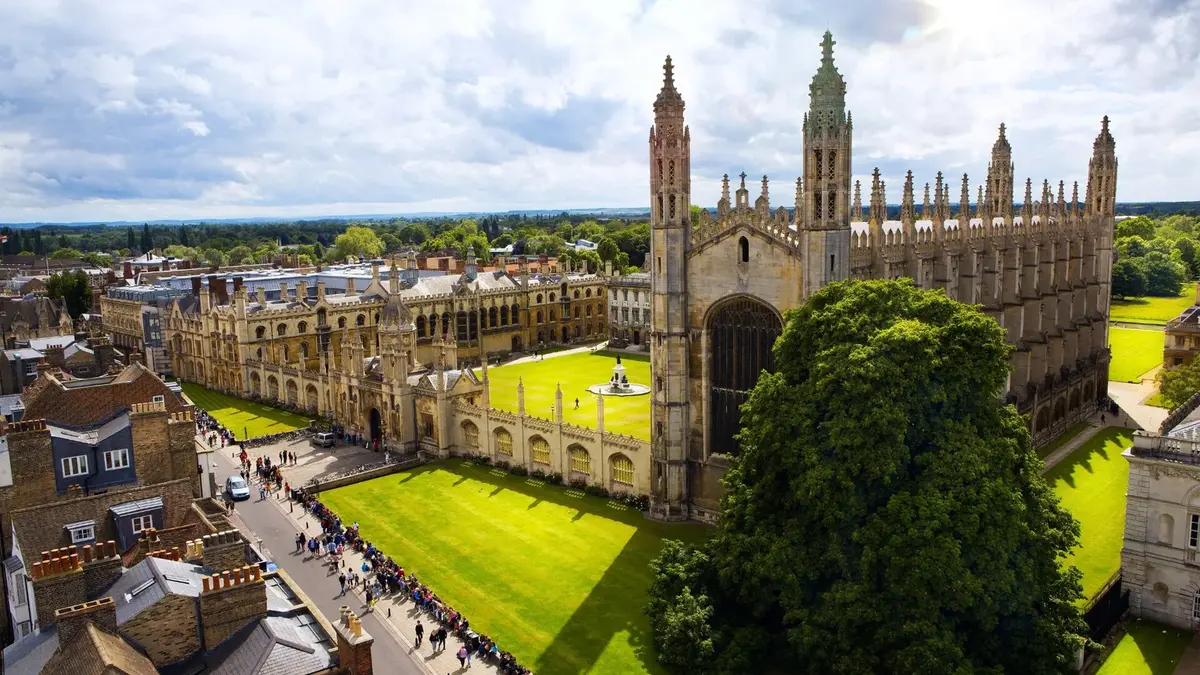
The Academic Insights Program lets high school students experience university life firsthand. You will live on campus and study in small groups of 7–10, learning from tutors from top universities like Oxford and Cambridge. Participants can explore over 20 subjects, including Architecture, AI, Business Management, Computer Science, Economics, Medicine, Philosophy, and more.
The courses are experiential and hands-on – you may find yourself conducting dissections in medicine, designing a robotic arm in engineering, participating in a moot court for law, or building creative writing portfolios and business case studies. By the end of the program, you’ll complete a personal project, receive written feedback, and receive a certificate of completion. You can find more details about the application here.
Why it stands out: You’ll study under expert academics, be guided daily by a university student mentor, complete a project you can show in future applications, and experience genuine university college life — with other campuses worldwide as alternatives.
3. Preparing for Success in Precalculus
Location: Rice University School of Mathematics Project, Houston, TX
Cost: $600 programme fee; optional workshop and parking fees may apply
Acceptance rate/cohort size: Selective; capped at 30 spaces
Dates: June 15-26
Application Deadline: Rolling
Eligibility: High school students who will have completed Algebra II and Geometry before the programme and plan to take Precalculus in the fall; must be able to attend the on-campus classes
Starting precalculus becomes much easier when the foundations already make sense. Preparing for Success in Precalculus, offered through Rice University’s School Mathematics Project, helps you strengthen the ideas that sit underneath higher-level math before the school year begins. You’ll revisit Algebra II and geometry concepts while working through problems that emphasize reasoning instead of memorizing formulas.
Classes are taught by Rice faculty and experienced math educators who encourage discussion, proofs, and multiple solution methods. The program also introduces responsible ways to use AI tools as part of your learning process. By the end, you’ll walk into precalculus with stronger mathematical instincts and a better understanding of why the formulas work.
Why it stands out: Rice’s School Mathematics Project focuses on building long-term mathematical thinking, making this much more than a simple summer review course.
4. IDEA MATH Summer Program
Location: John Paul II School, Plano, TX
Cost: Half-day (1 course, 40 hours): $1,395 early enrolment or $1,595 regular; Full-day (2 courses, 80 hours): $2,695 early enrolment or $2,895 regular
Acceptance rate/cohort size: Typically 6-16 students; capped at 16-20 depending on the course
Dates: June 4-6, June 8-12, and June 15-18
Application Deadline: Early registration: March 15th; Regular registration: April 15th
Eligibility: Students worldwide entering grades 3-12; students must complete a placement test, unless recently enrolled in IDEA MATH, to determine the appropriate course level
Some math problems refuse to fit into familiar formulas, and that’s exactly what the IDEA MATH Summer Program is built around. You’ll dive into subjects like number theory, combinatorics, algebra, and geometry through discussion-based classes that reward creative thinking.
Small class sizes mean you’ll regularly explain your solutions, compare ideas with classmates, and discover different ways to approach the same proof. The courses are paced according to placement tests, so you’ll work at a level that matches your background. If you’ve ever enjoyed olympiad-style questions or puzzles that take time to untangle, this program gives you plenty of them.
Why it stands out: IDEA MATH has become well known for olympiad-focused instruction taught in small classes where students actively present and defend their mathematical ideas.
5. Fusion Academy – Summer Remediation & Enrichment
Location: Multiple campuses across the U.S. (in-person) plus online options
Cost: Not publicly available
Acceptance rate/cohort size: 1:1 tutoring available
Dates: Summer enrolment open
Application Deadline: Rolling admission; contact the campus for availability
Eligibility: Students worldwide in grades 4-12; eligibility varies by programme type
Every student’s summer goals look a little different, and Fusion Academy is designed around that reality. You’ll work one-on-one with an instructor on subjects you want to strengthen or explore. Whether you’re catching up in math, improving reading skills, earning credits, or trying something new, the pace adjusts to you.
Programs also include executive functioning, study skills, technology, creative subjects, and world languages, depending on your interests. Sessions are available both online and on campuses across the United States, making scheduling fairly flexible. If you learn best with individual attention, this format can make a noticeable difference.
Why it stands out: Fusion’s signature one teacher, one student model gives every learner a fully personalized academic plan, something very few national summer programs offer.
6. UConn Health High School Student Research Apprentice Program
Location: In person at UConn Health, Farmington, CT, or Central Connecticut State University
Cost: Paid stipend; amount not specified
Acceptance rate/cohort size: Highly selective; typically 14 students
Application Deadline: April 1st
Eligibility: Connecticut high school juniors in 11th grade with a B average or better who are U.S. citizens or permanent residents, are aged 16 or older by the programme start date, and identify as first-generation college students, low-income students, or educationally under-resourced students
Among the more research-focused summer programs for 17 year olds, UConn Health’s High School Student Research Apprentice Program places you inside a working medical laboratory. Over five weeks, you join a basic science or clinical research team and contribute to ongoing projects through data collection, laboratory procedures, research documentation, or clinical study support.
Since the program follows a full-time commuter schedule, you’ll experience the rhythm of a real research workplace rather than a typical summer camp. Faculty and researchers guide you through day-to-day lab work while helping you understand how medical discoveries move from experiments to patient care. It’s a strong introduction if you’re considering medicine, biology, or biomedical research.
Why it stands out: UConn Health places high school students directly inside active medical research labs, giving you meaningful exposure to both laboratory and clinical research environments.
7. Young Scholars Summer Program – Biostatistics and Clinical Research

Location: Yale School of Public Health, New Haven, CT
Cost: $3,000 tuition, including a $500 deposit
Acceptance rate/cohort size: Highly selective; capped at 12 students
Dates: July 16-31
Application Deadline: March 31st
Eligibility: Local rising 11th- and 12th-grade students
Medicine relies on more than doctors and laboratories, and this Yale program shows you the role that data plays in every medical decision. You’ll learn how clinical studies are designed, how health datasets are organized, and how researchers decide whether results are statistically meaningful. Working with real health data, you’ll clean datasets, perform basic statistical analyses, and interpret what the numbers actually say.
Much of the program revolves around a team research project that ends with a presentation of your findings. Along the way, you’ll build a practical understanding of biostatistics while exploring how evidence shapes modern healthcare. It’s a great fit if you’re interested in medicine, public health, or data-driven research.
Why it stands out: Yale School of Public Health introduces high school students to the statistical methods that sit behind modern clinical research using real healthcare datasets.
8. Exposures Program (Yale Center for Clinical Investigation)
Location: Virtual, administered from New Haven, CT
Cost: Free; academic credit may be available
Acceptance rate/cohort size: Highly selective; 6.4% acceptance rate, with typically 32 students per cohort
Dates: July 6-31
Application Deadline: April 4th
Eligibility: High school and undergraduate students from around the world aged 15-21; minimum age is 15
Healthcare research doesn’t stop at the laboratory, and Yale’s Exposures Program explores that bigger picture through a fully virtual experience. You’ll work with a mentor to develop an independent research project while attending seminars, journal clubs, and discussions with clinicians and researchers.
Topics range from health technology and patient engagement to public health, health disparities, and data science. Throughout the month, you’ll gradually shape your project, receive feedback, and strengthen your research and presentation skills. The experience finishes with a formal presentation where you’ll share your work with the broader program community.
Why it stands out: Yale combines one-on-one mentorship with clinical research, public health, and health technology, giving students a broad view of how translational medicine works.
9. STEM Summer Institute
Location: Harpeth Hall School, Nashville, TN
Cost: Tuition required; scholarships are available
Acceptance rate/cohort size: No information available
Dates: June 1-11
Application Deadline: April 15th
Eligibility: Rising 7th- to 12th-grade girls from schools across Nashville and the Middle Tennessee region
Engineering starts with identifying a problem, and the STEM Summer Institute at Harpeth Hall builds the entire program around that process. You’ll investigate real community challenges before designing, building, and testing prototypes that address issues such as accessibility, flood prevention, sustainable farming, and public health. Along the way, you’ll develop practical skills in engineering design, prototyping, architecture, and problem-solving through hands-on projects.
Visits to local labs and conversations with women working in STEM help connect classroom ideas to real careers. The program welcomes students with all levels of experience, so curiosity matters more than an advanced background. By the end, you’ll have designed a solution while learning how engineering can make a practical difference.
Why it stands out: Harpeth Hall centers the program on human-centered engineering and connects students with women working across STEM fields throughout the experience.
10. Career and Technical Education (CTE) Program: JROTC Summer Cadet STEM/Leadership Camp
Location: Bowie State University, Bowie, MD
Cost: Free for eligible students
Acceptance rate/cohort size: Not publicly available
Dates: June 22-28
Application Deadline: By referral; varies by JROTC unit
Eligibility: Current 9th- to 12th-grade students enrolled in a JROTC programme who are referred by their JROTC instructor
If you’re already part of JROTC, this summer camp takes leadership training beyond the classroom. Hosted at Bowie State University, you’ll spend the week tackling leadership exercises, confidence courses, archery, swimming, and team challenges that develop decision-making under pressure. STEM sessions introduce subjects like drones, robotics, and 3D printing through practical activities that connect technology with real applications.
Every day blends technical learning with teamwork, communication, and leadership exercises that encourage you to step outside your comfort zone. Living and training alongside other cadets also gives the program a strong sense of community. It’s well-suited for students interested in leadership, engineering, or military career pathways.
Why it stands out: Few programs combine JROTC leadership training with hands-on experiences in robotics, drones, and 3D printing in a fully funded residential format.
11. ESTEEM / SER-Quest Summer Program
Location: University of Maryland, College Park, MD
Cost: Free for domestic students; $2,500 for international students
Acceptance rate/cohort size: Selective
Dates: July 20th – August 14th
Application Deadline: March 29th
Eligibility: Rising 12th-grade students from around the world
Engineering research starts long before anyone enters a laboratory, and ESTEEM / SER-Quest introduces you to that process from the ground up. You’ll learn how engineers identify research questions, review existing studies, and turn ideas into structured research proposals. Along the way, you’ll practice reading technical literature and understand how university research projects are planned before experiments even begin.
The program also includes workshops on college admissions, financial aid, and engineering careers, helping you prepare for life beyond high school. Faculty and mentors guide you through each stage while giving you a realistic picture of engineering study at the university level. It’s a thoughtful introduction for students considering research or engineering majors.
Why it stands out: The University of Maryland combines engineering research training with practical college and financial aid guidance, making the program valuable both academically and personally.
12. Summer Academy of Actuarial and Mathematical Sciences (SAAMS)
Location: Primarily virtual, with the final week held in person at Morgan State University, Baltimore, MD
Cost: Free to participate; accepted students receive a stipend
Acceptance rate/cohort size: Selective
Dates: June 29th – July 24th
Application Deadline: Priority deadline: February 28th; General deadline: April 30th
Eligibility: Rising 11th- or 12th-grade students, or graduating seniors entering Morgan State University
Numbers drive far more decisions than most people realize, and SAAMS explores where mathematics meets finance, computing, and risk analysis. You’ll attend classes in actuarial science, mathematics, and computer science while building the analytical skills used across quantitative careers. Professional development workshops and field trips help connect classroom topics to industries that rely on mathematical modeling and data. .
Most of the program takes place online, with the final week bringing everyone together at Morgan State University for an on-campus experience. Throughout the program, you’ll also meet faculty and mentors who can answer questions about college pathways and career options. It’s a good choice if you enjoy problem-solving and want to see where advanced math can lead.
Why it stands out: Morgan State is one of the few universities offering a dedicated actuarial science summer program for high school students, complete with a stipend and an on-campus experience.
13. WIE RISE! An Introduction to Engineering Research (Virtual)
Location: Virtual
Cost: $25 application fee; need-based scholarships are available
Acceptance rate/cohort size: Selective
Dates: July 27-31
Application Deadline: April 25th
Eligibility: Rising 9th- to 12th-grade students; open to all students, with no prior engineering experience required
Not every engineering program asks you to build a robot on day one, and WIE RISE! takes a different approach. Across five virtual days, you’ll explore a new engineering discipline each session through faculty talks, lab tours, demonstrations, and conversations with Maryland engineering students. You’ll also learn how research papers are organized and why engineers document their work the way they do.
Guided activities using everyday materials help connect research ideas to simple experiments you can complete at home. The program is designed for beginners, so no previous engineering experience is expected. By the end, you’ll have a clearer sense of how engineering research is carried out across different fields.
Why it stands out: The University of Maryland’s Women in Engineering Program makes engineering research approachable through virtual lab access, faculty sessions, and undergraduate mentorship.
14. Summer Engineering Institute (SEI)

Location: Georgia Institute of Technology, Atlanta, GA
Cost: Free
Acceptance rate/cohort size: 30 students
Dates: June 7-15; residential, with students staying on campus
Application Deadline: March 1st
Eligibility: Rising 11th- and 12th-grade students who are Georgia residents and will be at least 16 years old by June 7th
Spend nine days living like an engineering student at Georgia Tech’s Summer Engineering Institute. You’ll rotate through hands-on workshops, engineering design challenges, and lab activities that practically introduce different branches of engineering. Faculty and current Georgia Tech students lead sessions that show how engineering concepts move from theory to real applications.
Outside the classroom, you’ll experience residential campus life while taking part in leadership activities and college preparation sessions. Working with other students on technical challenges is a big part of the experience, giving you plenty of opportunities to test ideas and refine solutions. It’s a strong introduction to engineering at one of the country’s leading technical universities.
Why it stands out: Georgia Tech opens its engineering campus to a small group of students each summer, providing direct access to faculty, labs, and residential college life at no cost.
15. Advanced Manufacturing and Robotic
Location: UGA Center for Continuing Education & Hotel, Athens, GA
Cost: $530 in person; $725 residential fee; $20 parking fee
Acceptance rate/cohort size: No information available
Dates: July 13-17
Application Deadline: Enrolment opens on December 1st
Eligibility: Students worldwide aged 15-17
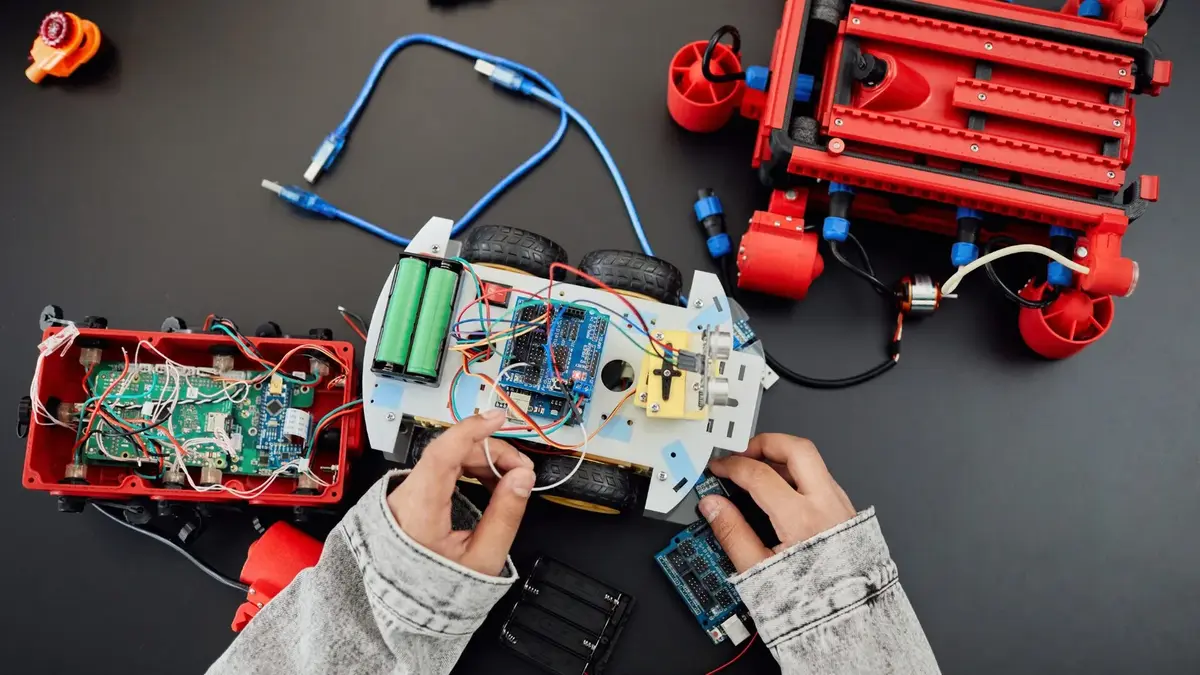
Modern factories rely on much more than conveyor belts, and Advanced Manufacturing and Robotics shows you what today’s production systems actually look like. You’ll learn to program industrial robotic arms, explore how sensors and vision systems guide automated machines, and see how engineers improve manufacturing through data. The program also introduces digital twin technology, allowing you to understand how virtual models are used to test and optimize real production systems.
Through guided projects, you’ll connect robotics, programming, and manufacturing into one workflow rather than studying them separately. No advanced background is required, making it a practical starting point for students curious about automation and industrial engineering.
Why it stands out: The University of Georgia brings together industrial robotics, automation, and digital twin technology in a single program, giving you exposure to tools used in modern manufacturing.
Frequently asked questions: Summer programs for 17 year olds
Are summer programs for 17 year olds open to international students?
Eligibility varies. Several programs, including UConn Health’s Research Apprentice Program and the Summer Engineering Institute at Georgia Tech, restrict eligibility to US residents or specific state residents. However, Yale’s Exposures Program and ESTEEM/SER-Quest at the University of Maryland accept international students, sometimes with an added fee. Immerse Education’s Academic Insights Programme is also open globally to students aged 13 to 18 across six locations.
How much do summer programs for 17 year olds cost?
Costs range from free to a few thousand dollars. Free options include Young Summer Math Days, the Summer Academy of Actuarial and Mathematical Sciences, and Georgia Tech’s Summer Engineering Institute. Mid-range programs like the Yale Young Scholars Summer Program cost around $3,000, while Advanced Manufacturing and Robotics at the University of Georgia costs $530 to $1,255 depending on residential status. Financial aid and stipends are available for several selective programs.
What is the difference between a research-based and a workshop-based summer program at 17?
Research-based programs, like Yale’s Exposures Program or UConn Health’s Research Apprentice Program, have you work with a mentor on an independent project, often culminating in a formal presentation. Workshop-based programs, like WIE RISE! or the STEM Summer Institute at Harpeth Hall, instead introduce you to a field through structured activities, talks, and demonstrations without requiring an independent research question. If you already know you want lab experience, a research-based program is the stronger fit; if you’re still exploring, a workshop format offers lower-commitment exposure.
How selective are summer programs for 17 year olds?
Selectivity varies considerably. Yale’s Exposures Program has a 6.4% acceptance rate, and UConn Health’s Research Apprentice Program admits only about 14 students. Other programs, like Fusion Academy’s one-on-one tutoring or IDEA MATH’s placement-tested courses, use rolling or eligibility-based admission rather than a highly competitive review. Regardless of selectivity, meeting specific residency or first-generation status requirements matters as much as academic strength for several of these programs.
What subjects can a 17 year old explore in a summer program?
Subject offerings span mathematics, medicine, engineering, and leadership. Programs like Young Summer Math Days and IDEA MATH focus specifically on advanced mathematical reasoning, while Yale’s Young Scholars Program and UConn Health’s apprenticeship lean into biostatistics and clinical research. Engineering-focused options include the Summer Engineering Institute at Georgia Tech and WIE RISE!, useful if you’re deciding between different technical disciplines before committing to a college major.
Is Immerse Education a good option for a 17 year old preparing for college applications?
Immerse Education’s Academic Insights Programme is a strong choice at 17, since it spans six global locations, including Oxford, Cambridge, and Boston, giving you flexibility in both subject and setting. The two week program places you in small groups of seven to 10 students, working on a personal project across more than 20 subjects, including AI, medicine, and business management. You’ll receive written feedback and a certificate of completion, giving you concrete material for your college applications regardless of where you live.
Make Seventeen Count Before University Starts
Seventeen is a useful point to test whether your strongest interests can withstand deeper study, tighter deadlines, and the independence university demands.
The 15 summer programs for 17 year olds in this guide provide routes into research, mathematics, medicine, engineering, leadership, and advanced academic work.
Use each option as a trial run: compare the daily work, the level of challenge, the mentorship available, and what you actually produce.
Ready to turn that insight into a stronger application strategy? Browse our University Preparation blogs for practical help with personal statements, subject choices, study habits, interviews, and the transition to university successfully.