15 Accredited High School Research Programs

When you’re in high school, research doesn’t have to wait until college. Participating in accredited high school research programs allows you to step beyond the classroom and experience what academic inquiry looks like in practice. These programs allow you to explore subjects in depth, ask meaningful questions, and engage with learning in a way that’s more independent, focused, and intellectually demanding.
Imagine spending your summer coming up with a research question, working closely with expert mentors, looking at data, improving your arguments, and learning how academic work is made and graded. These programs encourage you to think deeply, write meticulously, and engage with ideas, just like college students do. You will learn many skills in academic writing, critical thinking, and analysis that will help you with more than just this one project.
How do you choose the right accredited research program for high school students?
One key distinction is the opportunity to earn college credit while still in school. These credits can later count toward degree requirements, helping reduce future course loads and tuition costs, while also signaling to universities that you’re prepared for advanced academic work. Just as importantly, accredited research programs offer structured mentorship, clear academic standards, and meaningful outcomes that go beyond participation alone.
High school research programs cover a wide range of fields, including STEM, the humanities, the social sciences, medicine, and business. They are offered at colleges and universities all over the country. These programs help you figure out your academic path while working with motivated students from all over the world, whether you’re looking into a new field of study or getting ready for a competitive college environment.
You’ll learn how to manage long-term projects, engage in scholarly discussion, and navigate university-style expectations with confidence. To help you find the right fit, we’ve curated a list of 15 Accredited High School Research Programs. Each has been selected for its academic rigor, formal accreditation, strong mentorship, and ability to provide a meaningful foundation for undergraduate research and study.


15 Accredited High School Research Programs
1. Research Science Institute (RSI) – Massachusetts Institute of Technology (MIT)
Cost: Free
Credits from: RSI does not officially give college credit, but participants do original research with university-affiliated mentors. Some students also arrange for credit recognition on their own through their home institutions.
Dates: Late June – Early August
Application Deadline: Applications typically open in the fall and close in early January.
Location: Massachusetts Institute of Technology (MIT), Cambridge, MA.
Eligibility: High school juniors from around the world; applicants must demonstrate exceptional academic ability, particularly in mathematics and science.
Research Science Institute (RSI) is one of the most selective high school research programs in the world, combining advanced coursework with original, mentor-guided research at MIT. During the first phase, you complete demanding classes in theoretical STEM subjects designed to prepare you for independent research. Then, you work one-on-one with a research mentor, who is usually a university professor or senior researcher, to plan, carry out, and present an original research project.
The program ends with a formal research presentation, very similar to undergraduate research symposia. RSI isn’t concerned about grades or getting credits; instead, it focuses on getting students involved in the research process itself, from coming up with a problem to analyzing and sharing results. This program gives high school students a rare chance to experience the pace, expectations, and intellectual rigor of research at a top university.
Why it stands out: You’ll have the opportunity to complete actual research projects at RSI’s cutting-edge labs that are ordinarily inaccessible to high school students.
2. Immerse Education’s Pre-University Summer School
Cost: Varies; summer school scholarship available through their bursary programme
Credits from: Credit options are available through accredited partner universities in the US and the UK, depending on subject and location.
Dates: 2 weeks during the summer
Application Deadline: Multiple summer cohorts with rolling admissions.
Location: Boston, Cambridge, London, Oxford, Singapore, Sydney, Tokyo, and Toronto
Eligibility: Students worldwide aged 13-18 currently enrolled in middle or high school
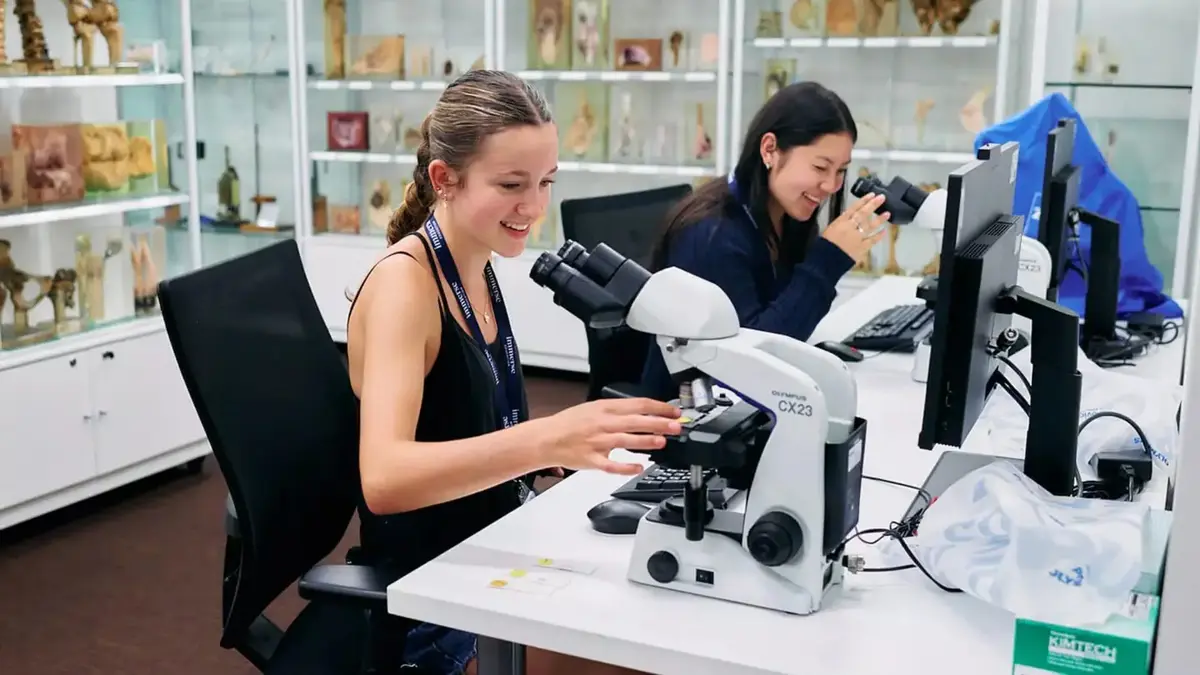
The Academic Insights Program provides school students with an opportunity to take undergraduate-level classes at universities around the world. Participants work with academics from universities like Oxford, Cambridge, and Harvard in classes of 4-10 students. They attend university-style lectures and 1:1 weekly sessions with their tutor. The program includes practical experiences such as dissections in medicine, robotic arm building in engineering, or moot courts for law.
You can choose from over 20 subjects, including architecture, artificial intelligence, business management, computer science, economics, medicine, philosophy, and more. By the end of the program, you will complete a personal project and receive written feedback and a certificate of completion. You can find more details about the application here.
Why it stands out: You’ll get an early start at university life and academics because the program includes an independent project, discussion-based classes, and living at a college campus.
3. MIT PRIMES-USA
Cost: Free
Credits from: MIT PRIMES does not automatically award college credit. In some cases, students may earn credit through partner universities depending on research track, mentor affiliation, and home institution arrangements.
Dates: January – June (academic year program)
Application Deadline: Applications typically open in the fall and close in early November.
Location: Hybrid; based at the Massachusetts Institute of Technology (MIT), Cambridge, MA, with remote participation options depending on track and location.
Eligibility: High school students worldwide with exceptional preparation in mathematics; applicants must demonstrate strong, proof-based problem-solving ability.
MIT PRIMES-USA is one of the most mathematically rigorous accredited high school research programs, placing students into genuine, long-term research under MIT-affiliated mentors. You work closely with a research advisor to explore open problems in areas such as number theory, combinatorics, algebra, geometry, or theoretical computer science.
The program focuses on long-term engagement with complex ideas, independent reasoning, and writing formal proofs instead of short projects or coursework. You take part in seminars and problem-solving sessions throughout the year that are similar to what you would observe in undergraduate and early graduate math classes. Your research culminates in a formal written paper and presentation at a mathematical conference or symposium.
Why it stands out: You’ll get to join a robust alumni community (90% in selective universities) and potentially obtain career and academic support.
4. Simons Summer Research Program
Cost: Fully funded; participants receive a stipend for the duration of the program.
Credits from: Students may earn college credit from Stony Brook University by enrolling in an associated course, subject to departmental approval and enrollment status.
Dates: June 29th – August 7th
Application Deadline: February 5th
Location: Stony Brook University, Stony Brook, NY.
Eligibility: High school juniors and select seniors with strong academic preparation in mathematics and science; international students are eligible.
The Simons Summer Research Program is one of the most research-intensive accredited high school research programs, placing students directly into active research groups at a major public research university. You are paired with a Stony Brook faculty mentor and work on an original project in fields such as math, physics, computer science, biology, or engineering.
The program emphasizes independent research, which means you must read academic literature, conduct experiments or theoretical work, and refine your results over several weeks. You also attend professional development workshops on research ethics, communicating science, and different STEM career paths. At the end of the program, you give a formal presentation of your research at a campus symposium, which is like an undergraduate research conference.
Why it stands out: Its labs are connected to national research centers, and you’ll contribute to cutting-edge computational and applied math projects.
5. Stanford Institutes of Medicine Summer Research Program (SIMR)
Cost: Fully funded; participants receive a stipend for the duration of the program.
Credits from: SIMR does not automatically award college credit. Some students may receive independent study or research credit through their home high school or external university arrangements, subject to institutional policies.
Dates: June 8th – July 30th
Application Deadline: February 21st
Location: Stanford University School of Medicine, Stanford, CA.
Eligibility: High school juniors and seniors aged 16 or older with strong preparation in science; applicants must be eligible to work in the United States.
Stanford SIMR is one of the most competitive accredited high school research programs in biomedical science, placing students into active research labs at one of the world’s leading medical schools. Paired with Stanford faculty mentors, you conduct hands-on research in areas such as cancer biology, immunology, bioengineering, neuroscience, and stem cell research.
The program focuses on full-time lab work, which means you’ll spend several weeks on experimental design, data collection, and scientific analysis. In addition to lab work, you attend seminars and professional development sessions focused on research ethics, scientific communication, and pathways in medicine and academia. The experience culminates in a formal research poster presentation delivered to the Stanford research community.
Why it stands out: Its deep connections to Silicon Valley make it easier to transition to interdisciplinary courses such as biomedical entrepreneurship or AI-driven health research.
6. The Rockefeller University Summer Science Research Program (SSRP)
Cost: Free; there is no fee to apply or participate.
Credits from: No college credit is awarded.
Dates: June 22nd – August 6th
Application Deadline: Applications typically close between October 13th and January 2nd; recommendation letters are due by January 5th.
Location: On campus at The Rockefeller University, New York, NY.
Eligibility: High school juniors and seniors who are 16 or older by the program start date. Students outside the NY/NJ/CT area and international applicants may apply; the program does not provide housing or visa support.
As one of the most lab-focused accredited high school research programs, SSRP places you in research teams with scientific trainees from Rockefeller and the Tri-Institutions (Rockefeller, MSK, and WCMC). You work in dedicated teaching labs on a schedule that closely mirrors professional research environments. The program expects about 35 hours a week during regular business hours, so it’s ideal if you can commit to the whole task.
SSRP includes electives, guest lectures, workshops, and networking-style programming in addition to lab work. These activities help you connect methods to bigger scientific questions. SSRP is ideal for those who are interested in biomedical science, can work well with others, and are willing to follow strict research and attendance rules.
Why it stands out: It focuses on independent research, mentorship from eminent researchers, and a final poster presentation, providing you with valuable experience for STEM applications.
7. BEYOND ALBERT High School Research Program – Albert Einstein College of Medicine / Montefiore Einstein Comprehensive Cancer Center
Cost: Free to participate. Students who complete the summer session receive a stipend of $2,500, a daily meal voucher, and a Metro OMNY card for transportation.
Credits from: Participants can earn up to 3 college credits through the Lehman College Now Program as part of their research experience.
Dates: Eight weeks, late June – August (Monday – Friday, 9:00 AM – 5:00 PM). An academic-year component runs September – May with weekly sessions.
Application Deadline: Applications are typically accepted between November 1st and January 12th.
Location: Albert Einstein College of Medicine and the Montefiore Einstein Comprehensive Cancer Center, Bronx, NY.
Eligibility: Rising juniors and seniors who are at least 16 years old and attend high school in the Bronx.
BEYOND ALBERT is a year-round, research-heavy program that includes an eight-week full-time summer research placement as well as ongoing academic year support and enrichment. You work in active biomedical research labs at Montefiore Einstein, where they do hypothesis-driven experiments, attend professional development workshops, and participate in seminars led by faculty and trainees.
The summer part of the program is like a professional research schedule, with full days of lab work. Academic-year sessions help students think more deeply about science through seminars and prepare them for college. You can earn college credit through partnered Lehman College classes and prepare independent research presentations.
Why it stands out: You could build a foundation for pre-med and biomedical research pathways because of the mentorship by Einstein faculty, and by creating research presentations.
8. Carnegie Mellon University – Pre-College Program in Computational Biology
Cost: $10,750 (residential) or $8,041 (commuter) for the four-week program, plus a $50 non-refundable application fee and an $800 non-refundable enrollment deposit.
Credits from: No college credit is awarded; this is an enrichment research experience.
Dates: June 20th – July 18th (4 weeks).
Application Deadline: March 1st.
Location: Carnegie Mellon University campus, Pittsburgh, PA.
Eligibility: High school students worldwide who are at least 16 years old by the program start date, typically rising sophomores and juniors with strong academic performance.
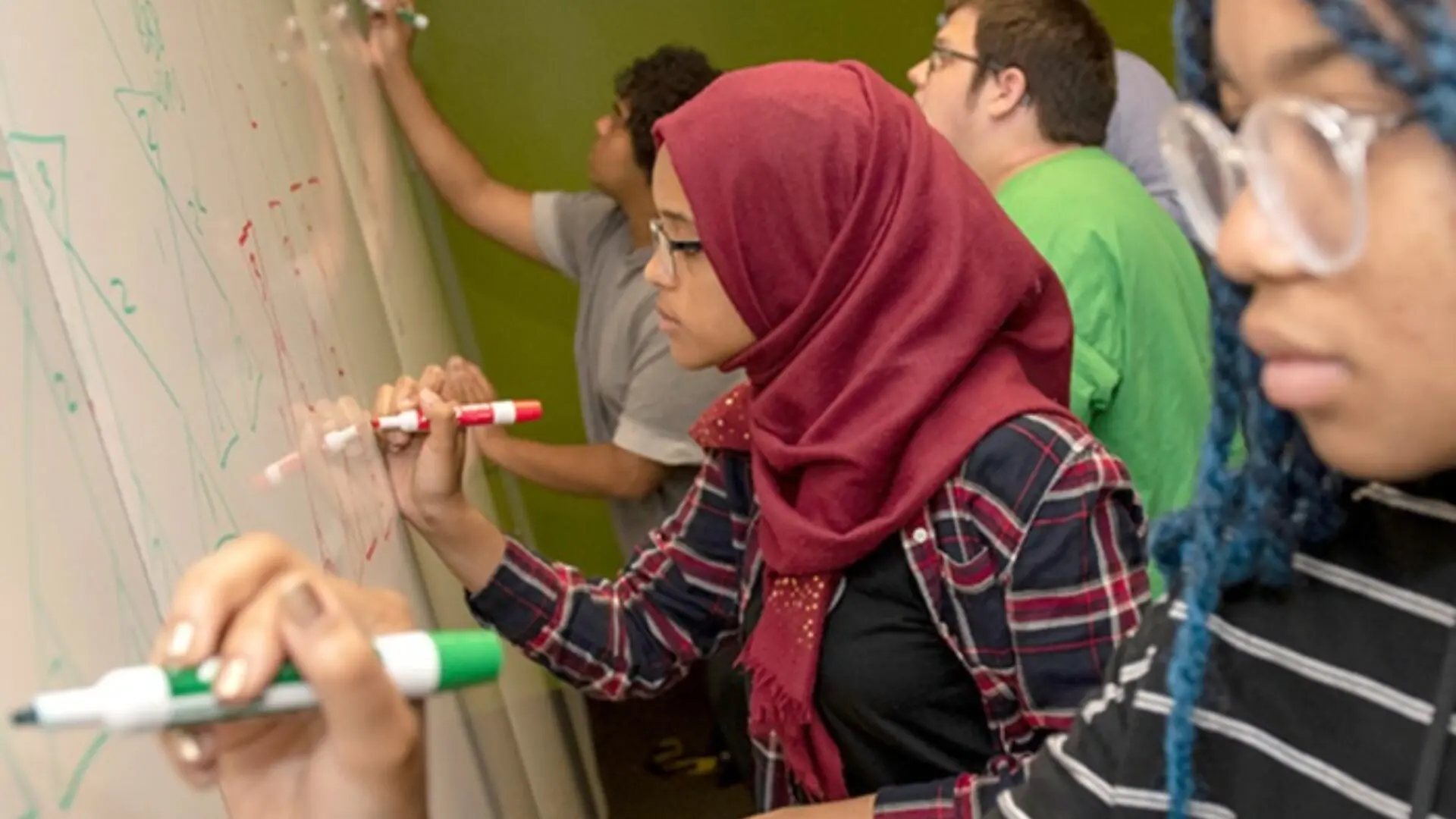
Carnegie Mellon’s Pre-College Program in Computational Biology puts high school students at the cutting edge of modern life sciences by combining lab work with computer analysis. Over the course of four weeks, you work with real biological datasets, like microbial DNA from field samples, and use computational methods to analyze and understand them. This shows how data science is becoming more important in biology.
Most days, you do hands-on work in the wet lab and solve programming problems that are similar to tasks done in research settings. This gives you an idea of how code and statistics are used to answer biological questions. Even if you don’t know much about coding, the curriculum is designed to be easy to understand, and there are materials available to help you get ready before the program starts.
Why it stands out: It introduces you to the intersection of computing and life sciences helping you build analytical and bioinformatics skills early.
9. Boston University Research in Science & Engineering (RISE) — Internship/Practicum
Cost: $5,930 in tuition, plus $485 in service fees and a $75 non-refundable application fee. Housing and dining are listed as TBD. Limited financial aid and a named scholarship option are available.
Credits from: RISE is a noncredit program. Students receive a certificate of completion; practicum participants also receive a letter of evaluation.
Dates: Program start June 28th; orientation June 29th; program concludes with a Poster Symposium on August 7th.
Application Deadline: February 4th; recommendation letters are due February 11th.
Location: Boston University campus, Boston, MA, with residential and commuter options.
Eligibility: Students entering their senior year in the fall; U.S. citizens and legal permanent residents only.
You do research for about 40 hours a week in the Internship track, with the help of BU-affiliated mentors, and work toward a final poster presentation. The Practicum track focuses on faculty-led projects across computational fields such as data science and neurobiology. After the program, students get a formal evaluation letter. The six-week schedule for both tracks is meant to make it feel like a real school commitment, not just a drop-in camp.
There are required orientations, weekly programming, and a final symposium. This program is a good fit for you if you’re already leaning toward STEM in college and want to learn more about what research is like at a large research university.
Why it stands out: You’ll study the larger research process, giving you an idea of how research works at universities and in actual life.
10. Anson L. Clark Scholars Program
Cost: Free to participate. Room, board, seminars, and most program costs are covered by Texas Tech University; participants also receive a stipend and support for on-campus meals and housing.
Credits from: The Clark Scholars Program does not award college credit; the research experience may be used toward independent study or research portfolios at the college level.
Dates: June 21st – August 6th (seven-week intensive summer research program).
Application Deadline: February 16th; applications typically open in early January.
Location: On campus at Texas Tech University, Lubbock, TX.
Eligibility: Highly qualified U.S. high school juniors and seniors who are at least 17 years old by the program start date; admission is competitive, with approximately 12 scholars selected each year.
The Anson L. Clark Scholars Program immerses a small cohort of elite high schoolers in authentic research life at a major public research university. Over seven weeks on the Texas Tech campus, you work side by side with faculty mentors on substantial research projects, engage in weekly seminars and field excursions, and present your findings at the program’s conclusion.
The structure shows what is expected of undergraduate research: being very involved in your topic, getting regular guidance from experienced researchers, and being part of the university’s intellectual community. You will work on your own and have chances to improve your academic writing, critical thinking, and group research skills all summer long. By the end of the program, you will have experienced the rhythms and demands of research at the collegiate level and built foundations that strengthen your transition to university study.
Why it stands out: It offers one-on-one mentorship with Texas Tech faculty, so you’ll be able to deepen your subject understanding and craft a better research project report.
11. Sanford PROMISE High School Research Scholars Program
Cost: Free to participate; includes a $4,000 scholarship for accepted students.
Credits from: Participants can earn 3 undergraduate elective credits (BIOC 192) through the University of South Dakota as part of the research experience.
Dates: May 26th – July 31st (10 weeks, full-time research).
Application Deadline: January 10th.
Location: Sanford Research Laboratories, Sioux Falls, South Dakota.
Eligibility: Domestic high school students aged 16 or older who are entering their senior year in the fall following the program.
The Sanford PROMISE High School Research Scholars Program puts motivated high school students right into biomedical research teams at an active research institute. You work with professional scientists and lab staff on ongoing research projects for more than ten weeks. This gives you hands-on experience with experimental methods, data analysis, and scientific reasoning.
The program includes journal club meetings, ethics training, career coaching seminars, and opportunities to showcase your work, such as at the Sanford Research Symposium, where you can create a scientific poster. This summer internship connects high school preparation with college research expectations by combining formal undergraduate credit from the University of South Dakota with extensive lab research.
Why it stands out: It combines a full-time biomedical research internship with undergraduate credit and structured scientific training, allowing you to work in professional research labs while earning an academic credential that supports future study in medicine and science.
12. University of California COSMOS – California State Summer School for Mathematics and Science
Cost: $5,518 in tuition, which covers housing, meals, orientation, field trips, activities, and on-site support, plus a non-refundable application fee of approximately $46. Financial aid and fee waivers may be available.
Credits from: COSMOS does not award formal college credit. The academic experience may be noted on university applications and may support independent study credit arrangements through a student’s high school or future university.
Dates: June 5th – August 1st.
Application Deadline: Early January to early February (exact dates vary by year).
Location: Residential sessions are offered across participating University of California campuses, including UC Davis, UC Irvine, UCLA, UC San Diego, and UC Santa Cruz.
Eligibility: High school students in grades 8-12. California residents are eligible; some campuses may consider a limited number of out-of-state applicants.
COSMOS is one of the most academically immersive Accredited High School Research Programs, extending high school learning into college-level study through faculty-guided clusters. You work with University of California researchers in advanced STEM subjects not typically offered in secondary education. Each COSMOS cohort is put into a “cluster” that includes two advanced STEM classes and a section on transferable skills.
These classes cover subjects like engineering, computer science, biotechnology, and applied mathematics, which are not usually taught in high school. Students attend lectures, labs, group projects, and seminars that are similar to what they would do in college classes and research. Even though COSMOS doesn’t award college credits, the program’s difficulty and guidance from UC faculty give students a good sense of what undergraduate STEM study is like, helping them gain skills and confidence for future research and academic paths.
Why it stands out: You’ll be placed in groups built around active UC research, giving you exposure to major UC laboratories, tech partnerships, and undergraduate research pipelines.
13. University of California Santa Barbara – Research Mentorship Program (RMP)
Cost: $13,274 (residential) or $5,675 (commuter).
Credits from: Participants earn university credit from the University of California, Santa Barbara through two courses, which are recorded on a permanent UCSB transcript.
Dates: June 15th – July 31st.
Application Deadline: March 9th.
Location: University of California, Santa Barbara, Santa Barbara, CA.
Eligibility: High school students worldwide, typically in 10th or 11th grade; exceptionally advanced 9th graders may be considered on a case-by-case basis. Applicants are generally expected to have a strong academic record.
UC Santa Barbara’s Research Mentorship Program (RMP) is one of the few accredited high school research programs that offers sustained, credit-bearing research alongside university researchers and graduate mentors. You are paired with a faculty, postdoctoral, or graduate student mentor to pursue an original research project in computer science, engineering, psychology, economics, and the humanities.
The experience begins with a virtual orientation and then transitions to full-time research on campus, where you spend significant hours each week on project work, data collection, and analysis. You take structured courses to develop core skills in academic writing and presentation techniques, prepare a technical research paper, and present your work at a symposium, reflecting undergraduate research expectations. Your college credits will stay on your UCSB record.
Why it stands out: It pairs you with university researchers for original, credit-bearing research and requires a formal paper and symposium presentation, giving you a rare opportunity to earn a permanent UCSB transcript while doing real undergraduate-style research.
14. Applied Research Innovations in Science and Engineering (ARISE) at NYU
Cost: Tuition-free; funded by the NYU Tandon Center for K–12 STEM Education. Accepted students receive a stipend for full participation in the summer research program.
Credits from: ARISE do not automatically award college credit. Students may independently arrange for credit recognition through partner institutions or future university programs.
Dates: June 1st – August 14th.
Application Deadline: February 21st (dates may vary slightly by year).
Location: NYU Tandon School of Engineering, Brooklyn, NY (in person).
Eligibility: Current high school 10th and 11th-graders who are residents of New York City with demonstrated interest and preparation in STEM disciplines.
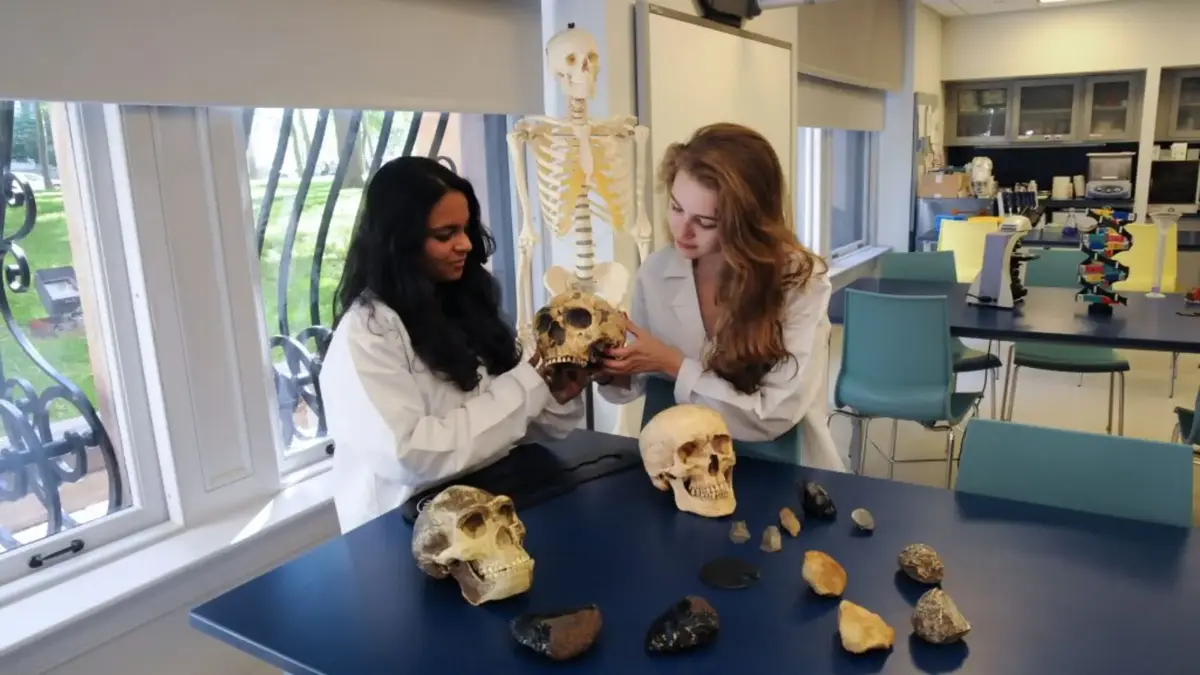
ARISE is a rigorous, summer research program that places high school students inside active research labs at NYU’s Tandon School of Engineering. The experience starts with basic workshops on lab safety, scientific writing, and professional development, preparing you to make a real contribution to ongoing faculty research projects. Thereafter, you spend several weeks working full-time in a participating lab led by NYU faculty and supported by graduate or postdoctoral mentors.
There, you participate in hands-on experiments, analyze data, and conduct hypothesis-driven research. At the end of the program, you will deliver a presentation of your work at the symposium. ARISE gives you a clear look at how professional scientific research works at the university level.
Why it stands out: It embeds NYC students in active NYU engineering labs through a fully funded, structured research internship, offering hands-on experience with faculty projects that closely reflect professional university research environments.
15. Princeton Plasma Physics Laboratory Internship Program
Cost: Free to participate; housing is not provided, and students are responsible for their own transportation and living arrangements. Interns receive a paid stipend for summer research work.
Credits from: The PPPL High School Internship does not award college credit. Students may independently pursue credit arrangements with their high schools or future universities.
Dates: June 30th – August 1st (approximately 8-10 weeks during the summer).
Application Deadline: Applications typically open in late November and close on March 1st.
Location: Princeton Plasma Physics Laboratory (PPPL), Princeton, NJ, located on the Princeton University campus.
Eligibility: Graduating high school seniors who are at least 16 years old and are U.S. citizens or permanent residents.
The Princeton Plasma Physics Laboratory High School Internship places students alongside scientists and engineers working on real research projects in plasma physics and fusion energy. During this full-time summer internship, you work on a specific research task with the help of PPPL research staff. You also help with ongoing experimental or simulation work that supports the laboratory’s research mission.
You also participate in professional development activities, lab safety training, and seminars that teach you basic research skills and how to communicate about science. The program ends with a final presentation in which participants share their project results with their peers and mentors. This is similar to how undergraduate research settings expect students to synthesize and communicate their findings.
Why it stands out: It places you inside a national laboratory working on real plasma physics and fusion research, giving you paid, hands-on exposure to large-scale scientific research and the communication standards expected in advanced STEM environments.
Join the Immerse Education 2027 Essay Competition
Follow the instructions to write and submit your best essay for a chance to be awarded a 100% scholarship.
How Research Strengthens Your Applications
Accredited research experience strengthens your university applications by showing how you think, work, and learn beyond the classroom. You demonstrate independence, curiosity, and the ability to manage demanding academic projects over time.
Through accredited high school research programs, you show admissions teams that you can operate at an undergraduate level. Designing questions, analysing data, and presenting findings reflect real university expectations.
Accreditation matters because it signals quality. Structured mentorship, clear assessment, and formal standards reassure universities that your research experience is credible and rigorous.
To plan applications, credits, and next academic steps, explore our University Preparation blogs for practical guidance.






Unlock Inspiring Opportunities with the Immerse Education Newsletter
Join our newsletter to stay ahead with exclusive updates, exciting programme highlights, and expert insights from the world of immersive education.
Learn how Immerse can transform your life
An in-depth overview of our university and career preparation programmes
Get a glimpse into the life of an Immerse participant
Find the right programme for you with sample timetables, location showcases, and more