IB Art Guide: Everything to Know Before You Choose the Course
Anyone can generate an image in seconds today, so developing an idea and explaining it clearly stands out more than ever. IB art rewards exactly that skill: the thinking, testing, and reflection behind every piece.
Officially called IB Visual Arts, it’s a two-year Group 6 course assessed through coursework, not exams. From 2027, the new course swaps the comparative study, process portfolio, and exhibition for three tasks we’ll explore later.
In this guide, we’ll discuss what you’ll study, how each task is assessed, HL vs SL, the real workload, and how it compares with AP Art and Design.
Let’s begin.
Key takeaways
- Officially called Visual Arts, IB art is a two-year Group 6 course at SL and HL. It’s built around three core areas, create, connect, and communicate, and has no written exam.
- From May 2027, new tasks replace the comparative study, process portfolio, and exhibition. Check that any study resource you use says first assessment 2027.
- All students submit an inquiries portfolio of up to 15 screens and 3,000 words, plus five resolved artworks worth 40%. SL adds a 20% connections study, while HL adds a 30% artist project with a video of up to three minutes.
- HL adds 90 hours (240 vs 150) and suits applicants for fine art, graphic design, or animation degrees. SL can support other paths, like architecture.
- IB art’s challenge comes from sustained studio work and writing, not timed exams. Across all tasks, you write up to 6,200 words at SL or 7,300 at HL.
- AP Art and Design is the closest alternative, scored 1 to 5 and centered on artwork and process. IB adds far more writing, including research into the cultural significance of other artists’ work.
What is IB Visual Arts?
Visual Arts is one of five IB Diploma arts subjects in Group 6, alongside Dance, Film, Music, and Theatre. Your classroom works like an artist’s studio, built around art-making as inquiry. You follow personal lines of inquiry, not a fixed topic list.
You can take it at standard level, with 150 recommended teaching hours, or higher level, with 240. Group 6 is also optional, since you can choose a second subject from another group instead.
There’s no written exam at either level. Instead, you curate digital submissions that combine images, video, and written reflection. IB examiners mark two tasks, while your teacher marks the third.


Environment & Sustainability

What’s changed in the new IB Visual Arts course
Published in February 2025, the new guide was first taught in August 2025 and first assessed in May 2027.
Here are the old components and their replacements.
IB Visual Arts topics: what you’ll study
Most teaching time, 90 hours at SL and 150 at HL, goes to art-making through your own lines of inquiry.
In the parts below, we’ll explore how that works.
Create, connect, and communicate
The course divides its core learning into three areas, each with 20 teaching hours at SL and 30 at HL. In practice, they overlap constantly as you develop your own artwork.
Here’s what each area asks you to do.
- Create: Experimenting drives this area, from testing media and techniques to following an idea from first concept to finished artwork. Along the way, you develop a personal visual language.
- Connect: Your own art-making gets situated alongside other artists’ work in personal, local, and global contexts. You also learn to judge an artwork’s cultural significance across time and place.
- Communicate: Every assessment task is submitted digitally, so this area builds the curating and presentation skills those submissions depend on. Class critiques also help you explain your choices.
The visual arts journal
Your visual arts journals are where all three core areas meet, recording your experiments, research, and reflections. Sketchbooks, research notebooks, exploratory studies on different paper sizes, and digital journals all count. Digital journals can hold 3D modeling screenshots, mood boards, and investigative photography.
Pages don’t need to look polished, because the IB doesn’t assess journals directly. They’re your main source of evidence when you curate all three assessment tasks.
Consistent documentation also protects your authenticity. Teachers must verify that submitted work is yours, and any AI-generated material you use must be cited.
Art-making forms and creative strategies
Over two years, you might move from pulling prints to editing a short video artwork. The IB’s art-making forms also include painting, drawing, sculpture, ceramics, photography, digital art, installation, performance, and intervention.
Whichever forms you choose, creative strategies shape how you develop ideas, like enlarging a small object to monumental size. The IB requires you to use more than one art-making form and more than one creative strategy.
In practice, your options depend on your school’s facilities, so check for a kiln, printing press, or video editing software.
How IB Visual Arts is assessed
Both levels complete three tasks: two external tasks worth 60% and one internal assessment worth 40%, all submitted digitally. Submissions combine visual evidence, written materials, and sometimes short videos.
In the sections below, we’ll break down each task’s requirements.
The art-making inquiries portfolio
Curated in your second year, this task shows how your art-making developed through one or more lines of inquiry. It’s worth 40% at SL and 30% at HL, marked out of 32 by an IB examiner.
You submit a PDF of up to 15 screens, or pages, and 3,000 words, plus a separate list of sources. That averages 200 words per screen, so visuals stay predominant.
Your screens must state the inquiry questions or generative statements that guided your work. Scanned journal pages, contact sheets, and even false starts can all serve as evidence of how your ideas evolved.
The connections study (SL only)
Starting from one of the five artworks you submit for internal assessment, this task places your work in a wider artistic conversation. It’s worth 20% of your SL grade, marked out of 24 by an IB examiner.
You submit a PDF of up to 10 screens and 2,500 words, plus a separate list of sources. All three parts must appear within your 10 screens.
First, you show how your chosen artwork connects with your own context. Next, you link it to at least two artworks by different artists, informed by research. Finally, you research those artworks’ cultural significance, both originally and across time and place.
The artist project (HL only)
This HL-only task offers the most freedom: you ideate and realize a new artwork in a context you choose. It’s worth 30% of your HL grade, marked out of 40 by an IB examiner.
You submit a PDF of up to 12 screens and 2,500 words across five sections, plus a list of sources. Each section has its own word limit, and connections link your project to at least two artworks by different artists. The others cover your proposal, dialogues, evaluation, and ideas for further development.
A video of up to three minutes shows your finished artwork in its context. It’s submitted with the artwork details and up to 100 words on your final artistic intentions. Keep records of every critique, since the dialogues section must show how feedback shaped your work.
Resolved artworks (internal assessment)
Your strongest finished pieces come together here as a coherent body of work. Worth 40% at both levels, this task is marked by your teacher and moderated by the IB.
SL students submit five artworks as images or videos of up to three minutes each, with titles, media, and sizes. A rationale of up to 700 words on two screens explains the choices behind them.
HL students select their five from at least eight works and explain that selection in the rationale. They also add five artwork texts, totaling 1,000 words, that place each piece in a wider artistic context.
SL is marked out of 32 and HL out of 40, with HL’s extra eight marks assessing artistic context.
Join the Immerse Education 2027 Essay Competition
Follow the instructions to write and submit your best essay for a chance to be awarded a 100% scholarship.
IB Visual Arts HL vs SL: how the two levels compare
Both levels share the same assessment objectives, but HL adds 90 teaching hours and a more demanding second external task.
Here’s a more detailed look at how the two levels compare.
If you’re aiming for degrees like fine art, graphic design, or animation, HL offers the deepest preparation. If art supports another path, like architecture or art history, SL builds a portfolio while freeing an HL slot.
How hard is IB art?
It’s demanding, but the challenge comes from sustained studio work, documentation, and writing, not timed exams. Across all three tasks, SL students can write up to 6,200 words and HL students up to 7,300.
Timing matters too. Most curating happens in the second year, and documented experimentation, including false starts, counts as evidence. Working in your journal every week spreads the load and gives you more material to select from.
IB Visual Arts vs AP Art and Design: which fits you better?
The closest equivalent to IB Visual Arts is AP Art and Design. Both end in a digital portfolio submitted in May, but they differ in length, structure, and how much you write.
Here’s how each one works.
- AP Art and Design: You build one portfolio, choosing 2-D Art and Design, 3-D Art and Design, or Drawing. Most of your score, 60%, comes from a Sustained Investigation: 15 images developing one inquiry, plus two short written responses. Readers score your inquiry and how it develops through practice, experimentation, and revision. The remaining 40% comes from five Selected Works, and the portfolio is scored from 1 to 5.
- IB Visual Arts: You complete three tasks over two years at SL or HL, graded from 1 to 7. Alongside your artwork, those tasks include up to 6,200 words at SL or 7,300 at HL. Much of that writing explores your own process and the cultural significance of other artists’ work.
Choose AP if you want your score to rest mainly on your artwork and process, with far less writing. IB can suit you better if you enjoy researching art in context and explaining your thinking in writing. Either way, check each college’s portfolio guidelines and credit policy.
Where IB Visual Arts can lead at university and beyond
Across two years, the course builds visual communication, critical analysis, and independent project management. Curating screens, researching artists, and resolving five artworks sharpen them.
These skills support degrees in fine art, illustration, graphic design, animation, and film, where your coursework can anchor your admissions portfolio. At SL, the course can support another degree instead. Architecture applicants gain portfolio work while keeping HL slots for subjects like Mathematics.
Down the line, these paths can lead to careers as a graphic designer, illustrator, animator, or art director. Roles like architect or curator usually require further study, such as accreditation or a master’s degree.
Want to test a creative path first? Our guide to the 15 design courses for high school students compares 15 pre-college options, including RISD and Central Saint Martins.
Explore film and animation with Immerse Education
Video art is one of the IB’s art-making forms, and the HL artist project ends with a three-minute video. Yet skills like framing a shot or editing footage aren’t always taught at school.
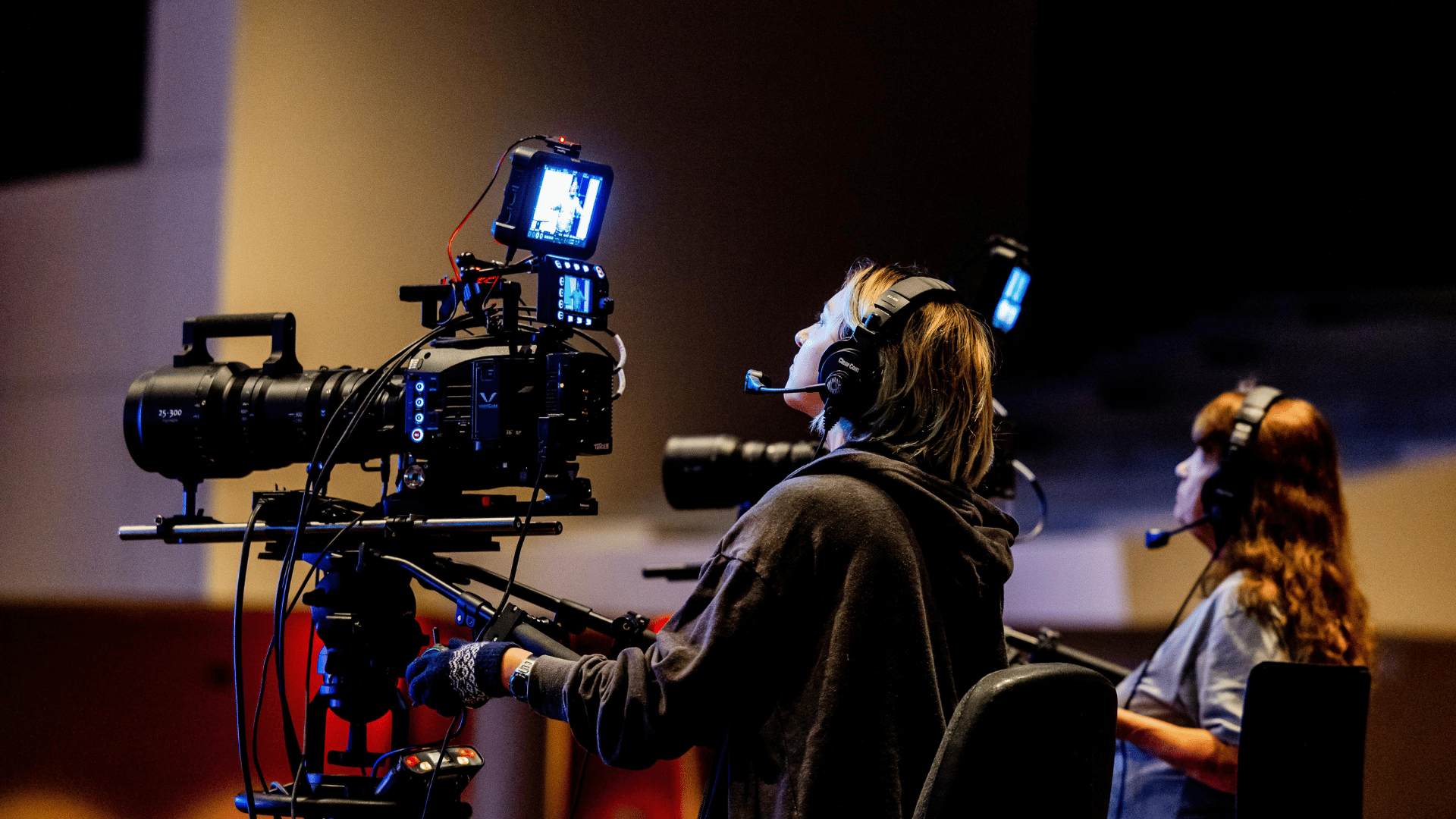
Our Film & Animation Summer School in Tokyo lets students aged 15 to 18 build those skills over two weeks. You’ll explore directing, cinematography, storyboarding, editing, sound design, and stop motion with industry professionals.
Past industry visits, like D’ART Shtajio’s anime studio, have shown how professional teams turn ideas into finished scenes. Along the way, you’ll work on your own animated projects, building hands-on skills in animation and filmmaking.
FAQs
Can you take IB Visual Arts without prior art experience?
Yes. The IB requires no prior art study, and the course begins with foundational skills. Earlier art classes, including arts in the IB Middle Years Programme (MYP), help but aren’t required.
Is there an IB art exam?
No. IB art has no written exam at SL or HL. You submit three digital tasks instead: two marked by IB examiners and one marked by your teacher, then moderated by the IB.
What happened to the IB art comparative study and exhibition?
Both were replaced for students assessed from 2027. The comparative study became the connections study at SL and the artist project at HL. The exhibition became the resolved artworks task.
Is IB art difficult?
It’s demanding but manageable with steady work. The challenge comes from two years of studio practice, documentation, and up to 6,200 words at SL or 7,300 at HL, not timed exams.
Do art schools accept IB Visual Arts work in a portfolio?
Yes. Art and design schools assess your own artwork, so pieces from your IB coursework can form much of your admissions portfolio. Always check each school’s specific portfolio requirements before applying.
Is IB art worth it?
It’s worth it if you enjoy making art and explaining your thinking. The course builds a portfolio, research skills, and visual communication that support creative degrees and many careers beyond art.
Conclusion: choosing IB art with confidence
Choosing IB art comes down to a few questions. Do you love making art and explaining your ideas? Could you see yourself studying or working in a creative field?
If the answer is yes, take HL for fine art, design, or animation degrees, or SL if art supports another path.
Before deciding, check your school’s facilities, talk to your art teacher, and look honestly at your sketchbooks. The right choice is one you’ll enjoy in year two.
If video art already sparks your curiosity, explore our Film & Animation Summer School in Tokyo, creating for two weeks alongside industry professionals.



Unlock Inspiring Opportunities with the Immerse Education Newsletter
Join our newsletter to stay ahead with exclusive updates, exciting programme highlights, and expert insights from the world of immersive education.
Learn how Immerse can transform your life
An in-depth overview of our university and career preparation programmes
Get a glimpse into the life of an Immerse participant
Find the right programme for you with sample timetables, location showcases, and more