IB ESS Guide: Everything to Know Before You Choose the Course
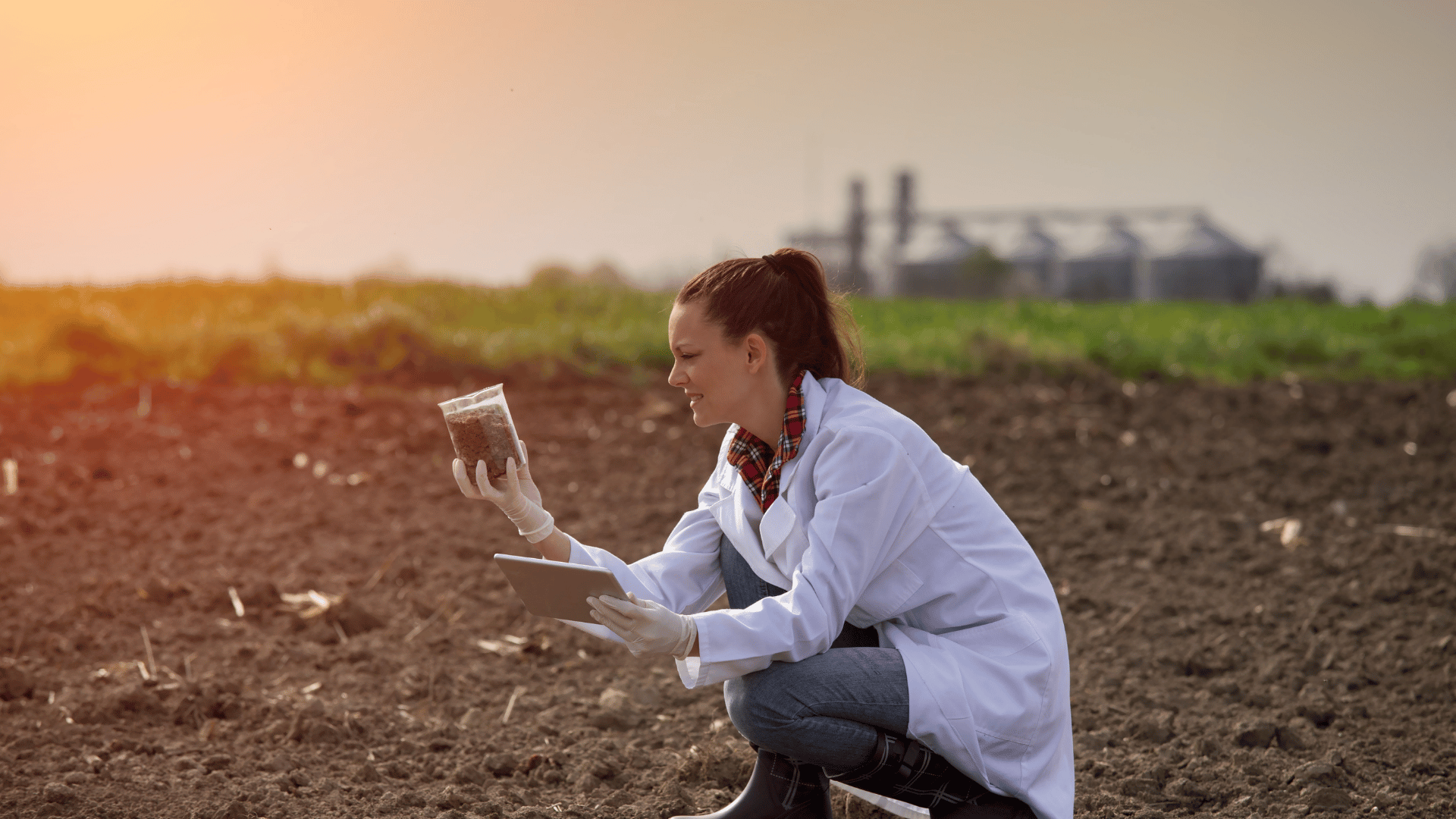
Torn between science and humanities for your IB Diploma? IB ESS lets you study both at once, exploring how ecosystems work and how human choices reshape them.
IB ESS stands for Environmental Systems and Societies, and it’s an interdisciplinary course that sits in both Group 3 (individuals and societies) and Group 4 (sciences). The new course, first examined in May 2026, added HL alongside SL.
In this guide, we’ll cover the syllabus, assessment, HL vs SL, the first exam results, and how ESS compares with AP Environmental Science, so you can decide with confidence.
Let’s start with what ESS is.
Key takeaways
- IB ESS (Environmental Systems and Societies) is one interdisciplinary subject that can count toward Group 3, Group 4, or both. Counting it as both frees one of your six slots for another subject.
- The new course was first examined in May 2026, adding HL, a collaborative sciences project, and an IA Strategy criterion. SL takes 150 teaching hours and HL 240, including a 50-hour experimental program at both levels.
- The syllabus spans eight topics, from Ecology to Human populations and urban systems, built around perspectives, systems, and sustainability. HL adds environmental law, economics, and ethics lenses.
- Exams make up 75% at SL and 80% at HL, with the IA, a 3,000-word report, covering the rest. Provisional May 2026 means were 4.5 at HL and 4.3 at SL, below the 4.9 DP average.
- Choose HL for environmental science, geography, or environmental policy, and SL if you’re aiming for medicine or engineering. These paths lead to careers such as sustainability consulting, conservation, and climate policy.
- Unlike AP Environmental Science’s single exam scored 1–5, ESS is graded 1–7 and weighs how values shape decisions. US colleges recognize it, but it won’t replace Biology, Chemistry, or Physics for majors that expect them.
What is IB ESS?
Environmental Systems and Societies (ESS) is one interdisciplinary IB subject that can meet both Group 3 and Group 4 requirements. That frees one of your six slots for another subject, though Diploma rules and your school’s timetable still apply.
You study ecosystems, water, land, climate, and resources alongside the social, economic, political, and ethical choices that shape them. Three key concepts run through every topic: perspectives, systems, and sustainability. SL runs for 150 recommended teaching hours and HL for 240.
This systems-and-perspectives approach sets ESS apart from Biology plus Geography. You’ll judge how different worldviews weigh the same issue, such as a dam or carbon tax. At HL, you’ll also apply environmental law, economics, and ethics.


What’s changed in the new IB ESS course
Launched in February 2024, the new course was first taught that August and first examined in May 2026.
Here’s how it differs from the old SL-only course.
IB ESS topics: what you’ll study
The syllabus covers 100 content hours at SL and 190 at HL, plus a 50-hour experimental program at both.
In the next sections, we’ll cover the concepts, topics, HL lenses, and practical work.
The three key concepts
Topic 1, Foundation, introduces three key concepts in 16 hours, and every later topic returns to them.
Here’s how each one frames climate change.
- Perspectives: These explain why people react to climate change in different ways. Some believe nature matters for its own sake, while others trust new technology to fix the problem.
- Systems: This concept shows how different parts of the planet connect and affect each other. When ice melts, Earth reflects less sunlight and warms faster, which melts even more ice.
- Sustainability: It asks whether a climate solution can last without harming nature, people, or the economy. You’ll weigh options like wind farms or carbon taxes against all three.
The eight syllabus topics
The syllabus moves from how ecosystems work to how people use water, land, air, energy, and cities.
Below, we’ll walk through each topic, with SL hours shown first, then HL.
- Topic 1: Foundation (16/16 hours): Same hours at both levels. It builds the three key concepts and introduces tools like the UN Sustainable Development Goals.
- Topic 2: Ecology (22/35 hours): Your biggest topic at both levels covers how ecosystems work, from food chains to nutrient cycles. Expect fieldwork such as quadrat sampling.
- Topic 3: Biodiversity and conservation (13/26 hours): Why are species disappearing? You’ll find out, then explore how conservation and rewilding projects bring nature back.
- Topic 4: Water (12/25 hours): From ocean currents to fishing and pollution, this topic asks how everyone can get safe, reliable water.
- Topic 5: Land (8/15 hours): Soil and farming take center stage, showing how the way we grow food protects or damages land.
- Topic 6: Atmosphere and climate change (10/23 hours): You’ll study what causes climate change, how it affects people, and how societies cut emissions or adapt. The ozone layer is covered too.
- Topic 7: Natural resources (10/18 hours): Energy is the focus here, comparing fossil fuels with renewables. You’ll also look at managing resources and waste through ideas like the circular economy.
- Topic 8: Human populations and urban systems (9/15 hours): Population growth meets city life in this final topic, which covers urban planning, migration, and how cities tackle air pollution.
The HL lenses (HL only)
HL students view the course through three extra lenses, applying them across topics rather than studying them separately.
Here’s what each lens adds, with its teaching hours.
- Environmental law (5 hours): Some countries now give rivers legal rights like a person’s. You’ll explore how laws like these, from local rules to UN agreements, protect nature.
- Environmental economics (7 hours): Who should pay for pollution? This lens helps you judge tools like carbon taxes and spot greenwashing when companies only look eco-friendly.
- Environmental ethics (5 hours): Here, the question is whether nature matters only when it’s useful to people, or simply for what it is. That changes how you judge a choice like draining a wetland for farmland.
Practical work and the collaborative sciences project
While the topics cover what you learn, a separate 50-hour experimental program covers how you investigate it, at both levels.
Here’s how those 50 hours split.
- Practical work (30 hours): In the field, you’ll count plants inside square frames called quadrats and record changes along a line, or transect. You’ll also test water for pH and oxygen levels, and survey people’s views.
- Collaborative sciences project (10 hours): You’ll team up with students from other DP sciences, sometimes from other IB schools, to tackle a real-world problem. Together, you’ll research the issue, propose solutions, and build skills like negotiation and leadership.
- Individual investigation (10 hours): These hours go toward your IA, where you answer your own research question. Your data can come from fieldwork, lab work, surveys, or secondary sources.
How IB ESS is assessed
Your grade combines two exams, worth 75% at SL and 80% at HL, with a teacher-marked, IB-moderated IA covering the rest.
In the next sections, we’ll break down Paper 1, Paper 2, and the IA.
Paper 1: case study analysis
Paper 1 gives you a resource booklet on an unseen case study, with data like maps, graphs, and tables. Every question is compulsory, and each one asks you to analyze or evaluate that data.
At SL, you’ll have 1 hour to earn 35 marks, worth 25% of your grade. At HL, you’ll have 2 hours for 70 marks, worth 30%. A calculator is required, so bring one you know well.
To prepare, practice with case studies from regions you haven’t studied in class. As you read each source, link it to perspectives, systems, or sustainability, since the course frames every issue through them.
Paper 2: short answers and essays
Where Paper 1 centers on one case study, Paper 2 ranges more widely and splits into two sections. Section A has short-answer and data-based questions worth 40 marks at both levels. Section B contains structured essays, each worth 20 marks.
At SL, you’ll answer one essay from a choice of two, with 2 hours for 60 marks. At HL, you’ll answer two from a choice of three, with 2.5 hours for 80 marks. Either way, Paper 2 is worth 50% of your grade.
The final 9 marks of each essay are judged against markbands rather than a fixed markscheme. To reach the top band, make a clear judgment, back it with well-explained examples, and use precise ESS terms.
The internal assessment (IA)
Covering the rest of your grade, your IB ESS IA is worth 25% at SL and 20% at HL. Schools set aside about 10 hours of class time for it.
In the individual investigation, you answer your own research question with data you collect and analyze. The report runs to 3,000 words at most. Charts, diagrams, data tables, equations, citations, the bibliography, and headers don’t count toward it.
You can collaborate in groups of three or fewer, but your research question, method, and data must still be unique. Each member might test a different variable or use different data from a shared set, then write their own report.
It’s marked out of 30 across six criteria, including a new Strategy criterion worth 4 marks. That criterion asks you to describe an existing or developing strategy linked to your research question. You then explain a tension it creates between perspectives, such as economic and environmental priorities.
Join the Immerse Education 2027 Essay Competition
Follow the instructions to write and submit your best essay for a chance to be awarded a 100% scholarship.
IB ESS HL vs SL: how the two levels compare
Both levels share the same eight topics, key concepts, and IA task, but HL adds extra content and three lenses.
Here’s how IB ESS HL and SL compare side by side.
Choose HL if you’re heading toward environmental science, geography, or environmental policy, since its lenses build on those fields. If you’re aiming for medicine or engineering instead, choose SL and save your HL slots for subjects those degrees require.
How hard is IB ESS?
ESS is demanding, but in a different way from lab sciences. The difficulty comes from reading unfamiliar data, analyzing case studies, and writing evaluative essays, not heavy math.
According to the IB Diploma Programme Statistical Bulletin (May 2026), ESS averaged 4.5 at HL and 4.3 at SL. Both sit below the overall DP mean grade of 4.9, and only about 5% of students earned a 7.
To beat those averages, practice the final 9-mark part of an essay weekly. Aim for a clear judgment backed by well-explained examples and precise terminology, which top markbands reward.
IB ESS vs AP Environmental Science: which fits you better?
Both courses explore how natural systems work and how people affect them, but they’re built and assessed very differently.
Each course takes a different route to your final score.
- AP Environmental Science (APES): A single 2-hour-40-minute digital exam decides your score. It has 80 multiple-choice questions and three free-response questions, scored from 1 to 5.
- IB ESS: You study it within the two-year IB Diploma, at SL or HL. Two exam papers and an IA make up your grade from 1 to 7.
APES centers on environmental science, testing data analysis, experimental design, and problem-solving through a single exam. IB ESS, by contrast, spreads your grade across two papers and an IA and weighs how values shape environmental decisions.
Where IB ESS can lead at university and beyond
Because ESS blends science with society, it prepares you for degrees on both sides of that divide. The closest fits are environmental science, environmental studies, geography, and ecology. For these, HL gives you the depth and extra content they build on.
Beyond those core subjects, ESS at SL can support degrees like urban planning, environmental policy, law, or economics. Topic 8 on urban systems and the course’s focus on perspectives both carry over well.
From there, these degrees can lead to careers in sustainability consulting, conservation, climate policy, and urban planning. ESG analysis is another option, where you assess how companies manage environmental and social risks.
Explore the natural sciences with Immerse Education
Choosing between ESS, Biology, or Chemistry is tricky when you’ve only ever studied the sciences as separate subjects. Seeing how they all connect first makes that decision far clearer.
Our Natural Sciences Summer School in Cambridge gives students aged 13–15 that chance over two hands-on weeks. You’ll explore five connected sciences, from evolution and cell biology to geology, chemistry, and neuroscience.
Along the way, you’ll also complete a personal project and present it to your cohort, building confidence alongside knowledge. It’s an ideal way to discover which science, or mix of sciences, suits you best before finalizing your IB choices.
FAQs
When did the new IB ESS course start?
The new IB ESS course started in August 2024, after launching in February 2024. Its first exams took place in May 2026, and it introduced HL alongside SL for the first time.
Does IB ESS count as a science?
Yes, IB ESS can count as your Group 4 science. It includes a 50-hour experimental program with fieldwork and a collaborative sciences project. It also blends in social science perspectives.
Can IB ESS count as both Group 3 and Group 4?
Yes, but ESS remains one subject with one grade. It can meet both group requirements, freeing space for another subject. You must still meet all other Diploma requirements, and schools may limit combinations.
How long is the IB ESS IA?
The IB ESS IA is a written report of up to 3,000 words. Charts, data tables, equations, citations, and the bibliography don’t count toward the limit. Schools allow about 10 hours of class time.
Is it hard to get a 7 in IB ESS?
Yes, a 7 is hard to earn. Provisional IB data shows only 5.4% of HL and 5.0% of SL students reached it in May 2026. Strong evaluative essays help you get there.
Do US colleges respect IB ESS?
Yes, US colleges recognize IB ESS as part of the IB Diploma. However, it won’t replace Biology, Chemistry, or Physics for majors that expect them, and credit policies vary by college.
Conclusion: choosing IB ESS with confidence
For students drawn to science and society, IB ESS delivers both and can cover two subject groups at once. It rewards curiosity, careful analysis, and confident written arguments.
Choose HL if environmental fields are your goal, and SL if ESS supports another path. Either way, ESS helps you develop data analysis and essay-writing skills that carry into any degree you choose.
The best subject choice comes from experience, so explore how the sciences connect before you commit to your subjects.
Spend two weeks in Cambridge on our Natural Sciences Summer School and discover the science that sparks your curiosity most.




Unlock Inspiring Opportunities with the Immerse Education Newsletter
Join our newsletter to stay ahead with exclusive updates, exciting programme highlights, and expert insights from the world of immersive education.
Learn how Immerse can transform your life
An in-depth overview of our university and career preparation programmes
Get a glimpse into the life of an Immerse participant
Find the right programme for you with sample timetables, location showcases, and more