IB Film Guide: Everything to Know Before You Choose the Course
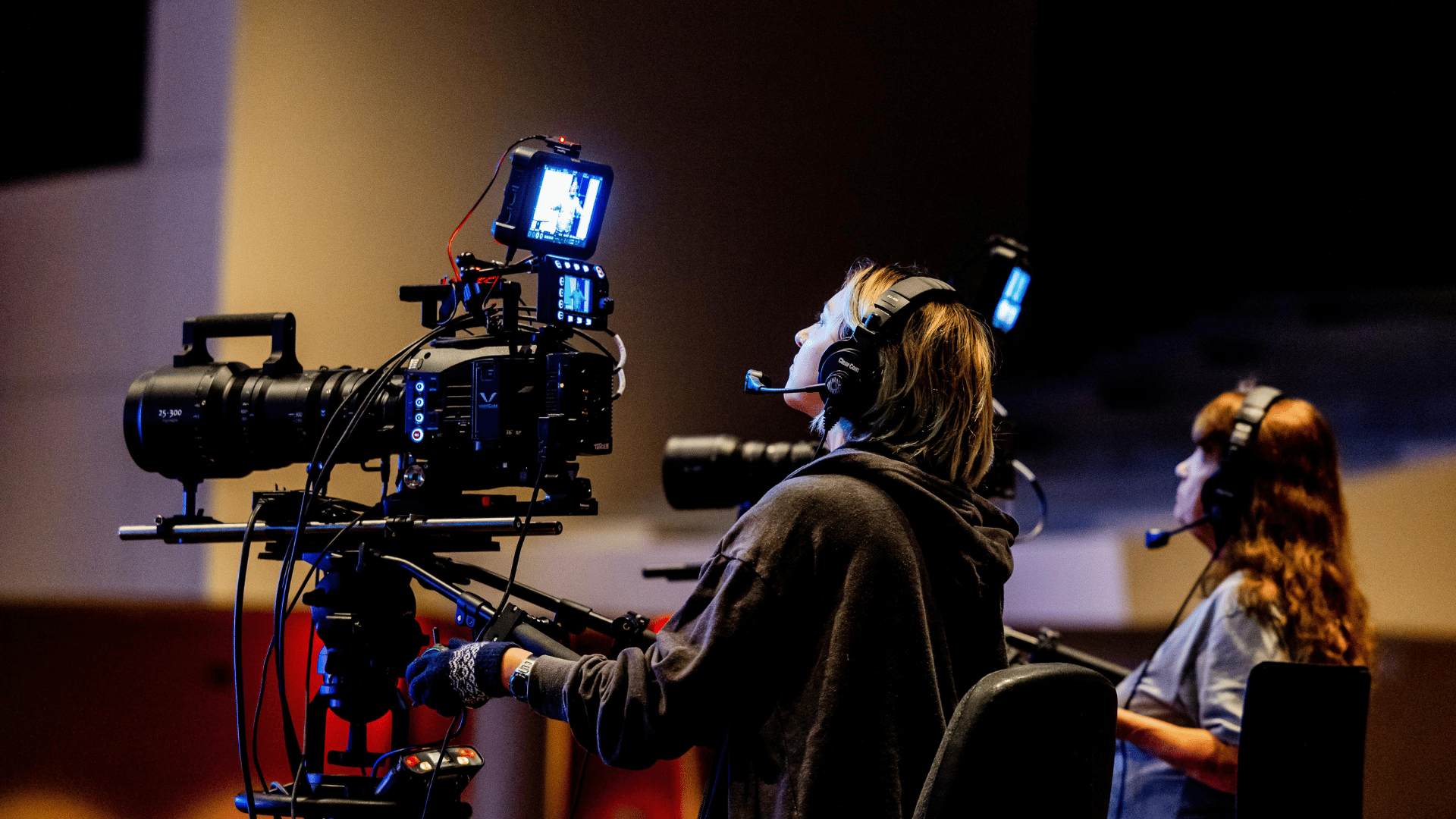
From Christopher Nolan’s The Odyssey to YouTuber Curry Barker’s $750,000 hit Obsession, 2026 has been remarkable for cinema, and IB Film teaches you the techniques behind standout films like these.
IB Film is a two-year Group 6 course at standard level (SL) and higher level (HL). You’ll study reading film, contextualizing film, production roles, and, at HL, collaborative filmmaking. Every task is coursework, with no exams.
In this guide, we’ll cover the syllabus, all four assessment tasks, how HL and SL compare, the real workload, and where the course can lead after high school.
Now, let’s roll the opening credits.
Key takeaways
- IB Film is a two-year Group 6 arts course, taught over 150 recommended hours at SL or 240 at HL, and it requires no previous filmmaking experience.
- Four syllabus components shape the course: Reading film (45 hours), Contextualizing film (45 hours), Exploring film production roles (60 hours), and Collaboratively producing film (90 hours, HL only).
- There’s no timed exam, as every task is coursework: a textual analysis of up to 1,750 words, a comparative study of up to 10 minutes, a film portfolio, and, at HL, a collaborative film of up to seven minutes with a report of up to 2,000 words.
- At HL, 60% of the grade is internal, which suits film production, screenwriting, or animation degrees, while SL’s 60% external weighting better supports media studies, communications, or English literature.
- The course is demanding because production, not exams, drives the workload, so a weekly editing slot, one digital folder for every clip, and early bookings for actors and locations keep deadlines manageable.
- Your film reel, completed films, and written analysis can form the start of a film school portfolio, opening routes to careers as a director, editor, cinematographer, screenwriter, or producer.
What is IB Film?
IB Film is an arts subject that belongs in Group 6, along with Dance, Music, Theatre, and Visual Arts. It’s the one Diploma group you can replace with a second subject from Groups 1 to 5.
The course aims to develop you as a proficient interpreter and maker of film. You’ll analyze how films create meaning, research films across cultures, and make short films as a director, editor, or cinematographer.
Standard level runs for 150 recommended teaching hours across the two years of the Diploma. Higher level runs for 240, with the extra 90 hours spent making original films in core production teams.
IB Film topics: what you’ll study
The syllabus is built on four official components, and your teacher chooses most of the films you’ll study within them.
In the next sections, we’ll break down each component and its teaching hours.
Reading film
At both SL and HL, this 45-hour component teaches you to read film as an art form. You’ll study narrative films, documentaries, TV shows, and shorts, learning how cinematography, editing, mise-en-scène, and sound create meaning. You’ll also consider cultural context, such as when, where, and how a film was made.
Classic exercises include breaking down the jump cuts in Breathless and the sound in Casablanca’s airport finale. These skills feed straight into the IB Film textual analysis, where you’ll analyze a film you haven’t studied in class.
Contextualizing film
Once you can read a single film closely, Contextualizing film shows how cinema has evolved across time, place, and culture. Over 45 hours at both levels, you’ll compare films from contrasting cultural contexts through areas of film focus.
Examples include the French New Wave, famous for its jump cuts, and film noir, a shadowy 1940s crime genre. Auteur theory is another, treating the director as a film’s main author.
One standout exercise maps the Western decade by decade, starting with The Great Train Robbery (1903). This work prepares you for the IB Film comparative study. There, you’ll research an area of film focus you haven’t studied in depth.
Exploring film production roles
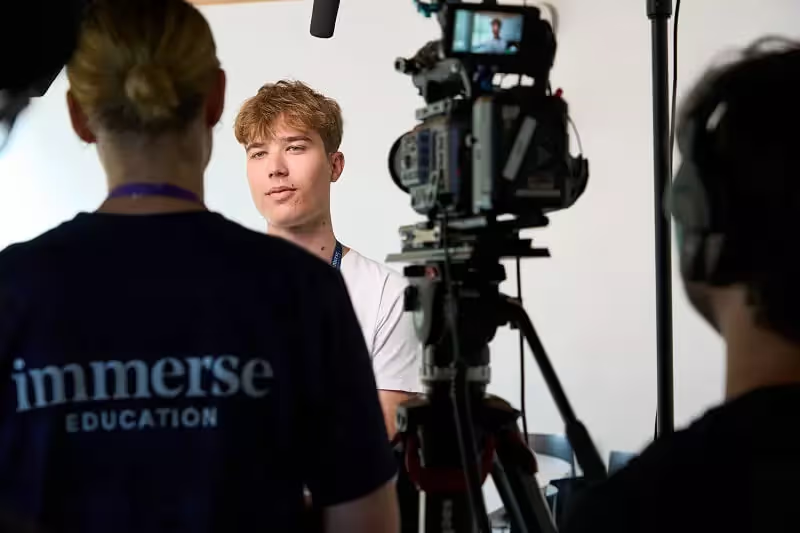
With analysis covered, the 60-hour production component puts the camera in your hands at both levels. You’ll work through pre-production, production, and post-production in at least three roles: director, writer, cinematographer, editor, or sound.
A sixth option lets you choose another creative role, such as animator or production designer. You’ll set a personal goal for each role, called a filmmaker intention, such as shooting a silhouette.
Exercises build from experiments, like recreating the warping dolly-zoom shot from Vertigo, to at least one completed film. Save everything from day one, since much of this work feeds your film portfolio.
Collaboratively producing film (HL only)
Where SL stops at three components, HL adds a fourth with 90 hours of team filmmaking. This is the main reason higher level carries a heavier practical workload. You’ll form a core production team to plan and create at least one original completed film.
Each member takes a chosen production role across pre-production, production, and post-production, working toward shared artistic intentions. You’ll then evaluate your own work in that role, the successes and challenges of the team, and whether the film met its intentions.


How IB Film is assessed
Every task is coursework, marked externally by IB examiners or internally by your teacher. SL is 60% external and 40% internal, while HL is 40% external and 60% internal.
In the next sections, we’ll break down what each of the four tasks involves.
Textual analysis
Your first external task, the IB Film textual analysis, is worth 30% at SL and 20% at HL. Each September, the IB releases a list of 10 prescribed films, valid for two years. Your teacher shortlists three to five, and you choose one you haven’t studied in class.
From that film, you’ll choose a continuous sequence of up to five minutes and analyze it in 1,750 words. You’ll explain how film elements such as lighting, framing, and sound create meaning and reflect the film’s cultural context.
Your teacher can comment on one draft before examiners mark it out of 28, with 12 marks for film elements.
Comparative study
Instead of an essay, the IB Film comparative study is a 10-minute presentation. It’s worth 30% at SL and 20% at HL. Within an area of film focus you choose, you’ll compare two films from contrasting cultural contexts. One must differ from your own time or place, and the other must contrast culturally with the first.
One example pairs The Cabinet of Dr. Caligari (1920) with Edward Scissorhands (1990) under German expressionism. Neither can be a film you’ve studied in depth or one from the textual analysis prescribed list. Once chosen, you can’t reuse either film in another IB Film task or your extended essay.
You’ll narrate without appearing on screen, opening with a 10-second title card listing your focus, films, and topic. Examiners mark it out of 32, with 12 marks each for task components and comparison.
Film portfolio
Moving from external to internal assessment, the film portfolio is SL’s heaviest task at 40% and worth 25% at HL. You’ll choose three production roles from the core five (director, writer, cinematographer, editor, and sound), or swap one for another creative role (such as animator or costume designer).
For each role, you’ll submit up to three portfolio pages and three minutes of reel footage. Your reel must include at least one completed film of up to three minutes, with no credits.
You can collaborate, but only with students from your school, and no two people can share a role. Each role earns up to eight marks, split evenly between pages and reel, for 24 in total.
Collaborative film project (HL only)
The final task is HL only, and at 35% of your grade, it’s the heaviest single task at that level. You’ll work in a core production team to plan and create an original completed film of up to seven minutes.
Alongside the film, you’ll submit a project report of up to 2,000 words, plus a list of all sources used. It’s designed to bring together everything you’ve learned across the course.
Plan early, because nothing from your film portfolio can be reused here. You’ll need two separate bodies of production work by the end of the course.
IB Film HL vs SL: how the two levels compare
HL adds a fourth component and a fourth assessment task, both built around team filmmaking. The other three tasks are identical at both levels, but their weightings change.
Here’s how the hours, tasks, and weightings line up across both levels.
Choose HL if you plan to study film, media, or animation, since the collaborative project adds a completed team film. SL suits you better if film supports a degree like English literature or journalism, where analysis outweighs production.
How hard is IB Film?
It’s a demanding course, but most of the pressure comes from production time rather than exams. Your portfolio reel runs up to nine minutes, including a completed film of up to three. HL adds a separate team film of up to seven minutes.
The academic side is equally rigorous, with a 1,750-word textual analysis and a 10-minute narrated comparative study. Both workloads run side by side, so good habits matter.
Set a weekly editing slot from your first term, and store every clip in one digital folder. Book actors and locations weeks ahead, and pick your comparative study films early. Teacher feedback covers one draft, so make it your strongest.
Where IB Film can lead at university and beyond
The course trains you as both critic and filmmaker. You’ll sharpen close reading and academic writing while learning camera, editing, and sound, and HL adds team production.
At HL, those skills lead most directly into film production, film studies, screenwriting, and animation degrees. Your reel and team film can form the start of a film school portfolio. To strengthen it, our guide to 15 film summer camps for high school students covers programs offering production experience.
If your focus is analysis, SL supports degrees such as media studies, communications, and English literature, where close reading matters.
Later, the course points toward careers as a director, editor, cinematographer, screenwriter, or producer. Its analytical side also suits film criticism, journalism, and marketing.
Join the Immerse Education 2027 Essay Competition
Follow the instructions to write and submit your best essay for a chance to be awarded a 100% scholarship.
Explore film with Immerse Education
Many students choose their IB subjects before they’ve ever studied film formally. That makes it hard to know whether you’ll enjoy analyzing films as much as watching them.
Our Film Studies Summer School in London closes that gap. Participants aged 15 to 18 explore film theory, history, criticism, genre, narrative structure, and screenwriting, taught by industry professionals.
Industry visits add a practical edge. Past visits have included Chocolate Films, where participants rotated through directing, camera, and presenting roles. It’s a close match for the production side of IB Film.
Want to explore animation as well? Our Film & Animation Summer School in Tokyo covers directing, cinematography, storyboarding, editing, sound design, and stop-motion animation. It’s a production-led contrast to the theory focus in London.
By the time you choose your IB subjects, you’ll know whether film deserves two years of your time, and if it does, you’ll begin IB Film with a head start in both analysis and production.
FAQs
What do you do in IB Film?
You analyze films and make your own. The course covers four areas: reading film, contextualizing film, exploring production roles, and, at HL only, collaboratively producing film, across 150 hours at SL or 240 at HL.
Do you need filmmaking experience to take IB Film?
No, the IB states that the course requires no previous experience at either SL or HL. You’ll learn camera, editing, and sound skills through exercises and experiments before creating at least one completed film.
Is there an IB Film exam?
No, IB Film has no timed exam. Every task is coursework: the textual analysis and comparative study are marked by IB examiners, while the portfolio and HL collaborative project are marked by your teacher.
Is IB Film a hard class?
Yes, IB Film is demanding, but the challenge comes from time management rather than exams. Filming portfolio clips, editing a reel of up to nine minutes, and writing a 1,750-word analysis require steady weekly work.
Is IB Film HL worth it?
IB Film HL is worth it if you’re targeting film production, screenwriting, or animation degrees. It adds a 90-hour collaborative component and a team film project worth 35%, which can strengthen a creative portfolio.
How do you get a 7 in IB Film?
Getting a 7 means knowing where marks sit. Film elements earn 12 of 28 textual analysis marks, comparing and contrasting earns 12 of 32 comparative study marks, and each portfolio role earns eight of 24.
Can IB Film help with film school applications?
Yes, IB Film can support film school applications. Your film reel, completed films, and written analysis can form the start of a creative portfolio, though you should check each program’s specific portfolio requirements first.
Conclusion: choosing IB Film with confidence
Whether you dream of directing the next Odyssey or shooting a breakout hit on a tiny budget, IB Film is where it starts.
Choose HL if you’re targeting film production, screenwriting, or animation degrees, where a strong creative portfolio really counts. SL suits you better for media studies, communications, or English literature, where analysis matters more.
Either way, the best preparation is practical: pick up a camera, shoot something short, or simply experience film study for yourself.
Our Film Studies Summer School in London combines film theory and screenwriting with hands-on industry visits, so you can choose IB Film with confidence.





Unlock Inspiring Opportunities with the Immerse Education Newsletter
Join our newsletter to stay ahead with exclusive updates, exciting programme highlights, and expert insights from the world of immersive education.
Learn how Immerse can transform your life
An in-depth overview of our university and career preparation programmes
Get a glimpse into the life of an Immerse participant
Find the right programme for you with sample timetables, location showcases, and more