IB Global Politics Guide: What to Know Before You Choose

Every decision about school funding, climate targets, and transit fares starts with someone holding power, and IB Global Politics teaches you to ask who holds it, why they use it as they do, and how their choices affect you.
IB Global Politics is a Group 3 subject that follows those questions from local communities to global institutions. At SL or HL, you’ll explore them through human rights, development, and conflict.
In this guide, we’ll discuss the 2026 syllabus, each paper and the engagement project, HL vs SL, whether the course is hard, and how it compares with AP US Government and Politics.
Let’s map it out.
Key takeaways
- IB Global Politics is a Group 3 course built on four key concepts: power, sovereignty, legitimacy, and interdependence, applied from local communities to global institutions.
- The current course was first assessed in May 2026, replacing the old HL oral presentations with Paper 3 and expanding the HL challenges from six areas to eight.
- Every student studies a six-topic core and three thematic studies (rights and justice, development and sustainability, and peace and conflict), while HL students research at least two case studies across at least two of eight challenge areas, such as borders, health, and technology.
- SL students sit Papers 1 and 2 for 70% of the grade, HL students add Paper 3 for 80%, and success depends on building evidence-based arguments under timed conditions.
- Both levels complete a 2,000-word engagement project on a political issue they choose, worth 30% at SL and 20% at HL, with HL students adding a recommendation of up to 400 words.
- HL takes 240 teaching hours versus 150 at SL and suits students heading into Political Science or International Relations, while AP US Government focuses on US institutions through one 3-hour exam.
What is IB Global Politics?
Global Politics is an IB Group 3 (Individuals and Societies) course on how power is gained, used, and challenged. Every unit connects back to the four IB Global Politics key concepts: power, sovereignty, legitimacy, and interdependence.
You study these concepts through real political cases rather than theory alone. One class could examine a local housing protest, a border dispute, or a UN climate summit. The IB lets teachers shape the course around current events and student interests.
SL runs for 150 teaching hours and HL for 240. The extra HL time goes into researching global political challenges, such as health, technology, and borders. At both levels, you also complete an engagement project on a political issue you care about.


What changed in the IB Global Politics syllabus for 2026?
The current course was first taught in August 2024 and first assessed in May 2026, replacing the 2017 version.
Here are the main changes you’ll notice when comparing the two versions side by side.
If you need more detail on these changes, check out the IB’s latest Global Politics curriculum updates.
IB Global Politics topics: what you’ll study
Both levels share a core and three thematic studies, HL adds an extension, and schools decide how to combine them.
In the sections below, we’ll cover the core, the thematic studies, and the eight HL challenges.
The core: understanding power and global politics
Every SL and HL student studies the core, which gives you the vocabulary for analyzing any political issue.
Here are the six topics it covers.
- Framing global politics: The actors who shape political outcomes, from states and NGOs to companies and individuals.
- Power: Hard, soft, and smart power, such as military strength versus a country’s cultural influence abroad.
- Sovereignty: A state’s authority over its own territory, and threats to it like secession movements.
- Legitimacy: Why people accept a government’s right to rule, and how that acceptance can be lost.
- Interdependence: Global governance in action, from international law and treaties to the UN Security Council.
- Theoretical perspectives: Different theories and models for explaining the same political event from competing points of view.
The three thematic studies and what each explores
Building on the core, the thematic studies apply its ideas to three political areas, all examined in Paper 2.
Here are the three themes, each with an example you could study.
- Rights and justice: Debates over whether human rights are universal. A classic case is the Universal Declaration of Human Rights.
- Development and sustainability: Ways to define development beyond GDP growth. A widely used benchmark is the UN’s 17 Sustainable Development Goals.
- Peace and conflict: How peace is built after war. One illustration is the International Criminal Court’s work prosecuting war crimes.
HL extension: the eight global political challenges
If you choose HL, you’ll spend an extra 80 hours on global political challenges, all assessed in Paper 3. You’ll research at least two case studies of your choice, covering at least two of the eight areas.
Here are the eight areas, each with an example of the kind of case you could research.
- Borders: Borders often stay contested long after they’re drawn. India and China, for instance, have disputed their Himalayan frontier for decades.
- Environment: Climate change forces countries to decide who pays for the damage it causes. At the 2022 UN climate summit, that debate led to a new global fund.
- Equality: Some groups hold far less political power than others. To change that, many countries now use gender quotas to bring more women into parliament.
- Health: COVID-19 vaccines reached wealthier countries months before poorer ones. That gap showed how much access to healthcare depends on politics.
- Identity: A shared language, history, or culture can bind people into a political community. In Catalonia, that sense of identity has fueled repeated campaigns for independence from Spain.
- Poverty: Governments try many approaches to reducing poverty, and some attach conditions to support. Brazil’s Bolsa Família, for example, pays low-income families when their children attend school.
- Security: When the 2017 WannaCry cyberattack disrupted UK hospitals, it showed that security threats now reach far beyond armies and invasions.
- Technology: Artificial intelligence is shifting power toward the companies that build it. In response, the European Union passed the AI Act, the first major law of its kind.
How IB Global Politics is assessed
SL students sit two exams worth 70%, HL students sit three worth 80%, and the engagement project covers the rest.
Below, we break down each paper and the engagement project, with the timing and weighting of each.
Paper 1: source-based questions on the core
Paper 1 is a 1 hour 15 minute exam on the core, shared by SL and HL. It’s worth 30% of your grade at SL and 20% at HL.
You’ll read four sources, which can include texts, images, diagrams, or infographics, and answer four compulsory questions worth 25 marks. The final question carries 12 marks and asks you to evaluate the sources and combine them with your own knowledge.
Strong answers link each source to a core concept, such as legitimacy or sovereignty, rather than simply summarizing it.
Paper 2: extended responses on the thematic studies
Essay writing takes center stage in Paper 2, a 1 hour 45 minute exam that’s identical at SL and HL. It counts for 40% of your grade at SL and 30% at HL.
You’ll write two essays for a maximum of 30 marks. One focuses on a single thematic study, and the other connects ideas across the themes and the core.
Expect questions like “To what extent is addressing structural violence increasingly important to achieving lasting peace?” To score well, take a clear position and back it with specific cases.
Paper 3: global political challenges (HL only)
Reserved for HL students, Paper 3 is a 1 hour 30 minute exam worth 30% of the final grade.
The exam gives you one source on a global political challenge and three questions worth 28 marks. You answer them using cases you’ve researched yourself.
Prompts can ask you to “evaluate the effectiveness of international governmental organizations for addressing global political challenges,” using two cases. That’s why building detailed case studies from your first term pays off here.
The engagement project (internal assessment)
Your teacher marks the engagement project, the course’s internal assessment, and the IB then moderates a sample. It makes up 30% of your grade at SL and 20% at HL.
You choose a political issue you care about, often in your community, and explore it through research and direct engagement. For instance, you could investigate why your town cut a bus route by interviewing council members and affected riders.
The IB recommends 25 hours for the project at SL, with more time at HL. Your findings go into a 2,000-word report. It justifies your choice of issue, explains your methods, links the issue to course content, and analyzes stakeholders’ views.
HL students also write a separate recommendation of up to 400 words, proposing a realistic way to address the issue. In the bus route example, that could mean suggesting what the council should do next, backed by your research.
Every paper and the engagement project reward the same skill: building a clear argument from evidence. That skill carries straight into the 4,000-word research project covered in our IB Extended Essay guide.
Join the Immerse Education 2027 Essay Competition
Follow the instructions to write and submit your best essay for a chance to be awarded a 100% scholarship.
IB Global Politics HL vs SL: how the two levels compare
The biggest differences between SL and HL come down to teaching time, Paper 3, and the weight each component carries.
Here’s a closer look at how they differ.
HL suits you if politics will be the focus of your degree, such as Political Science or International Relations. If it plays a supporting role, as in an Economics or Journalism degree, SL covers the core with less workload.
Is IB Global Politics hard?
It’s challenging but manageable, especially if you enjoy reading and debate. The hardest parts are the volume of reading, writing timed essays, and keeping up with current events.
Questions rarely have one right answer. “Discuss the view that development always results in inequalities,” for instance, asks you to weigh both sides with evidence.
Following the news and logging useful examples each week makes the workload much easier to manage, especially at HL.
IB Global Politics vs AP US Government and Politics
US students often weigh this course against AP US Government and Politics, yet each studies politics through a different lens.
Here’s how they compare on focus, length, and assessment.
- AP US Government and Politics: Designed to match an introductory college course, it focuses on the US Constitution, Congress, the courts, and elections. Your score, from 1 to 5, comes from one 3-hour exam, with 55 multiple-choice and four free-response questions weighted equally.
- IB Global Politics: Over two years, you’ll examine power across local, national, and global politics, from human rights to conflict. You’re graded 1 to 7 on written exams plus an engagement project marked by your teacher.
In short, AP gives you a focused grounding in how the US government works. IB Global Politics takes a wider view, building research and analysis skills through global issues over two years.
Explore international relations with Immerse Education
You choose between SL and HL before you’ve studied politics in class, so the decision can feel like a guess. Testing your interest first gives you a clearer answer.
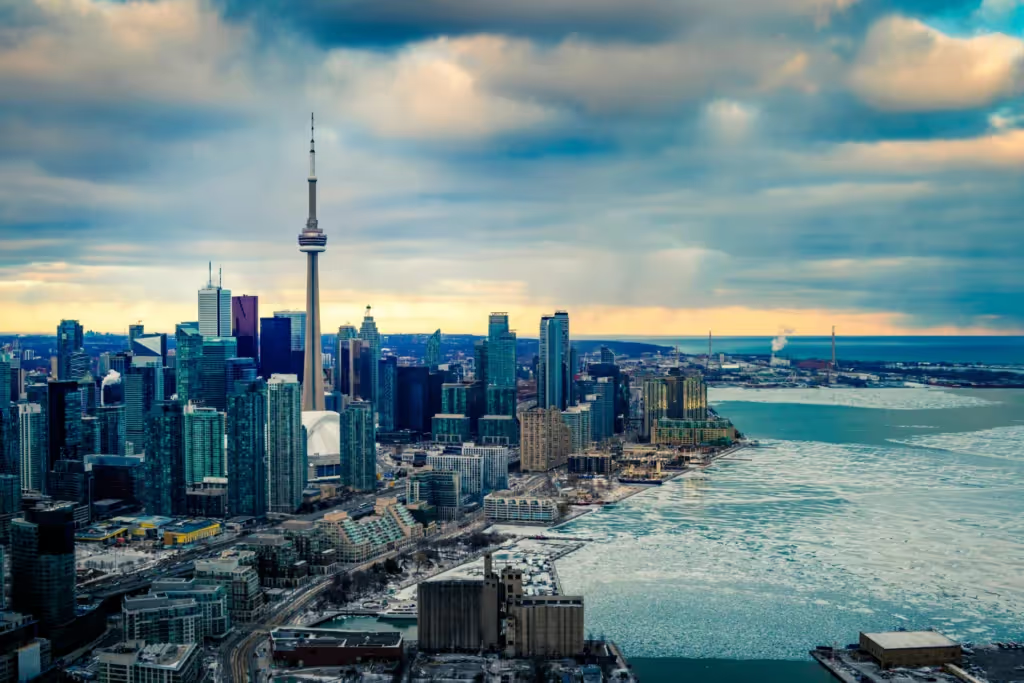
Our International Relations Summer School lets you do exactly that over two weeks in Oxford, Cambridge, or Toronto. You’ll apply realism, liberalism, and critical theory to the Cold War, decolonization, and diplomacy. That’s the same kind of analysis IB Global Politics asks for.
Tutors with backgrounds in diplomacy and global organizations guide you through an international relations simulation and a personal research project, giving you a practical way to find out whether HL is the right fit.
FAQs
What is global politics in simple terms?
Global politics is the study of how power works between people, governments, and international organizations. It explains why decisions about issues like climate, trade, and human rights happen the way they do.
Do you need prior knowledge to take IB Global Politics?
No, you don’t need any prior study of politics. The course builds key concepts from the start. Curiosity about current events and a willingness to read widely matter more than background knowledge.
How long is the IB Global Politics engagement project report?
The engagement project report has a 2,000-word limit at both SL and HL. HL students also write a separate recommendation section of up to 400 words, proposing how the issue could be addressed.
What are the grade boundaries for IB Global Politics?
Grade boundaries for IB Global Politics change every exam session, so there’s no fixed score for each grade. The IB sets them after marking, based on how difficult that session’s papers proved.
Is IB Global Politics good for university applications?
Yes, it shows admissions teams you can read critically, write at length, and analyze evidence. It’s especially relevant for Political Science, International Relations, Law, and PPE, where you’ll build on the same concepts and debates.
Do US colleges give credit for IB Global Politics?
Many US colleges do, mainly for HL scores of 5 or higher, but policies vary widely. Check each college’s IB credit page, as some don’t award credit for SL results.
Conclusion: choosing IB Global Politics with confidence
The right Group 3 choice comes down to fit, and IB Global Politics suits students who follow the news closely, enjoy debate, and build arguments from evidence.
Choose HL if politics will anchor your degree and you enjoy independent research, or SL if it supports another field like Economics or Journalism in college.
Whichever level you take, the habit of questioning who holds power, and why, will stay with you long after your exams.
Still deciding? Spend two weeks exploring diplomacy, global governance, and real political debates at our International Relations Summer School, then choose your IB level with confidence.





Unlock Inspiring Opportunities with the Immerse Education Newsletter
Join our newsletter to stay ahead with exclusive updates, exciting programme highlights, and expert insights from the world of immersive education.
Learn how Immerse can transform your life
An in-depth overview of our university and career preparation programmes
Get a glimpse into the life of an Immerse participant
Find the right programme for you with sample timetables, location showcases, and more