IB Theatre Guide: What to Know Before Choosing It at HL or SL

Ask most people what IB Theatre involves, and they’ll picture you under a spotlight. And while that’s true, the course also puts you behind the lighting desk, in the director’s chair, and in a rehearsal room where your own ideas become the show.
That’s because IB Theatre is a Group 6 subject where you research world theatre traditions, plan a play’s staging, and create original performances, with three tasks at SL, four at HL, and no written exam.
In this guide, we’ll discuss the current course, first assessed in 2024, from the syllabus and each assessment task to workload and future options. We’ll also flag outdated advice, like the retired Director’s Notebook.
Let’s set the stage.
Key takeaways
- As a Group 6 (The Arts) subject, IB Theatre has no written exam, so your whole grade comes from coursework built over two years.
- SL students complete three tasks over 150 teaching hours, while HL students complete four over 240 hours, adding a Solo Theatre Piece worth 35%.
- Both levels share three syllabus areas: staging play texts, exploring world theatre traditions, and collaboratively creating original theatre. HL adds a fourth area, performing theatre theory, with 90 extra teaching hours.
- IB Theatre is demanding in short bursts, especially before filmed deadlines, but a weekly theatre journal routine keeps the workload steady. Log one research note, one rehearsal experiment, and one reflection each week.
- There’s no AP Theatre course or exam, which makes IB Theatre one of the few externally assessed ways to study theatre in US high schools.
- HL fits college plans like a BFA in Acting, a BA in Drama, or a Theatre Design degree. SL supports degrees such as English Literature, where close reading matters, and Law, where persuasive speaking counts.
What is IB Theatre?
Group 6 (The Arts) is where IB Theatre sits, alongside Dance, Film, Music, and Visual Arts. You make theatre as a creator, designer, director, and performer, not just from the acting stage.
You’ll propose how to stage a play, research a world theatre tradition, and devise an original piece with your ensemble. HL students add a solo piece built on a theorist’s ideas.
The course runs over two years: 150 teaching hours at SL and 240 at HL. You don’t need previous experience, and a required theatre journal tracks your growth through research, rehearsals, and reflections.
This research carries into the DP core. You can write your Extended Essay in theatre, but it must be new work. You can’t reuse anything you’ve already submitted for a theatre task. You’ll also need a clear research question, and our IB Extended Essay guide shows you how to write one.




IB Theatre HL vs SL: which should you choose?
Your choice between HL and SL comes down to one extra task, 90 extra hours, and your university plans.
Here are the key differences between the two levels.
HL suits you better if you’re aiming for a BFA in Acting, a BA in Drama, or a Theatre Design degree. Its 35% solo piece builds independent performance work for auditions. Choose SL if theatre supports English Literature, through close reading of play texts, or Law, through confident public speaking.
The IB Theatre syllabus: what you’ll study
SL and HL share three syllabus areas, each tied to one assessment task, and HL adds a fourth on theory.
In the sections below, we’ll go into more detail about each syllabus area.
Staging play texts
This area teaches you to read a play like a director and designer, with 45 teaching hours at both levels. You’ll identify a play’s key ideas, then decide how set, lighting, costume, and sound could communicate them.
You’ll also stage single moments to create what the IB calls TEAM: tension, emotion, atmosphere, and meaning. Watching live theatre, in person or online, shows you how professionals achieve those effects.
Exploring world theatre traditions
Theatre looks very different from Tokyo to Kerala, and you’ll explore that range through both research and practice. Take Kathakali, a dance-drama from southern India performed in vivid face paint.
You’d start by reading about where Kathakali comes from and why it’s performed. Then you’d try its mudras, the hand gestures performers use to tell the story without words.
The IB’s approved list has more than 20 traditions, from British pantomime to Japan’s Kabuki, famous for bold makeup. Whichever you choose, you’ll reflect on what it teaches you about why people make theatre.
Collaboratively creating original theatre
Every piece starts with a spark, such as a photo, a news headline, or a theme like belonging. With your ensemble, the group you create with, you’ll turn that spark into original theatre.
This area gets 60 teaching hours at both levels, the most of any shared area. You’ll study how a professional theatre company builds new work, then test those methods in rehearsal.
Everyone performs, but you’ll also shape the piece by writing scenes, designing, or directing. After the show, you’ll gather audience feedback to check whether your piece had the effect you intended.
Performing theatre theory (HL only)
Should an audience cry with a character, or question what they’re watching? Theatre practitioners, the people whose methods shaped modern theatre, split on this. Konstantin Stanislavski trained actors to show truthful emotion, while Bertolt Brecht pushed audiences to think critically.
HL students spend 90 teaching hours exploring theorists like these. You’ll turn one idea, such as Brecht’s actors speaking directly to the audience, into your own short performance.
How IB Theatre is assessed
Like Dance, Film, Music, and Visual Arts, IB Theatre has no written exam, so your grade comes entirely from coursework.
Below, we’ll break down each of the four tasks.
Production Proposal
Worth 30% at SL and 20% at HL, the Production Proposal is the only task your teacher marks. You’ll choose a published play you haven’t studied, then plan how you’d stage the entire thing.
That staging stays on paper, presented in up to 12 pages of writing and visuals. Your visuals might include storyboards and set designs, while your writing stays under 4,000 words.
Plan to split those 12 pages evenly: four each on your ideas, overall design, and one key moment. That moment shows how acting and design choices create tension, emotion, atmosphere, or meaning. Your teacher marks it out of 20 and can comment on only one draft.
Research Presentation
Unlike the Production Proposal, the IB Theatre research presentation happens on camera and is marked by IB examiners. It carries the same weight, at 30% for SL and 20% for HL.
You’ll choose an unfamiliar tradition from the IB’s list and focus on one convention. In Kabuki, for example, that could be the mie, a frozen, dramatic pose. In up to 15 minutes, you’ll explain its cultural context and demonstrate what you learned by trying it.
You can film it in one continuous take or as three five-minute sections recorded over time. Only you appear on screen, and you’ll cite sources aloud or on slides as you go. That habit builds the academic research skills universities expect.
Collaborative Project
Your grade here depends on your own work, even though you create the piece as a group. The IB Theatre collaborative project is worth 40% at SL, your biggest task, and 25% at HL.
Your ensemble builds a 7-10 minute original piece from a starting point you choose, then performs it live. Everyone must perform, and you’ll also contribute as a writer, designer, or director.
After the show, you’ll submit its video alongside your own report of up to 10 pages and 4,000 words. That report explains your contributions and whether the piece held audience attention the way your ensemble intended.
Solo Theatre Piece (HL only)
Here, you’re the whole company: writer, director, designer, and performer in one. At 35%, the Solo Theatre Piece is the largest single part of your HL grade.
You’ll research a theorist you haven’t studied before and pick one specific aspect of their theory. You’ll then create a 4-7 minute solo piece that shows that idea working in front of a live audience.
Alongside the performance, you’ll submit a report of up to 2,500 words. Your recording must be continuous and unedited, so you can’t cut out mistakes. Choose your theorist early, leaving time to research, rehearse, and gather audience feedback for your report.
Is IB Theatre hard?
It’s demanding, but in bursts rather than all year. Workload spikes before deadlines for filmed tasks, and HL adds an unfamiliar theorist to research. Your rehearsals also depend on everyone in your ensemble.
The best fix is a weekly theatre journal routine: one research note, one rehearsal experiment, and one reflection. That record feeds your reports, so you’re never rebuilding months of work from memory.
IB Theatre vs AP vs A-level Drama
There’s no AP Theatre course or exam, only a Pre-AP Theatre foundation course.
A-level Drama and Theatre, the UK’s closest equivalent, works differently. AQA’s version ends with a three-hour written exam on set plays and live theatre, worth 40%. IB Theatre replaces that exam with recorded coursework, so your grade reflects two years of work instead of one sitting.
Join the Immerse Education 2027 Essay Competition
Follow the instructions to write and submit your best essay for a chance to be awarded a 100% scholarship.
Where IB Theatre can take you
Each assessed task builds skills colleges and employers value. Presenting research on camera, for example, teaches you to explain complex ideas clearly. Building a piece with your ensemble then adds teamwork under a firm deadline.
At HL, those skills lead naturally to a BFA in Acting, a BA in Drama, or a Theatre Design degree. At SL, they support English Literature, where close reading matters, and Law, where persuasive speaking counts.
Later, IB Theatre can lead to roles such as actor, director, stage manager, or lighting designer. Its skills also transfer to film and TV, arts administration, teaching, and marketing.
If you want to learn more about these careers and how to reach them, read our Career Exploration blogs.
Build your creative skills with Immerse’s Film Studies course
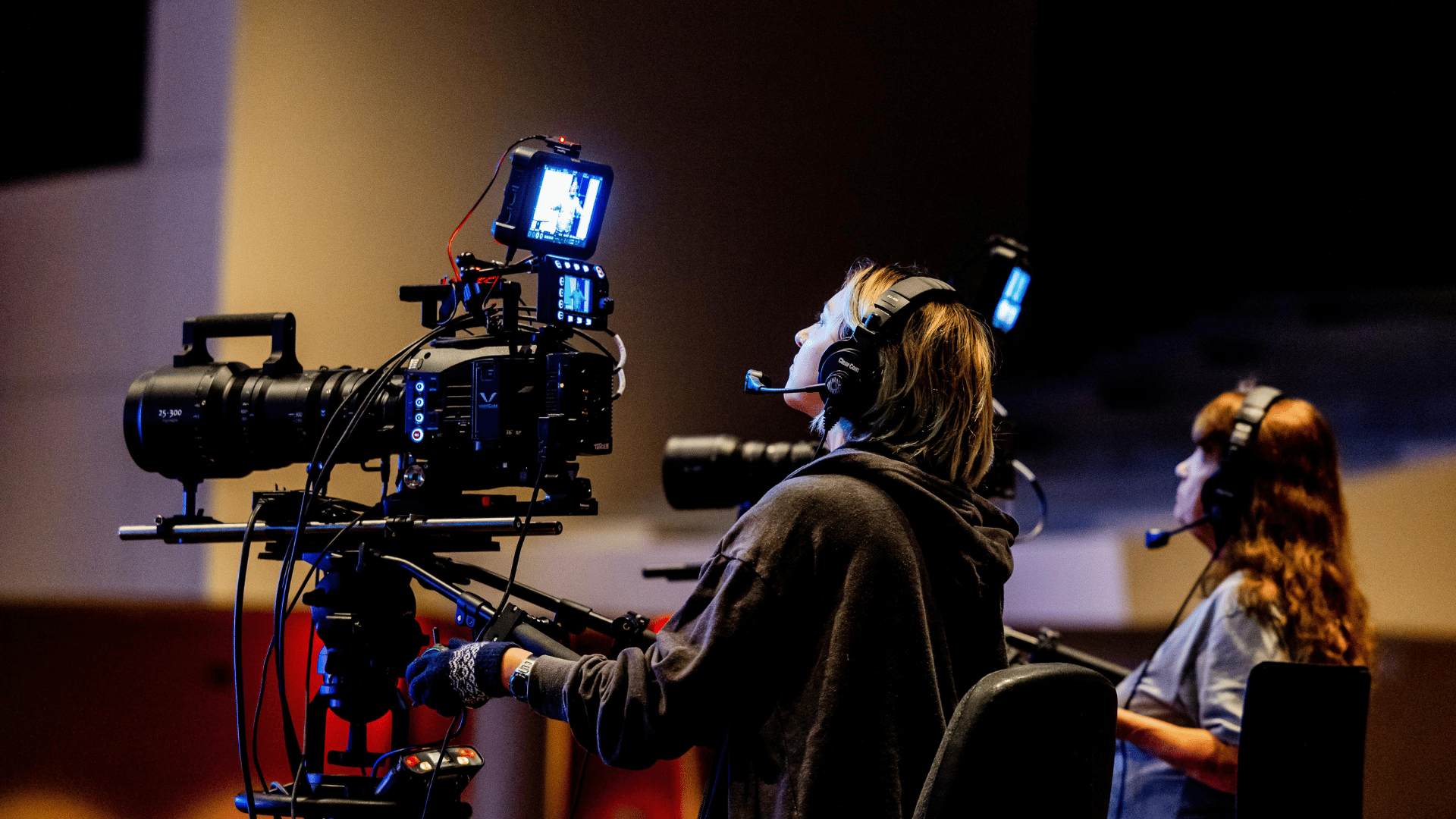
Directing for a live audience is only half of modern storytelling. Screens demand different skills, like framing shots, writing for the camera, and editing, which stage-focused courses don’t cover.
Our Film Studies Summer School in London, for ages 15-18, helps close that gap. You’ll explore directing, cinematography, and scriptwriting, building on the staging and ensemble skills IB Theatre develops.
Sample experiences include a visit to Framestore, the visual effects studio whose work appears in the Harry Potter films. It’s a rare look behind the screen before college. You’ll return with fresh creative work and industry insight to strengthen your college applications.
FAQs
What do you do in IB Theatre?
In IB Theatre, you make theatre as a creator, designer, director, and performer. You’ll plan a play’s staging, research world theatre traditions across cultures, and create original work with an ensemble.
Do you need acting experience to take IB Theatre?
No, the course requires no previous experience at SL or HL. You will perform, though, since every ensemble member appears in the Collaborative Project, and HL students also present a 4-7 minute solo piece.
Is IB Theatre HL or SL harder?
HL is harder because it adds the Solo Theatre Piece, worth 35% of the grade, and 90 extra teaching hours on theory. SL covers the same three core tasks, each carrying more weight.
What does the term “theatre practitioners” mean?
Theatre practitioners are the directors, actors, and writers whose methods shaped how theatre is made. One of the most influential is Konstantin Stanislavski, who built a system to help actors show truthful emotion.
Does IB Theatre have a written exam?
No, IB Theatre has no written exam at SL or HL. Your grade comes from coursework: a production proposal, a filmed research presentation, an ensemble performance, and, at HL, a solo piece.
Is there an AP equivalent to IB Theatre?
No, the College Board offers no AP Theatre course or exam, only a Pre-AP Theatre foundation course. IB Theatre fills that gap for students at IB schools, with coursework largely marked by IB examiners.
Conclusion: making your decision
Few IB subjects let you earn your whole grade by creating, researching, and performing, which is why IB Theatre deserves a deliberate choice.
Take HL if theatre sits at the heart of your college plans and you’re ready for the 35% solo piece. Choose SL if you want those skills to support another degree, such as English Literature.
Either way, treat it as a serious academic subject, not just an arts elective, and start your theatre journal from day one.
Ready to take your storytelling from the stage to the screen? Join our Film Studies Summer School in London and learn how directors tell stories through the camera.






Unlock Inspiring Opportunities with the Immerse Education Newsletter
Join our newsletter to stay ahead with exclusive updates, exciting programme highlights, and expert insights from the world of immersive education.
Learn how Immerse can transform your life
An in-depth overview of our university and career preparation programmes
Get a glimpse into the life of an Immerse participant
Find the right programme for you with sample timetables, location showcases, and more