15 Free Winter Programs for High School Students

TL;DR
This list covers 15 free winter programs for high school students, spanning structured research placements, girls-only STEM programs, and community volunteer roles. Several research programs, like Penn State’s College of Medicine internships and the Cleveland Clinic’s lab opportunities, have no fixed deadline since you arrange a placement directly with a faculty mentor. Others, like Fox Chase’s Immersion Science Program, admit as few as 16 students into an 11-week structured cohort. Immerse Education also offers a fully remote Online Research pathway, open to students aged 13 to 18 worldwide, with a bursary available for those who need it.
Winter programs for high school students offer a unique opportunity to transcend traditional classroom learning. As a curious student, you may be wondering how these programs can enhance your academic and personal growth. Free winter programs are designed to immerse you in dynamic fields like science, technology, art, and humanities. You’ll engage in practical projects, connect with industry experts, and sharpen essential skills such as critical thinking, communication, and collaboration.
Participating in these programs often involves working on team projects, where you’ll gain experience using tools and technologies that professionals utilize every day. Whether you’re designing a website, conducting scientific experiments, or creating art, you will not only build competencies but also create a tangible portfolio of your work.
How do you choose the right winter programs for high school students?
With countless options available, selecting a winter program that suits your interests and goals can feel overwhelming. Some programs are broad in focus, catering to a wide array of general interests, while others go deeply into specific topics, providing an intensive learning experience. It’s essential to evaluate not only the subjects covered but also the structure and mentorship offered by the program, as these factors can significantly influence your overall experience.
What’s exciting is that many reputable universities and organizations host a variety of free winter programs explicitly for high school students. Programs can range from in-depth research placements in biomedical labs to volunteer roles in community service and healthcare. Many of these initiatives are competitive yet accessible, often coming with stipends or other means of support, allowing you to gain valuable experience without the burden of financial costs.
To help you choose, we’ve drawn up a list of 15 free winter programs for high school students.
15 Free Winter Programs for High School Students
1. Construction + Community (Girls Garage)
Location: Girls Garage, Berkeley, CA
Cost/Stipend: Free
Program Dates: Offered as part of Girls Garage’s three after-school terms (fall, winter, spring); specific winter 2026 dates are set closer to the term
Deadline: December 1st
Eligibility: High school girls and gender-expansive youth in grades 9-12; international eligibility not specified
Construction + Community is a program offered by Girls Garage in Berkeley, CA, designed for high school girls and gender-expansive youth with an interest in architecture, construction trades, design, and engineering. You will learn essential technical construction skills through involvement in community service projects that aim to benefit local neighborhoods.
The program offers practical experience in architecture, construction trades, design, and engineering, providing a rich learning environment. You will work collaboratively with peers and mentors to design and complete meaningful projects. This experience can open doors to college pathways or careers in STEM fields and skilled trades. By the end of the program, you’ll develop teamwork, problem-solving, and practical technical skills.
Why it stands out: The program is free for participants and focuses on community benefit through construction projects, allowing you to gain valuable skills while making a difference in your neighborhood.
2. Immerse Education’s Online Summer School

Location: Fully remote
Cost: Varies; summer school scholarship available through our bursary programme
Acceptance rate/cohort size: Selective; 1:1 learning
Application Deadline: Rolling admissions; multiple dates throughout the year
Program Dates: Start any time; 10-15 hours of 1:1 tutorials over 2-3 weeks
Eligibility: Students around the world aged 13-18 (accredited options require age 14+)
Immerse Education's Online Research pathway offers high school students the opportunity to conduct rigorous research with tutors from Oxford, Cambridge, and Ivy League universities. You will work with your tutor to explore a subject of your choice in depth and write an academic research paper. The programme is taught 1:1, and on the Accredited option (ages 14+) you can earn 8 UCAS points or 3 US college credits.
The virtual research program is offered in over 20 subjects, including artificial intelligence, chemistry, psychology, economics, computer science, creative writing, philosophy, and more. At the end of the program, you’ll receive a written evaluation from your tutor and an opportunity to publish your research, with guaranteed submission to a high-school research journal on the Publication option (acceptance is at the journal’s discretion) and, on the Accredited and Publication options, an invitation to present at the Immerse Online Symposium.
Why it stands out: You’ll get access to 1:1 Oxbridge- or Ivy-style research supervision culminating in a publishable academic paper.
3. Lumiere Research Scholar Program
Location: Remote, you can participate in this program from anywhere in the world!
Cost: Varies depending on program type. Full financial aid available.
Application Deadline: Varies by cohort.
Program Dates: Varies by cohort: summer, fall, winter, or spring. Options range from 12 weeks to 1 year.
Eligibility: You must be currently enrolled in high school and demonstrate a high level of academic achievement.
The Lumiere Research Scholar Program is a rigorous research program tailored for high school students. The program offers extensive 1-on-1 research opportunities for high school students across a broad range of subject areas. The program pairs high school students with Ph.D. mentors to work 1-on-1 on an independent research project.
At the end of the 12-week program, you’ll have developed an independent research paper! You can choose research topics from subjects such as psychology, physics, economics, data science, computer science, engineering, chemistry, international relations, and more. You can find more details about the application here, and check out students’ reviews of the program here and here.
Why it stands out: You get 1-1 mentorship with a Ph.D. mentor and produce an independent research project by the end.
4. Girls Who Code Clubs Program
Location: Local Clubs hosted at schools, libraries, and community centers across the United States, with an international Clubs program also available
Cost/Stipend: Free
Program Dates: Ongoing; winter participation during the school year (1-2 hours weekly)
Deadline: Rolling basis
Eligibility: Girls (and, at many locations, non-binary students) in grades 3-12 domestically, or ages 11-18 through the international Clubs program
The Girls Who Code Clubs Program offers a supportive environment where girls from grades 3-12 can explore coding at their own pace. Through a flexible curriculum, you will engage in various practical activities that promote project-based learning. Participants can choose their learning paths from a comprehensive library of tutorials, allowing for personalized exploration of computer science topics.
The program prioritizes fostering confidence in technology and encourages students to use their skills to tackle challenges that matter to their communities. As you navigate different coding projects, you’ll collaborate with peers, enhancing teamwork and communication abilities. By the end of the program, you’ll develop problem-solving, critical-thinking, and coding skills.
Why it stands out: The Girls Who Code Clubs Program uniquely offers free, flexible coding education designed specifically for girls in grades 3 through 12, empowering participants to choose their own projects from an extensive library of tutorials.
5. Fox Chase Cancer Center Immersion Science Program
Location: Fox Chase Cancer Center, Philadelphia, PA
Cost/Stipend: Cost-free to participants
Program Dates: 11 weeks; early January through mid-March
Deadline: Mid-to-late October (exact date varies by cycle)
Eligibility: Must be 16 years old, have completed high school chemistry and biology, and live in the Philadelphia tri-state area; not open to international students
The Fox Chase Cancer Center Immersion Science Program offers authentic research training in the field of cancer signaling influenced by diet. Working closely with professional scientists and educators, you will design and conduct your own research project, gaining insights into the scientific process. The program emphasizes applied activities, allowing you to apply theoretical knowledge to pressing issues in cancer research.
You will be immersed in a collaborative environment that fosters the development of critical thinking skills. Throughout the experience, you’ll engage in data collection and analysis, making contributions to ongoing studies. By the end of the program, you’ll develop research methodology, analytical skills, and effective communication. Only 16 to 20 students are accepted each cohort, so the application is competitive.
Why it stands out: Participants conduct novel research projects aimed at defining how diet influences cancer signaling, providing a unique opportunity to address a significant health issue through scientific inquiry.


6. Cleveland Clinic Lerner Research Institute High School Research Opportunities
Location: Cleveland Clinic Lerner Research Institute, Cleveland, Ohio, USA
Cost/Stipend: Free
Program Dates: Flexible; placements occur throughout the year, including winter, and are arranged directly with a lab
Deadline: Rolling; there is no fixed application window
Eligibility: High school students aged around 16 and up; international eligibility not specified
The Cleveland Clinic Lerner Research Institute offers self-arranged research opportunities for high school students interested in biomedical research, rather than a single structured cohort with fixed dates. You reach out directly to faculty principal investigators whose work interests you, and your placement depends on finding a lab with space to take you on.
Once placed, you will engage in activities that explore scientific processes and research methodologies, conducting experiments and contributing to ongoing projects under the guidance of experienced researchers. This internship is an opportunity to look into potential biomedical careers, allowing you to see practical applications of scientific concepts. By the end of the program, you’ll develop critical thinking, problem-solving skills, and an understanding of the scientific process.
Why it stands out: What sets the Cleveland Clinic’s high school research opportunities apart is the direct access to active principal investigators, which rewards proactive outreach rather than a single centralized application.
7. Partnership for Scientific Inquiry (PSI), Oregon Health & Science University
Location: Oregon Health & Science University, Portland, Oregon
Cost/Stipend: None
Program Dates: A semester-long virtual course of weekly lectures, typically running January through May, with an optional summer internship at OHSU for those who complete it
Deadline: December 1st
Eligibility: Sophomores, juniors, and seniors residing in Oregon or the Portland metro area, at least 16 years old; not open to international students
Engage with the scientific process through the Partnership for Scientific Inquiry (PSI) program at Oregon Health & Science University. Over the course of the semester, you will attend weekly virtual lectures and receive mentorship from OHSU and Portland-area researchers. You’ll have the opportunity to develop your own research proposals and present your findings to an audience.
This structured environment encourages applied activities that foster critical thinking and scientific inquiry. Throughout the program, you’ll collaborate with peers and mentors, working through practical research scenarios. Completing the course can make you eligible for an optional summer internship at OHSU, requiring a minimum of 250 hours. By the end of the program, you’ll develop communication skills, analytical thinking, and the ability to conduct independent research.
Why it stands out: What sets the Partnership for Scientific Inquiry (PSI) program apart is its combination of a rigorous semester-long course on the scientific process, with an optional summer internship alongside a research mentor for students who complete it.
8. Habitat for Humanity Collegiate Challenge Program
Location: Habitat for Humanity of Forsyth County, Winston-Salem, NC, USA
Cost/Stipend: Free
Program Dates: Year-round (build projects operate through winter in many regions)
Deadline: None
Eligibility: High school and college students; open to international students
The Habitat for Humanity Collegiate Challenge Program invites high school and college students to participate in a weeklong service trip focused on building or remodeling houses. You will gain practical experience in construction, working alongside experienced volunteers and fellow students who are equally dedicated to community service.
This program not only allows you to contribute directly to affordable housing initiatives but also fosters valuable teamwork and problem-solving skills. It provides a dynamic environment where you learn about the construction process in a practical setting while making a positive impact in the community. By the end of the program, you’ll develop practical construction skills, community engagement, and interpersonal communication abilities.
Why it stands out: Habitat for Humanity of Forsyth County stands out as one of Collegiate Challenge’s most popular affiliates, attracting student groups from as far away as Oregon and New Hampshire.
9. Feeding America Volunteer Program
Location: Feeding America, Chicago, IL, USA
Cost/Stipend: None
Program Dates: January 1st - March 31st
Deadline: Rolling basis
Eligibility: Open to volunteers of all ages; open to international students
The Feeding America Volunteer Program engages individuals in meaningful community service at local food banks, where they actively help combat hunger. Participants will learn about social responsibility and the importance of food security while gaining firsthand experience through activities such as sorting and packing food, distributing meals, and offering assistance to those in need.
This collaborative environment encourages teamwork, allowing volunteers to interact with diverse community members and fostering a deeper sense of empathy for various social issues. By participating, you’ll gain valuable insights into the logistics involved in food distribution and community engagement. By the end of the program, you’ll develop organizational, teamwork, and communication skills.
Why it stands out: The Feeding America Volunteer Program uniquely allows participants to select from various specific roles like food sorting, meal distribution, and home delivery, providing tailored opportunities to tackle hunger in their communities.
10. San Francisco Free Clinic Volunteer Program
Location: San Francisco Free Clinic, San Francisco, CA, USA
Cost/Stipend: Free
Program Dates: Monday - Friday
Deadline: March
Eligibility: School-aged (Middle and High School) volunteers; open to international students
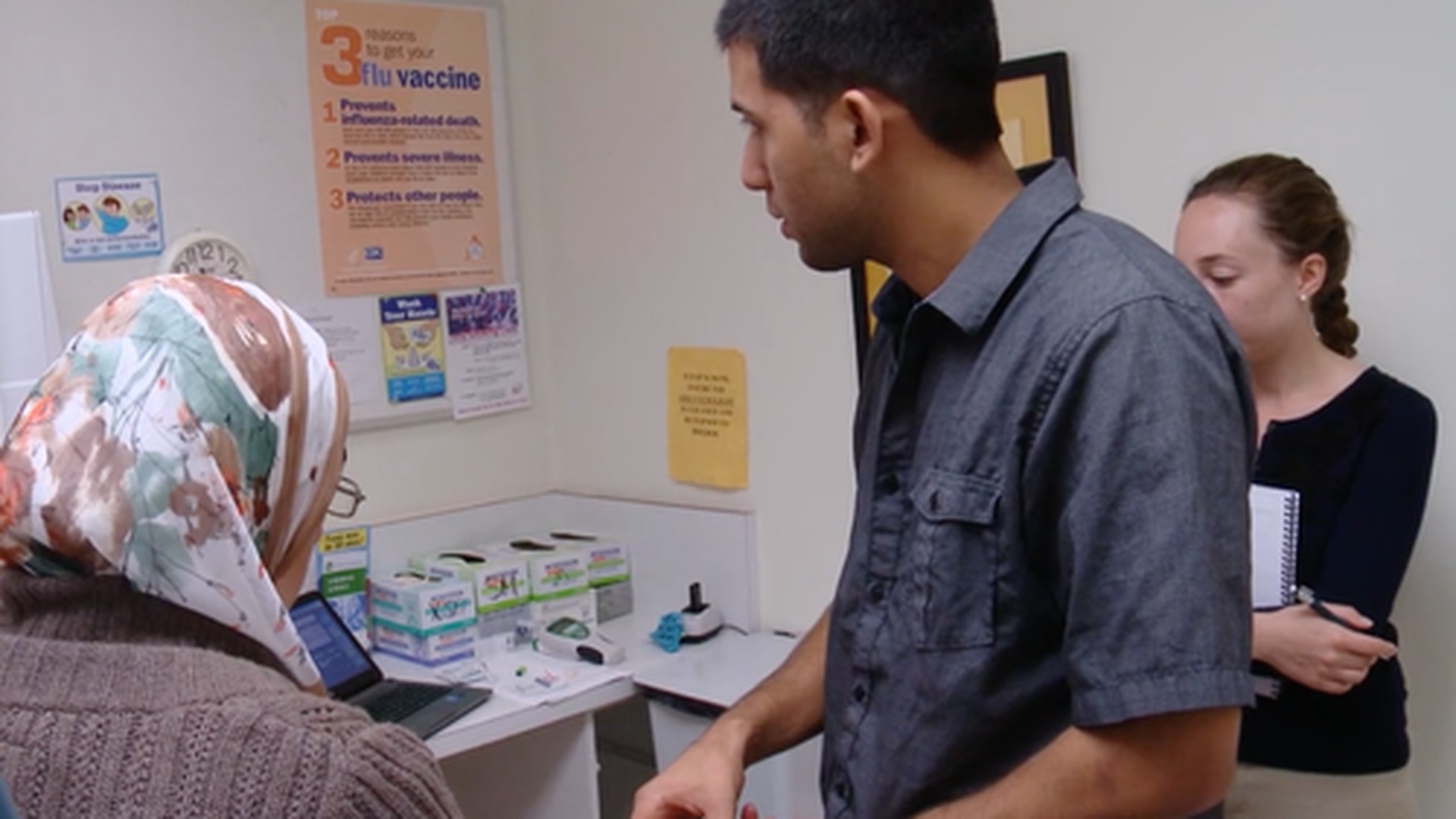
The San Francisco Free Clinic Volunteer Program allows school-aged volunteers to assist with essential front- and back-office tasks at a healthcare clinic. Through this experience, you will gain valuable exposure to the healthcare field while engaging in community service. The program is designed to help you develop skills that are beneficial for future careers in healthcare, such as administrative tasks, patient interaction, and teamwork.
You’ll work in a collaborative environment alongside healthcare professionals, enhancing your understanding of how a clinic operates. Participating in this program not only contributes to your community, but also refines your professional experience. By the end of the program, you’ll develop communication, organizational, and practical problem-solving skills.
Why it stands out: The program has a waitlist for school-aged volunteers, indicating high demand and the significant interest it attracts from students eager to gain direct healthcare experience.
11. ED Student Volunteer Unpaid Internship Program
Location: U.S. Department of Education, Washington, D.C., USA
Cost/Stipend: None
Program Dates: Eight to ten weeks; Winter/Spring term typically runs January through May
Deadline: November 30th
Eligibility: Be at least 16 years of age; attend an accredited educational institution; be enrolled not less than half time in a course of study related to the work to be performed. International applicants with specific visa statuses, including those on a student visa, may be eligible.
The ED Student Volunteer Unpaid Internship Program, located at the U.S. Department of Education in Washington, D.C., offers high school students the opportunity to gain volunteer experience across various fields. You will engage in practical activities that foster personal and professional development, typically committing eight to ten weeks during the winter/spring or fall terms.
Interns can work flexible hours ranging from 20 to 40 hours per week, allowing you to tailor your schedule based on your availability. The program emphasizes teamwork and practical applications of academic knowledge, providing an authentic glimpse into the functioning of a federal office. By the end of the program, you’ll develop organizational skills, professional communication, and a strong understanding of public service.
Why it stands out: Interns can work 20 to 40 hours per week during the winter/spring and fall terms and full-time during the summer session, allowing for a highly flexible work schedule.
Join the Immerse Education 2027 Essay Competition
Follow the instructions to write and submit your best essay for a chance to be awarded a 100% scholarship.
12. Research Internships and Observation for High School Students (Penn State College of Medicine)
Location: Penn State College of Medicine, Hershey, PA, USA
Cost/Stipend: None
Program Dates: Flexible (short-term 1-2 days or extended weeks to months), arranged with your chosen faculty supervisor
Deadline: No fixed deadline; you apply by identifying and contacting a supervisor directly
Eligibility: Must be at least 16 years of age; living in the United States; not open to international students
The Research Internships and Observation program at Penn State College of Medicine invites you to explore the field of medical research through short-term shadowing or extended internships in a laboratory setting. You will engage directly with researchers while identifying a faculty supervisor who will guide your experience, typically by browsing the Penn State Research Database to find a matching lab.
This program offers training and documentation, ensuring that you are well-prepared for your research activities. You will gain exposure to scientific methodologies, participate in observational studies, and understand the intricacies of medical research. Being in a professional environment allows you to refine your analytical abilities and research techniques. By the end of the program, you’ll develop critical thinking, communication, and practical research skills.
Why it stands out: Students must be at least 16 years of age to participate in this program, ensuring that you are entering the experience as a mature applicant ready for professional engagement.
13. AFRL Scholars Program (Air Force Research Laboratory)
Location: Air Force Research Laboratory, United States
Cost/Stipend: Free; stipend paid, with recent rates around 500-520 weekly for high school scholars
Program Dates: Fall and spring placements are limited; the main application window, which also covers summer, has recently run October 10th through early-to-mid January
Deadline: Early-to-mid January (exact date varies by cycle)
Eligibility: Upper-level high school students aged 16+; not open to international students
The AFRL Scholars Program offers upper-level high school students stipend-paid internships where they gain experience in STEM fields. You will work directly alongside scientists and engineers at the Air Force Research Laboratory, engaging in practical research and technology projects. This direct experience allows you to develop a deeper understanding of scientific methodologies and engineering principles.
You’ll collaborate in a dynamic and innovative environment that reflects professional research settings. As you contribute to ongoing projects, you will build applicable skills essential for your academic and professional careers. By the end of the program, you’ll develop analytical thinking, problem-solving abilities, and professional collaboration skills.
Why it stands out: Interns in the AFRL Scholars Program collaborate directly with full-time AFRL scientists and engineers on cutting-edge research initiatives, providing a unique insight into advanced scientific practices.
14. NASA Internship Programs
Location: NASA centers across the United States
Cost/Stipend: Free; most internships include a stipend
Program Dates: Winter/Spring cohort typically runs January through April or May
Deadline: Varies by center and cohort; recent windows have closed in late fall
Eligibility: U.S. citizens aged 16+ enrolled full-time in high school; not open to international students
Participate in applied projects with NASA, gaining exposure to various missions and enhancing your technical skills while preparing for your future career. The internships are tailored for high school students, providing an opportunity to work directly with NASA experts. You will engage in projects that contribute to the agency’s goals, acquiring practical experience in a professional environment.
This program emphasizes confidence-building and skill development, allowing you to navigate complex challenges. You’ll also learn to collaborate effectively and communicate your ideas clearly in a team setting. By the end of the program, you’ll develop problem-solving abilities, professional communication, and teamwork skills.
Why it stands out: NASA’s internships include opportunities for non-STEM majors as well as technical roles, allowing a diverse range of students to engage with and contribute to significant projects within the agency.
15. MIT PRIMES
Location: Greater Boston, Massachusetts, USA (PRIMES-USA offers a remote track for students outside commuting distance)
Cost: Free
Program Dates: January - December
Deadline: Varies annually
Eligibility: High school sophomores and juniors (or homeschooled students of the same age) with exceptional mathematical ability; in-person track requires residence in Greater Boston, while PRIMES-USA is open to students elsewhere in the country
MIT PRIMES is a year-long research program that allows you to work on original mathematics research under the mentorship of MIT graduate students and postdoctoral scholars. You’ll progress through four phases: advanced reading, active research, independent study, and final paper preparation. Depending on your grade level, you’ll complete either individual or group research projects on unsolved problems in mathematics.
Throughout the program, you’ll develop advanced reading, mathematical reasoning, and independent research skills while producing formal research reports. By the end of the program, you’ll present your findings at the PRIMES conference and write a final research paper that is published on the PRIMES website. Your research paper may also be submitted to national science competitions or professional research journals.
Why it stands out: Provides year-long mentorship on original mathematics research, culminating in a conference presentation and a publishable research paper, with a remote track for students outside the Boston area.
Frequently asked questions: Free Winter Programs for High School Students
What makes a winter program different from a summer program?
Winter programs tend to run during the school year rather than during a break, so they’re often part-time, evening, or weekend commitments rather than full-time blocks. Several entries on this list, like PSI at OHSU and the Immersion Science Program at Fox Chase, are built specifically around a semester-long school-year schedule rather than compressing everything into a few weeks. Research labs and offices stay staffed and running through the winter, so some programs, like Penn State’s and the Cleveland Clinic’s, let you arrange a placement on a rolling basis rather than waiting for a single application cycle. This flexibility can make winter programs easier to fit around a full course load than a summer commitment.
Are free winter programs actually selective?
Some are highly selective, while others are open to anyone who applies. Fox Chase’s Immersion Science Program accepts only 16 to 20 students per cohort, and MIT PRIMES is limited to a small number of students with exceptional mathematical ability. Community-based programs like Habitat for Humanity’s Collegiate Challenge or Feeding America’s volunteer roles, by contrast, welcome any student willing to commit the time. Checking a program’s acceptance rate or cohort size before applying can help you set realistic expectations and plan backup options.
Do you need prior research experience to apply?
Most of these programs don’t require prior research experience, though a few expect specific coursework. Fox Chase’s Immersion Science Program requires that you’ve completed high school chemistry and biology, and PSI expects a baseline interest in biomedical science rather than direct lab experience. Programs like Penn State’s research internships and the Cleveland Clinic’s lab opportunities are self-arranged, so your odds often come down to how clearly you can explain your interest to a potential mentor. Community service programs like Feeding America or Habitat for Humanity need no prior experience at all.
Can international students join these winter programs?
It varies widely by program. Immerse Education’s Online Research pathway and Girls Who Code’s international Clubs program are both built to welcome students from outside the US, and several of the volunteer programs on this list are open to any student regardless of location. Government-affiliated programs are more restrictive: the AFRL Scholars Program and NASA’s internships require US citizenship, and PSI at OHSU is limited to students in Oregon or the Portland metro area. Check each program’s eligibility section carefully before assuming a free program is open worldwide.
How do you find a research mentor for a self-arranged program?
For programs like Penn State’s research internships or the Cleveland Clinic’s research opportunities, you typically start by browsing a faculty or researcher database and reaching out directly rather than submitting a single central application. A short, specific email describing your interests and what you hope to learn works better than a generic request. Persistence matters here, since lab space is limited and not every researcher can take on a high school student. Starting this outreach early in the fall gives you the best chance of securing a winter placement.
Will a free winter program look as good as a paid summer program on a college application?
A free, selective program often carries more weight than a paid one, since admission itself signals that you were chosen from a competitive pool. Programs like Fox Chase’s Immersion Science Program or MIT PRIMES are free and highly selective, which tends to stand out more than a program anyone can pay to join. What matters most to admissions readers is what you actually did and learned, so a well-documented winter research placement can carry just as much weight as a summer program, regardless of cost. Choosing based on genuine interest rather than price point usually produces a stronger application story either way.
Ready to prepare for college this winter?
Free winter programs for high school students let you test a research interest or build real experience without paying program fees.
Weighing a structured research program against an open-ended volunteer role helps you pick the format that actually builds your application.
Reaching out directly to labs or mentors, since several programs have no fixed deadline, can open doors other students miss.
For more direction on where this winter could lead, browse our University Preparation blogs and keep building your college plans.



Unlock Inspiring Opportunities with the Immerse Education Newsletter
Join our newsletter to stay ahead with exclusive updates, exciting programme highlights, and expert insights from the world of immersive education.
Learn how Immerse can transform your life
An in-depth overview of our university and career preparation programmes
Get a glimpse into the life of an Immerse participant
Find the right programme for you with sample timetables, location showcases, and more