15 Pre-College Biology Summer Programs

TL;DR
You’ll find 15 pre-college biology summer programs, from paid lab internships at Duke and UCSF to tuition-based courses at Wake Forest and Carnegie Mellon. The key split is between local research internships, which often require you to live nearby, and paid summer schools open more widely. Most suit high schoolers from about grade 9 to 12, depending on the program. UT Austin’s High School Research Academy, for example, pairs five weeks of lab research with UT course credit. Immerse Education's Academic Insights pathway in Biology welcomes ages 16 to 18 in Oxford and Cambridge.
As someone interested in stepping into the field of biology, pre-college biology summer programs are among the most practical ways to gain early exposure to it. You do so by engaging in lectures, hands-on lab work, research projects, and fieldwork specifically designed for high school students. It often lets you explore topics that go beyond the high school curriculum, introducing you to concepts in cellular biology, genetics, ecology, molecular biology, and more.
While exploring such topics at an advanced level, you gain exposure to conducting laboratory and field research. You also learn the different steps of the research process, such as formulating the hypotheses, designing and conducting the experiments, collecting and analyzing the data, and presenting the results. In other words, you become familiar with the day-to-day duties of a biologist.
Why Should You Consider a Pre-College Biology Program?
Many of these biology programs are commonly hosted at top universities, so participating in one of them provides you access to these universities' curriculum, labs, research facilities, and other resources. It particularly provides you a taste of being a biology major, introducing you to the academic workload, collaborative lab and research work, and other aspects of studying any science subject in college.
Pre-college programs give you the opportunity to explore different biological disciplines, such as genomics, cell biology, plant sciences, environmental science, bioemedicine, biotechnology, and more. Depending on the program you join, you will engage in scientific activities that equip you with the skills needed to thrive in that particular area of biology. Whether you have already decided on the line of biology you would like to pursue a career in or are still considering the right direction for you, here are 15 pre-college biology summer programs that are worth considering.
15 Pre-College Biology Summer Programs
1. Immerse Education's Biology Summer School

Location: Oxford, Cambridge
Cost: Varies; summer school scholarship available through our bursary programme
Acceptance rate/cohort size: Selective; an average of 7 participants per class
Application Deadline: Multiple cohorts with rolling admissions
Program Dates: 2 weeks during the summer
Eligibility: Students worldwide aged 16-18; open to international students
Immerse Education's Academic Insights pathway lets high school students experience university life firsthand. You can live on campus or join as a commuter, study in small seminar groups averaging 7 students, and learn from tutors from eminent top universities like Oxford and Cambridge.
If you join the Biology Track, you'll step into a university-style learning environment where you'll study cellular biology, genetics, ecology, and more, exactly as undergraduates would. The course is experiential and focuses on hands-on learning. You'll also get to design and carry out your own mini research project on a biology topic that fascinates you, giving a taste of real-world scientific work. By the end of the program, you'll receive written feedback and a certificate of completion. You can find more details about the application and specific program details here.
Why it stands out: It pairs you with university-level tutors in focused small groups, helping you deepen subject knowledge and gain rigorous academic mentorship.
2. Kean University Group Summer Scholars Research Program (GSSRP)
Location: Kean University, Union, NJ
Cost: $3,000 (4-week session) or $1,500 (2-week session) with the early commitment discount by May 1st; otherwise $5,000 and $3,000; fee waivers and need-based scholarships available
Dates: July 6th to 30th (4-week session) and July 20th to 30th (2-week session) in 2026
Application Deadline: March 6th (2026 cycle)
Eligibility: High school sophomores, juniors, and seniors; international eligibility not specified
Kean University targets this research opportunity at high school students who have a strong interest in pursuing a career in STEM. If selected for the program, you will conduct scientific research in small groups with Kean faculty and graduate student mentors, with research streams that have included cancer biology and drug discovery.
Through your involvement in such group research work, you will become skilled at working in a collaborative environment and will also enhance your technical and analytical skills. You will also gain first-hand exposure to how researchers create scientific knowledge through research.
Why it stands out: GSSRP also hosts professional skills workshops, instrumentation demos, and sessions on college and career paths.
3. Lumiere Research Scholar Program
Location: Remote, you can participate in this program from anywhere in the world!
Cost: Varies depending on program type. Full financial aid available.
Application Deadline: Varies by cohort.
Program Dates: Varies by cohort: summer, fall, winter, or spring. Options range from 12 weeks to 1 year.
Eligibility: You must be currently enrolled in high school and demonstrate a high level of academic achievement.
The Lumiere Research Scholar Program is a rigorous research program tailored for high school students. The program offers extensive 1-on-1 research opportunities for high school students across a broad range of subject areas. The program pairs high school students with Ph.D. mentors to work 1-on-1 on an independent research project.
At the end of the 12-week program, you’ll have developed an independent research paper! You can choose research topics from subjects such as psychology, physics, economics, data science, computer science, engineering, chemistry, international relations, and more. You can find more details about the application here, and check out students’ reviews of the program here and here.
Why it stands out: You get 1-1 mentorship with a Ph.D. mentor and produce an independent research project by the end.
4. Wake Forest University Biology Research Institute
Location: Wake Forest University Reynolda Campus, Winston-Salem, NC
Cost: A non-refundable application fee of $60 and tuition of $3,500 (2026), plus a $550 deposit applied toward tuition; scholarship funding was exhausted for 2026
Dates: One-week sessions; July 5th to 10th and July 19th to 24th in 2026
Application Deadline: Applications open November 1st and are reviewed on a rolling basis; popular institutes can move to waitlists by January
Eligibility: Current 9th to 12th graders; open to students from all geographic locations
Part of Wake Forest University’s Summer Immersion Program, the Biology Research Institute lets you explore different aspects of biological research through lab and field work. You’ll take part in experiments on topics such as molecular plant growth, oceanic molecular biology, global change biology, and sustainability research.
Each day brings you into contact with experts in different areas of biological research. The week builds toward team research presentations of your sampling results, and you receive an official Wake Forest University Certificate of Completion.
Why it stands out: You will gain a comprehensive understanding of the field of biology, from the tiniest organisms to the broader ecosystems.
5. Stanford Medicine Genomics Research Internship Program at Stanford (GRIPS)
Location: Stanford University, Stanford, CA
Cost: Free to participate; $55 application fee, with fee waivers available for low-income students
Dates: June 15th to August 6th (2026)
Application Deadline: February 28th (2026 cycle)
Eligibility: Bay Area high school students who live in local counties; not open to students from outside the area
Offered by Stanford Medicine’s Department of Genetics, GRIPS is aimed at high school students who would like to immerse themselves in genetics research. During the eight weeks, you will be placed in a research laboratory and conduct genomics research under the supervision of a lab mentor.
You will be expected to work 20 hours per week. Alongside the research, you’ll take part in professional development and community-building activities. GRIPS is designed as an entry-level program, so prior research experience isn’t required.
Why it stands out: The program is free to attend and gives you eight weeks of genomics research under a dedicated lab mentor.


6. Duke University Cell Biology and Biochemistry Academy (CeBA)
Location: Duke University, Durham, NC
Stipend: $2,400 on completion
Dates: Six weeks; June 22nd to July 31st in 2026
Application Deadline: March 27th (2026 cycle, extended)
Eligibility: High school sophomores, juniors, or seniors who are at least 15 by the program start, live in the Research Triangle area, and can travel to and from Duke’s campus
In this program run by Duke University’s Department of Cell Biology, you will work on an independent research project and gain a practical understanding of how laboratory research in cell biology is done. A graduate student or postdoctoral scholar guides you through every step, from your research question to your final results.
The academy also schedules activities like career seminars and scientific journal clubs. Your work culminates in a scientific poster session where you present and share your results with other researchers.
Why it stands out: You will have Duke Cell Biology Department researchers mentoring you during the program.
7. University of Massachusetts Amherst Botanical Breakthroughs: Exploring the Biochemical Properties of Plants
Location: University of Massachusetts Amherst, Amherst, MA
Cost: Residential and commuter rates available; scholarships available
Dates: Two weeks in the summer
Application Deadline: Not specified
Eligibility: High school students; no prerequisites; local students may attend as commuters; international eligibility not specified
This UMass Amherst program is aimed at students who are particularly fascinated by plants and focuses on how plant-derived products have been used to cure diseases over time. During the two weeks, you will explore resources across campus, like the Herbarium, Conservatory, Plant Cell Collection Library, permaculture gardens, research labs, and greenhouses.
You will work with staff and professors from the Department of Biochemistry & Molecular Biology to study plants and their importance to human life, while building skills in molecular and biochemical lab techniques. The course ends with student poster presentations and a career panel.
Why it stands out: The program opens you to careers in medicine, the pharmaceutical industry, plant biology, and others.
8. Indiana University Jim Holland Summer Enrichment Program in Biology (SEP)
Location: Indiana University, Bloomington, IN
Cost: $125 non-refundable registration fee for accepted students
Dates: One week in July (July 19th to 24th in 2026)
Application Deadline: Applications open in January; teacher recommendation forms were due April 10th in the 2026 cycle
Eligibility: Students currently in 8th, 9th, or 10th grade with a minimum unweighted GPA of 3.0 who are taking or have taken science and math courses; international eligibility not specified
The Jim Holland Summer Enrichment Program in Biology (SEP) is made for high school students who wish to broaden their knowledge of genetics, evolution, environmental biology, molecular biology, plant sciences, and more.
You’ll attend lectures, take part in discussions, and work in laboratory sessions led by Indiana University faculty members and Indiana high school teachers. You’ll stay in a dormitory on the Bloomington campus during the week. You will also learn how to prepare for a successful college experience.
Why it stands out: SEP will introduce you to the various career opportunities available in the subject areas covered in the program.
9. University of Florida Research Explorations (REx)
Location: University of Florida, Gainesville, FL
Cost: A non-refundable application fee of $35 plus a program fee; application fee waivers available for qualifying Florida students
Dates: 2026: BioREx Session 1st June 21st to July 3rd; BioREx Session 2 and EnviroREx July 19th to 31
Application Deadline: Applications open in January (January 5th in 2026)
Eligibility: Students entering 11th or 12th grade; international eligibility not specified
In this program offered by the University of Florida, you will learn how scientists and engineers contribute new knowledge and tackle societal issues through research. You’ll visit active research labs, attend discussions on current UF research, and work through experiments with UF faculty and graduate students.
The biomedical track trains you in biotechnology techniques such as CRISPR and gel electrophoresis, while the environmental track uses fieldwork to study topics like aquatic toxicology and invasive species. You’ll also develop a research proposal with your peers and present it at a formal poster session.
Why it stands out: With two tracks offered in the program, you get to concentrate on research in biomedicine or environmental health and toxicology.
10. Carnegie Mellon University Pre-College Program in Computational Biology
Location: Carnegie Mellon University, Pittsburgh, PA
Cost: A non-refundable application fee of $50 and a program fee of $8,041 (Commuter) or $10,750 (Residential) in 2026; need-based scholarships available for US citizens and permanent residents
Dates: June 20th to July 18th (2026)
Application Deadline: February 1st (early, scholarship, and international applicants) and March 1st (final) in the 2026 cycle
Eligibility: In 10th or 11th grade at application and at least 16 by June 20th; commuters must live within about 30 miles of campus or in Allegheny County; open to international students
This pre-college program is best suited for those who would like to combine their passion for biology with computer science. After collecting samples from Pittsburgh’s local ecosystems, you will isolate bacterial DNA, fragment it into millions of sequences, and analyze them using the methods computational biologists use.
Half of each day is spent in a hackathon, where you work in teams to code solutions to questions inspired by biology. Preparatory materials help you arrive ready even if you have no prior programming experience.
Why it stands out: Each day highlights the link between lab experiments and computation, so you practice both sides of modern biology.
11. The University of Texas at Austin Summer High School Research Academy (HSRA)
Location: The University of Texas at Austin, Austin, TX
Cost: $4,000
Dates: June 8th to July 15th (2026)
Application Deadline: Applications open in late January; late submissions may not be reviewed
Eligibility: High school students who can commit to five consecutive weeks of research; international eligibility not specified
This is a five-week, non-residential program for you to conduct research in College of Natural Sciences laboratories on UT Austin’s campus. You will focus your research in disciplines such as biochemistry, biology, environmental science, genetics, neuroscience, genome engineering, data analytics, or ecology.
You’ll collaborate with peers, undergraduates, and faculty in CNS research groups. Every participant is enrolled in NSC309, a three-credit-hour college course through UT Extension, and you present a printed research poster at the closing symposium.
Why it stands out: HSRA hosts Wednesday seminars with UT guest speakers that deepen your understanding of different scientific fields.
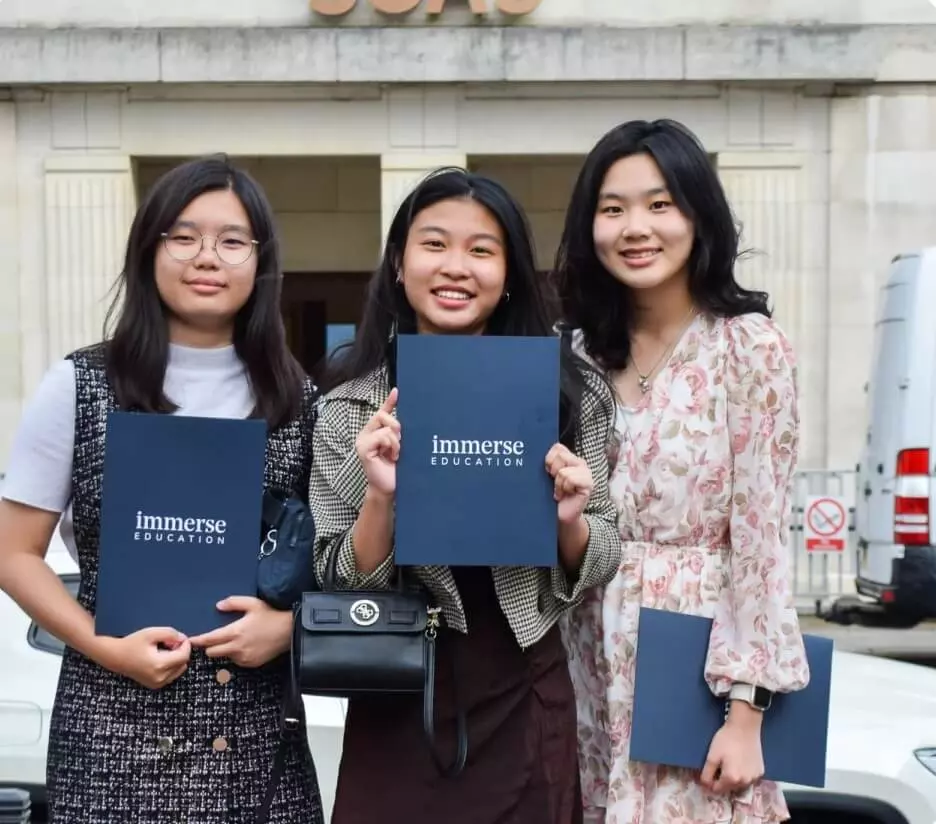
Join the Immerse Education 2027 Essay Competition
Follow the instructions to write and submit your best essay for a chance to be awarded a 100% scholarship.
12. Georgetown University Biotechnology for Science & Health Academy

Location: Georgetown University, Washington, D.C.
Cost: A non-refundable application fee of $50 plus a program fee of $5,530 (Commuter) or $6,800 (Residential); the application fee is waived for students who apply by January 31st, and there are a limited number of need-based scholarships available
Dates: Two weeks in the summer
Application Deadline: January 31st (Early Bird Deadline) and May 15th (Final Deadline)
Eligibility: 8th to 12th graders who are at least 15 years old and have a minimum GPA of 2.0; open to international students
Through this program conducted by Georgetown University, you will learn the applications of biotechnology in health and science fields. The program starts by introducing you to important biotechnology concepts through lectures. You will then complete lab exercises that give you a practical understanding of the concepts you have learned.
The program explores the ways DNA and protein diagnostics are used in modern healthcare, along with how DNA is used across fields like forensics, agriculture, and food science. For more options in this area, see these biotechnology programs for high school students.
Why it stands out: You can expect to engage in some exciting experiments, such as cloning a gene and analyzing the results.
13. UCSF Science and Health Education Partnership High School Intern Program
Location: The University of California, San Francisco (UCSF), San Francisco, CA
Stipend: Paid internship
Dates: Eight weeks in the summer, beginning in June
Application Deadline: Applications typically close in February; the 2026 application is closed
Eligibility: Current 11th graders (rising seniors) enrolled in an SFUSD high school or SF public charter school
If you are a rising high school senior whose interest in biology leans more toward biomedicine, this program lets you research in that field. It will place you in a UCSF lab for eight weeks so that you can complete a research project under the mentorship of a scientist there.
Unlike most research programs, acceptance doesn’t depend on your grades or a commitment to a science career. The program ends with a final presentation where you share your research poster.
Why it stands out: The internship gives you an authentic biomedical research experience without requiring grades or prior experience to apply.
14. Rice Bio Academies
Location: Rice University, Houston, TX
Cost: $599 per week; scholarships available
Dates: One-week sessions in the summer
Application Deadline: Not specified
Eligibility: Students currently in 7th through 11th grade, with high school tracks for older students; international eligibility not specified
Rice University’s Center for STEM Engagement runs this program, which offers tracks in biotechnology and biomedicine for high schoolers like you. Depending on your chosen track, you will learn fundamental aspects of biotechnology or biomedicine by exploring how they’re applied today.
You may find yourself extracting and analyzing DNA, building a prosthetic prototype, or testing PTC genes. These activities will make you accustomed to using the research tools and techniques used by industry experts.
Why it stands out: By the end of the program, you will have built a basic understanding of genetics and other scientific topics.
15. Wayne State University Biomedical Career Advancement Program (BCAP)
Location: Wayne State University School of Medicine, Detroit, MI
Stipend: Monetary award on successful completion, subject to funding
Dates: Six weeks in the summer
Application Deadline: Not specified
Eligibility: 10th to 12th graders with a GPA of at least 2.75; priority given to Wayne County residents, Detroit Public Schools Community District students, and students from disadvantaged backgrounds
Aimed at high school students who are considering future careers in research or the healthcare field, this six-week program gives you direct exposure to both. You’ll work alongside research faculty at Wayne State’s School of Medicine and train in procedures such as gel electrophoresis, microscopy, pipetting, and phlebotomy.
You’ll also gain mentorship from health professionals and meet like-minded students. BCAP alumni can go on to apply for BCAP Scholars to continue developing their research.
Why it stands out: By the end of the program, you will become well accustomed to different lab safety practices, making you ready to work in any lab setting in the future.
Frequently asked questions: Pre-College Biology Summer Programs for High School Students
What do you do in a pre-college biology summer program?
Most programs combine lectures with lab or field work in topics like genetics, cell biology, ecology, and biotechnology. Research-focused programs, like Duke’s CeBA and UCSF’s High School Intern Program, place you in a lab on your own project with a mentor. Shorter courses, like Wake Forest’s Biology Research Institute, teach techniques through team experiments. Many end with a poster session or presentation of your results.
Are there free or paid pre-college biology programs?
Yes, several cost little or even pay you. Duke’s CeBA awards $2,400 on completion, UCSF’s High School Intern Program is paid, and Wayne State’s BCAP offers a monetary award. GRIPS at Stanford is free to attend apart from a $55 application fee, and Indiana’s SEP charges only a $125 registration fee. Most of these are limited to local students, so check residency rules first.
Can international students attend pre-college biology programs?
Some can, but many research internships only accept nearby students. Wake Forest’s Summer Immersion Program and Carnegie Mellon’s Computational Biology program both accept students from anywhere, and Georgetown welcomes international applicants. Immerse Education's Academic Insights pathway in Biology is open to students aged 16 to 18 from around the world in Oxford and Cambridge. If you can’t travel, you could also look at these online biology summer schools for high school students.
Can you earn college credit in a biology summer program?
A few programs offer credit. UT Austin’s High School Research Academy enrolls every participant in NSC309, a three-credit-hour UT Extension course. Immerse also offers accredited options that earn 8 UCAS points or 3 US college credits from age 14. Most other programs on this list award a certificate rather than credit, so check before you apply if credit matters to you.
Do you need research experience to join a biology program?
No, many programs are designed for beginners. GRIPS describes itself as an entry-level introduction to biomedical research, and UCSF’s internship doesn’t consider grades or prior experience. Carnegie Mellon sends preparatory materials so you can start without programming experience. If you want to explore ideas before applying, browse these ideas for research projects in biology.
When should you apply for pre-college biology summer programs?
Start looking in the fall, since some applications open early. Wake Forest opens applications on November 1st, and Carnegie Mellon’s early deadline is February 1st. Many research programs close in February or March, including GRIPS (February 28th), Kean’s GSSRP (March 6th), and Duke’s CeBA (March 27th in 2026). Programs like Georgetown accept applications until May, but places can fill sooner.
Starting your path toward a biology degree
A summer in a university lab shows you what biology looks like beyond the textbook, from pipetting samples to presenting your own results.
Pre-college biology summer programs range from paid local internships to week-long residential courses, so you can match one to your budget and schedule.
Check residency rules and deadlines early, since many research programs only accept nearby students and close their applications by March.
For more help choosing a biology course, comparing entry requirements, and preparing strong applications, explore our University Preparation blogs before you apply.







Unlock Inspiring Opportunities with the Immerse Education Newsletter
Join our newsletter to stay ahead with exclusive updates, exciting programme highlights, and expert insights from the world of immersive education.
Learn how Immerse can transform your life
An in-depth overview of our university and career preparation programmes
Get a glimpse into the life of an Immerse participant
Find the right programme for you with sample timetables, location showcases, and more