15 Summer Programs for 16-Year-Olds

TL;DR
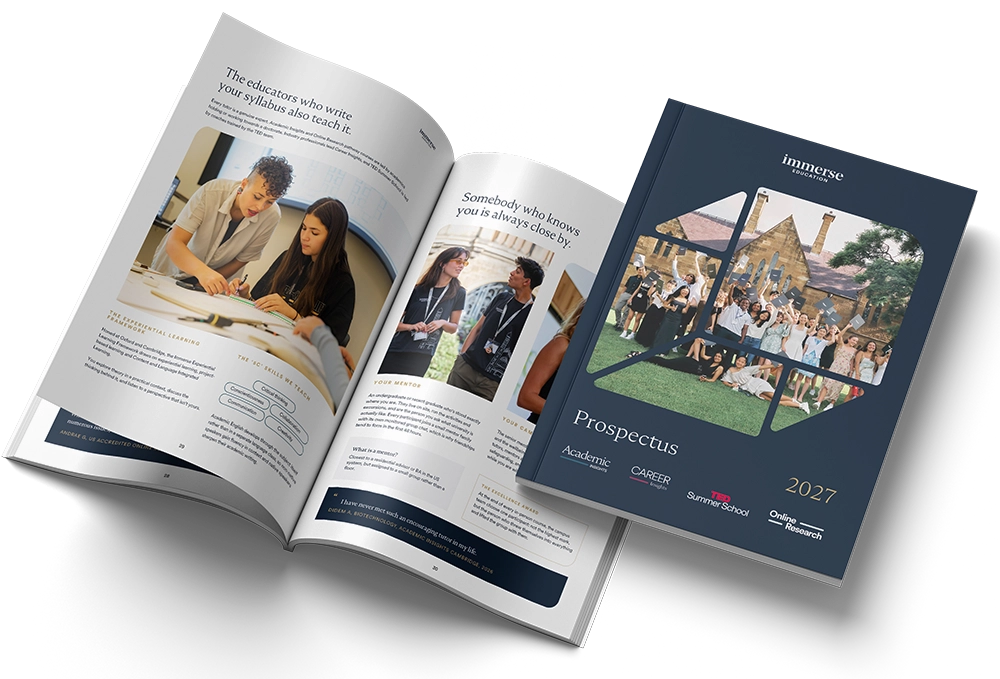
You’ll find 15 summer options here, from research programs at MIT, Stanford, and Stony Brook to free seminars, language study abroad, and university summer schools. Most are free or fully funded, but many are limited to U.S. citizens, permanent residents, or local students. They suit 16-year-olds ready for college-level work in STEM, the humanities, or languages. Simons Fellows, for example, spend at least four hours a day on faculty-led research. Immerse Education's Academic Insights pathway also offers two-week courses for ages 13 to 18 in six cities.
Turning sixteen is the ideal time to shape your college path. Whether you choose science, business, arts, or technology, early involvement alters your academic readiness. Gaining experience gives you a clear advantage before applications start. If you want to build that foundation during high school, a specialized summer program is a great place to begin.
Picture dedicating your break to lab experiments, business plans, or creative projects with motivated peers. You will produce original works for your portfolio, test academic theories, and gain a clear understanding of routines that schools rarely feature. This immersive environment feels totally different from simply reading about a career from afar.
What kinds of summer programs for 16-year-olds are there?
The choice relies completely on your personal goals. Certain programs focus on STEM fields and research, making them ideal for students who love technical discovery. Other programs center on leadership and humanities, allowing individuals to explore social dynamics and communication.
Many programs are university-hosted and highlight academic learning, while a different program type focuses on field experience. The finest programs offer chances to apply knowledge rather than just sit through lectures.
Besides expanding your intellect, these programs reinforce college applications by showing real initiative. They also deliver great exposure to concepts that students will encounter throughout higher education and future careers.
To help you find the right fit, we’ve curated a list of 15 summer programs for 16-year-olds worth exploring!
15 Summer Programs for 16-Year-Olds
1. Research Science Institute (RSI)
Location: Massachusetts Institute of Technology, Cambridge, Massachusetts (residential); a second site opens at Stanford University in 2027
Cost/Stipend: Free to attend
Acceptance rate/cohort size: 100 students at MIT; RSI Stanford starts with 50 students in 2027
Dates: Six weeks in the summer; 2027 dates not yet posted
Application Deadline: December 11th, 2026 at 11:59 p.m.
Eligibility: High school juniors (rising seniors); current seniors are not eligible; U.S. citizens and permanent residents apply directly to CEE, while international students apply through their country’s selection agency where one exists
Picture six weeks spent not studying science but doing it; that’s RSI, where each scholar carries a research project from first idea to final paper. The opening week throws you into intensive STEM classes with accomplished professors, and the five weeks that follow pair you with an experienced scientist or researcher on an individual project.
You’ll read the current literature in your field, carry out a detailed research plan, and present your findings in conference-style written and oral reports. Surrounded by a cohort as driven as you are, you finish the summer having lived, briefly, as a practicing scientist.
Why it stands out: It was the first cost-free summer program to combine on-campus coursework in scientific theory with off-campus research, and it remains one of the most widely recognized research credentials a high schooler can hold.
2. Immerse Education’s Pre-University Summer School

Location: Cambridge, London, Oxford, Singapore, Sydney, and Toronto
Cost/Stipend: Varies; summer school scholarship available through our bursary programme
Acceptance rate/cohort size: Selective; an average of 7 participants per class
Dates: 2 weeks during the summer
Application Deadline: Multiple cohorts with rolling admissions
Eligibility: Students aged 13 to 18; open to international students from around the world
Immerse Education's Academic Insights pathway lets you experience university life firsthand. You will study in tutor-led seminars averaging 7 students, with two 1:1 tutorials, masterclasses, and guest speakers across your two weeks. You can explore more than 20 subjects, including Architecture, Business Management, Computer Science, Economics, Medicine, and Philosophy, with residential or commuter options.
By the end of the programme, you’ll present a personal project on the final Friday, and accredited options let you earn 8 UCAS points or 3 US college credits from age 14. You can find more details about the application here.
Why it stands out: You’ll get an early start at university life and academics because the program includes an independent project, discussion-based classes, and living in a historic university city.
3. Lumiere Research Scholar Program
Location: Remote , you can participate in this program from anywhere in the world!
Cost: Varies depending on program type. Full financial aid available.
Application Deadline: Varies by cohort.
Program Dates: Varies by cohort: summer, fall, winter, or spring. Options range from 12 weeks to 1 year.
Eligibility: You must be currently enrolled in high school and demonstrate a high level of academic achievement.
The Lumiere Research Scholar Program is a rigorous research program tailored for high school students. The program offers extensive 1-on-1 research opportunities for high school students across a broad range of subject areas. The program pairs high school students with Ph.D. mentors to work 1-on-1 on an independent research project. At the end of the 12-week program, you’ll have developed an independent research paper!
You can choose research topics from subjects such as psychology, physics, economics, data science, computer science, engineering, chemistry, international relations, and more. You can find more details about the application here, and check out students’ reviews of the program here and here.
Why it stands out: You get 1-1 mentorship with a Ph.D. mentor and produce an independent research project by the end.
4. Telluride Association Summer Seminar (TASS)
Location: Residential on select US university campuses
Cost/Stipend: Free; Telluride Association covers tuition, books, room and board, field trips, and facilities fees, with extra aid available to replace lost summer earnings
Acceptance rate/cohort size: Not specified
Dates: Five weeks, June to July 2027 (the 2026 program ran June 21st to July 25th)
Application Deadline: 2027 applications open in fall 2026; the 2026 deadline was December 3rd, 2025
Eligibility: High school sophomores and juniors; open to US and international students, though international applicants (studying outside the US without a US passport) must be sophomores
The Telluride Association Summer Seminar offers something unusual: a free summer of college-level study into how power and privilege shape social structures. You’ll join one of two seminars in the humanities and social sciences, built on small-group discussion rather than lectures, and write essays that get feedback from the instructor team.
Outside class, you’ll take part in a public speaking program, hear from visiting guest lecturers, and help run a democratic community with your fellow scholars. Sharing those weeks with your instructors and a close cohort, you walk away thinking, writing, and arguing more sharply, and rarely alone.
Why it stands out: It pairs demanding, discussion-based college seminars with a democratic community of scholars, and every program cost is fully paid.
5. Sutton Trust UK Summer Schools
Location: 13 partner universities across the UK (residential)
Cost/Stipend: Free
Acceptance rate/cohort size: Heavily oversubscribed, at about 7 applicants per place
Dates: About five days in the summer (dates vary by university)
Application Deadline: Early March; the 2026 round ran January 12th to March 5th, 2026
Eligibility: UK students in Year 12 (England and Wales), Year 13 (Northern Ireland), or S5 (Scotland) who have only ever attended state schools, and who are under 18 at the time of the summer school; not open to international students
For a high-achiever who has only attended UK state schools, a Sutton Trust Summer School means a free week of living and studying at one of the country’s leading universities. You’ll focus on a single subject and spend the days in academic taster sessions, mixing with students from every corner of the UK between academic blocks.
Since the week costs you nothing, family income never decides whether you go, and some partner universities offer adjusted or contextual offers to students who complete the programme.
Why it stands out: For UK state-school students, it’s a free week inside one of 13 leading universities, with a possible adjusted offer from some partners afterwards.



6. NSLI-Y Summer Abroad
Location: Host countries abroad, which vary by language
Cost/Stipend: Fully funded by the US Department of State (a merit-based scholarship)
Acceptance rate/cohort size: Not specified
Dates: Six to seven weeks in the summer
Application Deadline: 2027 deadline not yet posted; the most recent cycle closed in November 2025
Eligibility: US citizens living in the US who are 15 to 18 at the start of the program and enrolled in high school; graduating seniors can apply; not open to international students
Through NSLI-Y, the US State Department funds American high schoolers to spend a summer abroad learning a critical language, with Arabic, Chinese, Korean, and Russian offered for summer programs. You’ll get at least 120 hours of intensive classroom instruction, live with a host family for all or part of the program, and join cultural activities designed to sharpen your skills.
You’re welcome to start as a complete beginner, and since the scholarship covers the program, it’s one of the few ways to study abroad in high school without the cost. If language study is your main goal, you can compare it with these summer language programs for high school students.
Why it stands out: Paid for by the federal government, it places you in a homestay overseas to learn a high-demand language from the ground up.
7. Carnegie Mellon Summer Academy for Math and Science (SAMS)
Location: Carnegie Mellon University, Pittsburgh, Pennsylvania (residential)
Cost/Stipend: Fully funded, merit-based program
Acceptance rate/cohort size: Not specified
Dates: Six weeks in person, preceded by a virtual component; the 2026 program ran June 20th to August 1st
Application Deadline: February 1st (2026 cycle); 2027 deadline not yet posted
Eligibility: In 11th grade when you apply and at least 16 by the program start date; US citizens or permanent residents only, so not open to international students; holistic review with a focus on students underrepresented in STEM
SAMS, run by Carnegie Mellon’s Center for Student Diversity and Inclusion, is a fully funded six-week introduction to college-level math and science for students underrepresented in STEM. After a virtual jumpstart, you’ll move onto campus for math and science coursework, interdisciplinary research projects, and close mentoring from faculty and staff.
Since 2024, the program has also included a college credit course, along with support on writing your college application essay. Living and working among CMU faculty, staff, and current students, you come out knowing what a demanding STEM university asks of you, and that it’s well within your reach. For more programs like it, see these STEM summer schools for high school students.
Why it stands out: It gives students underrepresented in STEM a free taste of CMU, with real coursework, a college credit course, and college application support in one summer.
8. MITES Summer
Location: Massachusetts Institute of Technology, Cambridge, Massachusetts (residential)
Cost/Stipend: Free
Acceptance rate/cohort size: Not disclosed
Dates: Six-week residential program over the summer
Application Deadline: February 1st at 11:59 p.m. PST (shared application with MITES Semester)
Eligibility: 11th graders (rising seniors); US citizens or permanent residents only, since visas don’t qualify, so not open to international students; focus on underrepresented and underserved students
MITES Summer packs six weeks at MIT for rising seniors, many from underserved or underrepresented backgrounds, who bring a strong record and a real drive in science and engineering. You’ll take a full slate of demanding courses, with midterms in week three, finals in week six, and final projects and presentations to close out the summer.
Along the way, you’ll live on campus, learn from instructors and mentors, and connect with peers from across the country who share your goals. What stays with you isn’t the coursework so much as the proof that MIT-level study, and the community around it, is somewhere you fit.
Why it stands out: It’s one of the most selective free STEM programs in the country, giving you a full residential taste of MIT before senior year.
9. Science and Engineering Apprenticeship Program (SEAP)
Location: 38 Department of the Navy laboratories across the US
Cost/Stipend: Paid; $4,000 stipend for new participants and $4,500 for returning participants
Acceptance rate/cohort size: About 300 placements across 38 labs
Dates: Eight weeks during the summer, with a possible extension of up to two weeks
Application Deadline: November 30th, 2026
Eligibility: Completed at least 9th grade and 16 or older by the start date; sophomores through graduating seniors; US citizens (some labs accept permanent residents or dual citizens); not open to international students
SEAP drops academically talented high schoolers straight into a Department of the Navy laboratory for eight weeks of research, mentored by working scientists and engineers. You’ll start by exploring the 38 participating labs and choosing the ones whose work pulls at you, then join a research team once a lab selects you.
Across the summer, you’ll contribute to active Naval science and technology projects, learning how research actually gets done while a scientist or engineer guides you one-on-one. For many interns, those eight weeks become a first look at science careers in government.
Why it stands out: It’s a paid, eight-week apprenticeship inside working Navy research labs, with a $4,000-plus stipend and a clear view of government science careers.
10. Simons Summer Research Program
Location: Stony Brook University, Stony Brook, New York
Cost/Stipend: Free; a stipend award is presented at the closing symposium
Acceptance rate/cohort size: Highly selective; number of fellows not specified
Dates: About six weeks; the 2026 program ran June 29th to August 7th
Application Deadline: February 5th (2026 cycle), with school nominations due January 30th; 2027 dates not yet posted
Eligibility: High school juniors (11th grade) at the time of applying, at least 16 by the start date, and US citizens or permanent residents; requires a school nomination; not open to international students
The Simons Summer Research Program turns high school juniors into Simons Fellows, embedded in a working Stony Brook research group with a real project to own across the sciences, math, or engineering. A faculty mentor takes you on, you learn lab techniques, and you give at least four hours a day to your research, with weekly faculty talks, workshops, and tours filling in around it.
The summer ends with a written abstract and a research poster you present at a closing symposium, where fellows receive a stipend award. Spending those weeks on campus beside other young researchers, you get an honest preview of what a research university actually feels like.
Why it stands out: Since 1984, the program has put high schoolers inside real faculty research groups rather than teaching labs, sending each one home with a poster and a stipend.
11. NIST Summer High School Internship Program (SHIP)
Location: NIST campuses in Gaithersburg, Maryland and Boulder, Colorado (in person)
Cost/Stipend: Free; unpaid volunteer internship; students provide their own housing and transportation
Acceptance rate/cohort size: Not specified
Dates: 2027 dates to be announced; the 2026 program ran June 22nd to August 7th
Application Deadline: End of January 2027
Eligibility: US citizens who are high school juniors or seniors at the time of application, with a minimum unweighted GPA of 3.0 and a home within 50 miles of a host campus; full seven-week commitment required; not open to international students
SHIP gives high schoolers a seat inside the federal laboratories of the National Institute of Standards and Technology for a seven-week summer of research. You’ll be paired with NIST staff scientists and engineers and work on an active project in a field like biochemistry, engineering, computer science, or physics, learning how research unfolds at a national lab.
Through the summer, you join seminars, meetings, and lab tours, then present your work in a formal poster session at a closing ceremony. You leave with a real feel for public-service science and the kind of precise measurement work that quietly underpins everyday technology.
Why it stands out: Few high schoolers get to work inside a federal research agency, and SHIP embeds you directly with NIST scientists on the measurement-science problems that underpin national innovation.
Join the Immerse Education 2027 Essay Competition
Follow the instructions to write and submit your best essay for a chance to be awarded a 100% scholarship.
12. Rockefeller University Summer Science Research Program (SSRP)
Location: The Rockefeller University, Upper East Side, New York, NY (in person; students arrange their own NYC housing)
Cost/Stipend: Free; an OMNY transit card is provided, and need-based stipends may be available
Acceptance rate/cohort size: 32 to 40 students per year, in four research teams of 8 to 10
Dates: June 21st to August 5th, 2027 (full-time)
Application Deadline: January 4th, 2027 at 5:00 p.m. ET
Eligibility: Current high school juniors and seniors who are 16 or older by June 21st, 2027; open to international students, though the program can’t assist with visas, travel, or housing
At Rockefeller’s Summer Science Research Program, you don’t just visit a lab; you join a research team that mirrors how a real one runs, led by scientist-mentors from the Tri-Institutions of Rockefeller, Memorial Sloan Kettering, and Weill Cornell. You’ll spend the first week learning techniques and lab norms, then choose a research question tied to your team’s topic and chase it down with your mentors’ guidance.
Over seven weeks of full-time work in the RockEDU teaching labs, you’ll collect and analyze your own data, then design a poster and present your findings at an end-of-program symposium. Elective courses, guest lectures, and a tight cohort of 32 to 40 scholars turn the summer into a first taste of life inside a biomedical research community.
Why it stands out: It places high schoolers on a structured research team mentored by scientists from three of the world’s top biomedical institutions, free of charge, with a poster symposium to cap the summer.
13. Carleton Liberal Arts Experience (CLAE)
Location: Carleton College, Northfield, Minnesota (residential)
Cost/Stipend: Free; all expenses paid
Acceptance rate/cohort size: Not specified
Dates: One week; the 2026 program ran July 5th to 11
Application Deadline: May 1st final deadline (April 1st priority deadline) for the 2026 cycle; applications opened February 1st
Eligibility: High school juniors (rising seniors) who are US citizens, permanent residents, or undocumented/DACA students living in the US, with an interest in African American history and culture; not open to international students
The Carleton Liberal Arts Experience gives rising seniors a free week on a residential college campus to explore the liberal arts through the lens of African American history and culture. You’ll take rigorous, college-level coursework across a range of disciplines, finding threads that tie the humanities, arts, and STEM together.
Between classes, you’ll live on campus with your cohort and get a feel for the style of education found at liberal arts colleges. With every cost covered, you come away with a real feel for residential college life and a clearer sense of where you might fit.
Why it stands out: In one fully funded week, it pairs college-level liberal arts courses with a close look at campus life, centered on African American history and culture.
14. Stanford Institutes of Medicine Summer Research Program (SIMR)
Location: Stanford Medicine, Stanford, California (in person; no on-campus housing)
Cost/Stipend: Free to participate; $50 application fee with a fee waiver option; stipends are not generally provided
Acceptance rate/cohort size: Not specified
Dates: Eight weeks; the 2026 program ran June 8th to July 30th
Application Deadline: The application opens on the SIMR website in December; 2027 deadline not yet posted
Eligibility: Current high school juniors or seniors, 16 or older by the start date, who live in and attend high school in the US and are US citizens or permanent residents; not open to international students
The Stanford Institutes of Medicine Summer Research Program gives high schoolers an eight-week spot inside a Stanford Medicine lab, working on a medically oriented research project. You’ll work alongside faculty, postdocs, and graduate researchers in one of eight research areas, including immunology, neuroscience, cancer biology, and bioengineering.
Rather than watching from the sidelines, you take on a project of your own with a mentor’s direct guidance. You come away with a clear feel for medical research and a better sense of whether a career in science or medicine fits you.
Why it stands out: It embeds high schoolers in Stanford Medicine’s labs for eight weeks of biomedical research at no cost, across a wide range of medical fields to choose from.
15. Princeton Laboratory Learning Program (LLP)
Location: Princeton University, Princeton, New Jersey (commuter only; not a residential program)
Cost/Stipend: Free; unpaid
Acceptance rate/cohort size: Not specified
Dates: Full-time over the summer; schedules vary by research opportunity
Application Deadline: March 15th (2026 cycle; applications opened February 15th)
Eligibility: US citizens currently in the US who are 16 or older by June 15th and enrolled in a local New Jersey high school; not open to international students
Princeton’s Laboratory Learning Program offers local high schoolers a free, full-time spot inside an active university research group in the sciences or engineering. You’ll be folded into an ongoing faculty project, closely supervised by Princeton researchers and staff, rather than handed a canned exercise.
Projects span whichever natural science or engineering areas faculty are hosting students that year, and you take part in active research during regular working hours across the summer.
Why it stands out: It places local New Jersey high schoolers directly into Princeton research groups at no cost, rather than in a structured camp.
Frequently asked questions: Summer Programs for 16-Year-Olds
Is 16 too old for a summer program?
No, 16 is one of the best ages to join a summer program, since many of the most selective options open up right around now. RSI, Simons, MITES Summer, and SAMS all accept students in their junior year, and several require you to be 16 by the start date. If you’d rather skip camp-style programs, look for research internships or college-level courses designed for older high schoolers. These programs treat you like an undergraduate, with real projects, mentors, and academic expectations.
What is the best summer program for a 16-year-old?
The best summer program at 16 depends on what you want to come away with. If research is your goal, RSI, Simons, and Rockefeller’s SSRP place you with working scientists on your own project. If you lean toward the humanities, TASS offers free college-level seminars, while NSLI-Y lets you learn a critical language abroad. You can also compare more options in these summer programs for high school juniors.
How do families afford summer programs at 16?
Many families start with free or fully funded programs, which make up a large share of the strongest options. TASS, RSI, MITES Summer, SAMS, and NSLI-Y cost nothing to attend, and SEAP pays a stipend of $4,000 or more. Paid programs often offer financial help too: Immerse Education's Academic Insights pathway has a bursary programme for students aged 13 to 18. You can find more no-cost options in these fully funded summer programs for high school students.
Can 16-year-olds do research over the summer?
Yes, and many research programs are built specifically for students around your age. Simons and SIMR require you to be at least 16 by the start date, and both place you inside university labs with faculty mentors. NIST SHIP and SEAP let you work on projects at federal research labs, though both are limited to US citizens, with some SEAP labs accepting permanent residents. Most of these programs end with a poster, abstract, or presentation of your findings.
Can international students join summer programs at 16?
Some programs welcome international students, but many of the free US options don’t. Rockefeller’s SSRP accepts international applicants, though it can’t help with visas, housing, or travel, and TASS takes international sophomores. RSI selects international students through agencies in participating countries. Immerse Education's Academic Insights pathway is open to students from around the world, with courses in Cambridge, London, Oxford, Singapore, Sydney, and Toronto. You can explore more in these summer research programs for international high school students.
When should you apply for summer programs at 16?
Start planning in the fall, since several of the most competitive deadlines land before winter break. SEAP closes on November 30th, 2026, and RSI on December 11th, 2026, while Rockefeller’s SSRP is due January 4th, 2027. Others, including MITES Summer and SAMS, have closed around February 1st in past cycles, and Princeton’s LLP closed on March 15th in 2026. Keep a calendar of deadlines and recommendation requests so nothing slips past you.
Building your college path at sixteen
At sixteen, the choices you make this summer can shape the subjects you pursue, the mentors you meet, and the story your applications tell.
The strongest summer programs for 16-year-olds give you real responsibility, whether that means running an experiment, defending an essay, or speaking a new language.
Many of the best options are free but close early, so mark your deadlines this fall and ask for recommendations well ahead of time.
When you’re ready to plan your next step toward university, explore our University Preparation blogs for guides on applications, essays, and choosing the right course.






Unlock Inspiring Opportunities with the Immerse Education Newsletter
Join our newsletter to stay ahead with exclusive updates, exciting programme highlights, and expert insights from the world of immersive education.
Learn how Immerse can transform your life
An in-depth overview of our university and career preparation programmes
Get a glimpse into the life of an Immerse participant
Find the right programme for you with sample timetables, location showcases, and more