McGill Study Abroad programs: A full guide
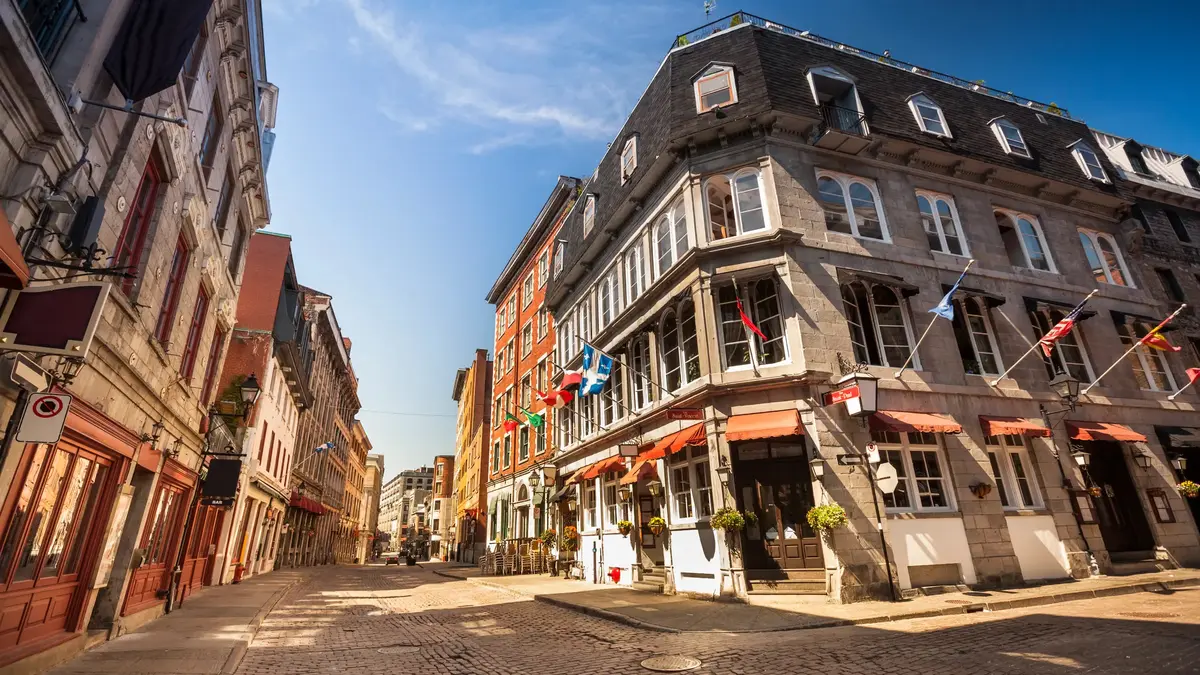
Being given the chance to study abroad has to be one of the most transformative experiences a university student can have, and McGill is one of the most sought-after gateways for it in Canada.
McGill is a leading research university based in Montreal that offers study abroad opportunities for current students, international exchange partners, and even high schoolers exploring Canada for the first time.
Often nicknamed the "Harvard of Canada," McGill has earned that reputation through its research output, highly selective admissions, and long-standing global academic reputation, though each university has its own distinct strengths.
In this guide, we'll cover eligibility, funding, deadlines, and what daily life is actually like, alongside high school exchange options for students not yet at university.
Let's start with who can actually go abroad.
Key Takeaways
- Inbound exchange requires a bilateral agreement between your home university and McGill, plus a CGPA of at least 3.0 out of 4.0; without one, Visiting Student status is the fallback, at McGill's own tuition rate.
- McGill runs on continuous assessment rather than one final exam, and some courses grade on a curve where the class average appears directly on your transcript.
- High schoolers have three main routes into Canada: CAPS-I public schools, specialty sport or arts academies within public schools, and CAIS-accredited boarding schools.
- McGill runs outbound exchanges through 160+ partner universities across 39 countries in six regions, and students can rank up to four choices since a first-choice nomination is never guaranteed.
- The former "Undergraduate Mobility Award" is now the need-based Mobility Bursary for Exchanges, paying roughly $750 to $2,500 per month depending on demonstrated financial need.
- McGill and the University of Toronto differ most in setting and cost: Montreal is bilingual and roughly 23% cheaper to live in, while Toronto is English-dominant, more expensive, and spread across three campuses with a larger student body.
Inbound Exchange: Studying Abroad at McGill University
International students often assume McGill works like any other university admissions process, but exchange only opens up once your own institution has a formal partnership in place.
Here's exactly how that partnership decides whether you get in.
Academic Requirements and Eligibility
McGill's incoming exchange students need to meet a few core requirements before their home university can nominate them:
- A CGPA equivalent to at least 3.0 out of 4.0
- Proof of English proficiency, if your home institution doesn't teach in English
- Enough completed coursework in your subject area to fit McGill's programme requirements
Can I Study Abroad at McGill?
If your home university has no bilateral agreement with McGill, exchange isn't available, you may still apply directly as a Visiting Student. Unlike exchange, there's no nomination required, you apply and pay tuition directly to McGill instead of your home university, admission depends purely on space availability, and stays are normally capped at one or two consecutive semesters.
Faculty capacity varies significantly. Arts and Science take the highest volume of exchange students, while the Desautels Faculty of Management, the Schulich School of Music, and the Faculty of Engineering cap places well below that, making them some of the hardest programmes to get into on exchange.
Step-by-Step Application Process
McGill breaks the incoming exchange journey into a clear five-step sequence:
- Prepare your application - confirm your bilateral agreement, meet the CGPA and English proficiency requirements, and gather your nomination paperwork
- Apply to McGill - submit your application once your home university has formally nominated you, during the correct window for your term
- Register for courses - select courses on Minerva after acceptance, respecting each faculty's own restrictions
- Get ready to arrive - handle your study permit, housing, and pre-arrival orientation before term starts
- Settle into your exchange - attend orientation, confirm registration by the add/drop deadline, and connect with International Student Services if issues come up
Steps one and two hinge entirely on timing. For Fall or full-year exchanges, nomination is due 20 March, with applications open 1 March to 1 April. Winter follows the same pattern earlier in the year, with nomination by 20 September and applications open 1 September to 1 October.



The McGill Student Experience: What It's Actually Like
Now that you've been accepted and registered for your first term, the best way to prepare is to read up on what daily life at McGill actually involves, beyond the paperwork you've already handled.
Here's what you can expect studying in a bilingual city with brutal winters.
Academics: Adapting to McGill's Rigor
McGill runs on continuous assessment rather than one high-stakes final exam. Expect midterms, weekly problem sets, quizzes, and short papers stacked throughout the term, so falling behind in week three has knock-on effects for the essay due in week nine.
Grades are assigned as letters (A through F), and for many courses, the class average appears on your transcript alongside your own grade, a sign the course is curved. Curving works in a few different ways: some instructors curve up a single exam based on how the class performed, others set fixed grade quotas from day one. The second type tends to unsettle students most, since your mark depends partly on classmates you can't control, so ask instructors early how their curve works rather than assuming.
Course registration is competitive too. Popular sections fill within days of opening, so registering the moment your slot opens on Minerva matters.
Culturally, McGill's workload has a reputation for spilling into identity, with visible exhaustion treated almost as a badge of honour, especially in the library during exam season. Sticking to a study routine that already works for you serves exchange students better than trying to out-suffer everyone else.
Finding Accommodation in Montreal
Most exchange students live off-campus, since residence spots go mainly to first-years. McGill's Off-Campus Housing office offers resources and support for the search.
Start your accommodation search several months before arrival, as the rental market around downtown Montreal becomes especially competitive before each academic term.
Three neighbourhoods dominate the options:
- McGill Ghetto (Milton-Parc) – immediately east of campus and walkable in 5 to 10 minutes, making it the most popular choice among McGill-affiliated renters
- Mile End – a bit further out, quieter and more creative, popular with graduate students and reachable by a short Metro or bike ride
- The Plateau – known for colourful walk-ups, a lively nightlife scene, and good Metro access at slightly lower rents than the immediate campus area
For private student residences, options like La Marq tend to get better reviews for community feel than hotel-style buildings, which can feel more isolating despite the convenience.
Weather: Braving the Canadian Winter
Montreal's January average sits around -9°C, with real cold snaps regularly dropping to -20°C or colder between December and February. The city also receives more than two metres of snow per year, so proper winter boots and an insulated coat aren't optional extras.
When the cold gets unbearable, locals disappear underground. RÉSO, Montreal's underground city, stretches roughly 32 kilometres beneath downtown, linking metro stations, shopping centres, and university buildings so pedestrians can avoid the worst of it entirely, something around 500,000 people use it daily in winter.
If you're wondering how to handle a shock this different from home, our guide on how to adapt to a new culture when studying abroad is a great place to start before you land.
Culture, Language, and Montreal Nightlife
Montreal is genuinely bilingual, and daily life switches fluidly between French and English even though McGill teaches in English. The STM runs the city's metro and bus network, with night buses covering the core after the metro closes, and BIXI bikes available from spring through autumn.
Saint-Laurent and Saint-Denis are the go-to streets for bars and late-night food, and Quebec's drinking age of 18 makes nightlife accessible early. No visit is complete without poutine and a wood-fired, Saint-Viateur-style bagel.
Montreal's festivals, from the Jazz Festival to Just for Laughs, also mean there's almost always something happening beyond campus throughout the year.
Join the Immerse Education 2027 Essay Competition
Follow the instructions to write and submit your best essay for a chance to be awarded a 100% scholarship.
High School Exchange Opportunities in Canada
While McGill only offers exchange and visiting programmes for university-level students, there are still plenty of opportunities if you're a high schooler looking to experience Canada before you ever apply anywhere.
Here are the different pathways that offer exactly that.
1. Public High Schools & CAPS-I
The Canadian Association of Public Schools – International (CAPS-I) is a non-profit network of more than 130 publicly-funded school boards across all 10 provinces, all offering established international student programmes from elementary through high school graduation.
Being a CAPS-I member doesn't mean every school in that board accepts international students. It means the board runs an international programme through select participating schools, and families apply via the board's international office rather than choosing a school directly.
Programme length is flexible, from a few weeks to a full academic year, and depending on the province, students can study in English, French, or a mix of both. Annual tuition for international students at Canadian public schools generally runs between CAD $9,500 and $17,000, on top of homestay or living costs.
Some well-known member boards include:
- Toronto District School Board - Canada's largest public board, with over 200 nationalities represented and specialised streams in IB, AP, Cyber Arts, and Elite Athletes
- Vancouver School Board - based in a city the UN has ranked among the world's most liveable, with electives spanning fashion design, robotics, and fine arts
Best for: Teens who want a broad, standard Canadian academic experience alongside local classmates, with the flexibility to explore electives rather than follow one fixed track.
2. Elite Specialty Academies
Some public schools within CAPS-I districts run named academy programs, letting international students train seriously in one focus area while completing a full academic diploma. A few real examples:
- Okanagan Mission Secondary School is AAAA-ranked in three sports and also runs a Broadway-style musical theatre program every year, staging a full production with students in grades 9 through 12.
- Penticton Secondary School runs its hockey program as a true partnership with the Okanagan Hockey Academy, unlike most academies bolted onto a school's timetable, letting students train competitively on-ice before regular classes.
- Ballenas Secondary School in Parksville, BC, runs dedicated academy streams in golf, soccer, and music, built into its regular international student program for students chasing a specific focus.
Best for: Students who already know their sport, art, or focus area and want a Canadian high school experience built around it, rather than a general academic exchange.
3. Independent & Boarding Schools
Unlike the public school route, CAIS boarding schools charge full private tuition in exchange for smaller classes, guaranteed on-campus housing, and rigorous IB or AP curricula. The network represents roughly 95 private schools nationwide, 29 of which offer boarding, and according to Go Far Global, all-in tuition for international boarders runs an indicative CAD $77,000 to $92,500 a year, covering tuition, meals, and campus housing.
A few well-known names give a sense of the landscape:
- Ridley College in St. Catharines, Ontario, runs a full IB programme alongside its boarding facilities, drawing international families specifically for that curriculum.
- Lakefield College School has built a reputation as one of Canada's strongest boarding options, pairing strong academics with a long-standing outdoor education program.
- Branksome Hall in Toronto stands out as one of the country's few all-girls IB boarding schools, giving families a gender-specific option within the CAIS network.
Some CAIS graduates also gain a financial edge afterward: Mount Allison University offers eligible CAIS international graduates a $5,000 annual tuition award, while Saint Mary's University knocks $1,000 off tuition each semester.
Best for: families seeking a highly structured, university-preparatory environment with small class sizes and guaranteed on-campus housing, rather than a homestay-based arrangement.
The Canadian Homestay Experience
Homestay is the accommodation model most CAPS-I and language-school programs default to for younger international students, and it's arguably the most immersive option on this list: rather than living independently, you become part of a Canadian household's daily routine, sharing meals, holidays, and ordinary weeknights the way a Canadian teenager would.
The Canada Homestay Network (CHN), the largest provider in the country, has placed students since 1995 and screens every host family through background checks, references, and an in-home safety review before matching begins.
Monthly fees typically fall between CAD $900 and $1,500, covering a furnished room, breakfast and dinner, utilities, and internet. On top of that, most programs charge a one-time $300 registration, placement, and orientation fee, plus a separate $500 non-refundable deposit applied toward your total invoice.
As a student, you're not left to figure things out alone once you've moved in. Your host family will guide you on transportation, local customs, and the everyday routines that don't show up in any orientation packet, from which bus gets you to school on time to how the household handles Sunday dinners.
If a full semester abroad feels like a bigger step than you're ready for, check out our guide to the University of Toronto summer programs for high school students for a shorter, lower-commitment way to experience Canadian campus life first.







Unlock Inspiring Opportunities with the Immerse Education Newsletter
Join our newsletter to stay ahead with exclusive updates, exciting programme highlights, and expert insights from the world of immersive education.
Learn how Immerse can transform your life
An in-depth overview of our university and career preparation programmes
Get a glimpse into the life of an Immerse participant
Find the right programme for you with sample timetables, location showcases, and more