15 Top Pre-College Programs for STEM Students

TL;DR
You’ll find 15 top pre-college programs for STEM students here, from tuition-free research programs like RSI, MITES, and SAMS to paid intensives like Penn’s ESAP and Stanford’s online Summer Institutes. The biggest difference is access, since many free programs only accept U.S. citizens or permanent residents while PROMYS and ESAP welcome students worldwide. Most programs target rising juniors and seniors, and several, like NYU’s ARISE, pay a stipend. Immerse Education’s Academic Insights pathway runs for two weeks in cities including Cambridge, Oxford, and Singapore for students aged 13 to 18.
If you already love STEM, the next step is finding out what it feels like to do it, not just study it. Top pre-college programs for STEM students put you in university labs, proof-based math classes, and engineering studios where questions don’t come with answer keys. You work alongside researchers and professors and finish with something real to show for it, like a research poster, a paper, or a prototype.
These programs range from free six-week intensives at MIT and Carnegie Mellon to paid engineering academies and online courses you can join from home. Depending on where you land, you might run experiments in an NYU Tandon lab, tackle number theory problem sets at PROMYS, or present a research paper at RSI. Many of the most competitive options are fully funded, so cost doesn’t have to decide for you.
What are pre-college programs for STEM students?
Pre-college programs for STEM students are summer programs, usually run by universities, research institutes, or government agencies, where high schoolers take advanced STEM courses or join active research projects. Most last from two to ten weeks, and many end with a poster session, research paper, or final presentation.
Programs fall into a few broad types. Research programs like SIMR, Simons, and BU RISE place you in a faculty lab, while coursework programs like MITES and SAMS mirror a college semester. Before you apply, check citizenship rules, since many free programs only accept U.S. citizens or permanent residents. Deadlines run from RSI’s December cutoff to late-winter dates for most others.
To help you compare your options, we’ve put together a list of 15 top pre-college programs for STEM students!
15 Top Pre-College Programs for STEM Students
1. Stanford Institutes of Medicine Summer Research Program (SIMR)
Location: Stanford University School of Medicine, Stanford, CA
Cost: No program fee beyond the application fee | Stipends available
Acceptance rate/cohort size: Not specified
Dates: June 8th - July 30th, 2026 (2027 dates not yet posted)
Application Deadline: 2027 deadline not yet posted
Eligibility: High school juniors and seniors who are at least 16 by the start of the program | International eligibility not specified
SIMR is an eight-week summer research internship where you work in a Stanford lab under the direct guidance of a one-on-one mentor. You choose from eight research institutes, including immunology, neurobiology, cancer biology, stem cell biology, cardiovascular biology, bioinformatics, and genetics.
If you prefer engineering design, the Bioengineering Team Internship has teams of four or five build prototypes that address a medical need. Past bioengineering teams have built an eye-drop delivery system and a football helmet that predicts concussions using machine learning. The summer ends with a poster session where you present your research to families, teachers, and Stanford faculty.
Why it stands out: You do real biomedical research in a Stanford lab with a dedicated mentor at no program cost.
2. Immerse Education’s Pre-University Summer School

Location: Cambridge, London, Oxford, Singapore, Sydney, and Toronto
Cost: Varies; summer school scholarship available through our bursary programme
Acceptance rate/cohort size: Selective; an average of 7 participants per class
Dates: 2 weeks during the summer
Application Deadline: Multiple cohorts with rolling admissions
Eligibility: Students aged 13 to 18; open to international students from around the world
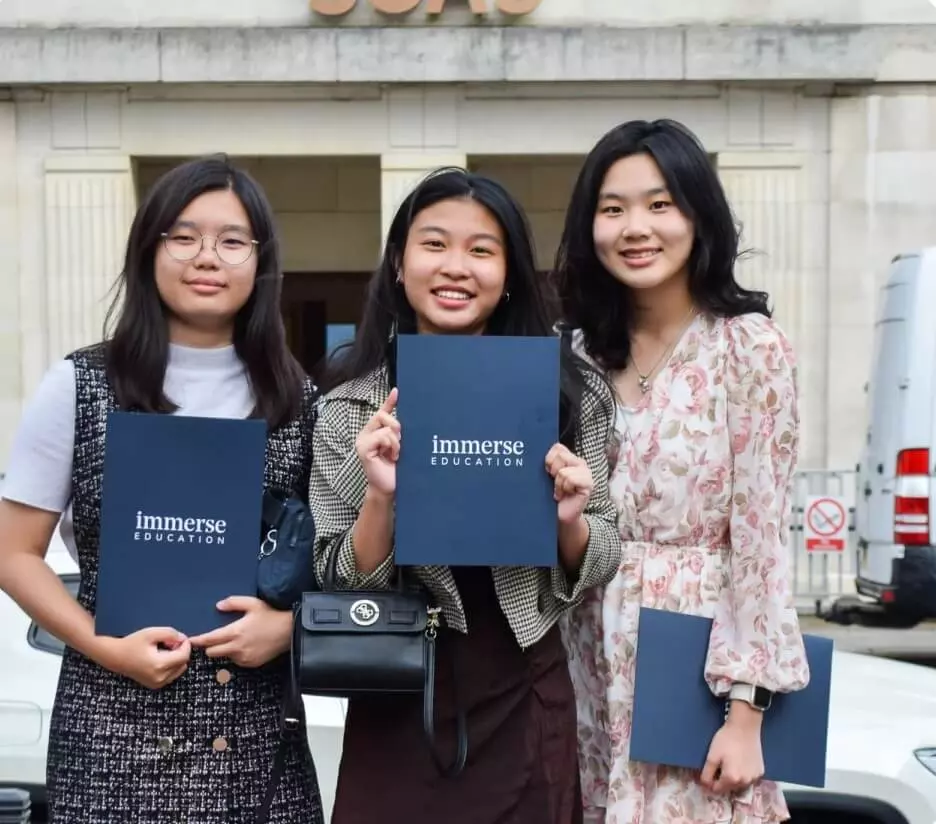
Immerse Education’s Academic Insights pathway gives you two weeks of undergraduate-level study in one subject, with STEM options including medicine, engineering, computer science, artificial intelligence, physics, chemistry, and mathematics. You learn in tutor-led seminars averaging seven students, with two one-to-one tutorials, masterclasses, and guest speakers. You can choose to live on campus or commute, depending on the location.
Throughout the course, you develop a personal project with your tutor’s guidance and present it on the final Friday. You finish with a Certificate of Achievement, and from age 14 you can opt into an accredited route worth 8 UCAS points or 3 US college credits. You can find more details about the application here.
Why it stands out: You study one STEM subject in depth, in small groups, in some of the world’s best-known university cities.
3. Lumiere Research Scholar Program
Location: Remote, you can participate in this program from anywhere in the world!
Cost: Varies depending on program type. Full financial aid available.
Program Dates: Varies by cohort: summer, fall, winter, or spring. Options range from 12 weeks to 1 year.
Application Deadline: Varies by cohort.
Eligibility: You must be currently enrolled in high school and demonstrate a high level of academic achievement.
The Lumiere Research Scholar Program is a rigorous research program tailored for high school students. The program offers extensive 1-on-1 research opportunities for high school students across a broad range of subject areas. The program pairs high school students with Ph.D. mentors to work 1-on-1 on an independent research project. At the end of the 12-week program, you’ll have developed an independent research paper!
You can choose research topics from subjects such as psychology, physics, economics, data science, computer science, engineering, chemistry, international relations, and more. You can find more details about the application here, and check out students’ reviews of the program here and here.
Why it stands out: You get 1-1 mentorship with a Ph.D. mentor and produce an independent research project by the end.
4. Research Science Institute (RSI)
Location: Massachusetts Institute of Technology, Cambridge, MA | Stanford University (new in 2027)
Cost: Free
Acceptance rate/cohort size: Highly selective; 100 students at MIT, plus 50 at Stanford in 2027
Dates: Six weeks in summer 2027
Application Deadline: December 11th, 2026
Eligibility: High school juniors (seniors are not eligible) | Open to international students
The Research Science Institute, run by the Center for Excellence in Education, is a cost-free summer program that takes you through the full research cycle. You start with a week of intensive STEM classes with accomplished professors before a five-week research internship on your own project with an experienced scientist as your mentor.
You’ll read current literature in your field and carry out a detailed research plan. In the final week, you prepare conference-style written and oral reports on your findings. In 2027, RSI is expanding to a second site at Stanford for 50 additional scholars.
Why it stands out: You complete original research at MIT or Stanford alongside some of the world’s most accomplished high school scientists, for free.
5. MITES Summer
Location: Massachusetts Institute of Technology, Cambridge, MA
Cost: Free, including room and board; you pay only for travel to and from MIT
Acceptance rate/cohort size: Not specified
Dates: Six weeks, late June through early August
Application Deadline: Apply online during the fall of your junior year (see the MITES application page)
Eligibility: High school juniors who are U.S. citizens or permanent residents | Not open to international students
MITES Summer is a six-week residential program that condenses a semester of MIT-level study into one summer. You take five courses: math, life sciences, physics, a humanities course, and a project-based elective, with past electives including machine learning, genomics, architecture, and electronics.
Expect about seven hours of classes on weekdays, plus homework, midterms, finals, and final projects. You’ll also tour MIT labs and local companies, meet admissions counselors at a college fair, and get college application guidance. At the end, each instructor writes an evaluation that many students submit with their college applications.
Why it stands out: You experience MIT’s pace and workload firsthand in a fully funded program built for students from underrepresented backgrounds.


6. Stony Brook University: Simons Summer Research Program
Location: Stony Brook University, Stony Brook, NY
Cost: Listed on the program FAQ
Acceptance rate/cohort size: 60 fellows selected from 1,864 applications in 2026
Dates: June 28th - August 6th, 2027
Application Deadline: Application link posts November 15th, 2026
Eligibility: High school juniors nominated by their schools; no prior research experience required | International eligibility not specified
The Simons Summer Research Program gives you six weeks inside a Stony Brook faculty research group in science, math, or engineering. Mentors come from chemistry, computer science, geosciences, marine science, neurobiology, and more than a dozen other departments.
You’ll run experiments, analyze data, and take on a research question of your own as part of work already underway. The program ends with a research poster presentation, and 10 fellows from the 2026 cohort were named Regeneron STS Scholars. Your school must nominate you to apply.
Why it stands out: You join an active research lab and contribute real work, with a strong track record of national science recognition.
7. AFRL Scholars Program
Location: Air Force Research Laboratory sites across the U.S.
Cost: Free | Stipend-paid internships
Acceptance rate/cohort size: Competitive
Dates: Summer internships; schedules vary by site
Application Deadline: Announced through the AFRL Scholars email list
Eligibility: Upper-level high school students, plus undergraduate and graduate STEM students | International eligibility not specified
The AFRL Scholars Program offers stipend-paid internships at Air Force Research Laboratory sites. You’ll work alongside full-time AFRL scientists and engineers on cutting-edge research and technology projects.
Interns contribute to unique, research-based projects rather than observing from the sidelines. The program is open to upper-level high school students as well as university students pursuing STEM degrees. Joining the program’s email list is the best way to hear about application windows and openings.
Why it stands out: You get paid to contribute to defense research alongside government scientists and engineers.
8. NASA OSTEM Internships
Location: NASA centers and facilities across the U.S.
Cost: Free | Most interns receive a stipend based on academic level and session length
Acceptance rate/cohort size: Competitive; more than 2,000 students each year
Dates: 10-week summer session; 15-week fall and spring sessions
Application Deadline: March 1st, 2027 (summer) | May 24th, 2027 (fall)
Eligibility: U.S. citizens who are 18 or older with at least a 3.0 GPA; high school seniors can apply for the summer after graduation | Not open to international students
NASA’s Office of STEM Engagement Internships let you work on real NASA projects with guidance from agency mentors. You’ll contribute to the agency’s mission in science, technology, aeronautics, and space exploration while building technical and professional skills.
Interns typically work Monday to Friday, 8 a.m. to 5 p.m., unless the project says otherwise. Letters of recommendation aren’t required, and you can apply to multiple opportunities across different centers. NASA also offers internships for non-STEM majors.
Why it stands out: You contribute to real NASA missions right after high school, with a paid stipend.
9. Carnegie Mellon University: Summer Academy for Math and Science (SAMS)
Location: Carnegie Mellon University, Pittsburgh, PA
Cost: Free (fully funded and merit-based); you cover travel to and from Pittsburgh
Acceptance rate/cohort size: Not specified
Dates: June 26th - August 7th, 2027, with a virtual Jumpstart on June 21-22
Application Deadline: February 1st, 2027
Eligibility: 11th graders who are at least 16 by the program start date and are U.S. citizens or permanent residents | Not open to international students
SAMS is a fully funded, six-week residential program focused on students underrepresented in STEM. You’ll take math and lab science courses, plus a collaborative research project with options like engineered meat, polymer chemistry, game design, and medical devices.
Weekly writing workshops help you produce an application-ready Common App essay by the end of the program. You’ll also complete “Student to Scholar,” a credit-bearing college transition course. The academic portion ends with a research symposium and awards ceremony.
Why it stands out: You get a fully funded taste of CMU’s STEM programs plus real help with your college essay.
10. NYU Tandon: Applied Research Innovations in Science and Engineering (ARISE)
Location: NYU Tandon School of Engineering, Brooklyn, NY
Cost: Free | $2,000 stipend on successful completion
Acceptance rate/cohort size: Not specified
Dates: June 1st - August 14th, 2026 (2027 dates not yet posted)
Application Deadline: February 27th, 2026 (2027 deadline not yet posted)
Eligibility: Rising juniors and seniors who are full-time NYC residents attending NYC schools | Not open to international students
ARISE is a free 10-week program that combines research training with lab work at NYU. The first four weeks cover safety training, college writing workshops, and research skills, before six weeks working in one of more than 80 NYU research labs.
Partner labs span areas like machine learning, robotics, materials science, chromatin genomics, and urban transportation. You’ll gain about 150 hours of lab experience and present your research at NYU’s Colloquium and the American Museum of Natural History Poster Symposium. Group and one-on-one college application support are included.
Why it stands out: You get paid to do 10 weeks of real university research in New York City.
11. Stanford Pre-Collegiate Summer Institutes
Location: Online
Cost: Listed on the Tuition and Financial Aid page | Financial aid available
Acceptance rate/cohort size: Average class size of 16
Dates: June 15-26 or July 6-17, 2026 (2027 dates not yet posted)
Application Deadline: 2026 applications have closed; 2027 dates not yet posted
Eligibility: Students currently in grades 8-11 | Open to students from around the world
Stanford Pre-Collegiate Summer Institutes offers intensive two-week study in a single online course. You choose from more than 75 courses, including STEM options in artificial intelligence, engineering, and mathematics.
Live classes meet daily with cameras on, so you discuss ideas in real time with instructors and classmates. Students typically join from all 50 states and more than 50 countries. Courses are ungraded and don’t award credit, and you can take one course per summer.
Why it stands out: You get a focused, Stanford-designed STEM course from anywhere in the world.
Join the Immerse Education 2027 Essay Competition
Follow the instructions to write and submit your best essay for a chance to be awarded a 100% scholarship.
12. Boston University: Research in Science & Engineering (RISE) Internship/Practicum
Location: Boston University, Boston, MA
Cost: Listed on the RISE Tuition, Aid & Payment page
Acceptance rate/cohort size: Not specified
Dates: June 27th - August 6th, 2027 (residential) | June 28th - August 6th, 2027 (commuter)
Application Deadline: Applications open December 17th, 2026
Eligibility: Domestic students currently in their junior year of high school | Not open to international students
RISE is a six-week program where you conduct university lab research at BU, with two tracks to choose from. In the Internship track, you spend 40 hours a week on research designed by a faculty mentor, in fields from astronomy and neuroscience to biomedical engineering and public health.
The Practicum track offers structured group research, which in 2026 covered computational neurobiology and data science. Both tracks end with a Poster Symposium where you present your results. One day a week, all RISE students attend workshops on academic and professional skills.
Why it stands out: You spend six full-time weeks in a BU research lab, mentored by faculty and graduate researchers.
13. UC Berkeley Pre-College Scholars
Location: UC Berkeley, Berkeley, CA | Virtual track available
Cost: Varies by track
Acceptance rate/cohort size: Not specified
Dates: Varies by track
Application Deadline: Listed on each track’s page
Eligibility: High school students; the Commuter Track is for Bay Area students | Open to students from around the world in the Residential and Virtual tracks
Berkeley Pre-College Scholars lets you take UC Berkeley courses for credit and experience university life alongside Berkeley students. You can choose a Residential Track, a Non-Credit Track, a Commuter Track for Bay Area students, or a Virtual Track you can join from anywhere.
In the credit-bearing tracks, you learn from Berkeley faculty and earn UC Berkeley credits. Residential students live on campus as part of the Berkeley student community. You’ll also connect with students from around the country and the world.
Why it stands out: You earn real UC Berkeley credit in courses taken alongside undergraduates.
14. University of Pennsylvania: Engineering Summer Academy at Penn (ESAP)
Location: University of Pennsylvania, Philadelphia, PA
Cost: Listed on ESAP’s financial information page
Acceptance rate/cohort size: Highly selective
Dates: July 12-31, 2026 (2027 dates not yet posted)
Application Deadline: January 31st, 2026 (priority and international) | February 28th, 2026 (final) (2027 deadlines not yet posted)
Eligibility: High school students who are at least 15 by the start of the program | Open to international students
ESAP is a residential summer academy run by Penn’s School of Engineering and Applied Science. Each of its seven programs is adapted from actual first- and second-year Penn engineering courses.
You’ll focus on one track for the full program, learning from Penn Engineering faculty in a demanding academic setting. Students who complete ESAP receive Penn credit, which can count toward a free elective at Penn Engineering. You’ll also live in a Penn residence and join social activities and trips around Philadelphia.
Why it stands out: You earn Penn credit in a course built from Ivy League engineering curriculum.
15. PROMYS: Program in Mathematics for Young Scientists
Location: Boston University, Boston, MA
Cost: Up to $8,000 (2026), depending on aid | Free for domestic students whose families earn under $80,000 a year
Acceptance rate/cohort size: About 80 students and 25 undergraduate counselors
Dates: June 27th - August 7th, 2027
Application Deadline: End of February 2027 (exact date to be confirmed)
Eligibility: Students aged 14-18 who have completed 9th grade and aren’t yet full-time college students | Open to international students, with aid considered case by case
PROMYS is a six-week residential mathematics program founded in 1989 and held at Boston University. You’ll spend your days on challenging problem sets designed to build deep thinking and creativity, with lectures and discussions alongside them.
You live and work with about 80 high schoolers and 25 undergraduate counselors who guide your mathematical exploration. To apply, you solve a challenging problem set and submit it with a recommendation letter, transcript, and short answers. PROMYS subsidizes every student, since the actual cost per student exceeds $10,000.
Why it stands out: You develop true mathematical thinking in a close-knit community, often at little or no cost.
Frequently asked questions: Pre-College Programs for STEM Students
What are the most prestigious pre-college STEM programs?
The most prestigious pre-college STEM programs are highly selective research and coursework programs at top universities. RSI brings about 100 students to MIT each summer and is adding 50 at Stanford in 2027, while Simons selected 60 fellows from 1,864 applications in 2026. MITES and PROMYS are also known for rigor. Prestige matters less than fit, so choose the program whose subject and format match your goals.
Are there free pre-college programs for STEM students?
Yes, several top STEM programs are free. RSI, MITES, and SAMS cover program costs, and MITES even provides room and board. NYU’s ARISE is free and pays a $2,000 stipend, while PROMYS is free for domestic families earning under $80,000. NASA’s OSTEM Internships pay most interns a stipend. For more paid options, explore these summer STEM internships for high school students.
Can international students attend pre-college STEM programs?
Yes, but many free U.S. programs are limited to citizens or permanent residents. MITES, SAMS, and NASA OSTEM Internships have citizenship requirements, while PROMYS, ESAP, RSI, and Stanford’s Summer Institutes welcome international students. Immerse Education’s Academic Insights pathway welcomes students from around the world in cities like Cambridge and Oxford. You can also compare these STEM summer programs in the UK.
Do pre-college STEM programs give college credit?
Some do. ESAP awards Penn credit, Berkeley Pre-College Scholars earns UC Berkeley credits, and SAMS includes a credit-bearing college transition course. Stanford’s Summer Institutes are ungraded and non-credit, though MITES gives you a written instructor evaluation you can share with colleges. Immerse Education’s Academic Insights pathway offers an optional accredited route from age 14, worth 8 UCAS points or 3 US college credits.
Do you need research experience to apply to a STEM program?
No, most STEM programs don’t require prior research experience. Simons says outright that it isn’t needed, and NASA’s internships don’t ask for recommendation letters. Applications instead focus on strong academics, essays, and recommendations, like SAMS’s requirement for a letter from a current math teacher. PROMYS asks you to solve a challenging problem set. If you want to build skills first, look into these math research programs for high school students.
Are there online pre-college STEM programs?
Yes, a few strong options run online. Stanford’s Pre-Collegiate Summer Institutes offers more than 75 live online courses, including AI, engineering, and mathematics, with an average class size of 16. UC Berkeley’s Virtual Track lets you earn Berkeley credits from anywhere in the world. For more options you can join from home, browse these online STEM programs for high school students.
Build your STEM path toward university
A summer in a real lab or proof-based classroom can show you which STEM field excites you most before you choose a college major.
When comparing top pre-college programs for STEM students, check citizenship rules, funding, and whether each one offers lab research, coursework, or both.
RSI closes on December 11th and SAMS on February 1st, so start drafting your essays and problem set solutions well before winter break.
To turn your summer research into a stronger STEM application, explore our University Preparation blogs for guidance on choosing and applying to universities.






Unlock Inspiring Opportunities with the Immerse Education Newsletter
Join our newsletter to stay ahead with exclusive updates, exciting programme highlights, and expert insights from the world of immersive education.
Learn how Immerse can transform your life
An in-depth overview of our university and career preparation programmes
Get a glimpse into the life of an Immerse participant
Find the right programme for you with sample timetables, location showcases, and more