15 Pre-Med Bootcamps for High School Students

TL;DR
You’ll find 15 pre-med programs here, mostly research internships at medical schools and institutes such as Stanford, Rockefeller, Duke, and Memorial Sloan Kettering. The biggest difference is access, since most cost nothing or pay a stipend but only accept local students or U.S. citizens, while Rockefeller’s SSRP takes applicants from outside the U.S. Most suit juniors and rising seniors aged 16 or older, and MSK takes just 20 interns a summer. Immerse Education’s Academic Insights pathway in Medicine runs for two weeks in six cities, including Cambridge, London, and Toronto, for students aged 13 to 18.
If you’re thinking about medicine, pre-med bootcamps for high school students let you test that interest long before you apply to college or medical school. Instead of only reading about disease in a biology textbook, you join research labs, learn from physicians, and present your findings to scientists. That experience can also help you work out why you want to study medicine and which part of the field excites you most.
Pre-med bootcamps come in a few formats, from two-week summer schools to paid research internships lasting up to ten weeks. Depending on the program, you might write a clinical research paper at Duke, run PCR in a cancer lab at Fred Hutch, or complete a health disparities project at UMass Chan. Many also include career seminars, college readiness sessions, and time with graduate students and physicians.
What are pre-med bootcamps for high school students?
Pre-med bootcamps for high school students are intensive summer programs, usually run by medical schools, hospitals, and research institutes, that introduce you to biomedical research and medical careers. Most last between two and ten weeks and pair you with a mentor in a lab or clinical setting.
Access varies more than you might expect. Many of the most selective programs are free or pay a stipend, but they only accept students from a specific city or state, and several require U.S. citizenship. Before you apply, check the age cutoff, residency rules, and whether housing is included, since most research internships expect you to arrange your own. Deadlines often fall between December and February, so it pays to plan early.
To help you compare your options, we’ve put together a list of 15 pre-med bootcamps for high school students!
15 Pre-Med Bootcamps for High School Students
1. Stanford Institutes of Medicine Summer Research (SIMR) Program
Location: Stanford University School of Medicine, Stanford, CA
Cost/Stipend: Free to attend; $50 application fee (waived for families with gross income under $80,000); limited need-based stipends available
Acceptance rate/cohort size: Highly selective; around 50 students expected
Application Deadline: Late February 2027 (application released December 18th, 2026)
Dates: June 7th - July 29th, 2027 (tentative)
Eligibility: Current juniors or seniors in the class of 2027 or 2028 who are 16+ by the program start | Must live in and attend high school in the U.S. and be U.S. citizens or permanent residents | Not open to international students
SIMR is an eight-week program where you perform basic research with Stanford faculty, postdoctoral fellows, and students on a medically oriented project. You rank the institute you’d like to work in when you apply, and if accepted, you rank faculty labs again before being placed.
Day-to-day, a Stanford graduate student or postdoctoral fellow mentors you, and most of the summer is spent on full-time lab work of around 40 hours a week. During the first two weeks, you also attend morning lectures, and the final two weeks are spent preparing a research poster. The program ends with a poster session where you present your project to families, teachers, and the Stanford community. Note that selection heavily favors Bay Area students, and housing isn’t provided.
Why it stands out: You spend eight weeks on a medically oriented research project in a Stanford lab, ending with a poster session for faculty and families.
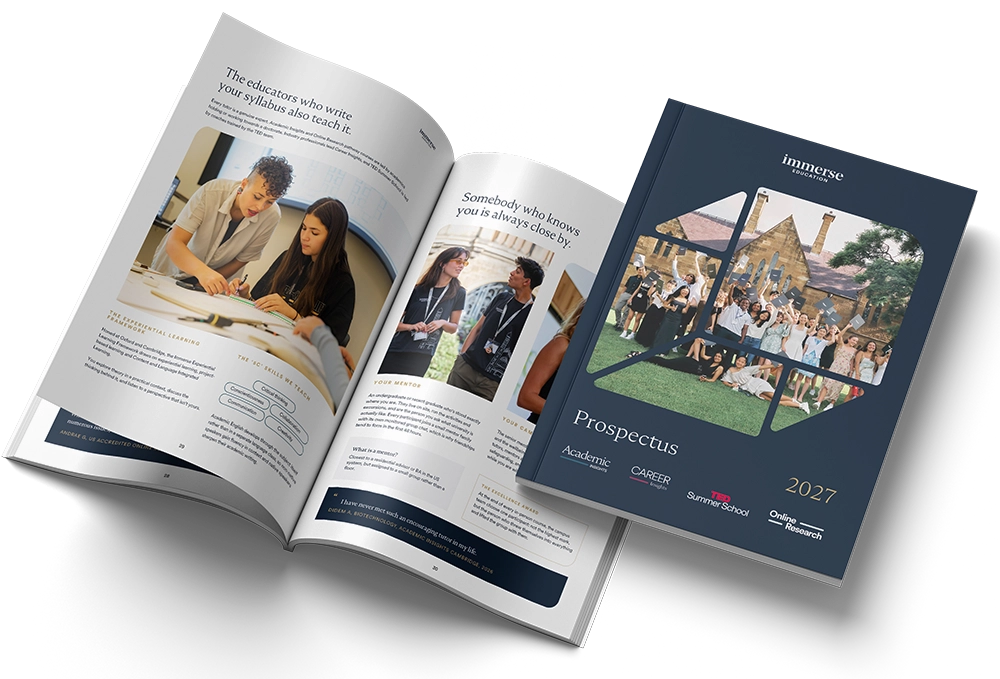
2. Immerse Education's Medicine Summer School

Location: Cambridge, London, Oxford, Singapore, Sydney, and Toronto
Cost: Varies; summer school scholarship available through our bursary programme
Acceptance rate/cohort size: Selective; an average of 7 participants per class
Program Dates: 2 weeks during the summer
Application Deadline: Multiple cohorts with rolling admissions
Eligibility: Students worldwide aged 13-18 currently enrolled in middle or high school; open to international students
Immerse Education's Academic Insights pathway in Medicine is a two-week, in-person programme that introduces you to university-level medical science through small-group teaching and case-based learning. You explore core topics such as anatomy, physiology, and clinical reasoning while learning how doctors apply scientific knowledge to diagnose and treat patients.
Classes emphasise discussion, critical thinking, and clear communication, mirroring the structure of undergraduate medical education. By the end of the programme, you will complete an academic project, receive detailed feedback, and gain a clearer understanding of what studying medicine at a top university involves.
Why it stands out: It connects you with medical academics and clinicians, helping you understand how medicine is studied and practiced at leading universities.
3. Lumiere Research Scholar Program
Location: Remote, you can participate in this program from anywhere in the world!
Cost: Varies depending on program type. Full financial aid available.
Application Deadline: Varies by cohort.
Program Dates: Varies by cohort: summer, fall, winter, or spring. Options range from 12 weeks to 1 year.
Eligibility: You must be currently enrolled in high school and demonstrate a high level of academic achievement.
The Lumiere Research Scholar Program is a rigorous research program tailored for high school students. The program offers extensive 1-on-1 research opportunities for high school students across a broad range of subject areas. The program pairs high school students with Ph.D. mentors to work 1-on-1 on an independent research project. At the end of the 12-week program, you’ll have developed an independent research paper!
You can choose research topics from subjects such as psychology, physics, economics, data science, computer science, engineering, chemistry, international relations, and more. You can find more details about the application here, and check out students’ reviews of the program here and here.
Why it stands out: You get 1-1 mentorship with a Ph.D. mentor and produce an independent research project by the end.
4. Rockefeller University: Summer Science Research Program (SSRP)
Location: The Rockefeller University, Manhattan, NY
Cost/Stipend: Free; NYC transit card provided, and need-based stipends may be awarded
Acceptance rate/cohort size: Extremely selective; 32-40 students each summer
Application Deadline: January 4th, 2027 (applications opened October 12th, 2026)
Dates: June 21st - August 5th, 2027
Eligibility: Current high school juniors or seniors who are 16+ by June 21st, 2027 | Open to international students, though RockEDU can’t help with visas, housing, or travel
During SSRP, you work on a research team designed and guided by scientific trainees from Rockefeller University, Memorial Sloan Kettering Cancer Center, and Weill Cornell Medicine. The program begins by introducing you to your team’s research topic and the techniques and lab norms you’ll need. During the second week, you choose a specific research question within that broader area and plan how you’ll approach it.
Over weeks three to five, you explore your question with guidance from your team leaders and scientist-mentors. In the final two weeks, you analyze your data and design a poster that you present at the end-of-program symposium. Elective courses, guest lectures, and workshops round out the experience, though you can’t use SSRP findings for science competitions.
Why it stands out: It allows you to develop an independent research question, conduct an investigation with leading scientists, and present your findings at a scientific symposium.
5. Harvard Medical School Project Success

Location: Harvard Medical School and HMS-affiliated research labs, Boston, MA
Cost/Stipend: Free; paid internship
Acceptance rate/cohort size: Selective
Application Deadline: February 4th, 2026 for the 2026 cycle (2027 deadline not yet posted)
Dates: June 29th - August 14th, 2026 (2027 dates not yet posted)
Eligibility: Current 11th or 12th graders who live in Boston or Cambridge, MA, are 16+ by the start date, and have a minimum 2.70 GPA | Must have completed algebra, biology, and chemistry and provide documentation that you’re allowed to work | Not open to international students
In Project Success, you spend the summer in a paid, full-time research internship in a Harvard Medical School or HMS-affiliated lab. Your mentor guides you through a research project while helping you understand the academic and professional paths available in science and medicine. Your research topic depends on your lab placement, so your summer could look very different from another intern’s.
Outside the lab, you join seminars with researchers and physicians, visit hospitals and biotechnology organizations, and build your writing and speaking skills. You’ll also receive career guidance and can network with students in other summer programs on campus.
Why it stands out: It combines one-on-one research mentorship with hospital visits, biotechnology exposure, and professional development within Harvard’s medical research community.



6. UMass Chan Medical School High School Health Careers Program (HSHCP)
Location: UMass Chan Medical School, Worcester, MA
Cost/Stipend: Free (tuition-free residential program); stipend and Certificate of Achievement awarded on completion
Acceptance rate/cohort size: Selective
Application Deadline: March 2nd, 2026 for the 2026 cycle (applications opened November 15th, 2025)
Dates: June 28th - July 24th, 2026 (2027 dates not yet posted)
Eligibility: Massachusetts residents who are sophomores or juniors at a Massachusetts high school and 16+ by mid-June | Not open to international students
As part of HSHCP, you spend four weeks in a residential program at UMass Chan Medical School that combines academic classes, professional observation, and research. Your classes cover science and biology, mathematics, English, communication skills, and information technology, giving you a foundation for further study in health-related fields. Through your assigned observer or internship placement, you meet physicians, scientists, and other healthcare professionals. You’ll also attend Cultural and Contemporary Health Issues seminars, and field trips reinforce what you learn in class.
Throughout the program, you complete a Health Disparities Research Project on a cultural group in Massachusetts, which you present before graduation. This structure gives you experience with both classroom learning and the work that takes place in medical and research settings.
Why it stands out: It integrates academic instruction with clinical observation and a health disparities research project, offering insight into both healthcare practice and community health challenges.
7. Winship Cancer Institute: Summer Scholars Research Program
Location: Winship Cancer Institute of Emory University, Atlanta, GA
Cost/Stipend: Free; $2,400 stipend for students who complete the program
Acceptance rate/cohort size: Selective; 10-12 students
Application Deadline: The 2027 application cycle is expected to open in fall 2026
Dates: Six weeks; the 2026 program ran June 8th - July 17th (2027 dates not yet posted)
Eligibility: Rising or graduating high school seniors who are 16+ by the start date | In-person program limited to U.S. citizens and permanent residents | International students can apply to the virtual-only option
In the Summer Scholars Research Program, you’re paired one-on-one with a Winship physician or lab-based researcher and conduct research in an active laboratory for six weeks. You attend lectures from Winship oncologists and research faculty on cancer biology and career paths in oncology, giving you a broad view of cancer research.
Roundtable discussions with cancer survivors add a patient perspective you rarely get in a lab. Field trips have included the Michael C. Carlos Museum and the Emory Proton Therapy Center. On the last day, you present your final project at a symposium, and you can invite family and teachers to attend.
Why it stands out: You work one-on-one with a Winship investigator and hear directly from cancer survivors about their experiences.
8. Duke STAR Program
Location: Duke Clinical Research Institute (DCRI), Durham, NC
Cost/Stipend: Free; $4,000 stipend for high school students (housing and transportation not included)
Acceptance rate/cohort size: Selective
Application Deadline: November 16th, 2026 - January 6th, 2027
Dates: June 21st - July 23rd, 2027
Eligibility: High school students who are 18+ by June 21st, 2027 | Must be U.S. citizens or permanent residents | Not open to international students
During the Duke STAR Program, you join a research team matched with Duke faculty mentors to take a clinical research project from a one-page summary to a complete research paper. In the first two weeks, you refine a research question about the uses and effects of a particular medication and conduct a thorough literature review.
A statistician teaches applied statistics and works with you to analyze data, while a medical writer runs tutorials on developing a scientific manuscript. The program aims for every participant to qualify for co-authorship on a peer-reviewed manuscript related to their team’s project. Lectures cover neonatology, antimicrobial therapy, and pharmacoepidemiology, alongside a medical ethics seminar on responsible research. You’ll also shadow a physician on hospital rounds.
Why it stands out: It takes you through the complete clinical research process, from literature review and statistical analysis to a manuscript prepared with professional guidance.
9. Houston Methodist’s Summer High School Research Internship
Location: Houston Methodist Hospital, Texas Medical Center, Houston, TX
Cost/Stipend: Not specified on the program page
Acceptance rate/cohort size: Selective
Application Deadline: December 4th, 2026 - January 29th, 2027
Dates: June 1st - August 6th, 2027 (10 weeks, full time)
Eligibility: High school juniors or seniors aged 16+ | Minimum 3.5 GPA | International eligibility not specified
Houston Methodist’s Summer High School Research Internship is a 10-week program that introduces you to translational research. You work alongside undergraduate research interns on a summer project chosen by your faculty mentor, who also teaches you the lab techniques you need to complete it.
That setup lets you see how researchers develop questions, conduct experiments, and interpret findings that may eventually inform patient care. The program ends with a research symposium where you present a poster of your work. A career and professional development curriculum also gives you tools for college applications.
Why it stands out: It provides exposure to translational medical research, helping you understand how laboratory investigations and scientific findings can eventually contribute to patient care.
10. National Heart, Lung, and Blood Institute: Summer Internship Program
Location: NIH laboratories in Bethesda, MD, and Framingham, MA
Cost/Stipend: No cost to participate
Acceptance rate/cohort size: Highly selective
Application Deadline: Applications go through the NIH Summer Internship Program portal; the most recent window posted by NHLBI ran November 18th, 2024 - February 19th, 2025
Dates: Six to eight weeks during the summer
Eligibility: High school seniors who are 18+ and will graduate before the internship starts, as well as college and graduate students | Must be U.S. citizens or permanent residents | Not open to international students
You’ll work within NIH laboratories on basic or clinical research under the mentorship of an NHLBI principal investigator. Your placement may involve areas such as cardiovascular health, pulmonary disease, blood disorders, or other topics studied by the National Heart, Lung, and Blood Institute. As part of your research group, you contribute to ongoing work and learn how scientists turn medical questions into research questions that can be investigated through laboratory methods and data.
You’ll also join professional development events and mentorship opportunities throughout the summer. NHLBI encourages you to contact investigators whose labs interest you after you submit your application.
Why it stands out: It offers access to NIH research teams working on major cardiovascular, lung, and blood-related health questions, alongside professional development in biomedical science.
11. Mayo Clinic’s Science Program for the Advancement of Research Knowledge (SPARK)
Location: Mayo Clinic, Jacksonville, FL
Cost/Stipend: Not specified on the program page
Acceptance rate/cohort size: Selective; places depend on available research mentors
Application Deadline: October 15th - December 4th, 2026
Dates: June 3rd - December 4th, 2027 (40 hours a week in summer, plus project work in the fall)
Eligibility: Rising juniors or seniors at schools in Duval County or St. Johns County, FL | Minimum 3.5 unweighted GPA | Must attend orientation and training in the first two weeks of June | Not open to international students
You’ll take part in mentored research in Mayo Clinic’s laboratories on its Florida campus, in a field you choose when you apply. Research areas include biochemistry and molecular biology, drug development, epidemiology, immunology, cancer biology, artificial intelligence, neuroscience, and regenerative sciences.
Since the program extends beyond the summer, you have more time to follow a research project as it develops rather than completing it within a short placement. After oral presentations in August, you submit a poster in October and present at an awards ceremony and poster symposium in December. Many SPARK scholars then enter their projects in regional, state, and international science fairs.
Why it stands out: Its extended timeline allows you to follow a biomedical research project over several months and present your findings at science fairs.
Join the Immerse Education 2027 Essay Competition
Follow the instructions to write and submit your best essay for a chance to be awarded a 100% scholarship.
12. Broad Summer Scholars Program (BSSP)
Location: Broad Institute of MIT and Harvard, Cambridge, MA
Cost/Stipend: Free; paid research position
Acceptance rate/cohort size: Highly selective; 18 scholars in 2026
Application Deadline: November 23rd, 2026 - January 20th, 2027
Dates: July 6th - August 13th, 2027
Eligibility: Rising seniors at Massachusetts high schools within commuting distance of the Broad Institute | B or better in science and math classes | Must be U.S. citizens, permanent residents, or non-U.S. citizens with employment authorization | Not open to international students living outside the U.S.
You’ll spend six weeks conducting original, paid biomedical research at the Broad Institute, and no prior research experience is required. Your project may relate to cancer, cell and molecular biology, epigenetics, or another area studied by the Broad research group you join. Through your project, you learn how scientists investigate biological questions and use research methods to better understand disease.
Alongside your research, you receive college readiness coursework, attend scientific talks by Broad scientists, and explore careers at a career mixer. At the end of the program, you present your work to the Broad community at a poster session.
Why it stands out: It provides a paid opportunity to contribute to biomedical research at a leading institute, with college readiness support built in.
13. JJ Vance Memorial Summer Internship
Location: University of Miami Miller School of Medicine, Miami, FL
Cost/Stipend: Free; paid internship
Acceptance rate/cohort size: Highly selective
Application Deadline: December 1st, 2026 - January 31st, 2027
Dates: June 14th - August 6th, 2027
Eligibility: Juniors in good standing at Miami-Dade and Broward-area high schools | Not open to international students
The JJ Vance Memorial Summer Internship in the Biological and Computational Sciences is an eight-week research course at the John P. Hussman Institute for Human Genomics. You’re paired with an HIHG staff member, postdoctoral fellow, or faculty member and work alongside them on research in the biological and computational sciences.
You’ll learn how researchers investigate questions related to human health and disease while receiving mentorship on academic and career paths. The internship ends with a final presentation luncheon, where you share what you worked on and learned. Interviews run in March and April, so you’ll want strong recommendations ready by the January deadline.
Why it stands out: It combines paid research experience with exposure to genomics and computational biology at a university medical school.
14. Fred Hutch Summer High School Internship Program
Location: Fred Hutch Cancer Center, Seattle, WA
Cost/Stipend: Free; financial award on completion, plus a free ORCA transit card
Acceptance rate/cohort size: Highly competitive
Application Deadline: March 13th, 2026 for the 2026 cycle (2027 details to be posted in November)
Dates: June 22nd - August 14th, 2026 (2027 dates not yet posted)
Eligibility: Rising seniors aged 16+ who live in Greater Seattle or surrounding areas | Not open to international students
You’ll begin with two weeks of training in lab safety and techniques such as pipetting, tissue culture, DNA isolation, PCR, and gel electrophoresis. From week three, you’re placed in pairs with a host mentor in a Fred Hutch research group, where your daily routine depends on the lab’s ongoing work.
The program is designed for students without extensive research experience, so you don’t need a lab background to apply. Your cohort also attends weekly sessions on ethics, health disparities research, data visualization, and biostatistics, along with college-essay workshops. You’ll finish with a reflection presentation for the Fred Hutch community, teachers, and families.
Why it stands out: It offers an immersive cancer research experience that combines laboratory training, mentorship, and scientific communication within a dedicated cancer research institution.
15. Memorial Sloan Kettering Cancer Center: Summer Student Program
Location: Memorial Sloan Kettering Cancer Center, New York, NY
Cost/Stipend: Free; $1,200 stipend (housing not provided)
Acceptance rate/cohort size: Highly selective; 20 interns per summer, with about a 2% acceptance rate
Application Deadline: December 1st, 2026 - February 5th, 2027
Dates: June 29th - August 20th, 2027
Eligibility: Current high school juniors aged 16+ by June 2027 with a 3.5 science GPA, living in NY, NJ, or CT within 25 miles of MSK’s Main Campus | Must be legally authorized to work in the U.S. | Not open to international students
You’ll join an MSK research lab for an eight-week biomedical or computational internship, paired with a mentor who supervises your work. Research areas include cancer biology, immunology, chemical biology, computational biology and genomics, pharmacology, and structural biology.
Over the summer, you complete a self-directed project that supports your principal investigator’s broader research goals. Beyond the lab, events hosted across MSK, including Memorial Hospital clinical departments, give you insight into translational medicine. The program ends with a closing ceremony poster session where you present your work.
Why it stands out: It gives you the chance to explore cancer-focused research at one of the world’s leading cancer centres, while also helping you develop practical research and scientific presentation skills.
Frequently asked questions: Pre-Med Bootcamps for High School Students
What courses should you take in high school for pre-med?
Focus on biology, chemistry, and math, and take them at the most advanced level your school offers. Several programs on this list set course requirements: Harvard’s Project Success expects you to have completed algebra, biology, and chemistry, and MSK asks for a 3.5 GPA in science. Physics, statistics, and English also help, since research programs ask you to analyze data and write clearly. For extra preparation, you can try these pre-med courses for high school students.
Is pre-med a lot of math?
Pre-med involves some math, but most of it is applied rather than abstract. In high school, algebra, statistics, and some calculus give you a strong base for chemistry, physics, and research. Duke’s STAR program shows why statistics matters, with a statistician teaching you to analyze data for a clinical research paper. If math isn’t your strongest subject, you can build comfort with data through one of these research project ideas in medicine.
Are pre-med programs for high school students free?
Many of the most selective pre-med research programs are free, and several pay you. Duke’s STAR program pays high school students a $4,000 stipend, Winship pays $2,400, and MSK pays $1,200, while Rockefeller’s SSRP charges nothing and covers NYC transit. SIMR is free to attend but charges a $50 application fee, which can be waived. The trade-off is access, since most free programs only accept local students or U.S. citizens and permanent residents.
Can international students attend pre-med programs in the US?
Some can, but most U.S. pre-med research programs require U.S. citizenship, permanent residency, or local residency. Rockefeller’s SSRP accepts applicants from outside the U.S., though it can’t help with visas or housing, and Winship offers a virtual option for students who don’t meet its in-person citizenship rules. Outside the U.S., Immerse Education’s Academic Insights pathway in Medicine welcomes students aged 13 to 18 from around the world in Cambridge, Oxford, London, Singapore, Sydney, and Toronto.
When should you apply for pre-med summer programs?
Start looking in early autumn, since most deadlines fall between December and February. Mayo Clinic’s SPARK closes on December 4th, 2026, Rockefeller’s SSRP on January 4th, 2027, and Duke’s STAR on January 6th, 2027. The Broad, JJ Vance, and MSK programs close between January 20th and February 5th, 2027. Most programs ask for two recommendation letters, so give your teachers several weeks’ notice. You can also compare these pre-med internships for high school students as you plan.
Do pre-med programs help you get into medical school?
They won’t guarantee a place, but they can strengthen your applications and help you confirm that medicine suits you. Duke’s STAR program aims for every participant to qualify for co-authorship on a peer-reviewed paper, and many programs end with a poster or presentation you can discuss in interviews. Immerse Education’s accredited route lets you earn 8 UCAS points or 3 US college credits from age 14. Later on, you’ll also need patient contact, so read up on how to get clinical experience for med school.
Choosing the pre-med bootcamp that fits you
Running experiments in a cancer lab, writing a clinical research paper, or presenting a poster shows you what medicine actually involves far beyond the textbook.
The best pre-med bootcamps for high school students match your age, location, and citizenship status, so check eligibility carefully before you start any application.
Many deadlines fall between December and February, so gather your transcript and ask two teachers for recommendation letters early in the fall semester.
To keep preparing for a medicine degree and the applications ahead, browse our University Preparation blogs for guides on subjects, admissions, and choosing courses.







Unlock Inspiring Opportunities with the Immerse Education Newsletter
Join our newsletter to stay ahead with exclusive updates, exciting programme highlights, and expert insights from the world of immersive education.
Learn how Immerse can transform your life
An in-depth overview of our university and career preparation programmes
Get a glimpse into the life of an Immerse participant
Find the right programme for you with sample timetables, location showcases, and more