15 Best Pre-College Law Programs at Universities

TL;DR
You'll find 15 pre-college law programs here, ranging from one-week introductions like Georgetown's Law Academy to intensive multi-week immersions such as USC's four-week track. Programs vary between credit-bearing courses, like Cornell's three-credit Introduction to the American Legal System, and certificate-only experiences focused on mock trials and courtroom advocacy. Formats span residential campus stays, commuter options, and fully online courses such as Northwestern's From Interview to Argument. Most accept students from ninth grade onward, with several open internationally. Immerse Education's Law Summer School, held across Oxford, Cambridge, and London for students ages 13 to 18, rounds out the list.
Law is a subject you can start exploring long before you apply to law school. You can learn to read a case closely, work out what the law actually says, question the evidence, and build an argument that someone else can challenge. A good pre-college law program gives high school students a chance to practise many of those skills while getting a feel for university-level study.
You might spend a few weeks discussing constitutional questions, analysing court decisions, writing legal arguments, or preparing for a mock trial. Some programs focus on criminal justice or human rights, while others look at business law, public policy, international law, or legal ethics. The work can be surprisingly specific, especially when you start dealing with actual cases and competing interpretations of the law.
What kinds of pre-college law programs at universities are there?
It really depends on what you want to get out of the experience. Some programs put most of their focus on trial advocacy, mock trials, and courtroom arguments. These can work well if you enjoy public speaking and debating. Others look at areas such as civil rights, environmental law, or international relations and give you a chance to see how laws and policies affect people.
You will also find programs that take place on college campuses, where you can experience classes and, in some cases, residential life. Others are online and may include sessions with lawyers, judges, or other people working in the legal field. If you want practical experience, look for programs that let you actually work through legal problems, rather than ones that are mostly lectures. To learn more about building a law career, go through our guide on law careers.
Spending part of your summer exploring law can also help you figure out whether it is something you want to pursue in college. More importantly, you get to practice skills like research, reasoning, writing, and public speaking along the way.
For related options, explore online law courses for high school students.
To help you narrow down your options, we have put together 15 pre-college law programs at universities worth checking out!
15 Best Pre-College Law Programs at Universities
1. Georgetown University Law Academy
Location: In person at Georgetown University in Washington, D.C., residential or commuter
Cost: $3,725 residential, including housing and meals, or $3,095 commuter, plus a $50 application fee that is waived for applications submitted by the early-bird date; need-based scholarships cover tuition only
Acceptance rate/cohort size: Not disclosed; once admitted, seats are filled first-come, first-served on payment of tuition
Dates: One week, starting June 21st, July 12th, or July 26th
Application Deadline: May 15th
Eligibility: For current 8th through 12th graders with at least a 2.0 GPA who are 15 by check-in; international students pay an additional $45 health insurance fee.
Georgetown University’s Law Academy introduces high school students to the American legal system through classes, case discussions, and courtroom exercises. You will examine constitutional rights, legal precedents, and courtroom procedures before putting them into practice in a capstone mock trial. During the simulation, you will deliver opening statements, cross-examine witnesses, and argue legal disputes.
Guest speakers from federal agencies, courts, and advocacy groups will also discuss judicial decision-making and legal ethics. Undergraduate residential assistants lead evening discussions and campus activities during the program. You will finish with a Georgetown certificate of participation and a clearer understanding of areas such as prosecution, policy, and advocacy.
Why it stands out: You finish with a Certificate of Completion from Georgetown, along with a clearer sense of which area of the profession suits you, whether prosecution, policy, or advocacy.
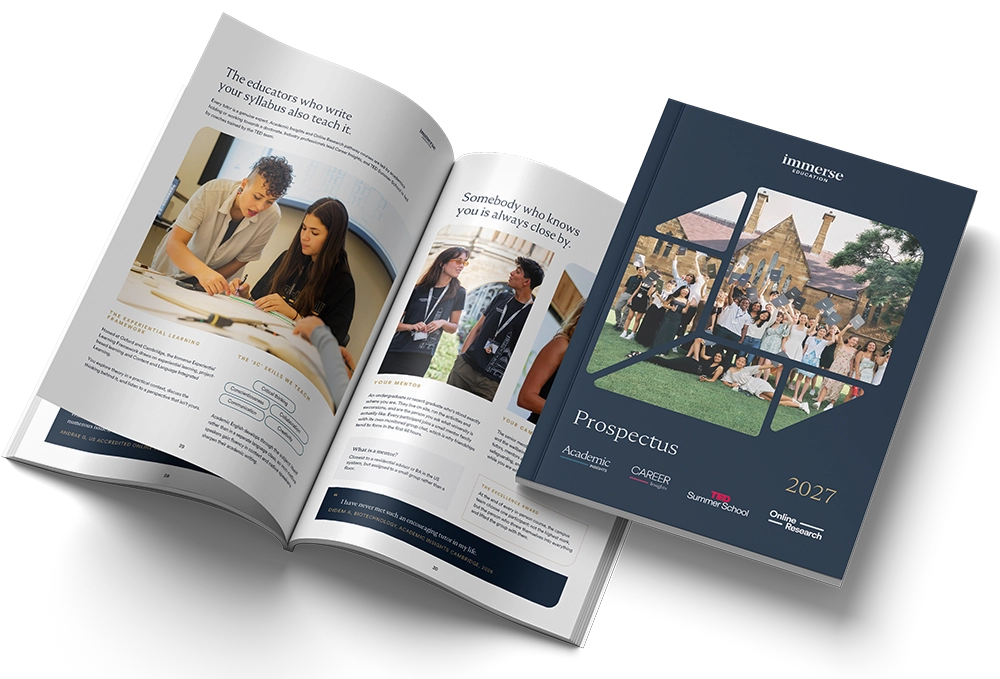
2. Immerse Education’s Law Summer School

Location: Oxford, Cambridge, London
Cost: Varies; summer school scholarship available through our bursary programme
Acceptance rate/cohort size: Selective; an average of 7 participants per class
Application Deadline: Multiple cohorts with rolling admissions.
Program Dates: 2 weeks during the summer
Eligibility: Students worldwide aged 13-18 currently enrolled in middle or high school
The Law Summer School provides school students with an opportunity to take undergraduate-level classes at universities around the world. Participants work with academics from universities like Oxford, Cambridge, and Harvard in classes of 4-10 students. They attend university-style lectures and 1:1 weekly sessions with their tutor.
Through interactive seminars, case studies, and discussions intended to replicate the intellectual rigor of undergraduate law courses, you investigate fundamental topics of law, including contracts, criminal justice, human rights, and constitutional principles. The program helps you develop the abilities necessary for success in legal and related academic fields by emphasizing analytical reasoning, persuasive communication, and disciplined arguments. By the end of the program, you will complete a personal project and receive written feedback and a Certificate of Achievement. You can find more details about the application here.
Why it stands out: You’ll be taught by top faculty, work on an independent project, and live on campus, giving you a complete experience of future university life.
3. Penn Carey Law Pre-College Academy

Location: In person at the University of Pennsylvania Carey Law School in Philadelphia
Cost: $9,899 residential, including housing, meals, and activities, or $6,299 commuter; scholarships are awarded on need, merit, and interest in law.
Acceptance rate/cohort size: Not disclosed
Dates: Three weeks, July 12-31 for residential, July 13-31 for commuter
Application Deadline: Rolling until seats fill up
Eligibility: For students in grades 9 through 12 with a record of academic achievement and leadership. International students can apply.
The Penn Carey Law Pre-College Academy gives high school students an intensive introduction to American law and legal reasoning. You will brief landmark court decisions, examine statutory interpretation, and discuss questions of legal ethics during daily seminars. The program also includes simulated appellate arguments and courtroom exercises where you will prepare legal briefs, make oral arguments, and defend a position before a judicial panel.
Practising attorneys and judicial clerks lead sessions on areas including civil litigation, corporate compliance, and criminal justice reform. Law student fellows also run study workshops and provide feedback on your case summaries. You will finish with a Penn Carey Law certificate of completion and practical experience in legal research, analysis, and advocacy.
Why it stands out: You argue orally and negotiate contracts in the law school's mock trial rooms, then participate in off-campus field trips.
4. Yale Young Global Scholars: Politics, Law and Economics
Location: In-person and residential on Yale's campus in New Haven, Connecticut
Cost: $7,000 per session, covering housing, meals, coursework, and campus resources; Need-based financial aid is available, reaching full tuition and sometimes travel.
Acceptance rate/cohort size: Serves nearly 2,000 students from over 150 countries
Dates: Varies
Application Deadline: January 7th
Eligibility: For sophomores and juniors aged 16 to 18 by July 19th who have not attended a previous session; international students can apply.
Yale Young Global Scholars’ Politics, Law and Economics session examines major questions in politics, law, and economics through lectures and small-group seminars. You will debate complex issues, work with primary texts, and collaborate with other participants on a capstone project. Graduate and undergraduate instructors lead seminar discussions and provide feedback on student proposals and presentations.
The residential program also includes cross-cultural activities and opportunities to meet students from different countries and academic backgrounds. Your work combines individual analysis with group problem-solving throughout the session. You will finish with a collaborative capstone project and a Yale Young Global Scholars certificate of completion.
Why it stands out: It includes a session-long capstone project that requires you to construct a collaborative response to a question of your own choosing, and admission to the program brings entry to a global alumni network that continues to open professional connections.
5. Emory Pre-College Program - Constitutional Law: Civil Rights and Civil Liberties
Location: In person at Emory University in Atlanta, Georgia, residential or commuter
Cost: $5,510 residential, including housing, dining, and activities, or $3,925 commuter, plus a $70 non-refundable application fee
Acceptance rate/cohort size: Not disclosed
Dates: June 28th – July 11th
Application Deadline: May 1st
Eligibility: Open to rising high school juniors and seniors (current 10th and 11th graders) who are at least 15 years old with a minimum 3.0 GPA; open to international students
Emory’s Constitutional Law program focuses on how American constitutional principles apply to questions of civil rights and civil liberties. You will examine Supreme Court cases involving free expression, digital privacy, and federal criminal procedure while learning how courts interpret constitutional protections. Seminar debates will ask you to analyse appellate opinions, weigh public interests against individual freedoms, and present oral arguments on civil-liberties disputes.
You will also study statutory interpretation and how changes in society can influence constitutional doctrine. Undergraduate residence advisers lead campus activities and support students throughout the program. You will complete the session with an official non-credit Emory transcript recording your final grade as Satisfactory or Unsatisfactory.
Why it stands out: You investigate contemporary constitutional conflicts, including modern digital privacy and freedom of speech against major technology firms, directly under Emory scholars while earning an official university transcript.




6. Columbia Pre-College: Legal Reasoning
Location: Columbia University, New York City for in-person sessions, or online
Cost: Varies by program format
Acceptance rate/cohort size: 22 students maximum per section
Dates: Online: July 6–17 or July 20–31; in person: June 29th – July 17th or July 21st – August 7th
Application Deadline: Rolling; the financial aid deadline falls on March 2nd, and payment is due June 12th
Eligibility: For high school students, roughly ages 14 to 18; open to international students
Columbia’s Pre-College program offers high school students a university-level introduction to legal reasoning through seminars, case studies, and collaborative projects. You will analyse complex primary sources, construct legal arguments, and present your findings in project workshops. The course also uses lectures and discussions to examine contemporary issues, professional ethics, and different ways of approaching complex problems.
You will work with other students while developing and defending your arguments. The program also includes a certificate and a written instructor evaluation of your work. This gives you a record of both your participation and how your instructor assessed your academic work.
Why it stands out: You receive a certificate and a written instructor evaluation of your work, which gives the admissions department substantive evidence to weigh your college application.
7. Cornell Precollege: Introduction to the American Legal System
Location: Online, from Cornell University's School of Continuing Education and Summer Sessions
Cost: $1,940 per credit, so a three-credit course totals $5,820, plus a $75 application fee; limited partial scholarships are available
Acceptance rate/cohort size: Not disclosed
Dates: June 22nd – July 10th
Application Deadline: May 14th
Eligibility: For students aged 15 to 19 who have completed sophomore year; open to US and international students, and credit-bearing
Cornell’s Introduction to the American Legal System examines how the American legal system developed and what purposes law serves. You will study the origins of American law in natural and common law and examine how the legal system deals with private disputes and offenses against the public.
The course treats law as a system to analyse, asking why it developed in its present form and how its different functions work. It is cross-listed with Cornell’s Government department as GOVT 3150 and is credit-bearing. The course is taught by a Senior Associate Dean from Cornell Law School and former Navy judge advocate, giving you direct instruction from an experienced legal academic and practitioner.
Why it stands out: Instruction is led directly by a Senior Associate Dean from Cornell Law School and former Navy judge advocate, providing high schoolers with rare access to top law school leadership.
8. UChicago Pre-College: Legal Reasoning and Institutions
Location: In person at the University of Chicago
Cost: Total program fee for this 3-week residential immersion is $9,300 and a non-refundable $1,000 enrollment deposit
Acceptance rate/cohort size: Not disclosed
Dates: Session 1 runs June 13th – July 3rd (classes June 15th – July 2nd)
Application Deadline: Not specified
Eligibility: For high school students admitted to the Summer Session pre-college program; open to international students
UChicago’s Legal Reasoning and Institutions course introduces high school students to the analytical methods used to examine law and legal institutions. You will work with academic texts, debate theoretical questions, and develop and defend arguments through the university’s inquiry-based approach.
The course places you in collaborative academic groups where you will discuss ideas, examine evidence, and present your reasoning. Faculty-led sessions focus on analysing complex questions and building arguments from the material you study. The residential format also gives you access to campus activities and undergraduate admissions workshops.
Why it stands out: You study at the university whose law and economics tradition reshaped how American courts analyze regulation, and the analytic habits acquired transfer directly to the logical reasoning that law admissions tests measure.
9. NYU Pre-Law Bootcamp
Location: In person at NYU in Manhattan, with optional campus housing
Cost: $2,579 per course plus a $50 non-refundable application fee, with housing and dining an optional $684; no financial aid, scholarships, or discounts are offered
Acceptance rate/cohort size: Not disclosed
Dates: One week, with the first session running June 29th - July 2nd and further sessions through early August
Application Deadline: March 14th for International students, April 29th for residential students, June 12th for commuter students
Eligibility: For students who have completed grades 9, 10, or 11, with an essay and official transcript required; housing is restricted to those aged 15 and over; international students can apply
NYU’s Pre-Law Bootcamp gives you a short, intensive introduction to legal careers, substantive law, and litigation. You will examine real court cases and use them to understand how legal disputes move through the American justice system. Lectures and speaker panels bring in legal practitioners who can explain the profession through examples from their own work.
The program also includes site visits to places such as courthouses, public-interest organisations, and government offices. You will see different parts of the legal profession across the week while completing projects based on college-level academic work. The course is part of NYU’s Career Edge track, keeping the focus on what legal work actually looks like as a profession.
Why it stands out: The bootcamp sits within NYU's Career Edge track, so the week is organized around the daily realities of the legal job, and it concludes with projects modeled on college classroom work.
10. Northwestern Law: From Interview to Argument
Location: Online, from Northwestern University
Cost: $1,895 per course with no additional fees; need-based scholarships are available on application
Acceptance rate/cohort size: Not disclosed; there is no limit on how many courses you take
Dates: 2-week or 4-week sessions offered throughout the year
Application Deadline: Rolling, with cohorts starting throughout the year; enrollment closes six days before a start date
Eligibility: For students aged 13 and over anywhere in the world, across any time zone
Northwestern’s Pre-College Law: From Interview to Argument puts you in the role of a lawyer handling a hypothetical client matter from the first consultation through oral argument. You will identify the relevant areas of law, conduct legal research, and analyse statutes and case law to determine how to approach the client’s problem.
You will then draft legal documents and build an argument based on your research. The course also includes simulated courtroom settings where you will deliver oral arguments and defend your position. Practicing lawyers from different legal fields contribute to the course throughout the program. You will finish with a Northwestern Certificate of Completion and experience working through a legal matter from intake to advocacy. You can enroll here.
Why it stands out: Practicing lawyers from a range of fields contribute throughout the course, and you receive a Northwestern Certificate of Completion issued by the university rather than an outside provider.
11. Rutgers Pre-Law and Mock Trial Summer Academy

Location: In-person and residential at Rutgers University in New Brunswick, New Jersey
Cost: The total cost is $2,899 (residential non-credit); each academy is priced as a separate one-week program, secured by a non-refundable $500 deposit, with the balance due June 1
Acceptance rate/cohort size: Not disclosed; both weeks reached capacity for this summer
Dates: Week I, covering a civil case, July 12-18; Week II, covering a criminal case, July 19-25
Application Deadline: International Students: April 12th; Domestic Students: May 29th
Eligibility: For students completing their sophomore and junior years, aged 16 to 18; international students can apply.
Rutgers’ Pre-Law and Mock Trial Summer Academy puts you in a courtroom setting to learn how civil and criminal law works. You will study the sources of law, how laws are created, and the basics of civil and criminal cases with a practicing legal professional. The program combines interactive lessons with courtroom visits, guest lectures, and full mock trials.
Week I focuses on a civil case, while Week II focuses on a criminal case, so you can experience both areas if you attend both. By the end of the program, you will present a full legal argument in a simulated courtroom. You will also receive a Rutgers Pre-College Digital Badge after completing the program.
Why it stands out: When you complete this program, you earn a Rutgers Pre-College Digital Badge, which is a university-verified credential you can add to your applications or professional profile.
Join the Immerse Education 2027 Essay Competition
Follow the instructions to write and submit your best essay for a chance to be awarded a 100% scholarship.
12. Wake Forest Law Institute Summer Immersion Program
Location: In-person and residential at Wake Forest University in Winston-Salem, North Carolina
Cost: $3,500 per week, secured by a non-refundable $550 deposit, with the balance due April 10; need-based scholarship funding is exhausted for this summer
Acceptance rate/cohort size: Not disclosed; both sessions moved to a waitlist
Dates: One week, June 14-19 or July 19-24, running Sunday to Friday with programming from 8:00 am to 4:30 pm
Application Deadline: Rolling admissions
Eligibility: For students in grades 9 through 12; open to international students
Wake Forest’s Law Institute introduces you to legal work through classes taught by academics and legal practitioners. You will examine how legal decisions are reached and how they affect people in real-world situations. The program uses practical examples and discussions to explore different areas of legal practice.
You will also take part in a simulated law-school-style environment covering areas such as criminal litigation and contract negotiations. The format gives you exposure to several parts of the legal profession during a single week. You will finish with a clearer understanding of the daily work, decisions, and responsibilities involved in a legal career.
Why it stands out: Instead of focusing on just one mock trial, it puts you inside a simulated first-year law school class where you practice real legal work, from criminal litigation to contract negotiations, across multiple fields of law.
13. Tufts Summer Hallmark: Law & Ethics
Location: In person in the greater Boston area at Tufts University
Cost: $3,291 pre-college course tuition, which excludes a $65 registration fee
Acceptance rate/cohort size: Not disclosed
Dates: Summer Session II runs July 5th – August 14th
Application Deadline: Rolling registration ahead of the session start
Eligibility: Open to high school students entering grades 10–12 or recent spring graduates (residential participants must be 15–19 years old). International students can apply.
Tufts’ Law & Ethics course examines law through philosophy, legal history, and the social sciences. You will begin with foundational legal concepts and then use them to examine historical and contemporary legal controversies. The course asks you to consider the difference between what the law is and what the law ought to be.
You will develop your writing and analytical skills while examining questions around justice and ethics. Topics include issues such as hate speech and juvenile justice, with perspectives from law, philosophy, psychiatry, and forensic neuroscience. The course also carries official Tufts undergraduate credit, giving you an academic record of the work you complete.
Why it stands out: You earn official Tufts undergraduate credit while examining complex legal issues, such as hate speech and juvenile justice, alongside guest experts in law, philosophy, psychiatry, and forensic neuroscience.
14. USC Summer Programs: Legal Reasoning and Argumentation
Location: In person at the University of Southern California in Los Angeles, California, residential or commuter
Cost: $11,570 residential, including housing, meals, and activities, or $8,130 commuter, plus an $85 application fee; no financial aid or scholarships are offered
Acceptance rate/cohort size: Not disclosed
Dates: Four weeks, June 22nd - July 17th
Application Deadline: March 13th for international applicants; May 8th for domestic applicants
Eligibility: Open to high school students who have completed at least ninth grade by the start of the program; international students can apply
USC’s Legal Reasoning and Argumentation program focuses on legal analysis, statutory interpretation, and courtroom procedure. You will examine landmark judicial decisions and work through complex appellate opinions in daily seminars and legal-writing workshops. Practical assignments include drafting predictive legal memoranda and preparing formal oral arguments.
You will also examine active federal appellate proceedings in downtown Los Angeles and hear from practising attorneys about criminal litigation, civil procedure, and legal ethics. The four-week program combines academic study with practical legal work. You will earn three transferable USC undergraduate credits while building a portfolio of legal writing and argumentation work.
Why it stands out: You earn three transferable USC undergraduate credits while constructing a portfolio of predictive legal memoranda and observing live arguments inside federal appellate courtrooms.
15. Fordham Summer Leaders Academy: Your Journey to the Bar: Fordham's Pre-Law Intensive
Location: In person at Fordham University (Rose Hill Campus, The Bronx), New York City, residential or commuter
Cost: $4,332 residential, including housing, meals, and excursions, or $3,125 commuter, plus a $75 non-refundable application fee
Acceptance rate/cohort size: Capped at approximately 20 students per class
Dates: July 6-16
Application Deadline: May 29th
Eligibility: High school students who have completed at least ninth grade with a recommended 3.0 GPA or higher; open to domestic and international students
Fordham’s Pre-Law Intensive introduces you to jurisprudence, litigation, constitutional law, and the New York court system. You will analyse constitutional doctrine, brief landmark judicial opinions, and explore different legal career paths through classes and practical exercises. Courtroom work includes drafting predictive legal memoranda, preparing oral arguments, and taking part in a capstone mock trial.
Legal practitioners and guest speakers also discuss case records, LSAT-style logical reasoning, and preparation for law school. The program includes a visit to Fordham University School of Law at Lincoln Center. You will complete the program with an official Fordham University Certificate of Completion and practical experience in legal analysis and advocacy.
Why it stands out: You gain a decisive advantage in your pre-law preparation by mastering courtroom litigation through a capstone mock trial and receiving direct admissions guidance and mentorship from Fordham Law School students at Lincoln Center.
Frequently asked questions: Best Pre-College Law Programs at Universities
Do pre-college law programs offer college credit?
Some do, though it varies significantly by university. Cornell's Introduction to the American Legal System is credit-bearing and cross-listed with the Government department, and Tufts' Law & Ethics course carries official undergraduate credit. USC's Legal Reasoning and Argumentation program awards three transferable credits after four weeks of study. Others, such as Georgetown's Law Academy or Rutgers' Mock Trial Summer Academy, offer certificates of completion or digital badges instead of credit. Checking each program's transcript policy closely will tell you whether the credit transfers toward your future college requirements.
What is the difference between a mock trial program and a legal reasoning course?
A mock trial program centers on courtroom simulation, having you argue cases, cross-examine witnesses, and deliver oral arguments, as seen in Penn Carey Law's Pre-College Academy and Rutgers' Mock Trial Summer Academy. A legal reasoning course instead focuses on analysing statutes, case law, and legal theory through seminars and writing, an approach taken by UChicago's Legal Reasoning and Institutions program and Northwestern's From Interview to Argument. Several programs, like Georgetown's Law Academy, combine both formats within a single session. Deciding whether you prefer courtroom performance or analytical writing will help you choose the right fit.
How much do pre-college law programs at universities cost?
Costs vary widely by length, location, and residential status. Shorter one-week programs, such as Georgetown's Law Academy, start around $3,095 for commuter students, while longer multi-week immersions like USC's four-week program reach $11,570 for residential students. Online options tend to cost less, with Northwestern's course priced at $1,895 with no additional fees. Need-based financial aid is available at some universities, including Yale Young Global Scholars and Emory, though a few programs, like NYU's Pre-Law Bootcamp, offer no financial aid at all.
What eligibility requirements do pre-college law programs typically have?
Most programs accept students starting around ninth grade, though minimum ages and grade requirements vary. Georgetown's Law Academy accepts current 8th through 12th graders who are 15 by check-in, while Yale Young Global Scholars restricts eligibility to sophomores and juniors aged 16 to 18. GPA minimums also appear at some schools, such as Emory's 3.0 requirement and Fordham's recommended 3.0. Most programs, including Immerse Education's Law Summer School for students ages 13 to 18, welcome applicants from around the world.
Are pre-college law programs available online?
Yes, several programs on this list run entirely online. Northwestern's From Interview to Argument and Cornell's Introduction to the American Legal System both deliver university-level legal instruction virtually, with Cornell's course also carrying academic credit. Columbia's Pre-College Legal Reasoning course offers both in-person and online sections depending on your preference. If travel or residential costs are a barrier, filtering for online programs still leaves you with credit-bearing and certificate options.
Can a pre-college law program help me decide if I want to study law?
Yes, that's one of the main reasons students take them. Programs across this list, from Georgetown's Law Academy to NYU's Pre-Law Bootcamp, are structured to expose you to different areas of legal work, including prosecution, policy, litigation, and advocacy, before you commit to a major. If you want more guidance, check out our guide on why you should study law.
Discover what a legal career really involves
Mock trials, courtroom visits, and guest speakers from firms and courts show you what lawyers actually do day to day.
Choosing between constitutional law, criminal justice, and policy tracks lets you see which corner of the field interests you most.
Working through the best pre college law programs at universities gives you evidence beyond grades that you've tested this path seriously.
Explore Immerse's Career Exploration blogs to keep weighing law against other fields before you commit to a direction.







Unlock Inspiring Opportunities with the Immerse Education Newsletter
Join our newsletter to stay ahead with exclusive updates, exciting programme highlights, and expert insights from the world of immersive education.
Learn how Immerse can transform your life
An in-depth overview of our university and career preparation programmes
Get a glimpse into the life of an Immerse participant
Find the right programme for you with sample timetables, location showcases, and more