15 Engineering Pre-College Summer Programs
TL;DR
You’ll find 15 engineering options here, from MIT’s radar workshop and RSI to paid lab internships and university research placements. Most are free or pay a stipend, but many are limited to US citizens or students who live near the host campus. They suit high schoolers, mostly rising juniors and seniors, who want to design, build, and test engineering systems. George Mason’s ASSIP, for example, runs eight weeks and earns you three college credits. Immerse Education's Academic Insights pathway also offers two-week Engineering courses for ages 13 to 18 in six cities.
Engineering is for students who look at a bridge, a robot, a sneaker, a phone, or even a badly designed school desk and think, “There has to be a better way to build this.” Engineering pre-college summer programs help you move beyond textbook formulas and actually step into the work of designing, testing, fixing, and improving real systems.
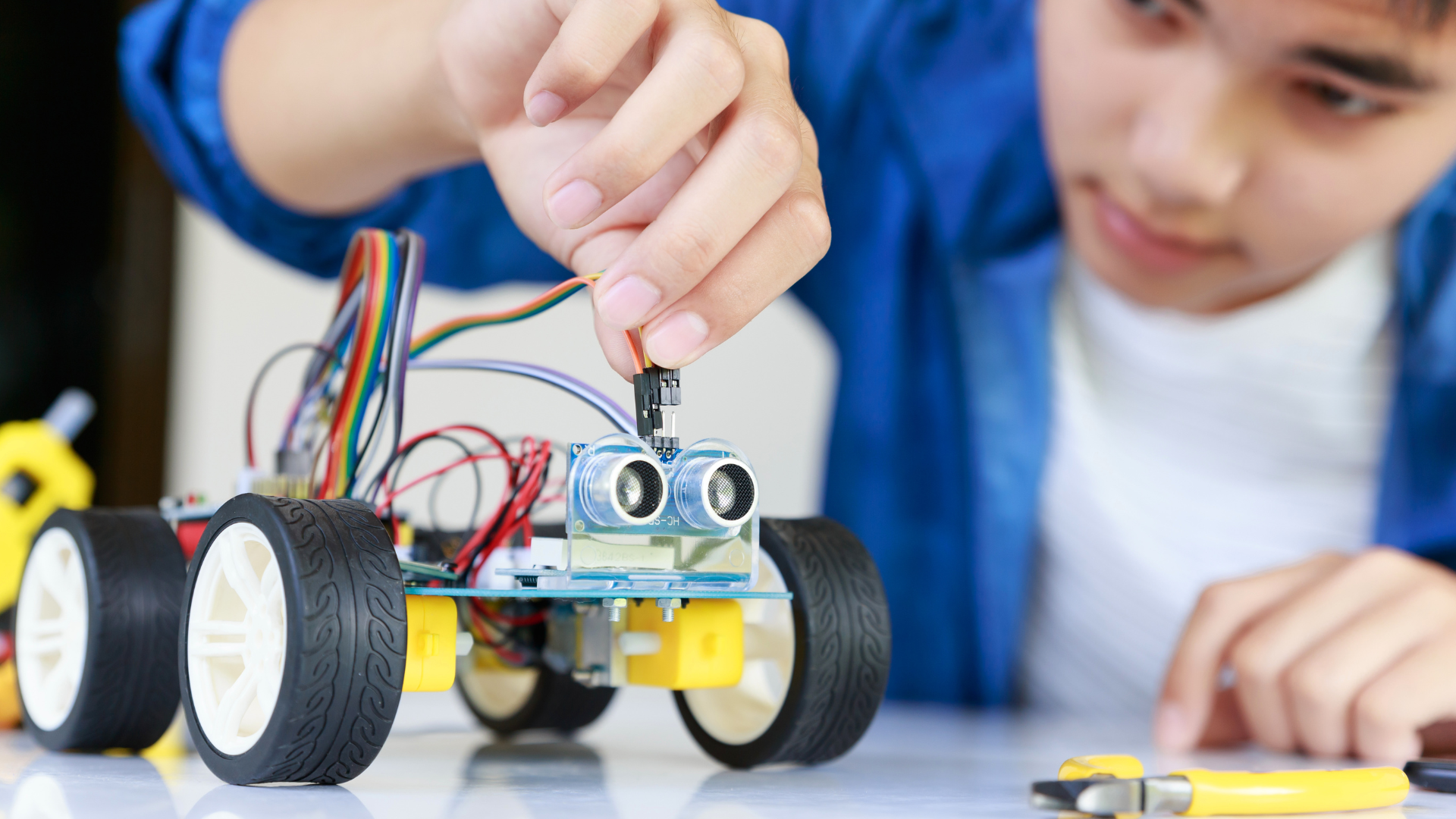
You may experiment with CAD software, prototyping, design thinking, robotics, circuits, coding, or materials science basics, all while learning how engineers turn messy ideas into practical solutions. Instead of only solving problems on paper, you get to build models, work through design challenges, analyze what failed, and explain your thinking like a university-level engineering student.
Why join an engineering pre-college program?
These programs can also give you a closer look at college life, from lectures and lab-style sessions to campus routines, collaborative projects, and academic independence. For high school students considering engineering, this kind of experience can make the field feel less abstract and much more real.
Engineering pre-college summer programs can act as a foundation for your college journey, giving you a taste of what university life is like at a top institution, in person. Below, we’ve put together 15 engineering pre-college summer programs that offer meaningful project work, university-level academics, mentorship, and a closer look at college life.
15 Engineering Pre-College Summer Programs
1. MITES Summer
Location: MIT campus, Cambridge, MA (residential)
Cost/Stipend: Free
Acceptance rate/cohort size: Highly selective
Dates: Six weeks, late June through early August
Application Deadline: February 1st at 11:59 p.m. PST (shared application with MITES Semester)
Eligibility: 11th graders (rising seniors) who are US citizens or permanent residents; visas don’t qualify, so not open to international students
MITES Summer gives you a rigorous introduction to STEM and engineering study in a college-style academic setting. You’ll take demanding courses across math, science, and the humanities, alongside a project-based STEM elective.
The program is designed to feel closer to a condensed college semester than a typical summer class, with midterms in week three, finals in week six, and final projects and presentations to close out the summer. Alongside academics, you’ll live on campus and get college admissions guidance that helps connect technical study with future academic planning.
Why it stands out: It gives you a serious preview of MIT-style STEM learning by combining advanced coursework, project-based work, and college readiness support in one structured summer.
2. Immerse Education's Engineering Summer School

Location: Cambridge, London, Oxford, Singapore, Sydney, and Toronto
Cost: Varies; summer school scholarship available through our bursary programme
Acceptance rate/cohort size: Selective; an average of 7 participants per class
Application Deadline: Multiple cohorts with rolling admissions
Program Dates: 2 weeks during the summer
Eligibility: Students around the world aged 13-18 currently enrolled in middle or high school; open to international students
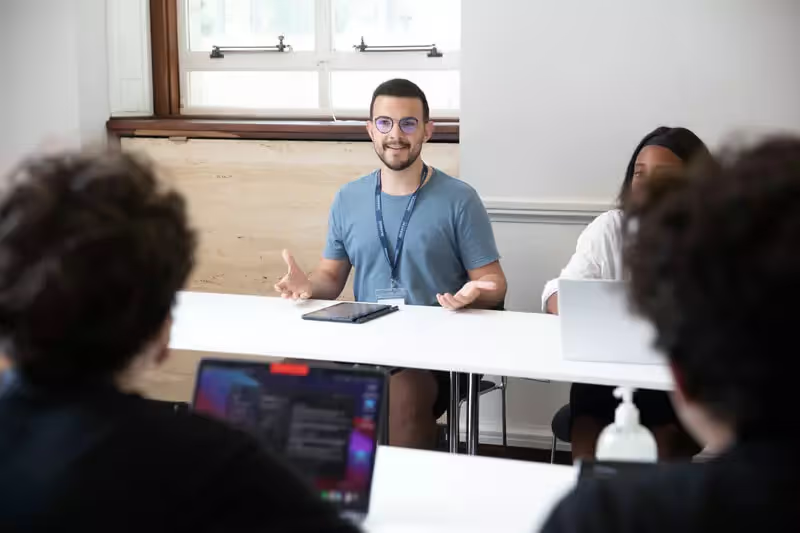
Immerse Education's Academic Insights pathway in Engineering offers a structured introduction to university-level engineering, taught by expert academics from institutions such as Oxford and Cambridge. Delivered in small classes with an average of 7 participants per class, the programme blends theory with applied learning.
For students aged 13-15, the course introduces foundational principles, including mechanics, forces, materials, and basic electronics. Guided workshops and design tasks help students understand how engineers approach problem-solving. For students aged 16-18, the curriculum advances into mechanical systems, electrical circuits, sustainability, and applied engineering design.
Students complete more independent projects and analyse real engineering challenges, developing reasoning expected at undergraduate level. Across all ages, learning includes university-style lectures, problem-solving sessions, weekly 1:1 tutorials, and a personal engineering project, ending with written feedback and a certificate.
Why it stands out: Age-specific syllabi tailored to students' academic stages, expert tutors from leading universities, small-group teaching that encourages discussion, and personalised feedback that supports meaningful academic growth and university readiness.
3. Lumiere Research Scholar Program
Location: Remote , you can participate in this program from anywhere in the world!
Cost: Varies depending on program type. Full financial aid available.
Application Deadline: Varies by cohort.
Program Dates: Varies by cohort: summer, fall, winter, or spring. Options range from 12 weeks to 1 year.
Eligibility: You must be currently enrolled in high school and demonstrate a high level of academic achievement.
The Lumiere Research Scholar Program is a rigorous research program tailored for high school students. The program offers extensive 1-on-1 research opportunities for high school students across a broad range of subject areas. The program pairs high school students with Ph.D. mentors to work 1-on-1 on an independent research project. At the end of the 12-week program, you’ll have developed an independent research paper!
You can choose research topics from subjects such as psychology, physics, economics, data science, computer science, engineering, chemistry, international relations, and more. You can find more details about the application here, and check out students’ reviews of the program here and here.
Why it stands out: You get 1-1 mentorship with a Ph.D. mentor and produce an independent research project by the end.
4. MIT’s Research Science Institute (RSI)
Location: Massachusetts Institute of Technology, Cambridge, MA (residential); a second site opens at Stanford University in 2027
Cost/Stipend: Free to attend
Acceptance rate/cohort size: 100 students at MIT; RSI Stanford starts with 50 students in 2027
Dates: Six weeks in the summer; 2027 dates not yet posted
Application Deadline: December 11th, 2026 at 11:59 p.m.
Eligibility: High school juniors (rising seniors); current seniors are not eligible; US citizens and permanent residents apply directly to CEE, while international students apply through their country’s selection agency where one exists
The Research Science Institute introduces you to the full cycle of scientific and engineering research, from studying advanced theory to presenting original work. You begin with a week of intensive STEM classes with accomplished professors before moving into a five-week individual research project under the guidance of an experienced scientist or researcher.
During the research phase, you’ll read the current literature in your field and carry out a detailed research plan, which may involve experimental design, computational modeling, or applied engineering methods. The structure pushes you to think beyond classroom problem sets and engage with how research questions are developed and tested. By the end, you’ll deliver conference-style written and oral reports on your findings.
Why it stands out: The program mirrors the full research cycle, giving you the chance to move from advanced STEM classes into original mentored research and conference-style presentation work.
5. MIT Lincoln Laboratory Radar Introduction for Student Engineers (LLRISE)
Location: MIT campus, Cambridge, MA (residential), with classes at MIT Lincoln Laboratory, Lexington, MA
Cost/Stipend: Free; you pay only for travel to and from MIT, and transportation to Lincoln Laboratory is provided
Acceptance rate/cohort size: Competitive
Dates: Two weeks; the 2026 workshop ran July 12th to July 25th
Application Deadline: March 11th (2026 cycle); 2027 deadline not yet posted
Eligibility: US citizens currently in 11th grade (rising seniors)
The MIT Lincoln Laboratory Radar Introduction for Student Engineers program gives you a focused introduction to radar engineering. You’ll populate a circuit board, solder radar antennas, and assemble a small continuous wave radar, then design your own experiments with it.
Along the way, you’ll learn about Doppler, pulse compression and ranging, and synthetic aperture radar from Lincoln Laboratory staff, and you’ll join workshops that build college and workforce readiness. The program is a strong option if you want to see how physics, electrical engineering, and data analysis come together in a working device. By the end, you’ll formally present your experiments to Laboratory staff members.
Why it stands out: Its radar-focused curriculum gives you unusually direct exposure to electrical engineering, signal processing, and system-building through a technical project you construct and test yourself.


6. Princeton University’s Laboratory Learning Program (LLP)
Location: Princeton University, Princeton, NJ (commuter only; not a residential program)
Cost/Stipend: Free; unpaid
Acceptance rate/cohort size: Highly competitive
Dates: Full-time over the summer; schedules vary by research opportunity
Application Deadline: March 15th (2026 cycle; applications opened February 15th)
Eligibility: US citizens currently in the US who are 16 or older by June 15th and enrolled in a local New Jersey high school; not open to international students
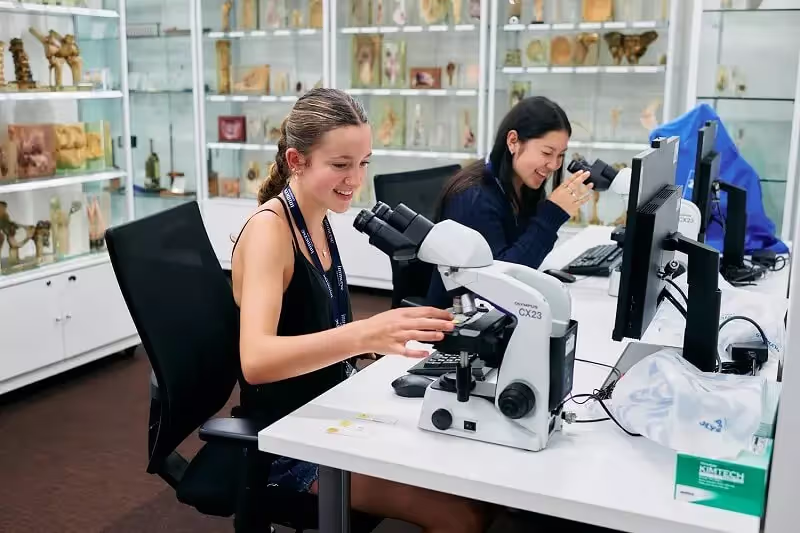
Princeton’s Laboratory Learning Program places you in a university research lab where you contribute to an active science or engineering project. Your placement depends on mentor availability, lab needs, and your academic background, so the exact work varies across participants.
Engineering-relevant projects may connect to renewable energy, biomedical engineering, materials science, molecular systems, or other applied research areas. Depending on the lab, you may assist with experiments, analyze data, review technical literature, document methods, or support modeling work.
Why it stands out: You’re placed into active university labs, making the experience valuable if you want to contribute to research rather than follow a fixed classroom-based curriculum.
7. Manufacturing & Materials Joining Innovation Center (Mₐ²JIC) Summer Internship
Location: The Ohio State University, Columbus, OH
Cost/Stipend: Free; paid internship; no transportation or room and board provided
Acceptance rate/cohort size: Selective; 8 interns in 2025
Dates: About 8 weeks, early June to early August (June 2nd to August 8th in 2026); up to 24 hours a week
Application Deadline: February 13th (2026 cycle); applications for summer 2026 opened September 1st, 2025
Eligibility: High school students with a strong interest in welding engineering who live in the Columbus, Ohio area; international eligibility not specified
The Manufacturing & Materials Joining Innovation Center Summer Internship introduces you to welding engineering as a research-driven branch of materials and manufacturing engineering. You’ll be matched with graduate students and contribute to ongoing projects under the guidance of faculty, graduate researchers, and industry partners.
Depending on your project, you may create, test, and analyze welding materials in the lab, and you may also work on data analysis, coding, or modeling. The summer ends with research presentations, and award winners have their posters displayed at Ohio State and at the FABTECH convention. You can find more like it among these summer engineering internships for high school students.
Why it stands out: This program introduces you to the engineering behind manufacturing and materials joining, a highly practical field that connects lab research with industry needs.
8. Texas Tech University’s Anson L. Clark Scholars Program
Location: Texas Tech University, Lubbock, TX
Cost/Stipend: Free; on-campus room, board, and meals provided; $25 application fee; $750 stipend after a successful research project report
Acceptance rate/cohort size: Highly selective; 12 students selected each summer
Dates: Seven weeks; June 21st to August 6th in 2026; 2027 dates not yet posted
Application Deadline: February 15th, 2027 (applications open January 2nd, 2027)
Eligibility: Rising high school seniors and recent graduates who are at least 17 by the start date and are US citizens or permanent residents; not open to international students
The Anson L. Clark Scholars Program gives you the opportunity to conduct faculty-mentored research in a field connected to your academic interests, including engineering, computer science, physics, mechanical engineering, or applied biomedical research. As a scholar, you work one-on-one with a Texas Tech faculty mentor on an independent project that requires technical problem-solving and sustained inquiry.
Your work may involve experimental design, data analysis, coding, modeling, literature review, or lab-based investigation depending on your research placement. Weekly seminars and academic discussions help you understand how research develops across disciplines and career paths.
Why it stands out: Its faculty-mentored research model gives you room to pursue a focused academic project while building independence, technical problem-solving skills, and research communication experience.
9. Johns Hopkins APL’s ASPIRE
Location: Johns Hopkins Applied Physics Laboratory, Laurel, MD (in person, with up to one remote day a week)
Cost/Stipend: Free; unpaid internship
Acceptance rate/cohort size: Less than 10% of new applicants
Dates: Starts June 23rd with orientation June 23rd to 25th; 30 to 40 hours a week until you return to school, totaling at least 190 hours
Application Deadline: February 15th (2026 cycle; applications opened January 1st)
Eligibility: Rising high school juniors and seniors who are at least 15 by June 1st, have a minimum 2.8 GPA, and are US citizens (green card holders aren’t eligible); must live in select Maryland counties, Alexandria, Arlington, or Fairfax, Virginia, or Washington, DC; reliable transportation to APL required
Johns Hopkins ASPIRE gives you project-based exposure to applied STEM and engineering work through the Applied Physics Laboratory. You are paired with an APL staff mentor and matched to a project based on your interests, skills, and available research needs.
Based on your placement, your work may involve coding, hardware development, simulations, lab tasks, aerospace systems, cybersecurity concepts, environmental analysis, or technical communication. The program expects you to work independently while communicating regularly with your mentor and adapting as technical challenges come up. APL doesn’t offer housing and isn’t reachable by public transit, so you’ll need your own way to get there each day.
Why it stands out: ASPIRE places you inside a major applied research environment, where you can work with professional mentors on technical projects tied to areas such as aerospace, cybersecurity, systems engineering, and computing.
10. New York University’s ARISE Program
Location: NYU Tandon School of Engineering, Brooklyn, NY
Cost/Stipend: Free; $1,000 stipend on successful completion
Acceptance rate/cohort size: Highly selective
Dates: 10 weeks: four weeks of remote workshops followed by six weeks of in-person lab work (June 1st to August 14th in 2026)
Application Deadline: 2027 deadline not yet posted
Eligibility: NYC students completing 10th or 11th grade who are full-time NYC residents attending NYC schools
NYU’s ARISE Program combines research training with lab experience in STEM fields, including several areas connected to engineering. The program begins with workshops in lab safety, research methods, scientific writing, and public speaking before you move into a research placement.
You may contribute to projects in engineering, robotics, computer science, cybersecurity, or related fields, with a graduate or postdoctoral mentor guiding you in an NYU faculty lab. During the research phase, you build practical skills in experimentation, documentation, analysis, and communication, alongside college application support. The experience concludes with a colloquium where you present your work to NYU faculty, peers, and family members.
Why it stands out: It combines research training with lab placement, helping NYC students build both technical skills and confidence in presenting scientific work to academic and public audiences.
11. NYU’s Innovation, Entrepreneurship and the Science of Smart Cities (ieSoSC)

A group of six students walking on an NYC street with their backs to the camera
Location: NYU Tandon School of Engineering, Brooklyn, NY
Cost/Stipend: Free (full scholarship)
Acceptance rate/cohort size: Highly competitive; cohort size not publicly specified
Dates: ieSoSC I: July 6th to August 7th, 2026 (five weeks); ieSoSC II (by invitation only): July 13th to August 7th, 2026; Monday to Friday, 9 a.m. to 4 p.m.
Application Deadline: May 15th (2026 cycle)
Eligibility: Students in grades 9 to 11 who are New York City residents
NYU’s Innovation, Entrepreneurship, and the Science of Smart Cities program connects engineering, technology, and urban problem-solving. You learn technical skills such as coding, circuit deployment, microcontrollers, and sensor integration, then apply them to challenges related to future cities. The program also introduces entrepreneurship concepts, including product development, economics, project management, pitch presentation, and patenting and copyrights.
You’ll also join theater-based communication workshops that help you sharpen your business pitch. By the end, you develop and present a product or service concept tied to smart city innovation. If you live in the city, you can explore more engineering programs in NYC for high school students.
Why it stands out: The program blends engineering design with entrepreneurship, giving you the chance to prototype technology-based solutions for urban challenges and pitch them clearly.
Join the Immerse Education 2027 Essay Competition
Follow the instructions to write and submit your best essay for a chance to be awarded a 100% scholarship.
12. Stony Brook University’s Simons Summer Research Program
Location: Stony Brook University, Stony Brook, NY
Cost/Stipend: Free; a stipend award is presented at the closing symposium
Acceptance rate/cohort size: Highly selective
Dates: June 29th to August 7th in 2026; 2027 dates not yet posted
Application Deadline: February 5th (2026 cycle), with school nominations due January 30th
Eligibility: High school juniors (11th grade) at the time of applying who are at least 16 by the start date and are US citizens or permanent residents; school nomination required; not open to international students
Stony Brook University’s Simons Summer Research Program lets you join an active research team in science, mathematics, or engineering. After being matched with a faculty mentor, you take responsibility for a defined project within a lab or research group and commit at least four hours a day to your research. Engineering-related work may connect to computer science, physics, applied mathematics, or other technical fields depending on mentor availability.
Alongside research, you attend weekly faculty talks, workshops, tours, and events that help you understand the pace of university-level research. The program concludes with a written abstract and a poster presentation, giving you practice in both technical work and scientific communication.
Why it stands out: Simons Fellows join active research teams at a major university, gaining experience with lab methods, faculty mentorship, and formal research presentation.
13. GROW (Greater Research Opportunities for the Workforce) at Boston University
Location: Boston University campus, Boston, MA
Cost/Stipend: Stipend of up to $2,000 on completing all program requirements
Acceptance rate/cohort size: Not specified
Dates: July 6th to August 14th, 2026, including a one-day orientation on July 6th; Monday to Friday, 9:30 a.m. to 4:30 p.m.
Application Deadline: 2026 applications opened February 9th; deadline not specified
Eligibility: Current juniors at a Massachusetts school who live within 30 miles of Boston, are at least 16 by July 1st, and have a demonstrated record of achievement in science
GROW gives you the chance to work inside a Boston University research lab for six weeks. After orientation, you’re placed individually in a lab, where you contribute to cutting-edge research in a collaborative group setting.
Several times a week, you’ll meet with the Program Manager to set goals and report on your progress. The program also includes guest speakers on STEM research and careers, plus a summer symposium where you present your research to a broader audience.
Why it stands out: GROW offers an accessible lab-based pathway into STEM, with a stipend, mentorship, and a final symposium built into the program.
14. George Mason University’s Aspiring Scientists Summer Internship Program (ASSIP)
Location: George Mason University, Fairfax, VA, and collaborating institutions; some mentors offer remote formats
Cost/Stipend: $25 application fee + $1,299 tuition for three college credits; fee waivers available for applicants with financial need
Acceptance rate/cohort size: Highly competitive
Dates: Eight weeks, full-time; June 18th to August 12th in 2026
Application Deadline: February 15th (2026 cycle; applications opened December 8th, 2025)
Eligibility: High school and undergraduate students who haven’t graduated from university; some mentors only accept interns 16 and older; international eligibility not specified
George Mason University’s Aspiring Scientists Summer Internship Program places you in a research environment where you work one-on-one with faculty researchers on ongoing STEM projects. You can pursue areas connected to engineering, including bioengineering, robotics, cybersecurity, environmental science, data science, or computational research.
Depending on your placement, daily work may involve experiments, simulations, data analysis, technical tools, scientific writing, or research presentations. The mentorship structure helps you develop independence while still receiving guidance on research methods and communication. The summer ends with a research symposium, and many interns’ abstracts appear in the Mason Journal of Student Scientists Research.
Why it stands out: It offers a wide range of research areas, including engineering-adjacent fields, along with three college credits and a final research symposium.
15. University of Cincinnati’s Biology Meets Engineering Program (BME)
Location: University of Cincinnati, Cincinnati, OH
Cost/Stipend: Not specified
Acceptance rate/cohort size: Selective
Dates: Three weeks in June; 2027 dates not yet posted
Application Deadline: Not specified
Eligibility: High school students; international eligibility not specified
The University of Cincinnati’s Biology Meets Engineering program shows you how biological systems can inspire engineering design. You study how animals sense the world, then apply those ideas to animal-inspired robotics through building and programming activities. The program blends biology with engineering challenges, helping you understand how observation, modeling, and design can work together. The three weeks often include a visit to the Cincinnati Zoo & Botanical Garden.
Why it stands out: The program offers a distinctive bio-inspired engineering experience, showing you how animal behavior, sensory systems, robotics, and design thinking connect in practical ways.
Frequently asked questions: Engineering Pre-College Summer Programs for High School Students
Are engineering pre-college summer programs worth it?
They can be, especially if you come away with something concrete, like a radar you built, a research poster, or college credit. Programs such as LLRISE, Simons, and ASSIP give you direct experience with the kind of work engineers actually do. They also help you test whether you enjoy the field before you commit to a major. If you’re still deciding where to focus, this guide to the top fields in engineering can help you narrow your interests.
Are there free engineering summer programs for high school students?
Yes, many of the most selective engineering programs are free. MITES Summer, RSI, LLRISE, ieSoSC, and Princeton’s Laboratory Learning Program cost nothing to attend, and LLRISE only asks you to cover travel to MIT. Some programs even pay you: Ma²JIC is a paid internship, ARISE awards a $1,000 stipend, and GROW offers up to $2,000. The trade-off is that free programs are often limited to US citizens or students who live nearby.
Can a high school student work in a university engineering lab?
Yes, several programs place high school students in active university or government labs. Princeton’s LLP, Simons at Stony Brook, ARISE at NYU, and GROW at Boston University all match you with researchers on ongoing projects. Johns Hopkins APL’s ASPIRE and MIT Lincoln Laboratory’s LLRISE offer similar exposure inside major research labs. You can find more options in these engineering research opportunities for high school students.
Do engineering summer programs give college credit?
Some do, but most research internships and workshops on this list focus on projects and presentations rather than credit. George Mason’s ASSIP is a clear exception, since you earn three college credits from the university for completing the eight-week internship. Programs like LLRISE and Simons instead give you a finished project, poster, or presentation to talk about. If credit matters to you, check whether your future college will accept it before you enroll.
Can international students join engineering pre-college programs?
Options are limited, since many free US engineering programs require US citizenship or local residency. RSI is one exception, selecting international students through agencies in participating countries. Immerse Education's Academic Insights pathway is open to students aged 13 to 18 from around the world, with Engineering courses in Cambridge, London, Oxford, Singapore, Sydney, and Toronto. If you’d rather study from home, these online engineering programs for high school students are another route.
When are the deadlines for engineering summer programs?
Deadlines start early, with RSI due December 11th, 2026 and Clark Scholars due February 15th, 2027. In the 2026 cycle, MITES Summer closed February 1st, Simons February 5th, ASSIP and ASPIRE February 15th, LLRISE March 11th, and Princeton’s LLP March 15th. A few, like ieSoSC, stayed open until May. Start your applications in the fall and line up recommendations well before winter break.
How a summer of engineering shapes applications
When you design a radar, run a lab test, or pitch a prototype, you collect the kind of specific stories engineering admissions readers remember.
The strongest engineering pre-college summer programs give you something to show afterward, whether that’s a research poster, a working device, or college credit.
Many of the best free options close between December and March, so build your list this fall and ask teachers for recommendations early.
For more guidance on choosing a major and preparing strong applications, explore our University Preparation blogs and start planning your path into engineering.






Unlock Inspiring Opportunities with the Immerse Education Newsletter
Join our newsletter to stay ahead with exclusive updates, exciting programme highlights, and expert insights from the world of immersive education.
Learn how Immerse can transform your life
An in-depth overview of our university and career preparation programmes
Get a glimpse into the life of an Immerse participant
Find the right programme for you with sample timetables, location showcases, and more