15 Engineering Research Opportunities for High School Students

In high school, most of your time goes into classes, assignments, and planning. But real understanding often comes from doing rather than just studying. Engineering research opportunities for high school students help you bridge that gap by giving you early exposure to real work.
Imagine being part of a lab or research setting where you’re observing experiments, testing ideas, or contributing to a small project. You might work with data, see how designs are built and adjusted, or learn how engineers approach challenges step by step. It’s not about doing everything yourself, but about understanding how the process works.
Even if engineering is just one of your interests right now, this kind of experience still helps. You build structured thinking, learn how to approach complex problems, and gain skills that carry into other areas as well.
How do you choose the right engineering research opportunities for high school students?
Finding the right research opportunity is not always simple. Some programs are mostly observational, while others don’t offer enough structure or depth to be truly useful. That’s why it’s important to look beyond the title and understand what you’ll actually be doing. Not every opportunity will give you meaningful exposure or help you build real skills.
Many universities, research labs, and STEM organizations offer programs designed for high school students. These often combine hands-on work with guidance from mentors. You might assist in experiments, work with datasets, or support ongoing projects while learning how engineers approach problems in real settings.
Some opportunities are focused on specific branches like robotics, civil engineering, or environmental systems, while others are broader. In most cases, you’ll also gain experience in collaboration, structured thinking, and basic research methods.
To make things easier, we have curated a list of 15 engineering research programs for high school students!
For more options, you can consider online engineering programs. If you’re looking to engage with engineering work environments, engineering internships for high school students might be a good option.




15 Engineering Research Opportunities for High School Students
1. MIT’s MITES Summer Program
Location: MIT Campus, Cambridge, MA
Cost: None
Acceptance rate/cohort size: Selective
Dates: Late June through early August
Application Deadline: Applications typically close in February
Eligibility: High school juniors (U.S. citizens or permanent residents)
The MITES Summer Program at Massachusetts Institute of Technology is a six-week residential experience where you take five rigorous courses across math, science, and humanities while living on campus. You engage in college-level coursework, including subjects like calculus and physics, along with a project-based elective that emphasizes hands-on learning.
The program includes lab work, engineering projects, and exposure to research through faculty-led sessions and lab tours. You also participate in seminars, workshops, and college readiness sessions that build academic and practical skills. Throughout the program, you are supported by mentors and become part of a collaborative learning environment.
Why it stands out: Combines intensive academics with hands-on projects and a full residential college experience at MIT.
2. Immerse Education’s Engineering Summer School

Location: Oxford, London, Toronto, Singapore, Cambridge, Tokyo, Sydney, and Singapore
Cost: Varies; summer school scholarship available through our bursary programme
Acceptance rate/cohort size: Selective; an average of 7 participants per class
Dates: 2 weeks during the summer
Application Deadline: Multiple summer cohorts with rolling admissions
Eligibility: Students worldwide aged 13-18 currently enrolled in middle or high school
Immerse Education’s Engineering Research Programme offers an immersive learning experience for future engineering studies. You’ll gain knowledge about a range of advanced topics, including electronics, mechanics, and civil engineering. You’ll gain real-world knowledge and develop problem-solving skills.
You’ll gain in-depth knowledge about different engineering concepts, including the principles of circuitry, motion, and force. You’ll understand how efficient, strong, and light materials are designed by engineers. The program allows you to address real-world challenges in engineering, prepare yourself for academic success, and work on a personal research project. You’ll participate in group workshops, attend expert seminars, and receive one-on-one guidance from tutors.
Why it stands out: Combines foundational engineering theory with a focused personal project and presentation component.
3. MIT’s Research Science Institute (RSI)
Location: Massachusetts Institute of Technology, Cambridge, MA
Cost: Free except an application fee of $75 (fee waiver available)
Acceptance rate/cohort size: Highly selective (> 2.5%)
Dates: 6 weeks, specific dates to be announced
Application Deadline: Application deadline falls around mid-December
Eligibility: High school juniors who are at least 16 years of age, and international students are eligible
Among the most prestigious engineering research opportunities for high school students, the Research Science Institute (RSI) at Massachusetts Institute of Technology is a highly selective six-week residential programme where you combine advanced STEM coursework with an independent research project. You begin with intensive classes in subjects like maths, computer science, and engineering to build the foundation for your research.
You then work with professional scientists on an original project, applying methods such as literature review, experimental design, and data analysis. The program focuses on full-cycle research, including developing methodology, interpreting results, and engaging with scientific practices. It concludes with a formal research paper and a conference-style presentation evaluated by experts.
Why it stands out: Combines rigorous coursework with a complete, independent research experience at one of the most competitive pre-college programs.
4. AFRL Scholar Program
Location: Various locations
Cost: Stipend amount is based on the scholar’s academic level
Acceptance rate/cohort size: 10%
Dates: Start dates may vary based on the AFRL sites and/or projects (8-week minimum in summer)
Application Deadline: January 10th (tentative)
Eligibility: Upper-level high school students (U.S. citizens)
The Air Force Research Laboratory (AFRL) Scholars Program is a paid summer research internship where you work alongside scientists and engineers on active STEM projects at Air Force Research Laboratory facilities. You contribute to ongoing research in areas such as engineering, computational science, materials science, or biomedical research while applying scientific methods and technical problem-solving.
The program involves working under a mentor, conducting experiments or computational tasks, and supporting real research workflows. You also gain experience with documentation, data handling, and presenting technical findings. The internship typically runs for several weeks and provides direct exposure to government research environments.
Why it stands out: Paid, mentor-led research experience within real-world government labs working on active STEM projects.
5. Northeastern University’s Young Scholars Program (YSP)
Location: Northeastern University’s Colleges of Engineering, Science, and Health Sciences (Bouve)
Cost: None
Acceptance rate/cohort size: Highly selective
Dates: June 22nd – July 30th
Application Deadline: March 2nd
Eligibility: Rising high school seniors based in Massachusetts (within commuter distance) | US Citizens or Permanent Residents. Check more details here
The Northeastern University Young Scholars Program (YSP) is a research-focused summer experience where you work in university labs alongside faculty and graduate students at Northeastern University. You contribute to ongoing projects in areas such as bioengineering, robotics, biotechnology, and energy systems while gaining hands-on lab experience.
The program includes seminars across multiple engineering disciplines, introducing topics like chemical analysis, environmental systems, and advanced materials. You also take part in career counseling sessions that cover engineering pathways and co-op opportunities. Field visits to industry and research organizations help connect lab work to real-world applications.
Why it stands out: Direct lab-based research experience combined with structured exposure to multiple engineering fields and career pathways.
6. Anson L. Clark Scholars Program
Location: Texas Tech University, Lubbock, TX
Cost: None except a $25 application fee / Students will receive a stipend of $750
Acceptance rate/cohort size: Highly selective / 12 students
Dates: June 21st – August 6th
Application Deadline: February 16th
Eligibility: High school students who will be at least 17 years old by the start of the program and will graduate this year or the next | U.S. citizens or permanent residents
The Anson L. Clark Scholars Program is a highly selective, fully funded seven-week research experience where you work one-on-one with faculty mentors at Texas Tech University on an advanced project in fields like computer science, mechanics, or electrical engineering.
You engage in in-depth, university-level research while learning core methods such as problem formulation, experimentation, and technical analysis. The program also includes weekly seminars, discussions, and field trips that expose you to broader academic and industry contexts. You develop skills in research documentation and communication, culminating in a final report and presentation.
Why it stands out: Fully funded, mentor-led research with a strong focus on individualized projects and academic depth.
7. ESTEEM/SER-Quest Summer Program
Location: A. James Clark School of Engineering at the University of Maryland, College Park, MD
Cost: None
Acceptance rate/cohort size: Highly competitive
Dates: July 7-31
Application Deadline: March 29th
Eligibility: High school seniors with a minimum GPA of 3.2 and no Cs in math and science courses | Must have completed Trigonometry, Chemistry, and Pre-Calc with a B or better (international students are likely not eligible). Check more details here
The ESTEEM/SER-Quest Summer Program is a four-week research-focused experience where you explore engineering by developing and working on your own research project.You learn how to build a research proposal, conduct a literature review, and analyze findings while understanding core engineering concepts and research methods.
The program emphasizes the full research process, from problem definition to presenting your results. Alongside this, you attend sessions on college applications, financial aid, and STEM career pathways. You also interact with undergraduate and graduate students to understand academic and professional trajectories in engineering.
Why it stands out: Focus on foundational research skills like proposal development and literature review within an engineering context.
8. Science and Engineering Apprenticeship Program (SEAP) at the Department of the Navy (DoN)
Location: Multiple lab locations are available across the country
Cost: No cost / Stipend of $4,000 for new participants, $4,500 for returning participants
Acceptance rate/cohort size: Selective
Dates: Eight weeks during the summer, with the option to extend for up to two more weeks
Application Deadline: November 1st
Eligibility: High school students who have completed at least 9th grade, are at least 16 years old, and are U.S. citizens. Students should check the specific lab’s additional requirements or exceptions
As one of the more hands-on engineering research opportunities for high school students, the Science and Engineering Apprenticeship Program (SEAP) is an eight-week research internship where you work inside Department of the Navy laboratories on active STEM projects under the guidance of professional scientists and engineers. You contribute to research in areas like computer science, applied mathematics, robotics, cybersecurity, AI, or engineering, depending on your placement.
The experience involves hands-on technical work such as software prototyping, data modeling, algorithm development, or robotics programming, along with documenting and analyzing results. You also learn how large-scale government labs approach long-term research and technology development.
Why it stands out: Direct placement in federal research labs with exposure to real-world, large-scale scientific and engineering projects.
9. California State Summer School for Mathematics and Science (COSMOS)
Location: The program is hosted by the University of California system and is offered at multiple campuses throughout the state
Cost: $5,518 + $46 application fee (financial aid available)
Acceptance rate/cohort size: Competitive admissions (160-200 participants each campus)
Dates: July 5th – August 1st
Application Deadline: February 6th
Eligibility: Students in grades 8-12. Limited to California students only
The California State Summer School for Mathematics and Science (COSMOS) is a selective four-week residential program where you study an intensive STEM cluster at a University of California campus. In engineering-focused clusters, you work with faculty on advanced topics such as mechanical systems, aerospace engineering, and applied physics through lab-based and project-driven learning.
You engage with concepts like dynamics, materials, thermodynamics, and design while applying them to real-world systems and prototypes. The program emphasizes sustained focus within a single subject area, allowing you to explore engineering in depth rather than through short modules. You also gain exposure to research environments and university-level problem-solving approaches.
Why it stands out: Deep, cluster-based learning model that lets you explore one engineering field in a focused, university-level setting.
10. Boston Leadership Institute Engineering Research Program
Location: Olin College, Greater Wellesley, MA
Cost: Three-Week Tuition: $2500, Three-Week Residential Fee: $2097
Acceptance rate/cohort size: Competitive admission
Dates: July 13-31
Application Deadline: No formal deadline
Eligibility: High school students; international students are eligible
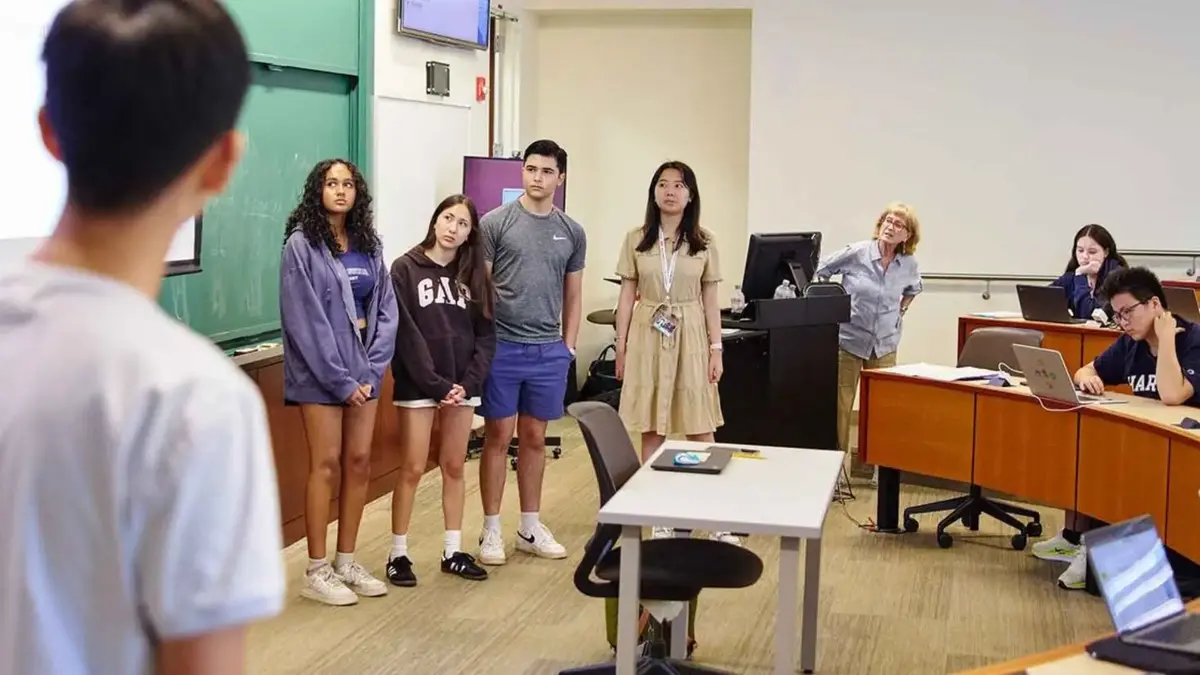
The Boston Leadership Institute Engineering Research Program is a hands-on summer experience where you work on applied engineering projects that combine mechanical, electrical, and programming concepts. You engage in team-based challenges such as building and programming Arduino-powered systems, while learning practical skills like soldering, wiring, and circuit design.
The program includes design-focused work using CAD and 3D printing to create and test functional prototypes. You also conduct experimental testing and performance analysis to refine your projects. Field experiences and collaborative work help connect classroom concepts to real engineering environments.
Why it stands out: Emphasizes hands-on prototyping and experimental testing through team-based engineering challenges.
11. Simons Summer Research Program
Location: Stony Brook University, Stony Brook, NY
Cost: No cost / Students will receive a stipend
Acceptance rate/cohort size: Selective
Dates: June 29th – August 7th
Application Deadline: February 5th
Eligibility: High school juniors who are at least 16 years old and U.S. citizens or permanent residents
The Simons Summer Research Program at Stony Brook University is a competitive research experience where you are paired with faculty mentors and placed within an active research group. You work on a defined project in fields such as biochemistry, computer science, engineering, or geosciences, gaining hands-on experience with lab techniques, data collection, and analysis.
The program focuses on independent contribution while helping you understand how research teams operate in a university setting. You also attend faculty talks, workshops, and lab tours to deepen your exposure to scientific research and academic pathways. The experience concludes with a written abstract and a research poster presentation at a symposium.
Why it stands out: Places you within an active research group with ownership of a defined project and a formal research presentation outcome.
12. NYU’s Applied Research Innovations in Science and Engineering (ARISE)
Location: NYU Tandon School of Engineering, Brooklyn, NY
Cost: No cost; $2,000 stipend
Acceptance rate/cohort size: Not specified
Dates: June 1st – August 14th
Application Deadline: February 27th
Eligibility: Rising high school juniors and seniors who live and attend school in NYC
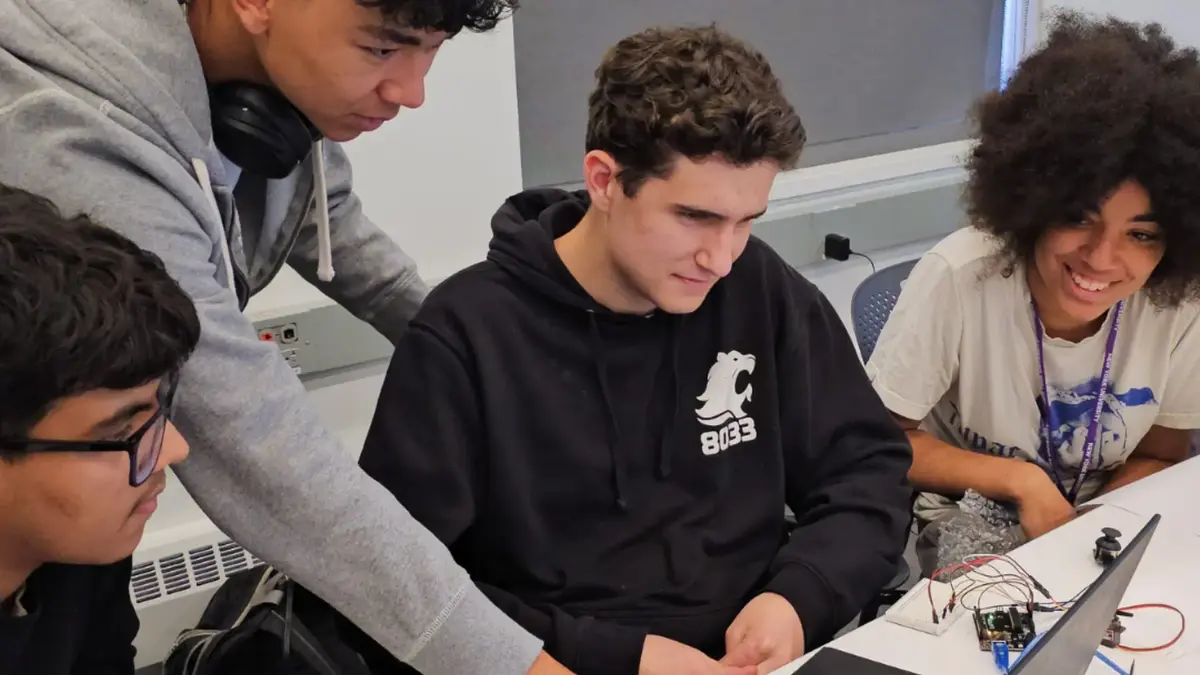
The NYU Applied Research Innovations in Science and Engineering (ARISE) is a 10-week research program where you begin with foundational training in lab safety, data analysis, and scientific writing before transitioning into mentored research at New York University labs. You spend around six weeks working in active research environments across fields like neuroscience, robotics, environmental science, and engineering, contributing to ongoing projects.
The program includes workshops on public speaking, college applications, and professional skills alongside your lab work. You gain extensive hands-on experience with research methods, documentation, and presenting findings. The experience concludes with a formal research presentation at a symposium hosted at the American Museum of Natural History.
Why it stands out: Structured pathway from research training to mentored lab work, culminating in a formal scientific presentation.
13. NIST Summer High School Intern Program
Location: NIST campuses in Gaithersburg, MD, and Boulder, CO
Cost: None
Acceptance rate/cohort size: Selective
Dates: June 22nd – August 7th
Application Deadline: January 26th
Eligibility: U.S. citizens who are current high school juniors or seniors at the time of application, with a minimum GPA of 3.0
The NIST Summer High School Intern Program at the National Institute of Standards and Technology is a research internship where you work alongside scientists and engineers on active projects in fields such as materials science, physics, chemistry, and information technology. You contribute to ongoing research by performing tasks like programming, experimental setup, and data analysis while learning how professional research teams operate.
The program emphasizes practical skills such as Python programming, electronics, and experimental design within a structured lab environment. You are expected to engage independently with your work, communicate with mentors, and document your findings. The experience provides direct exposure to real-world scientific research workflows and problem-solving.
Why it stands out: Immerses you in professional research labs with a focus on active contribution rather than observation.
14. USC Viterbi Discover Engineering
Location: USC campus, Los Angeles, CA
Cost: $85 application fee
Acceptance rate/cohort size: Competitive
Dates: June 22nd – July 17th
Application Deadline: International Student Deadline: March 13th; Domestic Student Deadline: May 8th
Eligibility: Students who have completed ninth grade by the start of the program. Check more details here
The USC Viterbi Discover Engineering program at the University of Southern California is a four-week college-level course where you explore multiple engineering disciplines through lectures and hands-on projects. You work in teams to design, build, and test solutions using the engineering design process, applying concepts across areas like robotics, structures, and systems.
The program includes project-based learning with tools such as simulation software, 3D printing, and programming, along with exposure to real-world engineering challenges. You also develop research and communication skills by writing a research paper and presenting your work. Site visits and discussions help connect classroom learning to practical engineering applications.
Why it stands out: Combines a credit-bearing course with hands-on projects and exposure to multiple engineering fields in a single program.
15. Biorocket Research Internship Program
Location: Genspace, Brooklyn, NY
Cost: No cost; $2,000 stipend
Acceptance rate/cohort size: Selective
Dates: Spring session: February 25th – May 21st; Summer session: July 6th – August 14th
Application Deadline: January 5th
Eligibility: New York City public and charter high school students aged 16 and up
The BioRocket Research Internship Program is one of the more distinctive engineering research opportunities for high school students, offering a summer research experience where you work with scientist mentors to explore genetic engineering and laboratory-based biology. You learn core lab techniques and collaborate in teams to design and carry out a research project, gaining exposure to how biological research is conducted.
The program emphasizes both experimentation and scientific thinking, along with developing skills in documenting and interpreting results. You also build science communication skills through activities like presentations and improv-based training. Lab tours, field visits, and career guidance sessions provide insight into real-world biotech and research environments.
Why it stands out: Combines hands-on biology research with a strong focus on science communication and real-world lab exposure.
Join the Immerse Education 2027 Essay Competition
Follow the instructions to write and submit your best essay for a chance to be awarded a 100% scholarship.
From Exploring Engineering to Thinking More Deeply
Research can change how engineering feels, turning it from a subject you study into a process you question, test, and understand more fully.
Engineering research opportunities for high school students make that shift possible by placing you closer to real methods, real challenges, and the thinking behind innovation.
As you observe, build, analyse, and reflect, you start recognising which problems excite you most and which parts of engineering deserve deeper attention.
Want ideas that challenge, sharpen, and inspire you beyond the lab? Open our Engineering Top Books Guide and discover where deeper thinking, stronger curiosity, and future direction can begin.






Unlock Inspiring Opportunities with the Immerse Education Newsletter
Join our newsletter to stay ahead with exclusive updates, exciting programme highlights, and expert insights from the world of immersive education.
Learn how Immerse can transform your life
An in-depth overview of our university and career preparation programmes
Get a glimpse into the life of an Immerse participant
Find the right programme for you with sample timetables, location showcases, and more