15 Student Exchange Programs for 16-Year-Olds

TL;DR
This list covers 15 student exchange programs you can join at 16, ranging from fully funded, government-backed initiatives like the U.S. State Department's FLEX and CBYX programs to shorter cultural trips with scholarships covering part of the cost. Program lengths vary enormously, from two-week summer visits to full academic years abroad living with a host family. Most require a minimum GPA or strong academic standing, and several, like the Voltaire Exchange Program, involve a reciprocal element where you also host your exchange partner. TechGirls selects only around three participants per country from 37 nations, making it one of the most competitive options here. Immerse Education also runs its Pre-University Summer School across six global locations, open to students aged 13 to 18, with financial aid available.
At 16, one of the most exciting ways to explore the world beyond your home country and immerse yourself in a new culture is through a student exchange program. Rather than visiting a country as a tourist, you have the opportunity to stay with a local family and experience what living there like a local entails through these programs. More importantly, exchange programs create the right environment for you to become fluent in a language. You can try speaking to the locals there in their language, thus gradually improving your fluency in it over time. Some even host special language classes.
You don’t even have to worry about missing school because all semester-long and year-long exchanges tend to enroll you in a school. By attending a school in a different country, you strengthen your ability to adapt to a new education system and learn to collaborate well with students from around the world.
Why should you participate in a student exchange program?
Many universities and future employers will view it very positively when they notice that your resume states that you have participated in an exchange program. It tells them that you are willing to go out of your comfort zone, ready to take up a challenge, and have the confidence to navigate unfamiliar situations. Additionally, your participation in these programs helps you develop independence, adaptability, leadership, intercultural communication, and a global perspective. These are all certainly qualities that will be highly valued in universities, thus strengthening your college applications.
There are so many exchange opportunities available out there, and picking the right one can be a bit overwhelming. The best way to go about choosing one is to ask yourself what you wish to gain out of the program and where exactly you wish to travel to.
For related options, consider study abroad programs for high school students.
To make your search easier, we've put together a list of 15 student exchange programs for 16-year-olds.
15 Student Exchange Programs for 16-Year-Olds
1. Racine Sister City Planning Commission, City of Racine, Wisconsin – Summer Sister City Student Exchange to Oiso, Japan
Location: Oiso, Kanagawa Prefecture
Cost: Approximately $1,500 airfare plus$160 passport fee and personal spending money; scholarships are available to offset some costs
Dates: July 19th – August 2nd
Application Deadline: March 2nd
Eligibility: City of Racine residents enrolled in grades 9–11; mandatory orientation sessions; open to international students
This program offers 16-year-olds a Summer Sister City Student Exchange to Oiso, Japan, designed to provide meaningful cultural and language experiences. The program covers engaging topics ranging from Japanese traditions to daily household customs.
During your stay, you will live with a host family, experience daily life in a Japanese household, tour historical sites, and participate in educational activities. By immersing yourself in this environment, you will develop practical language skills, cultural adaptability, and a deeper understanding of Japanese heritage. A unique feature of this opportunity is the availability of local scholarships to help offset your travel expenses, making this international journey highly accessible.
Why it stands out: It integrates you into the authentic daily routines of a Japanese family, fostering a genuine, long-lasting international connection.
2. Immerse Education's Pre-University Summer School
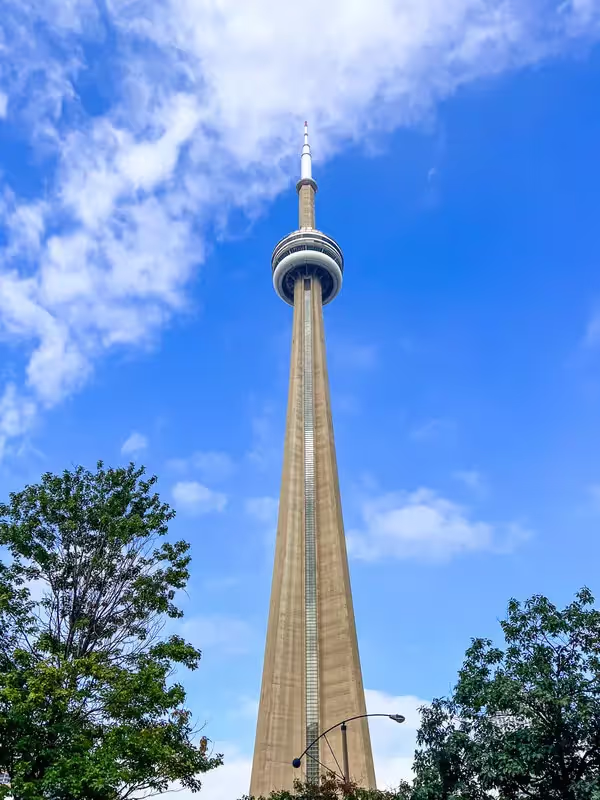
Location: Cambridge, London, Oxford, Singapore, Sydney, and Toronto
Cost: Varies; summer school scholarship available through our bursary programme
Acceptance rate/cohort size: Selective; an average of 7 participants per class
Dates: 2 weeks during the summer
Application Deadline: Multiple cohorts with rolling admissions
Eligibility: Students aged 13–18 currently enrolled in middle or high school; open to international students
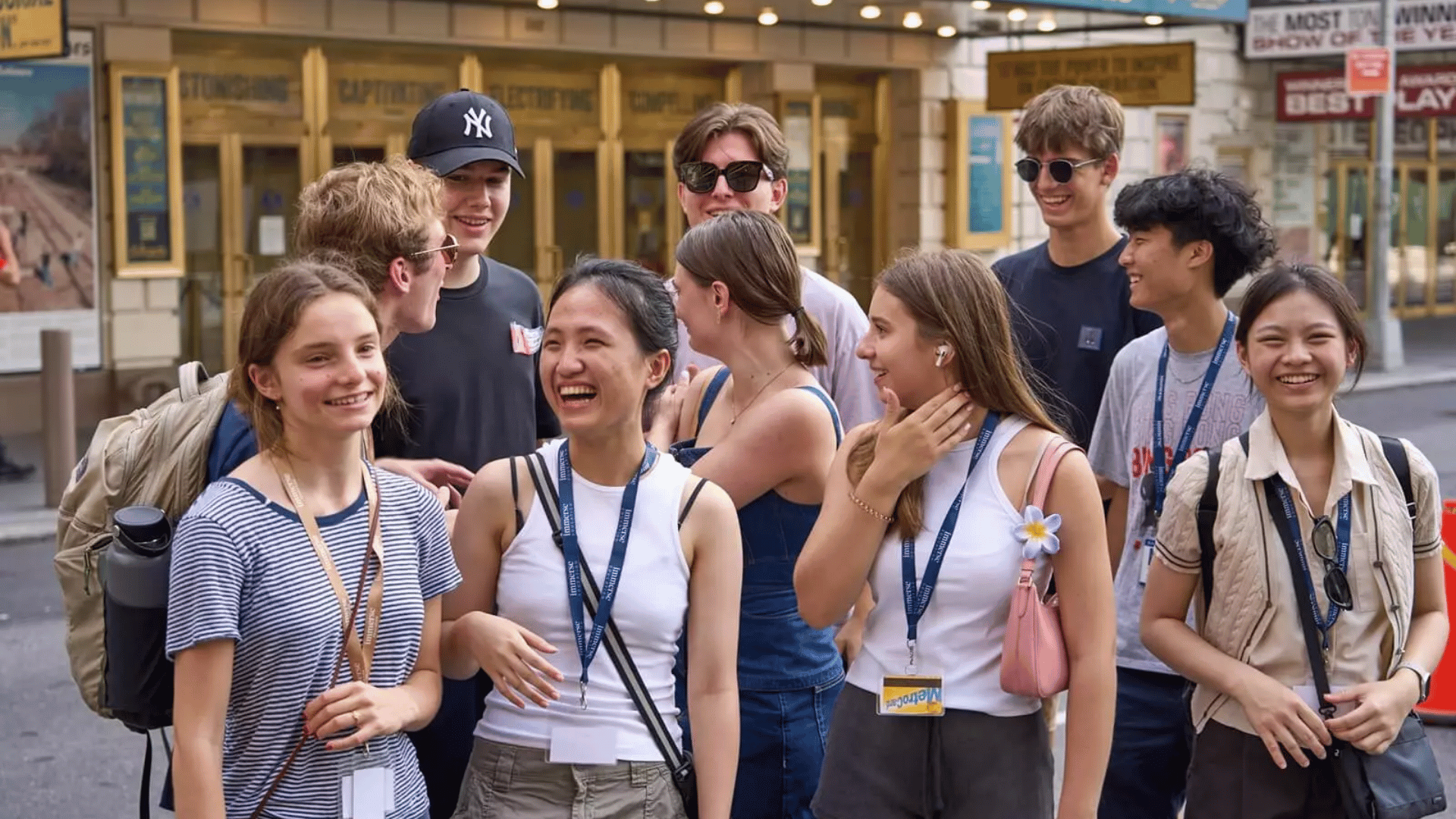
The Pre-University Summer School lets high school students experience university life firsthand. You will live on campus and study in small groups of 7-10, and learn from tutors from eminent top universities like Oxford and Cambridge. You can explore a wide range of subjects, spanning over 20 options, including Architecture, AI, Business Management, Computer Science, Economics, Medicine, Philosophy, and more.
The courses are experiential and focus on hands-on learning. You may find yourself conducting dissections in medicine, designing a robotic arm in engineering, participating in a moot court for law, or building creative writing portfolios and business case studies. By the end of the program, you’ll complete a personal project, receive written feedback, and receive a certificate of completion. You can find more details about the application here.
Why it stands out: You'll study under expert academics, be guided daily by a university student mentor, complete a project you can show in future applications, and experience genuine university college life, with other campuses worldwide as alternatives.
3. City of Midland Sister City Committee, Midland, Michigan – Midland–Handa Sister City Student Exchange
Location: Handa, Japan
Cost: None
Dates: July 22nd – August 12th
Application Deadline: March 23rd
Eligibility: Current high school sophomores or juniors; live or attend a school system in the City of Midland; minimum 3.0 GPA; not open to international students
This exchange program offers you a three-week trip to Japan as a youth ambassador. The program covers important topics like cross-cultural appreciation, local governance, and global citizenship. While there, you will live with three different host families, tour local government offices, visit regional places of interest, and help cook traditional meals.
A unique feature of this exchange is that the committee pays for your airfare and accommodations, meaning you only need to bring personal spending money. By navigating a foreign country without traditional chaperones, you will quickly learn valuable skills like adaptability, intercultural communication, and self-reliant leadership.
Why it stands out: This program turns you into an active participant in a 40-year-old international friendship, focusing on authentic daily routines rather than typical tourist excursions.
4. SAKURA Science High School Program
Location: Various universities and research institutes across Japan
Cost: None
Dates: One-week sessions throughout the year
Application Deadline: Varies by country (students do not apply directly; they must be nominated)
Eligibility: Grades 10th-12th high school students; minimum age:15 years; have a strong academic record in science/math; are first-time visitors to Japan; open to international students
The SAKURA Science High School Program is a short-term exchange initiative by the Japan Science and Technology Agency that invites you to experience Japan's scientific advancements. You will explore topics spanning space exploration, disaster resilience, technological innovation, and Japanese culture.
Your itinerary includes attending exclusive lectures by Nobel laureates, touring prominent research facilities like JAXA, and collaborating with local Japanese students. The program's unique feature is its fully funded structure that grants you unprecedented access to top-tier scientists and state-of-the-art laboratories. Ultimately, you will learn essential skills such as scientific inquiry, intercultural communication, and critical problem-solving.
Why it stands out: It bridges international diplomacy and STEM education by directly connecting ambitious teenagers with the leading researchers shaping Japan's technological future.
5. U.S. Department of State – Future Leaders Exchange Program
Location: Georgia, Kazakhstan, Poland, and Romania
Cost: None
Dates: One full academic year (typically August to May/June of the respective school year)
Application Deadline: Available in Fall (September or October)
Eligibility: FLEX (International): Citizens of over 20 participating countries across Europe and Eurasia, aged 15–18, enrolled in secondary school (usually grades 9 or 10), possessing good academic standing, prior English language study, and eligibility for a U.S. visa | FLEX Abroad (U.S.): U.S. citizens aged 15–18.5 who are currently enrolled in high school. Secondary school students with disabilities are actively encouraged to apply to the program; open to international students
Through the U.S. Department of State’s Future Leaders Exchange (FLEX) program, you receive a fully funded scholarship to spend an academic year living in the United States. The exchange focuses on cultural diplomacy, civic education, and youth leadership.
During your stay, you will live with an American host family, attend a local high school, complete community service projects, and share your home country's traditions through school presentations. Its standout feature is full cultural immersion, empowering you to serve as a citizen ambassador between nations. Throughout the year, you develop vital skills in cross-cultural communication, leadership, adaptability, and public speaking.
Why it stands out: It offers a prestigious, fully funded scholarship that eliminates all financial barriers, enabling young leaders to experience authentic cultural immersion and build lasting diplomatic ties at zero cost to their families.


6. U.S. Department of State – Congress-Bundestag Youth Exchange (CBYX) Program
Location: Germany
Cost: None
Dates: One full academic year from August to June
Application Deadline: Early November
Eligibility: U.S. citizens (for the outbound program to Germany) or a German citizen (for the inbound program to the U.S.); aged 15 to 18.5 years old by August 1st of the program departure year; current high school student with a minimum 2.5 GPA (on a 4.0 scale); must comply with U.S. Department of State eligibility policies for American Outbound Youth Programs; not open to international students
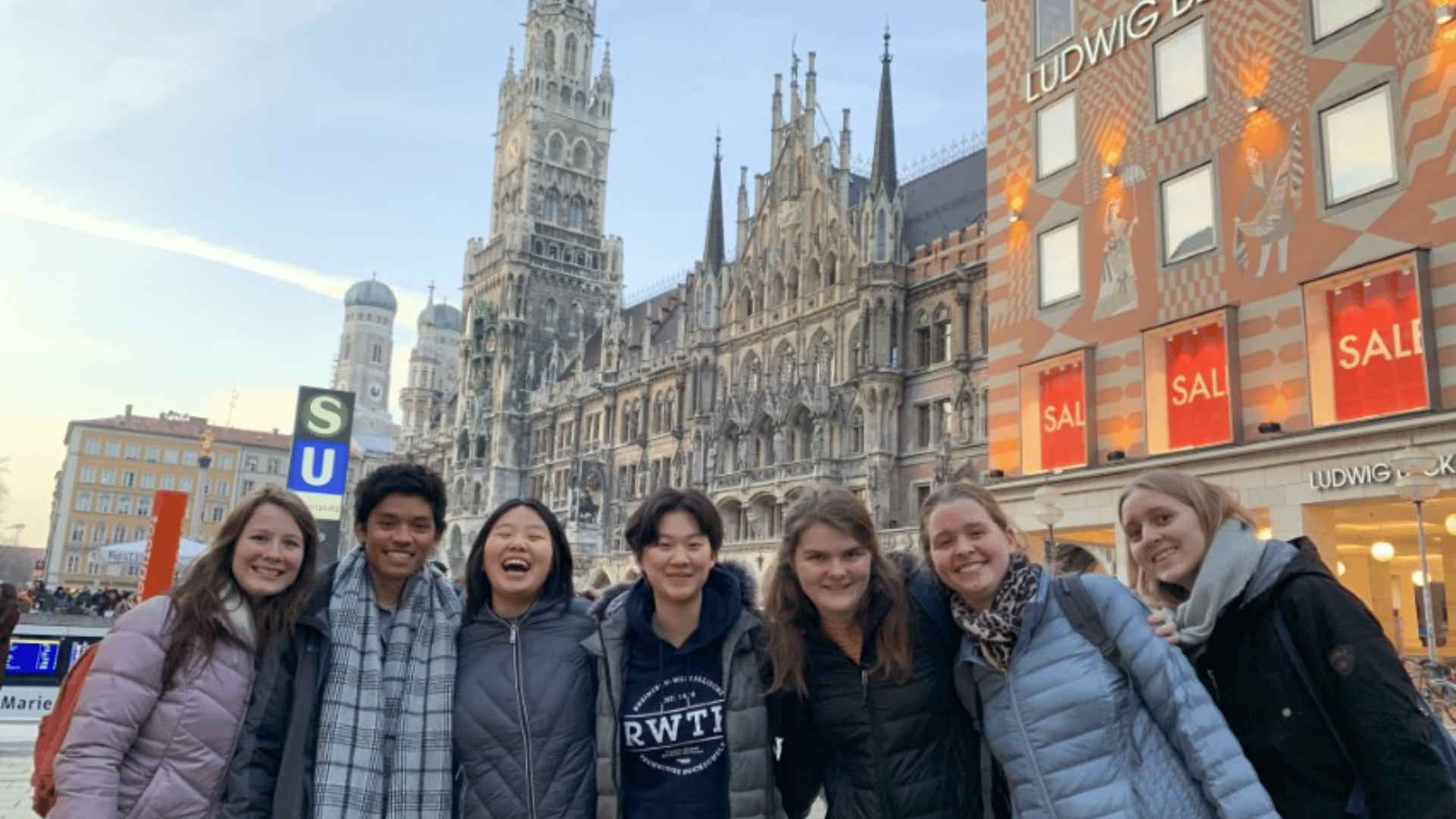
As a 16-year-old participant in the Congress-Bundestag Youth Exchange (CBYX), you spend an academic year living in Germany as a youth ambassador through a fully funded scholarship jointly backed by the U.S. Congress and the German Bundestag. The program covers German language acquisition, civic education, cultural immersion, and international diplomacy.
During the exchange, you will live with a German host family, attend a local high school, meet with parliamentary officials, and complete community service projects. Throughout these experiences, you develop German language proficiency, cross-cultural communication skills, personal independence, and leadership abilities. You ultimately serve as a grassroots diplomatic bridge between two nations while gaining firsthand insight into transatlantic relations.
Why it stands out: Unlike traditional study abroad programs, CBYX is fully government-funded and provides students with direct access to political leaders, civic institutions, and an influential bilateral alumni network.
7. Kennedy-Lugar Youth Exchange and Study – Youth Exchange and Study (YES) Abroad
Location: Bosnia and Herzegovina, Bulgaria, India, Indonesia, Jordan, Malaysia, Morocco, North Macedonia, Senegal, Thailand and Türkiye
Cost: None
Dates: One full academic year (typically running from August to June)
Application Deadline: Early December
Eligibility: U.S. citizens; aged 15 to 18.5 at the start of the program; enrolled in grades 9–12 (including homeschool) at the time of application; specific countries may have language prerequisites; not open to international students
This program offers you a fully funded, merit-based U.S. Department of State scholarship to spend an academic year in a country with a significant Muslim population. The program deeply explores topics like intercultural diplomacy, global citizenship, and mutual understanding.
During your exchange, you will live with a host family, attend a local high school, engage in cultural enrichment activities, and share American culture as a youth ambassador. Its most unique feature is this grassroots diplomacy approach, allowing you to build authentic international relationships rather than simply traveling as a tourist. Ultimately, you will learn real-world skills, including foreign language proficiency, cross-cultural communication, adaptability, and strong leadership.
Why it stands out: It empowers teenagers to act as official youth ambassadors for the United States, transforming a traditional study abroad year into a purposeful mission of international diplomacy and mutual understanding.
8. U.S. Department of State Bureau of Educational and Cultural Affairs, with Legacy International and Virginia Tech – TechGirls
Location: Blacksburg, Virginia; six U.S. cities; Washington, D.C.
Cost: None
Dates: July 11th – August 2nd; tech camp at Virginia Tech July 13–25; community immersion and job shadow July 25–29; Washington, D.C. activities July 29th – August 1st
Application Deadline: January 20th
Eligibility: Young women aged 15–17 on July 11th; citizens and residents of one of the 37 participating countries/territories or the United States; demonstrated advanced STEM skills; advanced intermediate English; returning to at least one further semester of secondary school; committed to a community-based project; open to international students
In this exchange program, you spend 23 days in the United States exploring applied technology with peers from 37 countries. At Virginia Tech, you choose one of four courses and take 38 hours of instruction from faculty and teaching assistants. Recent courses had you wiring breadboards and programming microprocessor robots, coding in JavaScript on the EarSketch music platform, or scripting in Python for computational biology.
Every Virginia Tech course integrates artificial intelligence concepts, from computational thinking and data analysis to machine learning and molecular modeling. You then job shadow and live with a host family in one of six U.S. cities, finishing in Washington, D.C. Back home, you deliver a Community Action Project with seven months of mentoring.
Why it stands out: It is fully funded by the U.S. Department of State, from visa fees and airfare to housing and meals, and selects only about three participants from each country or territory.
9. Goethe-Institut New York and GAPP, Inc. – German American Partnership Program (GAPP)
Location: United States and Germany
Cost: U.S. exchange estimate: $1,200–$3,200; travel grants and $500–$1,000 individual scholarships are available
Dates: Short-term cohorts: Minimum of 14 days (at least 10 days with a host family and 5 days attending the partner school); Long-term cohorts: Lasts for one semester or a full academic year
Application Deadline: Short-term: February 15th for both group grants and individual scholarships; Long-term: Applications must align with the start date of the host school's upcoming semester or academic year
Eligibility: Short-term: Groups of 10 to 20 students attending a U.S. or German secondary school with an active GAPP partnership. (U.S. schools do not need to offer a German language program to participate); Long-term (to U.S.): German students must be 15 to 18.5 years old, must not have completed more than 11 years of secondary education, and must not have previously completed a U.S. exchange on an F-1 or J-1 visa; not open to international students
In this program, you take part in a reciprocal school exchange designed around everyday life, language, and intercultural learning in the United States and Germany. You live with a host family, attend classes at the partner school, and participate in activities, field trips, or a shared project built around an exchange theme.
Each short-term exchange lasts at least 14 days, including at least 10 days with a host family and five days attending the partner school. You may also practice German, keep a travel journal, and present aspects of American life. These experiences build language ability, intercultural communication, independence, and adaptability while connecting you directly with students in another country.
Why it stands out: It combines reciprocal school partnerships with host-family immersion and regular school attendance rather than functioning primarily as a sightseeing trip.
10. Franco-German Youth Office (OFAJ / DFJW) – Voltaire Exchange Program
Location: Various locations, France and Germany
Cost/Stipend: No cost / €250 cultural grant and travel allowance are available
Dates: French students in Germany: 6 months, from early March to August; German students in France: 6 months, from early September to February of the following school year
Application Deadline: November 6th
Eligibility: Students in 8th, 9th, or 10th grade in Germany or 4ème, 3ème, or 2nde in France with partner-language foundation; open to international students
In the Voltaire Exchange Program, you participate in a reciprocal school exchange between France and Germany, focusing on profound language immersion and intercultural communication. You spend six months living with a host family and attending local classes, then host your exchange partner for another six months. You develop independence and cross-cultural adaptability by navigating daily life, educational differences, and social interactions in a foreign environment.
Throughout the year, you receive continuous support through pedagogical seminars and the Centrale Voltaire's dedicated network. Finally, you document your linguistic progress and cultural insights by completing a mobility experience portfolio. This comprehensive immersion deeply transforms your understanding of European civic life.
Why it stands out: It offers a uniquely reciprocal structure where participants experience profound cultural immersion both by integrating abroad and by hosting their international counterpart at home.
11. Franco-German Youth Office (OFAJ / DFJW) – Brigitte-Sauzay-Programm
Location: Host communities throughout France and Germany
Cost/Stipend: No cost / €250 cultural grant and travel allowance are available
Dates: No fixed calendar dates; each stay runs three months (minimum 84 consecutive days, including at least six weeks of school attendance) and is scheduled year-round by mutual agreement; students in class 8 or 4ème during the stay abroad may shorten it to 56 days
Application Deadline: No strict deadline to find a partner or agree on dates, as this is done on a rolling, individualized basis; travel-subsidy request due one month before departure
Eligibility: Enrolled at a school in Germany (classes 8–11) or France (4e, 3e, seconde, première); learning the partner language for at least two years or holding an equivalent level; approval of the head teacher and parents; reciprocal hosting of the exchange partner for three months; not open to international students
In this program, you live for three months with a host family in France or Germany and attend your exchange partner's school for at least six weeks. You take part in ordinary lessons, homework, and tests, then host that partner for three months in your own home and school. You find your own correspondent through the youth office's classified ads or a partner school, and complete an exchange dossier signed by your family and school.
You and your partner choose your own dates, and the two stays can fall within one school year or across two. A tutor, usually your language teacher, supports both families, and you apply online for a travel subsidy at least a month before departure.
Why it stands out: It is a free, strictly reciprocal exchange that families and schools schedule themselves, so the same partnership gives you three months abroad and three months as a host.
Join the Immerse Education 2027 Essay Competition
Follow the instructions to write and submit your best essay for a chance to be awarded a 100% scholarship.
12. U.S. Department of State – National Security Language Initiative for Youth (NSLI-Y)
Location: Available in countries where Chinese (Mandarin), Korean, Russian, or Arabic is spoken.
Cost: None
Dates: 6-7 weeks (Summer Programs), 10 weeks (Virtual NSLI-Y), and 8-10 months (Academic Year Programs)
Application Deadline: Summer & Academic Year: November 12th; Virtual: June 8th
Eligibility: U.S. citizens, aged 15–18 at the program's start, and enrolled in high school (grades 9–12 or homeschool equivalent). In-person programs require a minimum 2.5 GPA; prior language study is not required, but applicants cannot exceed the Advanced-Low proficiency range; not open to international students
The U.S. Department of State’s National Security Language Initiative for Youth (NSLI-Y) is a fully funded scholarship that allows you to study critical-need languages abroad. As a 16-year-old, you can dive into intensive immersion programs focusing on Arabic, Mandarin, Hindi, Indonesian, Korean, Persian, Russian, or Turkish.
During your program, you will tackle rigorous classroom instruction, live with a local host family, explore regional landmarks on cultural excursions, and practice conversation with peer language partners. A unique feature of this initiative is its combination of strict, beginner-friendly language immersion with active citizen diplomacy. Ultimately, you will build critical language proficiency, strengthen cross-cultural communication skills, and develop global adaptability for your future.
Why it stands out: Unlike typical high school study abroad programs, NSLI-Y offers a prestigious, all-expenses-paid pathway to mastering languages vital to U.S. national security while directly empowering you to act as a youth ambassador.
13. Council of Ministers of Education, Canada (CMEC) – Explore
Location: Various locations across Canada
Cost: None except a CAD $275 non-refundable registration fee
Dates: May 11th – June 12th; June 28th – July 31st; June 29th – July 31st; July 1st – August 1st; July 5th – August 8th; July 6th – August 7th; July 12th – August 14th
Application Deadline: February 3rd
Eligibility: Canadian citizens or permanent residents; age 16–17 by session start; part-time or full-time student for at least one term during the current school year; Canadian citizens or permanent residents studying abroad may apply; not open to international students who are student-visa holders in Canada
In the Explore program, you spend 31 to 33 days immersed in French or English at an accredited institution in another part of Canada. You take language instruction in and outside the classroom, join themed workshops, participate in cultural activities, and attend evening or weekend events.
For the 16–17 stream, you live on campus or with a local host family and are grouped with peers by age and language proficiency. You practise the target language daily while experiencing a different Canadian community and developing independence and confidence. Depending on the host institution, you may also be able to earn course credit, and every participant receives an official certificate of completion.
Why it stands out: It combines government-funded second-language immersion with a month-long residential cultural experience at accredited institutions across Canada.
14. Purdue University – Benjamin Franklin Transatlantic Fellowship (BFTF)

Location: Purdue University, West Lafayette, IN (program); Lafayette/Tippecanoe County, Indianapolis, Chicago, Philadelphia, and Washington (site visits)
Cost: None
Dates: June 23rd – July 21st
Application Deadline: February 16th
Eligibility: 16-18-year-old U.S. citizens; highly proficient in English; committed to enrolling in high school or university in their home country in the fall following the program; demonstrate strong leadership potential, academic achievement, and a serious interest in transatlantic relations and diplomacy; have little to no prior travel or study experience in the United States; open to international students
Primarily taking place at Purdue University, the Benjamin Franklin Transatlantic Fellowship is a four-week program that gives students from the US and Europe the opportunity to explore topics such as international diplomacy, media, democracy, and civic engagement. You will participate in seminars, debates, workshops, and other activities.
You will also find yourself working on community service projects that push collaboration and social impact. The program helps enhance your leadership, critical thinking, and public speaking skills. You will also develop adaptability, cross-cultural connections, and more awareness of global perspectives.
Why it stands out: The program will also allow you to network with politicians, scholars, and journalists from the US.
15. U.S. Embassy in Mozambique – Youth Ambassadors Africa Program (YA-AF)
Location: Alabama, New York, Vermont, and Washington, D.C.
Cost/Stipend: No cost / Stipend paid, amount not disclosed
Dates: July 8–30
Application Deadline: January 5th
Eligibility: 15 to 18 years old at the start of the exchange; able to attend at least one additional semester; proficient in English; open to international students
In this program, you will engage in a three-week exchange across the United States focused on civic engagement, leadership development, and participatory democracy. You will connect with American peers and experience homestays with host families in Alabama, New York, Vermont, and Washington, D.C. Throughout the exchange, you will strengthen critical thinking and problem-solving skills by participating in service learning, cultural exchange, and hands-on civic projects.
As you learn from American traditions of innovation and public service, you will build actionable strategies to apply back home. Following the U.S. exchange, you will continue your leadership journey by implementing community action projects to advance opportunity and excellence in your home country.
Why it stands out: It provides a fully funded opportunity for young African leaders to live with American host families and develop actionable community projects while exploring U.S. civic institutions.
Frequently Asked Questions: Student Exchange Program for High School Students
Are student exchange programs for 16-year-olds free?
Many of the most prestigious options on this list are fully funded, though eligibility is often restricted by citizenship or region. U.S. Department of State programs, including FLEX, CBYX, YES Abroad, and NSLI-Y, cover all costs for eligible American or partner-country students, from airfare to housing. The Voltaire Exchange Program and Brigitte-Sauzay-Programm between France and Germany are also free, aside from a small optional cultural grant. Programs run by local sister-city committees, like the Racine and Midland exchanges to Japan, vary, with some covering airfare fully and others asking families to contribute travel costs.
Can international students apply to US-based student exchange programs?
It depends heavily on the specific program, since many U.S. government-funded exchanges are restricted by nationality. FLEX accepts applicants from over 20 participating countries across Europe and Eurasia, while TechGirls is open to young women from 37 countries plus the United States. Programs like CBYX, YES Abroad, and NSLI-Y are generally restricted to U.S. citizens for the outbound direction, though some have reciprocal inbound tracks for partner-country students. Immerse Education's Pre-University Summer School, by contrast, is open to students worldwide aged 13 to 18 across six global locations.
How long do student exchange programs for 16-year-olds typically last?
Program length varies enormously across this list, from a couple of weeks to a full academic year. Shorter options include the SAKURA Science High School Program's one-week sessions and the Franco-German Voltaire Exchange, which runs six months split between hosting and being hosted. Longer commitments include FLEX, CBYX, and YES Abroad, each lasting a full academic year from roughly August to June. TechGirls falls in between at 23 days, combining a tech camp, community immersion, and time in Washington, D.C.
Do student exchange programs help with university applications?
Yes, many university admissions teams view exchange participation favorably, since it demonstrates independence, adaptability, and cross-cultural communication skills that are harder to show through grades alone. Programs like the Benjamin Franklin Transatlantic Fellowship at Purdue University let you network directly with politicians, scholars, and journalists, giving you specific experiences to reference in essays. Government-funded programs such as FLEX and YES Abroad also position you as a citizen ambassador, a distinctive framing that can set your application apart from more common summer activities.
What GPA do you need for a student exchange program?
GPA requirements vary by program, so checking each one's specific threshold matters. NSLI-Y and CBYX both require a minimum 2.5 GPA on a 4.0 scale, while the City of Midland's exchange to Japan asks for at least a 3.0 GPA. Some programs, including several sister-city exchanges and the Franco-German programs, don't specify a strict GPA but instead emphasize strong academic standing and a teacher or school recommendation. If a specific program doesn't publish a GPA cutoff, reaching out directly for clarification is a reasonable next step.
Do you need to know the host country's language before joining an exchange program?
It depends on the program, though prior language study is often preferred rather than strictly required. NSLI-Y explicitly states that prior language study isn't required, though applicants cannot exceed an Advanced-Low proficiency level. Programs like GAPP and the Franco-German exchanges typically expect at least a foundational level of the partner language, since you'll attend local classes and live with a host family. TechGirls requires advanced intermediate English rather than knowledge of a specific host-country language, since instruction happens in English at Virginia Tech.
Student exchange as your study abroad first step
Living with a host family for even a few weeks reveals far more about daily life abroad than any brochure or campus tour ever could.
Whether you choose a fully funded government program or a shorter cultural trip, a student exchange program for 16-year-olds like this one builds real independence.
Navigating a new school system, language, and set of social norms on your own teaches adaptability that admissions officers and future employers both notice.
Ready to explore how this experience fits into your broader plans? Visit Immerse Education's Study Abroad blogs for practical next steps.







Unlock Inspiring Opportunities with the Immerse Education Newsletter
Join our newsletter to stay ahead with exclusive updates, exciting programme highlights, and expert insights from the world of immersive education.
Learn how Immerse can transform your life
An in-depth overview of our university and career preparation programmes
Get a glimpse into the life of an Immerse participant
Find the right programme for you with sample timetables, location showcases, and more