15 Summer Fiction Writing Camps for High Schoolers

TL;DR
You’ll find 15 summer fiction writing camps, from affordable day camps at Nebraska and Goucher to selective residential workshops at Iowa, Yale, and Denison. The main split is between open-enrollment camps you can simply register for and competitive workshops that ask for a writing sample. Most suit high schoolers aged about 14 to 18, and some are limited to rising juniors and seniors. The Iowa Young Writers’ Studio, for example, pairs two weeks of one core course with readings by published writers. Immerse Education's Academic Insights pathway in Creative Writing welcomes ages 13 to 18 in Oxford.
Summer is certainly the right time for you to work on something beyond your school assignments and give your passion for writing fiction the attention it deserves. When you enroll in a fiction writing camp, you will have the chance to experiment with different genres as you learn to develop some engaging characters, come up with a compelling narrative, and edit your work into a well-written story.
Most of these camps take place at universities so when you participate in one, you are also gaining exposure to what learning in a college environment while working next to other young writers will entail. Much like an undergraduate-style workshop, you will spend your time immersing yourself in unique writing exercises and revising them based on feedback.
What will you actually do at a fiction writing camp?
A typical day in a fiction writing camp will be more than just writing a story from start to finish. You will find yourself attending lectures in which you learn various literary techniques, completing writing assignments based on prompts, reviewing your and other participants’ work, and more. You will even become familiar with the practice of taking inspiration from the world around you for your creative work.
Some camps will teach you about the publishing process as well, giving you an outlook on how a piece goes from being a draft to the final copy. In other words, you will be learning the different steps you can take to improve your draft, ultimately strengthening your vocabulary, style and tone. You even get to share your work with a wider audience through public readings or by having it published in the university’s in-house anthology.
If you wish to spend your summer developing your fiction writing skills, there are 15 summer fiction writing camps for high schoolers that you should look into.
15 Summer Fiction Writing Camps for High Schoolers
1. Immerse Education's Creative Writing Summer School

Location: Oxford
Cost: Varies; summer school scholarship available through our bursary programme
Acceptance rate/cohort size: Selective; an average of 7 participants per class
Application Deadline: Multiple cohorts with rolling admissions
Program Dates: 2 weeks during the summer
Eligibility: Students worldwide aged 13-18 currently enrolled in middle or high school; open to international students
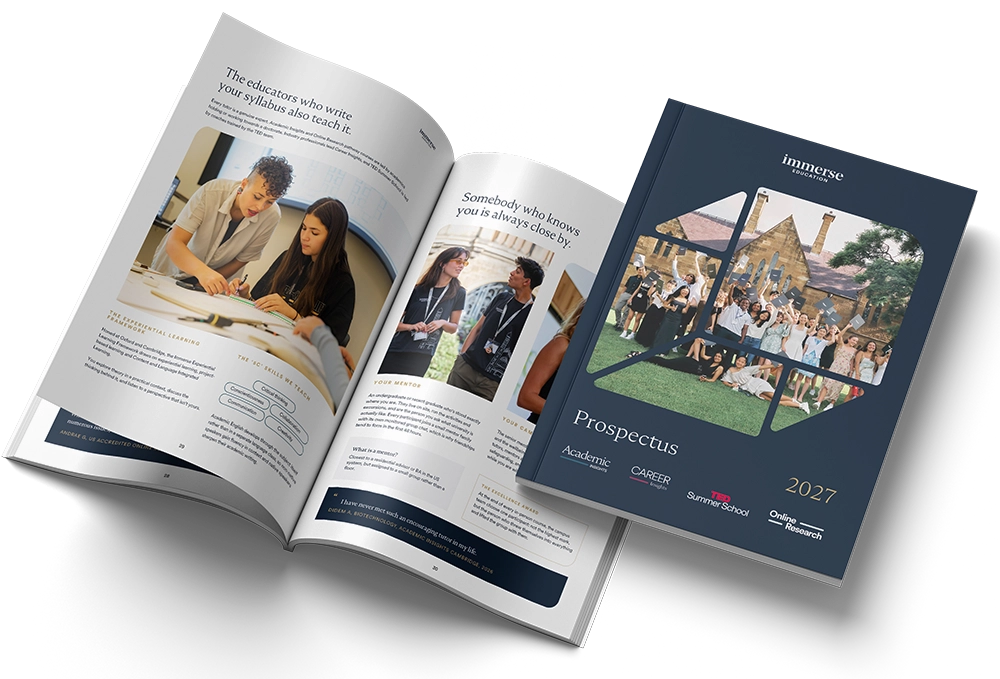
Immerse Education's Academic Insights pathway in Creative Writing will offer you the opportunity to explore the art of creative writing through building skills in poetry, narratives, and fiction. You'll participate in workshops, literary analysis and collaborative projects. You'll receive personalized guidance from experienced writers and explore different genres and writing styles as you find your unique voice as a writer.
Along with becoming a better writer, the program also gives you the experience of university life through thought-provoking discussions and a chance to make like-minded friendships. If you're a high school student looking for a writing program that can help you master creative writing, build self-confidence, and earn a recognized certificate, then this one is a good option to consider.
Why it stands out: It immerses you in narrative craft, genre exploration, and editorial feedback, helping you develop stronger storytelling skills and a more compelling creative voice.
2. Point Park University Creative Writing Camp
Location: Point Park University, Pittsburgh, PA
Cost: Commuter and residential rates available
Dates: One week in the summer
Application Deadline: Not specified
Eligibility: High school students aged 14 to 18, as well as recent high school graduates; international eligibility not specified
This is a week-long camp that brings out your creative writing skills by having you build a horror piece around villainous backstory and vivid imagery. For this, the camp takes you to the University of Pittsburgh’s Hillman Library Horror Archives, where you can find inspiration in text, film, sculpture, and monster objects.
It will also engage you in exercises that explore dramatic monologues and personal storytelling through creative nonfiction. By the end of the program, you will have a knack for turning imaginative ideas into a well-written story. Plus, you will share your work at a closing celebration and reading.
Why it stands out: The trip to a real horror archive gives you an unusual, research-driven way to build your fictional world.
3. Lumiere Research Scholar Program
Location: Remote, you can participate in this program from anywhere in the world!
Cost: Varies depending on program type. Full financial aid available.
Application Deadline: Varies by cohort.
Program Dates: Varies by cohort: summer, fall, winter, or spring. Options range from 12 weeks to 1 year.
Eligibility: You must be currently enrolled in high school and demonstrate a high level of academic achievement.
The Lumiere Research Scholar Program is a rigorous research program tailored for high school students. The program offers extensive 1-on-1 research opportunities for high school students across a broad range of subject areas. The program pairs high school students with Ph.D. mentors to work 1-on-1 on an independent research project.
At the end of the 12-week program, you’ll have developed an independent research paper! You can choose research topics from subjects such as psychology, physics, economics, data science, computer science, engineering, chemistry, international relations, and more. You can find more details about the application here, and check out students’ reviews of the program here and here.
Why it stands out: You get 1-1 mentorship with a Ph.D. mentor and produce an independent research project by the end.
4. Rice University Creative Writing Camp

Location: Rice University and partner campuses, Houston, TX
Cost: Varies by camp
Dates: Four weeks of camps in June and early July
Application Deadline: Not specified
Eligibility: Students in the Greater Houston area, with thematic tracks for middle and high school students; international eligibility not specified
Rice University’s Creative Writing Camp is a long-standing collaboration between the School Literacy and Culture program at Rice’s Susanne M. Glasscock School of Continuing Studies and Writers in the Schools Houston.
High school students enroll in targeted, thematic tracks that help you develop your voice, broaden your imagination, and build confidence as a writer. In 2026, the camp ran across three Houston campuses and welcomed more than 800 students. You’ll learn from experienced writers who help bring out your storytelling capacity.
Why it stands out: It’s one of the longest-running community writing camps in Houston, with more than three decades of history.
5. Goucher College Young Writers’ Camp
Location: Goucher College, Baltimore, MD
Cost: $600 (early registration by May 1st) or $650 (late registration) in 2026, including daily lunch and a printed camp anthology
Dates: One week; June 22nd to 26th in 2026
Application Deadline: Registration for 2026 is closed; early pricing ends May 1st
Eligibility: High school students in grades 9 to 12; international eligibility not specified
Goucher College welcomes students who love writing to this one-week camp to experiment with fiction, poetry, and creative nonfiction. You’ll work with experienced author-instructors at Goucher’s Kratz Center for Creative Writing in workshops, interactive writing games, and seminars with visiting authors.
You’ll also learn about college life and admissions from college counselors and current Goucher students. At the end of the week, professional literary editors help you put together an anthology of camp writing.
Why it stands out: The camp also helps you start thinking about personal essays for your college applications.




6. Susquehanna University Summer Writers Workshop
Location: Susquehanna University, Selinsgrove, PA
Cost: Underwritten by the university; financial aid available for students with demonstrated need
Dates: One week in July
Application Deadline: Not specified
Eligibility: Experienced writers entering grades 10 to 12 in the fall; international eligibility not specified
This summer writing workshop, now in its 39th year, connects talented high school writers with nationally recognized authors in small-group workshops. You’ll work in fiction, poetry, and creative nonfiction, attend daily seminars taught by Susquehanna’s creative writing faculty, and workshop your new writing in a supportive environment. Individual conferences and appearances by guest writers fill out the week. A public reading closes the workshop on the final Saturday.
Why it stands out: The university underwrites the cost, so it’s more affordable than many comparable residential workshops.
7. The Reynolds Young Writers Workshop at Denison
Location: Denison University, Granville, OH
Cost: $1,700 (2026); need-based financial assistance available
Dates: Eight days; June 19th to 28th in 2026
Application Deadline: March 3rd (2026 cycle)
Eligibility: Rising high school juniors and seniors; students come from across the country and around the world
Hosted every June, this residential workshop brings together up to 48 high school students with a passion for writing. You’ll join small workshops in poetry, fiction, and nonfiction, with daily classes taught by Denison and other college creative writing professors.
Group sessions with visiting writers and readings enrich the experience, and there’s time to write individually and meet with faculty one-on-one. You’ll contribute poems and short prose pieces to the Workshop Anthology to take home at the end of the week.
Why it stands out: The workshop gives you the opportunity to meet and hear directly from well-established writers and poets who will teach you to write well.
8. Yale Young Writers’ Workshop
Location: Online or in person at Yale University, New Haven, CT
Cost: $1,380 (Online); $2,660 (On campus, tuition); $3,085 (On campus with housing); $80 application fee
Dates: June 21st to 26th (2026)
Application Deadline: April 1st (2026 cycle; applications opened January 16th); workshops can fill earlier
Eligibility: Rising seniors aged 16 to 18 (on campus) and rising juniors and seniors aged 16 to 18 (online)
Yale’s Young Writers’ Workshop offers genre-based workshops designed to make you a better writer. Depending on the workshop you choose, you’ll craft fiction, poetry, nonfiction, and more, submitting a manuscript to your instructor before the week begins.
In each workshop, you will be introduced to literary techniques that can elevate your work. Admissions run on a rolling basis, so popular workshops can close before the April deadline.
Why it stands out: You will learn the importance of revising your work and rewriting based on feedback while gaining practice in properly critiquing a piece.
9. Nebraska Writing Project Young Writers Camp
Location: University of Nebraska-Lincoln, City Campus, Lincoln, NE
Cost: $250; scholarships available
Dates: July 13th to 24th, weekdays from 10 a.m. to 1 p.m.
Application Deadline: Rolling registration
Eligibility: 8th to 12th graders; international eligibility not specified
Through the Nebraska Writing Project’s Young Writers Camp, you will spend two weeks at the University of Nebraska-Lincoln exploring a wide range of genres. Workshops cover slam poetry, fiction, nonfiction, fantasy, mystery, songwriting, poetry, memoir, and screenwriting.
You’ll work with professional writers, professors, teachers, and undergraduate interns, and you’ll work one-on-one with a writing mentor. The camp ends with a public reading of your work at a celebration of writing on the final evening.
Why it stands out: You’ll leave with your work collected in the YWC Anthology alongside your fellow campers.
10. University of South Florida Creative Writing Summer Camp

Location: University of South Florida, Tampa, FL
Cost: Day and residential options available
Dates: One week in the summer
Application Deadline: Not specified
Eligibility: Rising 9th through 12th graders; international eligibility not specified
The University of South Florida runs this one-week course at its Tampa campus to build the creative writing abilities of high school students. You’ll explore different types of creative writing and try your hand at each through guided activities.
You will work alongside published authors and USF faculty and graduates who support you throughout the course. Additionally, you will become skilled in rewriting your work based on feedback.
Why it stands out: Through the intensive course, you will become a more confident writer who can express your voice through impactful, expressive language.
11. Austin Peay State University Tennessee Young Writers’ Workshop
Location: Austin Peay State University, Clarksville, TN
Cost: $600 (2026); financial assistance available
Dates: June 21st to 27th (2026)
Application Deadline: May 15th (2026 cycle)
Eligibility: High school students aged 14 to 18 during the camp, with no exceptions; international eligibility not specified
In this overnight camp hosted by Austin Peay State University in partnership with Humanities Tennessee, you get to refine your craft as a creative writer. Professional instructors lead workshops in a wide variety of creative writing styles and genres while you spend the week living on campus.
To apply, you’ll submit a sample of your creative writing, and places are awarded competitively. Since financial need doesn’t factor into admission decisions, you’ll be surrounded by talented writers selected on the strength of their work. You can compare more options in our list of overnight writing summer camps for teens.
Why it stands out: In addition to the writing sessions, you’ll take part in fun camp activities like making friendship bracelets with poetry lines.
Join the Immerse Education 2027 Essay Competition
Follow the instructions to write and submit your best essay for a chance to be awarded a 100% scholarship.
12. Iowa Young Writers’ Studio Summer Residential Program
Location: University of Iowa, Iowa City, IA
Cost: $2,500 (2026) plus a $10 reading fee; need-based full and partial grants available
Dates: June 14th to 27th (Session 1) and July 12th to 25th (Session 2) in 2026
Application Deadline: The 2026 application window ran January 19th to February 1st
Eligibility: Students currently in 10th, 11th, or 12th grade; international eligibility not specified
This is a two-week residential program in which you take one core course for the full session. You can choose from fiction writing, poetry writing, creative writing, TV writing, or playwriting, taught by graduates of the Iowa Writers’ Workshop and other University of Iowa MFA programs.
Classes include writing exercises and activities, and you’ll share your work with peers and teachers for feedback. The application asks for a writing sample, and transcripts are no longer required.
Why it stands out: The course is supplemented with readings by published writers, workshops on craft and revision, collaborative projects, and open mics.
13. Young Arizona Writers’ Workshop (YAWW)
Location: University of Arizona, Tucson, AZ
Cost: Program fee with a $40 deposit; scholarships available
Dates: June 1st to 10th (2026)
Application Deadline: May 4th (2026 priority registration); scholarship applications due May 1st
Eligibility: 9th to 12th graders; international eligibility not specified
As a participant in the Young Arizona Writers’ Workshop, you’ll explore fiction, poetry, and creative nonfiction through daily workshops. Each day moves between a fiction workshop, a poetry workshop, generative writing time, and a nonfiction workshop.
You’ll draft and revise your work while learning how creative writing gets published in the world. By the end of the program, your writing appears in a booklet alongside your peers’ work.
Why it stands out: You’ll leave as a published writer, with your work printed in the workshop booklet.
14. UMass Juniper Institute for Young Writers
Location: University of Massachusetts Amherst, Amherst, MA
Cost: $2,330 (Commuter) and $5,200 (Residential); scholarships available
Dates: Two-week sessions in July and August
Application Deadline: Applications for 2026 are closed
Eligibility: Rising 10th through 12th graders and recent high school graduates; international eligibility not specified
This is a two-week program that places you in a community of writers who enjoy creative writing as much as you do. Daily Writing Labs introduce you to creative styles, forms, and modes of writing, while Craft Sessions explore a particular aspect of writing in more depth.
You will also work through prompt-based exercises and share your work with other participants. By taking part in the different activities, you’ll practice your craft and receive one-on-one guidance.
Why it stands out: The program’s instructors read their published work to you and answer your questions about life as a writer.
15. Summer Workshop for Young Writers at the Kelly Writers House
Location: Kelly Writers House, University of Pennsylvania, Philadelphia, PA
Cost: $3,000 (2026), including tuition, materials, housing, all meals, and activities; limited financial assistance available
Dates: July 5th to 15th (2026)
Application Deadline: March 2nd (2026 cycle)
Eligibility: Students entering 11th or 12th grade in the fall; international eligibility not specified
Kelly Writers House runs this summer workshop so that high school students who love writing can spend their time doing just that. Daily craft sessions are led by members of Penn’s Creative Writing Program faculty and established writers connected to the Kelly Writers House community.
You’ll develop your creative writing across genres while collaborating with thoughtful peers and faculty. To apply, you’ll submit a personal statement, writing sample, transcript, and teacher recommendation.
Why it stands out: Your summer is based on Penn’s campus in Philadelphia, giving you a close look at an Ivy League creative writing community.
Frequently asked questions: Summer Fiction Writing Camps for High School Students
What do you do at a summer fiction writing camp?
You spend most of your time writing, sharing drafts, and revising based on feedback. Most camps combine craft lessons, prompt-based exercises, and peer workshops where you critique each other’s work. Many also include readings by published authors and one-on-one time with instructors. To prepare, you could practice with tips on how to write realistic characters.
Do you need a writing sample to join a fiction writing camp?
It depends on the camp. Selective workshops like the Iowa Young Writers’ Studio, the Kelly Writers House, and Austin Peay’s Tennessee Young Writers’ Workshop ask for a creative writing sample. Others, like the Nebraska Writing Project’s Young Writers Camp and Goucher’s Young Writers’ Camp, let you register without one. If you’re applying to a selective program, choose your strongest, most polished piece.
Are there affordable fiction writing camps for high schoolers?
Yes, several cost far less than residential pre-college programs. Nebraska’s Young Writers Camp costs $250, while Goucher and Austin Peay each cost $600 in 2026. Susquehanna’s workshop is underwritten by the university, and Iowa, Denison, and the Kelly Writers House offer need-based aid. Always check what’s included, since some fees cover meals and housing.
Can international students attend fiction writing camps?
Some can, though many US camps don’t state an international policy. Denison’s Reynolds Young Writers Workshop draws students from across the country and around the world, and Yale’s online workshop lets you join from home. Immerse Education's Academic Insights pathway in Creative Writing welcomes students aged 13 to 18 from around the world in Oxford. Contact US programs directly before applying if you live abroad.
Will a fiction writing camp help with college applications?
It can, especially if you leave with polished work to show. Many camps end with a published anthology or public reading, which gives you concrete achievements to mention. Goucher’s camp even helps you start your college application essays. You can also use your camp writing to build a portfolio, using this guide on how to create a writing portfolio.
When should you apply for summer fiction writing camps?
Start in the winter, since selective workshops close early. Iowa’s 2026 application window ran from January 19th to February 1st, while the Kelly Writers House closed on March 2nd and Denison on March 3rd. Yale accepted applications until April 1st, and Austin Peay until May 15th. If you want more ways to share your work, look into these creative writing competitions for high school students.
Building your fiction portfolio before college
A week of drafting, workshopping, and revising teaches you more about storytelling than a semester of reading about it ever could.
The best summer fiction writing camps for high schoolers leave you with finished stories, honest feedback, and often a published piece in an anthology.
Start preparing a strong writing sample early, since the most selective workshops close applications between January and April each year.
For more guidance on choosing a course, writing personal statements, and preparing for college-level study, explore our University Preparation blogs.





Unlock Inspiring Opportunities with the Immerse Education Newsletter
Join our newsletter to stay ahead with exclusive updates, exciting programme highlights, and expert insights from the world of immersive education.
Learn how Immerse can transform your life
An in-depth overview of our university and career preparation programmes
Get a glimpse into the life of an Immerse participant
Find the right programme for you with sample timetables, location showcases, and more