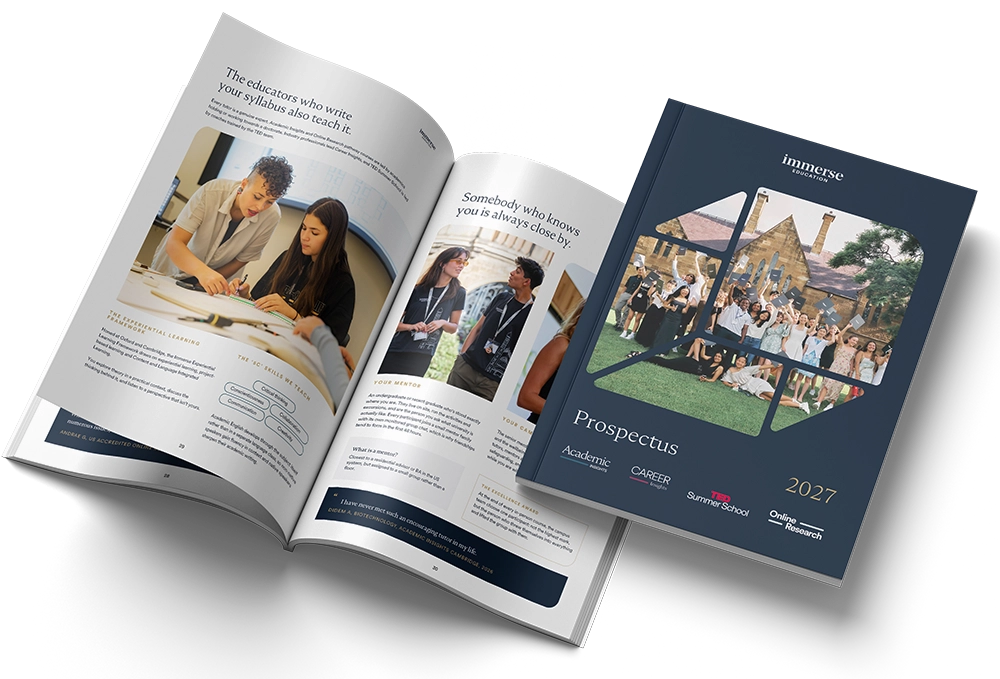
15 University Preparation Summer Schools for 17-Year-Olds

TL;DR
You’ll find 15 university preparation summer schools, from free UK residentials at Oxford, Surrey, and Newcastle to credit-bearing courses at Harvard, Cornell, and NYU. The biggest split is between free programmes for UK state school students and tuition-based US programs open to applicants worldwide. Most suit students around 17, usually in Year 12 or entering 11th or 12th grade. Johns Hopkins’ Next Generation Scholars Academy, for example, lets you earn up to 8 credits in five weeks. Immerse Education's Academic Insights pathway welcomes ages 13 to 18 in six cities, including Oxford and Toronto.
Attending university lectures, writing academic papers, and staying in campus dorms gives high schoolers a clear preview of higher education life. If you look at fields like biomedical science, economics, international relations, computer engineering, or psychology, knowing how university courses operate gives you a huge advantage. Getting comfortable with lecture note-taking and independent studying sets a solid baseline long before your freshman year begins. If you want to construct that foundation during your break, a specialized university preparation summer school is a fantastic place to start.
Think about spending two weeks participating in seminar debates, studying in academic libraries, or collaborating on group research alongside other motivated teenagers. You will complete university-style assignments, present your findings to instructors, and observe how college classrooms structure their daily schedules. This active setup feels completely separate from standard high school class routines.
What kinds of university preparation summer schools are there?
Your selection links directly with your specific academic targets. Certain options focus heavily on specific subjects like science research, business management, or creative writing, which suits students who want deep knowledge in one field. Other options focus on overall academic readiness, teaching research methods, essay writing, and public speaking across multiple subjects.
Dedicating your break to advanced study helps your college application stand out because it shows clear initiative and intellectual drive. These options also offer great practice with time management and study habits that you will use throughout your future degree and career.
To help you find the right fit, we've curated a list of 15 university preparation summer schools worth exploring!
15 University Preparation Summer Schools for 17-Year-Olds
1. University of Oxford UNIQ Programme
Location: University of Oxford, Oxford, United Kingdom
Cost/Stipend: Free
Acceptance rate/cohort size: Selective
Dates: A one-week, subject-specific residential between late June and July (June 29th to July 31st in 2026), arriving Monday and leaving Friday
Application Deadline: January 13th (2026 cycle; 2027 dates not yet announced)
Eligibility: Year 12 students (or equivalent) at UK state schools; not open to international students
Your UNIQ journey starts with a small-group online conversation with a member of the UNIQ team, before regional in-person events in the spring. The one-week residential then gives you a taste of undergraduate study at Oxford in a single chosen subject, through seminars, lectures, labs, and tutorials.
Workshops on applying to Oxford run alongside the academic teaching. From August to December, additional online support helps you make a competitive application to Oxford if you choose to. You can read more in our complete guide to UNIQ Oxford.
Why it stands out: You get a free week of subject teaching in Oxford, followed by months of sustained support as you prepare your university application.
2. Immerse Education’s Pre-University Summer School

Location: Cambridge, London, Oxford, Singapore, Sydney, and Toronto
Cost: Varies; summer school scholarship available through our bursary programme
Acceptance rate/cohort size: Selective; an average of 7 participants per class
Application Deadline: Multiple cohorts with rolling admissions
Program Dates: 2 weeks during the summer
Eligibility: Students aged 13 to 18; open to international students from around the world
Immerse Education's Academic Insights pathway lets you experience university-level study before you apply. You’ll study in tutor-led seminars averaging 7 students, with two 1:1 tutorials, masterclasses, and guest speakers built into your two weeks. You can choose from more than 20 subjects, including Architecture, Business Management, Computer Science, Economics, Medicine, and Philosophy, with residential or commuter options.
By the end of the programme, you’ll present a personal project on the final Friday, and accredited options let you earn 8 UCAS points or 3 US college credits from age 14. You can find more details about the application here.
Why it stands out: You’ll get an early start at university life and academics because the program includes an independent project, discussion-based classes, and living in a historic university city.
3. Lumiere Research Scholar Program
Location: Remote, you can participate in this program from anywhere in the world!
Cost: Varies depending on program type. Full financial aid available.
Application Deadline: Varies by cohort.
Program Dates: Varies by cohort: summer, fall, winter, or spring. Options range from 12 weeks to 1 year.
Eligibility: You must be currently enrolled in high school and demonstrate a high level of academic achievement.
The Lumiere Research Scholar Program is a rigorous research program tailored for high school students. The program offers extensive 1-on-1 research opportunities for high school students across a broad range of subject areas. The program pairs high school students with Ph.D. mentors to work 1-on-1 on an independent research project.
At the end of the 12-week program, you’ll have developed an independent research paper! You can choose research topics from subjects such as psychology, physics, economics, data science, computer science, engineering, chemistry, international relations, and more. You can find more details about the application here, and check out students’ reviews of the program here and here.
Why it stands out: You get 1-1 mentorship with a Ph.D. mentor and produce an independent research project by the end.
4. Wadham College Summer Schools
Location: Wadham College, University of Oxford, Oxford, United Kingdom
Cost/Stipend: Free, with accommodation and meals provided by the College and financial support for travel
Acceptance rate/cohort size: 15 students per summer school in 2025
Dates: Five days in August (August 17th to 21st in 2026)
Application Deadline: May 1st (2026 cycle)
Eligibility: Year 12 students at UK state schools or sixth-form colleges; not open to international students
You live in college for five days and follow one of three strands: Classics, Modern Languages, or Climate Change. The Classics strand, “Gender and Sexuality in the Ancient World,” runs a seminar series from the Faculty of Classics that includes language classes in Ancient Greek.
Modern Languages covers French, German, or Spanish, with the chance to try German, Portuguese, and Russian as a complete beginner. The Climate Change strand looks at impacts and solutions across the human and biological sciences and ends with group presentations on a topic you choose. Student ambassadors and College staff provide information, advice, and guidance on applying to top universities across the week.
Why it stands out: You get a free five-day residential inside an Oxford college with meals and travel covered, in a small group of around 15 students.
5. University of Surrey Residential Summer Schools
Location: University of Surrey, Guildford, United Kingdom
Cost/Stipend: Free
Acceptance rate/cohort size: 100 places, split as Business 35, Engineering Sciences 35, and Veterinary Medicine 30
Dates: Four days, three nights (June 29th to July 2nd in 2026)
Application Deadline: March 29th (2026 cycle; applications opened January 19th)
Eligibility: Year 12 students from groups currently under-represented in higher education who attend a non-selective state school or college in the UK, meeting criteria such as free school meals eligibility in the last six years; not open to international students
You spend four days and three nights on campus, choosing one strand from Business, Engineering Sciences, or Veterinary Medicine and following it throughout. Each strand lets you experience what studying your chosen subject is like at university degree level, with current students supporting you along the way.
The summer school sits within Surrey Scholars, a sustained outreach programme running from Year 9 through Year 13, so acceptance connects you to support well beyond the residential. Past participants often single out the student ambassadors as a highlight of the experience.
Why it stands out: You get a fully funded four-day residential in a strand capped at 30 to 35 places, plus a link into Surrey Scholars through to Year 13.


6. Warwick Pre-University Summer School
Location: University of Warwick, Coventry, United Kingdom
Cost/Stipend: £5,250 inclusive of a £1,000 deposit, plus a £50 non-refundable application fee; the fee covers ten nights of accommodation, breakfasts, evening meals, refreshments, all academic and skills teaching, the guest lectures, the social programme, travel to Oxford, and all trip activities
Acceptance rate/cohort size: Not disclosed
Dates: July 14th to 24th (2026)
Application Deadline: May 31st (2026 cycle); places are first come, first served
Eligibility: Students aged 16 to 17 for the whole programme who are considering applying to university; open to students from around the world
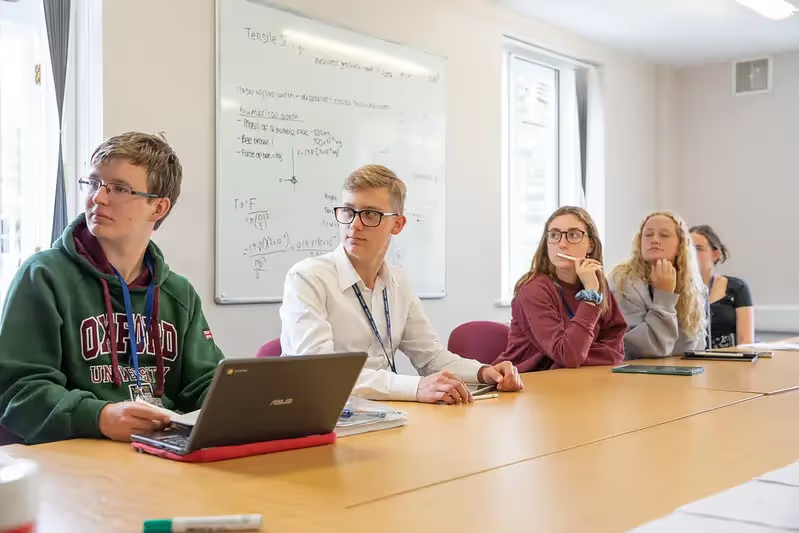
You spend ten nights on the Warwick campus taking teaching from Warwick faculty rather than a school-style timetable. Five courses are offered: Arts and Humanities; Business, Economics and Finance; Health, Medical and Life Sciences; Social Sciences; and Science and Engineering, each with 29 hours of lectures, seminars, and skills workshops.
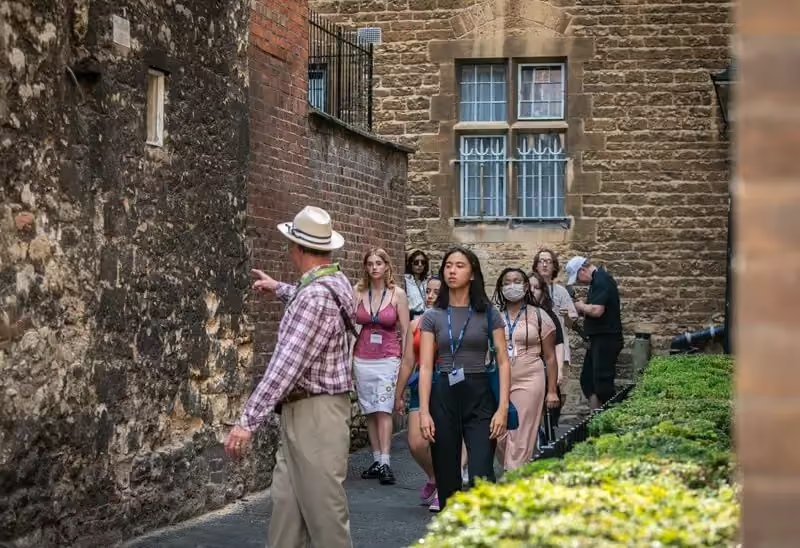
Day trips to Oxford and Warwick Castle are built into the schedule and included in the price. You live alongside current Warwick students who act as ambassadors, and you leave with a certificate of attendance from the University of Warwick. If you’re weighing other UK options, you can compare these summer programs in the UK for international high school students.
Why it stands out: You combine university-level teaching in your chosen discipline with skills workshops and day trips while living on a self-contained UK campus.
7. Yale Young Global Scholars
Location: Yale University, New Haven, Connecticut
Cost/Stipend: Tuition varies; need-based financial aid can cover up to the full cost of tuition; application fee waivers can reduce the fee to $0
Acceptance rate/cohort size: Selective; small seminars with a 12:1 student-to-instructor ratio
Dates: 2027 sessions: June 20th to July 2nd; July 4th to July 16th; July 18th to July 30th
Application Deadline: October 15th, 2026 (Early Action); January 6th, 2027 (Regular Decision)
Eligibility: High school sophomores and juniors, or international equivalents, aged 16 to 18; open to students from all countries
The program takes you through one of three academic tracks: Innovations in Science and Technology, Politics of Law and Economics, or Solving Global Challenges. You attend lectures delivered by Yale faculty and small seminars led by Yale undergraduate and graduate students.
You live in Yale’s residential colleges alongside students from more than 150 countries. You experience collegiate academic rigor without the pressure of letter grades or exams.
Why it stands out: You will study across one of three interdisciplinary tracks alongside students from more than 150 countries, with need-based aid that can cover the full cost of tuition.
8. Harvard Pre-College Program

Location: Harvard University, Cambridge, Massachusetts
Cost/Stipend: $6,100 plus a $75 non-refundable application fee (2026); need-based financial aid available
Acceptance rate/cohort size: Selective; small classes
Dates: Two-week sessions; 2026 ran June 20th to July 2nd, July 5th to July 17th, and July 19th to July 31st
Application Deadline: January 7th (Early) and February 11th (Regular) in the 2026 cycle
Eligibility: At least 16 by the start of your session, not turning 19 before it ends, and entering college within the next two years; open to international students
The program runs in two-week sessions, and you take one non-credit, college-level course. Course groups span speech, writing, and literature; psychology, medicine, and public health; law, politics, philosophy, and history; business and leadership; and STEAM.
Instead of traditional letter grades, you receive a detailed written evaluation and a Harvard transcript marked “Requirements Met” or “Requirements Not Met.” College readiness activities include workshops on your admissions essay, financial aid seminars, and panels with admissions officers from colleges across the country.
Why it stands out: You gain two residential weeks inside a single Harvard course, with written evaluations instead of grades and admissions panels built into the program.
9. Harvard Secondary School Program
Location: Harvard University, Cambridge, Massachusetts
Cost/Stipend: 2026: 4-Week Residential $9,100; 7-Week Residential $15,735; 7-Week Commuting or Online $4,180 (4 credits) to $8,160 (8 credits); plus a $75 non-refundable application fee; financial aid available
Acceptance rate/cohort size: Not disclosed
Dates: 2026: 7-week program June 20th to August 8th; 4-week program July 12th to August 7th
Application Deadline: January 7th (Early), February 11th (Regular), and April 1st (Late) in the 2026 cycle; international residential and commuting applicants had an earlier February 17th deadline
Eligibility: For 2026, students graduating from high school and entering college in 2026, 2027, or 2028; open to international students
Unlike the two-week Pre-College Program, this route puts you into credit-bearing Harvard Summer School courses. You choose between a four-week or seven-week session, and the seven-week residential option has you take two courses for 8 credits. You can pick from more than 200 courses, taught by Harvard faculty and visiting faculty.
Residential students live in Harvard College dorms or undergraduate Houses with a dining hall meal plan and access to Harvard’s libraries and athletic facilities. Proctors, nearly all of them Harvard College students, help build community and connect you to academic resources.
Why it stands out: You earn real Harvard college credit across four or seven weeks, with more than 200 courses to choose from.
10. Cornell Precollege Summer Residential Program
Location: Cornell University, Ithaca, New York
Cost/Stipend: $1,940 per credit (2025 to 2026 rate), plus a residential fee and a $75 non-refundable application fee; financial assistance available for first-generation and/or low-income students
Acceptance rate/cohort size: Not disclosed
Dates: 2026 residential sessions: June 22nd to July 10th and July 13th to July 31st (three weeks), or June 22nd to July 31st (six weeks)
Application Deadline: Late May for residential sessions (2026 cycle)
Eligibility: Students who have completed sophomore year of high school (or the international equivalent) by the time class starts; recent graduates must be under 18 when the course starts; open to international students
You enrol in regular credit-bearing Cornell undergraduate courses taught by Cornell instructors. Grades and credits appear on an official Cornell transcript, giving you a record of university-level work before you apply.
Because a three-week course compresses much of a semester’s content, the reading and assessment load is heavier than the calendar suggests. You apply with a complete transcript, a current grade report, a teacher or counselor recommendation, and a written application statement.
Why it stands out: You earn Cornell credit and an official transcript through undergraduate courses taught by Cornell instructors, open to students from high schools worldwide.
11. Johns Hopkins Next Generation Scholars Academy
Location: Homewood Campus, Johns Hopkins University, Baltimore, Maryland
Cost/Stipend: Tuition charged at $1,275 per credit hour (2026) for your undergraduate courses, plus the one-credit Academy course and housing, dining, and programming fees; $85 application fee
Acceptance rate/cohort size: Not disclosed
Dates: Five weeks; June 29th to July 31st in 2026
Application Deadline: February 3rd (Early Action) and March 10th (Regular Decision) in the 2026 cycle, with extended consideration after that
Eligibility: Rising high school juniors and seniors; international students may apply
You enrol in two undergraduate courses alongside current Johns Hopkins students, earning up to eight credit hours on an official Johns Hopkins transcript. A third course sits on top: an exclusive one-credit Academy course built around the college decision and admissions processes ahead of you.
In 2025, scholars worked with JHU Undergraduate Admissions and the University Writing Program, getting feedback on their personal statements. Completing the Academy earns you a certificate recognizing you as a Next-Gen Scholar.
Why it stands out: You gain up to eight Johns Hopkins credit hours, a dedicated course on college admissions, and five residential weeks on the Homewood Campus.
Join the Immerse Education 2027 Essay Competition
Follow the instructions to write and submit your best essay for a chance to be awarded a 100% scholarship.
12. Boston University Academic Immersion
Location: Boston University, Boston, Massachusetts
Cost/Stipend: $5,640 tuition
Acceptance rate/cohort size: Not disclosed
Dates: Three weeks; 2026: Experimental Psychology and Business June 28th to July 17th; Medicine, Business, and Creative Writing July 19th to August 7th
Application Deadline: May 29th (2026 cycle); popular tracks can fill earlier
Eligibility: Students entering their junior or senior year of high school; open to students from around the world; residential and commuter options available
You commit to one subject for three weeks rather than sampling several, choosing between experimental psychology, medicine, business, and creative writing. Each track combines classroom work in the subject with project-based learning, and Introduction to Medicine works as an intensive premedical course.
The Creative Writing track is offered in partnership with BU’s MFA Program in Creative Writing. Admission weighs your transcript from ninth grade onward, a 500 to 750 word personal statement, and one teacher recommendation.
Why it stands out: You spend three focused weeks in a single subject, from premedical study to creative writing with BU’s MFA program.
13. Notre Dame Summer Scholars
Location: University of Notre Dame, Notre Dame, Indiana
Cost/Stipend: $5,200 (2026); $75 application fee; very limited financial aid and some grants available
Acceptance rate/cohort size: Not disclosed
Dates: 2027: Session I June 19th to July 3rd; Session II July 10th to July 24th
Application Deadline: February 17th, 2027 (applications open October 19th, 2026)
Eligibility: High school students who are at least 16 by August 1st, 2027, with no exceptions to the age policy; open to international students
You take a single college-level course over two weeks taught by Notre Dame faculty and can earn one transferable college credit when you complete your track. Classes are kept small, and you collaborate on coursework outside class time just as you would in college.
You also have time to enjoy campus life and Notre Dame traditions, and past participants have taken part in community service projects. Applying requires a transcript, a counselor report, and one teacher recommendation, with SAT, ACT, or PSAT scores encouraged but not required.
Why it stands out: You can earn one transferable college credit from a two-week Notre Dame course with small classes and close faculty attention.
14. NYU Precollege

Location: New York University, Washington Square campus, New York, New York
Cost/Stipend: Tuition charged per credit, plus a $50 application fee; the non-credit College Writing Workshop costs $700
Acceptance rate/cohort size: Not disclosed
Dates: July 1st to August 12th (2026)
Application Deadline: For summer 2026, March 13th for international students coming to campus and June 15th for US and online students; residential students are advised to apply by May 1st
Eligibility: Rising 11th and 12th grade students, with a cumulative GPA of 3.0 recommended; open to international students, who must show English proficiency
You enrol in NYU undergraduate courses for credit, not in a parallel high school stream built for visitors. In the summer, you can earn up to 8 credits across two classes, or take the five-week, non-credit College Writing Workshop taught by NYU’s writing faculty.
Campus housing is available in the summer, and evening and weekend events help you connect with classmates. You leave with credits on an NYU transcript that show you can meet the demands of university-level academics. For more options in the city, you can explore these pre-college summer programs in NYC.
Why it stands out: You gain NYU credit and an official transcript from real undergraduate courses, with summer housing on the Washington Square campus.
15. Newcastle University Bitesize Uni
Location: Newcastle University, Newcastle upon Tyne, United Kingdom
Cost/Stipend: Free, including travel to and from Newcastle
Acceptance rate/cohort size: Limited places; applications may be prioritised if oversubscribed
Dates: Two three-day blocks (July 12th to 14th or July 15th to 17th in 2026)
Application Deadline: March 15th (2026 cycle)
Eligibility: UK-based students in Year 12, first year of college, or the equivalent in Northern Ireland and Scotland, aged 17 or under on the last day of their chosen dates; not open to international students
You stay in Park View accommodation and try out a degree subject you might want to study at university. Interactive sessions are delivered by academics in your chosen field, giving you first-hand insight into university teaching.
You’ll also get to know current students and other Year 12 students from around the UK. All linked degree programmes are eligible for Newcastle’s PARTNERS programme in Year 13, and those in the Science, Agriculture and Engineering faculty also link to Pathways to Newcastle.
Why it stands out: You get a fully funded residential at a Russell Group university with travel covered, linked to Newcastle’s supported entry programmes for Year 13.
Frequently asked questions: University Preparation Summer Schools for High School Students
What is a university preparation summer school?
A university preparation summer school is a short program that lets you experience university-style teaching before you apply. You usually attend lectures, seminars, or tutorials in one subject and get guidance on admissions, personal statements, or interviews. Some, like UNIQ and Wadham, focus on preparing you to apply to a specific university. Others, like Harvard’s Secondary School Program, let you take real college courses for credit.
Are there free university preparation summer schools?
Yes, especially in the UK. UNIQ, Wadham College, the University of Surrey, and Newcastle’s Bitesize Uni are all free, and several also cover travel, meals, and accommodation. Most of these are open only to UK students in Year 12, and some prioritise students from under-represented groups. If you’re looking for more no-cost options, browse these fully funded summer programs for high school students.
Can international students attend university preparation summer schools?
Yes, though the free UK programmes are usually limited to UK students. Warwick’s Pre-University Summer School, Yale Young Global Scholars, Harvard, Cornell, and NYU all accept international applicants, though some set earlier deadlines for visa processing. Immerse Education's Academic Insights pathway is open to students aged 13 to 18 from around the world in Cambridge, London, Oxford, Singapore, Sydney, and Toronto. Check visa timelines early if you’ll be travelling to study.
Can you earn college credit at a summer school at 17?
Yes, several programs on this list award transferable credit. Harvard’s Secondary School Program, Cornell Precollege, and NYU Precollege let you earn college credit on an official transcript, and Johns Hopkins’ Academy offers up to eight credit hours. Immerse also offers accredited options that earn 8 UCAS points or 3 US college credits from age 14. You can compare more pre-college summer programs for credit.
Is a university preparation summer school worth it?
It can be, especially if you’re unsure what to study or how university teaching works. A week or two of seminars and assignments helps you test a subject before committing to it on your application. Some programmes also offer ongoing support, like UNIQ’s online guidance through December or Newcastle’s links to its PARTNERS programme. Make sure the program fits your goals, budget, and eligibility before applying.
When should you apply for university preparation summer schools?
Start in the autumn, since many deadlines fall early in the new year. UNIQ closed on January 13th in the 2026 cycle, and Yale Young Global Scholars has an Early Action deadline of October 15th, 2026. Notre Dame Summer Scholars closes on February 17th, 2027, while Johns Hopkins’ Early Action deadline was February 3rd in 2026. Programs like Warwick and Boston University accept applications into late May, but places can fill earlier.
What a university prep summer gives you
A summer of seminars, lectures, and essays shows you how university learning actually works before you have to choose a degree.
The right university preparation summer schools for 17-year-olds also give you admissions guidance, college credit, or a stronger personal statement to show for it.
Check eligibility early, since the free UK programmes are open only to UK students and many US deadlines fall by early spring.
For more guidance on choosing courses, writing applications, and settling into student life, explore our University Preparation blogs before your final year begins.






Unlock Inspiring Opportunities with the Immerse Education Newsletter
Join our newsletter to stay ahead with exclusive updates, exciting programme highlights, and expert insights from the world of immersive education.
Learn how Immerse can transform your life
An in-depth overview of our university and career preparation programmes
Get a glimpse into the life of an Immerse participant
Find the right programme for you with sample timetables, location showcases, and more