14 Business Summer Schools for 16 Year Olds

TL;DR
This guide covers business summer programs open to 16-year-olds, from Wharton’s three-week Leadership in the Business World to two-week courses at Harvard and Yale. Most run in person on US campuses, though Stanford’s Summer Institutes run online, and a few options earn college credit. You’ll find choices for rising juniors and seniors, with some starting as early as grade 8. UChicago’s Pathways in Economics, for example, carries 100 units of credit, equal to one quarter-long undergraduate course. Immerse Education’s Academic Insights pathway in Business Management runs for two weeks in Cambridge, Oxford, Singapore, Sydney, and Toronto for students aged 13 to 18.
As a high school student interested in business, financial markets, and entrepreneurship, the subject can be exciting yet overwhelming. You might wonder what the field involves beyond basic economics textbooks. After all, business in practice involves quantitative decision-making, market strategy, startup launching, and team leadership in addition to foundational theory. One of the best ways to truly understand the subject is by joining a business summer program.
Picture yourself analyzing business case studies in a university lecture hall, building financial models with guidance from industry experts, or pitching startup concepts to like-minded peers. By spending your summer studying business, you’ll gain practical experience, collaborate with global peers, and get a real taste of university-level academics.
How do you choose the right business summer school for 16-year-olds?
It can be difficult to decide which program fits your goals. Some may be too generic, too basic, or disconnected from actual corporate and startup practices. That is why targeted guidance is important to help you sort through the options and identify the right program for your academic trajectory.
Various top universities and research institutions offer business summer programs that are rigorous, practical, and grounded in how businesses actually operate. You will explore microeconomics, financial analysis, marketing strategy, startup execution, and organizational leadership. You will learn through collaborative team projects, case studies, guest lectures, and pitch presentations. Programs range from those that model undergraduate introductory courses to those focused on startup incubator experiences.
Regardless of your chosen track, participating in a summer program acts as a foundation for your college journey, giving you a taste of what university life is like at a top institution while helping you clarify which majors and career paths in business suit you best. To help you choose, here is a list of 14 business summer schools for 16 year olds.
14 Business Summer Schools for 16 Year Olds
1. Wharton Global Youth Program: Leadership in the Business World (LBW)
Location: Philadelphia, PA
Cost: $11,899; need-based scholarships available
Acceptance rate/cohort size: Selective; applicants need a 3.5+ unweighted GPA
Dates: June 6th to 26th, June 27th to July 17th, or July 18th to August 7th, 2027
Application Deadline: January 27th, 2027 (5 p.m. ET)
Eligibility: Students graduating from high school in 2028 (rising seniors); open to international students
Hosted by the Wharton School of the University of Pennsylvania, Leadership in the Business World introduces high school students to undergraduate-level business education. Over three weeks, you will attend lectures delivered by Wharton faculty, analyze case studies, and work through team-based projects, simulations, and debates. The curriculum covers core disciplines including finance, marketing, strategy, and leadership, along with the management frameworks businesses use to assess their internal and external environments. The program culminates in a capstone case competition, where your team applies what it has learned to a business scenario. Beyond the classroom, you will experience residential life on Penn’s campus, building a clear academic foundation for future business studies.
Why it stands out: It gives you direct exposure to Wharton faculty and an authentic experience of undergraduate business coursework.
2. Immerse Education's Business Summer School
Location: Cambridge, Oxford, Singapore, Sydney, and Toronto
Cost/Stipend: Varies; summer school scholarship available through our bursary programme
Acceptance rate/cohort size: Selective; an average of 7 participants per class
Dates: 2 weeks during the summer
Application Deadline: Multiple cohorts with rolling admissions
Eligibility: Students aged 13-18 (ages vary by location); open to international students
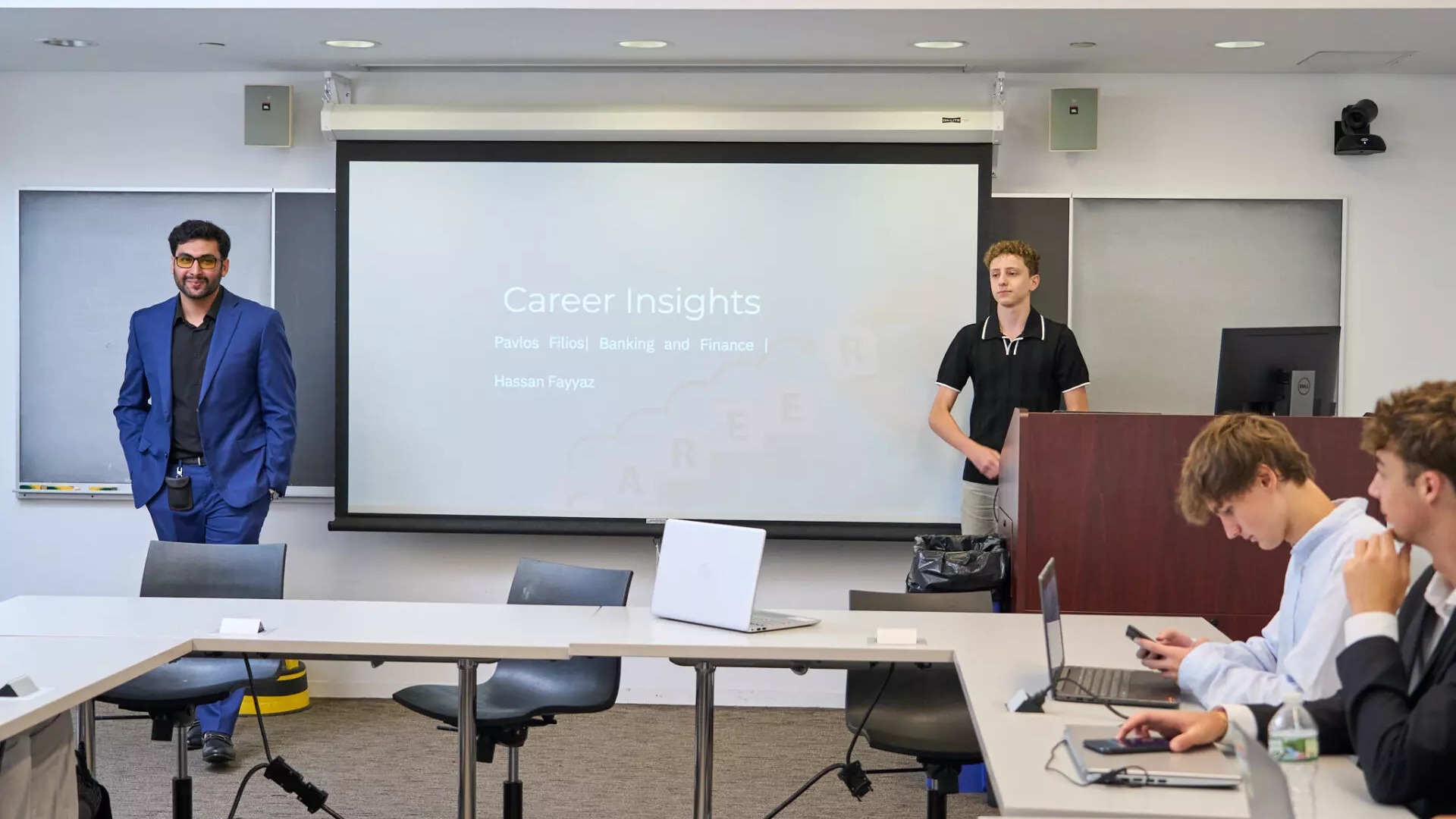
Immerse Education's Academic Insights pathway in Business Management lets you explore business management and take college-level classes at universities around the world. Throughout the program, you will participate in lectures, hands-on workshops, 1-on-1 tutoring sessions with expert mentors, and gain professional experience.
You will develop professional skills, explore the key concepts of business like strategic management, marketing, and finance, and attend immersive activities. The program includes an independent study in business management led by expert mentors. By the end of the program, you will receive a certificate of achievement.
Why it stands out: You'll learn from world-class tutors in classes of around seven students, follow a practical case-study curriculum, and live in a real university residence as part of a global community of 20,000+ alumni.
3. Young Founders Lab
Cost: Varies depending on program type. Full financial aid available.
Location: This program is 100% virtual, with live, interactive workshops
Eligibility: The program is currently open to all high school students
Program Dates: Multiple cohorts throughout the year, including summer, fall, winter, and spring
Application Deadline: Varies according to cohort. You can access the application link here!
The Young Founder’s Lab is a start-up boot camp founded and run by Harvard entrepreneurs. In this program, you will work towards building a revenue-generating start-up that addresses a complex problem. You will also have the opportunity to be mentored by established entrepreneurs and professionals from Google, Microsoft, and X.
Apart from building the start-up itself, you will also participate in interactive classes on business fundamentals and business ideations, workshops and skill-building sessions, case studies, panel discussions, and more. The program is an excellent opportunity to delve into the world of business in high school and have a space to explore multiple theoretical as well as practical frameworks that lead to a successful business. You can check out the brochure for the program here.
Why it stands out: You work on building a startup with expert mentorship.
4. Berkeley Business Academy for Youth (B-BAY): High School Summer Entrepreneurship Program
Location: Haas School of Business, UC Berkeley, Berkeley, CA
Cost: Not listed on the application page; program fees are due within 10 days of acceptance
Acceptance rate/cohort size: Selective; applications include essays, a teacher recommendation, and a possible interview
Dates: July 5th to 18th or July 19th to August 1st (2026 dates; 2027 dates not yet posted)
Application Deadline: Applications for the 2026 cycle are closed; 2027 deadlines not yet posted
Eligibility: Academically motivated high school students; international eligibility not specified
Based at UC Berkeley’s Haas School of Business, B-BAY’s High School Summer Entrepreneurship Program is a two-week residential experience for students who want to build their knowledge of business. The application asks you to reflect on Haas’s Defining Leadership Principles, such as Question the Status Quo and Beyond Yourself, which shape how the program approaches business thinking. Over the two weeks, you will explore entrepreneurship and business fundamentals in a rigorous, college-prep setting designed for mature, motivated students. Living on the UC Berkeley campus also gives you firsthand insight into university life and a network of peers who share your interest in business.
Why it stands out: It gives you a two-week residential preview of business study at UC Berkeley’s Haas School of Business.
5. Harvard Summer School Pre-College Program

Location: Harvard University, Cambridge, MA
Cost: $6,100 plus a $75 application fee (2025 rate); need-based financial aid available
Acceptance rate/cohort size: Selective
Dates: June 20th to July 2nd, July 5th to 17th, or July 19th to 31st (2026 dates; 2027 dates not yet posted)
Application Deadline: Multiple application rounds; 2027 deadlines not yet posted
Eligibility: Students graduating from high school in 2027 or 2028 who are at least 16 by the start of the summer term; open to international students, who are not eligible for financial aid
Harvard’s two-week Pre-College Program lets you take one non-credit, college-level course, with economics and business topics among the subject areas you can choose from. You will attend classes led by Harvard Summer School instructors while living in Harvard’s residential halls, experiencing undergraduate daily life and academic expectations. Outside class, you can join college readiness workshops, social events, and dozens of co-curricular activities. Throughout the session, rigorous reading and discussion help you evaluate your readiness for competitive college programs and your long-term interest in economics and management. You can stay for more than one session if you want a longer experience on campus.
Why it stands out: You will reside in Harvard dormitories while taking college-level classes that mirror real undergraduate courses.




6. Georgetown University: Entrepreneurship Academy
Location: Georgetown University, Washington, D.C.
Cost: Varies by commuter or residential option; 2027 tuition not yet posted
Acceptance rate/cohort size: Selective
Dates: June 7th to 19th (2026 dates; 2027 dates not yet posted)
Application Deadline: January 31st (early bird) and April 15th (final), 2026
Eligibility: Current 8th graders through high school seniors; open to international students
Georgetown’s Entrepreneurship Academy explores the advantages and challenges of managing your own enterprise. Over two weeks, you will look at choosing a start-up, prototype testing, market research, social innovation, global business, and the operations of running a business. You will learn the basics of design thinking and brainstorming before shaping your ideas into business plans. The program ends with a team pitch competition, giving you practice presenting and defending a business idea. Field trips, group discussions, and sessions with entrepreneurs across different industries also help you build public speaking, networking, and team-building skills.
Why it stands out: It pairs entrepreneurship coursework with personal development, so you build communication and networking skills alongside a business plan.
7. Stanford Pre-Collegiate Summer Institutes
Location: Online
Cost: $3,080 (2025 rate); need-based financial aid available
Acceptance rate/cohort size: Selective
Dates: June 15th to 26th or July 6th to 17th (2026 dates; 2027 dates not yet posted)
Application Deadline: March 13th (2026)
Eligibility: Students in grades 8 to 11; open to international students
Stanford’s Summer Institutes let you study a single subject in depth through an intensive two-week online course, with options that include entrepreneurship and other social science topics. Courses challenge you with advanced content not typically found in the high school curriculum, taught live by Stanford instructors. You attend class at a set daily time with your camera and microphone on, which keeps discussions active and interactive. Small, discussion-based classes bring together peers from around the world who share your academic drive. Without the pressure of grades, you can focus on building analytical skills and testing your interest in studying business at a research university.
Why it stands out: You can study business topics live with Stanford instructors from anywhere in the world, without the cost of a residential program.
8. Business: Strategy & Innovation, Wake Forest University
Location: Virtual
Cost: $1,595
Acceptance rate or cohort size: Selective
Dates: Multiple 1-, 2-, and 4-week sessions offered throughout the year
Application deadline: Varies by session
Eligibility: Students aged 13 and older; international students may apply
In Wake Forest University's Business: Strategy & Innovation course, you examine how companies develop strategies, respond to competition, and introduce new products or services. Using examples from companies such as Netflix and Apple, you explore concepts including business models, competitive positioning, customer experience, and innovation through online instruction and applied projects.
You also learn how to examine information companies use when making strategic decisions. This includes reviewing financial filings such as 10-K reports, comparing competitors, and considering how businesses adjust their approaches as markets change. Alongside these topics, you consider how leadership, organizational culture, and ethical considerations influence the way companies operate and make decisions.
Why it stands out: You study business strategy through company analysis, financial documents, competitive research, and practical projects. If you'd rather explore business entirely online with a broader set of course options, our online business programs for high school students roundup covers more virtual choices.
9. Yale Young Global Scholars (YYGS): Politics, Law & Economics
Location: Yale University, New Haven, CT
Cost: Need-based financial aid covering up to full tuition available for domestic and international students
Acceptance rate/cohort size: Selective; seminars with a 12:1 student-to-teacher ratio
Dates: June 21st to July 3rd, July 5th to 17th, or July 19th to 31st (2026 dates; 2027 dates not yet posted)
Application Deadline: Early Action and Regular Decision rounds; 2026 deadlines were October 15th, 2025 and January 7th, 2026
Eligibility: High school students aged 16 to 18; open to international students
YYGS is an interdisciplinary program that approaches economics and business through the lens of public policy, law, and governance. Each session combines lectures by Yale faculty with small seminars led by Yale undergraduate and graduate students, keeping a 12:1 student-to-teacher ratio. The participant body includes students from over 150 countries, bringing global perspectives on markets and international development into every discussion. You will also complete a session-long capstone project with a small team, working on a contemporary challenge under the mentorship of YYGS instructional staff. Living in Yale’s Benjamin Franklin and Pauli Murray Colleges gives you an introduction to Ivy League campus life while you test your interest in interdisciplinary economics majors.
Why it stands out: You will collaborate with peers from over 150 countries to examine economic challenges from global policy perspectives.
10. Cornell University Precollege Studies
Location: Cornell University, Ithaca, NY
Cost: $1,940 per credit (summer 2026 rate); residential fee of $3,287 for three-week or $6,595 for six-week sessions
Acceptance rate/cohort size: Not specified
Dates: June 22nd to July 10th, July 13th to 31st, or June 22nd to July 31st for residential sessions (2026 dates; 2027 dates not yet posted)
Application Deadline: May 5th for residential sessions (2026)
Eligibility: High school students; open to international students
Cornell offers high school students the opportunity to take regular, credit-bearing Cornell University courses taught by Cornell instructors. Residential course options span subjects from business and hospitality to leadership, including courses such as NBA 3820: Family Business Foundations from Generation to Generation. You will be on a fast-paced schedule, covering 15 weeks of coursework in a three- or six-week period. This pace gives you direct experience with university academic rigor and work volume before you apply to college. Earning transferable college credit while navigating a university course schedule also lets you demonstrate academic capability to future college admissions officers.
Why it stands out: You earn official Cornell University academic credit while studying on Cornell’s campus.
11. University of Chicago Summer Immersion: Pathways in Economics
Location: University of Chicago, Chicago, IL
Cost: Not listed on the course page; need-based financial aid available
Acceptance rate/cohort size: Selective; applications include a teacher recommendation, transcript, and short essay
Dates: Session 1, June 15th to July 2nd (2026 dates; 2027 dates not yet posted)
Application Deadline: February 11th (priority) and March 12th (regular), 2026
Eligibility: Students in grades 9 to 11 who are at least 14; pre-calculus required; open to international students
Known for its quantitative approach to social sciences, the University of Chicago uses this course to introduce you to the approaches to economic research and experimentation that have made it a leader in the field. The course is designed for students with a strong interest in using math to identify economic patterns, so pre-calculus is a prerequisite. As a three-week Immersion course, it is graded and carries 100 units of UChicago credit, equivalent to one full quarter-long undergraduate course. You will live in campus housing alongside pre-college students from across the country and around the world. The academic intensity provides strong preparation if you are aiming to pursue quantitative social sciences or finance majors in college.
Why it stands out: It focuses heavily on quantitative economics and experimental methods, and it earns you graded UChicago credit.
Join the Immerse Education 2027 Essay Competition
Follow the instructions to write and submit your best essay for a chance to be awarded a 100% scholarship.
12. US Naval Academy Summer Seminar
Location: US Naval Academy, Annapolis, MD
Cost: $450 plus travel expenses; the program fee covers lodging, meals, and all clothing worn during the session
Acceptance rate/cohort size: Selective
Dates: May 30th to June 4th, June 6th to 11th, or June 13th to 18th (2026 dates; 2027 dates not yet posted)
Application Deadline: Applications for 2026 ran from January 6th to March 31st
Eligibility: Rising high school seniors (current juniors); international eligibility not specified
Hosted by a federal service academy, the USNA Summer Seminar introduces you to life at the Academy through academic, athletic, and professional training. You will live in Bancroft Hall, the dormitory all midshipmen live in, and take part in academic and leadership workshops across a six-day session. The Summer Seminar has a strong academic focus, with workshops in areas such as naval architecture. Your Summer Seminar application also serves as a preliminary application to the Academy, which you complete before or during your senior year. The program suits you if you are weighing a service academy appointment and want to see how leadership is taught in a military setting.
Why it stands out: It gives you a week of academy life, and your application doubles as a preliminary USNA application.
13. Babson Summer Study for High School Students (Babson College)
Location: In-person component held at New England Innovation Academy, Marlborough, MA | fully online option also available through Babson
Cost: Online: $6,295 | In-person, non-residential (day): $9,295 | In-person, residential: $12,995 (each includes 4 Babson College credits; a $95 application fee applies); need-based financial aid is limited to the online format
Acceptance rate or cohort size: Not disclosed
Dates: July 8th to 28th
Application deadline: Typically mid-February (early) and mid-March (standard); confirm current-year dates on Babson's site
Eligibility: Rising high school juniors and seniors who are at least 16 by the start of the program and meet Babson's English-proficiency requirements; international students can apply
You work on real-world challenges connected to the UN Global Goals, using research and design thinking to develop practical responses. With guidance from faculty, you collaborate in cross-cultural teams, manage projects, and learn how to turn an initial idea into a structured solution.
You also strengthen your communication skills by presenting your work to different audiences, practicing your pitches, and using feedback to improve them. Along the way, you develop problem-solving, leadership, and entrepreneurial thinking skills while gaining experience working in an international academic setting. The program also provides the opportunity to earn 4 college credits.
Why it stands out: You combine academic learning, collaborative project work, and presentation practice while earning college credit.
14. Summer Business Camp (NJ), Rutgers Business School

Location: Livingston Apartments and Rutgers Business School, Livingston Campus, Piscataway, NJ
Cost: $2,600 for one week (includes room & board, meals, and field trips)
Acceptance rate or cohort size: Not disclosed
Dates: July 5th to 11th | July 12th to 18th | July 19th to 25th
Application deadline: Registration is open
Eligibility: High school students; international students have attended
During this one-week residential program, you rotate through several areas of business, including finance, accounting, management, marketing, and supply chain. Faculty-led sessions introduce the fundamentals of each field, while activities such as elevator pitches and business plan development give you opportunities to apply those concepts to practical scenarios.
You also take part in visits to businesses and structured exercises that involve developing, refining, and presenting business ideas. Living on Rutgers' Livingston Campus gives you an opportunity to follow a residential college routine, including staying in campus housing and participating in scheduled program activities. By combining classroom learning with applied projects, you gain a broader understanding of how different business functions connect.
Why it stands out: You explore multiple business disciplines while developing and presenting ideas in a residential university setting.
Frequently asked questions: Business Summer Schools for 16 Year Olds
Can a 16-year-old attend a business summer school?
Yes, many business summer schools are built around students who are 16 or will be by the start of the program. Harvard’s Pre-College Program requires you to be at least 16 by the first day of the summer term, and Yale Young Global Scholars admits students aged 16 to 18. Wharton’s Leadership in the Business World is for rising seniors graduating in 2028, while Stanford’s Summer Institutes accept students in grades 8 to 11. Check each program’s grade and age rules carefully, since some count your age on a specific date.
How much do business summer schools for 16 year olds cost?
Costs range from a few hundred dollars to more than $11,000, depending on length, format, and housing. The US Naval Academy Summer Seminar charges $450 plus travel, covering lodging, meals, and clothing, while Stanford’s online Summer Institutes cost $3,080 in 2025. At the top end, Wharton’s three-week Leadership in the Business World costs $11,899. Many programs offer need-based aid, and Yale Young Global Scholars can cover up to full tuition for both domestic and international students.
Can you earn college credit at a business summer school?
Yes, but only some programs award credit, so check before you apply. Cornell’s Precollege Studies courses are regular, credit-bearing Cornell courses, and UChicago’s three-week Immersion courses carry 100 units of credit. Harvard’s two-week Pre-College Program, by contrast, is non-credit. Immerse Education’s Academic Insights pathway offers an optional accredited route where your work is formally assessed, so you can earn 3 US college credits if you are 14 or older.
Are there online business summer programs for high school students?
Yes, you can study business online if travel or cost makes a residential program difficult. Stanford’s Pre-Collegiate Summer Institutes run entirely online, with live classes that require your camera and microphone to be on. You choose one course and study it in depth over two weeks alongside students from around the world. For more remote options, browse these online business programs for high school students.
Can international students attend business summer schools?
Yes, most programs on this list accept international students, though visa and aid rules differ. Yale Young Global Scholars brings together students from more than 150 countries and offers need-based aid to international applicants. Harvard’s Pre-College Program accepts international students, but they are not eligible for its financial aid and do not qualify for F-1 student visas. Immerse Education’s Academic Insights pathway in Business Management is open to students aged 13 to 18 from around the world, with an average of 7 participants per class.
When should you apply to business summer schools?
You should start researching in the fall and apply in winter, since many deadlines fall between January and March. Wharton’s Leadership in the Business World closes applications on January 27th, 2027, and Yale Young Global Scholars’ 2026 Regular Decision deadline was January 7th. UChicago’s priority deadline was February 11th in 2026, and the Naval Academy’s Summer Seminar application ran from January 6th to March 31st. Applying early also gives you more time to complete essays and secure teacher recommendations.
Discover the business role that suits you
One summer spent pitching ideas, analyzing cases, or modeling markets can show you whether finance, strategy, or entrepreneurship really excites you as a future career.
The business summer schools for 16 year olds on this list cover everything from week-long academy sessions to credit-bearing college courses and online seminars.
Choose the one that lets you try the role you keep imagining, whether that is founder, analyst, consultant, or manager, and notice what energizes you.
When you want to map those roles in more detail, our Career Exploration blogs explain what each business career involves and how to start preparing.






Unlock Inspiring Opportunities with the Immerse Education Newsletter
Join our newsletter to stay ahead with exclusive updates, exciting programme highlights, and expert insights from the world of immersive education.
Learn how Immerse can transform your life
An in-depth overview of our university and career preparation programmes
Get a glimpse into the life of an Immerse participant
Find the right programme for you with sample timetables, location showcases, and more