15 Architecture Summer Schools for Year 13 Students

TL;DR
This guide covers architecture summer schools where you can build a design portfolio through drawing, model-making, and digital tools before applying to university. Most are studio-based programmes at US universities and design schools, ranging from five-day camps to six-week credit-bearing courses, with several online options. You’ll find choices for your final years of school, including some open only once you’ve graduated. Cal Poly’s four-week workshop, for example, ends with a gallery exhibit of your work. Immerse Education’s Academic Insights pathway in Architecture runs for two weeks in Cambridge for students aged 13 to 18.
Sketching axonometric projections, testing structural materials, and creating physical models give Year 13 students authentic studio exposure before beginning university applications. High school seniors aiming for degrees in environmental design, civil planning, or interior architecture benefit when they learn how to articulate visual concepts through spatial drawings. Practicing with physical modeling materials and design software gives your creative portfolio an early lift long before admissions panels review your work.
Spend two weeks constructing balsa-wood frameworks, manipulating digital form studies, and receiving direct desk critiques alongside driven peers. Working through real design briefs teaches you how practicing architects solve urban spatial puzzles and pitch concepts to clients.
What kinds of architecture summer schools for Year 13 students are there?
Your choice connects directly with your intended area of specialization within the design field. Certain academies focus heavily on freehand perspective drawing and physical model fabrication, which suits you if you prefer tactile craft. Alternate programs emphasize digital 3D rendering and sustainable structural systems, showing you how contemporary designs integrate with local environments.
Committing your summer to focused design studio work proves strong motivation and independent creative ambition on higher education applications. These intensive experiences cultivate the precise visual literacy and spatial analysis required in a rigorous undergraduate architecture degree.
To help you find the right fit, we’ve curated a list of 15 architecture summer schools for Year 13 students worth exploring!
15 Architecture Summer Schools for Year 13 Students
1. Cooper Union: Introduction to Architecture Online
Location: Online, delivered by The Cooper Union, New York, NY
Cost/Stipend: $2,980 tuition plus a $40 application fee; you purchase your own supplies (2026)
Acceptance rate/cohort size: Not disclosed
Dates: July 6th to August 7th, with live sessions Monday to Friday, 11 a.m. to 2 p.m. EST (2026 dates; 2027 dates not yet posted)
Application Deadline: June 1st (2026); rolling review, with no applications reviewed after June 10th
Eligibility: Current high school students and students who will still be in high school in the fall; open to students worldwide
Cooper Union faculty guide your investigation into spatial composition, form generation, and architectural theory in a program modeled on the curriculum of the school’s five-year Bachelor of Architecture degree. Studio instruction introduces analog drawing conventions, geometric transformations, and digital representation methods. Individual drafting assignments and small-group desk reviews help you assemble a design portfolio for university applications.
Daily synchronous sessions train your eye to analyze structural volume and translate conceptual ideas into clean graphic presentations. The five-week virtual studio culminates in reviews with an international jury of architecture faculty and critics. You’ll receive a Certificate of Completion from The Cooper Union once you complete all assignments.
Why it stands out: You receive portfolio preparation from Cooper Union faculty, alongside individual desk reviews and a formal critique panel, all in a flexible virtual format.
2. Immerse Education's Architecture Summer School
Location: Cambridge
Cost: Varies; summer school scholarship available through our bursary programme
Acceptance rate/cohort size: Selective; an average of 7 participants per class
Application Deadline: Multiple cohorts with rolling admissions
Program Dates: 2 weeks during the summer
Eligibility: Students worldwide aged 13-18 currently enrolled in middle or high school; open to international students
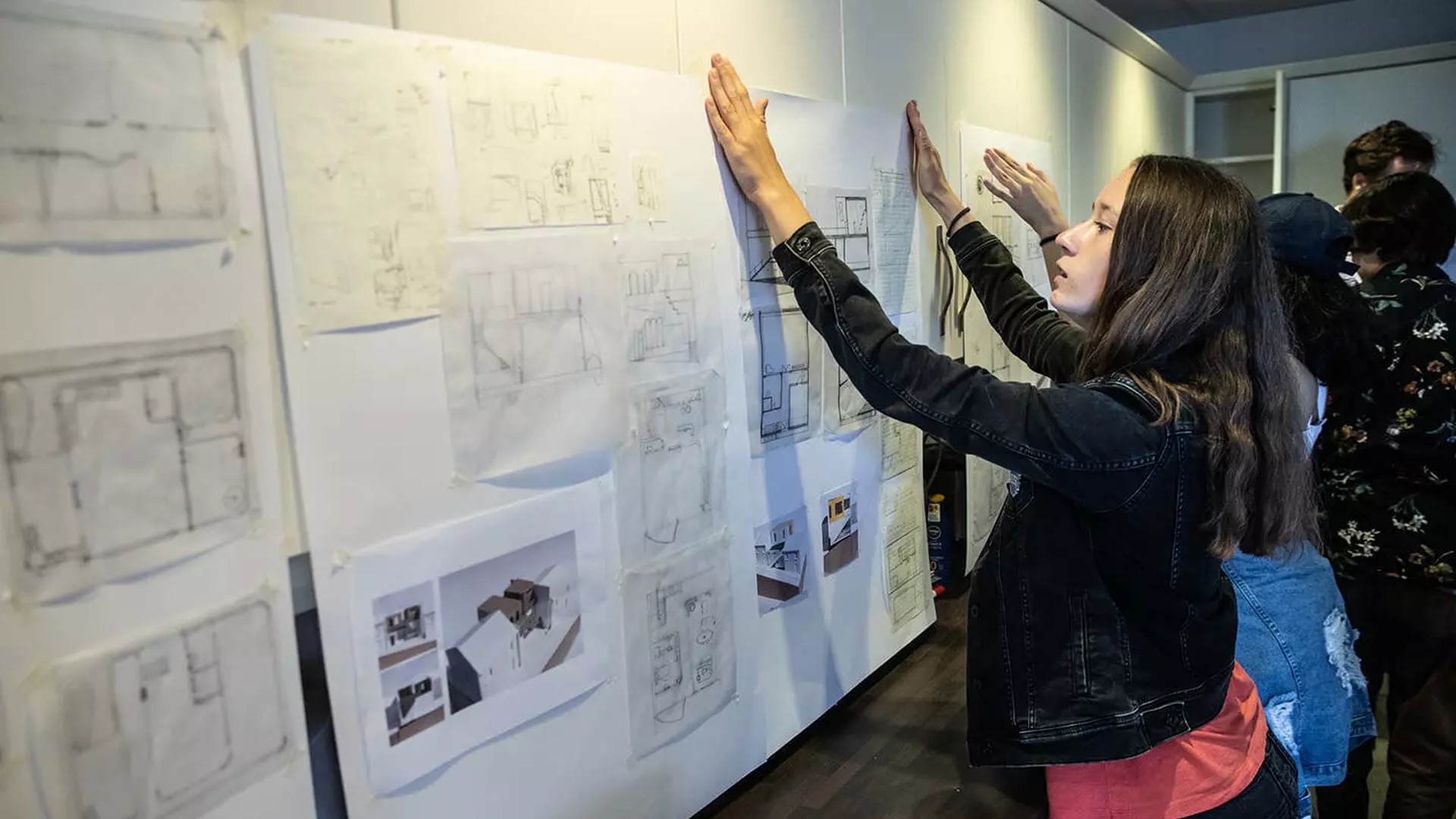
Immerse Education's Academic Insights pathway in Architecture is a residential academic program designed for high school students interested in architecture, providing a structured introduction to the subject at a university level. Within this program, you will explore core architectural concepts, including spatial design, structural thinking, sustainability, and urban planning through practical design projects, studio sessions, and organized field trips. The course brings together hands-on workshops and theoretical knowledge, enabling you to nurture creativity, visual thinking, and technical design skills, which are the core for further architectural study.
Moreover, the program includes cultural immersion and exposure to the environments of a notable place such as Cambridge, which helps you expand your knowledge of how architecture influences cities and societies. Upon finishing the course, you are awarded a Certificate of Achievement that recognises your academic development and readiness for further study in the field. You can find more details about the application here.
Why it stands out: It offers hands-on design projects and expert feedback, helping you understand how architectural thinking and creative problem-solving operate in professional contexts.
3. Lumiere Research Scholar Program
Location: Remote, you can participate in this program from anywhere in the world!
Cost: Varies depending on program type. Full financial aid available.
Application Deadline: Varies by cohort.
Program Dates: Varies by cohort: summer, fall, winter, or spring. Options range from 12 weeks to 1 year.
Eligibility: You must be currently enrolled in high school and demonstrate a high level of academic achievement.
The Lumiere Research Scholar Program is a rigorous research program tailored for high school students. The program offers extensive 1-on-1 research opportunities for high school students across a broad range of subject areas. The program pairs high school students with Ph.D. mentors to work 1-on-1 on an independent research project. At the end of the 12-week program, you’ll have developed an independent research paper!
You can choose research topics from subjects such as psychology, physics, economics, data science, computer science, engineering, chemistry, international relations, and more. You can find more details about the application here, and check out students’ reviews of the program here and here.
Why it stands out: You get 1-1 mentorship with a Ph.D. mentor and produce an independent research project by the end.
4. University of Michigan Taubman College: ArcStart
Location: University of Michigan, Ann Arbor, MI
Cost/Stipend: $6,250, covering tuition, housing, meals, field trips, and instructional supplies; $495 non-refundable deposit; scholarships may be awarded (2026)
Acceptance rate/cohort size: Not disclosed; a waitlist is used if applications exceed space
Dates: July 12th to 31st (2026 dates; 2027 dates not yet posted)
Application Deadline: February 26th (2026)
Eligibility: Current high school freshmen through seniors, plus rising college freshmen; open to international students, with no F-1 visa required
Taubman College studios welcome your creative efforts as instructors introduce architectural concepts, fabrication techniques, and the built environment. Led by an architecture faculty member and supported by current Taubman undergraduate and graduate students, you’ll learn drawing, drafting, and modeling tools before developing original design proposals. You’ll also study architectural history and curate your work into a digital portfolio.
Site visits take your cohort to significant buildings across the region and inside professional architecture firms. Meetings with the Taubman College admissions team provide direct answers about applying for undergraduate degrees in Architecture and Urban Technology.
Why it stands out: You spend three weeks in Taubman College studios, completing university-level design projects, touring professional firms, and hearing directly from the admissions team.
5. SCI-Arc: Design Immersion Days
Location: Southern California Institute of Architecture (SCI-Arc), Los Angeles, CA
Cost/Stipend: Not listed for 2026 on the program page; full-tuition DID scholarships available for domestic students with significant financial need
Acceptance rate/cohort size: Not disclosed
Dates: June 15th to July 10th (2026 dates; 2027 dates not yet posted)
Application Deadline: May 15th (2026); rolling registration until capacity is reached
Eligibility: High school students under the age of 18; international eligibility not specified
Downtown Los Angeles studios provide an experimental testing ground as instructors guide your exploration of contemporary design concepts and visual communication. Over four weeks, you’ll work with traditional drawing and physical building as well as digital tools such as 3D modeling, 3D printing, and augmented reality. One-on-one desk critiques and group pin-ups with SCI-Arc faculty mirror the review process used in professional architecture practice.
Projects respond to the cultural, material, and economic context of Los Angeles, connecting your studio work to the city around you. The program culminates in a public exhibition where you present your final projects to a panel of leading architects and critics.
Why it stands out: You spend four weeks producing experimental design work at SCI-Arc and finish with a refined portfolio for future design and architecture school applications.



6. Pratt Institute: Summer PreCollege (Architecture)
Location: Pratt Institute, Brooklyn, NY
Cost/Stipend: $8,192 (residential) or $5,452 (commuter), plus a non-refundable application fee (2026)
Acceptance rate/cohort size: Not disclosed
Dates: July 6th to 31st (2026 dates; 2027 dates not yet posted)
Application Deadline: May 1st (2026)
Eligibility: High school students; open to students from around the globe
Pratt Institute’s Brooklyn campus hosts your daily studio investigations during this four-week PreCollege Intensive. You’ll select two classes from more than 20 options, including Architecture, and earn four college credits along with an official Pratt transcript. Classes are taught by Pratt faculty and designed to mirror the rigor and structure of college-level art and design coursework.
Residential students also join guided studio hours with Pratt student mentors and portfolio development sessions with Pratt’s Admissions Office. The program ends with a final exhibition where you showcase your work to friends, family, and the Pratt community.
Why it stands out: You earn four Pratt credits while completing four weeks of intensive studio work and portfolio development in Brooklyn.
7. Harvard GSD: Design Discovery Virtual

Location: Online, delivered by Harvard University Graduate School of Design, Cambridge, MA
Cost/Stipend: Not listed in the program overview; financial aid information available on the program site
Acceptance rate/cohort size: Not disclosed
Dates: June 8th to 26th (2026 dates; 2027 dates not yet posted)
Application Deadline: April 20th (2026)
Eligibility: Students aged 18 or older with a high school diploma or equivalent; open to US and international students
Design Discovery Virtual is a three-week online program that introduces you to design, media, and methods across architecture, landscape, and urban planning and design. Sections are taught by graduating or advanced Harvard GSD students and coordinated by current GSD design faculty. The program combines live synchronous meetings with recorded content you can watch outside class time.
Your tuition includes licensed access to 3D modeling and digital design software for the duration of the program. At the end, you receive a written evaluation from your instructor, a Harvard GSD certificate, and a draft portfolio of design work.
Why it stands out: You explore three design disciplines side by side, which helps you decide which one to pursue before committing to a degree.
8. Cornell University: Introduction to Architecture
Location: Cornell University, Ithaca, NY
Cost/Stipend: $18,402 (residential) or $11,807 (commuter) for the six-credit program, plus a non-refundable application fee (2026)
Acceptance rate/cohort size: Not disclosed
Dates: June 22nd to July 31st (2026 dates; 2027 dates not yet posted)
Application Deadline: May 5th (2026)
Eligibility: High school students considering a degree in architecture; open to international students
Six intensive weeks on Cornell’s Ithaca campus introduce you to the demands of university studio culture. You’ll take a design studio and a lecture course together, covering design principles, history, theory, preservation, and technology for a total of six Cornell credits. The studio introduces concepts of space, form, function, and technology through a graduated sequence of exercises.
Faculty and guest reviews build toward a major final project, and portfolio development is part of the program. The program requires no specialized knowledge beyond a serious interest in architectural design, giving you practical clarity on the workload of a professional architecture degree.
Why it stands out: You earn six Cornell University credits across six weeks of studio assignments, lectures, and faculty reviews.
9. UCLA Architecture and Urban Design: JumpStart Summer Institute
Location: UCLA Department of Architecture and Urban Design, Los Angeles, CA
Cost/Stipend: Program fee varies by UC student status, plus campus and administrative fees
Acceptance rate/cohort size: Not disclosed
Dates: June 22nd to July 17th (2026 dates; 2027 dates not yet posted)
Application Deadline: June 12th (application) and June 19th (enrollment), 2026
Eligibility: Students with a high school diploma or equivalent; open to international students; commuter program
UCLA’s Department of Architecture and Urban Design opens its studio classrooms for an intensive four-week introduction to architectural education. Led by Summer Programs Director Julia Koerner, the studio combines intensive design exercises, individual feedback sessions, small group discussions, and studio-wide reviews.
You’ll be introduced to the conceptual and technical facilities essential to studying architecture as a discipline. Weekly lectures from UCLA faculty and guest designers explore idea-driven design as well as urban and design culture in Los Angeles. Completing ARCH&UD 103 earns you six UCLA units and documented portfolio work.
Why it stands out: You earn six UCLA units through an intensive design studio, making it a strong option once you’ve finished Year 13 and want university credit before your degree.
10. Columbia University GSAPP: Introduction to Architecture
Location: Columbia University Morningside Campus, New York, NY, with an online section for high school students
Cost/Stipend: $4,590 for the 3-point course (2025 rate), plus university fees; full-tuition Hilyard Robinson Scholars awards available
Acceptance rate/cohort size: Not disclosed
Dates: July 6th to August 7th (2026 dates; 2027 dates not yet posted)
Application Deadline: Rolling review
Eligibility: The online high school section is open to students entering grades 10 to 12; international eligibility not specified
Columbia University’s Graduate School of Architecture, Planning and Preservation introduces you to contemporary processes of architectural design in a five-week course. Alongside the architecture studio, you’ll join lectures, discussions, workshops, and site visits covering computation, making, ecology, history and theory, and the practice of architecture.
The online high school section welcomes both beginners and more experienced young designers. Completing the course earns you three points of Columbia University credit. Short-term summer housing is available through Columbia for the in-person course.
Why it stands out: You experience Columbia GSAPP’s studio methods over five weeks while earning university credit.
11. University of Maryland: Terp Young Scholars - Discovering Architecture
Location: University of Maryland School of Architecture, Planning and Preservation, College Park, MD
Cost/Stipend: Varies
Acceptance rate/cohort size: Not disclosed
Dates: July 13th to 31st (2026 dates; 2027 dates not yet posted)
Application Deadline: Not specified
Eligibility: High school students through the Terp Young Scholars program; international eligibility not specified
University of Maryland faculty introduce the fundamentals of the design process across architectural practice, historic preservation, landscape design, and urban planning. Formal lectures, media workshops, and one-on-one design critiques let you experience daily life as an undergraduate architecture student.
Daily exercises and weekly assignments build skills in sketching, 2D and 3D representation, and site analysis, ending with the design of a human-scale structure for a real site. Current UMD architecture students work alongside you in the studio, sharing insights on academic pathways. This three-week course earns you three college credits while clarifying future university degree options.
Why it stands out: You earn three University of Maryland credits while exploring architecture, landscape design, historic preservation, and urban planning in one course.
Join the Immerse Education 2027 Essay Competition
Follow the instructions to write and submit your best essay for a chance to be awarded a 100% scholarship.
12. Cal Poly San Luis Obispo: Architecture Summer Career Workshop
Location: California Polytechnic State University, San Luis Obispo, CA
Cost/Stipend: Residential and commuter options; fees listed through Cal Poly Conference and Event Planning
Acceptance rate/cohort size: Not disclosed
Dates: June 28th to July 24th (2026 dates; 2027 dates not yet posted)
Application Deadline: Not specified
Eligibility: High school students; commuter option for students who live locally; international eligibility not specified
Four weeks in Cal Poly architecture studios put the university’s polytechnic learning philosophy directly into practice. The workshop introduces you to architecture and design while exposing you to related fields such as architectural engineering, landscape architecture, city and regional planning, and construction management.
Residential students live in Cal Poly’s South Mountain dorms, supervised by live-in counselors who are current Cal Poly architecture students. The program culminates in a gallery exhibit of your work on the final day. Beach days, pool time, and recreational activities led by architecture students balance the fast-paced studio schedule.
Why it stands out: You experience Cal Poly’s studio method over four weeks with mentoring from current architecture students, ending with a public gallery exhibit.
13. Boston Architectural College: Summer Academy
Location: Boston Architectural College, Back Bay, Boston, MA, with an online Global option
Cost/Stipend: $2,000 (3 college credits) or $1,800 (not for credit); scholarships available
Acceptance rate/cohort size: Not disclosed
Dates: July 6th to 31st (2026 dates; 2027 dates not yet posted)
Application Deadline: June 22nd (Boston) and June 9th (online), 2026; scholarship priority deadline March 1st
Eligibility: High school students in grades 9 to 12 aged 14 or older; open to students from anywhere in the world
Boston’s historic Back Bay neighborhood provides the setting for this half-day program held on weekday afternoons. You’ll choose an Exploration or Investigation track and work on design projects in architecture, interior design, and landscape architecture.
You can enroll for three college credits or take the program not for credit. Every Summer Academy graduate is eligible for a $2,000 scholarship toward a BAC undergraduate degree. Field trips, such as visits to the Harvard Art Museums, connect your studio work to design across the city.
Why it stands out: You can earn three college credits and a $2,000 scholarship toward a future BAC degree while studying in Boston’s Back Bay.
14. Syracuse University: Summer College - Architecture
Location: Syracuse University School of Architecture, Syracuse, NY
Cost/Stipend: $6,595 (residential) or $5,138 (commuter) for 3 college credits (2026)
Acceptance rate/cohort size: Not disclosed
Dates: July 5th to 24th (2026 dates; 2027 dates not yet posted)
Application Deadline: May 1st (2026)
Eligibility: Rising high school juniors or seniors, or 2026 high school graduates; open to international students
Syracuse University’s School of Architecture hosts this three-week course on its main campus in upstate New York. You’ll study spatial definition, form, and spatial relationships through a fundamental, conceptual introduction to architecture.
Syracuse School of Architecture faculty teach the course, which is structured so you can complete projects for an architecture program application portfolio. Your final project asks you to design a small pavilion in downtown Syracuse. Completing the course earns you three Syracuse University credits.
Why it stands out: You earn three Syracuse University credits and finish with a portfolio project built around a real site in downtown Syracuse.
15. Penn State University: Architecture and Landscape Architecture Summer Camp

Location: Pennsylvania State University, Stuckeman Family Building, University Park, PA
Cost/Stipend: Not listed on the camp overview
Acceptance rate/cohort size: Not disclosed
Dates: July 12th to 16th or July 19th to 23rd (2026 dates; 2027 dates not yet posted)
Application Deadline: Not specified
Eligibility: Students entering grade 9 through just-graduated seniors; international eligibility not specified
The Stuckeman Family Building serves as your working laboratory for studying the core principles of architectural and landscape design. Faculty from the Penn State Stuckeman School mentor you in a residential setting as you work through guided drawing and model-making exercises.
The camp emphasizes physical hand-drawing and physical model-making and moves at an accelerated pace. Projects build quickly into complex representations of abstract spatial conditions, with studios designed so no one is left behind. You’ll work in the same space as current architecture and landscape architecture students, giving you a feel for professional degree programs.
Why it stands out: You experience studio culture in Penn State’s Stuckeman School, working with university faculty in a short, residential format.
Frequently asked questions: Architecture Summer Schools for Year 13 Students
Do you need a portfolio to apply to architecture summer schools?
No, most architecture summer schools don’t expect you to arrive with a portfolio, since building one is part of the point. Cornell’s program requires no specialized knowledge beyond a serious interest in architectural design, and Columbia’s online high school section welcomes both beginners and more experienced young designers. SCI-Arc asks for a high school transcript and a personal statement rather than design work. You’ll still want to show genuine curiosity, so sketching buildings around you or visiting local architecture before you apply can help.
Can architecture summer schools help with university applications?
Yes, architecture summer schools give you portfolio work and studio experience to draw on in your application. Pratt includes portfolio development sessions with its Admissions Office, and Michigan’s ArcStart has you meet Taubman College’s admissions team. Immerse Education’s Academic Insights pathway also offers an optional accredited route where your work is formally assessed, so you can earn 8 UCAS points. It is still worth checking the A-Level requirements for architecture and preparing for architecture interview questions at the universities on your list.
Which architecture summer schools give college credit?
Several architecture summer schools award college credit, though many do not. Cornell’s six-week program earns you six credits, UCLA’s JumpStart carries six units, and Pratt’s four-week PreCollege Intensive awards four credits with an official transcript. Columbia GSAPP’s Introduction to Architecture offers three points, while Syracuse, Maryland, and the Boston Architectural College each offer three credits. Michigan’s ArcStart and Cooper Union’s high school program are non-credit, finishing instead with a certificate or portfolio work.
Are there online architecture summer schools?
Yes, you can study architecture online if traveling for a summer program isn’t practical. Cooper Union runs a five-week live online studio for high school students, and Harvard GSD’s Design Discovery Virtual offers a three-week introduction to architecture, landscape, and urban planning for students aged 18 and over. Columbia GSAPP also runs an online high school section, and the Boston Architectural College offers a Global online version of its Summer Academy. For more remote choices, browse these online architecture programs for high school students.
Can international students attend architecture summer schools in the US?
Yes, many architecture summer schools welcome international students, but visa rules vary. Michigan’s ArcStart is non-credit, so you don’t need an F-1 visa, and the Boston Architectural College welcomes high school students from anywhere in the world. Harvard GSD invites international students to its online Design Discovery Virtual, as it does not sponsor visas for its in-person program. Immerse Education’s Academic Insights pathway in Architecture is open to students aged 13 to 18 from around the world, with an average of 7 participants per class.
When should you apply to architecture summer schools?
You should plan to apply in winter or early spring, since some deadlines fall months before summer. Michigan’s ArcStart deadline was February 26th in 2026, Harvard GSD’s Design Discovery Virtual closed on April 20th, and Cornell’s applications were due May 5th. Other programs run later, with Cooper Union’s deadline on June 1st and UCLA’s JumpStart accepting applications until June 12th. If you need financial aid, apply earlier, since scholarship deadlines, such as the Boston Architectural College’s March 1st date, often come first.
From summer studio to architecture degree
A few weeks of drafting, model-making, and studio critiques can tell you more about architecture than any prospectus or open day ever could.
Whether you choose a credit-bearing course or an online studio, architecture summer schools for Year 13 students help you build portfolio pieces for your applications.
Pay attention to which projects keep you up late at your desk, because that energy is the clearest sign you’re ready for a degree.
Once you’re ready to plan the next step, our University Preparation blogs cover personal statements, interviews, and everything else that architecture applications require.






Unlock Inspiring Opportunities with the Immerse Education Newsletter
Join our newsletter to stay ahead with exclusive updates, exciting programme highlights, and expert insights from the world of immersive education.
Learn how Immerse can transform your life
An in-depth overview of our university and career preparation programmes
Get a glimpse into the life of an Immerse participant
Find the right programme for you with sample timetables, location showcases, and more