15 Business Courses for High School Students

Business is about much more than learning how companies make money. It brings together strategy, finance, marketing, entrepreneurship, and decision-making to understand how ideas become products, how organizations grow, and why some ventures succeed while others struggle. Business courses for high school students offer an opportunity to explore the fundamentals of entrepreneurship, finance, marketing, and management while developing practical, university-level skills.
Through hands-on projects and real-world case studies, students can build an advanced skill set in areas such as financial modeling, market research, pitch deck creation, and professional tools like Excel and PowerPoint.
These programs also encourage critical thinking, collaboration, and problem-solving, helping students gain confidence in tackling complex business challenges. Business programs can act as a foundation for a high schooler’s college journey — giving them a taste of what university life is like at a top institution, in person.
Business programs can also serve as a strong foundation for your college journey, allowing you to experience what studying at a top institution is like through an in-person university setting.
What kind of business courses are available for high school students?
Business courses for high school students can cover a wide range of subjects, depending on what you want to explore. Some focus on entrepreneurship, where you develop a business idea, study a target market, create a pitch, and learn what it takes to launch a venture.
Others introduce areas such as finance, accounting, marketing, economics, management, or business strategy. You can also find more hands-on courses that involve case studies, simulations, group projects, financial modeling, or presentations. This variety makes it easier to try different areas of business before deciding what you may want to study more deeply in college.
To help you with your search, we have listed below 15 business courses for high school students.
For adjacent opportunities, consider the online business program.
Key Takeaways
- Program formats include fully virtual options, such as the Wharton Global Youth Program and Columbia’s Entrepreneurship & Innovation course, and residential campus programs, like Michigan Ross’s Summer Business Academy.
- Free programs include the University of Texas at Austin’s McCombs Future Executive Academy, a fully funded six-day residential experience for sophomores and juniors.
- The University of Kansas Summer Venture in Business and Carnegie Mellon-style programs are not open to international students, unlike most other courses on this list.
- Program lengths range from three days, as in Marquette’s Summer Business Academy, to four weeks for Babson Summer Study and Columbia’s virtual Entrepreneurship & Innovation course.
- Several programs award college credit or a credit-bearing option, including Babson Summer Study and the University of Maryland’s SELF Experience.
- Costs vary from $50 for the University of Kansas’s Summer Venture in Business to $8,959 for Wharton’s Innovation and Startup Culture program in San Francisco.
- Wharton’s Sports Business Academy is the only program on this list focused specifically on the business side of the sports industry.
- Immerse Education’s Business Summer School places students aged 15 to 18 in classes averaging 7 students across locations including Oxford, Cambridge, Singapore, Toronto, and Sydney.
15 Business Courses for High School Students
1. Wharton Global Youth Program – Future of the Business World
Location: Virtual
Cost: $4,099; scholarships are available
Acceptance rate/cohort size: Selective; cohort size not specified
Dates: June 15– 26; July 6–17
Application Deadline: Priority: January 28; rolling admissions thereafter
Eligibility: High school students in grades 9–12; open to international students
If you’re interested in understanding how businesses make decisions in changing environments, this online course introduces you to core concepts in strategy, innovation, and management. Through live online sessions, guided activities, and business simulations, you’ll examine topics such as consumer behaviour, competitive markets, technological change, and decision-making under uncertainty.
As you work through case-based discussions and collaborative exercises, you’ll learn how to evaluate business problems, develop practical recommendations, and communicate your ideas clearly. The course concludes with a project in which you assess an emerging business trend and present a strategic response based on your analysis.
Why it stands out: You explore business strategy through interactive simulations, collaborative coursework, and a final project that emphasizes analysis, problem-solving, and clear communication.
2. Immerse Education’s Business Summer School
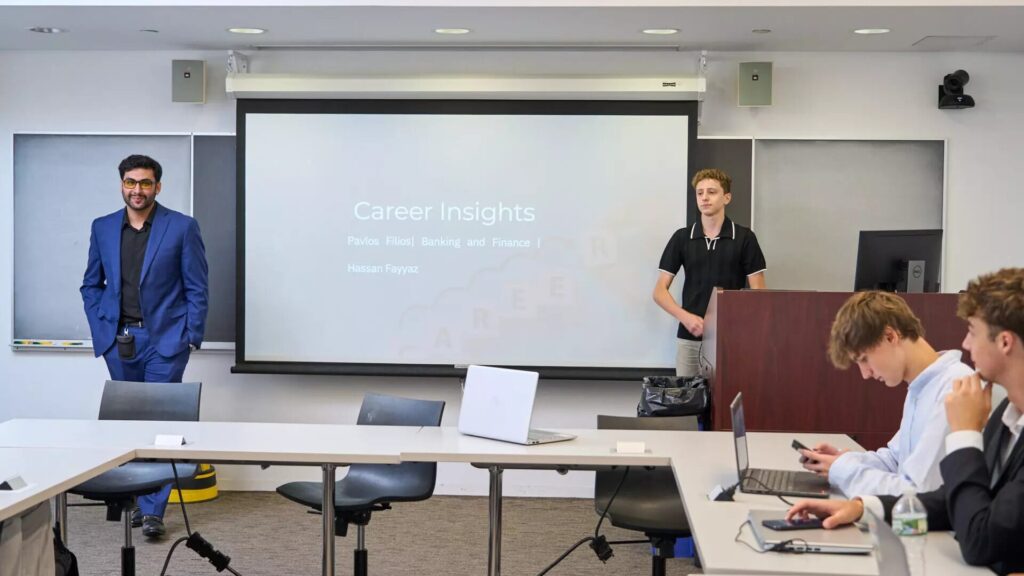
Source: Immerse Education
Location: Singapore, Toronto, Sydney, Oxford, Cambridge, Sydney
Cost/Stipend: Varies; summer school scholarship available through our bursary programme
Acceptance rate/cohort size: Selective; average of 7 students per class
Dates: June 28 – July 11, and July 12 – 25
Application Deadline: Multiple summer cohorts with rolling admissions
Eligibility: Students aged 15–18 currently enrolled in middle or high school; open to international students
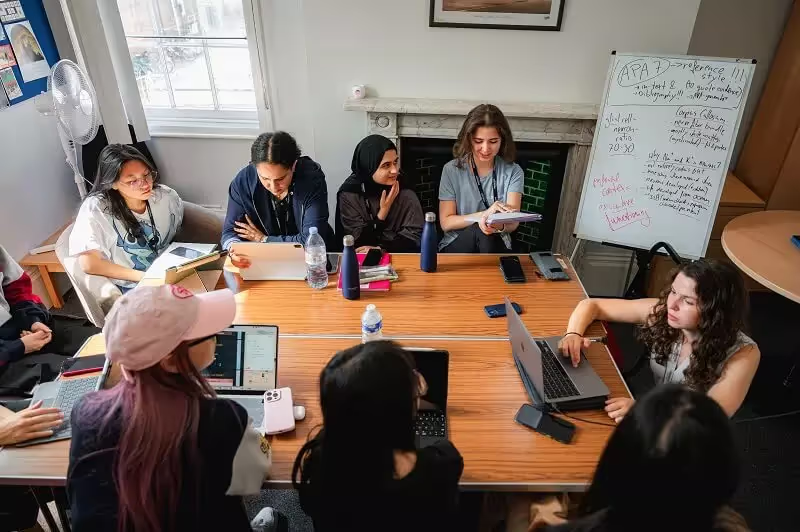
The Business Management Summer School Program offers students three ways to explore business management and an opportunity to take college-level education at universities around the world. Throughout the program, you will participate in lectures, hands-on workshops, 1-on-1 tutoring sessions with expert mentors, and gain professional experience.
You will develop professional skills, explore the key concepts of business like strategic management, marketing, and finance, and attend immersive activities. The program includes an independent study in business management led by expert mentors. By the end of the program, you will receive a certificate of achievement.
Why it stands out: You’ll learn from world-class tutors in classes of around seven students, follow a practical case-study curriculum, and live in a real university residence as part of a global community of 20,000+ alumni.
3. UPenn Wharton Global Youth Program – San Francisco: Innovation and Startup Culture
Location: Wharton San Francisco Campus, San Francisco, CA
Cost: $8,959 tuition + $100 non-refundable application fee; financial aid is available
Acceptance rate/cohort size: Selective; approximately 50 students per session
Dates: Session 1: July 5–17; Session 2: July 19–31
Application Deadline: March 18
Eligibility: High school students in grades 9–11; minimum 3.3 unweighted GPA; open to international students
This two-week residential program allows you to explore entrepreneurship while studying on Wharton’s San Francisco campus. Through faculty-led sessions, collaborative workshops, and visits to local startups, you’ll examine how new ventures are developed, from identifying a problem and researching a market to designing a business model and presenting an idea.
Throughout the program, you’ll work in teams to apply concepts to practical exercises, using AI tools where appropriate to support research, brainstorming, and communication. Guest talks from founders and professionals provide additional perspectives on building and growing businesses. Upon successful completion, you’ll receive a certificate and a digital badge recognizing your participation.
Why it stands out: You combine classroom learning with startup site visits and a team venture project, gaining practical experience in the entrepreneurial process.
4. Columbia Business School – Youth About Business Camp
Location: Columbia University’s Business School, New York, NY
Cost: $3,000 | $1,500 with partial scholarship | $750 with full scholarship
Acceptance rate/cohort size: Competitive; 50 students
Dates: July 6–10 or July 13–17
Application Deadline: Rolling basis until capacity (typically late May)
Eligibility: Students in grades 9–12; ages 14–17; open to international students
This five-day business camp introduces you to how different functions within an organization work together. Through simulations, collaborative exercises, and mock business negotiations, you’ll explore topics such as marketing, finance, operations, technology, and business law while gaining a broader understanding of how business decisions are made.
Throughout the program, you’ll participate in team activities, panel discussions, and presentations that help you develop communication, collaboration, and leadership skills. You’ll also have opportunities to interact with professionals from a range of business fields, giving you insight into different career paths and workplace roles.
Why it stands out: You gain a broad introduction to business functions through simulations, teamwork, and interactions with industry professionals.
5. University of Maryland – Snider Enterprise and Leadership Fellows (SELF) Experience
Location: Virtual or in person at University of Maryland
Cost: $1,791 (residential); $1,420 (online); limited partial scholarships are available
Acceptance rate/cohort size: Selective; ~40 students
Dates: July 13–31
Application Deadline: June 1
Eligibility: Rising students in grade 10 to graduating grade 12; open to international students
This program introduces you to business by combining foundational concepts with leadership development and entrepreneurship. Through a college-level course, you’ll study subjects including marketing, business strategy, personal finance, market economics, and venture creation while examining how these ideas apply to real-world challenges.
Alongside classroom learning, you’ll work with peers to develop and refine a business idea, using feedback from faculty, mentors, and business professionals throughout the process. The program also encourages you to reflect on your personal goals, decision-making, and leadership approach as you build practical business skills. Depending on the program structure, you may also earn college credit upon successful completion.
Why it stands out: You combine college-level business coursework with leadership development and a collaborative venture project.
6. Wharton Global Youth Program – Sports Business Academy
Location: Virtual
Cost: $4,799; scholarships are available
Acceptance rate/cohort size: Selective; limited spaces
Dates: July 6–24
Application Deadline: March 18; rolling admissions thereafter
Eligibility: High school students in grades 10–11 with a strong academic background and an interest in sports, business, and management; open to international students
This program explores the commercial and strategic aspects of the sports industry, helping you understand how sports organizations operate as businesses. Through lectures, case studies, discussions, and industry examples, you’ll examine topics such as sponsorship, media rights, licensing, fan engagement, team finances, and the business models that support professional sports.
As the course progresses, you’ll analyze issues including player contracts, league economics, franchise management, and the broader financial and ethical questions shaping the industry. Working in teams, you’ll apply these concepts to a final project that evaluates the business strategy of an emerging sports league using a structured analytical approach.
Why it stands out: You examine the sports industry through business analysis and apply your learning in a team-based capstone project.
7. Michigan Ross Summer Business Academy
Location: University of Michigan, Ann Arbor, MI
Cost: $5,500 + $75 application fee; need-based full and partial scholarships available
Acceptance rate/cohort size: ~70 students per session
Dates: Cohort 1: June 7–17; Cohort 2: June 21 – July 1
Application deadline: January 8
Eligibility: Rising high school seniors with a minimum cumulative 3.0 GPA; open to international students
This two-week program introduces you to core business concepts through a combination of classroom instruction and applied learning. You’ll study topics such as finance, marketing, strategy, and leadership while working through case studies, simulations, and collaborative exercises designed to help you apply business concepts to practical situations.
Throughout the program, you’ll work with peers to analyze business challenges, develop solutions, and strengthen your analytical, communication, and teamwork skills. In addition to academic sessions, you’ll participate in professional development activities and visit regional companies to learn more about different industries and organizational environments.
Why it stands out: You combine classroom learning with case-based projects, professional development, and company visits.
8. Columbia University Pre-College: Entrepreneurship & Innovation
Location: Virtual
Cost: $4,018 per session + $80 application fee
Acceptance rate/cohort size: Highly selective; cohort size not specified
Dates: July 6–17 (Summer A Online); July 20–31 (Summer B Online)
Application Deadline: March 24
Eligibility: High school students in grades 9–12; open to international students
This online course introduces you to the process of developing a business or social venture, from identifying an opportunity to shaping a workable business concept. Through interactive lectures, case studies, team-based activities, and guided discussions, you’ll explore topics such as customer discovery, business models, market analysis, branding, financing, and the legal considerations involved in launching a new venture.
As you progress through the course, you’ll refine your ideas using structured business frameworks and feedback from instructors and peers. You’ll also strengthen skills in communication, financial analysis, project planning, negotiation, and teamwork while creating practical materials that support your venture, such as a business model, pitch presentation, or implementation plan.
Why it stands out: You develop a venture idea from concept to presentation while building practical entrepreneurship skills through project-based learning.
9. University of Kansas School of Business – Summer Venture in Business
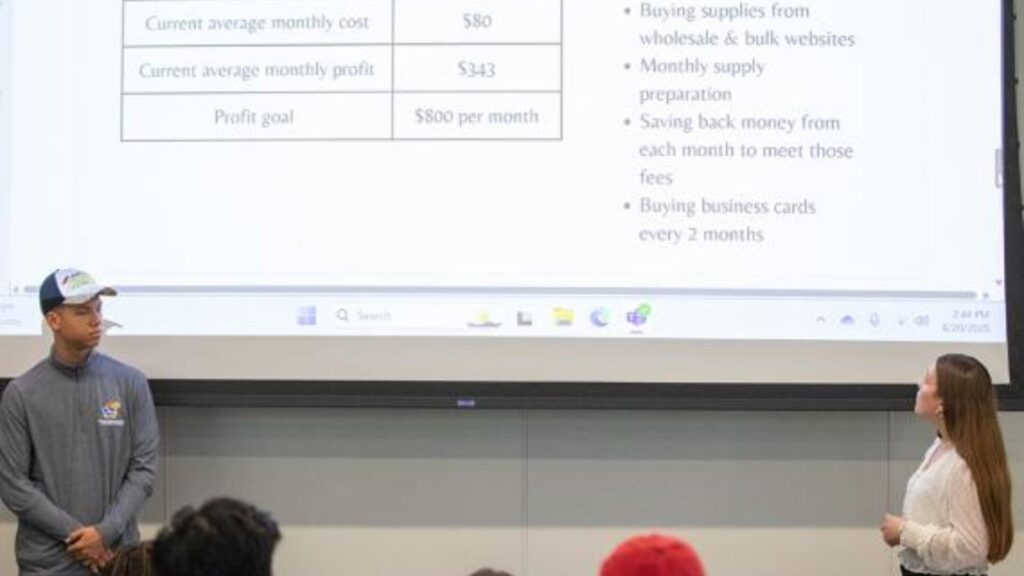
Source: University of Kansas School of Business
Location: University of Kansas School of Business, Lawrence, KS
Cost: $50 participation fee; need-based waivers are available
Acceptance rate/cohort size: Selective; typically around 50 students
Dates: July 19–24
Application deadline: February 13
Eligibility: Rising 11th and 12th graders with 3.4+ GPA or ACT/GPA Business Index ≥ 5.55; not open to international students
This six-day residential program introduces you to university-level business study while giving you experience of living on a college campus. Through faculty-led classes and interactive workshops, you’ll explore a range of business and management topics while learning how these subjects are studied in an academic setting.
During the program, you’ll take part in an industry visit, attend discussions with current students and alumni, and engage in activities designed to help you better understand business education and related career pathways. Living in a campus residence hall and participating in evening events with student mentors also gives you insight into day-to-day university life outside the classroom.
Why it stands out: You combine introductory business coursework with a residential campus experience and industry exposure.
10. Marquette University, College of Business Administration – Summer Business Academy
Location: Milwaukee, Wisconsin
Cost: $500
Acceptance rate/cohort size: Non-competitive; approximately 50 students
Dates: June 22–24
Application Deadline: April 30; rolling until June 1
Eligibility: Rising 10th–12th graders; 9th graders considered case-by-case; open to international students
In this program, you spend three days on Marquette’s campus exploring accounting, management, and marketing alongside College of Business Administration faculty. Each morning pairs faculty instruction with interactive case work and skill-building workshops in a different business discipline, followed by a campus highlight tour.
Every afternoon takes you off campus to a Milwaukee company, where a guest speaker and on-site activities connect directly to the business concepts you worked through that morning. Your instructors include former leaders from Ford, Johnson Controls, FedEx and Amazon, plus a former Wall Street equity analyst. You leave with case-analysis, teamwork and professional networking experience gained well before college coursework begins.
Why it stands out: It pairs each morning’s faculty-led workshop with an afternoon visit to a Milwaukee company where that same business concept is at work.
11. Colorado State University (K–12 Summer Programs) – Global Business Academy
Location: Fort Collins, Colorado
Cost: $3,750; limited scholarships are available
Acceptance rate/cohort size: Selective; cohort size not stated
Dates: July 12–22
Application Deadline: May 1
Eligibility: Ages 15–18; current high school freshmen, sophomores, or juniors; enrolled in high school for Fall; English proficiency required; open to international students
In this program, you explore international business, entrepreneurship, sustainability, innovation, ethics, financial literacy, and leadership through an immersive residential experience. You work through the Rec Tech Challenge, using design thinking, customer discovery, entrepreneurship tools, and team decision-making to develop a startup concept. You also attend faculty-led sessions, visit businesses, interact with executives, and receive small-group college and career coaching.
The program combines hands-on startup development with direct access to CSU business faculty, executives, and companies across multiple industries. You build practical skills in negotiation, cross-cultural communication, teamwork, leadership, and business problem-solving. Residential campus life and team-building activities add a broader introduction to university life.
Why it stands out: It combines a structured entrepreneurship challenge with company visits, executive interaction, business instruction, and a residential college experience for students from around the world.
12. Babson Summer Study
Location: Virtual
Cost: $6,295 + $95 application fee; scholarships are available
Acceptance rate/cohort size: Selective; small cohort sizes
Dates: July 8–28
Application Deadline: March 13
Eligibility: Rising high school juniors and seniors; open to international students who meet the specific requirements
Babson Summer Study introduces you to entrepreneurship and business decision-making through a college-level, credit-bearing course. You’ll explore topics such as venture creation, leadership, marketing, finance, communication, and the process of evaluating new business ideas. The program also uses global challenges, including themes connected to the United Nations Sustainable Development Goals, as a starting point for developing solutions.
Working in teams, you’ll research problems, shape a venture concept, and present your ideas while building skills in collaboration, analysis, and communication. Faculty members and student mentors provide guidance throughout the process as you develop your project from an initial idea to a final presentation.
Why it stands out: You earn college credit while developing an entrepreneurial project focused on real-world challenges.
13. USC Pre-College Online – Building Blocks of Business
Location: Virtual
Cost: $1,990 + $35 application fee; full scholarships are available exclusively for students enrolled in the summer session of the USC Leslie and William Morrow Neighborhood Academic Initiative (USC NAI)
Acceptance rate/cohort size: Not specified
Dates: July 20, August 3, 17, and 31
Application Deadline: July 20: July 15; August 3: July 29; August 17: August 12; August 31: August 26
Eligibility: High school or secondary program students ages 14+; open to international students
USC’s Building Blocks of Business course provides an introduction to the key areas that shape how organizations operate, including accounting, marketing, finance, leadership, data analytics, operations, and strategy. Using the Business Model Canvas, you’ll examine how companies develop products or services, engage customers, manage resources, and create sustainable business models.
Throughout the course, you’ll explore how different business functions work together to support decision-making and organizational goals. For the final project, you’ll evaluate two business models from an investor’s perspective, comparing their strengths, challenges, and potential for success.
Why it stands out: You learn how business functions connect while practicing analysis through a business model evaluation project.
14. The University of Texas at Austin, McCombs School of Business – McCombs Future Executive Academy (MFEA)
Location: Austin, Texas
Cost: None
Acceptance rate/cohort size: Highly selective; cohort size not stated
Dates: May 31 – June 5
Application Deadline: January 31
Eligibility: Current high school sophomores and juniors; open to international students
In this program, you will explore multiple business fields through hands-on learning at the University of Texas at Austin. During this free, six-day residential experience, you will live on campus and learn directly from world-renowned faculty and corporate representatives. You will engage in interactive workshops and tackle a practical case competition that tests your analytical and problem-solving skills.
By networking with industry professionals, you will develop foundational leadership skills essential for a modern corporate environment. Mentorship from current university student leaders will also guide you in understanding the academic pathways available in business.
Why it stands out: It provides high school students with a fully funded, immersive campus experience that combines rigorous case competitions with direct mentorship from university student leaders and industry professionals.
15. Brown Pre-College Programs – Leadership in Changing Business: Social Entrepreneurship

Source: Brown University
Location: Providence, RI (in-person and remote options available)
Cost: 2-Week On-Campus: $6,052 (Residential) / $4,748 (Commuter); 4-Week Online: $5,778; need-based scholarships (Sibley Scholarships) are available for U.S. citizens, permanent residents, and undocumented/DACA students|
Acceptance rate/cohort size: Selective; cohort size not specified
Dates: On-Campus (2 weeks): June 21 – July 2 or July 12–24; Virtual: June 22 – July 17
Application Deadline: May 15 (rolling)
Eligibility: Students completing grades 9–12 who will be 14–18 years of age by June 14; open to international students
Brown’s Leadership in Changing Business: Social Entrepreneurship course explores how entrepreneurial approaches can be applied to social and environmental challenges. You’ll examine different types of social enterprises, including nonprofit organizations, mission-driven businesses, cooperatives, hybrid models, and benefit corporations, while learning how they balance purpose, operations, and financial considerations.
Through readings, discussions, guest speakers, and team activities, you’ll analyze how social entrepreneurs identify problems, design solutions, and measure outcomes. As part of the course, you’ll develop a business plan and elevator pitch for a venture focused on addressing a social issue. You’ll also consider topics such as leadership, collaboration, communication, and the relationship between business decisions and broader questions of equity and responsibility.
Why it stands out: You apply entrepreneurship concepts to create a venture plan focused on solving a social challenge.
Frequently asked questions: Business Courses for High School Students
What is the best business course for a high school student interested in entrepreneurship?
Columbia’s Entrepreneurship & Innovation course and Babson Summer Study both walk students through developing a venture from an initial idea to a final pitch, with Babson also offering college credit. Wharton’s Innovation and Startup Culture program adds hands-on exposure through visits to real San Francisco startups alongside its team venture project. Students choosing between them should weigh whether they want the academic credit Babson offers or the location-specific startup exposure Wharton provides.
Are there free business courses for high school students?
Yes. The University of Texas at Austin’s McCombs Future Executive Academy is fully funded and includes a six-day residential experience with no program cost. The University of Kansas’s Summer Venture in Business charges only a $50 participation fee, with need-based waivers available, though it isn’t open to international students. Most other programs on this list carry tuition costs but offer partial or need-based scholarships.
Can international students take business courses in the US over the summer?
Many programs are open to international applicants, including the Wharton Global Youth Program, Columbia Business School’s Youth About Business Camp, and Michigan Ross’s Summer Business Academy. The University of Kansas’s Summer Venture in Business is a clear exception, restricted to domestic students only. International applicants should also confirm specific GPA or academic index requirements, since several programs set minimum thresholds.
Which business courses focus on a specific industry rather than general business topics?
Wharton’s Sports Business Academy is built entirely around the commercial side of professional sports, covering sponsorship, media rights, and franchise management. Brown’s Leadership in Changing Business: Social Entrepreneurship course similarly narrows in on social and environmental ventures rather than general business fundamentals. Students wanting a broader survey of business functions should instead consider programs like Columbia’s Youth About Business Camp or USC’s Building Blocks of Business.
Do business courses for high school students offer college credit?
Some do. Babson Summer Study is explicitly credit-bearing, and the University of Maryland’s SELF Experience may offer college credit depending on program structure. Most shorter programs, such as Marquette’s three-day Summer Business Academy or Columbia Business School’s five-day camp, focus on skill-building and industry exposure rather than academic credit.
How much do business courses for high school students typically cost?
Costs range widely depending on length and format. Short, non-residential programs like Marquette’s Summer Business Academy cost around $500, while intensive residential options like Wharton’s Innovation and Startup Culture program in San Francisco run close to $9,000. Virtual programs tend to fall in the $4,000 range, as seen with the Wharton Global Youth Program and Columbia’s Entrepreneurship & Innovation course, and many offer scholarships to offset the cost.
From venture project to career questions
Choosing among these business courses for high school students gives you a genuine introduction to strategy, finance, and entrepreneurial thinking.
Once the course ends, you can turn that hands-on experience into a clearer sense of your career direction.
The business thinking, confidence, and presentation skills you built become a strong foundation for exploring where business could take you.
Keep building on what you started with this course by exploring our Career Exploration blogs for guidance on your next steps.


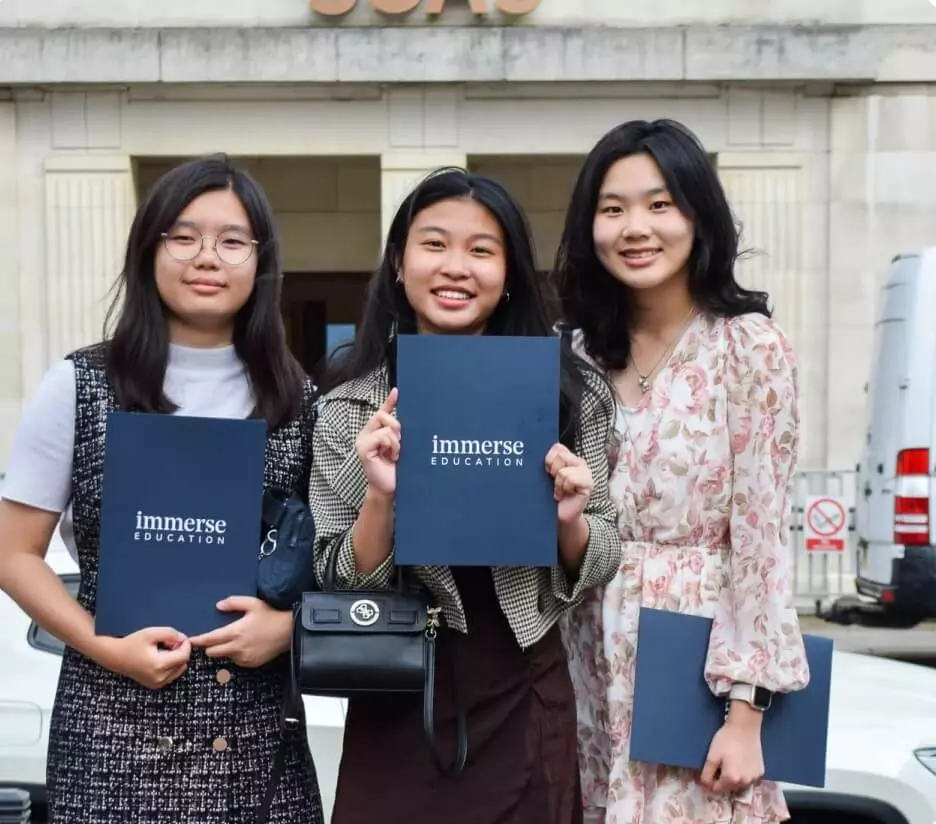
Join the Immerse Education 2027 Essay Competition
Follow the instructions to write and submit your best essay for a chance to be awarded a 100% scholarship.
About the author

Peter Grieve
BA (Hons) from University of Sheffield | Managing Director, Immerse Education
Peter has experience in providing high-quality academic programmes since 2013 and has overseen the student journeys of over 10,000 individuals. A dual-honours graduate in Chinese and Business Management, he loves to travel and experience lifestyles around the world. He is passionate about welcoming students from a wide range of countries, backgrounds and cultures to Immerse Education. Peter enjoys helping ambitious students find their place in a positive and interconnected planet.







Unlock Inspiring Opportunities with the Immerse Education Newsletter
Join our newsletter to stay ahead with exclusive updates, exciting programme highlights, and expert insights from the world of immersive education.
Learn how Immerse can transform your life
An in-depth overview of our university and career preparation programmes
Get a glimpse into the life of an Immerse participant
Find the right programme for you with sample timetables, location showcases, and more