15 Social Sciences Summer Schools for Year 13 Students

TL;DR
You’ll find 15 social sciences summer schools here, spanning politics, economics, psychology, sociology, and international relations. The main split is between paid pre-college courses open to international students and stipend-paying programmes limited to students in New York City and Newark. Most suit you if you’re finishing Year 13 or about to start a social science degree, though check age and grade cut-offs. Syracuse’s Introduction to Sociology, for example, earns you 3 university credits in two weeks. Immerse Education also runs a two-week PPE course in Cambridge and Oxford for ages 16 to 18, with bursaries available.
As a Year 13 student interested in social sciences, you may already have a good idea of the subjects that interest you, whether that is politics, economics, sociology, international relations, psychology, or anthropology. Yet classroom learning can only take you so far. You may want to explore how these subjects connect to current affairs, social issues, public policy, and the world around you. One of the best ways to deepen your understanding is by joining a social sciences summer school.
Imagine spending your summer discussing political ideas with students from different countries, examining social issues through university-level coursework, or exploring how researchers study communities and institutions. A summer school can give you the opportunity to learn beyond your regular curriculum, develop your academic interests, and experience what studying the social sciences at university could be like.
How do you choose the right social sciences summer school for Year 13 students?
Finding a suitable program can be challenging when different schools offer different subjects, teaching styles, locations, and levels of academic difficulty. You need to consider what you want to study, how closely the program matches your interests, and whether it gives you enough opportunities to engage with the subject.
Universities and academic institutions offer social sciences summer schools covering areas such as politics, economics, sociology, international relations, psychology, and public policy. You may learn through seminars, debates, research projects, lectures, workshops, and group discussions. Some programs introduce you to university-level concepts, while others allow you to explore a specific field in greater depth.
15 Social Sciences Summer Schools for Year 13 Students
1. UCLA’s Political Science Summer Program
Location: University of California, Los Angeles, Los Angeles, CA
Cost/Stipend: $2,199 program fee; total estimated fees of $2,660 for high school students, including registration and campus fees (2026 rates)
Acceptance rate/cohort size: Not specified
Dates: June 22nd - July 10th, 2026; 2027 dates not yet posted
Application Deadline: June 12th, 2026, with rolling review from February 15th; 2027 deadline not yet posted
Eligibility: You must be in grades 9-12, at least 15 by the first day of Summer Sessions, and have a cumulative GPA of 3.2 or higher; open to international students; commuter program only
The UCLA Political Science Summer Program introduces you to American politics while exploring how political institutions and collective action shape society. You’ll examine political history and current American politics while learning how social scientists study the world. The three-week program also includes a career panel featuring guests who discuss political science and possible career paths, and it’s taught by graduate students and alumni of UCLA’s political science PhD program.
You’ll earn five units of UCLA college credit and have opportunities to connect with graduate and undergraduate mentors. If American politics is your main interest, you can compare more options among these political science summer schools for high school students.
Why it stands out: You’ll combine introductory political science coursework with college credit, career exploration, and mentoring at UCLA.
2. Immerse Education's Philosophy, Politics, & Economics Summer School
Location: Oxford and Cambridge, UK
Cost: Varies; summer school scholarship available through our bursary programme
Acceptance rate/cohort size: Selective; an average of 7 participants per class
Dates: 2 weeks during the summer
Application Deadline: Multiple cohorts with rolling admissions
Eligibility: High school students around the world aged 16-18 years old; open to international students
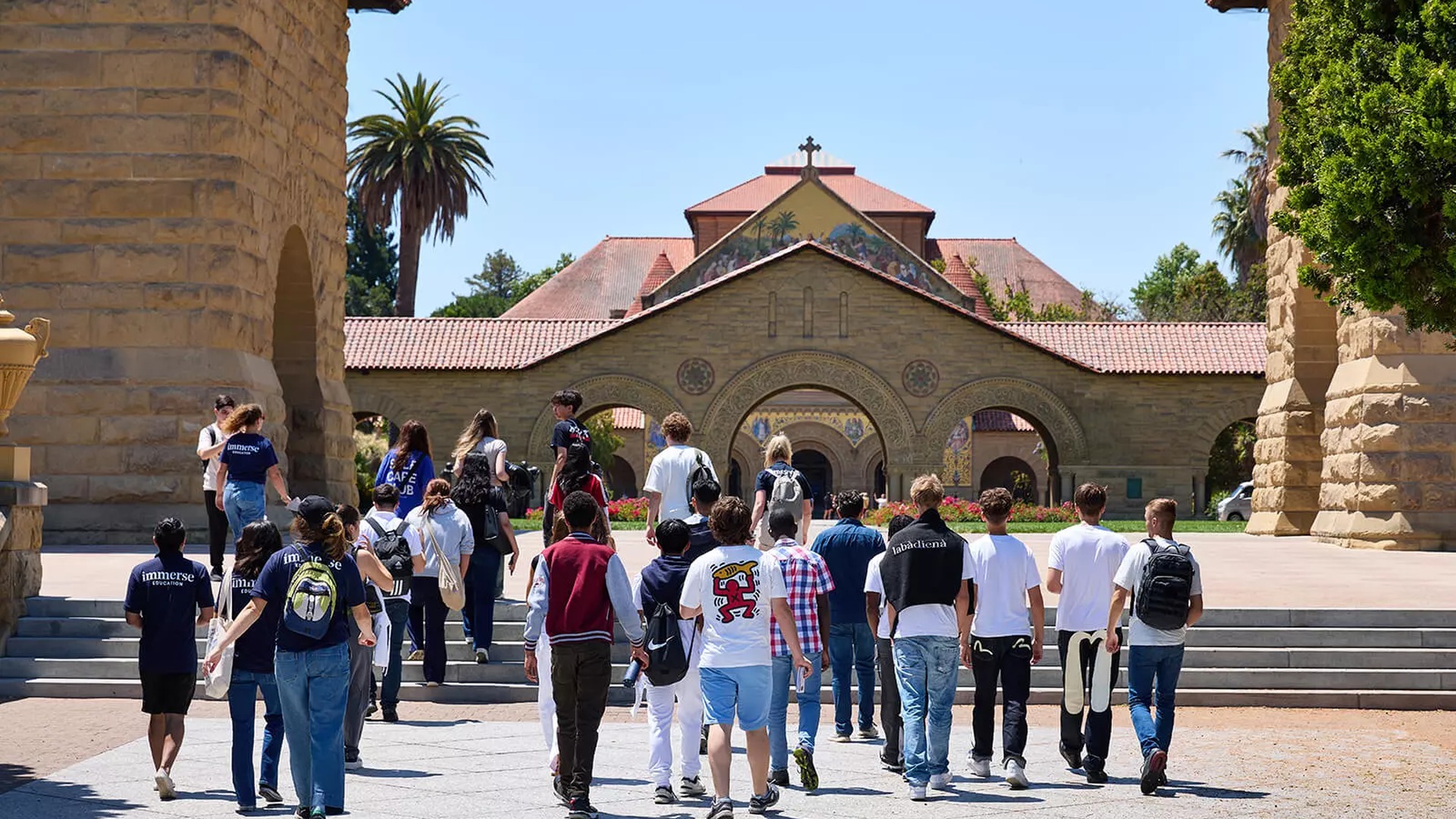
Immerse Education's Academic Insights pathway in Philosophy, Politics & Economics combines philosophical inquiry, political theory, and economic analysis into one comprehensive program. For this program, you have the option to study in either Oxford or Cambridge, both of which have an exceptional history of educating brilliant minds. You will learn these crucial aspects of politics through engaging discussions, real-life case studies, and interactive workshops.
For two weeks, you will dive deep into politics through in-depth academic sessions, a personal research project, and 1:1 tutoring. Not only will you be busy studying, but your evenings and weekends will also be filled to the brim with student activities, day excursions, and social events.
Why it stands out: Studying PPE in Oxford or Cambridge with 1:1 tutoring and a personal research project turns this into a miniature version of elite university life rather than a simple summer course.
3. Lumiere Research Scholar Program
Location: Remote, you can participate in this program from anywhere in the world!
Cost: Varies depending on program type. Full financial aid available.
Program Dates: Varies by cohort: summer, fall, winter, or spring. Options range from 12 weeks to 1 year.
Application Deadline: Varies by cohort.
Eligibility: You must be currently enrolled in high school and demonstrate a high level of academic achievement.
The Lumiere Research Scholar Program is a rigorous research program tailored for high school students. The program offers extensive 1-on-1 research opportunities for high school students across a broad range of subject areas. The program pairs high school students with Ph.D. mentors to work 1-on-1 on an independent research project.
At the end of the 12-week program, you’ll have developed an independent research paper! You can choose research topics from subjects such as psychology, physics, economics, data science, computer science, engineering, chemistry, international relations, and more. You can find more details about the application here, and check out students’ reviews of the program here and here.
Why it stands out: You get 1-1 mentorship with a Ph.D. mentor and produce an independent research project by the end.
4. Wake Forest University’s Psychology Institute

Location: Wake Forest University Reynolda Campus, Winston-Salem, NC
Cost/Stipend: $3,500 (tuition subject to change each year)
Acceptance rate/cohort size: Not specified
Dates: Week of June 13-18, 2027, or week of June 20-25, 2027 (Sunday to Friday, overnight)
Application Deadline: Applications opened November 1st, 2026; no deadline listed on the institute page
Eligibility: Current students in grades 9-12; international eligibility not specified on the institute page
The Psychology Institute takes you inside the study of the mind and behavior through practical activities and academic sessions led by Dr. Christian Waugh and Dr. Melissa Maffeo of Wake Forest. You’ll explore emotions, the disordered brain, sensation and perception, neuroscience, and the psychology of addiction. You’ll conduct your own observational study and take part in activities such as a guided sheep brain dissection and sensory perception lab.
You’ll also examine how illusions, emotions, and biases can influence the way you experience and interact with the world. At the end, you’ll present your team’s research findings and receive a Wake Forest University Certificate of Completion, and you can find similar options among these psychology summer schools for high school students.
Why it stands out: You’ll combine psychology lessons with brain-based activities, observational research, and laboratory experiences on a university campus.
5. Georgetown University’s Economics Policy Academy
Location: Georgetown University, Washington, DC
Cost/Stipend: $9,085 residential (tuition and meals); $7,085 commuter tuition (2026 rates)
Acceptance rate/cohort size: Not specified
Dates: Three weeks (June 28th - July 17th in 2026); 2027 dates not yet posted
Application Deadline: 2027 offerings and applications open November 16th, 2026
Eligibility: High school students (see the program’s How to Apply page); international students can apply, with dedicated resources for international applicants
The Economics Policy Academy lets you examine how governments shape markets through the combined perspectives of economics and political science. You’ll explore topics such as globalization, basic microeconomics, poverty and inequality, the welfare state, development economics, trade policy, behavioral economics, and U.S. fiscal and monetary policy.
Classes are complemented by field trips, workshops, group discussions, guest speakers, and visits to local economic policy organizations. You’ll also create a research-based poster connected to a theme from the program and receive a Certificate of Participation. For more programmes in this field, see these economics summer schools for high school students.
Why it stands out: You’ll connect economic theory with policy questions through research, workshops, discussions, and visits to policy organizations.



6. Columbia University’s Political and Economic Ideologies of the Modern World
Location: Columbia University, New York, NY (in person)
Cost/Stipend: See Columbia Pre-College’s Program Costs page
Acceptance rate/cohort size: Not specified
Dates: Summer A: June 28th - July 16th, 2027; Summer B: July 20th - August 6th, 2027
Application Deadline: See Columbia Pre-College’s Dates and Deadlines page
Eligibility: High school students; open to students from around the world
Political and Economic Ideologies of the Modern World lets you examine the ideas that have shaped politics and society, from capitalism and socialism to communism, liberalism, populism, and nationalism. You’ll consider how different ideologies approach freedom, equality, justice, citizenship, and democracy.
Excerpts from classic and contemporary political theory, newspaper and magazine articles, and film clips form the basis for class discussions and debates. You’ll also draft and revise personal ideology statements while using evidence to develop and defend your positions.
Why it stands out: You’ll explore competing political and economic systems through theory, debate, writing, and direct conversations with guest speakers.
7. Annenberg Youth Academy for Media and Civic Engagement
Location: University of Southern California, Los Angeles, CA
Cost/Stipend: Not listed on the program page
Acceptance rate/cohort size: 26 students
Dates: Three weeks in the summer; 2027 dates not yet posted
Application Deadline: April 19th, 2026 for the 2026 cycle; 2027 deadline not yet posted
Eligibility: High school students who live and attend school in communities surrounding USC, including Boyle Heights, Compton, East Los Angeles, Historic South Central, Koreatown, Watts, and Westlake; not open to international students
The Annenberg Youth Academy for Media and Civic Engagement gives you a three-week summer intensive focused on media, communication, journalism, and civic engagement. You’ll encounter material equivalent to first-year college-level courses while strengthening your writing, critical thinking, public speaking, debate, multimedia production, interviewing, and ethnography skills.
The program also introduces you to USC Annenberg’s undergraduate programs and potential careers in media and journalism. You’ll have opportunities to meet scholars and practitioners working across communication, journalism, and public relations.
Why it stands out: You’ll gain exposure to college-level media and communication studies while learning directly from USC Annenberg scholars and industry practitioners.
8. USC International Relations Summer Program
Location: University of Southern California, Los Angeles, CA
Cost/Stipend: See USC Pre-College’s Admission, Tuition and Fees page
Acceptance rate/cohort size: Not specified
Dates: Four weeks in the summer; see USC Pre-College’s admissions page for 2027 dates
Application Deadline: See USC Pre-College’s admissions page
Eligibility: High school students; international participants welcome, with a dedicated visa and immigration guide
The International Relations Summer Program lets you examine world conflicts through the lens of international relations theory. You’ll explore peace and conflict resolution, human rights, genocide, religion in politics, global terrorism, and the role of international organizations.
Through simulations, role-playing, and negotiation exercises, you’ll apply theories to case studies and develop practical approaches to conflict resolution. You’ll also create an individual case study and research a project of your choosing. The four-week course includes activities such as a United Nations Security Council simulation and a field trip to the Museum of Tolerance, and you’ll earn college credit. If international affairs is your focus, you can explore more international relations programs for high school students.
Why it stands out: You’ll move beyond theory through conflict simulations, case-study research, and practical exercises focused on international cooperation and peace.
9. New-York Historical Society’s Student Historian Internship Program
Location: New-York Historical Society, New York, NY
Cost/Stipend: Stipend provided to interns on successful completion
Acceptance rate/cohort size: Not specified
Dates: Summer cohort runs from early July to mid-August; 2027 dates not yet posted
Application Deadline: Summer applications typically close in late March; 2027 deadline not yet posted
Eligibility: High school students entering grades 10, 11, or 12; see the program page for location requirements; international eligibility not specified
The Student Historian Internship Program gives you the chance to conduct original research using the New-York Historical Society’s collections and resources. You’ll work on a historical theme and turn your research into creative digital projects designed for public audiences.
You’ll meet museum and library professionals and learn about careers in history, museums, and digital humanities. You’ll also work with other students to strengthen your historical thinking, communication, and digital media skills. The program combines research and writing with project work, giving you a closer look at how historians research and present the past.
Why it stands out: You’ll conduct original historical research and transform your findings into digital projects for the public while working alongside museum professionals.
10. Yale University’s Politics of Law & Economics (PLE)
Location: Yale University, New Haven, CT
Cost/Stipend: $7,500 for one residential two-week session, covering housing, meals, and materials but not travel; need-based financial aid can cover up to the full cost of tuition for domestic and international students
Acceptance rate/cohort size: Selective; students from over 150 countries take part across YYGS each summer
Dates: Three two-week sessions in June and July 2027
Application Deadline: January 6th, 2027 (Regular Decision); the Early Action deadline has passed
Eligibility: High school students aged 16-18; Yale Young Global Scholars welcomes students from around the world
The Politics of Law & Economics track lets you examine economic theories, the values and practices of government, and legal frameworks in historical and comparative perspectives. You’ll explore subjects such as public policy, human rights, market regulation, governance structures, international policy, and conflict and cooperation across borders.
Through Yale faculty lectures and small-group seminars, you’ll consider questions about inequality, political power, constitutional law, antitrust, and the role of governments in markets, with sample seminars ranging from the meritocracy debate to nations and nationalism. The interdisciplinary format encourages you to approach current issues through political, legal, and economic perspectives rather than studying them in isolation.
Why it stands out: You’ll bring politics, law, and economics together in one interdisciplinary track while learning alongside students from across the world.
11. Sadie Nash Leadership Project’s Summer Institute
Location: Sites in Manhattan, Brooklyn, Queens, and the Bronx, NY, and Newark, NJ
Cost/Stipend: Eligible participants can receive a $450 stipend at the end of the summer based on participation
Acceptance rate/cohort size: Not specified
Dates: July 6th - August 13th, 2027 (Mondays to Thursdays, 10 am to 4 pm)
Application Deadline: Applications for 2027 launch at the end of November 2026; the listed deadline is March 13th
Eligibility: Young women and gender-expansive youth enrolled in high school and living in New York City or Newark who haven’t previously completed Summer Institute; no academic criteria; not open to international students
Sadie Nash Leadership Project’s Summer Institute gives you six weeks to explore leadership, identity, social justice, and community through workshops and group activities. You’ll meet women and gender-expansive leaders, including elected officials, business owners, and artists, and hear about their experiences and paths.
Past classes have included Anthropology of Gender and Education for Liberation, giving you a social science lens on identity and society while developing your critical thinking and leadership skills. Field trips to colleges and other sites add another dimension to the experience.
Why it stands out: You’ll combine social justice education, leadership development, conversations with community leaders, and field experiences in one stipend-supported summer program.
Join the Immerse Education 2027 Essay Competition
Follow the instructions to write and submit your best essay for a chance to be awarded a 100% scholarship.
12. Tufts University’s Leadership for Social Change
Location: Tufts University, Medford/Somerville, MA
Cost/Stipend: $5,750 residential (the program is residential only)
Acceptance rate/cohort size: Not specified
Dates: July 12-23, 2027
Application Deadline: Applications open December 14th, 2026; check the program page for the final deadline
Eligibility: You must be entering grades 10-12 and be 15 at the start of the program; domestic and international students are welcome to apply, though Tufts cannot sponsor visas
Tufts University’s Leadership for Social Change, run with Tufts’ Tisch College of Civic Life, helps you examine social issues while developing practical civic leadership skills. You’ll explore topics such as educational inequity, neighborhood segregation, environmental justice, community health, public policy, and grassroots movements through academic sessions and fieldwork.
You’ll work with local organizations and research a social issue affecting your own community, considering its policies, stakeholders, and wider systems of inequality. In small groups, you’ll connect social issues and create a poster for the closing ceremony, and you’ll earn 1 Tufts credit on a pass/fail basis.
Why it stands out: You’ll connect social science learning with community organizations and develop a practical action plan for addressing an issue in your own community.
13. George Washington University’s Pre-College Summer Immersion Program
Location: George Washington University, Washington, DC
Cost/Stipend: See GW’s Summer Immersion tuition page; 2027 rates not yet posted
Acceptance rate/cohort size: Not specified
Dates: Two-week sessions in the summer (Session III ran July 19-31 in 2026); 2027 dates not yet posted
Application Deadline: In 2026, the priority deadline was May 1st, with rolling admissions until each session’s final deadline (June 28th for Session III); 2027 dates not yet posted
Eligibility: You must be a rising high school sophomore, junior, or senior; open to students from around the world
George Washington University’s Pre-College Summer Immersion Program lets you spend two weeks exploring an academic subject while using Washington, DC, as an extended classroom. You’ll combine lectures and seminars with practical activities, site visits, guest speakers, and opportunities to explore organizations connected to your field of study.
Social science options have included U.S. Law, U.S. Foreign Policy, and How to Be a Changemaker: Leadership and Civic Engagement. Such options allow you to investigate subjects ranging from international conflict and public policy to advocacy and community leadership.
Why it stands out: You’ll study social science topics while using Washington, DC’s government, diplomatic, cultural, and civic institutions as part of your learning environment.
14. Georgetown University’s Law Academy

Location: Georgetown University, Washington, DC
Cost/Stipend: $3,725 residential, including tuition and meals; $3,095 commuter (2026 rates)
Acceptance rate/cohort size: Not specified
Dates: One week (2026 sessions ran June 21-27, July 12-18, and July 26th - August 1st); 2027 dates not yet posted
Application Deadline: 2027 offerings and applications open November 16th, 2026
Eligibility: High school students (see the program’s How to Apply page); international students can apply, with dedicated resources for international applicants
The Law Academy introduces you to jurisprudence and the way laws are adjudicated and administered. You’ll examine topics including constitutional law, the jury system, arrests and sentencing, punishment for minors versus adults, criminal justice debates, and Supreme Court controversies.
Lectures, guest speakers, and discussion sessions let you explore these issues from different perspectives while learning from Georgetown faculty and legal experts. You’ll also take part in mock trials, where you’ll serve as a lawyer in a hypothetical criminal case. Along the way, you’ll explore legal careers and experience aspects of undergraduate life at Georgetown.
Why it stands out: You’ll combine classroom discussions of major legal issues with mock trials and exposure to Georgetown faculty and legal professionals.
15. Syracuse University’s Introduction to Sociology
Location: Syracuse University, Syracuse, NY
Cost/Stipend: $5,595 residential; $4,624 commuter; discounts and scholarships available
Acceptance rate/cohort size: Not specified
Dates: July 5-17, 2026; 2027 dates not yet posted
Application Deadline: 2027 deadline not yet posted
Eligibility: You must be a rising high school junior or senior, or a recent high school graduate (2026 graduates were eligible for the 2026 session); Syracuse accepts international students
Syracuse University’s Introduction to Sociology (SOC 101) explores how social structures and individual lives influence one another. You’ll examine how class, gender, race, ethnicity, and disability become social categories and how these differences can contribute to social inequality.
The course introduces you to major sociological concepts and theories while encouraging you to apply them to social issues and everyday life. You’ll develop your sociological imagination and practice connecting individual experiences with wider historical, political, economic, and cultural forces, earning 3 credits graded A to F.
Why it stands out: You’ll earn three university credits while learning to connect individual experiences with the larger social structures shaping society.
Frequently asked questions: Social Sciences Summer Schools for Year 13 Students
Can you do a summer school after finishing Year 13?
Yes, several programmes here accept you after you finish Year 13, which is equivalent to being a recent high school graduate. Syracuse’s Introduction to Sociology accepted 2026 graduates for its 2026 session, and Tufts’ International Relations programme accepts spring 2027 graduates. Others, such as Georgetown’s academies and Wake Forest’s Psychology Institute, expect you to be a current high school student, so check grade rules carefully. Immerse Education’s Academic Insights pathway in PPE is open to students aged 16 to 18 from around the world.
Are there free or funded social sciences summer programmes?
Yes, though most are local programmes with residency rules. Sadie Nash Leadership Project’s Summer Institute offers a $450 participation stipend to young women and gender-expansive youth in New York City or Newark, and the New-York Historical Society’s Student Historian Internship pays interns a stipend on completion. If you don’t live in those areas, look at need-based aid instead. Yale Young Global Scholars offers aid covering up to full tuition for domestic and international students, and Syracuse offers discounts and scholarships.
Do social sciences summer schools give college credit?
Some do, and the type of credit varies. UCLA’s Political Science program awards five units of UCLA credit, Syracuse’s Introduction to Sociology carries 3 credits graded A to F, and Tufts’ Leadership for Social Change offers 1 Tufts credit on a pass/fail basis. Others, including Georgetown’s academies and Wake Forest’s institutes, award certificates instead. If you’re heading to a UK university, check whether it recognises the credit at all, and focus on what the course adds to your subject knowledge.
How do you choose between politics, economics, psychology, and sociology summer schools?
Start with the degree you’re most likely to study, then pick a programme that lets you test it through actual coursework rather than general enrichment. If you’re torn between subjects, an interdisciplinary option such as Yale’s Politics of Law & Economics track or Georgetown’s Economics Policy Academy lets you compare approaches side by side. Psychology programmes like Wake Forest’s lean on experiments and observation, while sociology courses like Syracuse’s focus on reading and analysing social structures. Immerse Education’s Academic Insights pathway in PPE combines philosophy, politics, and economics in two weeks, with an average of 7 students per class.
When do applications open for 2027 social sciences summer schools?
Many open between November 2026 and January 2027. Wake Forest opened applications on November 1st, Georgetown posts its 2027 offerings on November 16th, Sadie Nash launches its application at the end of November, and Tufts opens applications on December 14th, 2026. Yale Young Global Scholars’ regular decision deadline is January 6th, 2027. UCLA reviewed 2026 applications on a rolling basis from February 15th, so applying early usually gives you the widest choice of sessions.
Can international students attend US social sciences summer schools?
Yes, many US pre-college programmes accept international students, though the rules vary. Tufts welcomes international applicants but can’t sponsor visas and doesn’t offer them financial aid, while Yale Young Global Scholars offers need-based aid to domestic and international students alike. UCLA asks international applicants to submit their full secondary school record, with guidance on converting grades to a US GPA. Local programmes such as Sadie Nash and the Annenberg Youth Academy are limited to residents of specific areas.
Your next step into the social sciences
If you’re heading towards a politics, economics, psychology, or sociology degree, one strong summer can sharpen that choice well before your first lecture.
You’ll get the most from social sciences summer schools for Year 13 students when the course asks you to research, debate, and write.
Check whether each programme accepts recent graduates, offers credit, or limits places by location, since these details narrow your options quickly.
As your first term gets closer, explore our University Preparation blogs for practical advice on study skills, reading lists, and starting university confidently.






Unlock Inspiring Opportunities with the Immerse Education Newsletter
Join our newsletter to stay ahead with exclusive updates, exciting programme highlights, and expert insights from the world of immersive education.
Learn how Immerse can transform your life
An in-depth overview of our university and career preparation programmes
Get a glimpse into the life of an Immerse participant
Find the right programme for you with sample timetables, location showcases, and more