15 Science Summer Schools for Year 12 Students

TL;DR
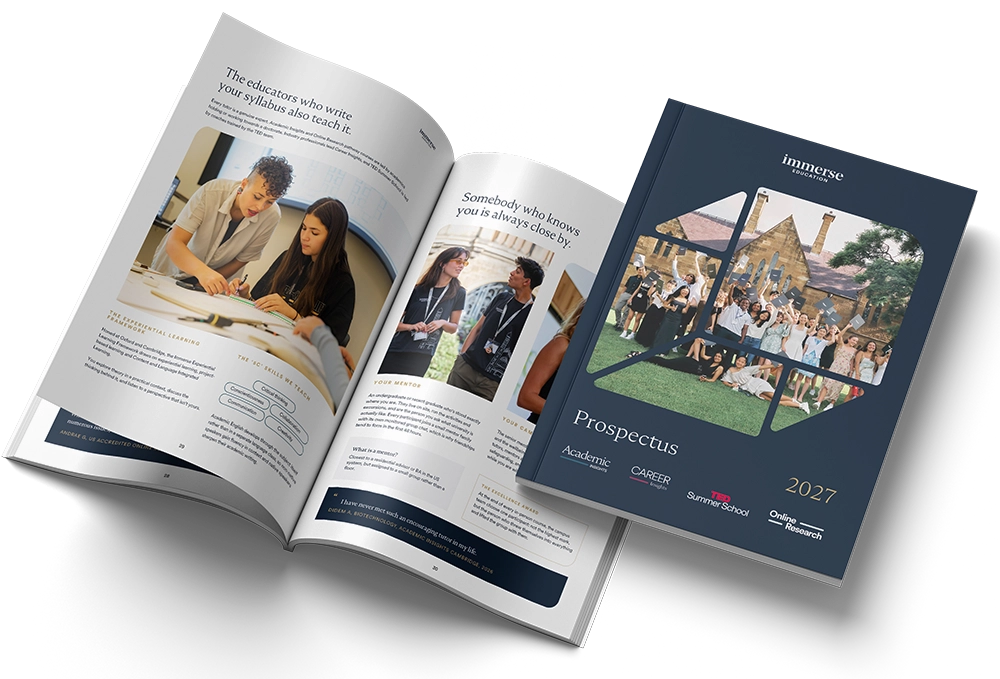
You’ll find 15 science summer schools here, from free research placements in New York labs to residential university programmes at Cambridge, Oxford, and Imperial. The biggest split is between free, access-focused programmes, which often require UK state schooling or US citizenship or residency, and paid courses open to international students. Most suit you if you’re 16 or 17 and considering a science degree. Rockefeller’s SSRP, for example, takes 32 to 40 students for seven weeks of team-based lab research. Immerse Education also runs Biology, Chemistry, and Physics courses in Cambridge and Oxford, with bursaries available.
Science begins with questions: why something happens, how a system works, and what evidence can tell you about the world around you. A science summer school gives you the opportunity to investigate those questions beyond the school curriculum, often through laboratory experiments, university lectures, demonstrations and collaborative research projects.
Depending on the program, you might analyse biological samples, explore chemical reactions, work with scientific datasets or investigate concepts across physics, neuroscience and environmental science. Along the way, you develop practical skills in experimental design, data analysis and scientific reasoning while learning how researchers turn observations into evidence-based conclusions.
So, how do you choose the science summer schools for Year 12 students?
For Year 12 students, these programs can also help bridge the gap between studying science at school and pursuing it at university. Access to university laboratories, specialist equipment and researchers can expose you to areas of science that may not be available in your regular classes. You can experience the independence of undergraduate learning, explore potential degree subjects and gain a clearer picture of what scientific research looks like in practice.
With programs spanning everything from laboratory science to interdisciplinary research, choosing the right opportunity can take some careful consideration. To help you narrow your options, we’ve compiled a list of 15 science summer schools for Year 12 students that offer practical academic experience and an introduction to university-level science.
15 Science Summer Schools for Year 12 Students
1. Rockefeller University Summer Science Research Program (SSRP)
Location: The Rockefeller University, New York City, New York
Cost/Stipend: Free; an OMNY card covers NYC public-transit travel, and need-based stipends may be awarded to students experiencing financial hardship
Acceptance Rate/Cohort Size: Selective; 32-40 students each summer, split into four research teams
Dates: June 21st - August 5th, 2027
Application Deadline: January 4th, 2027, at 5:00pm ET (including the letter of recommendation)
Eligibility: Current high school juniors and seniors who are at least 16 by June 21st, 2027; students outside the US may apply, but RockEDU can’t assist with transportation, accommodation, or visa applications
Rockefeller University’s SSRP gives you seven weeks of full-time, mentored laboratory research rather than a conventional classroom-based summer course. You join one of four research teams of 8 to 10 scholars, each guided by at least three mentors drawn from scientific trainees at Rockefeller University, Memorial Sloan Kettering, and Weill Cornell Medicine. In the first week, you learn relevant laboratory techniques and research norms before choosing a question to explore with your team in week two.
You then spend several weeks collecting and analysing data with guidance from scientist-mentors. Electives, guest lectures, workshops, and networking sessions complement approximately 35 hours of research activity each week. The program ends with you analysing your findings and creating a scientific poster for the final symposium. Note that SSRP findings can’t be submitted to high school science competitions, and if New York appeals, you can explore more research programs in NYC for high school students.
Why it stands out: You carry out mentored research in a university laboratory and develop a scientific question from experimentation through data analysis and poster presentation.
2. Immerse Education’s Pre-University Summer School
Location: Cambridge and Oxford, UK (Biology, Chemistry, and Physics), plus online
Cost: Varies; summer school scholarship available through our bursary programme
Acceptance Rate/Cohort Size: Selective; an average of 7 participants per class
Dates: 2 weeks during the summer
Application Deadline: Multiple cohorts with rolling admissions
Eligibility: Students aged 13-18 (subject availability varies by age group); open to international students from around the world
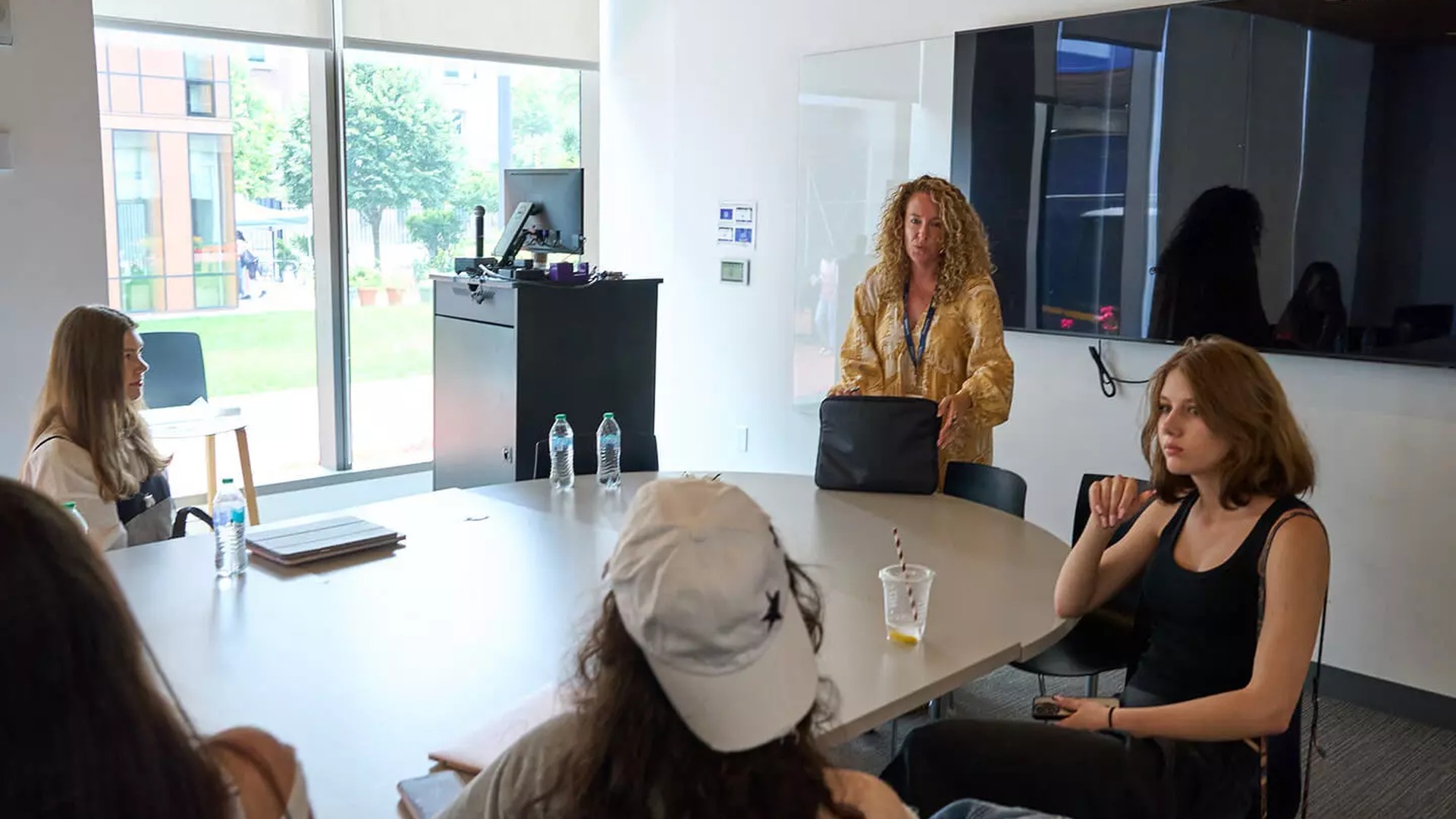
Immerse Education’s Academic Insights pathway lets you study a single science, such as Biology, Chemistry, or Physics, at university level over two weeks in Cambridge or Oxford. Tutor-led seminars average 7 students, and you also get two 1:1 tutorials, masterclasses, and guest speakers alongside your classes. You also work on a personal research project, helping you develop critical thinking, problem-solving, and analytical skills, and present it to your class on the final Friday.
If you’d rather study from home, you can study Biology, Chemistry, or Physics through Immerse Education's Online Research pathway, with 10 to 15 hours of 1:1 tutorials over 2 to 3 weeks that end in a finished research project. Accredited options let you earn 8 UCAS points or 3 US college credits from age 14. By the end, you develop a strong academic foundation in your chosen science and a clearer understanding of future study and career pathways. You can find more details about the application here.
Why it stands out: You’ll study with expert tutors in small classes, complete a project you can show in future applications, and experience residential university life in Cambridge or Oxford.
3. Lumiere Research Scholar Program
Location: Remote, you can participate in this program from anywhere in the world!
Cost: Varies depending on program type. Full financial aid available.
Program Dates: Varies by cohort: summer, fall, winter, or spring. Options range from 12 weeks to 1 year.
Application Deadline: Varies by cohort.
Eligibility: You must be currently enrolled in high school and demonstrate a high level of academic achievement.
The Lumiere Research Scholar Program is a rigorous research program tailored for high school students. The program offers extensive 1-on-1 research opportunities for high school students across a broad range of subject areas. The program pairs high school students with Ph.D. mentors to work 1-on-1 on an independent research project.
At the end of the 12-week program, you’ll have developed an independent research paper! You can choose research topics from subjects such as psychology, physics, economics, data science, computer science, engineering, chemistry, international relations, and more. You can find more details about the application here, and check out students’ reviews of the program here and here.
Why it stands out: You get 1-1 mentorship with a Ph.D. mentor and produce an independent research project by the end.
4. BEYOND ALBERT High School Research Program - Albert Einstein College of Medicine
Location: Albert Einstein College of Medicine, Bronx, New York
Cost/Stipend: Free; stipend provided, plus a daily meal voucher and an OMNY card for transportation
Acceptance Rate/Cohort Size: Selective; acceptance rate is not publicly available
Dates: Eight weeks from late June through August (Monday to Friday, 9am to 5pm), followed by academic-year programming on Thursdays from September through May
Application Deadline: Applications open in early November; the deadline is not listed on the program page
Eligibility: Bronx residents attending a Bronx high school who will be rising juniors or seniors and at least 16 by the summer start; not open to international students
BEYOND ALBERT gives you an eight-week, full-time introduction to biomedical and cancer research at the Montefiore Einstein Comprehensive Cancer Center. You work with expert faculty members at the cancer center and spend your weekdays carrying out laboratory research. Alongside lab work, you attend seminars and workshops led by cancer center faculty, postdocs, and students, plus career and professional development sessions.
The program also incorporates college application and readiness support, so you learn how to plan your next steps as well as how research is conducted. You prepare an independent research presentation, with opportunities to present your work to faculty, and can earn up to three credits through the Lehman College Now Program. After the summer, academic-year seminars, workshops, and mentoring continue through May.
Why it stands out: You combine sustained cancer-research experience with a paid stipend, college-readiness support, and continued mentoring during the school year.
5. Magee-Womens Research Institute: High School Summer Internship Program
Location: Magee-Womens Research Institute or UPMC Magee-Womens Hospital, Pittsburgh, Pennsylvania
Cost/Stipend: Free; $1,800 stipend if your household qualifies for Pennsylvania’s National School Breakfast and Lunch Program; parking and housing are not provided
Acceptance Rate/Cohort Size: Selective; 259 scholars have completed the program since it began in 1995
Dates: Six weeks (240 hours) during the summer; 2027 dates not yet posted
Application Deadline: Summer 2027 applications open in December 2026
Eligibility: Current high school sophomores and juniors who are over 16 by the program start and have primary residence in one of the specified southwest Pennsylvania counties; not open to international students
The Magee-Womens Research Institute High School Summer Internship gives you six weeks of full-time experience in research focused on reproductive biology, women’s health, and infant health. You work on your own research project under the guidance of an investigator and their staff, with recent projects ranging from fertility preservation to ovarian cancer models and maternal health.
Over 240 hours, you gain experience with basic, translational, or clinical research methods while learning how scientists investigate questions with implications for human health. Informal Lunch & Learn sessions let investigators share their own paths into biomedical science careers. At the end of the program, you present your findings to fellow interns, MWRI faculty, and staff at the annual High School Internship Presentation Day. If biomedical research is your focus, you can compare more biomedical summer programs for high school students.
Why it stands out: You complete an intensive mentored research project focused on women’s health and present your findings to the MWRI research community.



6. Borough of Manhattan Community College STEP Program
Location: Borough of Manhattan Community College, New York City, New York
Cost/Stipend: No program fee is publicly stated; meal tickets and MetroCards are provided, and research participants who complete their assignments can receive a stipend
Acceptance Rate/Cohort Size: Selective for the research component; acceptance rate is not publicly available
Dates: Five-week summer session in July and August (Monday to Thursday, 10am to 3pm), plus fall and spring sessions on Fridays
Application Deadline: Not publicly stated
Eligibility: New York City students in grades 9-12 who meet STEP’s eligibility requirements, including economic criteria; international eligibility not specified
BMCC’s Science and Technology Entry Program introduces you to STEM subjects through academic enrichment, practical activities, and supervised laboratory experience. You can take classes in science and mathematics while also accessing test preparation for the ACT, PSAT, SAT, and Regents exams, plus college-application support. If you enter the research component, you work with a BMCC faculty mentor in a science laboratory to design and complete a project and produce a research poster.
Research applicants need at least a 3.0 GPA, a teacher or counsellor recommendation, and a commitment to a full year of research of at least two hours a week. Selected participants also travel to Albany each March for an annual STEP conference with research poster and robotics competitions. Students who adequately complete their research assignments qualify for a stipend at the end of the session.
Why it stands out: You can progress from STEM enrichment into supervised faculty-led laboratory research while also receiving college-preparation and test-preparation support.
7. Sutton Trust Summer School - University of Cambridge
Location: University of Cambridge, Cambridge, UK
Cost: Free; includes accommodation in a Cambridge college
Acceptance Rate/Cohort Size: Highly competitive; cohort size not specified
Dates: One week in August; 2027 dates not yet posted
Application Deadline: Not yet announced for 2027
Eligibility: Year 12 students at UK state schools who meet the Sutton Trust’s eligibility criteria; not open to international students outside the UK school system
The University of Cambridge Sutton Trust Summer School gives you up to 20 hours of academic study in your chosen subject while living in a Cambridge college. Science strands have included Biological Sciences, Chemical Engineering and Biotechnology, Earth Sciences, Medicine, and Veterinary Medicine, all taught by experts in the subject. The program is designed to introduce you to the depth and pace of undergraduate study at a research-intensive university rather than revisit school-level material.
You also explore the city and take part in activities such as punting and formal hall. Alongside subject teaching, you receive guidance on making a competitive university application, from personal statements to student finance. Cambridge may also make contextual offers to participants, which can be worth checking before you apply.
Why it stands out: You experience Cambridge-level science teaching at no cost while living in a college for a week.
8. University of Oxford: UNIQ Summer Residential
Location: University of Oxford, Oxford, UK
Cost: Free
Acceptance Rate/Cohort Size: Selective; priority goes to students with good grades from backgrounds underrepresented at Oxford
Dates: One-week residential in summer 2027; check the UNIQ Key Dates page
Application Deadline: Applications open December 15th, 2026, and close at 13:00 on January 19th, 2027
Eligibility: UK state school students in Year 12 (England and Wales), Year 13 (Northern Ireland), or S5 (Scotland); not open to international students studying outside the UK
Oxford’s UNIQ program gives you a subject-specific residential designed to show you what undergraduate study at the university is actually like. You can apply for science-based subjects such as chemistry, engineering, medicine, physics, mathematics, or other STEM disciplines, depending on the courses offered that year. During the residential, you study with Oxford academics through combinations of lectures, laboratory sessions, seminars, tutorials, and subject-specific workshops.
You stay in an Oxford college and follow the academic program run by your chosen department. The wider program also includes interactions with current students and support designed to help you understand the Oxford application process. After the residential, UNIQ continues to provide online guidance as you prepare university applications during Year 13. For a wider view of the field, you can compare these Oxbridge summer programs for high school students.
Why it stands out: You receive free Oxford subject teaching, college accommodation, and sustained application support as part of a university-run access program.
9. Imperial College London Global Summer School

Location: Imperial College London, South Kensington, London, UK
Cost: £7,695 program fee (2026)
Acceptance Rate/Cohort Size: Selective; cohort size not specified
Dates: June 29th - July 10th or August 3-14 in 2026; 2027 dates not yet posted
Application Deadline: 2026 applications have closed; 2027 dates not yet posted
Eligibility: Students aged 16 or 17 with excellent academic ability and strong English-language skills; open to international students
Imperial’s Global Summer School gives you two weeks of residential STEM study on its South Kensington campus. You choose a week-one subject from chemistry (July only), data science and artificial intelligence (August only), engineering, medicine and life sciences, or physics. During that first week, you take part in lectures, laboratory sessions, and practical workshops, with Medicine and Life Sciences students learning clinical skills at St Mary’s Hospital.
In the second week, you join students from other subjects on an Innovation Challenge led by the Imperial Enterprise Lab, where your group works out a response to a pressing practical problem. You live in Prince’s Gardens student accommodation and take part in organised activities across London. The program also provides guidance on applying to UK universities, including Imperial.
Why it stands out: You combine laboratory-based STEM study with a multidisciplinary Innovation Challenge while living on Imperial’s South Kensington campus.
10. King’s College London K+ Summer School
Location: King’s College London, London, UK
Cost: Free; travel to and from London is covered for participants who live outside London
Acceptance Rate/Cohort Size: Selective; more than 500 Year 12 students are selected across K+ each year
Dates: Non-residential summer school; 2027 dates not yet posted
Application Deadline: Summer-pathway applications open later in the cycle; exact deadline not yet announced
Eligibility: Year 12 students at eligible non-selective UK state schools in London and surrounding areas who meet K+ widening-participation criteria; not open to international students
K+ is King’s flagship widening-participation program, with summer pathways including Natural, Mathematical & Engineering Sciences and Psychiatry, Psychology & Neuroscience. You take part in academic lectures, careers experiences, and skills workshops designed to give you a realistic introduction to university study. The summer school is non-residential, so you attend sessions on King’s campuses during the day rather than staying in university accommodation.
You also meet current King’s students and academics, giving you opportunities to ask questions about degree subjects and university life. K+ continues beyond the summer with application support, academic development, and on-campus events during Year 13, making the summer school part of a wider two-year program. Students who successfully complete K+ can also receive a two-grade reduced offer on most King’s courses and a £1,000 first-year bursary if they enrol at the university.
Why it stands out: You receive free subject-specific university exposure as part of a longer program that continues supporting you through the university application process.
11. University of Pennsylvania - Engineering Summer Academy at Penn (ESAP)
Location: University of Pennsylvania, Philadelphia, Pennsylvania
Cost: $9,250 program fee for 2026, covering tuition, room and board, course materials, and program trips; travel not included
Acceptance Rate/Cohort Size: Selective; acceptance rate is not publicly available
Dates: Three weeks in summer (July 12-31 in 2026); 2027 dates not yet posted
Application Deadline: 2026 deadlines were January 31st (priority and international applicants) and February 28th (final); 2027 dates not yet posted
Eligibility: High school students who are at least 15 by the program start; open to international students
Penn Engineering’s ESAP gives you three weeks of intensive study in a specialised engineering field on the University of Pennsylvania campus. Depending on the summer, courses can cover areas such as biotechnology, computer science, robotics, and nanotechnology. Classes combine lectures, laboratory work, and technical projects, using Penn Engineering facilities and instructors. Several courses incorporate practical experimentation or programming alongside the underlying scientific and mathematical concepts.
The program is academically intensive, with group assignments and projects that continue beyond scheduled class and laboratory hours. You also connect with peers from different backgrounds through social activities and trips.
Why it stands out: You study one engineering field intensively using Penn Engineering laboratories and complete college-level technical coursework over three weeks.
Join the Immerse Education 2027 Essay Competition
Follow the instructions to write and submit your best essay for a chance to be awarded a 100% scholarship.
12. UMD ESTEEM/SER-Quest
Location: University of Maryland, College Park, Maryland
Cost: Free
Acceptance Rate/Cohort Size: Selective; acceptance rate and cohort size are not publicly available
Dates: July 7-31 in 2026; 2027 dates not yet posted
Application Deadline: March 29th in 2026, with teacher recommendations due April 9th; 2027 dates not yet posted
Eligibility: Rising 12th graders with at least a 3.2 GPA, no C grades in mathematics or science, and Trigonometry, Chemistry, and Pre-Calculus completed with a B or better; intended for students seriously considering engineering at UMD; international eligibility not specified
ESTEEM/SER-Quest is a four-week, research-focused program run by the University of Maryland’s Center for Minorities in Science and Engineering. You explore an engineering research problem while learning how to develop a research proposal, carry out a literature search, and review your project. The program also introduces you to engineering concepts and the research environment of UMD’s A. James Clark School of Engineering.
You meet undergraduate and graduate students through engineering activities and learn more about different academic and career pathways within the field. College preparation is built into the program through sessions on applications, financial aid, career readiness, and preparing for university-level engineering. The 2026 program was in person and commuter-only, with no university housing available, and participation doesn’t guarantee admission to UMD.
Why it stands out: You complete a structured engineering research project while learning how proposals, literature reviews, and university-level research are developed.
13. Carnegie Mellon University - Summer Academy for Math and Science (SAMS)
Location: Carnegie Mellon University, Pittsburgh, Pennsylvania
Cost: Free; fully funded and merit-based, but you are responsible for travel to and from Pittsburgh
Acceptance Rate/Cohort Size: Highly selective; acceptance rate and cohort size are not publicly available
Dates: June 26th - August 7th, 2027, with a required virtual Jumpstart on June 21-22, 2027
Application Deadline: February 1st, 2027
Eligibility: Students in 11th grade at the time of application who will be at least 16 by June 26th, 2027; U.S. citizens or permanent residents only; financial documentation required; not open to international students
SAMS is a fully funded Carnegie Mellon program designed to deepen your preparation for university-level STEM study through academic coursework and project-based learning. You complete quantitative and computational seminars, including laboratory techniques courses in biology, chemistry, and physics, alongside a collaborative research project advised by STEM faculty or graduate students. A required virtual Jumpstart takes place before the six-week residential program to prepare you for the academic work ahead.
Past research projects have ranged from polymer chemistry to medical devices and engineered meat. The academic program concludes with a research symposium on the final Friday, where you present your project. You also take weekly writing workshops focused on college essays and a credit-bearing college transition course, then continue with virtual enrichment sessions after the residential ends.
Why it stands out: You receive six weeks of fully funded STEM preparation, research experience, and college-application support in a residential Carnegie Mellon program.
14. Project SEED Summer Program by the American Chemical Society
Location: In-person research labs at participating institutions across the US
Cost/Stipend: Free; $4,000 fellowship award for Summer I and Summer II participants
Acceptance Rate/Cohort Size: Selective; varies by participating research site
Dates: 8-10 weeks during the summer, typically about 8 hours a day, Monday to Friday
Application Deadline: The online application typically opens between February and April; 2027 deadline not yet posted
Eligibility: High school students from economically disadvantaged backgrounds who meet the program’s eligibility requirements; international eligibility not specified
Project SEED gives you 8-10 weeks of paid research experience in chemistry or a closely related scientific field. As a first-time Summer I participant, you work on a research project under the direct supervision of a scientist-mentor, commuting daily to a research lab. Rather than completing predetermined classroom exercises, you contribute to an active project through activities such as experimental work, data collection, analysis, and scientific documentation.
Summer II gives returning students another summer of research, along with possible travel grants to present at ACS or other scientific meetings. Former participants can later apply for Project SEED college scholarships if they plan to pursue a chemistry-related field. If chemistry is your main interest, you can find more options among these chemistry research programs for high school students.
Why it stands out: You complete paid, mentor-guided chemistry research in a working laboratory, with a route to further research summers and college scholarships.
15. Rensselaer Polytechnic Institute - PREFACE Summer Engineering Design Program
Location: Rensselaer Polytechnic Institute, Troy, New York
Cost: $4,750 (2026); includes room, meals, instructors, supplies, local transportation, and planned activities; limited need-based partial scholarships are available
Acceptance Rate/Cohort Size: Selective; 20 students are selected
Dates: July 19th - August 1st in 2026; 2027 dates not yet posted
Application Deadline: April 11th in 2026; 2027 date not yet posted
Eligibility: Students entering grades 11 or 12 who are interested in engineering or technology; applicants must be US citizens or permanent residents with strong English, so international students are not eligible
PREFACE gives you two weeks of residential engineering and technology study at Rensselaer Polytechnic Institute, building on a program that has run since 1978. You explore how engineers use design and manufacturing processes to develop practical solutions to global challenges through immersive, project-based activities. RPI faculty and professionals from engineering, science, management, humanities, and major research centres contribute to the program.
The 2026 theme examined artificial intelligence, covering machine learning, data analysis, computer vision, natural language processing, and ethical AI. You simulate a robot learning to navigate a maze using a Q-learning algorithm in MATLAB, then build and test a real robot in an actual maze. With only 20 students selected, the program combines technical exploration with a small residential cohort and direct interaction with RPI faculty and professionals.
Why it stands out: You work through interdisciplinary engineering-design challenges in a small, selective residential cohort while learning directly from RPI faculty and research professionals.
Frequently asked questions: Science Summer Schools for Year 12 Students
Are there free science summer schools for Year 12 students?
Yes, several of the strongest science summer schools for Year 12 are free, though most target specific groups. In the UK, UNIQ at Oxford, the Sutton Trust Summer School at Cambridge, and K+ at King’s College London are free for eligible state school students. In the US, Rockefeller’s SSRP and Carnegie Mellon’s SAMS are free, while Project SEED and Magee-Womens Research Institute pay stipends to eligible students. Check eligibility carefully, as many free programmes depend on your school type, location, citizenship, or household income.
When do applications open for Year 12 science summer schools?
Most applications open between October and February, so the autumn of Year 12 is the time to start. Rockefeller’s SSRP closes on January 4th, 2027, UNIQ runs from December 15th, 2026, to January 19th, 2027, and Carnegie Mellon’s SAMS closes on February 1st, 2027. Magee-Womens Research Institute opens its 2027 applications in December, while K+ and the Sutton Trust publish summer dates later in the cycle. Keep a calendar of these windows, as most selective programmes don’t accept late applications.
Can international students join science summer schools in the UK?
Yes, but mainly through paid programmes, since most free UK schemes are reserved for UK state school students. Imperial College London’s Global Summer School welcomes students aged 16 and 17 from around the world, and Immerse Education’s science courses in Cambridge and Oxford are open to international students aged 13 to 18. UNIQ, the Sutton Trust Summer School, and K+ are designed for UK state school students, so they aren’t realistic options if you study abroad. For more UK-based choices, you can browse these STEM summer programs in the UK.
Does a science summer school help your UCAS application?
A science summer school can strengthen your UCAS application by giving you specific experiences to reflect on in your personal statement. Writing about a lab technique you learned, a research question you explored, or a poster you presented shows engagement beyond your A-level syllabus. Access programmes add direct benefits too: K+ completers can receive a two-grade reduced offer for most King’s courses, and UNIQ provides application support through Year 13. Focus on what you learned rather than simply naming the programme.
Do you need lab experience to apply to a science research programme?
No, most research programmes for Year 12 students don’t expect prior lab experience. Rockefeller’s SSRP has no minimum GPA or curriculum requirements and spends its first week teaching you research techniques and laboratory norms. BEYOND ALBERT asks for a passion for science, while Magee-Womens Research Institute pairs you with an investigator who guides your project. These programmes do look for curiosity, commitment to the full schedule, and strong recommendations, so focus your application on why you want to do research.
Can you do a science research project online?
Yes, you can complete a science research project online through mentored programmes that pair you with a tutor. Immerse Education’s Online Research pathway in Biology, Chemistry, and Physics gives you 10 to 15 hours of 1:1 tutorials over 2 to 3 weeks, ending in a finished research project. The Lumiere Research Scholar Program pairs you with a Ph.D. mentor for a longer independent project that ends in a research paper. Online options suit you if you can’t relocate for a lab placement, though you’ll trade bench work for literature and data-based research.
Your first step towards a science degree
Choosing how to spend your Year 12 summer can shape which science you study, where you apply, and how confidently you write about it.
The best science summer schools for Year 12 students let you test lab techniques, ask research questions, and see university teaching up close.
Shortlist programmes that match your subject and eligibility, note every deadline this winter, and apply early to the ones that excite you the most.
If you’re ready to plan beyond the summer, explore our University Preparation blogs for guidance on personal statements, applications, and choosing the right degree.





Unlock Inspiring Opportunities with the Immerse Education Newsletter
Join our newsletter to stay ahead with exclusive updates, exciting programme highlights, and expert insights from the world of immersive education.
Learn how Immerse can transform your life
An in-depth overview of our university and career preparation programmes
Get a glimpse into the life of an Immerse participant
Find the right programme for you with sample timetables, location showcases, and more