15 Engineering Summer Schools for Year 13 Students

TL;DR
You’ll find 15 engineering summer schools and research placements here, from two-week university courses to paid lab internships with the U.S. Navy, Army, and NIH. The key split is between paid courses, many open to international students, and free or stipend-paid placements, which are mostly limited to U.S. citizens or permanent residents. Most suit you if you’re heading into or just finishing Year 13. SEAP, for example, pays new participants $4,000, and its 2027 applications close on November 30th, 2026. Immerse Education also runs engineering courses in six cities, including Cambridge and Toronto, with bursaries available.
Creating circuits, testing structural loads, and programming automated systems give Year 13 students a real taste of engineering work before starting university. If you look at areas like mechanical design, aerospace innovation, renewable energy, or robotics, knowing how to solve complex design problems gives you an early advantage. Gaining familiarity with technical problem-solving gives you a strong start long before university applications begin.
Think about spending two weeks assembling working prototypes, testing structural stress models, or coding microcontrollers alongside other motivated teens. You will test physical components, write control scripts, and observe how engineers structure their daily projects.
What kinds of engineering summer schools for Year 13 students are there?
Your choice should align with your specific academic targets. Certain programs focus heavily on practical fabrication, robotics, and CAD modelling, which suits students who love practical design. Other programs focus on civil infrastructure, sustainable energy, or biomedical devices, allowing you to study how engineering solutions affect everyday life.
Dedicating your break to engineering studies helps your university application stand out by showing clear initiative and academic focus. These programs also offer great practice with mathematical modeling and analytical thinking that you will face throughout your future degree years and career.
15 Engineering Summer Schools for Year 13 Students
1. U.S. Department of the Navy: Science and Engineering Apprenticeship Program (SEAP)
Location: 38 Department of the Navy research laboratories across the United States
Cost/Stipend: Free; stipend of $4,000 for new participants and $4,500 for returning participants, paid bi-weekly
Acceptance rate/cohort size: Competitive; about 300 placements nationwide
Dates: Eight weeks during the summer, with a possible extension of up to two weeks
Application Deadline: November 30th, 2026, for summer 2027 (applications opened September 15th, 2026)
Eligibility: Current high school students who have completed at least Grade 9, including graduating seniors; must be 16 or older by the internship start date; U.S. citizens (some labs accept permanent residents and dual citizens); not open to international students
Department of the Navy research laboratories place high school students alongside practising naval scientists and engineers for eight weeks of summer research. You’re selected based on academic achievement, personal statements, recommendations, and your career and research interests, then placed in one of 38 labs across the country. Lab placements let you take part in meaningful STEM research while learning about naval science and technology.
Mentoring from laboratory scientists and engineers gives you a clearer sense of research and engineering pathways within the Department of the Navy, where many former interns go on to build careers. If paid placements appeal to you, you can find more options among these summer engineering internships for high school students.
Why it stands out: You receive a $4,000 stipend as a new participant while taking part in active naval research under the mentorship of laboratory scientists and engineers.
2. Immerse Education's Engineering Summer School
Location: Cambridge, London, Oxford, Singapore, Sydney, and Toronto
Cost: Varies; summer school scholarship available through our bursary programme
Acceptance rate/cohort size: Selective; an average of 7 participants per class
Application Deadline: Multiple cohorts with rolling admissions
Program Dates: 2 weeks during the summer
Eligibility: Students around the world aged 13-18 currently enrolled in middle or high school; open to international students
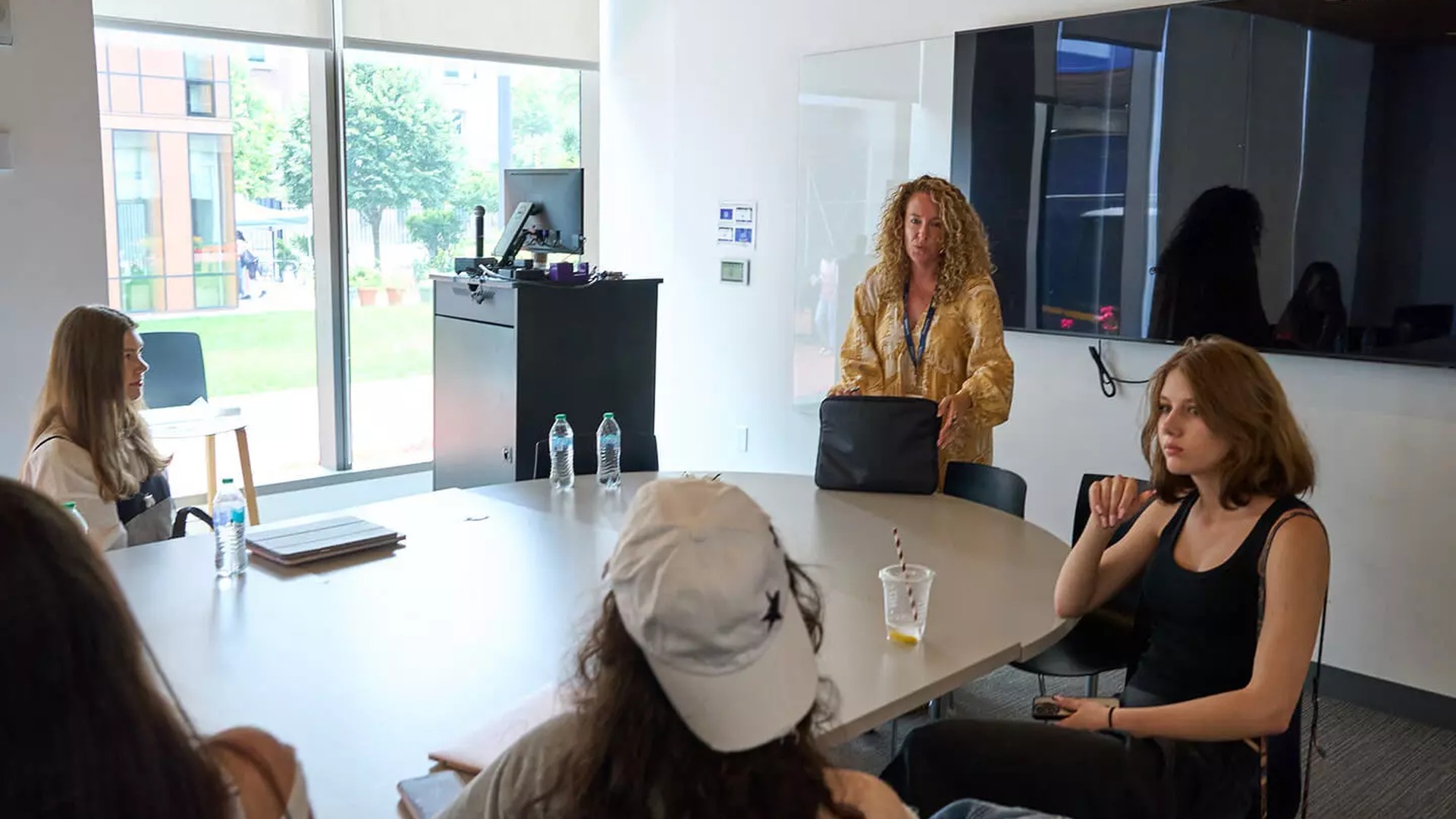
Immerse Education's Academic Insights pathway in Engineering offers a structured introduction to university-level engineering, taught by expert academics from institutions such as Oxford and Cambridge. Delivered in small classes with an average of 7 participants per class, the programme blends theory with applied learning.
For students aged 13-15, the course introduces foundational principles, including mechanics, forces, materials, and basic electronics. Guided workshops and design tasks help students understand how engineers approach problem-solving. For students aged 16-18, the curriculum advances into mechanical systems, electrical circuits, sustainability, and applied engineering design.
Students complete more independent projects and analyse real engineering challenges, developing reasoning expected at undergraduate level. Across all ages, learning includes university-style lectures, problem-solving sessions, weekly 1:1 tutorials, and a personal engineering project, ending with written feedback and a certificate.
Why it stands out: Age-specific syllabi tailored to students' academic stages, expert tutors from leading universities, small-group teaching that encourages discussion, and personalised feedback that supports meaningful academic growth and university readiness.
3. Lumiere Research Scholar Program
Location: Remote, you can participate in this program from anywhere in the world!
Cost: Varies depending on program type. Full financial aid available.
Program Dates: Varies by cohort: summer, fall, winter, or spring. Options range from 12 weeks to 1 year.
Application Deadline: Varies by cohort.
Eligibility: You must be currently enrolled in high school and demonstrate a high level of academic achievement.
The Lumiere Research Scholar Program is a rigorous research program tailored for high school students. The program offers extensive 1-on-1 research opportunities for high school students across a broad range of subject areas. The program pairs high school students with Ph.D. mentors to work 1-on-1 on an independent research project. At the end of the 12-week program, you’ll have developed an independent research paper!
You can choose research topics from subjects such as psychology, physics, economics, data science, computer science, engineering, chemistry, international relations, and more. You can find more details about the application here, and check out students’ reviews of the program here and here.
Why it stands out: You get 1-1 mentorship with a Ph.D. mentor and produce an independent research project by the end.
4. AEOP High School Internships
Location: U.S. Army research laboratories and centers, plus partner university labs, across the United States
Cost/Stipend: Free, with no application fee; educational stipend that varies by location and programme length
Acceptance rate/cohort size: Highly competitive; cohort size not specified
Dates: Summer; length varies by location
Application Deadline: Varies by location
Eligibility: Current high school students who are U.S. citizens or permanent legal residents; additional requirements vary by location, and some placements are designed for priority populations; commuter only; not open to international students
This Army-sponsored programme places high school students in Army research labs and partner university labs for a summer of paid research. You work with a qualified mentor on research in fields such as cybersecurity, energetics, biology, and materials science. Placements are designed for commuters, so transport, meals, and housing aren’t provided, and it helps to choose locations you can reach easily.
The internship also builds your skills and gives you networking and training opportunities that can support your next steps in STEM. Once you finish, you become part of the AEOP alumni community, which offers ongoing career support.
Why it stands out: You earn an educational stipend while conducting research with a qualified mentor in an Army-funded or partner university laboratory.
5. Air Force Research Laboratory: AFRL Scholars Program
Location: Air Force Research Laboratory sites across the United States
Cost/Stipend: Free; stipend-paid internship
Acceptance rate/cohort size: Not specified
Dates: Varies by location
Application Deadline: Varies by location; check the programme site for current dates
Eligibility: Upper-level high school students; international eligibility not specified on the programme homepage
The AFRL Scholars Program offers stipend-paid internships for upper-level high school students, alongside undergraduate and graduate students pursuing STEM degrees. You work with full-time AFRL scientists and engineers on research and technology projects, contributing directly to unique, research-based work.
Placements give you a close look at how research laboratories operate and how engineering problems are tackled in a defence research setting. The programme is administered by the Universities Space Research Association as part of a wider effort to strengthen the STEM workforce pipeline. Working alongside professional researchers can help you test whether research-focused engineering suits you before you start your degree.
Why it stands out: You gain paid research experience working with full-time Air Force Research Laboratory scientists and engineers.




6. Texas Tech University: Anson L. Clark Scholars Program
Location: Texas Tech University, Lubbock, Texas
Cost/Stipend: Free; room and board covered, plus a $750 stipend; $25 application fee
Acceptance rate/cohort size: 12 scholars
Dates: June 20th - August 5th, 2027
Application Deadline: February 15th, 2027 (application opens January 2nd, 2027)
Eligibility: Rising high school seniors and recent high school graduates aged 17 or older; U.S. citizens or permanent residents; not open to international students
Texas Tech University selects twelve high school scholars to conduct seven weeks of intensive research alongside faculty. Laboratory assignments pair you with a faculty mentor, with research areas that can include engineering. Experimental work and data analysis let you carry a research project from an initial question through to findings in a university laboratory.
Living with a small cohort of fellow scholars gives you peers to share the experience with throughout the summer. The application asks for essays, transcripts, test scores, and three recommendations, so it helps to prepare before it opens in January.
Why it stands out: Limited to just 12 participants, this seven-week programme pairs you with a faculty mentor and covers room and board, plus a $750 stipend.
7. National Institutes of Health: Summer Internship Program (SIP)
Location: NIH campuses, including the main campus in Bethesda, Maryland
Cost/Stipend: Free; stipend adjusted annually by educational level; housing not provided
Acceptance rate/cohort size: Not specified; Principal Investigators select their own interns
Dates: Between May 10th and August 31st, 2027, with exact dates set with your Principal Investigator
Application Deadline: January 26th, 2027, at noon ET; reference letters due February 2nd, 2027
Eligibility: Graduating high school seniors who will be 18 by September 30th, 2027 (17-year-olds must live within 40 miles of an NIH campus); U.S. citizens or permanent residents; not open to international students
The NIH Summer Internship Program places you in a full-time, in-person research group led by a Principal Investigator in the NIH Intramural Research Program. Engineering is one of many fields welcomed, alongside biology, computer science, physics, and bioinformatics, with research spanning basic, translational, and clinical work. There’s no central selection, so you contact Principal Investigators whose work interests you and direct them to your completed application.
Professional development, career programming, and a well-being programme support you alongside your research. The summer builds towards Summer Poster Day in early August, where you share your research with the NIH community, and you can find similar options among these engineering research opportunities for high school students.
Why it stands out: As a graduating senior, you can join a full-time NIH research group and present your work at Summer Poster Day.
8. Stanford University: Stanford Institutes of Medicine Summer Research Program (SIMR)

Location: Stanford University, Stanford, California
Cost/Stipend: Stipends available (details on the programme’s Stipends page)
Acceptance rate/cohort size: Not specified; selection heavily favours Bay Area students
Dates: June 7th - July 29th, 2027 (tentative; 8 weeks)
Application Deadline: Late February 2027; the application opens December 18th, 2026
Eligibility: Current high school juniors or seniors (class of 2027 or 2028) aged 16 or older by the June 2027 start, living in and attending high school in the U.S.; U.S. citizens or permanent residents; not open to international students
Stanford’s SIMR invites high school students to spend eight weeks performing basic research on a medically oriented project. Faculty, postdoctoral fellows, students, and researchers guide your work, giving you a direct view of how scientific research is carried out. You contribute to an active project in a Stanford lab, which suits you if you’re interested in where engineering meets biology and medicine.
Field trips and events round out the research experience with the rest of your cohort. The programme aims to build your interest in biological sciences and medicine while showing you how research questions become results.
Why it stands out: You perform research on a medically oriented project alongside Stanford researchers over eight weeks.
9. Stony Brook University: Garcia Research Scholars Program
Location: Garcia Center for Polymers at Engineered Interfaces, Stony Brook University, Stony Brook, New York
Cost/Stipend: Not listed on the main programme pages; check the programme FAQs
Acceptance rate/cohort size: Not specified
Dates: Summer; 2027 dates not yet posted
Application Deadline: Not yet posted for 2027
Eligibility: High school students aged 16 or older by the programme start (July 4th cutoff in 2026), with a 3.8 unweighted GPA and test scores at or above the 60th percentile; rising college freshmen apply through the undergraduate track; open to international students who already hold documents to be in the U.S. (no visa support)
Stony Brook’s Garcia Center runs an interdisciplinary research programme where fundamental science is applied to engineering and medical challenges. Research areas include tissue engineering, materials design, energy generation and storage, mathematical modelling, and computation.
One goal each summer is to advance projects far enough for students to submit abstracts to the Materials Research Society Fall Meeting, one of the world’s major scientific conferences. Abstracts are reviewed by experts and selected for scientific significance, originality, and technical quality. Every participant works on actual experiments in labs, which is why the programme requires you to be at least 16.
Why it stands out: You work on materials and engineering research with the goal of submitting your findings to a major international scientific conference.
10. Johns Hopkins University: Explore Engineering Innovation (EEI)
Location: Johns Hopkins University, Baltimore, Maryland, plus commuter, hybrid, and online options
Cost/Stipend: Tuition varies by format; scholarships available (see the Tuition and Fees page)
Acceptance rate/cohort size: Not specified; 12:1 student-to-teacher ratio
Dates: Four weeks in person, five weeks online, or two weeks remote followed by two weeks on campus
Application Deadline: See the programme’s Application Dates and Deadlines page
Eligibility: High school students (check the programme site for grade and course prerequisites); open to international students, with guidance provided for international families
The Whiting School of Engineering’s Explore Engineering Innovation is a survey course covering chemical, civil, electrical, and mechanical engineering alongside materials science. Collaborative projects and labs let you work through engineering problems the way engineers do, with a student-to-teacher ratio of 12:1.
You can take the course in person over four weeks, online over five, or in a hybrid format that combines remote and on-campus study. Tools such as the programme’s truss simulator support your work on structural design. Successful completion gives you the opportunity to earn Johns Hopkins University credit.
Why it stands out: You test foundational principles across civil, mechanical, chemical, and electrical engineering, with the chance to earn Johns Hopkins credit.
11. Michigan State University: High School Engineering Institute (HSEI)
Location: Michigan State University College of Engineering, East Lansing, Michigan
Cost/Stipend: $1,099 programme fee (2026)
Acceptance rate/cohort size: Not specified
Dates: Four five-day sessions between June 14th and July 16th in 2026; 2027 dates not yet posted
Application Deadline: 2026 deadlines ran from June 5th to July 3rd, depending on session
Eligibility: Students entering grades 10-12, plus recent high school graduates; open to international students
Michigan State University’s residential institute is built for students seriously considering engineering as a career. Each day, you focus on a different engineering major and spend time with a faculty member, a graduate student, and an undergraduate through short lectures, demonstrations, team problem-solving, and tours.
Presentations from the Honors College, Admissions, Study Abroad, and the co-op and undergraduate research centre show you what studying engineering at MSU involves. Tours of engineering research facilities bring you into the labs where faculty work. The five-day format gives you a short, focused way to compare majors before committing to one.
Why it stands out: Recent graduates and upper-level students can sample a different engineering major each day with faculty, graduate students, and undergraduates.
Join the Immerse Education 2027 Essay Competition
Follow the instructions to write and submit your best essay for a chance to be awarded a 100% scholarship.
12. University of Maryland: Terp Young Scholars
Location: University of Maryland, College Park, Maryland, and online
Cost/Stipend: See the Program Fees & Scholarships page; 2027 fees not yet listed
Acceptance rate/cohort size: Not specified
Dates: July 12-30, 2027
Application Deadline: See the Program Dates & Deadlines page
Eligibility: Rising high school sophomores or above (course prerequisites vary); campus courses require you to live within commuting distance, with no housing provided; open to international students through a separate application
Terp Young Scholars lets you take one three-credit University of Maryland course over three weeks, either on campus or online. The 2027 course list isn’t out yet, but recent options have included engineering courses offered on campus and online. In Why Do Things Fail?, you design structures with specific performance goals, predict their failure points, then build and test them against your predictions.
The Fault in Our Data, offered online by the A. James Clark School of Engineering, teaches you to analyse, visualise, and model large datasets. Both your credits and your grade go on your UMD transcript, so expect several hours of coursework a day.
Why it stands out: You earn three University of Maryland credits through a single engineering course, with your grade recorded on an official UMD transcript.
13. UMass Amherst: Summer Engineering Institute (SENGI)
Location: University of Massachusetts Amherst, Amherst, Massachusetts
Cost/Stipend: $4,119 residential / $2,337 commuter (2026); partial scholarships for students with financial need and academic merit
Acceptance rate/cohort size: Not specified
Dates: July 12-25, 2026 (2 weeks); 2027 dates not yet posted
Application Deadline: Not listed on the programme page
Eligibility: Rising high school sophomores through seniors; international eligibility not specified
UMass Amherst’s two-week institute shows you how engineers design practical solutions for everyday life and communities. You explore biomedical, chemical, civil, computer, electrical, environmental, industrial, and mechanical engineering through faculty presentations, guided discovery, and design activities.
Practising professional and research engineers, most of them faculty, lead the projects, and you work on one project across both weeks before presenting it on the final day. Classes run in team-based learning labs and across the Engineering Quadrangle, building your skills in design, communication, teamwork, research, and software. Successful completion earns you two credits.
Why it stands out: You gain broad exposure across eight engineering branches and earn two credits while completing a two-week project.
14. Syracuse University: Bioengineering for Space Exploration
Location: Syracuse University, Syracuse, New York (on campus)
Cost/Stipend: Residential $4,995; commuter $4,024; discounts and scholarships available
Acceptance rate/cohort size: Not specified
Dates: July 19-31, 2026; 2027 dates not yet posted
Application Deadline: Not listed on the course page
Eligibility: Rising high school sophomores, juniors, or seniors, or 2026 high school graduates; open to international students
Bioengineering for Space Exploration introduces you to astrobiology and bioengineering through lectures, workshops, virtual field trips, lab activities, and projects. You start with the physical, biological, chemical, and geological properties of potential extraterrestrial habitats, with a focus on the engineering technology involved. Projects ask you to perform simulated exobiological sampling and to design and prototype a simulated Mars rover.
The course is led by Douglas Yung, an Associate Teaching Professor in bioengineering who previously worked at NASA’s Jet Propulsion Laboratory as a postdoctoral fellow. Completing the two-week course earns you a Certificate of Completion and the option to request a Syracuse University noncredit transcript.
Why it stands out: You apply engineering principles to astrobiology problems on campus, including prototyping a simulated Mars rover, under a former NASA JPL postdoctoral fellow.
15. University of Pennsylvania: Management & Technology Summer Institute (M&TSI)

Location: University of Pennsylvania, Philadelphia, Pennsylvania
Cost/Stipend: $11,999 on-campus fee plus a non-refundable $100 application fee; need-based scholarships available
Acceptance rate/cohort size: 75 participants
Dates: July 11-31, 2027
Application Deadline: January 27th, 2027 (applications opened November 2nd, 2026)
Eligibility: Rising high school seniors with strong chemistry, physics, and calculus coursework, test scores, leadership roles, and recommendations; international eligibility not specified on the programme page
Penn’s Jerome Fisher Program in Management & Technology runs this institute in partnership with Penn Engineering and the Wharton School. Over three weeks, you build and present a prototype and go-to-market plan for your own high-tech venture, with your presentation evaluated by Penn faculty. Classes are taught by full-time Wharton and Penn Engineering faculty, with guest lectures from leading academics.
Simulations led by industry innovators such as Google, plus field trips to companies, show how technology and management connect outside the classroom. Successful completion earns you a full Penn college course credit from the School of Engineering and Applied Science.
Why it stands out: You earn one Penn college credit while combining Penn Engineering prototyping with Wharton business instruction in a cohort of 75.
Frequently asked questions: Engineering Summer Schools for Year 13 Students
Can you do an engineering summer school after finishing Year 13?
Yes, several engineering summer programmes accept you after you finish Year 13 or graduate high school. The NIH Summer Internship Program is built for graduating seniors who finish high school before the internship starts, and Michigan State’s High School Engineering Institute welcomes recent graduates. Syracuse University’s Bioengineering for Space Exploration accepts 2026 high school graduates, while the Anson L. Clark Scholars Program is open to recent graduates aged 17 or older. Check each programme’s wording carefully, as some only accept current or rising high school students.
Are there paid engineering summer programmes for Year 13 students?
Yes, several U.S. research placements pay you a stipend instead of charging tuition. SEAP pays $4,000 to new participants and $4,500 to returning ones, while AEOP High School Internships and the AFRL Scholars Program both pay stipends that vary by placement. The Anson L. Clark Scholars Program covers room and board and adds a $750 stipend. Most of these are limited to U.S. citizens or permanent residents, so if you’re an international student, paid courses or remote research programmes are usually the more realistic route.
Can international students attend engineering summer schools in the US?
Yes, many university-run engineering summer schools in the US accept international students, though government-funded placements usually don’t. Michigan State’s High School Engineering Institute is open to U.S. and international students, and the University of Maryland runs a separate application for international applicants to Terp Young Scholars. Stony Brook’s Garcia programme accepts international students but can’t support visa applications, so you’d need existing documents to be in the U.S. If you’d rather stay closer to home, these engineering summer schools in the UK give you options without the visa process.
When should you apply for engineering summer programmes?
You should start applying in the autumn before your summer, as the most competitive deadlines fall in winter. SEAP’s 2027 applications close on November 30th, 2026, the NIH Summer Internship Program closes on January 26th, 2027, and Penn’s M&TSI closes on January 27th, 2027. The Anson L. Clark Scholars Program follows on February 15th, 2027, with Stanford’s SIMR due in late February. Many university summer schools publish dates and open applications in winter or spring, so build a shortlist early and track each deadline.
Does an engineering summer school help your university application?
An engineering summer school can strengthen your application by giving you concrete projects and skills to discuss in your personal statement or interviews. Describing how you designed, tested, or presented a prototype says far more than listing the programme name. Some programmes add formal recognition, such as the Johns Hopkins credit available through Explore Engineering Innovation or the Penn credit from M&TSI. Immerse Education’s accredited options earn 8 UCAS points or 3 US college credits from age 14, which can help if you’re applying through UCAS.
Can you do engineering research as a high school student?
Yes, you can do engineering research before university through lab placements or mentored research programmes. Stony Brook’s Garcia programme works towards abstracts for the Materials Research Society Fall Meeting, while SEAP, AEOP, and AFRL place you in government research laboratories. If you want flexibility, the Lumiere Research Scholar Program pairs you remotely with a Ph.D. mentor to write an independent research paper in subjects including engineering. Research placements are often more selective than courses, so apply widely and start early.
From Year 13 labs to engineering lectures
You don’t need to wait for your first lecture to test what engineering feels like, because one focused summer can already show you plenty.
The best engineering summer schools for Year 13 students give you prototypes to build, mentors to learn from, and problems that stretch your thinking.
Whether you choose a funded lab placement or a university course, pick the option that best matches the engineering field you plan to study next.
When you’re ready to plan the next step, explore our University Preparation blogs for advice on applications, personal statements, and confidently starting your degree.






Unlock Inspiring Opportunities with the Immerse Education Newsletter
Join our newsletter to stay ahead with exclusive updates, exciting programme highlights, and expert insights from the world of immersive education.
Learn how Immerse can transform your life
An in-depth overview of our university and career preparation programmes
Get a glimpse into the life of an Immerse participant
Find the right programme for you with sample timetables, location showcases, and more