15 Online Python Courses for High School Students

TL;DR
This list gathers 15 ways to learn Python online, ranging from two-day crash courses to full semester-length classes. You can choose between completely free options through Google, HarvardX, and Coursera, or paid university courses costing up to $3,200. Programs span complete beginner introductions through specialized tracks in AI, data science, and cryptography, so you can match a course to what you already know. One option even lets you earn a college credit from Johns Hopkins University after six weeks. Immerse Education also offers an online coding research programme for ages 13 to 18, with UCAS or college credit options available.
AI is moving fast, and coding is showing up in places you might not expect. It is no longer limited to computer science. Engineers use it to build and test things, data scientists use it to work with massive datasets, researchers use it to analyze results, and even fields like medicine and finance now rely heavily on code.That makes high school a pretty good time to start experimenting with Python. A good Python course can simply help you get your feet wet, build a few things, and figure out whether you actually enjoy solving problems with code.
An online Python course can start with the basics and gradually get you doing things that feel more like actual programming. You might learn to write and debug code, work with datasets, build small applications, understand algorithms, or use Python libraries to analyze and visualize data. The other nice thing is that you can learn from home and work around your school schedule, without having to worry about commuting, housing, or fitting another trip into an already busy calendar.
Why should learn Python in high school?
Learning Python in high school can give you a much stronger grasp of basic computer science before the subject becomes more demanding in college. You start getting comfortable with concepts such as problem decomposition, algorithms, data structures, debugging, and writing reusable code. Python is also powerful enough to remain useful beyond an introductory course, so the language you learn as a beginner can continue into more advanced projects and applications.
There is also a clear academic benefit to developing this skill before college. Having already completed Python projects gives you something specific to discuss in your college applications and demonstrates that your interest in computing has involved actual work, not just an interest in the subject.
Finally, online Python courses are generally a more accessible option than longer programs or internships. Many introductory courses are free or relatively inexpensive, and you can complete them from home without the additional costs of travel, accommodation, or relocation.
For related options, consider online coding courses for high school students.
With that in mind, here is a list of 15 online Python courses for high school students!
15 Online Python Courses for High School Students
1. Johns Hopkins Engineering Innovation Pre-College Programs: Intro to Python
Location: Online (asynchronous)
Cost: A non-refundable application fee of $30 and a tuition of $1,300 (scholarships available)
Dates: 6-week sessions available in Fall, Spring, and Summer
Application Deadline: Varies by the session
Eligibility: High school students who have completed 9th grade and Algebra II plus maintain As and Bs in their science math classes
In this six-week asynchronous course, you will learn some of the important programming concepts with the help of real-world examples. The pre-college course will particularly focus on Python, teaching you to write the code and debug it, analyze data and design interactive simulations.
You will be able to learn at your pace by watching pre-recorded videos and completing practice problems, assignments, and weekly quizzes. More importantly, you will also engage in hands-on projects that let you implement your Python coding skills. Some of the projects you will complete include a take-home pay calculator, a secret code breaker, and a virtual code breaker. Upon completing the course, you can earn one college credit from the Johns Hopkins University.
Why it stands out: You will have instructors from Johns Hopkins give you regular feedback and offer their support throughout the course.
2. Immerse Education’s Online Coding Summer School
Location: Fully remote
Cost/Stipend: Varies by program type
Acceptance rate/cohort size: 1:1 learning
Dates: Flexible; multiple cohorts in a year
Application Deadline: Rolling admissions; multiple dates throughout the year
Eligibility: Students aged 13-18 (accredited options require age 14+); open to international students
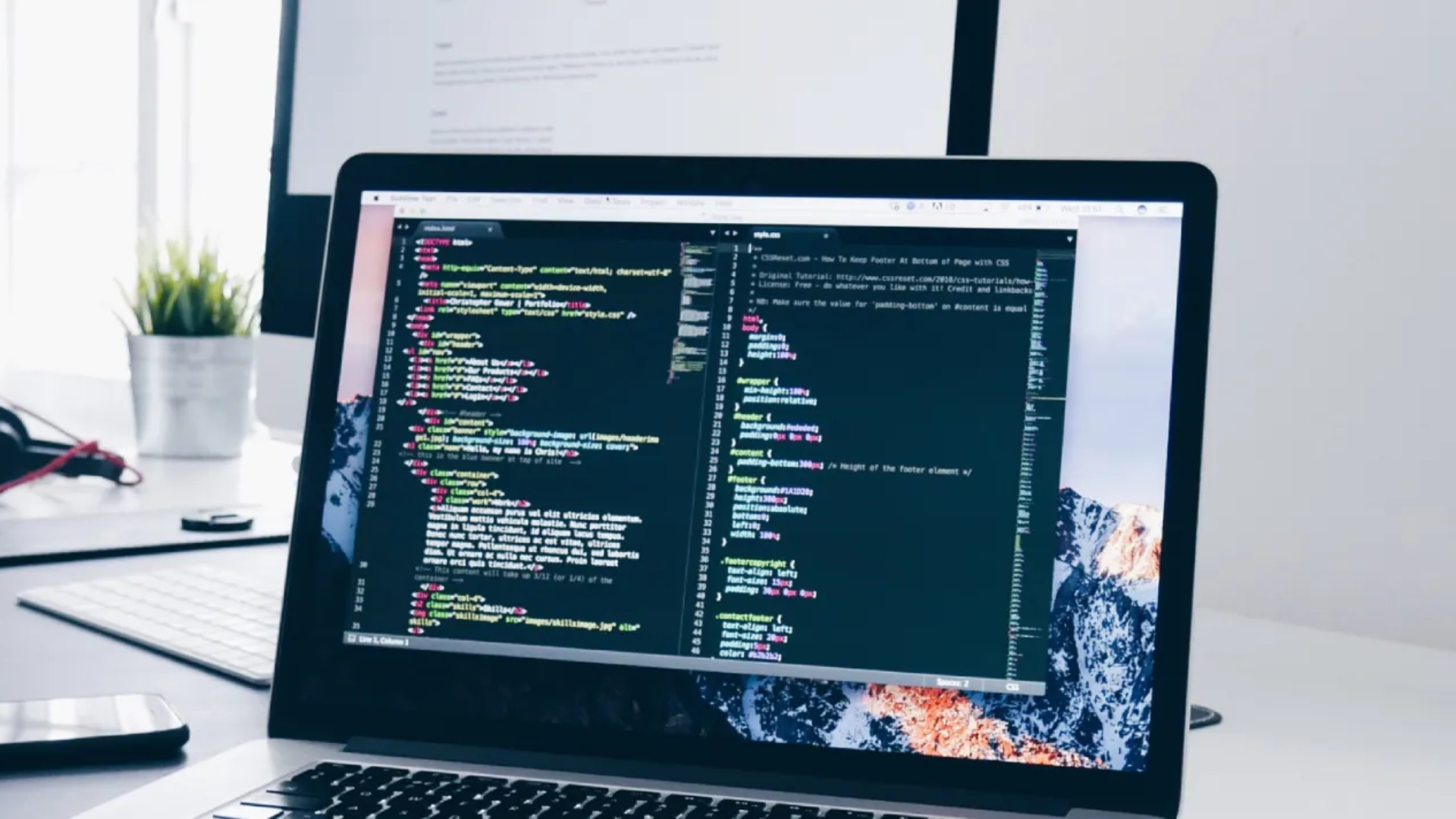
The Online Research pathway allows you to explore coding through an independent, university-style research project guided by a personal tutor from Oxford, Cambridge, or an Ivy League university. On the coding and computer science pathways, you’ll investigate areas such as programming languages, algorithms, data structures, software development, or applied computing, developing analytical and problem-solving skills used in real technical fields. You may also choose to explore encryption and cybersecurity topics, examining how cryptographic techniques protect digital information and how security principles are applied in modern systems.
Delivered through one-to-one or small-group tutoring, the programme mirrors undergraduate research and is available across more than 20 subjects. Depending on the pathway, you can earn recognised college or UCAS credits. By the end, you’ll complete a full academic research paper, receive detailed written feedback, and have the opportunity to publish your work or present it at the Immerse Online Symposium.
Why it stands out: You’ll get access to 1:1 Oxbridge- or Ivy-style research supervision culminating in a publishable academic paper.
3. Kode With Klossy Summer Camps
Location: Online and in-person options are also available
Cost: Free
Dates: Two-week summer camps; dates vary by session
Application Deadline: April 7th
Eligibility: Open to young women and gender-expansive teens, aged 13-18 years old
Kode With Klossy calls for young women and gender-expansive teens to participate in its coding classes with the aim to get them excited about pursuing a STEM career. You will find that there are three curricula offered in the summer camps, out of which AI and data science are most suitable if you are interested in Python. The AI track will cover some of the primary concepts in AI and ML, including algorithms, data sets, and natural language processing. You will also learn to train a chatbot with the help of Python. Through the data science track, you will learn to analyze and visualize data using SQL, Python, and data visualization tools. You will use your newly acquired skills to do a data visualization project on a topic of your choice.,
Why it stands out: You will have the opportunity to hear from some expert women in the field of technology who can further encourage you to choose a career in IT.
4. NYU GSTEM Data Science Course
Location: Online
Cost: An application fee of $50 and a course fee of $2,500 (application fee waiver and financial aid available)
Dates: February 3rd - May 5th
Application Deadline: November 14th - December 14th
Eligibility: 11th and 12th graders who are in the US and have completed an introductory computer science course and a math course
As someone who is interested in Python, you would certainly enjoy attending this 12-week course on data science. In it, you will develop the skills and knowledge needed to collect, process, analyze and visualize data. As a result, you will have learned to visualize the collected data using Python and Jupyter notebooks. You will be using Python throughout the course so you are expected to have some foundational language in programming.
You should be familiar with variables, booleans, loops, conditionals, and iteration. Additionally, you will also learn to build, test and validate mathematical models, plus to make predictions using mathematical models. The syllabus for this program is designed and taught by NYU professors; you can get an official NYU academic transcript after completing the course.
Why it stands out: Given that data science is quite useful in the STEM field, attending this course can strengthen your career prospects in STEM.
5. Stanford Pre-Collegiate Summer Institutes: Artificial Intelligence
Location: Online
Cost: An application fee of $65 and a course fee of $3,200 (financial aid is available; there is a financial aid application fee of $60 for which a fee waiver is available for qualifying students)
Dates: June 15–26 (Session One) and July 6–17 (Session Two)
Application Deadline: March 13th
Eligibility: 10th and 11th graders who will be more than 13 years old and less than 19 during the duration of the program and have a beginner-level proficiency in Python
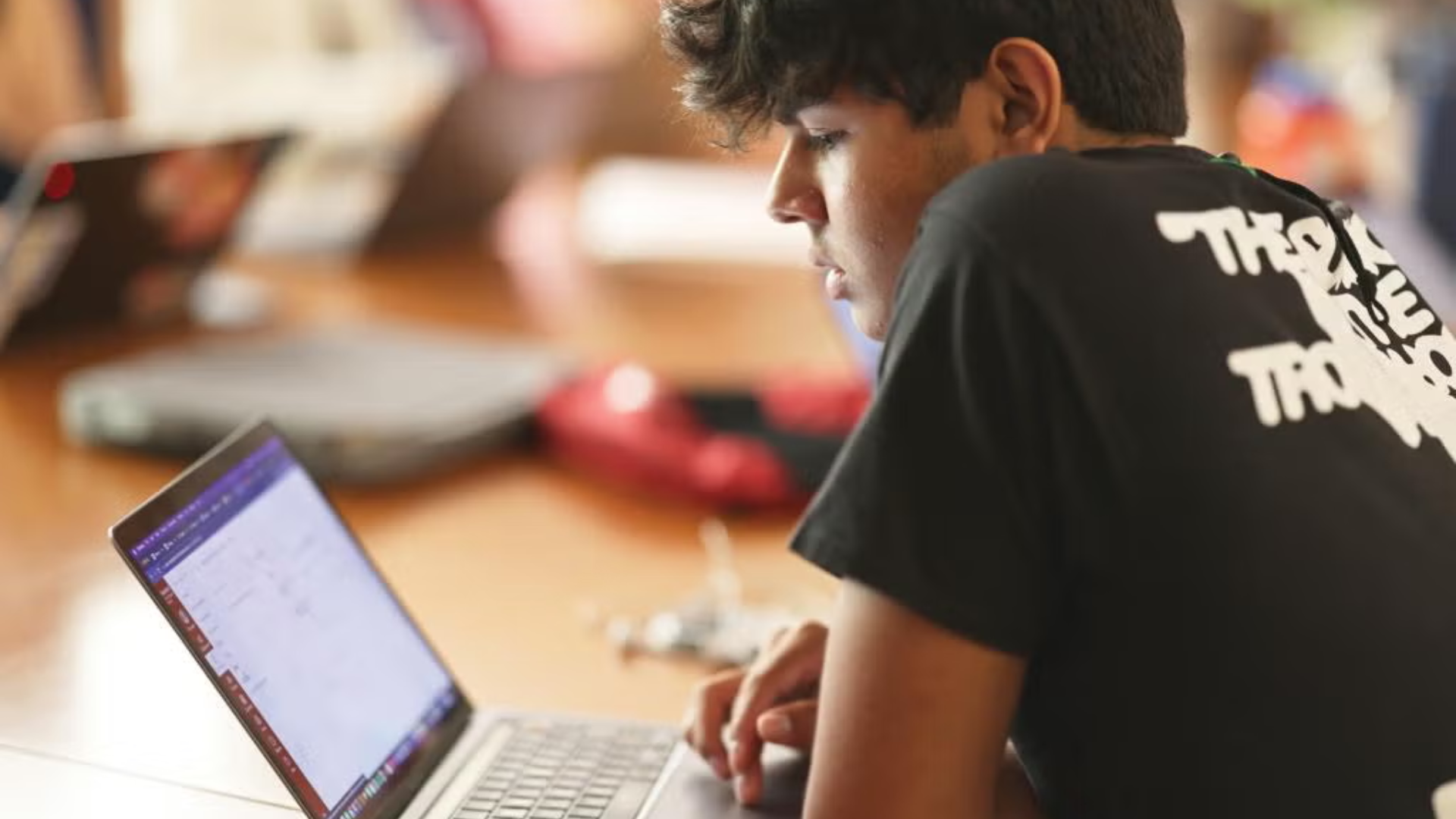
Through your participation in this online Stanford course, you will gain an in-depth understanding of artificial intelligence while specifically learning how professionals train AI systems to properly complete the tasks assigned to them. In the process, you will become familiar with supervised learning, unsupervised learning, and reinforcement learning algorithms.
You will gain hands-on practice in writing these algorithms in Python. Plus, the course will provide you with both pedagogical and real-world datasets to help strengthen your programming skills in the process. You will also learn to analyze an algorithm, particularly identifying biases and removing them for better results.
Why it stands out: By the end of the program, you will have the skills to develop an AI system that solves a real-world problem.



6. University of Michigan Programming for Everybody (Getting Started with Python)
Location: Online via Coursera
Cost: Free
Dates: 2 weeks at 10 hours a week
Application Deadline: Open all year round
Eligibility: Open to high school students
Offered by the University of Michigan, this course is aimed at students who absolutely have no knowledge of Python. In this course, you will start by learning to install Python and then write your first program in the application. In the process, you will become familiar with some of the fundamental aspects of programming, which include variables, expressions, conditional codes, functions, loops, and iteration. You will also gain hands-on practice in using some of these basic programming tools.
Plus, you will learn to store data in variables and use them to perform calculations. This is the first course in the university’s specialization series on Coursera, titled Python for Everybody Specialization. Once you complete this course, you will have the opportunity to further enhance your knowledge of Python and dive into topics such as Python data structures, using Python to access web data, using databases with Python, and more.
Why it stands out: Rather than just teaching you Python, this course also focuses on helping you understand why you should program and why you should use Python.
7. HarvardX: CS50's Introduction to Artificial Intelligence with Python
Location: Online via edX
Cost: Free to audit
Dates: 7 weeks (self-paced)
Application Deadline: Open all year round
Eligibility: Open to high school students
This introductory course to artificial intelligence with Python dives into the primary concepts and algorithms that drive artificial intelligence. By learning them, you will understand how AI can play games, recognize photos or handwriting, translate content, and more. You will particularly explore some AI theories like graph search algorithms, classification, optimization, machine learning, large language models, and more.
You will even get to write a Python code in which you will be applying the different theories. The ultimate goal of the program is to ensure that you leave the program with the ability to build an artificial intelligence system. Plus, you will have gained familiarity in using libraries for machine learning.
Why it stands out: With the course verified by Harvard University, you will get a certificate from the university upon successfully completing the course.
8. HarvardX: CS50's Introduction to Programming with Python
Location: Online via edX
Cost: Free to audit
Dates: 10 weeks
Application Deadline: Open all year round
Eligibility: Open to high school students
This is another online course offered by Harvard University that can be suitable for high school students like you who are interested in learning Python. The course aims to help you form a better understanding of programming with Python as an example. You can consider this course regardless of whether you have prior knowledge in other programming languages or not.
The syllabus will cover functions, variables, conditionals, loops, exceptions, libraries, file I/O, regular expressions, object-oriented programming, and more. Simultaneously, you will learn to read, write, test and debug Python code. More importantly, the program will engage you in various coding exercises that are inspired by real-world examples so that you can gain practice in using Python.
Why it stands out: You will do all your work on a web browser rather than downloading software, so you can use any PC or Mac to complete the course.
9. Google's Python Class
Location: Online
Cost: Free
Dates: 2 days
Application Deadline: Open all year round
Eligibility: Open to high school students
Google offers this course for anyone who has some beginner-level knowledge in programming and wishes to learn Python. In other words, this course is suitable for anyone who can explain terms like "variables" and "if statements." The syllabus will start from teaching you to install Python, then cover basic elements like strings and lists, before moving to advanced ones like text files, processes, and http connections.
Ultimately, the course ensures that you learn the different concepts that allow you to write a full Python program. The course includes lecture videos followed by coding exercises, so you can practice what you have learned. Some of the coding exercises you will be working on include the baby names exercise, the copy special exercise, and the log puzzle exercise.
Why it stands out: The syllabus is structured in a way you can complete it over two intensive days but given that the course materials are always available, you can complete it at your own pace too.
10. Northeastern University Pre-CollEDGE Online Programs: Introduction to Engineering with Coding
Location: Online
Cost: $495 (need-based financial aid available)
Dates: 4 weeks to complete; Course materials will be available online June 1st - August 1st
Application Deadline: April 21st - June 15th
Eligibility: 9th to 11th graders
By participating in this course, titled Introduction to Engineering with Coding, you will gain fundamental knowledge in coding, software development and data visualization. What makes this course even more suitable for you is the fact that it specifically dives into some primary concepts in Python programming. You will learn how IT professionals use Python to create and improve software, how they use Python to visualize and share data in a way that is both appealing and easy to understand, and some other uses of Python.
You will learn by reading materials, watching videos and taking quizzes. You will also complete some special programming activities that will improve your coding and data skills. Through your participation in this course, you will gain an in-depth understanding of how coding and software development build apps and programs.
Why it stands out: Apart from engaging in this course on your own time, you will also be welcomed to participate in live webinars alongside the university’s professors, students and alumni.
11. MITx: Introduction to Computer Science and Programming Using Python
Location: Online via edX
Cost: Free
Dates: 9 weeks
Application Deadline: Open all year round
Eligibility: Open to high school students
The Massachusetts Institute of Technology has designed this course for high schoolers who are interested in Python like you. If enrolled in this course, you will particularly learn how computer science professionals implement a programming language like Python in coming up with a solution for analytical problems. In the process. you will learn about computational thinking and the steps to write Python code, which will be used to resolve a specific problem.
Throughout the course, you will watch lecture videos and work on lecture exercises and problem sets on Python 3.5. As a result, you will become knowledgeable in debugging, data structures, simple algorithms, and more through this course. Given that this course is the first part of a two-part course series, you can even consider enrolling in the Introduction to Computational Thinking and Data Science course if you are interested.
Why it stands out: In this course, you will gain exposure to various topics, allowing you to make a more informed decision about which topic you would like to learn in depth later.
Join the Immerse Education 2027 Essay Competition
Follow the instructions to write and submit your best essay for a chance to be awarded a 100% scholarship.
12. University of Michigan Joy of Coding: Intro to Coding & Computational Thinking
Location: Online
Cost: $149 (need-based financial aid available)
Dates: 6 weeks to complete; Course materials will be available online June 17th – August 28th
Application Deadline: May 31st (Priority Deadline)
Eligibility: Open high school students who are at least 13 years old and have completed an Algebra course
This course, created by the University of Michigan, equips you with the skills and knowledge you need to write your Python code. It will teach you to break problems into simpler steps, come up with an algorithm and write Python code with variables, functions, conditionals, and loops.
It aims to provide you with an understanding of the thought process of writing a code. Plus, you will learn the importance of these codes in people’s regularly used apps and tools. You will also learn some of the primary concepts in programming and computational problem-solving. Ultimately, it helps you form a strong foundation if you are considering studying some advanced AI and data science topics.
Why it stands out: This course gives you an outlook on what you can expect to learn if you choose to major in computer science, IT, or other related subjects in college.
13. North Carolina School of Science and Mathematics Intro to Cryptography and Computer Programming
Location: Online
Cost: $695 (financial aid plus early bird and siblings discounts available)
Dates: July 6–24
Application Deadline: Opens December 6th and closes when all spots are filled
Eligibility: Rising 10th through 12th graders
This online course introduces you to terms like variables, functions, conditional logic, looping, and more that you will use to code in Python. Rather than simply teaching you Python programming, this course concentrates on how a programming language like Python can be used to streamline the process of enciphering and deciphering encrypted messages.
In other words, this course can be quite suitable for those who are interested in Python and cryptographic methods. With the course running for three weeks, you will be attending the first two at your convenient time but be expected to spend at least seven hours per week. In the final week, you will attend live sessions and interact with your instructor and other participants. By the end of the course, you will have completed a data analysis and visualization project.
Why it stands out: You will learn about the various encryption methods available so that you can use them to understand coded messages without having to decode them.
14. Meta Programming in Python
Location: Online via Cousera
Cost: Free
Dates: 5 weeks at 10 hours a week
Application Deadline: Open all year round
Eligibility: Open to high school students
By enrolling in this course, you will have the opportunity to learn programming in Python from experts who are part of Meta. The course ensures that you form a basic understanding of computer programming with the help of Python syntax. You will particularly learn how programmers write codes to solve a problem.
In the process, you will be exposed to the Python ecosystem, thus familiarizing yourself with modules, libraries and tools for Python. More importantly, you will practice writing Python code that has variables, data types, control flow and loops, functions and data structures in it. Simultaneously, you will gain experience in improving your code by mitigating errors and exceptions. The course will also dive into the importance of testing in Python.
Why it stands out: This is a beginner-friendly course that only requires having an interest in coding and can lead to careers in back-end development or database engineering.
15. Introduction to Python Programming - University of Pennsylvania
.png)
Location: Online via Coursera
Cost: Free
Dates: 3 weeks at 10 hours a week
Application Deadline: Open all year round
Eligibility: Open to high school students
In this introductory course, you will develop your knowledge in computer programming while specifically concentrating on the Python language. The syllabus will cover aspects such as data structures, conditionals, loops, variables, and functions while ensuring that you understand them well and learn to use them properly in your code.
The course will expose you to various tools that you can use to write and run Python code. The ultimate goal of the course is to ensure that you can write fully functional Python code by the end of it. You will also engage in coding exercises that are designed to give you practice in using common data structures, writing custom functions, and reading and writing to files.
Why it stands out: With the course consisting of four modules, the University of Pennsylvania has designed it to dive deep into different topics, allowing you to form an in-depth understanding of them.
Frequently asked questions: Online Python Courses for High School Students
Do you need any prior coding experience to take an online Python course?
No, several courses on this list are built specifically for complete beginners with zero coding background. The University of Michigan's Programming for Everybody assumes no prior knowledge and starts by having you install Python before writing your first program. Google's Python Class sits at the other end, expecting you to already understand basic terms like variables and if statements. HarvardX's CS50 Introduction to Programming with Python welcomes you regardless of whether you've used another language before. Check each course's eligibility section closely, since the starting level varies more than the subject name suggests.
Which online Python courses for high school students offer college credit?
A handful award real university credit rather than just a certificate of completion. Johns Hopkins Engineering Innovation's Intro to Python gives you one college credit after six weeks, and NYU's GSTEM Data Science Course ends with an official NYU academic transcript. Immerse Education's Online Research Programme also lets you earn recognised college or UCAS credits, depending on which pathway you choose. Most of the free courses, including everything on Coursera and edX, award a certificate rather than transferable credit. If credit matters to you, confirm it's listed explicitly before you apply, since it's the exception rather than the rule.
How much weekly time do online Python courses for high school students typically require?
Time commitment ranges from a couple of hours to a near full-time schedule, so check the course length against your other summer or school commitments. University of Michigan's Programming for Everybody asks for about 10 hours a week over two weeks, and Meta's Programming in Python follows a similar 10-hour pace across five weeks. North Carolina School of Science and Mathematics' Cryptography course expects at least seven hours a week for three weeks, with live sessions added in the final week. For more information, consider our guide on how long it takes to learn coding.
Can an online Python course strengthen your college application?
Yes, having completed real Python projects gives you something specific to point to beyond just listing an interest in computing. Kode With Klossy's data science track has you complete a data visualization project you choose yourself, which works well as a talking point in essays or interviews. NYU's GSTEM Data Science Course goes further, ending with an official transcript that shows admissions officers you handled college-level coursework. Even free options like HarvardX's CS50 courses come with a certificate proving completion. For more information, go through our guide on building a career in coding.
What kinds of projects do you build in an online Python course?
Projects range from simple beginner exercises to full data analysis pieces, depending on which course you pick. Johns Hopkins' Intro to Python has you build a take-home pay calculator and a secret code breaker as part of the six-week course. Google's Python Class works through exercises like a baby names program and a log puzzle to practice core syntax. At the more advanced end, the North Carolina School of Science and Mathematics' cryptography course ends with a full data analysis and visualization project. Look at a course's specific project list before enrolling if a portfolio piece matters to you.
Are there online Python courses focused specifically on AI or data science?
Yes, several courses on this list build directly toward AI or data science rather than general programming. Stanford's Pre-Collegiate Summer Institute covers supervised, unsupervised, and reinforcement learning algorithms, all written in Python. Kode With Klossy's data science track teaches you to analyze and visualize data using SQL and Python together, alongside a final project of your choosing. HarvardX's CS50 course on artificial intelligence with Python covers graph search, classification, and machine learning theory. NYU's GSTEM course focuses more narrowly on data collection, processing, and visualization using Python and Jupyter notebooks across a 12-week term.
Turn a Python course into career direction
Trying Python early gives you a low-risk way to test whether a tech career actually suits how you like to think and solve problems.
Online Python courses for high school students range from two-day crash courses to full data science tracks, so you can match the workload to your curiosity.
Finishing a project you built yourself, whether a chatbot or a data visualization, gives you something concrete to discuss when a career actually interests you.
Once you've found a course that fits, explore Immerse's Career Exploration resources to see where that interest could lead.







Unlock Inspiring Opportunities with the Immerse Education Newsletter
Join our newsletter to stay ahead with exclusive updates, exciting programme highlights, and expert insights from the world of immersive education.
Learn how Immerse can transform your life
An in-depth overview of our university and career preparation programmes
Get a glimpse into the life of an Immerse participant
Find the right programme for you with sample timetables, location showcases, and more