15 Medicine Summer Schools for 14 Year Olds

TL;DR
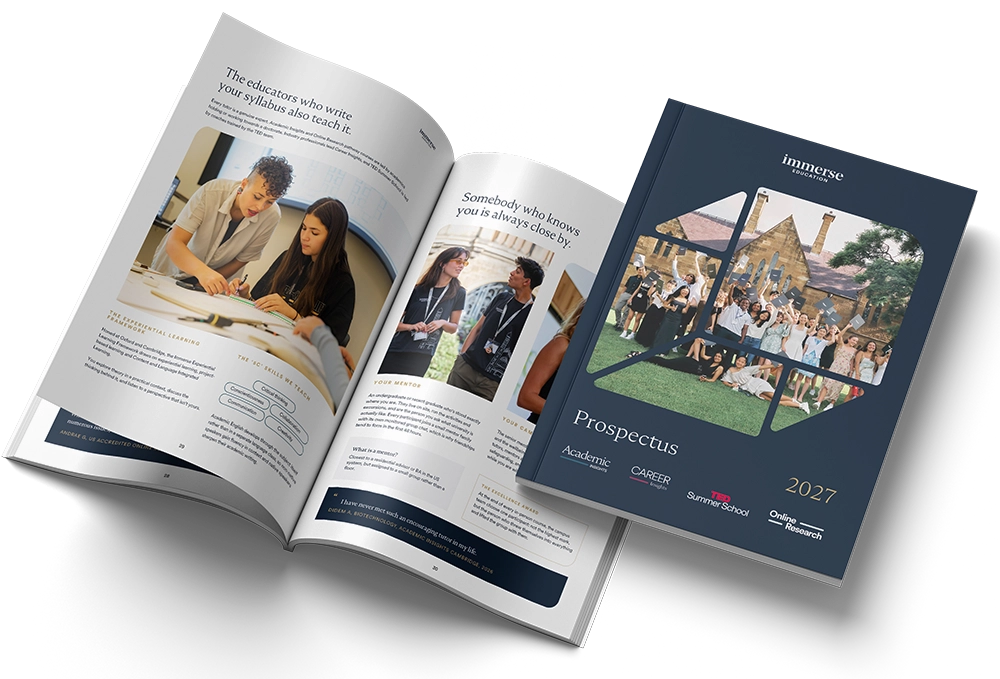
You’ll find 15 medicine summer schools here that accept 14-year-olds, from university day camps with organ dissections to vet camps, rural health career camps, and virtual programs you can join from home. Prices range from free options like Virtual Camp Med to $1,800 for Tufts’ summer veterinary session. Most suit rising 8th to 10th graders, and many are tied to a specific state or region. Immerse Education’s Academic Insights pathway also runs Medicine for students aged 13 to 18, and its Cambridge and Oxford programmes include groups for ages 13 to 15.
Learning how doctors diagnose illnesses, perform suture work, and run clinical tests gives 14-year-olds a distinct head start in understanding human anatomy. Practicing patient communication and laboratory methods at fourteen sets a solid baseline long before medical school applications begin. If you want to construct that understanding during your break, a specialized medicine summer school for 14-year-olds is a fantastic place to start.
Think about spending two weeks measuring patient vitals, examining organ models, or practicing basic diagnostic routines alongside other motivated teenagers. You will formulate medical case studies, test basic clinical procedures, and observe how healthcare teams organize daily patient care.
What kinds of medicine summer schools for 14-year-olds are there?
Your selection links directly with your specific academic targets. Certain options focus heavily on clinical skills, human anatomy, and emergency response, which suits students who want to practise medical skills themselves..
Several programs run directly inside university science departments or hospital simulation centers, while other options provide virtual interactive workshops that fit around your personal schedule. The top options always give participants opportunities to test out diagnostic tools, present findings, and ask practicing doctors questions rather than sitting through passive speeches.
To help you find the right fit, we’ve curated a list of 15 medicine summer schools for 14-year-olds worth exploring!
15 Medicine Summer Schools for 14 Year Olds
1. UGA Mini-Medical School Summer Academy 2A
Location: In person at the UGA Center for Continuing Education & Hotel in Athens, Georgia, as a day or overnight camp
Cost/Stipend: $530 day rate, with a $735 overnight add-on and $40 parking (2026)
Acceptance rate/cohort size: Not disclosed
Dates: The 2026 session ran June 15-19; 2027 dates not yet posted
Application Deadline: Registration runs through UGA’s youth programs portal; the 2026 session is now closed
Eligibility: Students aged 14 to 17, with no prior experience required; international eligibility not specified
You correlate the scientific workings of the nervous, cardiovascular, and digestive systems with the clinical diseases that arise in each. You will also experience short lectures alternating with practical activities and selected dissections of organ specimens. Current medical students from the Augusta University/UGA Medical Partnership teach the camp, having built the curriculum with faculty to challenge and inspire you.
Those same instructors answer your questions about pre-med requirements, clinical volunteering, and research opportunities. Access to university labs, technology, and teaching resources anchors every session in equipment you would not otherwise reach. For more options as you get older, explore these pre-med summer programs for high school students.
Why it stands out: You study body systems through organ dissections and short lectures, taught by current medical students who also walk you through pre-med requirements and medical school pathways.
2. Immerse Education's Medicine Summer School

Location: Cambridge, London, Oxford, Singapore, Sydney, and Toronto
Cost: Varies; summer school scholarship available through our bursary programme
Acceptance rate/cohort size: Selective; an average of 7 participants per class
Program Dates: 2 weeks during the summer
Application Deadline: Multiple cohorts with rolling admissions
Eligibility: Students worldwide aged 13-18 currently enrolled in middle or high school; open to international students
Immerse Education's Academic Insights pathway in Medicine is a two-week, in-person programme that introduces you to university-level medical science through small-group teaching and case-based learning. You explore core topics such as anatomy, physiology, and clinical reasoning while learning how doctors apply scientific knowledge to diagnose and treat patients.
Classes emphasise discussion, critical thinking, and clear communication, mirroring the structure of undergraduate medical education. By the end of the programme, you will complete an academic project, receive detailed feedback, and gain a clearer understanding of what studying medicine at a top university involves.
Why it stands out: It connects you with medical academics and clinicians, helping you understand how medicine is studied and practiced at leading universities.
3. Lumiere Research Scholar Program
Location: Remote , you can participate in this program from anywhere in the world!
Cost: Varies depending on program type. Full financial aid available.
Application Deadline: Varies by cohort.
Program Dates: Varies by cohort: summer, fall, winter, or spring. Options range from 12 weeks to 1 year.
Eligibility: You must be currently enrolled in high school and demonstrate a high level of academic achievement.
The Lumiere Research Scholar Program is a rigorous research program tailored for high school students. The program offers extensive 1-on-1 research opportunities for high school students across a broad range of subject areas. The program pairs high school students with Ph.D. mentors to work 1-on-1 on an independent research project. At the end of the 12-week program, you’ll have developed an independent research paper!
You can choose research topics from subjects such as psychology, physics, economics, data science, computer science, engineering, chemistry, international relations, and more. You can find more details about the application here, and check out students’ reviews of the program here and here.
Why it stands out: You get 1-1 mentorship with a Ph.D. mentor and produce an independent research project by the end.
4. ASU Health Care Discovery Camp (Session 1)
Location: In person at Arizona State University’s Polytechnic campus, Mesa, Arizona
Cost/Stipend: $350
Acceptance rate/cohort size: Not disclosed
Dates: Session 1 ran June 15-19, 2026, Monday to Friday, 8 a.m. to 5 p.m.
Application Deadline: May 30th for Session 1 in 2026; registration opened March 16th, 2026
Eligibility: Rising 8th and 9th grade students; international eligibility not specified
You explore veterinary medicine, dentistry, counseling and psychology, nutrition, and biological sciences across five days, alongside other health and wellness disciplines. Faculty, staff, and students from ASU’s College of Integrative Sciences and Arts lead the camp, giving you a glimpse into the health degrees and professions they work in every day.
Lab exploration and interactive workshops let you practise across those fields rather than watching demonstrations. Panel discussions bring healthcare professionals into the room to describe their own routes into the work. The format suits you if you’re curious about health careers but haven’t settled on one yet.
Why it stands out: You sample several health and wellness fields in one week, learning from ASU faculty and students through lab exploration and panels with healthcare professionals.
5. WFIRM Virtual Regenerative Medicine Academy
Location: Online via Zoom, with an optional on-site day of workshops, demos, and a tour at the Wake Forest Institute for Regenerative Medicine in Winston-Salem, North Carolina
Cost/Stipend: No program fee listed; you’re expected to buy about $50 of household materials for daily activities
Acceptance rate/cohort size: Selective; applicants are notified by March 22nd, 2027
Dates: July 12-16, 2027; Zoom lessons run Monday to Thursday, 9:45 a.m. to 2:30 p.m. EST
Application Deadline: Applications open January 15th and close February 15th, 2027, at 5 p.m. EST
Eligibility: Middle and high school students aged 14 to 18; open to students from across the U.S. and around the world
You study the research and technologies behind regenerative medicine, the field focused on engineering tissues and organs for patients. World-class faculty researchers, industry professionals, and near-peer mentors teach the sessions, so you hear from people at every stage of the field.
Alongside the science, the academy explores career and educational pathways into regenerative medicine. You complete daily activities using household materials, which keeps the virtual format active rather than lecture-only. On the final day, you can join an optional on-site session at WFIRM with workshops, demos, a tour, and lunch.
Why it stands out: This one-week academy combines live instruction from regenerative medicine researchers with industry professionals, near-peer mentors, career pathway guidance, and an optional on-site day at WFIRM.



6. Northwest AHEC Virtual Camp Med

Location: Online and self-paced; an in-person version is also offered for students in the Northwest AHEC region of North Carolina
Cost/Stipend: Free registration
Acceptance rate/cohort size: Not disclosed
Dates: June 1st - July 31st, 2027 (Virtual Camp Med)
Application Deadline: Summer 2027 registration has not opened yet; check back on the Camp Med page
Eligibility: Virtual Camp Med is open to current 8th to 12th graders; international eligibility not specified
Throughout the course, you work through five modules: My Career Choices, Explore the Health of Your Region, Human Body Systems, Healthcare in Action, and Education Possibilities. You track your progress in a Camp Med Notebook, turning your 20 hours of study into a record of your medical learning.
In the regional health module, you examine the healthcare strengths, challenges, and needs in your own area. The Northwest AHEC of Wake Forest University School of Medicine runs the camp as part of the North Carolina AHEC program. Once you complete all the modules and submit your notebook, you earn a certificate of completion.
Why it stands out: Delivered entirely online with free registration, this self-paced program lets you complete five healthcare-career modules across 20 hours, build a Camp Med Notebook, and earn a Certificate of Completion for college and job applications.
7. Texas Tech Health El Paso Summer Medical Camp
Location: In person on the Texas Tech Health El Paso campus, El Paso, Texas
Cost/Stipend: Snacks and learning materials are provided at no cost
Acceptance rate/cohort size: Up to 30 students per camp
Dates: Two two-week camps; the 2026 sessions ran June 8-18 and June 22nd - July 2nd, from 8 a.m. to 4 p.m. daily
Application Deadline: 2027 dates and registration will be announced closer to summer
Eligibility: Current or rising high school students interested in a medical career who can attend in person every day; international eligibility not specified
The Paul L. Foster School of Medicine hosts this camp to introduce you to the medical professions over two full weeks. You attend interactive presentations with healthcare professionals and guest speakers from different areas of medicine. Field trips, a mock crime scene investigation, and college preparation workshops give you a varied look at medicine and the education that leads to it.
You also take part in a financial aid session and a reality store exercise that simulates real life expenses. The camp suits you if you want sustained exposure to medical careers alongside practical college planning.
Why it stands out: You combine two weeks of medical career exposure with college preparation, including a mock crime scene investigation and a reality store exercise on life expenses.
8. Southwest PA AHEC Summer Health Career Academy
Location: In person on the main campus of the University of Pittsburgh School of Medicine, Pittsburgh, Pennsylvania
Cost/Stipend: $250 for course materials, field trips, and lunch; scholarships are available for students who demonstrate need
Acceptance rate/cohort size: Competitive; over 900 ninth and tenth graders have taken part over the past 21 years
Dates: The 2026 Academy ran July 13-17
Application Deadline: May 16th, 2026 (extended); 2026 applications are now closed
Eligibility: Current 9th and 10th graders who live in Allegheny, Armstrong, Beaver, Fayette, Greene, Washington, or Westmoreland County; the regional residency requirement means international students are not eligible
You meet practicing healthcare professionals, take part in health career activities, and learn to monitor vital signs and perform basic medical procedures. You also pick up basic medical terminology and receive training in leadership skills. The academy explores the academic preparation each health career requires, giving you a clearer roadmap for high school and college.
Partners include the University of Pittsburgh’s medicine, dental medicine, occupational therapy, and nursing programs, along with Chatham University’s physical therapy and athletic training programs. You are responsible for your own transportation to and from the academy.
Why it stands out: The program combines practical health career activities, structured leadership training, and direct contact with practicing health professionals on the University of Pittsburgh School of Medicine campus.
9. RiverStone Health MedStart Camps
Location: In person at host medical centres in Billings, Missoula, Butte, Miles City, and Great Falls, Montana
Cost/Stipend: $500 per student, covering room and board, transportation to events, activities, and materials; need- and merit-based scholarships available
Acceptance rate/cohort size: Not disclosed
Dates: 2026 camps ran June 14-18 (Billings), June 22-26 (Missoula), June 28th - July 2nd (Butte), July 19-23 (Miles City), and July 26-30 (Great Falls)
Application Deadline: 2026 applications are closed; acceptance was announced by April 10th, 2026
Eligibility: Montana high school sophomores and juniors no older than 18, including homeschooled and GED students; rural, low-income, first-generation, and underserved students are encouraged to apply. The Montana focus means international students are not eligible.
The Eastern Montana AHEC at RiverStone Health designed MedStart to encourage Montana high school students to pursue healthcare careers. Each camp features the professionals and career options at its host medical centre, so your week reflects the healthcare work happening in that community.
Completing the camp makes you eligible for one college credit through Montana Tech, transferable to all schools in the Montana University System. MedStart also gives you a chance to learn about college life and see that higher education is within reach. If you enjoy the experience, you can apply for a second year of camp.
Why it stands out: You spend a week at a Montana medical centre, earn a transferable college credit through Montana Tech, and can return for a second year.
10. Illinois AHEC Rural Health Careers Camp
Location: In person and overnight at Northern Illinois University, DeKalb, Illinois
Cost/Stipend: $150 per camper (2026)
Acceptance rate/cohort size: Up to 50 students
Dates: Three days; the 2026 camp ran June 29th - July 1st
Application Deadline: Applications are reviewed as they arrive; applications for the 2027 camp open in January 2027
Eligibility: Rising high school freshmen, sophomores, and juniors who live and attend school in a rural community of 25,000 people or fewer, with preference for students from 19 northern Illinois counties; students from Chicago or its suburbs are not eligible, and international students are not eligible
The National Center for Rural Health Professions at the University of Illinois College of Medicine Rockford runs this camp through the Illinois AHEC Network Program. You take part in at least 15 activities and labs connected to different healthcare professions and learn directly from current healthcare providers about why they love their careers.
Camp counselors are current health professions students, so you can ask them what training actually involves. You stay in a university residence hall and eat in campus dining, giving you a first taste of college life. Since 2005, the camp has helped more than 650 students explore careers in rural healthcare.
Why it stands out: You try at least 15 healthcare activities in three days while living in a university residence hall, making it a low-cost first look at both medicine and college life.
11. Tufts Adventures in Veterinary Medicine
Location: In person at the Cummings School of Veterinary Medicine, Grafton, Massachusetts
Cost/Stipend: $1,800 for the summer session or $1,500 for the April session, including lunch, snacks, activities, lab fees, and supplies; need-based aid typically covers 20-40% of tuition
Acceptance rate/cohort size: Not disclosed
Dates: Monday to Friday, 9 a.m. to 4 p.m.; check the program page for current session dates
Application Deadline: Not specified on the program page
Eligibility: Students currently in 9th to 12th grade; high school sessions are commuter-only and do not include housing; international eligibility not specified
Adventures in Veterinary Medicine has introduced pre-college students to veterinary careers at Tufts’ Cummings School for more than 30 years. In the school’s simulation lab, you learn techniques such as intubation and ultrasound. The program combines lectures, experiences with animals, and diagnostic challenges that ask you to think like a veterinarian.
You also interact closely with current Cummings School students, who share what veterinary training involves. If you’re focused on animal health, explore these pre-vet summer programs for high school students as well.
Why it stands out: You practise intubation and ultrasound in a professional simulation lab while working through diagnostic challenges alongside Tufts veterinary students.
Join the Immerse Education 2027 Essay Competition
Follow the instructions to write and submit your best essay for a chance to be awarded a 100% scholarship.
12. Purdue Junior Boiler Vet Camp
Location: In person and residential at Purdue University College of Veterinary Medicine, West Lafayette, Indiana
Cost/Stipend: $1,300 for the seven-day camp
Acceptance rate/cohort size: Not disclosed
Dates: June 13-19, 2027
Application Deadline: 2027 deadline not yet posted; check the Boiler Vet Camp apply page
Eligibility: Students entering 8th or 9th grade; campers come from across the country; international eligibility not specified
Over seven days, you explore veterinary medicine across dogs and cats, cows, pigs, horses, and other farm animals. You dissect a heart, reach into a cow’s stomach, watch a veterinary pathologist perform a necropsy, and practise giving an intravenous injection on a model.
Trips to the Indianapolis Zoo and the Fair Oaks dairy and pig operations broaden your understanding of zoo and farm animal medicine. Throughout the week, your group works through a real medical case with College of Veterinary Medicine faculty. On Saturday morning, you present your case to fellow campers, parents, and faculty.
Why it stands out: The camp introduces veterinary medicine through a heart dissection, a necropsy demonstration, zoo and farm visits, and a real case you present to faculty and families.
13. Auburn University Veterinary Camp

Location: In person at the Auburn University College of Veterinary Medicine, Auburn, Alabama
Cost/Stipend: $1,300, including on-campus housing, meals, instruction, materials, transportation to field-trip sites, and recreational activities
Acceptance rate/cohort size: Not disclosed
Dates: June 22-26, 2026; 2027 dates not yet posted
Application Deadline: Not specified on the program page
Eligibility: Rising 9th and 10th grade students; international eligibility not specified
The Auburn University College of Veterinary Medicine partners with the Office of Professional and Continuing Education to run this camp each summer. You learn in classrooms, laboratories, and outdoor facilities that include Auburn’s raptor, equine, dairy, and beef operations.
Topics cover public health, farm animals, exotics and wildlife, companion animals, anatomy, physiology, surgery prep skills, and research. You also receive mentoring about careers in the veterinary sciences. Living in Auburn’s residence halls with 24/7 counselor supervision gives you a feel for campus life.
Why it stands out: You experience veterinary medicine across raptor, equine, dairy, and beef facilities while living on campus and receiving career mentoring.
14. Mississippi State University Vet Camp
Location: In person at the MSU College of Veterinary Medicine’s Wise Center, Starkville, Mississippi
Cost/Stipend: One-Day Camp $125, Three-Day Camp $400, and Overnight Camp $750, plus a $25 non-refundable application fee
Acceptance rate/cohort size: Competitive; places are assigned by random drawing among eligible applicants
Dates: One-day, three-day, and five-day overnight camps run each summer
Application Deadline: Applications open in late January and close in early February
Eligibility: The one-day camp takes ages 10 to 14, the three-day camp ages 13 to 17, and the overnight camp ages 15 to 17; students who have attended the three-day or overnight camp can’t return, and international eligibility is not specified
Veterinary medicine professors lead the teaching, and current veterinary students serve as camp counselors throughout. Interactive laboratories carry you through animal anatomy, microbiology, radiology, and other parts of a career caring for animals.
Career exposure spans small and large animals, public health, pathology, research, and rehabilitation. Every session takes place in a practical learning environment alongside veterinary students, staff, and faculty veterinarians. At 14, you can choose between the one-day and three-day camps.
Why it stands out: You explore animal anatomy, microbiology, and radiology with veterinary medicine professors, and places are allocated by random draw rather than academic ranking.
15. CIAHEC Medical Summer Youth Programs
Location: University of Indianapolis, Indianapolis, Indiana
Cost/Stipend: Young Achievers Academy: Free; Health Careers Enrichment and PT/OT Camp: $75 each; scholarships and discounts available
Acceptance rate/cohort size: Not disclosed
Dates: 2026 dates were June 1-5 (PT/OT Camp), June 15th - July 2nd (Young Achievers Academy), and June 22-26 (Health Careers Enrichment)
Application Deadline: Not specified; you register through each camp’s online form
Eligibility: Students in grades 9 to 12; international eligibility not specified
The Central Indiana AHEC runs three summer camps at the University of Indianapolis for students exploring health careers. The Health Careers Enrichment camp covers nursing, physical therapy, occupational therapy, and kinesiology through panel discussions, lab simulations, and clear guidance on each career’s degree requirements.
The PT/OT Camp focuses on rehabilitation professions at the university’s School of Physical Therapy. The free three-week Young Achievers Academy combines health career exploration with preparation for the college application process. Across all three, panels, simulations, and games help you compare careers before choosing a path.
Why it stands out: Participants gain comparative exposure to nursing, physical therapy, occupational therapy, and kinesiology through professional panel discussions, lab simulations, and clear guidance on the degree requirements each career demands.
Frequently asked questions: Medicine Summer Schools for 14-Year-Olds
Can a 14-year-old go to a medicine summer school?
Yes, several medicine summer schools accept students at 14, though age and grade limits vary. UGA’s Mini-Medical School Summer Academy is open to ages 14 to 17, and Purdue’s Junior Boiler Vet Camp is for students entering 8th or 9th grade. Immerse Education’s Academic Insights pathway accepts students aged 13 to 18, with groups for ages 13 to 15 in Cambridge and Oxford and an average class size of 7. Always check whether a program counts your current grade or your grade next fall.
Are there free medical summer programs for 14-year-olds?
Yes, a few programs on this list cost nothing to join. CIAHEC’s three-week Young Achievers Academy at the University of Indianapolis is free for 9th to 12th graders, and Northwest AHEC’s Virtual Camp Med has free registration for 8th to 12th graders. Texas Tech Health El Paso’s Summer Medical Camp provides snacks and learning materials at no cost, while Wake Forest’s Virtual Regenerative Medicine Academy lists no program fee beyond about $50 of household materials. Others, like Southwest PA AHEC and RiverStone Health, offer need-based scholarships.
What do you do at a medicine summer school?
Most medicine summer schools mix short lectures with practical activities such as dissections, simulations, and conversations with healthcare professionals. At UGA, you study body systems through organ dissections, while Southwest PA AHEC teaches you to monitor vital signs and use basic medical terminology. Vet camps like Purdue’s include a heart dissection and a necropsy demonstration. Many programs also cover college and career planning, so you leave with a clearer sense of the path toward medical school.
Can you do a medicine summer program online at 14?
Yes, you can join a couple of programs on this list from home. Wake Forest’s Virtual Regenerative Medicine Academy runs on Zoom for students aged 14 to 18 from across the U.S. and around the world. Northwest AHEC’s Virtual Camp Med lets 8th to 12th graders complete 20 hours of self-paced modules between June 1st and July 31st, 2027. Online formats work well if you can’t travel, though in-person camps usually give you more lab time.
When should you apply for medicine summer camps?
Apply in winter or early spring, since several deadlines fall months before summer. Wake Forest’s Virtual Regenerative Medicine Academy accepts applications from January 15th to February 15th, 2027, and Mississippi State’s Vet Camp application opens in late January and closes in early February. Illinois AHEC’s Rural Health Careers Camp opens its 2027 applications in January, while Southwest PA AHEC’s 2026 deadline was May 16th. Set reminders early so you don’t miss a cycle.
Do medicine summer schools help with college applications later?
They can, especially when they help you build a clear story about your interest in medicine. RiverStone Health’s MedStart lets you earn one college credit through Montana Tech, and Virtual Camp Med gives you a certificate of completion you can add to applications and résumés. Camps with college preparation, like Texas Tech Health El Paso’s financial aid sessions, also help you plan ahead. Explore these summer programs for 14-year-olds to keep building experience across your interests.
Start your road to medical school today
At fourteen, you have plenty of time to test whether medicine suits you, long before you apply to college or choose a major.
A medicine summer school for 14-year-olds can show you how doctors think, whether through organ dissections, clinical case work, or conversations with medical students.
Check grade limits, residency rules, and costs carefully, since several camps admit only local students or select campers through a lottery.
For more guidance on planning coursework, applications, and your path toward studying medicine, explore our University Preparation blogs whenever you’re ready.





Unlock Inspiring Opportunities with the Immerse Education Newsletter
Join our newsletter to stay ahead with exclusive updates, exciting programme highlights, and expert insights from the world of immersive education.
Learn how Immerse can transform your life
An in-depth overview of our university and career preparation programmes
Get a glimpse into the life of an Immerse participant
Find the right programme for you with sample timetables, location showcases, and more