15 Architecture Summer Schools for 13 Year Olds

TL;DR
You’ll find 15 architecture programs here for 13-year-olds, from week-long design camps in Chicago, New York, Portland, and Raleigh to self-paced online courses from Harvard, MIT, and MoMA. The biggest difference is cost and format, since NOMA PDX and Girls Build! are free day programs, while NC State’s middle school camp costs $775. Most in-person camps are for students entering grades 6 to 8, and many fill up months before summer. Immerse Education’s Academic Insights pathway offers Architecture in Cambridge for students from age 13.
If you’re 13 and you love sketching buildings, making models, or imagining how your neighborhood could look, an architecture summer school lets you test that interest early. Depending on the program, you might design a treehouse, model a skyscraper in SketchUp, or plan a community project with local architects.
Starting at 13 gives you time to explore before high school course choices and portfolio decisions arrive. You also get a feel for the studio-based way architects learn, where you sketch, build, present, and take feedback on your ideas.
What are architecture summer schools for 13 year olds?
Architecture summer schools for 13 year olds are short design programs, usually run by architecture centers, universities, or professional groups, that introduce you to how buildings and cities are designed. Most last from a few days to two weeks and combine drawing, model-making, field trips, and a final project.
Most in-person camps on this list are built for students entering grades 6 to 8, and several are free. Before you apply, check the grade range, whether you’ll need to commute daily, and when registration opens. Popular camps often sell out months before summer.
To help you get started, we’ve put together a list of 15 architecture summer schools for 13 year olds!
15 Architecture Summer Schools for 13 Year Olds
1. Chicago Architecture Center: Girls Build!
Location: Chicago Architecture Center and other sites around Chicago, IL
Cost: Free with registration
Acceptance rate/cohort size: Limited spaces; sessions often sell out
Dates: Programs run throughout the year; the fall 2026 session runs on Saturdays from October 24th to December 12th, and past summer camps have run for five days in June and July
Application Deadline: The fall 2026 session is sold out; email caclearning@architecture.org to join the waitlist
Eligibility: Girl-identifying youth in grades 6 to 8 | International eligibility not specified
Girls Build! is a free Chicago Architecture Center program that introduces girls in grades 6 to 8 to architecture, design, and the built environment. You explore Chicago’s buildings, solve design challenges, and build models under the guidance of designers and educators who work full-time at the CAC.
Sessions also connect you with women who are leading the way in STEAM fields. The fall 2026 session, Public Art & Architecture, includes field trips, professional guests, and a showcase where you present your own architecture proposal.
Why it stands out: You learn architecture for free in a gender-affirming setting, alongside women working in design.
2. Immerse Education's Architecture Summer School
Location: Cambridge
Cost: Varies; summer school scholarship available through our bursary programme
Acceptance rate/cohort size: Selective; an average of 7 participants per class
Application Deadline: Multiple cohorts with rolling admissions
Program Dates: 2 weeks during the summer
Eligibility: Students worldwide aged 13-18 currently enrolled in middle or high school; open to international students
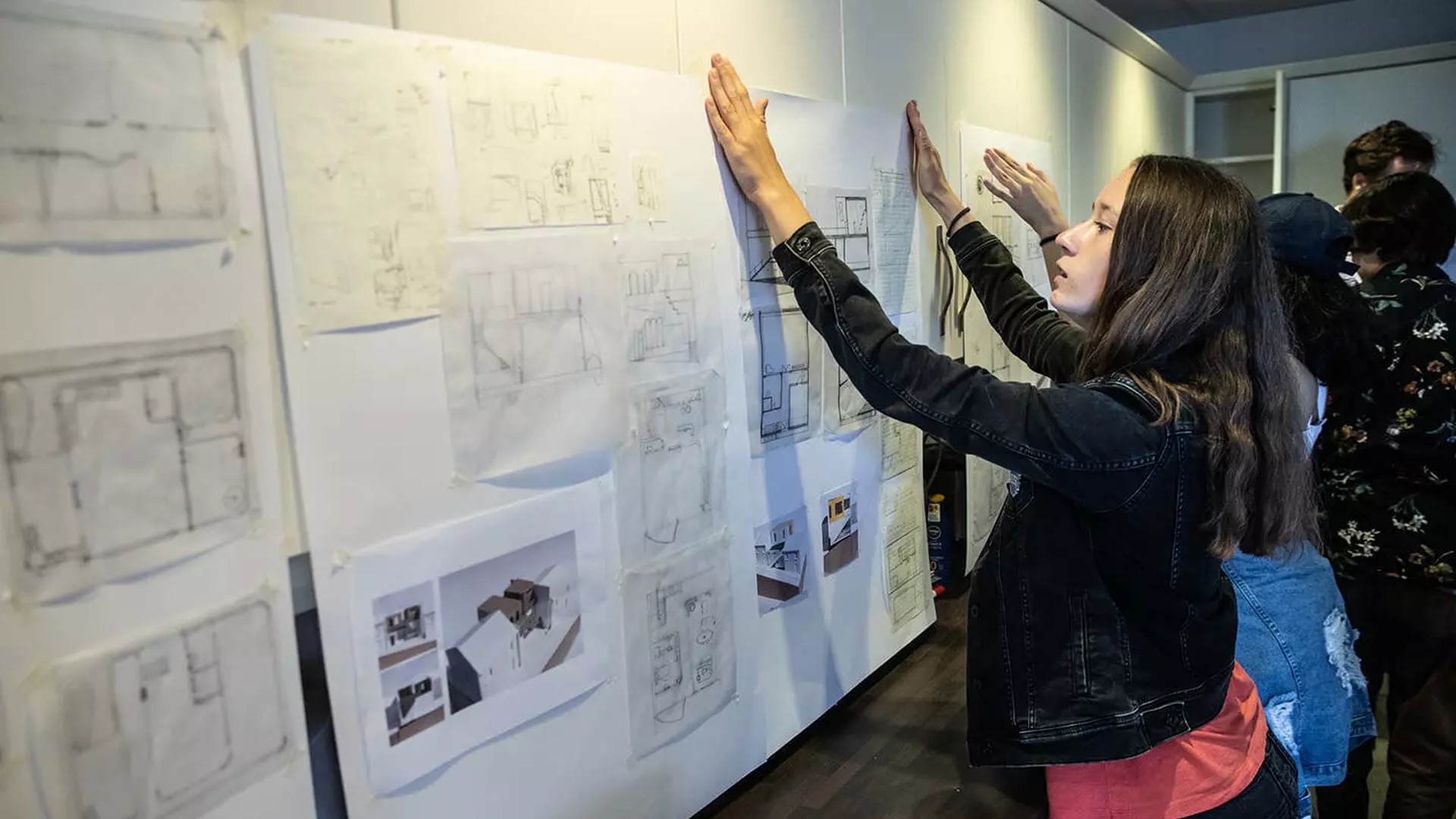
Immerse Education's Academic Insights pathway in Architecture is a residential academic program designed for high school students interested in architecture, providing a structured introduction to the subject at a university level. Within this program, you will explore core architectural concepts, including spatial design, structural thinking, sustainability, and urban planning through practical design projects, studio sessions, and organized field trips. The course brings together hands-on workshops and theoretical knowledge, enabling you to nurture creativity, visual thinking, and technical design skills, which are the core for further architectural study.
Moreover, the program includes cultural immersion and exposure to the environments of a notable place such as Cambridge, which helps you expand your knowledge of how architecture influences cities and societies. Upon finishing the course, you are awarded a Certificate of Achievement that recognises your academic development and readiness for further study in the field. You can find more details about the application here.
Why it stands out: It offers hands-on design projects and expert feedback, helping you understand how architectural thinking and creative problem-solving operate in professional contexts.
3. Lumiere Research Scholar Program
Location: Remote, you can participate in this program from anywhere in the world!
Cost: Varies depending on program type. Full financial aid available.
Application Deadline: Varies by cohort.
Program Dates: Varies by cohort: summer, fall, winter, or spring. Options range from 12 weeks to 1 year.
Eligibility: You must be currently enrolled in high school and demonstrate a high level of academic achievement.
The Lumiere Research Scholar Program is a rigorous research program tailored for high school students. The program offers extensive 1-on-1 research opportunities for high school students across a broad range of subject areas. The program pairs high school students with Ph.D. mentors to work 1-on-1 on an independent research project. At the end of the 12-week program, you’ll have developed an independent research paper!
You can choose research topics from subjects such as architecture, psychology, physics, economics, data science, computer science, engineering, chemistry, international relations, and more. You can find more details about the application here, and check out students’ reviews of the program here and here.
Why it stands out: You’ll get an early start on university-level study through small seminars, 1:1 tutorials, and an independent project, with residential or commuter options.
4. NOMA PDX Architecture Summer Camp
Location: Portland Community College Cascade Campus, Portland, OR
Cost: Free, including all materials, supplies, and a meal each day
Acceptance rate/cohort size: Limited to 40 students; first come, first served
Dates: Three days in late June, 9 a.m. to 3 p.m. daily
Application Deadline: Registration typically opens each March; 2026 registration is closed
Eligibility: Middle school students in grades 6 to 8 (ages 11 to 14), with a focus on students historically underrepresented in architecture | International eligibility not specified
The Portland chapter of the National Organization of Minority Architects created this camp in 2022 as part of NOMA’s Project Pipeline initiative. Over three days, you move through every stage of the design process, from sketching, diagramming, and site visits to drawing and model making, to create a project that addresses a community issue. Local architects, designers, and community members mentor you throughout.
Day 1 introduces architecture fundamentals and the design challenge, Day 2 focuses on collage making, floor plans, and models, and Day 3 ends with your final presentation to families and community members. You must attend all three days, since each one builds on the last. NOMA PDX is also piloting a bilingual English and Spanish camp in Gresham.
Why it stands out: You design for a real community issue for free, guided by architects who want to make the profession more diverse.
5. Pratt Institute Summer Scholars: Middle School Portfolio Development
Location: Pratt Institute, Brooklyn, NY
Cost: $320; financial aid available
Acceptance rate: Limited; classes fill on a first-come, first-served basis
Application deadline: 2026 registration opened on April 22nd; places go first come, first served
Dates: July 6th to 17th, 2026, Monday to Friday
Eligibility: Students entering grades 7 or 8 in the 2026 to 2027 school year who commit to the whole program | International eligibility not specified
Pratt’s Summer Scholars program runs two weeks of art and design studio classes taught by faculty from the Schools of Art, Design, and Architecture. The Middle School Portfolio Development course builds your observational drawing skills, which matter if you’re considering portfolio audition high schools. You draw from still life objects and models using pencil, oil pastel, charcoal, and other materials.
Projects focus on depicting three-dimensional forms in space as they appear under natural or artificial light. Once you reach high school, Pratt also offers a Summer Scholars architecture class that covers physical and digital model-making.
Why it stands out: You build strong drawing foundations with Pratt faculty for a low cost, with a clear next step into architecture.




6. Center for Architecture: Treehouses

Location: Center for Architecture, 536 LaGuardia Place, New York, NY
Cost: Not specified on the program page; see the Summer Programs FAQs
Acceptance rate/cohort size: 12 to 16 students per class, with 1 teacher and 1 assistant
Application Deadline: 2027 program information will be posted in January
Dates: July 13th to 17th, 2026 (2027 dates not yet posted)
Eligibility: Students entering grades 6 to 8 | International eligibility not specified
Treehouses starts with the structure of trees before you craft a scale model inspired by your idea of the perfect tree. You then design and build a fantasy treehouse within its branches, testing different ways to support the structure. Ladders, swings, furniture, and other details are all made to scale.
Like all of the Center’s summer programs, the class combines art and building activities, design challenges, investigations of architectural examples, and field trips. You work independently on your own project within a group setting.
Why it stands out: You learn how structure and scale work by designing something imaginative from the ground up.
7. NC State Design Camp: Middle School Day Camps
Location: NC State College of Design, Raleigh, NC
Cost: $775, including meals, instruction, supplies, activities, and insurance; financial assistance scholarships available
Acceptance rate/cohort size: 40 seats per program; 5:1 student-staff ratio
Application Deadline: 2027 registration opens at the end of January 2027; in 2026, registrations after April 10th carried a $50 late fee
Dates: July 13th to 17th or July 27th to 31st, 2026 (2027 dates not yet posted)
Eligibility: Rising 6th, 7th, and 8th graders | International eligibility not specified
NC State’s Middle School Day Camps are week-long programs that introduce you to design thinking through 2D and 3D projects. You explore the range of design disciplines offered at the College of Design, with studio activities that build your creative problem-solving skills and visual literacy.
Design Camp has run for more than 45 years, and summer 2025 marked its 45th anniversary. The camp suits you if you want to understand how design shapes everyday life before choosing a specialty like architecture.
Why it stands out: You sample several design fields in small groups, with one staff member for every five students.
8. NC State Design Fundamentals Day Camp
Location: NC State College of Design, Raleigh, NC
Cost: $850, including meals, instruction, supplies, activities, and insurance; financial assistance scholarships available
Acceptance rate/cohort size: 60 seats; 5:1 student-staff ratio
Application Deadline: 2027 registration opens at the end of January 2027; in 2026, registrations after April 10th carried a $50 late fee
Dates: July 6th to 10th, 2026 (2027 dates not yet posted)
Eligibility: Rising 8th and 9th graders | International eligibility not specified
Design Fundamentals bridges NC State’s middle school camps and its high school programs. During the week, you complete three studio-based projects across digital, 2D, and 3D design. Activities outside the studio strengthen your creative and critical thinking.
You also talk with current College of Design students about college-level design pathways. That gives you an early look at how a design degree, including architecture, might fit your future.
Why it stands out: You finish three different studio projects while learning how design study leads to future careers.
9. Center for Architecture: Public Art and Architecture
Location: Center for Architecture, 536 LaGuardia Place, New York, NY
Cost: Not specified on the program page; see the Summer Programs FAQs
Acceptance rate/cohort size: 12 to 16 students per class, with 1 teacher and 1 assistant
Application Deadline: 2027 program information will be posted in January
Dates: July 6th to 10th, 2026 (2027 dates not yet posted)
Eligibility: Students entering grades 6 to 8 | International eligibility not specified
This program looks at how sculptures, murals, and other installations make public spaces more interactive and lively. You visit examples across New York City and learn about others around the world before exploring your own ideas through 2D and 3D design activities.
For your final project, you design and create a model of your own public art installation. It’s a good fit if you’re drawn to both art and architecture and want to see where they meet.
Why it stands out: You see how art and architecture work together to shape the public places people share.
10. Center for Architecture: Digital Design: Transit Architecture
Location: Center for Architecture, 536 LaGuardia Place, New York, NY
Cost: Not specified on the program page; see the Summer Programs FAQs
Acceptance rate/cohort size: 12 to 16 students per class, with 1 teacher and 1 assistant
Application Deadline: 2027 program information will be posted in January
Dates: July 6th to 10th, 2026 (2027 dates not yet posted)
Eligibility: Students entering grades 6 to 8; you need your own laptop | International eligibility not specified
Transit Architecture explores the history and design of the New York City subway and compares it with notable systems around the world. Inspired by the planned Interborough Express, which will connect 17 subway lines between Brooklyn and Queens, you use 3D design software to create a transit hub.
You also look at the social, environmental, and engineering challenges the subway faces today. You’ll need a Windows or Mac laptop and charger, and you’ll receive a link to a free SketchUp trial before class. Chromebook users can use the web version, but tablets and phones won’t work.
Why it stands out: You use digital design to tackle a real infrastructure question about how a city moves.
11. University of Arkansas Fay Jones School: Bentonville Design Camp
Location: Crystal Bridges Museum of American Art, Bentonville, AR
Cost: Set by Crystal Bridges, which handles registration and payment
Acceptance rate/cohort size: Not specified
Application deadline: 2026 registration opened in late February (2027 dates not yet posted)
Dates: June 8th to 12th, 2026, 1:30 to 4:30 p.m. daily
Eligibility: Ages 11 to 13 (Camp 2), with a separate camp for ages 8 to 10 | International eligibility not specified
The Bentonville Design Camp is a week-long collaboration between the University of Arkansas Fay Jones School of Architecture and Design and Crystal Bridges Museum of American Art. Led by Fay Jones School faculty and students, the camp has you solve design problems by building physical models inspired by the museum’s own architecture.
Along the way, you build STEAM skills and learn to draw inspiration from your surroundings. It’s one of the few Fay Jones School camps open to students under 14.
Why it stands out: You learn model-making from university architecture faculty in a museum known for its striking design.
Join the Immerse Education 2027 Essay Competition
Follow the instructions to write and submit your best essay for a chance to be awarded a 100% scholarship.
12. Harvard University: The Architectural Imagination

Location: Online (edX)
Cost: Free to audit; $249 for a verified certificate
Acceptance rate/cohort size: Open enrollment
Application deadline: Available anytime
Dates: Self-paced; about 10 weeks at 3 to 5 hours per week
Eligibility: Open to anyone; introductory level
The Architectural Imagination comes from the Harvard Graduate School of Design and teaches architecture as both cultural expression and technical achievement. You study buildings such as the Crystal Palace, Le Corbusier’s designs, and the Pompidou Center, with exercises that teach you to produce your own architectural drawings and models.
The course moves through three parts: form and history, technology, and representation and context. You also learn how to read and analyze different forms of architectural representation, a skill architects rely on every day.
Why it stands out: You can learn from Harvard architecture professors for free, at your own pace, from anywhere.
13. Center for Architecture: Digital Design: Skyscrapers
Location: Center for Architecture, 536 LaGuardia Place, New York, NY, with trips to New York City skyscrapers
Cost: Not specified on the program page; see the Summer Programs FAQs
Acceptance rate/cohort size: 12 to 16 students per class, with 1 teacher and 1 assistant
Application Deadline: 2027 program information will be posted in January
Dates: July 20th to 24th, 2026 (2027 dates not yet posted)
Eligibility: Students entering grades 6 to 8; you need your own laptop | International eligibility not specified
Digital Design: Skyscrapers explores the structures and systems that make supertall buildings possible. Through discussions, design challenges, and trips to New York City skyscrapers, you build up ideas before designing your own skyscraper in 3D software.
As with the Center’s other digital programs, you’ll need a compatible laptop and charger, and a free SketchUp trial link arrives before the first class. If you’d rather work with your hands, the Center also runs a non-digital Skyscrapers class where you design with drawings and models.
Why it stands out: You study how real skyscrapers stand up, then design your own using the same software many architects use.
14. MoMA’s Massive Open Online Courses
Location: Online (Coursera)
Cost: Optional paid certificate of completion; no academic credit
Acceptance rate/cohort size: Open enrollment
Application deadline: Courses are available on an ongoing basis
Dates: Self-paced
Eligibility: Open to anyone; no prior knowledge or experience required
MoMA offers online courses on Coursera where you hear directly from artists and designers and look closely at works in the museum’s collection. For architecture, Reimagining Blackness and Architecture explores how race and racism shape the built environment and how Black architects and artists have reimagined it.
The beginner-level course has six modules and is taught by MoMA’s Sean Anderson and Arlette Hernandez. You can move at your own pace and add a certificate if you want one for your records.
Why it stands out: You study architecture alongside the social questions that shape who buildings and cities are designed for.
15. MIT OpenCourseWare: Introduction to Architecture & Environmental Design
Location: Online
Cost: Free
Acceptance rate/cohort size: Open access
Application deadline: Available anytime
Dates: Self-paced
Eligibility: Open to anyone; materials come from an undergraduate course
This MIT OpenCourseWare course, taught in spring 2014, introduces the design of the environment at every scale, from objects to buildings to the larger territory. Through lectures and design exercises, you build skills in analysis, spatial representation, and design methods.
The course looks at architecture, urbanism, and landscape in the context of the arts and sciences. You can download the full course, including its three design exercises, and work through it on your own schedule.
Why it stands out: You get free access to real MIT architecture course materials, which makes it a stretch challenge for ambitious 13-year-olds.
Frequently asked questions: Architecture Summer Schools for 13 Year Olds
Are there free architecture summer camps for 13 year olds?
Yes, a few strong options are free. NOMA PDX’s Architecture Summer Camp in Portland costs nothing and includes materials and a meal each day, and Chicago Architecture Center’s Girls Build! programs are free for girls in grades 6 to 8. Online, MIT OpenCourseWare’s architecture course is free, and you can audit Harvard’s The Architectural Imagination at no cost. Free camps fill quickly, so watch for registration dates.
What do you do at an architecture summer camp?
You usually sketch, build models, and work toward a final project you present at the end. At the Center for Architecture, you might design a treehouse or create a transit hub in SketchUp, while NOMA PDX has you tackle a community design challenge with local architects. NC State’s camps cover 2D, 3D, and digital projects across several design fields. Many camps also include field trips to real buildings.
Can 13 year olds take architecture courses online?
Yes, and several are open to anyone. Harvard’s The Architectural Imagination is introductory and self-paced, taking about 10 weeks at 3 to 5 hours a week, and MIT OpenCourseWare shares a full undergraduate architecture course for free. MoMA’s Reimagining Blackness and Architecture has six beginner-level modules on Coursera. For more options, browse these online architecture programs for high school students.
Are there architecture summer programs in New York for middle schoolers?
Yes, New York has some of the most varied options for your age. The Center for Architecture runs week-long classes for students entering grades 6 to 8, with 12 to 16 students per class and themes like treehouses, transit, and skyscrapers. Pratt’s Middle School Portfolio Development course costs $320 for two weeks of drawing with Pratt faculty. You can find more in these architecture summer programs in NYC.
Can international students attend architecture summer schools at 13?
It depends on the program, since most US camps on this list are local day camps that expect you to commute daily. Online courses from Harvard, MIT, and MoMA are open to anyone, wherever you live. Immerse Education’s Academic Insights pathway welcomes international students, and its Architecture course in Cambridge accepts students from age 13. You can also compare these architecture summer schools in the UK.
When should you sign up for architecture summer camps?
Start watching in winter, since registration often opens months before summer. NC State opens Design Camp 2027 registration at the end of January 2027, and the Center for Architecture posts its 2027 programs in January. NOMA PDX usually opens registration each March, and Pratt’s 2026 registration opened on April 22nd. Many of these camps sell out, so sign up as soon as registration opens.
Build your first steps toward architecture
Sketching a treehouse, modeling a skyscraper, or planning a neighborhood with real architects shows you how design ideas become places people use.
The right architecture summer schools for 13 year olds match your location and budget, and many of the best options are free or low cost.
Popular camps sell out quickly, so note when registration opens each winter or spring and keep an online course ready as a backup.
To learn more about what architects do and how careers in design take shape, browse our Career Exploration blogs for guides and next steps.





Unlock Inspiring Opportunities with the Immerse Education Newsletter
Join our newsletter to stay ahead with exclusive updates, exciting programme highlights, and expert insights from the world of immersive education.
Learn how Immerse can transform your life
An in-depth overview of our university and career preparation programmes
Get a glimpse into the life of an Immerse participant
Find the right programme for you with sample timetables, location showcases, and more