15 Medicine Summer Schools for Year 11 Students

TL;DR
You’ll find 15 medicine summer schools here, mostly in the UK, from two-day hospital taster courses to week-long clinical skills programmes and three-week university residentials. The key thing to check is age, since King’s and BioGrad need you to be 16 by the start date, while Southampton and Premed Projects accept younger students. Costs range from free bursary places at Southampton to £6,950 at St Andrews. Immerse Education’s Academic Insights pathway in Medicine welcomes students from age 13 in Cambridge and Oxford.
If you’re in Year 11 and thinking about medicine, a summer school lets you test that interest long before you write a personal statement. Depending on the programme, you might practise suturing on training models, record an ECG, or attend lectures at a medical school.
Year 11 is when you choose your A-levels, so it’s a useful moment to check that medicine suits you. When you eventually apply, you’ll need to show you understand what a medical career involves, and a summer school gives you experiences to reflect on.
What are medicine summer schools for Year 11 students?
Medicine summer schools for Year 11 students are short programmes, usually run by universities, hospitals, or specialist providers, that introduce you to how medicine is studied and practised. Most last from two days to three weeks and combine lectures, clinical skills practice, and lab work.
Age rules matter more than you might expect. Several programmes need you to be 16 by the start date, which can rule you out if you’re still 15 in July. Before you apply, check the age limit, whether accommodation is included, and how quickly places fill. Some popular courses sell out months in advance.
To help you find the right fit, we’ve put together a list of 15 medicine summer schools for Year 11 students!
15 Medicine Summer Schools for Year 11 Students
1. King’s College London Pre-University Summer School: Medical Science
Location: King’s College London, London, UK
Cost: £3,295 per one-week course for 2027 (£3,195 if you apply by 29th January 2027); £4,095 with accommodation; £65 application fee
Acceptance rate/cohort size: Not specified
Dates: One-week sessions in July 2027: 5 to 9, 12 to 16, and 19 to 23rd July
Application Deadline: Applications open in early November 2026
Eligibility: Students aged 16 or 17 before the course starts, in their final three years of high school, with English at B2 level | Open to international students
King’s Medical Science course explores how human anatomy and physiology relate to common medical conditions. You study the cardiovascular, endocrine, and musculoskeletal systems, with a focus on how diseases are diagnosed and treated. Teaching mixes lectures, seminars, workshops, and experiential activities, and introduces research on monitoring and promoting health.
You carry out independent research on a set topic and work in a group to produce a presentation. The course is taught by King’s academics including James Clark, Professor of Cardiovascular and Physiology Education. Completing the assignments earns you a King’s Certificate of Completion.
Why it stands out: You study body systems through the lens of clinical diagnosis, taught by a leading London medical university.
2. Immerse Education's Medicine Summer School

Location: Cambridge, London, Oxford, Singapore, Sydney, and Toronto
Cost: Varies; summer school scholarship available through our bursary programme
Acceptance rate/cohort size: Selective; an average of 7 participants per class
Program Dates: 2 weeks during the summer
Application Deadline: Multiple cohorts with rolling admissions
Eligibility: Students worldwide aged 13-18 currently enrolled in middle or high school; open to international students
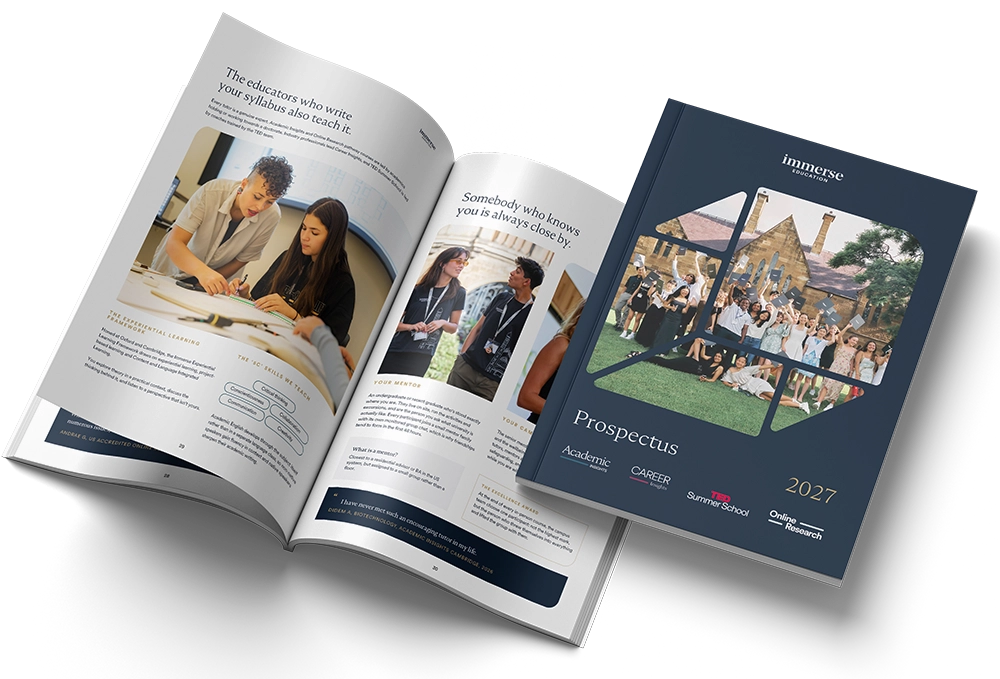
Immerse Education's Academic Insights pathway in Medicine is a two-week, in-person programme that introduces you to university-level medical science through small-group teaching and case-based learning. You explore core topics such as anatomy, physiology, and clinical reasoning while learning how doctors apply scientific knowledge to diagnose and treat patients.
Classes emphasise discussion, critical thinking, and clear communication, mirroring the structure of undergraduate medical education. By the end of the programme, you will complete an academic project, receive detailed feedback, and gain a clearer understanding of what studying medicine at a top university involves.
Why it stands out: It connects you with medical academics and clinicians, helping you understand how medicine is studied and practiced at leading universities.
3. Lumiere Research Scholar Program
Location: Remote, you can participate in this program from anywhere in the world!
Cost: Varies depending on program type. Full financial aid available.
Application Deadline: Varies by cohort.
Program Dates: Varies by cohort: summer, fall, winter, or spring. Options range from 12 weeks to 1 year.
Eligibility: You must be currently enrolled in high school and demonstrate a high level of academic achievement.
The Lumiere Research Scholar Program is a rigorous research program tailored for high school students. The program offers extensive 1-on-1 research opportunities for high school students across a broad range of subject areas. The program pairs high school students with Ph.D. mentors to work 1-on-1 on an independent research project. At the end of the 12-week program, you’ll have developed an independent research paper!
You can choose research topics from subjects such as psychology, physics, economics, data science, computer science, engineering, chemistry, international relations, and more. You can find more details about the application here, and check out students’ reviews of the program here and here.
Why it stands out: You’ll get an early start on university-level study through small seminars, 1:1 tutorials, and an independent project, with residential or commuter options.
4. University of Southampton: Experience Medicine with LifeLab
Location: LifeLab and University Hospital Southampton, Southampton, UK
Cost: £400 standard; £200 subsidised place; free bursary place with up to £100 travel support for eligible students
Acceptance rate/cohort size: Not specified
Dates: Summer school on 22 and 23rd July 2027; an autumn school runs in October for Years 10 and 11
Application Deadline: Register your interest to hear when 2027 applications open; standard places are first come, first served
Eligibility: Students in Years 9, 10, and 11; bursary and subsidised places use widening participation criteria | International eligibility not specified
Experience Medicine is a two-day course that shows you what it takes to train and work as a doctor. Working with medical student ambassadors, you practise venesection, cannulation, suturing, blood pressure measurement, and urine testing, and use your anatomy knowledge to work through patient cases. You also witness a trauma scenario and hear from emergency service professionals.
You tour the Acute Medical Unit and clinical research facilities at University Hospital Southampton. A talk from the Faculty of Medicine Admissions tutor and sessions on interview technique help you prepare for applying to medical school. Food is provided, but you’ll need to arrange your own transport.
Why it stands out: You get hospital-based clinical skills practice aimed directly at Year 9 to 11 students, with free places for those who qualify.
5. BioGrad: Clinical Skills and Medical Research
Location: BioGrad Liverpool and the University of Chester, UK
Cost: £1,200; optional accommodation at the University of Chester for £250 per week
Acceptance rate/cohort size: 10:1 student-to-tutor ratio
Dates: Five-day courses during school holidays, including July and August 2027 at the University of Chester
Application Deadline: Rolling; current 2026 to 2027 dates are fully booked, with a waiting list
Eligibility: Ages 16 to 19 at the start of the course; A-level Biology or equivalent recommended | International eligibility not specified
BioGrad’s Clinical Skills and Medical Research course combines two days of clinical skills with two days in a research laboratory. You learn to take a patient history, perform basic life support, take blood pressure readings, record ECGs, and use spirometry and chest X-rays to diagnose lung conditions. In the lab, you carry out blood typing, Gram staining, and an ELISA to diagnose an infectious disease.
On the final day, you present one of your experiments in a formal session and attend a careers workshop with BioGrad scientists. You can also request a personalised reference from a senior doctor or scientist to support your UCAS application.
Why it stands out: You see both sides of medicine, from examining patients to running the lab tests that support diagnosis.



6. BioGrad: Pre-Hospital Emergency Medicine
Location: BioGrad Liverpool and the University of Chester, UK
Cost: £1,200; optional accommodation at the University of Chester for £250 per week
Acceptance rate/cohort size: 10:1 student-to-tutor ratio; places are limited
Dates: Five-day courses, including 15 to 19th February 2027 in Liverpool and several weeks from July to August 2027 in Chester
Application Deadline: Rolling until each course fills
Eligibility: Ages 16 to 19 at the start of the course; A-level Biology or equivalent recommended | International eligibility not specified
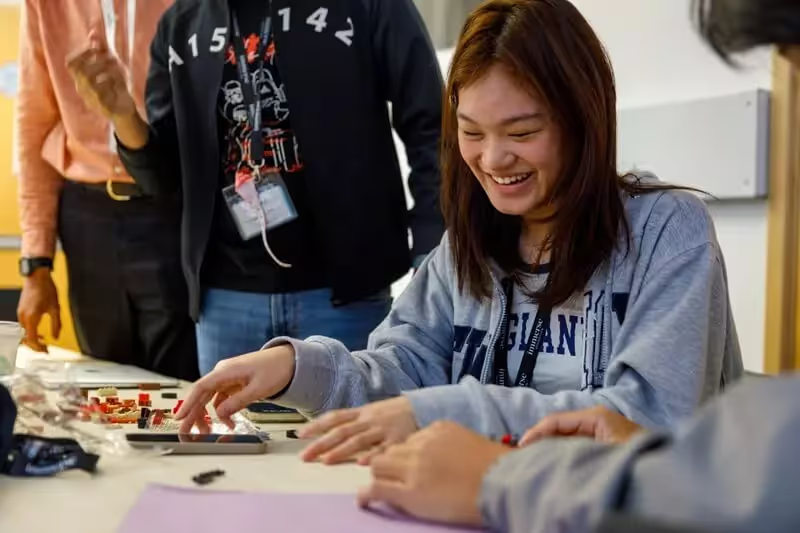
Pre-Hospital Emergency Medicine introduces you to the skills used when patients need urgent care. Across five days, you practise basic and advanced life support, venesection with ultrasound guidance, IV and intraosseous cannulation, suturing, and plaster casting for fractures. You also learn the ABCDE approach for assessing critically ill patients.
Sessions are led by doctors and clinicians, and the week ends with ABCDE assessment presentations. You receive your own scrubs and stethoscope to keep, and the course can count as your Gold DofE Residential.
Why it stands out: It focuses on fast, structured decision-making in emergencies, a side of medicine most short courses barely touch.
7. University of Edinburgh Pre-University: Life Sciences

Location: University of Edinburgh, Holyrood Campus, Edinburgh, UK
Cost: £5,250
Acceptance rate/cohort size: Not specified
Dates: 29th June to 10th July 2026 (2027 dates not yet posted)
Application Deadline: 19th May 2026 (2027 deadline not yet posted)
Eligibility: Students aged 16 to 18 in their penultimate or final year of school, with general science, biology, or chemistry to GCSE level or equivalent, and English at IELTS 6.5 | Open to international students
Edinburgh’s two-week course is built for students considering a life sciences degree, which makes it a useful option if you’re weighing medicine against related subjects. You explore Biology, Chemistry, Genetics, and Immunology through strands in Biochemistry, Molecular and Cellular Biology, and Biodiversity and One Health.
Classes combine mini-lectures, tutorials, workshops, and laboratory practicals. You design scientific investigations, analyse data, visit science organisations, and get advice from Edinburgh’s admissions team on applying to UK universities.
Why it stands out: Its One Health strand connects human health with animals, microorganisms, and the environment.
8. BioGrad: General Internal Medicine
Location: University of Chester, Chester, UK
Cost: £1,200; optional accommodation for £250 per week
Acceptance rate/cohort size: 10:1 student-to-tutor ratio
Dates: Five-day courses in July and August 2027
Application Deadline: Rolling; current 2027 dates are fully booked, with a waiting list
Eligibility: Ages 16 to 19 at the start of the course; A-level Biology or equivalent recommended | International eligibility not specified
General Internal Medicine introduces the skills doctors use to assess adult patients across major organ systems. You take medical histories, listen to heart sounds, record your own ECG, and carry out OSCE-style cardiovascular, respiratory, and abdominal examinations.
Later sessions cover chest X-ray interpretation, abdominal ultrasound, the National Early Warning Score, cancer care, and ultrasound-guided biopsies. Each day builds on the last, so you see how history, examination, and imaging come together in diagnosis.
Why it stands out: You follow the diagnostic reasoning of internal medicine from patient history to imaging.
9. King’s College London Pre-University Summer School: Neuroscience
Location: King’s College London, London, UK
Cost: £3,295 per one-week course for 2027 (£3,195 if you apply by 29th January 2027); £4,095 with accommodation; £65 application fee
Acceptance rate/cohort size: Not specified
Dates: One-week sessions on 12 to 16th July and 26 to 30th July 2027
Application Deadline: Applications open in early November 2026
Eligibility: Students aged 16 or 17 before the course starts, in their final three years of high school, with English at B2 level | Open to international students
If your interest in medicine leans toward the brain, King’s also runs a one-week Neuroscience course as part of its Pre-University Summer School. Classes mix lectures and seminars with interactive learning, and assignments are designed to reflect university-level assessment.
You can combine Neuroscience with Medical Science across two or three weeks for a longer stay. Residential students live in single en-suite rooms at Stamford Street Apartments in central London, with 24-hour support.
Why it stands out: You can build a two-week medicine-focused summer at King’s by pairing it with Medical Science.
10. Rosetta Institute: Molecular Medicine Workshops
Location: University College London, UK, plus UC Berkeley, UC San Diego, and Columbia University in the US
Cost: Listed on Rosetta’s Apply/Finances page
Acceptance rate/cohort size: Selective; an application and letter of recommendation are required
Dates: The 2026 UCL session ran 3 to 15th August; 2027 summer workshops will be scheduled soon
Application Deadline: Not specified
Eligibility: Students aged 14 to 18 for university-based workshops | Open to international students
Rosetta’s workshops are taught by PhD-level instructors and explore medicine at the molecular level. You learn how normal molecular and cellular processes work, then how they’re disrupted during disease, with a strong emphasis on experimental design, drug development, and personalised medicine.
At the end, you create an original research project on a gene or molecular process of your choice. The 2026 UCL session offered AI-Enhanced Bioinformatics and Developmental Biology, with residential students living in undergraduate dorms alongside teaching assistants.
Why it stands out: You design your own research project on the molecular causes of disease.
11. BioGrad: Laboratory Skills

Location: BioGrad Liverpool and the University of Chester, UK
Cost: £1,200; optional accommodation at the University of Chester for £250 per week
Acceptance rate/cohort size: 10:1 student-to-tutor ratio; places are limited
Dates: Five-day courses, including several weeks from July to August 2027 at the University of Chester
Application Deadline: Rolling until each course fills
Eligibility: Ages 16 to 19 at the start of the course; A-level Biology or equivalent recommended | International eligibility not specified
BioGrad’s Laboratory Skills course suits you if you want to understand how diseases are investigated in the lab. You perform blood typing, culture bacteria, test antibiotic sensitivity, run an indirect ELISA, and prepare PCR reactions and gel electrophoresis.
On the final day, you search and analyse scientific literature in a group, then present your findings. These are the same diagnostic and research techniques used in hospital labs and biomedical research.
Why it stands out: It’s a strong pick if you’re deciding between medicine and biomedical science.
Join the Immerse Education 2027 Essay Competition
Follow the instructions to write and submit your best essay for a chance to be awarded a 100% scholarship.
12. University of St Andrews: Summer Academic Experience, Medicine
Location: University of St Andrews, St Andrews, Scotland, UK
Cost: £6,950 all-inclusive (2027), covering tuition, accommodation, meals, airport transfers, and trips
Acceptance rate/cohort size: Not specified
Dates: 24th July to 14th August 2027
Application Deadline: Applications for 2027 are open now
Eligibility: Students aged 16 to 18 on arrival with strong GCSE grades, A grades, or a minimum 3.2 GPA, and English at B2 level | Open to international students
St Andrews’ three-week Medicine course has you attend lectures in the School of Medicine, join seminars, and carry out experiments and data collection in its labs. Topics have included clinically applied anatomy and physiology, clinical medicine and diagnosis, and experimental design. You also practise medical communication with qualified GPs and simulated patients.
You complete a poster project on a medical topic and visit the Royal College of Surgeons in Edinburgh. The course introduces the UCAT and gives you practice for Multiple Mini Interviews, the format many UK medical schools use.
Why it stands out: It covers studying medicine and applying for it, from simulated patients to UCAT and MMI preparation.
13. Richer Education: Pre-Medicine Summer Camp at Imperial College London
Location: Imperial College London, South Kensington, London, UK
Cost: £995 per week; 10% discounts for siblings and multiple courses
Acceptance rate/cohort size: 5 to 15 students per group, with a 1:15 tutor ratio
Dates: Weekly camps from 28th June to 13th August 2027, 9:15 a.m. to 3:15 p.m.
Application Deadline: Book online; places fill on a first-come, first-served basis
Eligibility: Ages 13 to 17; all levels welcome | International eligibility not specified
Richer Education’s Pre-Medicine Summer Camp is a day camp held at Imperial College London. Topics range from circulation, breathing, genetics and cancer, and microbiology to emergency medicine, mental health, surgical skills, and neuroscience. Students are grouped by age and level of knowledge.
You’re encouraged to ask doctors and medical students what studying and practising medicine is really like. Activities focus on problem-solving, teamwork, and resilience, teaching you to try new approaches when a first solution doesn’t work. You’ll need to bring a packed lunch each day.
Why it stands out: It’s one of the few London options open to Year 11 students who aren’t yet 16.
14. NHS Lothian: Step Into Healthcare
Location: Edinburgh and the Lothians, UK; Step Into Medicine runs at the Chancellor’s Building, Little France
Cost: Not specified
Acceptance rate/cohort size: Limited places
Dates: Step Into Medicine runs for three days each June, with an early 2027 programme being planned
Application Deadline: Programmes open at different times; join the mailing list for updates
Eligibility: Step Into Medicine is for current S5 and S6 students; all programmes require you to live or study in Edinburgh and the Lothians | Not open to students outside the region
Step Into Healthcare is NHS Lothian’s work experience pathway, with programmes in medicine, dentistry, nursing, midwifery, allied health professions, and clinical engineering. Step Into Medicine helps you explore a career as a doctor and builds the clinical communication and interpersonal skills you’ll need for medical school applications and interviews.
Insight Days throughout the year offer shorter, focused sessions, and some are open from S4. If you’re in Year 11 now, you can plan ahead for Step Into Medicine once you reach S5.
Why it stands out: You see how doctors work alongside nurses, scientists, and other NHS professionals.
15. Premed Projects: London Hospital Work Experience (2 Weeks)
Location: Central London, UK
Cost: £3,535, including accommodation; optional meal plan for £455
Acceptance rate/cohort size: 60 places per start date
Dates: Two-week placements with start dates in July and August each year
Application Deadline: Rolling; places are first come, first served
Eligibility: Students aged 14 or older with an interest in medicine (the average age is 16) | Open to UK and international students
Premed Projects’ two-week course takes you through hospitals, a hospice, and medical school sessions across London. A sample timetable includes a GP simulation, neurological exams with King’s medical students, basic life support training, a simulated ward round, radiology, anatomy dissection, and an on-call day.
The final day focuses on writing a strong personal statement and preparing for medical school interviews. You receive a work experience certificate and can ask for a detailed reference to use in your applications.
Why it stands out: You get two weeks of varied clinical exposure in London, with accommodation and supervision included.
Frequently asked questions: Medicine Summer Schools for Year 11 Students
Can you do a medicine summer school in Year 11?
Yes, but age limits matter, since many courses need you to be 16 by the start date. Southampton’s Experience Medicine accepts Years 9 to 11, Premed Projects takes students from 14, and Richer Education’s camp is for ages 13 to 17. If you’re under 16, Immerse Education’s Academic Insights pathway welcomes students from age 13 in Cambridge and Oxford. You can also try these online medicine courses for high school students.
Are there free or low-cost medicine summer schools?
A few options keep costs down. Southampton’s Experience Medicine offers free bursary places with up to £100 in travel support, plus £200 subsidised places, for students who meet widening participation criteria. Richer Education’s weekly camp costs £995, and BioGrad’s five-day courses cost £1,200. Pre-university courses at universities cost more, from £3,295 a week at King’s to £6,950 for three weeks at St Andrews.
How do you get medical work experience in Year 11?
Short hospital-based courses are one of the easiest routes at your age. Premed Projects accepts students from 14 for hospital work experience in London, and Southampton’s course includes a tour of University Hospital Southampton’s Acute Medical Unit. If you live in Edinburgh or the Lothians, you can plan ahead for NHS Lothian’s Step Into Medicine in S5. You can find more options in these medical shadowing opportunities for high school students.
Do medicine summer schools help with UCAT and interviews?
Some include direct admissions preparation. St Andrews introduces the UCAT and gives you practice for Multiple Mini Interviews, while Southampton covers interview techniques and includes a talk from its medicine admissions tutor. Premed Projects ends with a day on personal statements and interviews, and BioGrad offers a personalised reference. In Year 11, these sessions show you what’s ahead rather than prepare you for an imminent application.
Can international students attend medicine summer schools in the UK?
Yes, several programmes welcome international students. King’s and St Andrews accept applicants with B2-level English, and Edinburgh asks for an IELTS score of 6.5. Premed Projects regularly hosts both UK and international students, and Rosetta’s UCL workshop draws students from around the world. NHS Lothian’s programmes, by contrast, are only for students living or studying in Edinburgh and the Lothians.
Are there medicine summer schools in London for Year 11 students?
Yes, London has several. King’s runs one-week Medical Science and Neuroscience courses for students aged 16 or 17, Richer Education holds its pre-medicine camp at Imperial College London for ages 13 to 17, and Premed Projects runs two-week hospital placements from age 14. Rosetta also runs workshops at University College London. For more London options, browse these medicine summer programs in London.
Get a head start on studying medicine
Practising suturing, taking an ECG, or shadowing a ward round shows you what studying medicine involves long before you write your personal statement.
When comparing medicine summer schools for Year 11 students, check the minimum age first, since several popular courses only accept students who are already 16.
Book early and look into bursaries, since clinical skills courses and hospital placements often fill months before the summer holidays even begin.
For more help choosing A-levels, building experience, and planning your medicine application, explore our University Preparation blogs for step-by-step guidance.





Unlock Inspiring Opportunities with the Immerse Education Newsletter
Join our newsletter to stay ahead with exclusive updates, exciting programme highlights, and expert insights from the world of immersive education.
Learn how Immerse can transform your life
An in-depth overview of our university and career preparation programmes
Get a glimpse into the life of an Immerse participant
Find the right programme for you with sample timetables, location showcases, and more