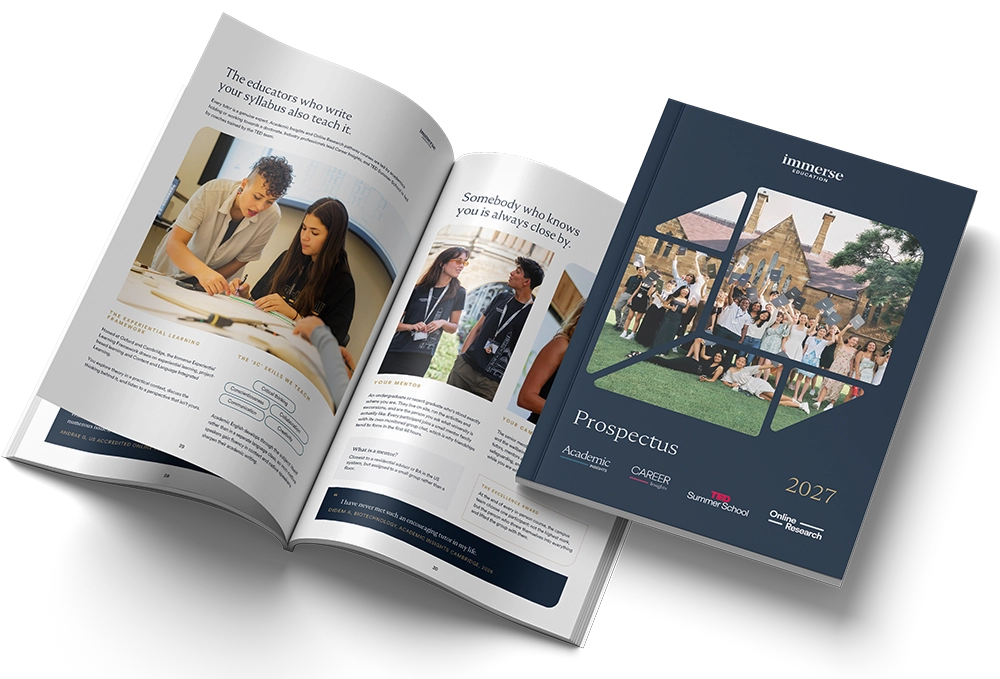
15 Summer Camps in Europe for High School Students in 2026

Summer camps for high school students provide an immersive academic experience that helps students build advanced skills while exploring potential fields of study. Through hands-on projects, interactive workshops, collaborative learning, and mentorship from university faculty and industry experts, participants engage with the core concepts, tools, and methodologies used in their chosen discipline.
Whether conducting research, solving real-world challenges, or working with professional-grade technologies, students gain practical academic experience, strengthen critical thinking and problem-solving abilities, and develop the confidence needed to thrive in higher education. Along the way, they also experience university life firsthand, from learning in world-class facilities to collaborating with like-minded peers in a dynamic campus environment.
Summer programs in 2026 can act as a foundation for your college journey, giving you a taste of what university life is like at a top institution, in person.
Why Europe?
Europe offers an exceptional setting for high school summer programs, combining centuries of academic excellence with world-leading innovation. Home to some of the world’s most prestigious universities, pioneering research institutions, and globally recognized industries, Europe provides students with unparalleled exposure to cutting-edge ideas and real-world applications across a wide range of disciplines.
Beyond the classroom, Europe’s rich cultural heritage, diverse perspectives, and interconnected cities create a uniquely immersive educational experience. Students gain international exposure by engaging with peers from around the world, exploring historic landmarks and cultural institutions, and experiencing different ways of thinking and learning.
To help you with your search, below are 15 summer camps in Europe for high school students in 2026.
For related options, consider the online research program.
Key Takeaways
- Free programs include Scuola Normale Superiore’s Residential Courses in Italy, Oxford’s UNIQ Summer Programme, and Imperial’s Year 9 Girls Engineering and Year 10 Insights Summer Schools in the UK.
- Several UK-based programs, including Oxford’s UNIQ, Imperial’s Year 9 and Year 10 programs, are restricted to UK state school students and not open to international applicants.
- Program lengths vary from three to four days, as with Trinity College Dublin’s individual STEM camps and Scuola Normale Superiore’s residential courses, to two weeks for programs at Constructor University, Edinburgh, and Warwick.
- Costs range from free options to £5,250 for two-week residential programs at the Universities of Edinburgh and Warwick.
- Subject focus spans STEM, business, and humanities, with Trinity College Dublin offering seven themed camps and the University of Amsterdam covering topics from international relations to sustainability.
- Bocconi’s Summer School and TechCamp at Politecnico di Milano both take place in Milan, Italy, but focus on different areas: interdisciplinary business subjects versus single-discipline STEM courses.
- Immerse Education’s Academic Insights Programme runs across eight global locations, including four in Europe (London, Oxford, Cambridge, and beyond), for students aged 13 to 18 studying in small groups.
- Application deadlines range from January for Oxford’s UNIQ Summer Programme to open enrollment until capacity for programs like Trinity College Dublin’s STEM Camps.
15 Summer Camps in Europe for High School Students in 2026
1. Trinity College Dublin’s Trinity Walton Club - Summer STEM Camps 2026
Location: Dublin, Ireland
Cost/Stipend: €305 per five-day camp; €365 for Collide and IGNITE; limited financial aid is available for select students
Acceptance rate/cohort size: Non-competitive; cohort size not stated
Dates: Frontiers: July 6-10; Launch and Data Detectives: July 13-17; Assemble and Collide: July 20-24; Connect and IGNITE: July 27-31
Application Deadline: Open until all places are filled
Eligibility: Secondary school students for Launch, Data Detectives, Assemble, Collide and Connect; Frontiers restricted to 4th, 5th and 6th year students; IGNITE open to students aged 12 and older; open to international students
In this camp, you join one of seven week-long camps on Trinity College Dublin’s campus, each built around a different area of STEM. Depending on your choice, you build and program Arduino circuits, design and test catapults and motorised buggies, analyse real datasets in Python, or use chromatography and blood-spatter analysis to reconstruct events.
Most camps end with a presentation – a smart-city device showcase, a launch competition, a mock trial, or a short research project. The IGNITE camp runs with Portal, Trinity’s ideas workspace, where teams develop an innovation into a business plan and pitch it. Frontiers, for fourth-, fifth- and sixth-year students, samples artificial intelligence, nanoscience, environmental engineering and data science.
Why it stands out: It offers seven distinct themed camps in one summer, i.e., from forensic investigation to smart-city coding to entrepreneurship, on a university campus, with fully subsidised places reserved for students from Trinity Access Programme–linked schools.
2. Immerse Education’s Pre-University Summer School
Location: Cambridge, London, Oxford
Cost: Varies; summer school scholarship available through our bursary programme
Acceptance rate/cohort size: Selective; an average of 7participants per class
Dates: 2 weeks during the summer
Application Deadline: Multiple summer cohorts; rolling admissions.
Eligibility: Students across the globe aged 13–18 currently enrolled in middle or high school; open to international students
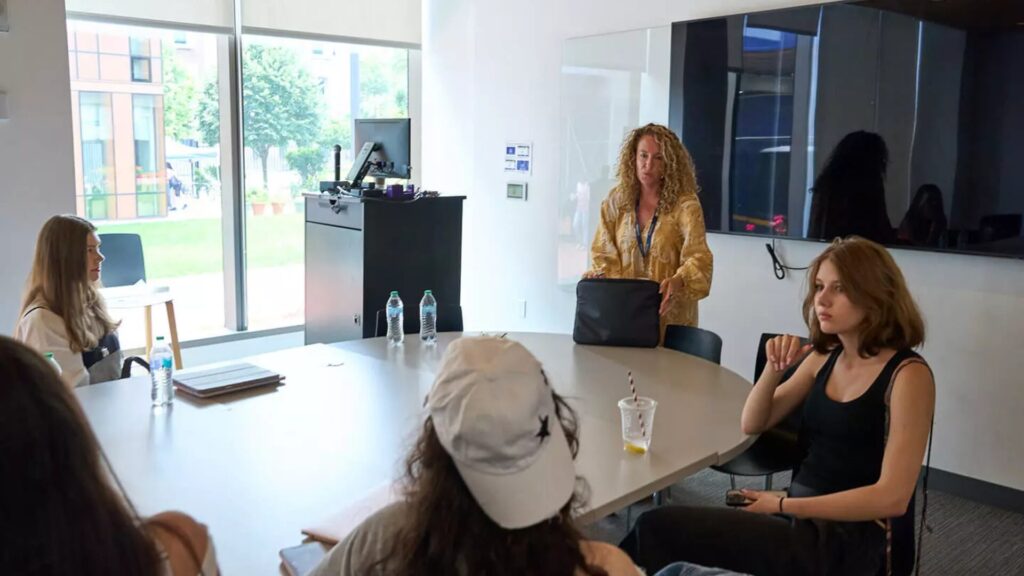
The Academic Insights Program lets high school students experience university life firsthand. You will live on campus, study in small groups of 7–10, and learn from tutors from eminent universities such as Oxford and Cambridge. You can explore a wide range of subjects, spanning over 20 options, including Architecture, AI, Business Management, Computer Science, Economics, Medicine, Philosophy, and more.
The courses are experiential and focus on hands-on learning. You may find yourself conducting dissections in medicine, designing a robotic arm in engineering, participating in a moot court for law, or building creative writing portfolios and business case studies. By the end of the program, you’ll complete a personal project, receive written feedback, and receive a certificate of completion. You can find more details about the application here.
Why it stands out: You’ll get an early start at university life and academics because the program includes an independent project, discussion-based classes, and living at a college campus.
3. Scuola Normale Superiore - Residential Courses 2026
Location: Lecce, San Miniato, Turin, and Rome, Italy
Cost/Stipend: None
Acceptance rate/cohort size: Highly competitive; up to 300 students
Dates: Lecce: June 15-18; San Miniato: June 23–26; Turin: June 30th - July 3rd; Rome: July 7-10
Application Deadline: May 11th
Eligibility: Students enrolled in the fourth or fifth year of an Italian upper secondary school, an Italian school abroad, or an equivalent-level institution based in a foreign country; fourth-year students apply either through school nomination (maximum five per institute) or directly, fifth-year students by direct application only; parental authorisation required for participants under 18; open to international students
In this program, you spend three to four days living and studying alongside students drawn from across Italy and from schools abroad. The timetable mixes lectures by university professors with seminars and laboratories on research topics and current affairs, spanning mathematics, physics and biology as well as classics, history and philosophy.
After each session, you join the discussion, putting questions directly to the speakers. Tutors who are current Normale undergraduates and doctoral researchers stay on site, sharing how they study in structured meetings and over free time. Each course is held in a landmark venue rather than on a campus, including the Accademia Nazionale dei Lincei in Rome and the Conservatorio Santa Chiara in San Miniato.
Why it stands out: It gives selected students free board and lodging inside an institution that ordinarily admits undergraduates only by national competition, with places allocated on merit across every Italian region and to schools abroad.
4. Summer Camp at Constructor University
Location: Constructor University, Bremen, Germany
Cost: €4,600 (includes tuition, accommodation, meals, excursions, transportation, and mentorship; excludes flights, visa, insurance, and personal expenses)
Acceptance rate/cohort size: Selective; ~49 total students per camp
Dates: July 24th - August 4th
Application Deadline: May 1st
Eligibility: High school students aged 16-18 from around the world
In this camp, you’ll spend around 12 days exploring how mathematical methods are used to analyze and solve problems across a range of disciplines. Through lectures, guided exercises, and collaborative sessions, you’ll study topics including calculus, data analysis, and optimization while developing your approach to quantitative problem-solving.
As the course progresses, you’ll apply mathematical concepts to project-based tasks linked to fields such as science, technology, and economics. You’ll also investigate how mathematics connects with subjects like programming and physics, gaining insight into the role of modelling and analytical techniques in practical contexts. Alongside your academic schedule, you’ll take part in campus activities and local excursions that introduce you to student life and the surrounding region.
Why it stands out: You use mathematical modelling and analytical methods to investigate interdisciplinary problems through collaborative projects.
5. Pre-Uni Camps by Université Paris Dauphine-PSL
Location: London, UK
Cost/Stipend: £220; financial aid is available
Acceptance rate/cohort size: Selective; 40 students
Dates: July 7-9
Application Deadline: Open until full
Eligibility: Year 11-13 students from all over the world, students aged 16 and above, students entering their last 2 years of IB program or finishing any other high school diploma, students in their gap year
In this program, you’ll study introductory topics in economics and management through university-style classes offered in either Paris or London. The program is designed for high school students and covers areas such as economic principles, management, finance, marketing, and public speaking, providing an overview of how these subjects are taught at university.
Throughout the course, you’ll attend academic sessions that combine lectures and classroom discussions while developing your understanding of core business and economics concepts. As the program is non-residential, you’ll be responsible for arranging your own accommodation and meals during your stay. At the end of the course, you’ll receive a certificate acknowledging your participation.
Why it stands out: You experience university-style learning in economics and management while studying in Paris or London.



6. Youth Business Bootcamp - ESSEC Business School
Location: ESSEC Business School, FR
Cost: €1,900
Acceptance rate/cohort size: Selective; ~70-80 students
Dates: July 6-10
Application Deadline: May 31st
Eligibility: High school students aged 15-18; B2 level of English and must provide a certificate (TOEFL, TOEIC, IELTS, Cambridge, Duolingo) unless they have spent their last two years in an entirely English-taught higher education program; open to international students
In this bootcamp, you’ll spend one week exploring business through a series of lectures, group discussions, and project-based activities conducted entirely in English. The curriculum introduces topics such as artificial intelligence in business, digital marketing, international trade, and business strategy, with an emphasis on applying concepts to practical scenarios rather than studying them only in theory.
Throughout the program, you’ll collaborate with other participants on assignments before completing a group project focused on developing a global business strategy. The application process requires supporting documents, including your CV, motivation letter, academic transcripts, and proof of English proficiency. The program takes place on the ESSEC Cergy campus, allowing you to experience a European business school setting during your stay.
Why it stands out: You apply business concepts through a week-long group project while experiencing study in a French Grande École environment.
7. TechCamp - Politecnico di Milano
Location: Campus Città Studi, Campus Bovisa, and Campus Lecco, Milan, Italy
Cost: €800
Acceptance rate/cohort size: Competitive; capped at 25-30 students
Dates: June 15 -19; June 22 -26
Application Deadline: May 15th
Eligibility: Secondary/high school students aged 15-18; starting from 2nd year (or 1st year in four-year tracks); open to international students
In this camp, you’ll choose from a range of one-week STEM courses covering subjects such as coding, robotics, cybersecurity, artificial intelligence, green energy, sports engineering, architecture, and design. Each course combines practical activities, project work, and classroom instruction, allowing you to explore a specific technical field through hands-on learning conducted entirely in English.
The program is intended for secondary school students and is designed to introduce university-level STEM topics without requiring extensive prior specialization. Depending on your chosen subject, your classes may take place at different Politecnico campuses, allowing you to experience more than one university setting during the program.
Why it stands out: You focus on a single STEM discipline through an intensive, project-based course at a European engineering university.
8. University of Oxford’s UNIQ Summer Programme
Location: University of Oxford, Oxford, UK
Cost: None
Acceptance rate/cohort size: Highly selective; 15-60 students per week
Dates: One-week courses in the summer; late June to the end of July
Application Deadline: January 13th
Eligibility: UK and Islands state school students in Year 13 (Northern Ireland), S5 (Scotland), or Year 12 (England/Wales), who are under 18 and have at least six GCSEs (or National 5s in Scotland) with at least one grade 7/A or above, and are currently studying Maths and Chemistry to A level; not open to international students
In this program, you’ll explore university-level study through a program that combines online preparation, regional activities, and a residential experience at the University of Oxford. The program begins with a virtual introduction before moving into in-person events and a week-long stay at an Oxford college, where you’ll take part in academic sessions and campus activities.
During the residential element, you’ll experience aspects of undergraduate life by living in a college environment, interacting with current students, and learning more about how Oxford courses are structured. After completing the program, you’ll continue to access guidance related to applying to university, including support with UCAS applications and interview preparation.
Why it stands out: You experience Oxford’s academic environment while receiving guidance on undergraduate applications and preparation.
9. King’s College London Pre-University Summer School
Location: London, UK
Cost/Stipend: £3,195 (1 week) to £9,375 (3 weeks); housing: £3,965 to £11,685; + £65 application fee
Acceptance rate/cohort size: Competitive; approximately 1,500+ students across all summer programs
Dates: 4 sessions between July 6-31; each session lasts for 1 week
Application Deadline: April 10th
Eligibility: High school students aged 16 to 17 years old; about to begin their final three high school years; open to international students
In this program, you’ll take part in a university-style summer program in London where you can explore a subject area that matches your interests. Course options include fields such as marketing, computer science, psychology, and medical science, with learning delivered through lectures, seminars, discussions, role-play activities, and sessions with guest speakers.
You can choose between residential and non-residential participation, depending on your preferred arrangement. Alongside your academic sessions, you’ll join organised activities and excursions that allow you to experience London, meet other participants, and become familiar with aspects of student life. After completing the program requirements and assignments, you’ll receive a certificate of completion.
Why it stands out: You study a chosen subject in London while taking part in academic sessions and professional-led discussions.
10. University of Bocconi Summer School
Location: Milan, Italy
Cost: €2,700
Acceptance rate/cohort size: Competitive; ~400-500 high school students
Dates: July 6-17
Application Deadline: April 9th
Eligibility: Students around the world in their third-to-last or second-to-last year of high school; at least 15 years old by the start date of the program
In this program, you’ll spend 11 days exploring academic topics connected to business, economics, technology, and related fields through Bocconi University’s summer school for high school students. You’ll choose two courses from a selection of subjects such as data science, fashion, entrepreneurship, and game theory, allowing you to build knowledge in areas that align with your interests.
Your classes will be taught by Bocconi faculty and will include lectures, discussions, and academic activities designed around your chosen subjects. Outside the classroom, you’ll have opportunities to explore Milan, take part in group activities, and meet students from different countries while becoming familiar with the city’s culture and university setting.
Why it stands out: You study interdisciplinary subjects with university faculty while experiencing academic life in Milan.
11. University of Amsterdam Pre-University Summer Programme
Location: Amsterdam, the Netherlands
Cost/Stipend: Prices vary per programme, €800 residential fees; financial aid is available
Acceptance rate/cohort size: Selective; approximately 22 students per subject track
Dates: Dates vary per course from June to July for two weeks
Application Deadline: Varies based on selected course
Eligibility: High school students from across the world aged 16+
In this program, you’ll explore possible areas of study through subject-based courses created for high school students at the University of Amsterdam. Course options include topics such as business innovation and entrepreneurship, international relations, media and journalism, politics and identity, psychology, and sustainability, allowing you to focus on an area that matches your interests.
Most courses run for two weeks and combine academic sessions at the Roeterseiland Campus with independent study time and group activities. You’ll stay in student accommodation at Stayokay Hostel Amsterdam Oost, allowing you to experience aspects of student life while spending time with participants from different backgrounds.
Why it stands out: You explore a range of academic subjects through university-based courses while experiencing student life in Amsterdam.
Join the Immerse Education 2027 Essay Competition
Follow the instructions to write and submit your best essay for a chance to be awarded a 100% scholarship.
12. Imperial Year 9 Girls Engineering Summer School
Location: London, England
Cost/Stipend: None
Acceptance rate/cohort size: Highly selective; cohort size not disclosed
Dates: August 4-7
Application Deadline: March 18th
Eligibility: Female students in Year 9. Applicants must be on track to achieve a minimum of five GCSEs at grades 7-9 (including maths and sciences) and a minimum grade 5 in English Language. Must be able to commute to the campus daily. Priority is given to students from under-represented backgrounds in higher education; not open to international students
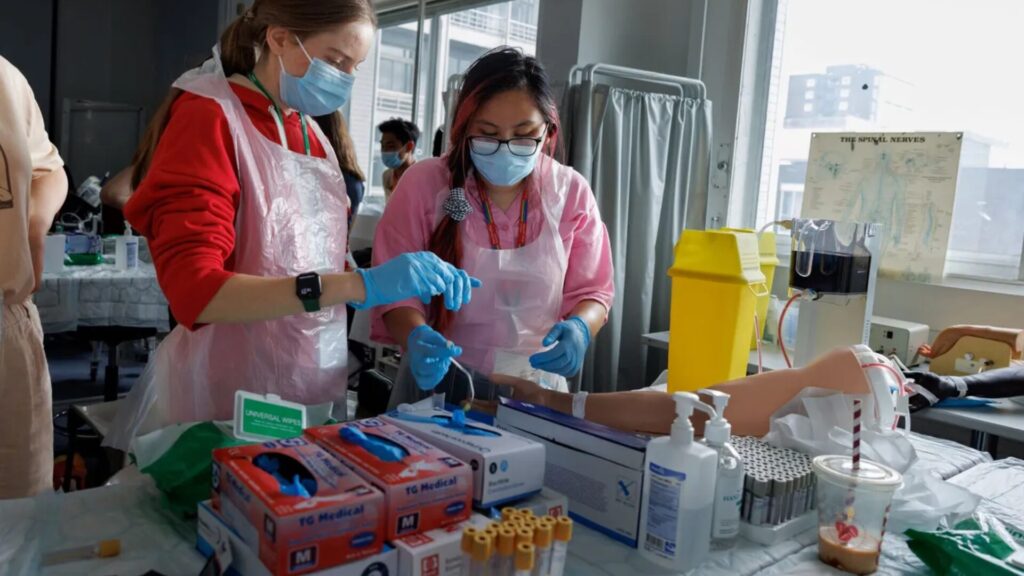
In this program, you’ll explore different areas of engineering through a four-day summer program designed for female high school students. The course begins with introductory activities that help you meet other participants before moving into workshops and academic sessions focused on engineering concepts, applications, and problem-solving approaches across different disciplines.
As part of the program, you’ll work with other students to develop a poster on an engineering topic covered during the course. You’ll present your project at a final showcase, where you can explain your ideas to other participants, teachers, and family members. The program is non-residential, with tuition, materials, and lunch provided, while you arrange your own accommodation and travel.
Why it stands out: You explore engineering topics through workshops and communicate your learning through a university-based project presentation.
13. University of Edinburgh Pre-University Summer School
Location: University of Edinburgh, UK
Cost: £5,250
Acceptance rate/cohort size: Selective; limited capacity
Dates: June 29th - July 10th
Application Deadline: May 19th
Eligibility: Students around the world aged 16-18
In this program, you’ll spend two weeks studying a subject of your choice while getting familiar with life at the University of Edinburgh. The program offers courses across areas such as design, humanities, life sciences, and social sciences, with sessions led by university tutors.
Your schedule may include lectures, workshops, studio-based activities, and guided activities that connect your academic interests with the city around you. During the course, you’ll live in university accommodation and take part in both academic and social activities with students from different countries. You may also visit museums, cultural sites, and other locations across Edinburgh to explore how the city supports your learning experience.
Why it stands out: You explore an academic subject while experiencing university accommodation, teaching, and student life in Edinburgh.
14. University of Warwick’s ‘A Taste of Science and Engineering’

Location: University of Warwick Pre-University Summer School, Coventry, UK
Cost: £5,250
Acceptance rate/cohort size: Selective; small cohort sizes
Dates: July 14-24
Application Deadline: May 31st
Eligibility: Students aged 16-17 who are considering applying to university. No subject-specific prerequisites required; international students can apply
In this program, you’ll spend 10 days exploring science and engineering subjects through a residential summer program designed around university-style learning. The course introduces you to undergraduate-level topics through lectures, seminars, and interactive sessions led by university academics and subject specialists, allowing you to examine areas that may go beyond the standard high school curriculum.
During the program, you’ll take part in discussions, practical activities, and group projects that reflect aspects of university study. With a structured academic schedule, you’ll learn more about STEM subjects offered at Warwick, experience different teaching approaches, and become familiar with the routines of living and studying on a university campus.
Why it stands out: You experience university-level STEM learning through academic sessions, group work, and residential campus life.
15. Imperial College Year 10 Insights Summer School
Location: UK
Cost/Stipend: None
Acceptance rate/cohort size: Highly competitive; cohort size not specified
Dates: July 29th - August 1st
Application Deadline: March 11th
Eligibility: Year 10 students attending UK state schools who live and study in the UK; not open to international students
In this program, you’ll choose between two academic pathways, including Science or Engineering , and follow a schedule tailored to your selected subject area. The program begins with orientation sessions and introductory group activities, allowing you to meet your mentor and connect with other participants before moving into workshops and learning sessions specific to your pathway.
Over the following days, you’ll explore key concepts through subject-based activities while working alongside your peers. On the final day, you’ll collaborate with your group to produce an academic poster that reflects the topics you’ve studied. You’ll then present your poster in a conference-style session, developing experience in explaining scientific or engineering ideas to an audience.
Why it stands out: You gain experience following a subject-specific academic schedule and presenting your learning through a collaborative poster session.
Frequently asked questions: Summer Camps in Europe for High School Students in 2026
Are there free summer camps in Europe for high school students?
Yes. Scuola Normale Superiore’s Residential Courses in Italy are free and include board and lodging, while Oxford’s UNIQ Summer Programme and Imperial’s Year 9 and Year 10 Summer Schools in the UK also carry no cost. These free options tend to have narrower eligibility, often limited to UK state school students or, in Scuola Normale’s case, students from Italian secondary schools or Italian schools abroad.
Can international students attend European summer camps for high school students?
Many programs welcome international applicants, including Trinity College Dublin’s Summer STEM Camps, Constructor University’s Summer Camp in Bremen, and the University of Amsterdam’s Pre-University Summer Programme. Oxford’s UNIQ Summer Programme and Imperial’s Year 9 and Year 10 Summer Schools are notable exceptions, restricted to UK state school students. Immerse Education’s Academic Insights Programme is also open to students across the globe at its European locations.
What is the best summer camp in Europe for STEM-focused high school students?
Trinity College Dublin’s Summer STEM Camps offer seven distinct themed weeks, from coding and robotics to forensic science, making it a strong choice for students wanting to sample multiple STEM areas. TechCamp at Politecnico di Milano instead offers deep focus on a single technical discipline, such as cybersecurity or robotics, over one intensive week. Students wanting broader exposure should lean toward Trinity, while those wanting depth in one area should consider TechCamp.
How much do summer camps in Europe for high school students cost?
Costs vary considerably by program length and structure. Short programs like Trinity College Dublin’s five-day STEM camps cost around €305 to €365, while two-week residential programs at the Universities of Edinburgh and Warwick cost £5,250 each. Constructor University’s 12-day camp in Bremen costs €4,600 and includes tuition, accommodation, and excursions, giving a sense of what a fully inclusive residential program costs compared to non-residential options.
Which European summer camps focus on business or economics?
The Pre-Uni Camps by Université Paris Dauphine-PSL, ESSEC Business School’s Youth Business Bootcamp, and Bocconi’s Summer School in Milan all center on business and economics topics. Bocconi stands out for its interdisciplinary structure, letting students choose two courses from subjects including data science, fashion, and game theory. ESSEC’s bootcamp, by contrast, concentrates on a single group project built around global business strategy over one week.
What age do you need to be for a summer camp in Europe?
Age requirements vary by program and country. Imperial’s Year 9 Girls Engineering Summer School is limited to a specific school year group, while most university-run programs, including those at Edinburgh, Warwick, and Amsterdam, set a minimum age of 16. Immerse Education’s Academic Insights Programme has one of the widest ranges, accepting students aged 13 to 18 across its various European locations.
Your European summer camp was just the preview
Choosing among these summer camps in Europe for high school students in 2026 gives you a genuine early introduction to university-style teaching and campus life abroad.
Once the program ends, you can turn that early exposure into a clearer sense of your subject choices and university direction.
The confidence, independent thinking, and academic skills you built become a strong foundation for your applications in the years ahead.
Keep building on what you started this summer by exploring our University Preparation blogs for guidance on your next steps.






Unlock Inspiring Opportunities with the Immerse Education Newsletter
Join our newsletter to stay ahead with exclusive updates, exciting programme highlights, and expert insights from the world of immersive education.
Learn how Immerse can transform your life
An in-depth overview of our university and career preparation programmes
Get a glimpse into the life of an Immerse participant
Find the right programme for you with sample timetables, location showcases, and more