15 Work Experience Opportunities for 15 Year Olds

Summary
You’ll find 15 work experience opportunities here, from paid internships at The Met and in Massachusetts courts to research placements at Stanford and UC Santa Barbara. The biggest split is between paid local placements, which usually require US residency or work authorization, and programs open to international students. Most suit you if you’re 15 or 16 and in grade 10 or 11, though a few need you to be older. The Met, for example, pays interns a $1,100 stipend. Immerse Education’s Career Insights pathway in London, New York, and Tokyo is open to students aged 15 to 18 worldwide.
At 15, you may have started thinking about possible careers, but it can be difficult to know what a job actually involves from school subjects alone. Work experience gives you an opportunity to explore professional environments and see how communication, teamwork, problem-solving, research, organisation, and technical skills are applied to real tasks.
You might contribute to a project, shadow professionals, work through an industry brief, attend skills workshops, or receive guidance from a mentor. These experiences can help you develop practical workplace skills while exploring fields such as medicine, engineering, business, technology, law, research, and the creative industries. They can also help you identify what interests you, and what does not, before making decisions about future subjects or degrees.
How do you choose the right work experience for a 15 year old?
Work experience programs can act as a foundation for your academic journey, giving you a direct feel for what a particular field looks like at the professional level in a structured setting.
To help you choose, we’ve put together a list of 15 work experience opportunities for 15 year olds, focusing on programs that offer practical projects, mentorship, skills development, and meaningful exposure to professional environments.
15 Work Experience Opportunities for 15 Year Olds
1. National University of Singapore (NUS): Youth Programmes
Location: National University of Singapore, Singapore, with some programmes online
Cost/Stipend: Varies by programme; fees are listed individually for each NUS Youth Programme
Acceptance rate/cohort size: Not specified; NUS reports more than 4,000 participants each year across over 40 programmes
Dates: Typically June to August and December to February; on-campus programmes run over 1-2 weeks
Application Deadline: Varies by programme and intake
Eligibility: High school and pre-university students who are at least 15 at the start of the programme; some programmes are for undergraduates only | Open to international students, with participants from 25 countries and regions
NUS Youth Programmes give you the opportunity to explore academic and career-related subjects through short university-based courses in Singapore. Programmes for high school and pre-university students include International Economics and Finance, Media Communication and Marketing, Negotiation in a Global World for Young Leaders, and AI and Machine Learning Fundamentals.
On-campus programmes include at least 15 hours of classroom engagement over one to two weeks, while online options run for three to six weeks. You also learn alongside students from different countries and build soft skills such as leadership, teamwork, and public speaking. Successful participants receive a verifiable e-certificate of completion from NUS.
Why it stands out: It gives students aged 15 and up direct exposure to NUS teaching and campus life through short, subject-focused programmes designed for participants from Singapore and abroad.
2. Immerse Education’s Career Insights Summer School

Location: London, New York, and Tokyo
Cost: Varies; summer school scholarship available through our bursary programme
Acceptance rate/cohort size: Selective; an average of 7 participants per class
Dates: 2 weeks during the summer
Application Deadline: Multiple cohorts with rolling admissions
Eligibility: Students aged 15-18 | Open to international students from around the world
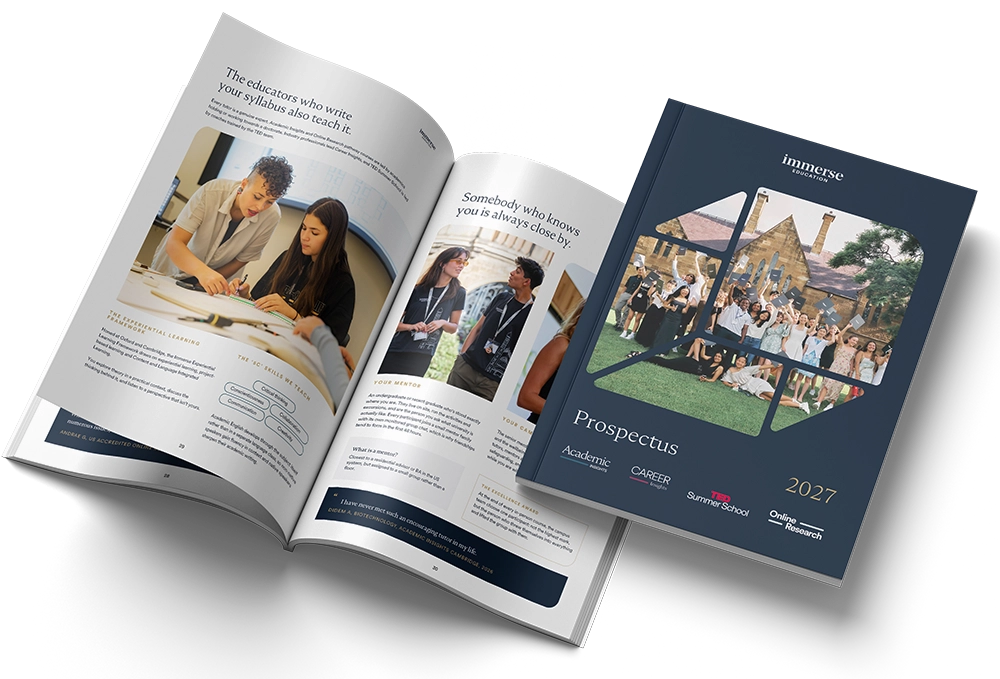
Immerse Education’s Career Insights pathway lets you explore a career from the inside in three major industry hubs. You’re taught by industry experts and go behind the scenes at the offices, studios, and headquarters of organisations in your chosen field, with a mentor-led reflection session after each visit.
Subjects include architecture, artificial intelligence, banking and finance, business management, engineering, fashion and design, film, law, marketing, and medicine. Expert insights sessions build workplace skills such as networking, personal branding, and persuasive communication. You can also choose an optional add-on worth 8 UCAS points or 3 US college credits. You can find more details about the application here.
Why it stands out: You see how your chosen industry works day to day through visits and practical sessions, such as suturing practice in Medicine or a courtroom visit in Law.
3. Ladder Internship Program
Location: Remote! You can work from anywhere in the world.
Cost: $3,190, with full and partial financial aid available.
Acceptance rate/cohort size: Selective
Dates: Multiple cohorts throughout the year, including Spring, Summer, Fall, and Winter.
Application Deadline: Ladder runs about six cohorts a year, with start dates in the fall, winter, spring and summer. Applications close about three weeks before each cohort begins. See current deadlines and start dates.
Eligibility: High school students from any country. College and gap year students can apply to Ladder’s University Internship Program.
Ladder Internships is a selective program that places high school students in remote internships with startups. Host companies span industries from AI and machine learning, technology and software to healthcare and biotech, finance and fintech, engineering, environmental science and consulting (explore the options). Interns work closely with a coach at their host company on a real project and present the final work to the company at the end of the program. Apply here.
Why it stands out: You work one-on-one with a manager at a high-growth start-up and present your finished project to the company, all remotely and in just eight weeks.
4. Judicial Youth Corps Program
Location: Boston, Worcester, and Springfield, MA
Cost/Stipend: Paid summer internship; the hourly rate is not listed
Acceptance rate/cohort size: Selective; students are chosen through applications, teacher recommendations, and interviews with court personnel
Dates: Six weeks, from July through August
Application Deadline: The 2026 application period has closed; future deadlines are posted on the program page
Eligibility: High school students who meet the city requirements: Boston applicants must live in Boston and attend Boston Public Schools, while Worcester and Springfield applicants must attend a high school in that city | Not open to students outside these cities
The Judicial Youth Corps Program gives you paid work experience inside the Massachusetts court system while teaching you about the courts and the rule of law. You are taught and mentored by judges, lawyers, clerks, probation officers, and other court personnel who volunteer as educators and work supervisors.
Alongside your paid courthouse internship, you attend paid educational sessions on Fridays. Activities include a mock trial, field trips, group discussions, and shadowing. This is particularly useful if you are considering law, government, criminal justice, or public administration and want to understand those careers before choosing a college pathway.
Why it stands out: It combines a paid courthouse internship with direct mentorship from judges and legal professionals and a structured introduction to the Massachusetts justice system.
5. Memorial Sloan Kettering Cancer Center: Summer Student Program
Location: Memorial Sloan Kettering Cancer Center, New York, NY
Cost/Stipend: Free; students receive a $1,200 stipend for the summer | Housing and transportation are not provided
Acceptance rate/cohort size: 20 interns per summer; MSK typically receives more than 1,000 applications, for an acceptance rate of about 2%
Dates: June 29th - August 20th, 2027
Application Deadline: February 5th, 2027, at 8:00 a.m. EST | Applications open December 1st, 2026
Eligibility: Current high school juniors who are at least 16 by June 2027, have a 3.5 GPA in science subjects, are legally authorized to work in the US, and live in NY, NJ, or CT within 25 miles of MSK’s Manhattan campus | Not open to international students
MSK’s Summer Student Program is an eight-week biomedical or computational lab internship for high school students interested in careers in the biomedical sciences. You are placed in an MSK research lab and paired with a mentor who helps you build the technical skills to complete a self-directed project that supports the lab’s wider research objectives.
Research areas include cancer biology, chemical biology, computational biology and genomics, engineering and imaging, immunology, pharmacology, and structural biology. You also attend lab meetings and program events that introduce you to translational medicine and research careers. The internship is full-time, at around 40 hours a week, so it closely resembles a real research placement.
Why it stands out: With only 20 interns selected from more than 1,000 applicants, you receive intensive laboratory mentorship while completing your own project within an active MSK research lab.



6. Sakura Science High School Program (Japan Science and Technology Agency)
Location: Universities, research institutes, high schools, and science facilities across Japan
Cost/Stipend: Invitation program coordinated by JST; costs aren’t listed on the program page
Acceptance rate/cohort size: Highly selective; 6,841 high school students took part in 67 courses between 2014 and 2024
Dates: About one week; courses run at different points in the year
Application Deadline: No open individual application; students are invited through national contacts in participating countries
Eligibility: Excellent high school students from participating countries, mainly in Asia | International participation is the focus of the program
The Sakura Science High School Program is a JST-run exchange that invites outstanding high school students and their supervisors to Japan for about a week. You may attend special classes taught by leading scientists, including Nobel laureates, and visit prominent Japanese universities and research institutes.
Past visits have included JAXA and research sites in Tsukuba Science City. The program also includes social activities with Japanese high school students, embassy visits, and cultural experiences. It is particularly useful if you are considering STEM study and want to see how research is carried out across Japanese universities and institutes.
Why it stands out: It is a government-backed exchange that gives selected students access to Japanese universities, research institutes, and leading scientists.
7. Johns Hopkins University: The Immersive Summer Program for Education, Enrichment, and Distinction (ISPEED) in Biomedical Engineering
Location: Johns Hopkins University Homewood Campus, Baltimore, MD
Cost/Stipend: Fully funded; tuition, housing, meals, travel to and from Baltimore, and campus facilities are covered | You can also apply for a one-time need-based stipend
Acceptance rate/cohort size: Selective; cohort size is not specified
Dates: June 29th - July 24th in 2026 | Future dates are posted about six months before the program
Application Deadline: The 2026 application has closed | Information for future cycles is posted about six months before the program starts
Eligibility: High school sophomores or juniors who are US citizens or permanent residents; you must be at least 15 on move-in day and under 18 on the last day | Not open to international students
Johns Hopkins’ ISPEED in Biomedical Engineering is a four-week residential program built around project-based learning rather than traditional lectures. You do research, lab work, and presentations, drawing on Johns Hopkins’ top-ranked undergraduate biomedical engineering program.
You also tour Hopkins labs, attend seminars with STEM professionals, and learn about the college admissions process. Living on the Homewood campus gives you a direct experience of university life alongside students from across the country. Successful participants earn three Johns Hopkins college credits.
Why it stands out: It is fully funded and combines biomedical engineering projects, lab work, residential university life, and three college credits in one four-week program.
8. High School Summer Live: Fashion Institute of Technology (FIT)
Location: Fashion Institute of Technology, New York, NY
Cost/Stipend: $550 for one 10-day class, including all fees
Acceptance rate/cohort size: Open registration; classes may fill
Dates: July 6-21 in 2026, meeting on 10 weekdays across this period
Application Deadline: Registration ran from February 4th to June 10th in 2026
Eligibility: Students in grades 9-12 as of September of the year they enroll | International students are welcome, but housing is not provided
FIT’s High School Summer Live lets you explore a creative or business-related field through a 10-day precollege course on its Manhattan campus. Course options span areas such as fashion design, business, animation, illustration, marketing, styling, film, photography, forecasting, and toy design.
Classes are taught by FIT professionals who share their own industry experience. You may also produce work that helps you decide whether an FIT major matches your interests. The courses are beginner-friendly, so you can gain career exposure without any prior professional experience.
Why it stands out: It gives you direct exposure to fashion and creative-industry careers through practical college-style courses taught in the heart of New York City’s Fashion District.
9. Summer High School Internship Program: The Metropolitan Museum of Art
Location: The Metropolitan Museum of Art, New York, NY
Cost/Stipend: Paid; interns receive a $1,100 stipend on completion
Acceptance rate/cohort size: Selective; finalists are invited to an in-person group interview
Dates: Late June to August 7th in 2026, including a bootcamp and 40 hours of departmental placement
Application Deadline: March 13th in 2026
Eligibility: Students in grades 10 or 11, or working toward a High School Equivalency, who live in and attend school in New York, New Jersey, or Connecticut; you must provide working papers and an SSN or ITIN | Not open to international students without local residency and work documentation
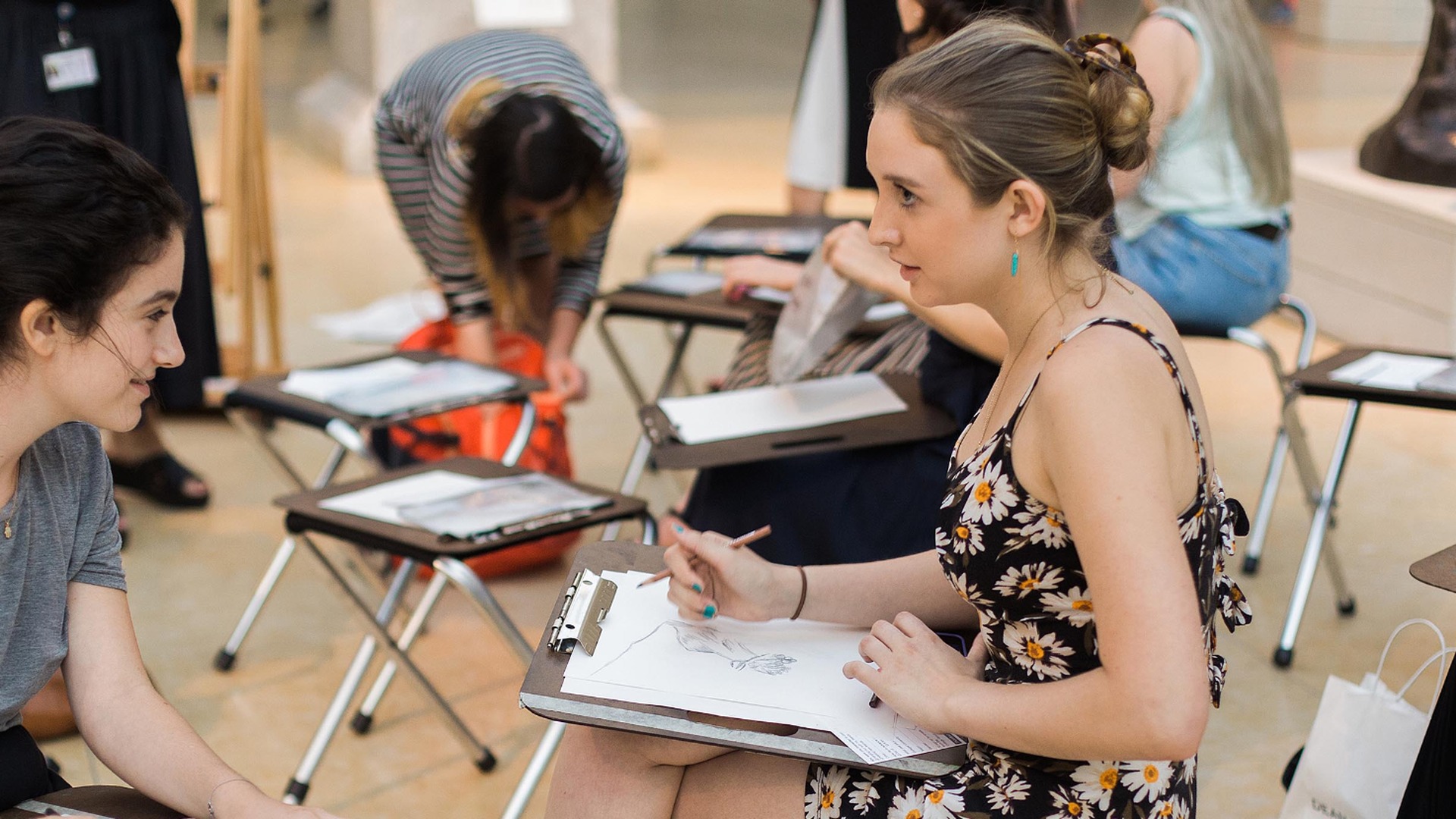
The Met’s Summer High School Internship Program gives you paid professional experience while introducing you to the many careers that keep a major museum running. You connect one-on-one and in small cohorts with museum professionals in areas such as curatorial work, social media, education, imaging, and design.
Your 40-hour departmental placement runs at about 10 to 20 hours a week, alongside Teen Fridays and biweekly cohort check-ins with mentors. You do not need any previous knowledge of art or art history to apply. This can be particularly useful if you are considering art, design, communications, education, history, or museum studies and want to see what those roles look like in practice.
Why it stands out: You receive paid work experience and direct access to professionals across multiple museum careers, letting you explore fields well beyond traditional curatorial work.
10. VISTA Pathways to Health Careers (Denver Health)
Location: Denver Health, Denver, CO
Cost/Stipend: Free to participate; internship hours are paid at no less than Colorado minimum wage
Acceptance rate/cohort size: More than 200 applications each year for 30 spots
Dates: Two-year commitment across junior and senior year; the 100-120-hour paid internship runs in either a 12-week winter session or a 7-week summer session
Application Deadline: Applications for the 2027-2028 program year open in mid-January 2027 and close in early March
Eligibility: Current high school sophomores attending school in the Denver metro area who are legally authorized to work in the US | Not open to international students without US work authorization
VISTA Pathways to Health Careers, formerly the Medical Career Collaborative (MC²), is a two-year healthcare pathway that combines paid hospital experience, mentorship, and career support. During junior year, you complete a 100-120-hour paid internship in a Denver Health department, where you observe, shadow, and assist staff in patient-facing or non-patient-facing roles.
Your mentors may include nursing assistants, technicians, nurses, paramedics, therapists, and physicians. You also join monthly field trips and weekly seminars covering topics such as medical terminology. In senior year, you earn certifications such as Basic Life Support and get help with college applications, financial aid, and scholarships.
Why it stands out: You complete a paid hospital internship while receiving two years of mentorship, healthcare training, and college and career support.
11. Chicago Summer Business Institute (CSBI) Internship
Location: Chicago, IL; internships are with sponsoring companies and organisations across the city
Cost/Stipend: Paid internship; compensation is not listed
Acceptance rate/cohort size: Selective; cohort size is not specified
Dates: Six-week summer program
Application Deadline: The application portal is open from February 1st to March 31st
Eligibility: City of Chicago residents who are high school sophomores, juniors, or seniors in the 2026-2027 school year, with at least a B or 3.0 average and a family household income below $80,000 a year | Not open to international students
The Chicago Summer Business Institute was founded in 1991 to give Chicago high school students paid summer internships and an introduction to financial services. You work in a paid placement with a sponsoring organisation, with a supervisor who helps you set goals and evaluates your work.
Past interns have worked at investment firms and City of Chicago departments such as the Department of Finance. Friday afternoon workshops, guest speakers, and small-group luncheons at sponsor firms build your professional skills. This is especially useful if you want paid workplace exposure before college and are considering business, finance, or public service.
Why it stands out: It combines a six-week paid placement with professional-development workshops and direct contact with Chicago’s financial services community.
Join the Immerse Education 2027 Essay Competition
Follow the instructions to write and submit your best essay for a chance to be awarded a 100% scholarship.
12. Indiana University Simon Comprehensive Cancer Center: Future Scientist Program
Location: IU Simon Comprehensive Cancer Center, Indianapolis, IN
Cost/Stipend: Paid internship; the stipend amount is not listed
Acceptance rate/cohort size: Selective; cohort size is not specified
Dates: June 1st - July 22nd, 2027
Application Deadline: Applications open November 15th, 2026, and close February 28th, 2027
Eligibility: High school juniors at Indianapolis and Marion County public schools | Not open to international students, since you must attend a local school
The Future Scientist Program gives you eight weeks of mentored research at the IU Simon Comprehensive Cancer Center. You are paired with a principal investigator who guides your project, and you may also work with an in-lab mentor. The internship runs like a full-time, Monday-to-Friday job, with regular seminars and professional development sessions.
Depending on your placement, you could work in a basic science lab, a clinical or translational setting, a bioinformatics lab, or outreach research. By the end, you create and present a scientific poster at the cancer center’s summer poster session.
Why it stands out: You spend eight weeks completing a mentored research project within an NCI-designated comprehensive cancer center while being paid for your work.
13. SHTEM: Summer Internships for High Schoolers at Stanford University

Location: Stanford University, Stanford, CA
Cost/Stipend: $2,500 tuition, plus a $95 non-refundable application fee | Financial aid is available
Acceptance rate/cohort size: Selective; students are mentored in groups of 2-5
Dates: June 21st - August 6th, 2027
Application Deadline: Applications open December 7th, 2026, and are expected to close February 21st, 2027
Eligibility: High school juniors or seniors in the 2026-2027 school year who are at least 14 by June 20th, 2027, and are US citizens or permanent residents | Not open to international students; housing is not provided
Stanford’s SHTEM internship introduces you to research that crosses traditional academic boundaries. You join a small research group and work on a project that may combine engineering, computer science, biology, neuroscience, psychology, linguistics, philosophy, the arts, or design.
Projects are mentored by students, faculty, and staff of the Stanford Compression Forum and its affiliated organisations. You can expect about 20-30 hours of work a week, plus weekly faculty lectures and workshops. Prior research experience is not required, and the program especially encourages students without it to apply.
Why it stands out: Small research teams of 2-5 students work on interdisciplinary Stanford projects that deliberately connect STEM with the humanities.
14. UT Southwestern Medical Center: High School Student Internship
Location: Online, hosted by UT Southwestern Medical Center, Dallas, TX
Cost/Stipend: Not specified
Acceptance rate/cohort size: Selective; cohort size is not specified
Dates: Two weeks in June
Application Deadline: Applications open in late September and are due in early February
Eligibility: Rising 10th, 11th, and 12th graders and rising college first-years | International eligibility not specified
UT Southwestern’s High School Student Internship is a two-week online program focused on careers in mental health rather than laboratory research. Before each interactive session, you complete readings drawn from mass media and scientific journal articles. You then meet psychiatrists, neuropsychologists, physician assistants, and licensed clinical social workers, who explain their daily work and career paths.
Sessions introduce areas such as psychotherapy, neuropsychological testing, neuroscience, interventional psychiatry, and community psychiatry. This is especially useful if you want to compare different mental-health careers before choosing a pathway.
Why it stands out: You hear directly from several types of mental-health clinician-scientists, making it easier to compare psychiatry, psychology, social work, and related pathways.
15. University of California, Santa Barbara: Research Mentorship Program (RMP)
Location: University of California, Santa Barbara, CA, with a virtual component at the start
Cost/Stipend: $5,675 commuter; $13,274 residential, including the $75 application fee (2026 prices; 2027 pricing is posted in early December) | Limited need-based scholarships, with priority for California residents
Acceptance rate/cohort size: Competitive; cohort size is not specified
Dates: June 14th - July 31st, 2027, starting with a virtual component on June 14-17
Application Deadline: Applications open December 15th, 2026
Eligibility: High school students in grades 10 or 11 with a minimum 3.80 weighted GPA; outstanding 9th graders are considered case by case | Open to international students, and TOEFL scores aren’t required
UCSB’s Research Mentorship Program pairs you with a graduate student, postdoc, or faculty mentor for interdisciplinary, university-level research. You choose a research project from a long list of disciplines offered each year and learn research techniques alongside your mentor.
The GRIT talks lecture series connects you with UCSB researchers presenting their work. You also live the university experience and network with equally ambitious peers. The program is intensive enough that you may not enroll in other courses, activities, or programs at the same time.
Why it stands out: You carry out mentored university research on a project you choose, while learning directly from UCSB’s research community.
Frequently asked questions: Work Experience Opportunities for 15 Year Olds
Can you do work experience at 15?
Yes, many programs accept students at 15, especially in grades 9 to 11. NUS Youth Programmes take students who are at least 15 at the start, and FIT’s summer courses are open to students in grades 9 to 12. Some placements set higher age limits, though: MSK requires you to be at least 16 by June 2027. Check both the grade and age rules before you apply, since they don’t always match.
Do 15 year olds get paid for work experience?
Some programs pay you, but most paid placements are tied to local residency. The Met pays a $1,100 stipend, and Denver Health’s VISTA internship pays at least Colorado minimum wage. The Judicial Youth Corps and the Chicago Summer Business Institute also offer paid internships. Paid programs usually ask for working papers or US work authorization, so check those rules first.
How can you find work experience at 15 if you live outside the US?
Look for programs that state they’re open to international students. NUS Youth Programmes welcome participants from 25 countries and regions, and UCSB’s Research Mentorship Program accepts international applicants without TOEFL scores. Immerse Education’s Career Insights pathway runs in London, New York, and Tokyo for students aged 15 to 18, with industry visits led by working professionals. You can also browse these work experience opportunities in the UK for high school students.
Can you do work experience online at 15?
Yes, several programs run fully online. UT Southwestern’s mental health internship is a two-week online program in June, and Ladder Internships places you with a startup remotely for about eight weeks. NUS also offers online Youth Programmes lasting three to six weeks. Online placements are a good way to test a field when travel isn’t possible, and you can read more about what virtual work experience involves.
When should you apply for work experience programs?
Start looking in autumn, since most deadlines fall between February and March. MSK’s applications close on February 5th, 2027, SHTEM’s are expected to close on February 21st, 2027, and IU’s Future Scientist Program closes on February 28th, 2027. Denver Health’s VISTA opens in mid-January, and CSBI’s portal runs from February 1st to March 31st. Programs with rolling admissions can fill early, so apply as soon as you’re ready.
Does work experience at 15 help with university applications?
It can, if you use it to show genuine interest and reflection. Programs like Johns Hopkins ISPEED award college credit, and Immerse Education’s Career Insights pathway offers an optional add-on worth 8 UCAS points or 3 US college credits. Write down what you did and learned after each placement, so you can draw on it in personal statements and interviews. The insight you gain matters more than the brand name of the placement.
From curiosity to career clarity at 15
A single placement can show you more about a career than months of reading, especially when you start testing ideas at 15.
Compare work experience opportunities for 15 year olds by checking age limits, residency rules, and pay before you commit to an application.
Keep notes on what energises you and what drains you, since both answers will sharpen the next choices you make.
For more ideas on testing industries and planning your next steps, browse our Career Exploration blogs before your next application season begins.






Unlock Inspiring Opportunities with the Immerse Education Newsletter
Join our newsletter to stay ahead with exclusive updates, exciting programme highlights, and expert insights from the world of immersive education.
Learn how Immerse can transform your life
An in-depth overview of our university and career preparation programmes
Get a glimpse into the life of an Immerse participant
Find the right programme for you with sample timetables, location showcases, and more