14 Summer Schools for 13-Year-Olds

Summary
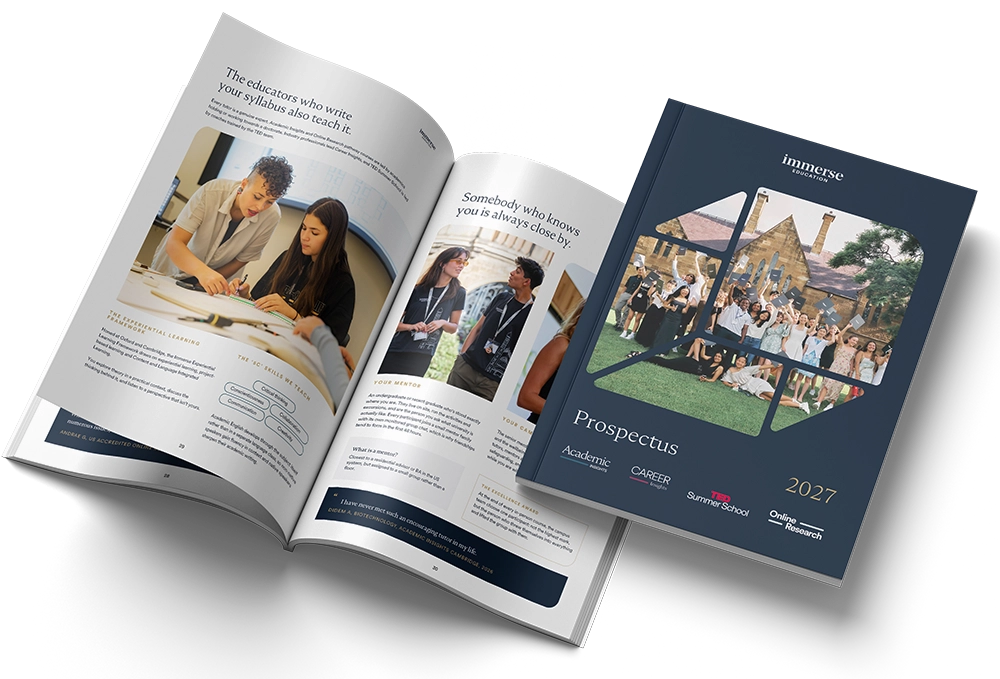
You’ll find 14 summer schools here for 13-year-olds, from STEM and business courses at US universities to drama, art, and design programmes in the UK. The main split is between free programmes at MIT, Stanford, and NYU, which are limited to certain US states, cities, or income levels, and paid courses that welcome students worldwide. Most suit you if you’re in middle school, though several run up to age 17. Stanford’s online summer course, for example, runs in cohorts of just 12 students. Immerse Education’s Academic Insights pathway also has groups for ages 13 to 15 in Cambridge and Oxford, with bursaries available.
At 13, you may already have subjects you enjoy, whether that’s science, coding, business, drama, or art. Yet school lessons can only show you so much of what studying a subject in depth actually involves. You may want to see how it works in a lab, a studio, or a seminar room before you build your future plans around it. One of the best ways to explore those interests is by joining a summer school.
Imagine spending your summer building a business plan, designing a set for a play, or running experiments with university mentors. A summer school can introduce you to university-style learning, help you build skills like problem-solving and teamwork, and give you a clearer sense of which subjects you want to pursue.
How do you choose the right summer school for 13-year-olds?
Choosing a program can be tricky when options differ so much in focus, length, cost, and eligibility. You need to think about what you want to study, whether the program accepts your age or grade, and whether it’s open to students where you live.
Universities, conservatoires, art schools, and education organisations all run summer schools for younger students. Depending on the program, you might take part in lab activities, coding projects, seminars, design workshops, or rehearsals. Some are free but limited to local students, while others charge tuition and welcome students from around the world.
Your choice should also depend on format and timing. Many US programs are built around middle school grades, while UK courses usually set age ranges, and residential options give you an early taste of campus life. To make your search easier, here is a list of 14 summer schools for 13-year-olds. These programs were chosen for their academic or creative focus, structure, and suitability for younger students.
14 Summer Schools for 13-Year-Olds
1. UC San Diego Extended Studies: Middle School Entrepreneurship for Young Innovators
Location: Wangenheim Middle School, San Diego, CA (2026 session)
Cost: Not currently listed; check the course page when new sections open
Acceptance rate/cohort size: Enrollment-based | Cohort size is not publicly available
Dates: The 2026 session ran July 13-17, 9 a.m. to 3 p.m. | 2027 dates have not been posted yet
Application Deadline: Pre-enrollment required | No upcoming sections are currently listed
Eligibility: Middle school students | International eligibility not specified
UC San Diego’s Entrepreneurship for Young Innovators course introduces you to the process of turning an early idea into a mini-business. You learn how to refine an idea, build a business plan, conduct customer and market research, and think through budgeting, marketing, and financial planning. Classes combine guided instruction with practical exercises that encourage you to make decisions and test your assumptions.
You also work alongside other students, giving you opportunities to compare ideas and practise communicating your reasoning. By the end of the week, you develop a project that demonstrates how your business idea could work in practice. The course is a useful introduction if you are curious about entrepreneurship but have not studied business formally before.
Why it stands out: You work through the main stages of developing a business idea in one focused week and finish with a project you can showcase.
2. Immerse Education’s Pre-University Summer School

Location: Cambridge and Oxford, UK, for ages 13 to 15
Cost: Varies; summer school scholarship available through our bursary programme
Acceptance rate/cohort size: Selective; an average of 7 participants per class
Dates: 2 weeks during the summer
Application Deadline: Multiple cohorts with rolling admissions
Eligibility: Students aged 13 to 18, with groups for ages 13 to 15 in Cambridge and Oxford | Open to international students from around the world
Immerse Education’s Academic Insights pathway gives you two weeks of undergraduate-level study in a single subject, with groups for ages 13 to 15 in Cambridge and Oxford. You learn in tutor-led seminars averaging 7 students, with two 1:1 tutorials, masterclasses, and guest speakers built into your fortnight. In Cambridge and Oxford, you live and learn in a historic university college, and you can choose from more than 20 subjects across all locations, including architecture, computer science, economics, medicine, and psychology, with availability varying by age group.
By the end of the programme, you complete a personal project and present it to your cohort on the final Friday. From age 14, you can also opt in to earn 8 UCAS points or 3 US college credits. You can find more details on the Pre-University Summer School application page.
Why it stands out: You study in small seminar groups, work on a personal project, and live in a historic college, giving you an early taste of university life.
3. Lumiere’s Junior Explorer Program
Location: Virtual
Cost: Varies | Financial aid available
Acceptance rate/Cohort size: Highly selective
Program dates: Eight weeks | Timing varies by cohort
Application deadline: Varies based on cohort
Eligibility: Students in grades 6 to 8
Lumiere’s Junior Explorers Program is a selective online research experience for middle school students, designed to build advanced academic writing and research skills. You begin by selecting a subject area, such as STEM, humanities, or social sciences, and are matched with a PhD-level mentor from a top university.
Over the course of the program, you receive a structured introduction to your chosen field, then design and carry out an independent research project focused on a real-world question. To strengthen your writing and analytical abilities, you conclude the program by producing a formal research paper that presents your findings.
Why it stands out: You get 1-1 mentorship with a Ph.D. mentor and produce an independent research project by the end.
4. MIT dynaMIT
Location: Massachusetts Institute of Technology, Cambridge, MA
Cost: Free
Acceptance rate/cohort size: Selective | Cohort size is not publicly available
Dates: Separate one-week summer sessions for rising Grades 6-7 and rising Grades 8-9
Application Deadline: Announced annually on the programme website
Eligibility: Rising Grades 6-9 students who live in Massachusetts | The programme particularly encourages students from low-income families and those who may have limited access to STEM enrichment | Not open to international students living outside Massachusetts
dynaMIT is a free MIT programme that gives you a week of practical exposure to science and engineering. You take part in experiments, design activities, and collaborative challenges led by MIT undergraduate and graduate student mentors. Rather than following one fixed subject, the programme introduces you to different areas of STEM through activities that change from year to year.
The emphasis is on experimenting, asking questions, and learning how scientific ideas work through direct application. Working in small groups also helps you practise teamwork and communicate your approach to a problem. The programme is especially useful if you want to explore STEM in a university environment without needing previous specialist experience.
Why it stands out: You explore science and engineering through free, practical activities while receiving close mentorship from current MIT students.
5. Stanford Middle School Scholars Program

Location: Online through Stanford Pre-Collegiate Studies
Cost: Tuition-free
Acceptance rate/cohort size: Selective | Summer courses run in cohorts of 12 students
Dates: The 2026 summer course ran July 6-24, followed by weekly fall meetings from August 26th - December 9th | 2027 dates have not been posted yet
Application Deadline: March 25th for the 2026 cycle | The 2026 application is now closed
Eligibility: Students currently in Grades 6 or 7 who live in and attend school in the United States and come from low-income backgrounds | Admitted families typically have household incomes under $90,000 | Not open to international students living outside the U.S.
The Stanford Middle School Scholars Program combines a three-week academic summer course with continued support during the fall semester. You join live online classes taught by Stanford Online High School instructors and work through challenging, discussion-based material with a cohort of 12 students. Summer courses are designed to strengthen the habits and reasoning skills needed for rigorous high school study.
During the fall, you meet weekly to cover topics such as academic writing, math enrichment, growth mindset, and exploring selective high school or enrichment options. Program staff also work closely with families, and parents or guardians attend at least one conference during the year. Since both components are required, the programme offers more sustained preparation than a standalone three-week course.
Why it stands out: You receive tuition-free summer instruction plus several months of continued academic support, including guidance on applying to selective schools or programmes.


6. New York University’s College and Career Lab (CCL)
Location: New York University, Washington Square Campus, New York City, NY
Cost: Free | Meals, an MTA card, programme materials, and advising support are provided
Acceptance rate/cohort size: Selective | Cohort size is not publicly available
Dates: Four weeks in July, Monday to Friday | The 2025 Exploratory Stage ran July 7th - August 1st; check the CCL site for current dates
Application Deadline: In 2025, applications opened January 15th and closed March 31st
Eligibility: Current Grade 7 or 8 students who live in one of New York City’s five boroughs and attend a public or charter school there | Citizenship status does not affect admission, but students living outside NYC, including international students, are not eligible
NYU’s College & Career Lab begins with a four-week Exploratory Stage that introduces you to several university subjects and professional pathways. You attend lectures, small-group discussions, interactive activities, and visits connected to areas such as business, law, neuroscience, nursing, dentistry, and public service. Faculty, university staff, and industry professionals help you understand how different subjects connect with real careers.
The programme also develops skills such as self-advocacy, networking, and navigating future academic options. After the initial middle-school stage, you can continue through later CCL stages as you progress through high school. Meals, local transportation support, materials, and advising are included, making the programme fully accessible to admitted NYC students.
Why it stands out: You begin in middle school but can continue through a six-year college-and-career pathway that combines NYU academics, professional exposure, and long-term advising.
7. UAL International Summer School for 11-15-Year-Olds
Location: Chelsea College of Arts, University of the Arts London, London, UK
Cost: From £2,500 | Optional UAL accommodation costs £99 per night, and students under 16 must book with a parent or guardian
Acceptance rate/cohort size: No competitive application process | Cohort size is not publicly available
Dates: Two weeks, with start dates in July 2027
Application Deadline: Booking is now open for Summer School 2027
Eligibility: Students aged 11-15 with an interest in art and design | International students are welcome
UAL’s International Summer School gives you an introduction to the way practical learning works in an art and design university. Across a series of projects, you work with drawing, colour, mark-making, visual research, idea development, design, and techniques for creating 2D and 3D collages and models. Much like a foundation-level course, the programme gives you space to test different materials and approaches while producing work that can support an emerging creative portfolio.
Studio activities, group discussions, and a visit to Tate Britain give you opportunities to develop your ideas and explain the thinking behind your work with guidance from tutors. Along the way, you gain firsthand experience of studying within a specialist creative university environment. You receive a digital badge and certificate of attendance upon completing the programme.
Why it stands out: It gives younger students direct access to UAL studio teaching while supporting early portfolio and idea development.
8. Johns Hopkins Center for Talented Youth (CTY) On-Campus Summer Programs
Location: Residential sites at Johns Hopkins University (Baltimore, MD), Roger Williams University (Bristol, RI), Dickinson College (Carlisle, PA), Ursinus College (Collegeville, PA), Loyola Marymount University (Los Angeles, CA), and UC Santa Cruz (Santa Cruz, CA)
Cost: Tuition varies by course and length | Limited need-based financial aid is available
Acceptance rate/cohort size: Requirements vary by course | Cohort size is not publicly available
Dates: Three-week sessions during the summer | Exact dates vary by site
Application Deadline: Rolling enrolment while space remains | Registration is currently open
Eligibility: Residential programmes for students in Grades 7-12 at all sites (Grades 5-12 at select sites) | International eligibility not specified
CTY’s on-campus summer programmes give you three weeks of focused study in a single subject alongside other academically advanced students. You choose from a wide range of challenging courses, with entry requirements that vary from course to course. Classes are long and immersive, with three-hour morning sessions, an afternoon class, and a final evening session that let you go much deeper into a topic than a standard school lesson allows.
Residential students live on a college campus with resident assistants, taking part in organised activities, weekend events such as talent shows and movie nights, and a structured daily routine. Most residential students are between 12 and 15, so at 13 you would be studying and living alongside peers your own age. The programme suits you if you already work well ahead of your grade and want to study one subject in real depth.
Why it stands out: You spend three weeks studying one advanced subject intensively while experiencing supervised residential life on a university campus with peers of similar ability.
9. Guildhall Residential Drama Summer School for Ages 13-17
Location: Freemen’s School, Ashtead Park, Surrey, UK
Cost: £3,295, which includes tuition, accommodation, meals, and some evening and weekend activities
Acceptance rate/cohort size: Limited places | Acceptance rate and cohort size are not publicly disclosed
Dates: The 2026 courses ran July 13-24 and July 27th - August 7th | 2027 dates have not been posted yet
Application Deadline: In 2026, bookings closed at 5 p.m. on May 1st, or earlier if courses reached capacity
Eligibility: Open to students aged 13-17 of all experience levels | A sufficient level of English is required to fully participate | International eligibility not specified
The Guildhall Residential Drama Summer School offers an intensive introduction to acting and theatre-making in a fully residential setting. Over two weeks, you take part in core technique sessions in voice, movement, improvisation, and Shakespeare. You then work within one of three strands, devised theatre, site-specific work, or modern text work, taking your ideas from first concept through to performance.
The programme places strong emphasis on collaboration, helping you build confidence, communication skills, and the ability to work creatively within an ensemble. The course ends with an open rehearsal sharing for friends and family, and evening social activities run throughout your stay. It suits you if you’re exploring theatre seriously or thinking about drama school or youth theatre programmes later on.
Why it stands out: You receive conservatoire-style actor training from Guildhall School tutors in a supportive residential setting that welcomes both beginners and more experienced young performers.
10. UMBC Middle School Summer Programs
Location: University of Maryland, Baltimore County, Baltimore, MD, with selected courses also offered at the Universities at Shady Grove
Cost: $374 per one-week course | A $50 early-bird discount applied before March 31st in 2026
Acceptance rate/cohort size: Open registration on a first-come, first-served basis | Courses accept 10-25 participants
Dates: In 2026, five one-week sessions ran between June 22nd and July 31st | 2027 dates have not been posted yet
Application Deadline: Rolling registration until individual courses fill
Eligibility: Incoming Grades 6-8 students | International eligibility not specified
UMBC’s Summer Enrichment Academy lets you choose short, subject-focused courses designed specifically for middle school students. Recent options include drone programming with Python, empathic AI, cybersecurity, entrepreneurship and financial literacy, political debate, video game design, urban planning, mock trial, Model UN, and music production. Each course uses projects, discussions, experiments, or technical exercises to help you actively practise what you are learning.
You can take a morning or afternoon course and combine different weeks if you want to explore more than one subject over the summer. At 13, you fit the programme directly if you are entering Grade 6, 7, or 8.
Why it stands out: You can build your own summer schedule from one-week university-run courses spanning STEM, business, humanities, and creative subjects.
11. Rice University Physiology: The Foundations of Medicine

Location: Online
Cost/Stipend: $1,795; need-based scholarships available
Acceptance rate/cohort size: Not available
Program Dates: Multi-length courses offered throughout the year, including summer
Application Deadline: Rolling; apply for the next available course (no transcripts or recommendation letters needed)
Eligibility: Students aged 13 and up; international eligibility not specified on the course page
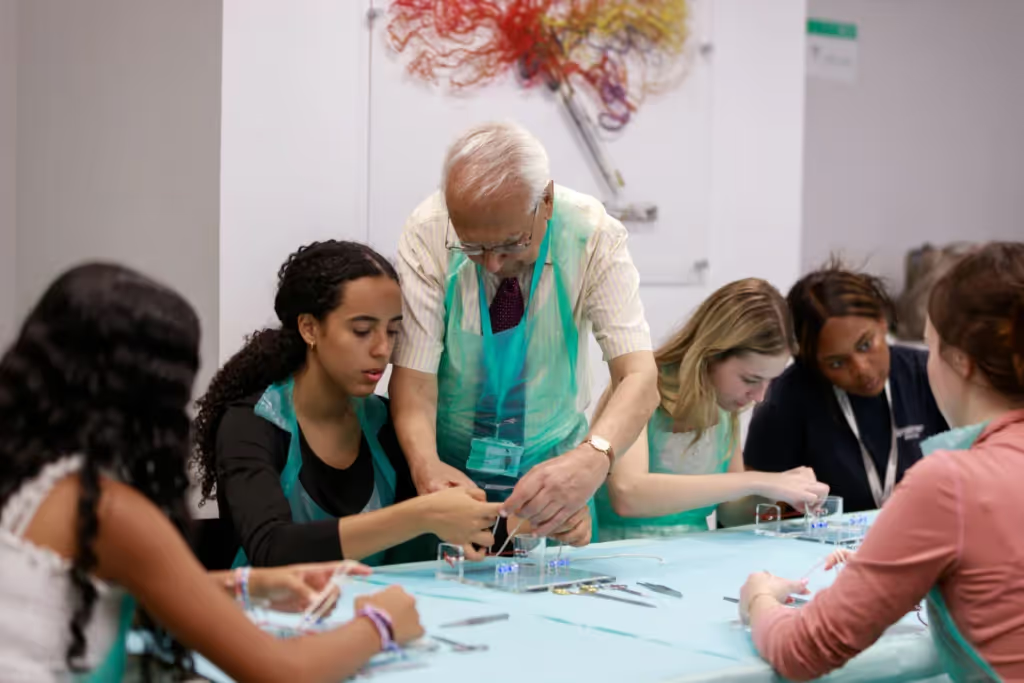
This online course examines how the nervous, muscular, cardiovascular, and respiratory systems work individually and together. You study concepts such as flow and resistance, active and passive transport, neuron communication, muscle contraction, cardiac conduction, and respiratory mechanics.
Practising physicians describe the pathological complications they encounter in clinical work. The flexible course includes 20 to 30 hours of video lectures, simulations, assignments, and independent study. A mentor supports your assignments and helps you brainstorm your capstone project. After completing the course, you earn a Certificate of Completion from Rice University.
Why it stands out: You build models of healthy and pathological organ systems for a final capstone project while studying material designed by Rice bioengineering faculty.
Join the Immerse Education 2027 Essay Competition
Follow the instructions to write and submit your best essay for a chance to be awarded a 100% scholarship.
12. XUK Multi-Activity Residential Summer Camp
Location: Dauntsey’s School, Wiltshire, UK
Cost: £1,280 per week for 2027 | Optional trips, transfers, and extras are charged separately
Acceptance rate/cohort size: Open enrolment subject to availability | Cohort size is not publicly available
Dates: Five one-week sessions from July 4th to August 8th, 2027
Application Deadline: Rolling booking while places remain | Early-booking discounts apply until the end of January and the end of March
Eligibility: Children and teenagers aged 8-17, with a Senior Camp for ages 13-17 | International students are welcome
XUK’s Multi-Activity Residential Summer Camp lets you build a varied summer around sports, arts, adventure activities, trips, and themed evenings. At 13, you join the Senior Camp for ages 13 to 17, which gives you more responsibility, later bedtimes, and more choice while staff still supervise.
Campers come from more than 40 nationalities, so residential life gives you plenty of chances to practise communication and teamwork in an informal setting. Families can book anywhere from one to five weeks and add optional trips such as London or Stonehenge. This is primarily a recreational residential camp rather than an academic summer school or university-preparation programme.
Why it stands out: You can shape a residential summer around sports, creative activities, outdoor challenges, and international friendships.
13. Royal Conservatoire of Scotland Summer Schools
Location: Wallace Studios at Speirs Locks, Royal Conservatoire of Scotland, Glasgow, UK
Cost: £335 (2026 fee) | Accommodation and meals are not included | Financial support may be available through RCS bursary schemes
Acceptance rate/cohort size: Open-access course | Cohort size is not publicly available
Dates: July 19-23, 2027, Monday to Friday
Application Deadline: Booking is now open for 2027
Eligibility: Students aged 13-17 with an interest in design for performance | No previous experience is required | International students are welcome, but students must arrange their own travel and accommodation
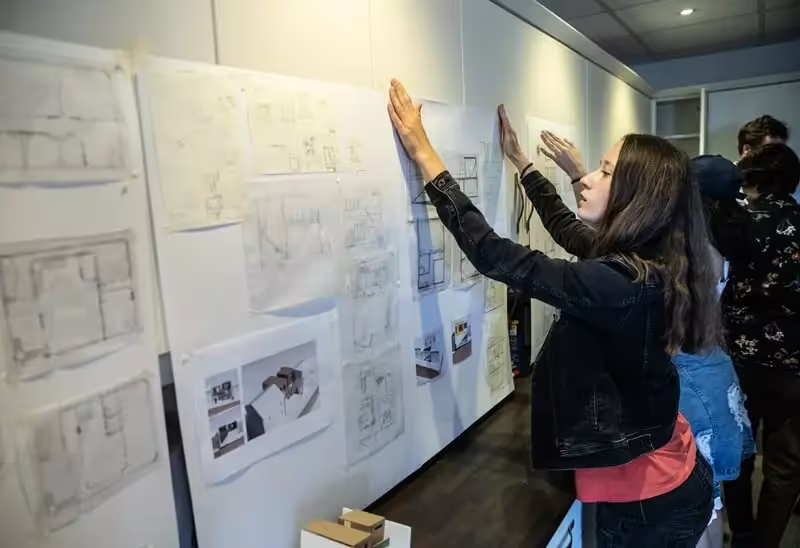
This one-week course introduces you to how set and costume designers develop an idea from early research through to a finished visual concept. You work through research, design development, sketchbook work, model-making, and presentation, using the same studios and resources as RCS’s full-time BA Production students. Experienced industry practitioners guide group discussions and workshops while helping you develop your own design response to a text provided before the course.
By the end of the week, you create a fully realised model box and costume design and present your work to the group. The course is open to beginners, so you do not need previous theatre or design training. It can help you understand whether production design, theatre design, or another creative pathway is something you may want to explore further.
Why it stands out: You complete the full set-and-costume design process and finish with work that can contribute to an early creative portfolio.
14. MIT Full STEAM Ahead Into Summer
Location: Massachusetts Institute of Technology, Cambridge, MA
Cost: $220 for the three-week programme in 2026, covering lunch and materials | Need-based financial aid is available
Acceptance rate/cohort size: Selective | Cohort size is not publicly available
Dates: The 2026 programme ran July 6-24, Monday to Friday | 2027 dates have not been posted yet
Application Deadline: Registration and the waitlist for 2026 have closed, with decisions released in early May
Eligibility: Middle school students who live in Massachusetts | Students outside Massachusetts, including international students, are not eligible
MIT Full STEAM Ahead Into Summer is a three-week day programme that explores science, technology, engineering, arts, and mathematics through a shared theme of climate and sustainability. You spend your time making, experimenting, and working with other students to develop ideas and build projects of your own design. Rather than separating technical and creative subjects, the programme encourages you to combine engineering, art, and practical problem-solving when responding to environmental questions.
Team projects require you to test ideas, adapt your designs, and communicate how your solution works. The programme runs on MIT’s Cambridge campus from morning through early afternoon each weekday, with lunch and project materials covered by the programme fee. It is a good fit if you want interdisciplinary STEM exposure and prefer learning by building and creating.
Why it stands out: You use engineering, art, and collaborative design to explore climate and sustainability through three weeks of making and building at MIT.
Frequently asked questions: Summer Schools for 13-Year-Olds
Can a 13-year-old go to a residential summer school?
Yes, several residential summer schools welcome 13-year-olds, especially in the UK. Guildhall’s Residential Drama Summer School takes students aged 13 to 17, and Summer Boarding Courses at Eton College accepts ages 12 to 16. In the US, Johns Hopkins CTY runs three-week residential sites where most students are between 12 and 15. Immerse Education’s Academic Insights pathway also has residential groups for ages 13 to 15 in Cambridge and Oxford colleges, with an average of 7 students per class.
Are there free summer schools for 13-year-olds?
Yes, but most free options have strict location or income rules. MIT’s dynaMIT is free for rising 6th to 9th graders in Massachusetts, NYU’s College & Career Lab is free for 7th and 8th graders at NYC public or charter schools, and Stanford’s Middle School Scholars Program is tuition-free for low-income 6th and 7th graders in the US. If you don’t qualify, low-cost options like UMBC’s $374 courses may help. You can also browse these summer programs for 8th graders for more ideas.
How much do summer schools for 13-year-olds cost?
Costs range from a few hundred dollars to several thousand pounds. UMBC charges $374 per one-week course, and RCS’s set and costume design course cost £335 in 2026. Residential programmes cost more: Guildhall’s drama course was £3,295 in 2026, XUK charges £1,280 per week for 2027, and the Eton course starts at £5,995 for two weeks. Check what each fee includes, since some cover accommodation and meals while others don’t.
Can international students attend summer schools for 13-year-olds?
Yes, many UK programmes welcome students from around the world. UAL’s International Summer School, XUK, and RCS all accept international students, and Summer Boarding Courses at Eton College publishes visa guidance for families. Most free US programmes work differently, since dynaMIT, NYU’s College & Career Lab, Stanford’s Middle School Scholars Program, and MIT Full STEAM Ahead only accept students living in specific states, cities, or the US. If you need a UK visitor visa, apply early, as processing can take three to four weeks.
What do you do at a summer school for 13-year-olds?
It depends on the subject, but most programmes mix teaching with a project you finish by the end. At UC San Diego, you build a business plan, while RCS has you create a model box and costume designs, and UAL helps you produce work for an early portfolio. At Immerse Education’s Academic Insights pathway, you study one subject in small seminars and present a personal project on the final Friday. If you already have a subject in mind, these medicine summer schools for 13-year-olds show how specialised options compare.
When should you apply for summer schools for 13-year-olds?
Start looking in the autumn or winter before your summer. Several deadlines fall in early spring: Stanford’s 2026 deadline was March 25th, NYU’s College & Career Lab closed on March 31st in 2025, and Guildhall’s 2026 bookings closed on May 1st. UMBC and XUK also offer early-booking discounts that end in January or March. If you’re planning a year ahead, these summer programs for rising 9th graders are worth a look.
Getting an early taste of university life
Whether you’re building a business plan in San Diego or designing a set in Glasgow, the right summer can show you how university learning feels.
Many summer schools for 13-year-olds set limits on age, grade, or where you live, so read the eligibility rules carefully before you fall for one.
Treat this summer as a low-pressure trial, a chance to test subjects, meet curious peers, and discover how you like to learn best.
When you’re ready to plan what comes after middle school, explore our University Preparation blogs for practical advice on choosing subjects, building skills, and applying.






Unlock Inspiring Opportunities with the Immerse Education Newsletter
Join our newsletter to stay ahead with exclusive updates, exciting programme highlights, and expert insights from the world of immersive education.
Learn how Immerse can transform your life
An in-depth overview of our university and career preparation programmes
Get a glimpse into the life of an Immerse participant
Find the right programme for you with sample timetables, location showcases, and more