15 Spring Break Programs for High School Students

Summary
Here you’ll find 15 programs that fit around spring break or the spring semester, from week-long immersions and Saturday workshops to online and college-credit courses. The biggest split is between free programs limited to local students, like MITES Saturdays and Stanford FAST, and paid courses at universities such as Columbia, NYU, and Georgetown. Most suit you if you’re in grades 9 to 12, though some start at age 13. MISA Spring, for example, packs at least five health certifications into a single spring-break week. Immerse also runs two-week summer courses for ages 13 to 18, with bursaries available.
Spring break may only last a week, but it can be more than time away from school. If you’re curious about university study, you may want to see what a subject looks like beyond your textbook before building your college plans around it. One of the best ways to explore that curiosity is by joining a spring break program.
Imagine spending your break practicing clinical skills, building a legal argument, or shooting a short film alongside other motivated students. A spring break program can introduce you to university-level learning, help you build skills like research and teamwork, and give you a clearer sense of what you want to study.
How do you choose the right spring break program for high school students?
Choosing a program can be tricky when options differ so much in length, cost, and eligibility. You need to think about what you want to study, whether the program fits your school calendar, and whether it’s open to students where you live.
Universities, colleges, and nonprofits all run programs during spring break or across the spring semester. Depending on the program, you might take a college class for credit, complete a research project, or train in an arts discipline on Saturdays. Some are free but limited to nearby public schools, while others charge tuition and accept students from further afield. If research is your main interest, you can also browse these spring research programs for high school students.
Timing matters too, since many spring programs set deadlines months in advance, often in November, December, or early January. To make your search easier, here is a list of 15 spring break programs for high school students.
15 Spring Break Programs for High School Students
1. Massachusetts Institute of Technology: MITES Saturdays
Location: Massachusetts Institute of Technology, Cambridge, MA
Cost/Stipend: Free; you only pay for transportation to and from MIT, and Lawrence Public Schools provides transportation for Lawrence students
Acceptance rate/cohort size: Selective; acceptance rate and cohort size are not publicly available
Dates: 16 Saturdays a year from 10:00 am to 3:30 pm, with 8 in the fall and 8 from February to early May
Application Deadline: December 3rd, 2026 for students; recommendations are due December 10th, 2026
Eligibility: Students in grades 7 to 10 at public schools in Boston, Cambridge, or Lawrence, MA; U.S. citizens or permanent residents only | Not open to international students
MITES Saturdays (formerly SEED Academy) is a multi-year STEM program that you can stay in through high school once admitted, for up to five and a half years. Each semester, you take a project course in a field such as robotics, biological engineering, computer science, or civil engineering, alongside an Academic Mentoring Seminar on college and career skills.
You also receive college application guidance and can meet admissions counselors at the program’s college fair. At the end of each semester, your instructor writes an evaluation of your strengths and contributions, which many students submit with their college applications. Lunch is provided free of charge each Saturday.
Why it stands out: You can receive several years of free STEM enrichment and college preparation through a sustained MIT program.
2. Immerse Education's Online Research

Location: Fully remote
Cost: Varies; summer school scholarship available through our bursary programme
Acceptance rate/cohort size: Selective; 1:1 learning
Application Deadline: Rolling admissions; multiple dates throughout the year
Program Dates: Start any time; 10-15 hours of 1:1 tutorials over 2-3 weeks
Eligibility: Students around the world aged 13-18 (accredited options require age 14+); open to international students
The Online Research pathway offers high school students the opportunity to conduct rigorous research with tutors from Oxford, Cambridge, and Ivy League universities. You will work with your tutor to explore a subject of your choice in depth and write an academic research paper. The programme is taught 1:1, and on the Accredited option (ages 14+) you can earn 8 UCAS points or 3 US college credits.
The virtual research program is offered in over 20 subjects, including artificial intelligence, chemistry, psychology, economics, computer science, creative writing, philosophy, and more. At the end of the program, you'll receive a written evaluation from your tutor and an opportunity to publish your research, with guaranteed submission to a high-school research journal on the Publication option (acceptance is at the journal's discretion) and, on the Accredited and Publication options, an invitation to present at the Immerse Online Symposium. You can find examples of papers Immerse students have worked on here. You can find more details about the application here.
Why it stands out: You'll get access to 1:1 Oxbridge- or Ivy-style research supervision culminating in a publishable academic paper.
3. Lumiere Research Scholar Program
Location: Remote, you can participate in this program from anywhere in the world!
Cost: Varies depending on program type. Full financial aid available.
Application Deadline: Varies by cohort.
Program Dates: Varies by cohort: summer, fall, winter, or spring. Options range from 12 weeks to 1 year.
Eligibility: You must be currently enrolled in high school and demonstrate a high level of academic achievement.
The Lumiere Research Scholar Program is a rigorous research program tailored for high school students. The program offers extensive 1-on-1 research opportunities for high school students across a broad range of subject areas. The program pairs high school students with Ph.D. mentors to work 1-on-1 on an independent research project. At the end of the 12-week program, you’ll have developed an independent research paper!
You can choose research topics from subjects such as psychology, physics, economics, data science, computer science, engineering, chemistry, international relations, and more. You can find more details about the application here, and check out students’ reviews of the program here and here.
Why it stands out: You get 1-1 mentorship with a Ph.D. mentor and produce an independent research project by the end.
4. Montclair State University: Early College Scholars Program
Location: Montclair State University, Montclair, NJ, or synchronous online depending on the course
Cost/Stipend: $825 per three-credit course; parking, textbooks, and course materials cost extra; financial aid and scholarships are not offered
Acceptance rate/cohort size: Application-based; acceptance rate and cohort size are not publicly available
Dates: Fall, spring, and summer terms; winter enrollment is not offered
Application Deadline: Varies by term; applications are reviewed on a rolling basis
Eligibility: Students aged 16 or older by the start of the semester; current juniors or seniors for fall and spring, rising juniors or seniors for summer; you don’t need to live in New Jersey | International eligibility not specified
Montclair State’s Early College Scholars Program allows you to enroll in regular university courses while you are still in high school. You can study on campus or choose synchronous online classes, and you earn transferable college credit while completing the same coursework as university students in your class. You can take up to two courses each term from a long list of suggested courses, from calculus and Python programming to psychology, film, and world languages.
Studying alongside university students means managing readings, assignments, deadlines, and participation with greater independence. You can book academic advising appointments as you select and complete your course. The program can help you test your readiness for undergraduate study while earning credit before graduation.
Why it stands out: You take regular Montclair State courses for transferable credit rather than a separate high school curriculum.
5. University of Pennsylvania Young Scholars High School Program
Location: University of Pennsylvania, Philadelphia, PA
Cost/Stipend: $4,542 per course unit for 2025-26, including tuition, general fee, and technology fee; tuition is waived for one course per semester for 11th graders at School District of Philadelphia public or charter high schools
Acceptance rate/cohort size: Selective; acceptance rate and cohort size are not publicly available
Dates: Fall and spring semesters
Application Deadline: Varies by semester; check Penn’s admissions page for the current term
Eligibility: Current 11th graders attending a local high school within commuting distance of Penn | International eligibility not specified
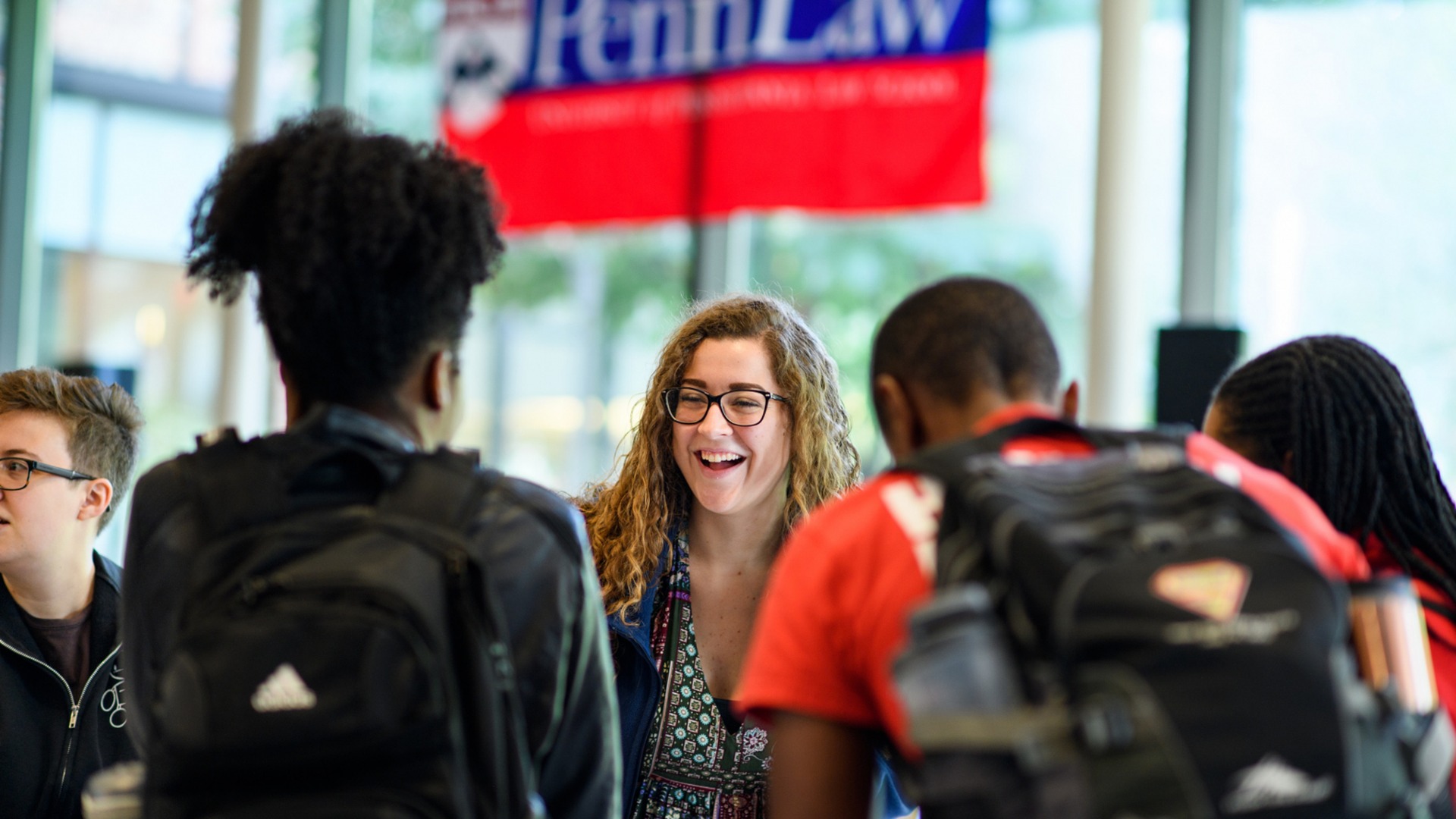
Penn’s Young Scholars High School Program lets academically strong juniors at local high schools take Penn courses for credit during the fall and spring semesters. Rather than following a separate pre-college curriculum, you enroll in undergraduate courses and are evaluated by the same academic standards and procedures as Penn undergraduates. You can use the program to deepen an existing interest or to investigate a new field before applying to college.
Alongside your course, you can use academic support at the Marks Family Writing Center, the Mathematics Department, and the Weingarten Learning Resources Center. If you attend a Philadelphia public or charter high school, you can take one course each semester tuition-free in 11th grade.
Why it stands out: It gives local juniors direct access to regular Penn coursework, tuition-free for eligible Philadelphia public and charter school students.




6. Georgetown University’s Law Pre-College Online Program
Location: Online
Cost/Stipend: $1,895 for the enrichment course; $3,995 for the college-credit version; need-based scholarships are available
Acceptance rate/cohort size: Application-based; decisions usually arrive within a week
Dates: Enrichment courses run in 1-, 2-, or 4-week sessions throughout the year; the college-credit option runs for 6, 8, or 12 weeks
Application Deadline: Rolling; tuition is due the day before your chosen session starts
Eligibility: Students aged 13 and older enrolled in high school or within a year of graduating | Open to international students
Georgetown’s online law course introduces you to the reasoning and advocacy skills lawyers use when working through a case. You learn how to separate key facts from core legal issues, gather evidence, construct persuasive arguments, and practice direct and cross-examination techniques. You also explore the Bill of Rights and how lawyers balance individual liberties, such as the Fourth Amendment’s right to privacy, against the needs of society.
The enrichment version includes 20 to 30 hours of flexible instruction with mentor support, while the college-credit option involves about 130 hours of graded coursework. You finish with a capstone project that asks you to analyze a legal scenario and respond as an advocate. Since the program is fully asynchronous, you can take part from any time zone.
Why it stands out: You practice legal analysis and advocacy through case-based problems, with the option of enrichment study or a college-credit course.
7. EnergyMag Virtual Internship
Location: Virtual
Cost/Stipend: Free; internships are unpaid
Acceptance rate/cohort size: Selective; only a limited number of interns are accepted
Dates: Quarter-time internships run year-round for 1 to 9 months; half-time summer internships run for 2 to 8 weeks
Application Deadline: Rolling; no fixed deadline is published
Eligibility: High school sophomores, juniors, and seniors with a GPA above 3.25 and at least one honors science or honors English class, although exceptions may be made | International eligibility not specified
EnergyMag’s virtual internship introduces you to research and analysis in renewable energy and the energy storage industry. Depending on your level, you research and analyze a specific company, technology, or narrow market, then produce a draft analysis report that can be published on EnergyMag’s site under your name. Along the way, you learn how to approach professionals for information, synthesize findings from multiple sources, and write for a professional audience.
Quarter-time interns work around eight hours each week, staying in daily electronic contact with EnergyMag and a mentor. If you produce a publishable report, you receive a Letter of Accomplishment summarizing your work. The experience suits you if you want research exposure to energy, sustainability, or business without needing to travel.
Why it stands out: You can publish a research report on the energy storage industry under your own name while still in high school.
8. Stanford FAST (Future Advancers of Science and Technology)
Location: East San Jose, CA, with one session at Stanford University
Cost/Stipend: No program fee is listed
Acceptance rate/cohort size: Not specified
Dates: Every other Saturday from September 19th, 2026 to March 20th, 2027, with one session at Stanford in December
Application Deadline: Not listed; contact the FAST team about joining
Eligibility: Students at Andrew P. Hill, Mt. Pleasant, James Lick, or Independence high schools in the East Side Union High School District; other ESUHSD students can email to ask | Not open to students outside ESUHSD, including international students
Stanford FAST pairs you with Stanford graduate student mentors to design and carry out original scientific research across the academic year. Projects span chemistry, biology, physics, engineering, and data science, depending on your interests. You meet with your mentors every other Saturday, with workshops along the way to support your research.
Every spring, you present your work at local and state science fairs and at an annual symposium at Stanford University. Meeting over several months gives you time to revise your methods and take ownership of your project.
Why it stands out: You develop an original STEM research project over several months with sustained mentorship from Stanford graduate students.
9. NYU Tisch Future Artists Programs
Location: NYU Tisch School of the Arts, New York City, NY
Cost/Stipend: Free
Acceptance rate/cohort size: Selective; online application plus an interview or audition; acceptance rate and cohort size are not publicly available
Dates: 14 Saturdays from January 30th to May 8th, 2027, between 9 am and 6 pm depending on the department
Application Deadline: November 9th, 2026 for spring 2027
Eligibility: High school first-years, sophomores, and juniors who can commute to NYU Tisch every Saturday; designed for students who may lack access to arts programs and would qualify for NYU financial aid | International eligibility not specified
Tisch Spring Future Artists gives you free arts training with the same rigor offered in NYU’s undergraduate departments. You apply to a specific workshop in dance, drama, recorded music, photography, filmmaking, dramatic writing, cinema studies, or game design. Each workshop requires a firm Saturday commitment across 14 weeks, and students who miss class may be dismissed from the program.
Depending on your workshop, you may create films, develop performances, produce original writing, or design games while receiving feedback from instructors. The program emphasizes collaboration, artistic technique, and developing your individual creative voice. As a free program, it opens up sustained pre-college arts training without the tuition of many university programs.
Why it stands out: You receive 14 weeks of free, discipline-specific arts training built on the rigor of Tisch’s undergraduate departments.
10. NYU Precollege Program for High School Students

Location: New York University, New York City, NY; courses are offered in person and online
Cost/Stipend: Charged by credit; about $700 to $16,000 for 0 to 8 credits, plus an application fee
Acceptance rate/cohort size: Selective; minimum 3.0 GPA; acceptance rate and cohort size are not publicly available
Dates: Fall, spring, and summer terms
Application Deadline: Varies by term; decisions usually arrive 2 to 3 weeks after a complete application
Eligibility: Current 11th or 12th graders for fall or spring, or rising 11th or 12th graders for summer | Open to international students, online in fall and spring and in person in summer
NYU Precollege allows you to enroll in undergraduate courses and earn college credit while you are still in high school. You choose from subjects such as business, STEM, humanities, social sciences, arts, media, and languages, depending on the semester’s course offerings. You study alongside NYU undergraduates and other Precollege students, with full access to resources like the NYU library system and peer tutoring.
In fall and spring, every Precollege student commutes, so the academic-year terms work best if you live near New York City or study online. The summer program adds on-campus housing, social activities, and College 101 workshops on admissions and study skills. The program can help you test a prospective major while learning how to manage college coursework before graduating.
Why it stands out: You earn NYU college credit by taking undergraduate courses alongside university students before finishing high school.
11. UC San Diego FUTURES Program
Location: UC San Diego Division of Extended Studies, San Diego, CA; delivery format varies by course
Cost/Stipend: Varies by course; payment plans are available on a case-by-case basis
Acceptance rate/cohort size: Open enrollment; cohort sizes vary by course
Dates: Courses follow the academic year from about September to June, with some compressed summer options
Application Deadline: Enrollment opens by August; you enroll directly through the FUTURES website
Eligibility: High school students | International eligibility not specified
UC San Diego’s FUTURES programs give you career-focused training in fields like machine learning, business management, marketing, digital circuit design, AutoCAD, Revit, robotics with JavaScript, and Spanish-English translation. Each program is designed specifically for high school students and taught by industry experts, with three courses that often build on each other in sequence. You earn three pre-college units per course when you pass with a C- or higher.
Completing all three courses in a track earns you an Award of Completion from UC San Diego Division of Extended Studies to use on college applications and resumes. Classes run through the academic year, so you can use spring to start or continue a pathway.
Why it stands out: You can complete a full career pathway and earn UC San Diego pre-college units while still in high school.
Join the Immerse Education 2027 Essay Competition
Follow the instructions to write and submit your best essay for a chance to be awarded a 100% scholarship.
12. Georgetown University’s Pre-College Course in Medical Research
Location: Online
Cost/Stipend: $1,895; need-based scholarships are available
Acceptance rate/cohort size: Application-based; decisions usually arrive within a week
Dates: 1-week, 2-week, and 4-week sessions throughout the year
Application Deadline: Rolling; tuition is due the day before your chosen session starts
Eligibility: Students aged 13 and older enrolled in high school or within a year of graduating | Open to international students
Georgetown’s Medical Research course shows you how researchers formulate, run, and evaluate the evidence behind clinical trials. You learn the steps of evidence-based medicine, build a research question with the PICO method, and compare ethical and unethical research through case studies. The course also covers the basics of biostatistics, epidemiology, and reading medical journal articles, with a focus on cancer research.
For the capstone, you create a video presentation on the scientific method in clinical trials, drawing on two or three research papers you choose. A mentor guides you through 20 to 30 hours of flexible coursework, and you earn a Georgetown Certificate of Completion when you finish.
Why it stands out: You trace how clinical trials lead to medical discoveries while building a mentor-supported capstone on cancer research.
13. Columbia College Edge: Academic Year
Location: Columbia University, Morningside Campus, New York City, NY
Cost/Stipend: $2,672 per point; a typical three-point course costs 95 from spring 2027) and course-specific and program fees
Acceptance rate/cohort size: Selective; minimum 3.3 GPA; acceptance rate and cohort size are not publicly available
Dates: Spring 2027 runs from January 19th to May 14th, 2027
Application Deadline: Rolling; specific deadlines vary by term
Eligibility: Domestic students in grades 11 to 12 for fall and spring | Not open to international students in fall or spring (international students can apply for summer)
College Edge allows you to take actual Columbia undergraduate courses for credit while you are still in high school. You choose from a pre-approved list of courses, study alongside Columbia undergraduates, and should plan for two to three hours of study outside class for every hour in class.
An academic advisor helps you select courses and navigate registration, although admission to College Edge does not guarantee a place in a particular class. You can also attend seminars and workshops designed to prepare you for college and career, run by the program’s Student Life team. On-campus housing is not available, so if you won’t be living at home, you must stay with an adult family member or family friend.
Why it stands out: You earn Columbia credit by joining regular undergraduate classes rather than taking a separate high school curriculum.
14. MISA Spring
Location: MISA office, Oakland, CA
Cost/Stipend: $1,950 plus a $75 non-refundable application fee; program materials, health certifications, clinical equipment, and daily lunch and snacks are included
Acceptance rate/cohort size: Application and interview-based; acceptance rate and cohort size are not publicly available
Dates: Cohort A runs March 29th to April 2nd, 2027, and Cohort B runs April 5th to 9th, 2027, Monday to Friday, 9 am to 3 pm
Application Deadline: January 2nd, 2027
Eligibility: High school students in grades 9 to 12 | International eligibility not specified
MISA Spring is a five-day medical immersion program designed to give you practical exposure to healthcare skills during spring break. You take part in practical activities such as phlebotomy training and hospital-based clinical simulations while learning how healthcare teams work together. The program emphasizes active application, so you practice skills rather than only hearing about medical careers in lectures.
You also earn at least five health-focused certifications during the week, each valid for a minimum of two years. Collaborative activities help you develop communication, listening, and teamwork in healthcare settings. Two separate cohorts are offered so students with different spring-break dates can participate.
Why it stands out: You combine clinical simulations and practical skills training with at least five health-related certifications during one spring-break week.
15. FIT High School: Spring 4-Day Workshops
Location: Fashion Institute of Technology, New York City, NY
Cost/Stipend: $440 for one four-day workshop, including fees
Acceptance rate/cohort size: Registration-based; places are available until workshops fill
Dates: Four Saturdays during the spring semester, six hours a day; spring 2027 dates have not been posted yet
Application Deadline: Spring registration typically opens in December; check FIT’s Precollege calendar for the closing date
Eligibility: High school students in grades 9 to 12 at the time of registration | International eligibility not specified
FIT’s Spring 4-Day Workshops let you explore a focused creative skill or career area over four Saturday sessions. You choose from short workshops in fashion, design, business, and other subjects FIT specializes in, with availability changing each spring. The workshops are designed for high school students and focus on practical exercises rather than long-term coursework.
Depending on the workshop, you may create portfolio material, practice a technical process, or explore what professionals in a creative field actually do. The short format suits you if you want concentrated exposure to an FIT subject without a full-semester commitment.
Why it stands out: You can spend four focused Saturdays developing a specific creative skill through a workshop designed and delivered by FIT.
Frequently asked questions: Spring Break Programs for High School Students
Do spring break programs look good on college applications?
Yes, a spring break program can strengthen your application when it shows sustained interest or a concrete outcome. College credit from NYU Precollege or Columbia College Edge shows you can handle university coursework, while the instructor evaluations from MITES Saturdays give admissions officers a written view of your work. Shorter programs help most when you connect them to a bigger story, like a research paper or portfolio. For more credit-bearing options, see these college credit courses for high school students.
Are there free spring break programs for high school students?
Yes, several free options exist, but most are limited to local students. MITES Saturdays is free for eligible public school students in Boston, Cambridge, and Lawrence, and NYU Tisch’s Spring Future Artists workshops are free if you can commute to NYU every Saturday. EnergyMag’s virtual internship is also free, though unpaid. If you need a paid program, Georgetown’s online courses offer need-based scholarships.
How much do spring break programs for high school students cost?
Costs range from free to more than $8,000 per course. FIT’s four-day workshops cost $440, Montclair State charges $825 per three-credit course, and MISA Spring costs $1,950 plus a $75 application fee. College-credit options cost more: a typical three-point course at Columbia College Edge costs $8,016 before fees. When you compare prices, check whether materials, meals, and housing are included.
Can international students join spring break programs in the US?
It depends on the program. Online options like Georgetown’s pre-college courses and NYU Precollege’s fall and spring classes accept international students, but Columbia College Edge only admits international students in summer. Many free programs, including MITES Saturdays and Stanford FAST, are limited to local students. Immerse Education’s Online Research pathway is open to students aged 13 to 18 from around the world, with 1:1 tutoring.
Are there online spring break programs for high school students?
Yes, several programs let you study from home on your own schedule. Georgetown’s Law and Medical Research enrichment courses run in one-, two-, or four-week asynchronous sessions, so a one-week session can fit into your break. For a longer project, Immerse Education’s Online Research pathway pairs you with a tutor from Oxford, Cambridge, or an Ivy League institution for 10 to 15 hours of 1:1 tutorials, ending in a research paper. You can also explore these online research programs for high school students.
When should you apply for a spring break program?
Apply in the fall or early winter, since many deadlines fall months before spring. NYU Tisch’s Spring Future Artists deadline is November 9th, MITES Saturdays closes on December 3rd, and MISA Spring closes on January 2nd. Rolling programs like Georgetown’s online courses give you more flexibility, with decisions in about a week. Check each program’s dates against your school calendar before applying, since spring breaks vary by district.
What a spring break program can teach you
A single week of clinical training or a Saturday arts workshop can show you more about a subject than months of reading about it alone.
Many spring break programs for high school students close applications months ahead, so check deadlines in the fall and plan around your school calendar.
Whatever you choose, notice which tasks energize you most, because that reaction can help guide your future major and shape your college list.
For more ways to plan your next steps, explore our University Preparation blogs on choosing courses, building applications, and getting ready for university.






Unlock Inspiring Opportunities with the Immerse Education Newsletter
Join our newsletter to stay ahead with exclusive updates, exciting programme highlights, and expert insights from the world of immersive education.
Learn how Immerse can transform your life
An in-depth overview of our university and career preparation programmes
Get a glimpse into the life of an Immerse participant
Find the right programme for you with sample timetables, location showcases, and more