15 Summer Programs for Teens

Summer break gives teens a good chunk of free time, weeks that don’t come with a syllabus attached. A summer program is one of the smartest ways to make use of that stretch, instead of watching it disappear into a routine of sleeping in and scrolling through your phone. You get uninterrupted time to explore something you’ve been circling for a while, guided by instructors who actually work in that field, not just teach a version of it from a textbook.
Think about spending your summer coding a small project from scratch, working through a psychology case study that doesn’t come with a simple answer, building a business pitch you actually have to defend out loud, or running a hands on science experiment where the results aren’t guaranteed. That kind of experience teaches you things a regular class doesn’t have time for, mostly because a program isn’t racing against a bell or a fixed curriculum. It also leaves you with something specific to talk about later, in a college essay, an interview, or a resume that needs more substance than just a list of extracurriculars.
How can a summer program help you explore your interests?
A summer program gives you real, low-pressure time to actually try something out, instead of assuming you’d enjoy it based on a single class period. If a subject like engineering, writing, or psychology has caught your attention but you’ve never had a real chance to sit with it, a program lets you test that properly, without needing to commit to it for your entire future.
It’s also useful for figuring out what doesn’t interest you, which matters just as much as finding what does. Some teens come out of a program with a real, specific direction they want to pursue. Others come out with a clear list of things to cross off, which honestly saves a lot of time later. Either way, it makes decisions about classes, majors, and even the jobs you go after down the line a lot easier to make with confidence.
To help you find the right fit, we’ve put together a list of 15 summer programs for teens!
For related options, consider the online research program.
Key Takeaways
- Free programs include MIT’s Research Science Institute, the Princeton Summer Journalism Program, the Annenberg Youth Academy, and American University’s Summer Civics Institute.
- Several research-focused programs pay stipends, including SEAP with up to $4,500, the American Museum of Natural History’s Science Research Mentoring Program at $2,500, and the Smithsonian’s NMNH Summer High School Internship at $5,600.
- Programs restricted to specific regions or citizenship include SEAP, Carnegie Mellon’s SAMS, the American Museum of Natural History’s program for NYC students, and the Kenan Fellows internship for Palm Beach or Martin County residents.
- Program lengths range from one week, as with American University’s Summer Civics Institute, to ten months for the American Museum of Natural History’s Science Research Mentoring Program.
- Research-based programs like MIT’s RSI, the Garcia Center’s REU, and NYU Tandon’s ARISE place students directly into ongoing faculty or lab research projects.
- Costs for non-free programs range from $999 for the University of Florida’s Summer Media Institute to $8,850 for Stanford’s Summer Humanities Institute.
- Application deadlines span from October for Yale Young Global Scholars’ early action to April for the Annenberg Youth Academy.
- Immerse Education’s Academic Insights Programme runs across six global locations, including Oxford, Cambridge, and Singapore, for students aged 13 to 18 in classes of 7 to 10.
15 Summer Programs for Teens
1. Center for Excellence in Education Research Science Institute
Location: Massachusetts Institute of Technology (MIT), Cambridge, MA
Cost: An application fee of $75 (need-based application fee waivers available), though the six-week residential program itself is completely cost-free to attend
Dates: June 28 – August 8
Application Deadline: December 10
Eligibility: High school juniors (11th graders); U.S. citizens and permanent residents apply directly, while international students may apply if their country participates
This is a highly selective program that offers places for just 100 high school students from around the world with excellent academic standing. If selected, you will be participating in its on-campus sessions covering scientific theory and off-campus sessions focused on research. You will spend the first week of the program learning advanced topics from university professors.
In the weeks to follow, you will gain hands-on practice in every step of the research process. This includes reading existing literature in your area of interest, developing a detailed plan for your research, and conducting it. The last week will be dedicated to preparing an oral or a written presentation of your discoveries.
Why it stands out: During the five weeks you work on your individual research project, you will have some talented researchers and scientists mentoring you.
2. Immerse Education’s Academic Insights Programme
Location: Oxford, Cambridge, Singapore, Sydney, Toronto, and Boston
Cost: Varies; financial aid available
Cohort size: 7-10 students per class
Dates: 2 weeks during the summer
Application Deadline: Multiple summer cohorts; rolling admissions
Eligibility: Students aged 13–18 currently enrolled in middle or high school
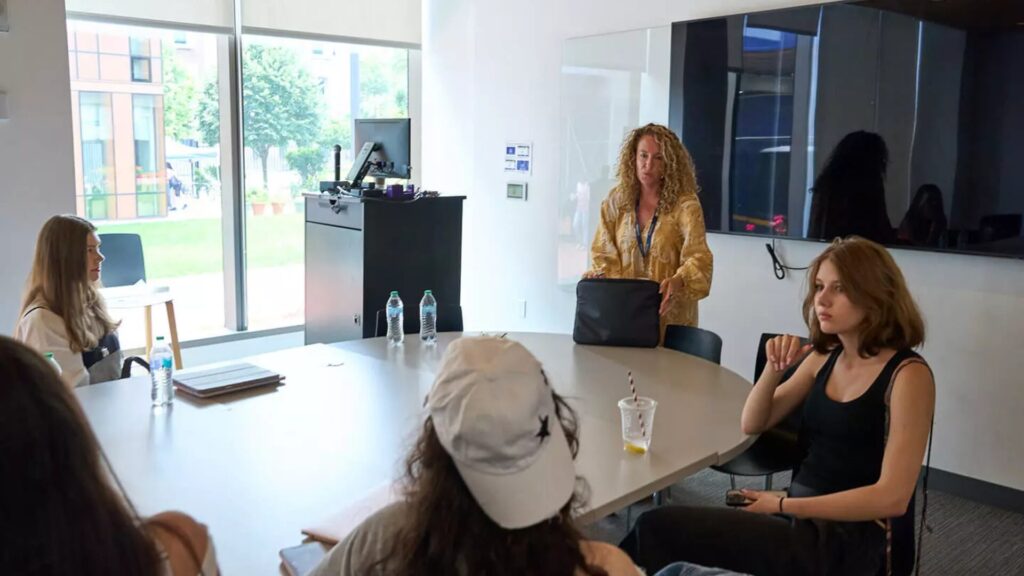
The Academic Insights Program is designed to let high school students get a taste of college life before enrolling in one. As part of this program, you will live on campus and learn from instructors who work for top universities like Oxford and Cambridge. You will be able to choose from a wide range of subject areas and focus on them for two weeks, including architecture, AI, business management, computer science, economics, medicine, philosophy, and more.
Regardless of your chosen discipline, your classes will engage you in a hands-on learning experience through interactive activities. Some examples include dissections in medicine, designing a robotic arm in engineering, participating in a moot court for law, or building creative writing portfolios and business case studies. You are required to submit an independent project for which you will receive written feedback. The program will also provide you with a certificate of completion. You can find more details about the application here.
Why it stands out: You’ll study under expert academics, be guided daily by a university student mentor, complete a project you can show in future applications, and experience genuine university college life, with other campuses worldwide as alternatives.
3. Stanford Institutes of Medicine Summer Research Program
Location: Stanford University, Stanford, CA
Cost: $40 application fee; limited need-based stipends available
Dates: June 7- July 29
Application Deadline: Late February
Eligibility: 11th and 12th graders who will be at least 16 years old when the program starts, are US citizens or permanent residents, and currently live and attend a high school in the US; preference given to students in the Bay Area
This is an eight-week research program that allows you to conduct simple research on a medicine-related topic. More specifically, you will be conducting research in one of the following areas: immunology, neurobiology, cancer biology, bioengineering, stem cell and regenerative medicine, cardiovascular biology, bioinformatics, and genetics and genomics.
By engaging you in such research projects, the university ensures that it enhances your interest in biological sciences and medicine. The program is also your chance to work alongside the faculty, postdoctoral fellows, students, and researchers from Stanford University. It also helps you gain hands-on practice and a better understanding of how research is done.
Why it stands out: You will benefit from one-on-one mentorship offered by Stanford graduate students or postdoctoral fellows.
4. Carnegie Mellon University Summer Academy for Math and Science (SAMS)
Location: Carnegie Mellon University, Pittsburgh, PA
Cost: Free to attend, though standard applications require a $50 application fee
Acceptance rate/cohort size: Not specified
Dates: June 15 & 16 (Part 1) and June 20 – August 1 (Part 2)
Application Deadline: February 1
Eligibility: Rising 12th graders who are US citizens or permanent residents and will be at least 16 years old when the program starts
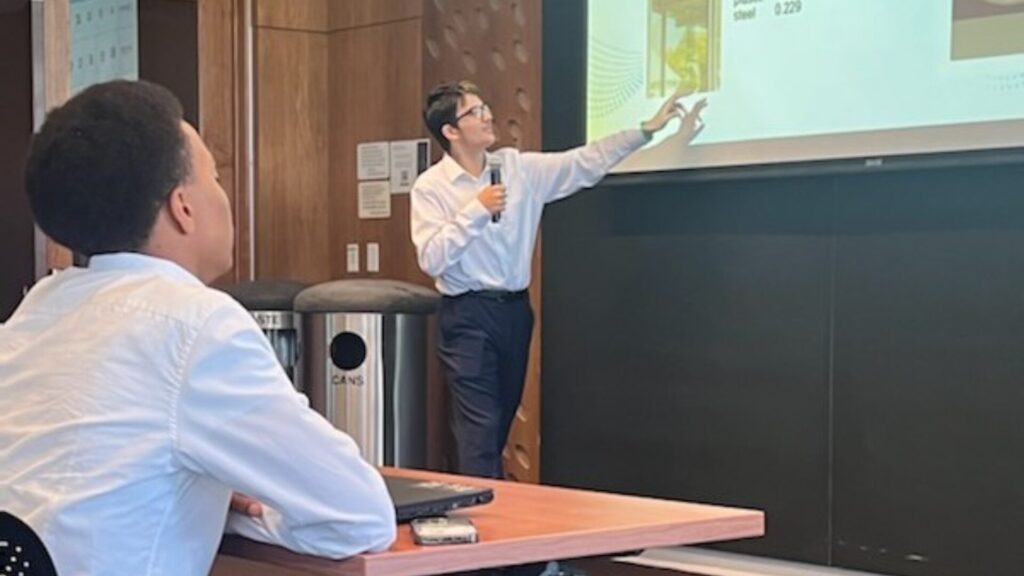
The Summer Academy for Math and Science is a three-part program that begins with a virtual component designed to equip you with the skills you need to succeed in the second part of the program. Part 2 will be a six-week residential experience at the university where you will attend seminars in science and math and conduct research on a STEM-related topic, which you will be presenting at the research symposium.
You will also be scheduled with workshops focused on STEM-related research, career exploration, college admission, financial aid, and more. The third part of the program is the continued support you will receive virtually in areas such as college prep, budgeting, and more even after the six weeks of the program.
Why it stands out: SAMS was started by Carnegie Mellon University’s Center for Student Diversity & Inclusion as a way to get more students who are underrepresented in STEM to enter the field.
5. Garcia Center for Polymers at Engineered Interfaces Research Experience for High School Students
Location: Stony Brook University, Stony Brook, NY
Cost: $4,000 for laboratory usage fee and additional fee for accommodation, meal plan, and health service
Dates: June 24 – August 7
Application Deadline: Late February or Early March
Eligibility: High school students who are at least 16 years old when the program starts, have an unweighted GPA of 3.8 on a 4.0 scale or 95 out of 100, are enrolled in three of the following subjects: English, chemistry, mathematics or calculus, physics and biology, and can legally reside in the US during the program.
Organized by the Garcia Center for Polymers at Engineered Interfaces, this is a rigorous program that calls students with a strong academic record to work on an individual project. During the seven weeks of the program, you will have faculty from the Garcia Center guiding you on your research project, and the program will also include formal instruction.
In fact, the program even allows you to continue your research through the academic year by discussing it with your program mentor and coming up with a research schedule. Past students have done research in topics such as tissue engineering, hydrogels, flame retardants, polymer nanocomposites, and more, so you can expect to focus your research on such or related topics.
Why it stands out: Students have often gone on to win national research competitions, receive patent awards, and more for their research work.
6. California State Summer School for Mathematics & Science (COSMOS)
Location: Available at UC Davis, UC Irvine, UC Los Angeles, UC Merced, UC San Diego, and UC Santa Cruz, CA
Cost: A non-refundable application fee of $46 and a non-refundable program fee of $5,518 (financial assistance available)
Dates: July 5 – 31 (UCI, UCSD) and August 1 (UCD, UCLA, UCM, UCSC)
Application Deadline: January 7 – February 6
Eligibility: High school students from California; not open to international students
The COSMOS program is aimed at high school students who have shown a strong interest in STEM subjects. If selected for the program, you will have the opportunity to learn some advanced STEM topics that go beyond your high school curriculum. Simultaneously, the intensive program will also assign you hands-on activities and lab work.
With the COSMOS program taking place across several University of California campuses, you will find that the syllabuses will be unique to each campus and based on the teaching and research strengths there. Moreover, you get to work closely with the professors, researchers, and scientists of the particular university you are attending the program at.
Why it stands out: The program is sure to get you interested in choosing a STEM career and give you a clearer understanding of what studying or having a career in the field looks like.
7. Yale Young Global Scholars (YYGS)
Location: Yale University, New Haven, CT
Cost: $7,000 (need-based financial aid available)
Dates: June 20 – July 2 (Session I), July 4 – 16 (Session II), and July 18 – 30 (Session III)
Application Deadline: October 15 (Early Action Deadline) and January 6 (Regular Decision Deadline)
Eligibility: 10th and 11th graders from anywhere in the world who will be between the ages of 16 and 18 when Session III starts and have not previously participated in the program before; open to international students
Welcoming academically talented students from all over the world, the Yale Young Global Scholars program is an opportunity to dive into an interdisciplinary topic for a duration of two weeks on the Yale campus. The program offers three academic tracks. The Innovations in Science & Technology course lets you explore different ways science can be used to solve real-world problems; the Politics of Law & Economics course covers economic theories, government values and practices, legal frameworks, and more.
The Solving Global Challenges course dives into the creative and interdisciplinary ways to solve contemporary global issues. Regardless of your topic, the sessions are engaging and foster stimulating discussion. Though each of the three academic tracks is offered in all three sessions, you can only attend one, so be sure to rank the tracks in your application according to your interests.
Why it stands out: You will be surrounded by international students who can give a fresh perspective on the topics of discussion.
8. Princeton Summer Journalism Program
Location: Emma Bloomberg Center for Access and Opportunity at Princeton University, Princeton, NJ
Cost: Free
Dates: Year-long with summer intensives held late June through early August
Application Deadline: Application opens in early December and closes in January
Eligibility: 11th graders who have a permanent address in the US, have a minimum cumulative GPA of 3.5 on a 4.0 scale, plan to attend a college in the US, and meet one of the socioeconomic factors listed by the program.
The Princeton Summer Journalism Program is a much more suitable program for junior-year students who are passionate about journalism. One of the standout components of the program is the summer intensives held from June to August, during which time you will learn from industry professionals. It starts with online sessions where you will be completing weekly reading assignments, writing your articles, and meeting with college counselors who will help with college applications.
Following this is a 10-day residential experience at Princeton University in which you get to cover a sports event and a news event in Princeton, work on an investigative journalism project, produce your newspaper, and much more. The program continues to offer support even after you have left.
Why it stands out: PSJP arranges site visits to newsrooms of publications like The New York Times, Huffington Post and Bloomberg so that you gain first-hand exposure to how professional journalists work.
9. Stanford Summer Humanities Institute
Location: Stanford University, Stanford, CA
Cost: Tuition ranges from $8,250 to $8,850 (need-based financial aid available)
Dates: June 21 – July 10 (Session One) and July 12 – 31 (Session Two)
Application Deadline: February 2
Eligibility: 10th and 11th graders from anywhere in the world who are at least 15 years old and will be less than 18 years old during the program
This is a three-week residential program hosted at Stanford University where you can participate in seminars and discussions that expose you to some important topics in the humanities, such as politics, literature, philosophy, and more. Stanford University will place you in a humanities course based on the course preferences mentioned in your application.
Your options include Ancient Rome and Its Legacies, Colonial Extractions of African Cultural Treasures, Magical Realism: One Hundred Years of Solitude, Happiness and the Good Life, and others. Regardless of which course you are enrolled in, classes will meet two hours each weekday and consist of lectures, group discussions, and individual work. You will be scheduled with other enrichment activities and field trips on the weekends.
Why it stands out: The university’s professors and graduates run the sessions, helping you form a better understanding of the world.
10. Annenberg Youth Academy for Media and Civic Engagement
Location: USC Annenberg School for Communication and Journalism, Los Angeles, CA
Cost: Free
Dates: June 15 – July 2
Application Deadline: April 19
Eligibility: High school students who have completed 9th grade and live and attend a high school in Boyle Heights, Compton, Crenshaw, East Los Angeles, Historic South Central, Huntington Park, Hyde Park, Jefferson, Koreatown, Lincoln Heights, Lynwood, Mid City, Monterey Park, Pico Union, South Gate, Vernon, Watts, and Westlake.
The Annenberg Youth Academy for Media and Civic Engagement selects a small cohort of 26 students from communities around the University of Southern California and exposes them to the importance of media communications and journalism in shaping civic-minded leaders and innovators. If selected for the program, you will have the opportunity to attend undergraduate-level classes.
You will also get to develop your skills in writing, critical thought, public speech and debate, multimedia production, interviewing, and ethnography. By equipping you with such skills, the program prepares you for the current workforce. Moreover, the program will also introduce you to the career prospects available in media and journalism.
Why it stands out: You will have the chance to network with professionals who are making some significant contributions to the communication, journalism, and public relations fields.
11. American University Summer Civics Institute on American Principles and Debates
Location: American University, Washington, DC
Cost: Free
Dates: June 21 – 28
Application Deadline: April 15
Eligibility: High school students; international student eligibility not specified
In this week-long program, you will be attending seminars hosted by The Lincoln Scholars Program and the Political Theory Institute of the American University. During your participation in these seminars, you will be introduced to some of the major debates and texts that help you form a more profound understanding of the liberal democracy and political traditions of America. The experience will give you insight into the college syllabus and what to expect when you join a university.
By the end of the program, you will feel more confident in your ability to read and analyze complicated texts. The program will make use of texts like The Declaration of Independence, Abraham Lincoln’s On the Perpetuation of Our Political Institutions, Elizabeth Cady Stanton’s Declaration of Sentiments, and others. You will also learn to share your opinions clearly in written or spoken format.
Why it stands out: The seminars kindle conversations among the participants and with the professors from the university, thus expanding your perspectives.
12. CJC’s Summer Media Institute (SMI)
Location: University of Florida, Gainesville, FL
Cost: $999
Dates: June 18 – 23 (SMI) and June 24 – 29 (SMI Sports)
Application Deadline: March 5
Eligibility: High school students; open to international students
The University of Florida’s College of Journalism and Communication organizes this program that allows high school students to participate in a series of workshops to explore the fields of journalism and communication. As a participant, you will also be attending electives and specializations where you have the opportunity to learn broadcast reporting, photojournalism, feature & newswriting, anchoring & hosting, and more.
Moreover, the program has a curriculum designed to help you feel more prepared for careers in the journalism and communication fields. You will find that there are electives focused on magazine writing, public relations and event management, and more. CJC even hosts an additional session for students who are particularly interested in sports journalism.
Why it stands out: The program gives you the opportunity to learn directly from the university’s professors and some experienced industrial professionals.
13. American Museum of Natural History Science Research Mentoring Program
Location: American Museum of Natural History, New York City, NY
Stipend: $2,500
Dates: August – June (includes a 4-week Summer Institute in August, followed by a mentored research experience from September through June)
Application Deadline: March 1
Eligibility: 10th and 11th graders who live and attend school in New York City and have passed the last three or more semesters; students should also be enrolled in or have completed one of the courses listed here, or attend one of the partner schools or programs listed here; not open to international students
If selected for this 10-month program by the American Museum of Natural History, you will start by participating in a summer institute that runs for four weeks. At this summer institute, you will develop your knowledge in data science. Once you have completed this training, you will join the museum’s researchers for the next part of the program.
You will spend four hours per week working alongside them on their ongoing projects, which are usually in subject areas like astrophysics, anthropology, conservation biology, genetics, and genomics. Through your involvement in the research project, you will learn to conduct experiments with DNA in a lab setting, analyze data collected with a space telescope, code and analyze data in Python, R, and other programming languages, and more.
Why it stands out: The program ensures that you are working on a new and unique research topic or question so that you get to do actual research rather than replicating something that has already been done.
14. NMNH Summer High School Internship
Location: Smithsonian Institution, Washington, DC
Stipend: $5,600 ($700/week)
Acceptance rate/cohort size: Not specified
Dates: June 23 – August 14
Application Deadline: February 16 – March 20
Eligibility: 9th to 12th graders aged 15 to 18 who live within the D.C., Maryland, or Virginia area and within commuting distance of the National Museum of Natural History for the full duration of the internship program
Participating in this internship program hosted by the Smithsonian National Museum of Natural History can be one of the best ways to learn what working in a museum environment looks like. You will find that there are various internship roles available, among which some are science-centered, and others are non-science roles.
You can expect to find options in exhibits/communications, botany, anthropology, paleobiology, science education, and more. Based on your role, you will find yourself researching and writing articles about the natural world, managing and conserving plant specimens, restoring museum materials, or engaging in other tasks. You will also benefit from field trips, behind-the-scenes tours, career readiness skill development sessions, and more.
Why it stands out: The museum will pair you with a museum staff member who will supervise you throughout your participation in the project.
15. Kenan Fellows High School Summer Internships
Location: Wertheim UF Scripps Institute, Jupiter, Florida
Stipend: $4,480
Dates: June 5 – July 31
Application Deadline: March 1
Eligibility: Rising 11th and 12th graders who are at least 14 years old, have a minimum GPA of 3.0 or higher, live and attend school in Palm Beach or Martin County, and are U.S. citizens/permanent residents.
The Kenan Fellows High School Internships program is your opportunity to work alongside scientists who are researching areas such as cancer, the coronavirus, and more. Over the eight weeks of the program, you will spend time at The Wertheim UF Scripps Institute laboratories, where you will be working on biomedical research projects with the scientists there to guide you.
You will specifically learn scientific process, research planning, bench experience, experimental design, data analysis, and more. Once you have completed your research work, you will need to produce a written scientific abstract, an oral presentation, and a poster of it. Additionally, you will be scheduled for weekly seminars.
Why it stands out: The internship program can be a good stepping stone for students who are thinking of pursuing careers in basic research, drug discovery, biotechnology, or biomedical engineering.
Frequently asked questions: Summer Programs for Teens
What is the best free summer program for teens interested in research?
MIT’s Research Science Institute is widely regarded as one of the most rigorous free options, pairing students with mentors for an individual research project over six weeks. The Princeton Summer Journalism Program and American University’s Summer Civics Institute are also free but focus on journalism and civics rather than STEM research. Students specifically wanting paid research experience should also consider SEAP or NYU Tandon’s ARISE, which combine no-cost participation with stipends.
Are there paid summer programs or internships for teens?
Yes. The Science & Engineering Apprenticeship Program (SEAP) offers a $4,000 to $4,500 stipend, the Smithsonian’s NMNH Summer High School Internship pays $5,600 over eight weeks, and NYU Tandon’s ARISE program provides a $2,000 stipend alongside lab placement. These paid options tend to have narrower eligibility, often requiring citizenship, permanent residency, or specific geographic location.
Can international students apply to summer programs for teens in the US?
Some programs are open to international students, including MIT’s Research Science Institute for students from participating countries and Immerse Education’s Academic Insights Programme, which accepts students worldwide. Many others, including SEAP, Carnegie Mellon’s SAMS, the Stanford Institutes of Medicine Summer Research Program, and the Smithsonian internship, are restricted to U.S. citizens or permanent residents. International applicants should confirm citizenship requirements carefully before applying.
What is the difference between a summer program and a summer internship for teens?
Summer programs, like Immerse Education’s Academic Insights Programme or Yale Young Global Scholars, typically combine coursework, seminars, and a personal project within a structured academic schedule. Internships, such as the Smithsonian’s NMNH Summer High School Internship or the Kenan Fellows program, place students directly into a workplace or research setting with a stipend and hands-on responsibilities tied to ongoing projects. Students wanting academic breadth might prefer a program, while those wanting workplace experience and pay might prefer an internship.
Which summer programs for teens are best for exploring humanities or social science interests?
Stanford’s Summer Humanities Institute offers seminar-based courses in literature, philosophy, and politics over three weeks, while Yale Young Global Scholars includes a Politics of Law & Economics track alongside its other interdisciplinary options. American University’s Summer Civics Institute focuses specifically on American political traditions and debate. Students wanting broader subject flexibility might also consider Immerse Education’s Academic Insights Programme, which includes philosophy among its 20-plus subject options.
How selective are summer programs for teens?
Selectivity varies widely. MIT’s Research Science Institute accepts only around 100 students globally, and Princeton’s Laboratory Learning Program takes as few as two interns per project. Larger-scale options like Yale Young Global Scholars and Stanford’s Summer Humanities Institute admit more students but remain competitive, while Immerse Education’s Academic Insights Programme maintains small classes of 7 to 10 students to preserve close instruction.
Your summer program was just the entry point
Choosing among these summer programs for teens gives you a genuine introduction to college-level academics and hands-on project work.
Once the program ends, you can turn that early exposure into a clearer sense of your academic and career direction.
The confidence, skills, and academic habits you built become a strong foundation for stronger university applications ahead.
Keep building on what you started this summer by exploring our University Preparation blogs for guidance on your next steps.



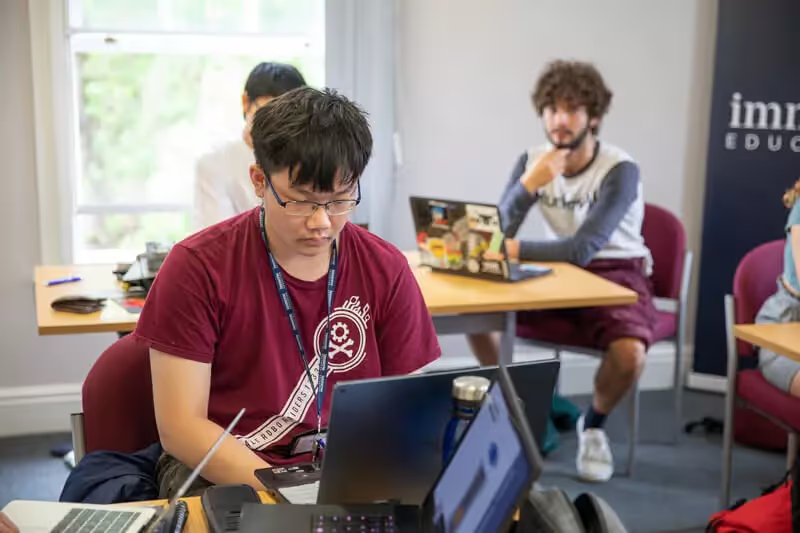
Join the Immerse Education 2027 Essay Competition
Follow the instructions to write and submit your best essay for a chance to be awarded a 100% scholarship.
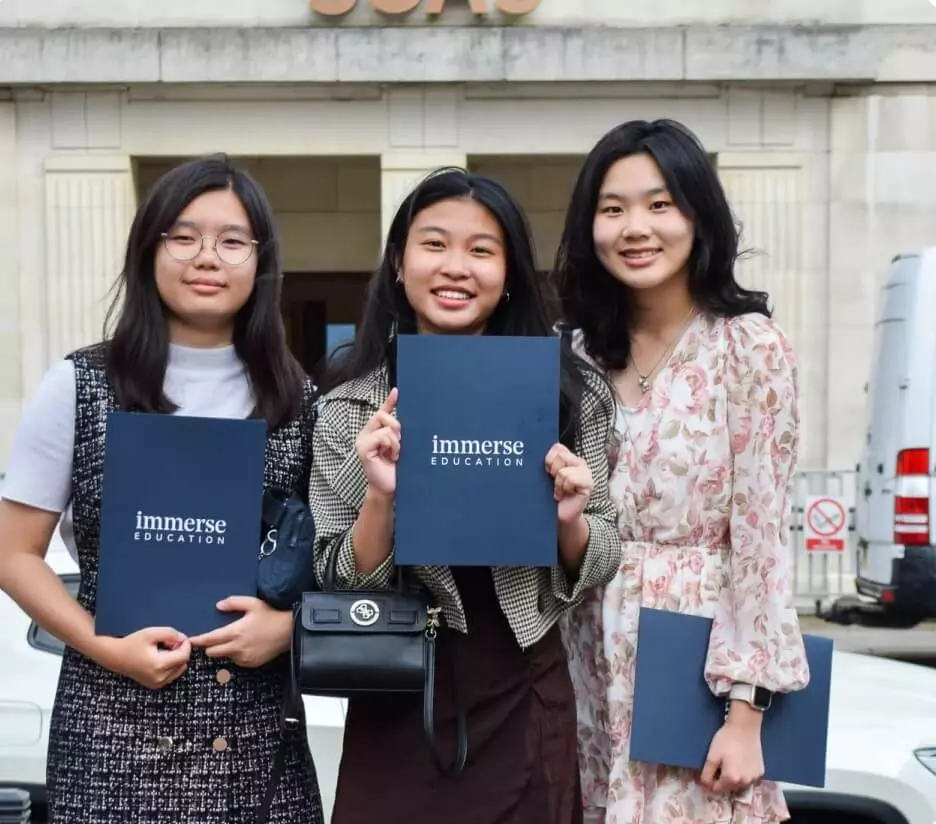



Unlock Inspiring Opportunities with the Immerse Education Newsletter
Join our newsletter to stay ahead with exclusive updates, exciting programme highlights, and expert insights from the world of immersive education.
Learn how Immerse can transform your life
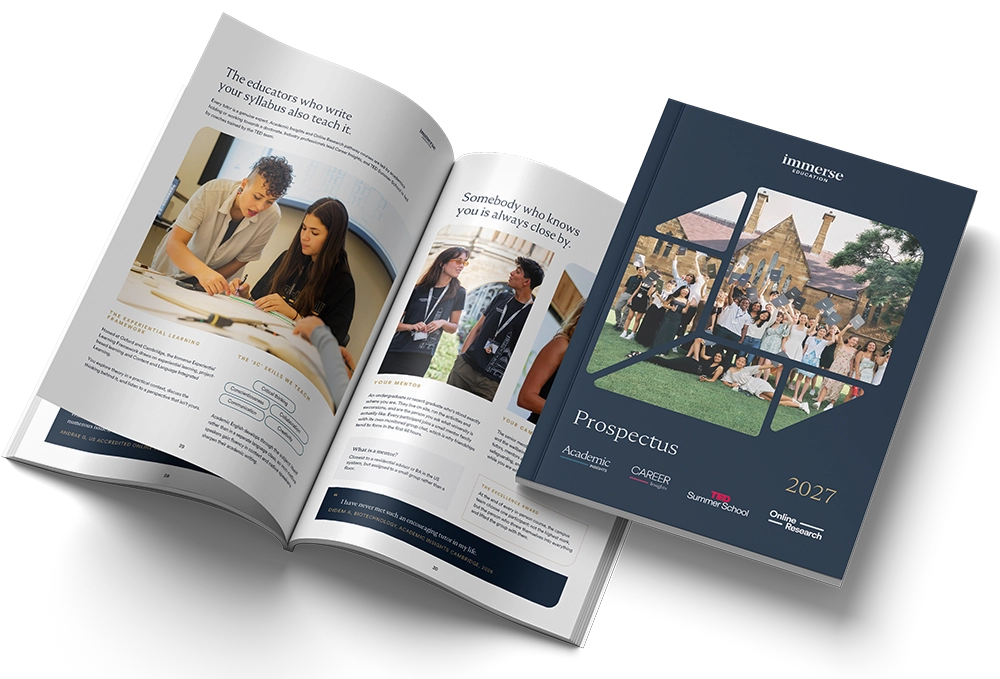
An in-depth overview of our university and career preparation programmes
Get a glimpse into the life of an Immerse participant
Find the right programme for you with sample timetables, location showcases, and more