15 Summer Schools in London for 14 Year Olds

As a 14-year-old, you are at the point where school subjects start turning into interests you might actually pursue. Summer schools in London for 14-year-olds put you inside institutions like these for a week or more, learning from academics, professional actors, and working artists rather than from a textbook.
Picture yourself running an experiment in an Imperial College teaching lab, rehearsing a scene at a conservatoire in the Barbican, or sketching beside the Thames at an art school studio. You also pick up an early feel for lectures, studio critiques, and campus facilities, along with a clearer sense of how you learn best.
These programs can act as a foundation for your college journey, giving you a taste of what university life is like at a leading institution, in person. Because so many universities, conservatoires, and cultural organizations share one city, a London summer school for 14-year-olds can be residential or a daily commute, free or paid, scientific or artistic.
Why London for 14-Year-Olds?
Few cities concentrate as many teaching institutions within one transport network. Imperial College London, University College London, King’s College London, and the London School of Economics all run school outreach programs, and specialist conservatoires such as the Guildhall School of Music & Drama, the Royal Central School of Speech and Drama, and Trinity Laban teach young people directly on their own campuses.
National museums, including the Science Museum, the Natural History Museum, and the British Museum, offer free entry, so you can extend anything you study during the day with primary collections. The Tube and rail network means a summer school in London for 14-year-olds rarely requires boarding; you can attend a conservatoire course in the morning and be home for dinner.
If you are weighing future degree subjects, that density makes London an efficient place to test several directions in a single summer. To help you choose well, we have curated 15 summer schools in London for 14-year-olds.
For adjacent opportunities, consider summer programs in Oxford and summer programs in Cambridge.
Key takeaways
- Imperial College London’s Year 10 Insights Summer School is completely free but highly selective, restricted to UK students on track for strong GCSE grades in maths and sciences.
- Immerse Education’s Psychology Summer School spans six global locations, including London, Sydney, and Toronto, with classes of seven to 10 students open to students worldwide aged 13 to 18.
- King’s Maths School’s Girls Love Maths and Physics! Summer School is completely free, admitting 160 students annually for four days taught by staff from a specialist maths-focused sixth form.
- Mission Discovery Summer School at King’s College London costs £799 for the day program or £1,999 for residential, with winning space experiments actually built and launched to the International Space Station.
- The Royal Central School of Speech and Drama’s Play in a Week is completely free, prioritizing first-generation applicants, young carers, and students eligible for free school meals.
- UAL’s International Summer School for 11 to 15 Year Olds starts from £2,500 for a two week program taught at Chelsea College of Arts, next door to Tate Britain.
- Camden Summer University is entirely free but restricted to Camden residents, offering a broad catalogue of courses spanning creative arts, cookery, sport, and nationally recognized certifications.
- Program costs for London summer schools for 14-year-olds range from free options like Imperial’s Year 10 Insights and Camden Summer University to over £2,500 for UAL’s International Summer School.
15 Summer Schools in London for 14-year-olds
1. Imperial College London Year 10 Insights Summer School
Location: Imperial College London, London, UK
Cost: None
Acceptance rate/cohort size: Highly selective; cohort size not specified
Dates: July 29 – August 1
Application Deadline: March 11
Eligibility: Year 10 students who live and attend school in the UK; applicants should be on track for at least five GCSEs at grades 7-9, including maths and sciences; not open to international students
In this program, you choose a science stream or an engineering stream when you apply, then spend four days in taster sessions built around that choice. The science stream puts you into undergraduate teaching labs for practical work in biology, chemistry, and physics.
The engineering stream moves you between departments and into research labs where the technology is still being developed. An undergraduate mentor stays with your small group all week, so there is always someone to ask what a degree here actually involves. The week closes with an academic-style conference where your group presents a poster on one concept you learned to workshop leaders and guests.
Why it stands out: You’ll get a structured preview of Imperial’s teaching style two full years before most applicants first set foot on the campus.
2. Immerse Education’s London Summer School

Source: Immerse Education
Location: London
Cost/Stipend: Varies; summer school scholarship available through our bursary programme
Acceptance rate/cohort size: Highly selective; 7–10 students per class
Dates: 2 weeks during the summer
Application Deadline: Multiple summer cohorts with rolling admissions
Eligibility: Students worldwide aged 13-18 currently enrolled in middle or high school
The Immerse Education Psychology Summer School is an immersive two-week academic program designed to introduce you to the scientific study of the human mind and behavior. You’ll engage with core areas of psychology, including cognitive psychology, behavioral science, and mental health. You’ll dive into cognitive psychology and neuroscience while unpacking the core ideas of behavioral psychology.
You’ll be participating in interactive lectures, case studies, experiments, and group discussions that build analytical, research, and critical thinking skills. Along the way, you’ll see how surroundings and context influence the way people think and act, and you’ll develop an understanding of the forces that shape interactions and social patterns. By the end of the program, you will complete a personal project and receive written feedback and a certificate of completion. You can find more details about the application here.
Why it stands out: It gives you a taste of university-style psychology study, helping you prepare for future university applications or careers in psychology and related fields.
3. King’s College London – STEM Work Experience Week
Location: London, United Kingdom
Cost: None
Acceptance rate/cohort size: Highly competitive; 32 students
Dates: July 6–10
Application Deadline: March 13
Eligibility: Currently in Year 10; attend a state-funded school; school or home postcode in an Inner London borough; able to attend all five days; application completed with a parent or guardian; not open to international students
The King’s College London STEM Work Experience Week is a summer-school program designed to introduce you to university-level science and engineering. You will explore diverse academic topics covering Chemistry, Engineering, Informatics, Mathematics, and Physics.
Throughout the week, you will participate in active learning through four main activities: touring research laboratories, engaging in interactive STEM workshops, collaborating on a team research project to solve a real-world problem, and presenting a scientific poster. Unlike traditional corporate placements, the program’s unique feature is its immersive campus-based format that blends practical experiments with real university lectures. Ultimately, you will build the practical research, teamwork, and problem-solving skills necessary to successfully study a STEM degree.
Why it stands out: It provides a rare opportunity for Year 10 students to directly interact with active scientists and tackle practical challenges within cutting-edge university laboratories.
4. King’s Maths School Girls Love Maths and Physics! Summer School
Location: King’s College London (Strand Campus), London, UK
Cost: None
Acceptance rate/cohort size: Moderately selective; 160 students per summer
Dates: July 13–16
Application Deadline: May 24
Eligibility: Female and female-identifying students in Year 10; not open to international students
In this program, you spend four days on mathematical sciences that sit outside the school curriculum, taught by staff from a state sixth form that teaches nothing but maths-focused subjects. Days run from roughly 9:45 am to 3:15 pm and mix problem solving, practical experiments, and one off-site trip.
You also hear from women who work in mathematical sciences, which is useful if you are weighing maths and physics against other STEM directions. King’s Maths School was set up with King’s College London, and few free university-linked programs are built entirely around maths and physics for your year group. This London summer school for 14-year-olds suits anyone already working past their classroom maths.
Why it stands out: You’ll sit in a university lecture theatre with 159 other girls who like the same subject, which is a rarer room than it sounds.
5. Imperial College London Year 9 Girls Engineering Summer School

Source: Imperial College London
Location: Imperial College London, London, UK
Cost: None
Acceptance rate/cohort size: Highly selective; cohort size not disclosed
Dates: August 4–7
Application Deadline: March 18
Eligibility: Female students in Year 9. Applicants must be on track to achieve a minimum of five GCSEs at grades 7-9 (including maths and sciences) and a minimum grade 5 in English Language. Must be able to commute to the campus daily. Priority is given to students from under-represented backgrounds in higher education; not open to international students
In this program, you sample several branches of engineering through taster sessions run by different Imperial departments. Recent cohorts have worked with bioengineering, civil, design, earth science, materials, and mechanical engineering. The first day is orientation, ice-breakers, and a group challenge on engineering principles, with a mentor who stays with your team to the end.
On the final day, you plan and present a poster on one engineering discipline at an exhibition attended by academic leaders, family, and guests. Talks across the week show how the maths and science you are already studying turn into an engineering career.
Why it stands out: You’ll end each day with a short reflection exercise that connects what you tried to specific degree routes and careers.
6. Mission Discovery Summer School at King’s College London
Location: King’s College London, London, UK
Cost/Stipend: £799 (day program) or £1,999 (residential program)
Acceptance rate/cohort size: Open enrollment; cohort size not specified
Dates: July 6–10
Application Deadline: Rolling until full
Eligibility: Students aged 14–18; open to international students
In this program, you spend five days designing a space experiment in a team, guided by a mentor who stays with you all week. NASA astronauts Ken Ham and Steve Swanson host sessions alongside King’s College London academics and NASA’s Sarah Murray.
The week moves from team building and leadership through the design brief, budgeting, and how an experiment behaves in microgravity, then a public speaking seminar. Your team pitches to a judging panel on the final day, and the winning experiment gets built at King’s College London and launched to the International Space Station. Your completion certificate is signed by a NASA astronaut and King’s College London professors.
Why it stands out: It counts toward the residential section of your Gold Duke of Edinburgh’s Award if you choose the boarding option.
7. Guildhall School Acting Summer Course for Ages 12-15
Location: Guildhall School of Music & Drama, London, UK
Cost: £725
Acceptance rate/cohort size: Open enrollment; groups of up to 16
Dates: Course 1: July 27–31; Course 2: August 3–7
Application Deadline: July 23: Course 1; July 30: Course 2
Eligibility: Anyone aged 12-15 with sufficient English language skills; open to international students
In this program, you work with professional tutors on voice, singing, movement, improvisation, and text in daily practical sessions. Emily Berrington, who trained in acting at Guildhall and has since worked on stage and screen in Humans and The Inbetweeners 2, developed the course.
You arrive having read the set play, currently Ella Hickson’s Wendy and Peter Pan, and spend the week putting sections of it on their feet. Sessions run at the School’s Silk Street home in the Barbican, and the week may include some evening activity. On the last day, you show short sections of work to parents and guardians as an open rehearsal, so what they see is the process itself.
Why it stands out: It gives you a conservatoire rehearsal-room experience years before drama schools would consider you for full-time training.
8. Trinity Laban Young Musicians’ Summer School
Location: Trinity Laban Conservatoire of Music and Dance, London, UK
Cost: £160 (UK participants); £320 (international participants); £40 for students receiving free school meals or Pupil Premium; sibling discounts available
Acceptance rate/cohort size: Open enrollment; cohort size not specified
Dates: July 22–25
Application Deadline: Rolling basis
Eligibility: Youth aged 11–18 of any instrument or voice; open to international students
In this program, you choose from performance-based and skills-building workshop strands, led by musicians from Trinity Laban and beyond. The conservatoire teaches in King Charles Court at the Old Royal Naval College, so you rehearse inside a riverside Greenwich landmark.
Ensembles mix ages, instruments, and genres, from classical players to bassists and drummers working in jazz and pop. The four days build toward a public concert that you perform on the Laban Theatre stage. Ultimately, this program is unique because it requires no minimum grade level for entry and culminates in a major public concert at a prestigious venue like the Laban Theatre.
Why it stands out: It groups you with players from many schools and standards, creating ensemble experiences a single school music department cannot assemble.
9. Royal Central School of Speech and Drama Play in a Week (13-15)
Location: Royal Central School of Speech and Drama, London, UK
Cost: None
Acceptance rate/cohort size: Moderately selective; cohort size not specified
Dates: August 3–7
Application Deadline: Rolling basis
Eligibility: Ages 13–15; priority for first-generation applicants, young carers, care-experienced students, disabled students, and those eligible for free school meals; not open to international students
In this program, you devise and perform an original piece of theater in five days, working with a professional actor. Workshops build voice, movement, character, and storytelling into a final performance for friends and family in one of Central’s studios.
The course is run by the conservatoire’s Widening Participation Team with Camden Summer University and the Donmar Warehouse, so you spend the week inside a working drama school rather than a hired hall. Central’s Eton Avenue campus in Swiss Cottage is where Judi Dench trained, and you rehearse in its studios. As a free option, this London summer school for 14-year-olds is hard to match for drama.
Why it stands out: You’ll leave with a piece of theater you helped write, which is a stronger thing to talk about than a certificate.
10. UAL International Summer School for 11 to 15 Year Olds
Location: Chelsea College of Arts, University of the Arts London, London, UK
Cost: From £2,500
Acceptance rate/cohort size: Open enrollment; cohort size not specified
Dates: Two-week sessions starting in July and August
Application Deadline: Rolling until sessions fill
Eligibility: Anyone aged 11–15 with a keen interest in art and design; open to international students
This program is built like a compressed foundation course, moving through research and idea generation, drawing, sketching, mark-making, design, and 2D and 3D collage and modeling. You make work in response to London itself, and tutors push you to experiment with scale, texture, and color.
You leave with a digital badge, a certificate of attendance, and finished pieces you can build a portfolio around. Teaching happens at Chelsea College of Arts on Millbank, next door to Tate Britain. The course runs at the same time as UAL’s version for 16-to 18-year-olds, so you work in an age-appropriate group while sharing the campus.
Why it stands out: It is taught inside the university that runs Central Saint Martins and the London College of Fashion, giving you an early link to specific art and design degree routes.
11. Royal Academy of Dance Summer Intensive Syllabus Course
Source: Royal Academy of Dance
Location: Royal Academy of Dance, London, UK
Cost: £249 per week (£224 for RAD members); optional Pilates add-on £73.50 (£66 for members)
Acceptance rate/cohort size: Open enrollment; cohort size is strictly capped by studio capacity
Dates: August 17–21
Application Deadline: July 13
Eligibility: Students aged 11 and above studying RAD Intermediate Foundation to Advanced 2 with thorough syllabus knowledge; open to international students
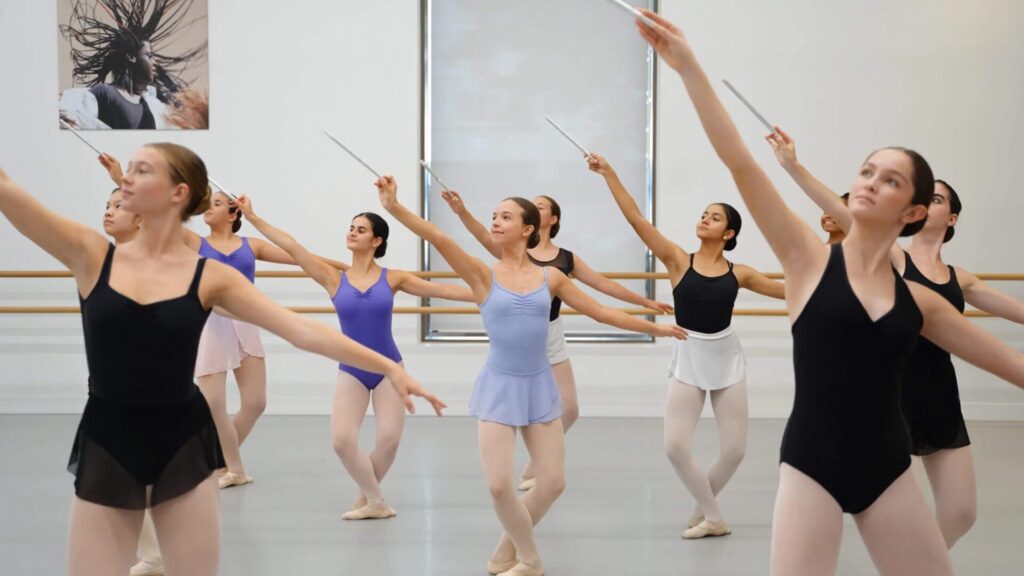
In this program, you spend five consecutive days being coached through the RAD Vocational Graded Syllabus at the Academy’s purpose-built headquarters on York Road in Battersea. Mornings cover Intermediate Foundation and Intermediate from 10:15 am; afternoons cover Advanced Foundation, Advanced 1, and Advanced 2 from 2:30 pm.
Barre and center work sit alongside pointe coaching for the female variations and virtuosity work for the male variations. An optional Pilates class before or after your session works on the strength and alignment that keeps you out of the injury cycle. The faculty includes RAD examiners and tutors who train teachers on the Academy’s own programs.
Why it stands out: It feeds into a dedicated RAD exam session held at the headquarters the week after the course, so the coaching converts directly into a qualification.
12. Guildhall School Vocal Technique for Young Performers
Location: Guildhall School of Music & Drama, London, UK
Cost: £385; bursaries are available
Acceptance rate/cohort size: Selective; approximately 15–20 students per cohort
Dates: July 31 – August 2
Application Deadline: July 3, or earlier if the course reaches capacity
Eligibility: Singers aged 13–17 with some performance or vocal-lesson experience and sufficient English language skills; open to international students
In this program, you work on breath control, dynamic range, and vocal nuance inside jazz and contemporary pop repertoire. Fini Bearman, a professor of Jazz Voice and Songwriting at Guildhall, leads the three days.
Sessions alternate between technical exercises, group exploration, and performance coaching on a song you bring with you, so you need sheet music or a backing track for something you are already singing. The course closes with a performance session and a professional accompanist, which is where the technique either holds up or does not. It suits singers thinking seriously about music at a university or conservatoire.
Why it stands out: You’ll spend three days on the voice as a technical instrument, a level of attention most school and choir settings cannot give you.
13. UAL Illustration for 11 to 15 Year Olds Short Course
Location: Chelsea College of Arts, University of the Arts London, London, UK
Cost: From £680
Acceptance rate/cohort size: Open enrollment; typically 12–16 students per class
Dates: Multiple 3-to-5 day sessions running throughout July and August
Application Deadline: Rolling until the course fills
Eligibility: Students aged 11–15 interested in illustration, drawing, design, or fine art; open to international students
In this program, you draw by hand all week, working through collage and printmaking as well, and looking at how illustration behaves in editorial, fashion, and advertising. Alessandra Genualdo, an illustrator whose clients include the V&A and the Museum of London, teaches the course.
Guided briefs walk you through a commission the way a working illustrator handles one, from research and sketchbook pages to a finished image. The week ends with a portfolio piece you make in a technique you pick yourself. You bring a sketchbook, pencils, and whatever you like to color with. For a subject-specific week, this summer school in London for 14-year-olds gives you a focused alternative to general art courses.
Why it stands out: You’ll spend five days on one discipline, long enough to find out whether you actually want to draw for a living.
14. Guildhall School Creative Writing for Ages 14-17
Location: Guildhall School of Music & Drama, London, UK
Cost: £230; bursaries are available
Acceptance rate/cohort size: Open enrollment; limited places
Dates: July 18–19
Application Deadline: July 3 or when the course reaches capacity
Eligibility: Students aged 14–17 with an interest in creative writing and sufficient English language skills; open to international students
In this program, you read poetry and fiction, then use artwork, photographs, and songs as starting points for your own writing. Annie Hayter, a London writer who won the Galley Beggar Press Short Story Prize, leads both days.
You draft one piece of your choice, get individual feedback on it, and perform it at a closing showcase for invited friends and family. Work made over the weekend can go into a digital anthology. Class discussion is run like a university seminar, which is useful practice if you are heading toward English at A-level.
Why it stands out: It sharpens the literary analysis skills that GCSE and A-level English reward, while you write creatively for its own sake.
15. Camden Summer University
Location: Multiple venues across Camden, London, UK
Cost: None
Acceptance rate/cohort size: Open enrollment; cohort size not specified
Dates: July 22 – August 21
Application Deadline: Rolling until filled
Eligibility: Ages 13–19 who live in Camden, attend a local state school, or attend a council-run youth center; not open to international students
In this program, you book from a free catalog that runs across creative arts, music and performing arts, film, media and ICT, fashion and beauty, cookery, sport and fitness, and work and life skills. Courses run at venues across the borough for a month, so you can string several together.
Recent courses have included steel pans, Arabic calligraphy, manga drawing, corsetry, archery, and a Level 2 Food Hygiene certificate. Camden Council runs the program as a youth service, and it partners with institutions including the Royal Central School of Speech and Drama. Many courses carry nationally recognized accreditation you can put on a CV.
Why it stands out: You’ll be able to book several different courses across the month, something no single-subject summer school allows.
Frequently asked questions: Summer schools in London for 14-year-olds
Are London summer schools for 14-year-olds open to international students?
Eligibility is mixed. Most free, widening-participation programs, including Imperial’s Year 10 Insights Summer School, King’s Maths School’s Girls Love Maths and Physics! Summer School, and Camden Summer University, are restricted to UK residents or state school students. However, Mission Discovery Summer School, Guildhall School’s various courses, and UAL’s International Summer School all explicitly welcome international students. Immerse Education’s Psychology Summer School is also open globally to students aged 13 to 18.
How much do London summer schools cost for 14-year-olds?
Costs vary enormously by funding model. Free options include Imperial’s Year 10 Insights Summer School, King’s Maths School’s program, and the Royal Central School’s Play in a Week. Fee-paying options range from £160 for Trinity Laban’s Young Musicians’ Summer School to £2,500 for UAL’s International Summer School and £1,999 for Mission Discovery’s residential track.
What subjects can a 14-year-old explore in a London summer school?
Subject offerings span STEM, performing arts, and creative fields. Imperial’s various programs and King’s Maths School focus on STEM subjects like engineering and physics, while Guildhall School and Royal Central School of Speech and Drama offer performing arts training in acting, voice, and creative writing. UAL’s International Summer School and Illustration course provide a visual arts alternative, useful if you’re drawn to creative fields rather than STEM or performance.
Do London summer schools for 14-year-olds require a residential stay?
Most don’t, since London’s transport network makes daily commuting practical for many programs. Imperial’s Year 10 Insights Summer School and King’s Maths School’s program are both non-residential day programs. Mission Discovery Summer School offers both a day and residential option. Few programs in this age bracket require overnight stays, reflecting the practical ease of attending as a day student in a well-connected city.
How selective are London summer schools for 14-year-olds?
Selectivity varies considerably. Imperial’s Year 10 Insights Summer School and Imperial’s Year 9 Girls Engineering Summer School are both highly selective, tied to specific GCSE trajectory requirements. Others, like Trinity Laban’s Young Musicians’ Summer School or Camden Summer University, use open, non-competitive enrollment. Regardless of selectivity, meeting gender-specific criteria, as seen with King’s Maths School and Imperial’s Girls Engineering program, matters for programs targeting underrepresented groups.
Is Immerse Education a good option for a 14-year-old considering London?
Immerse Education’s Psychology Summer School is a strong choice if you want a genuine London university experience without needing UK residency, since London is one of six global locations alongside Sydney, Singapore, and Toronto. The two week program places you in small groups of seven to 10 students, exploring cognitive psychology and behavioral science through interactive lectures and experiments. You’ll complete a personal project, receive written feedback, and earn a certificate of completion, with financial aid available through its bursary programme.
Turning your London summer into a long-term plan
Choosing a London summer school as a 14 year old gives you a genuine early introduction to university-style teaching years before most students get the chance.
Once the program ends, you can turn that early exposure into a clearer sense of your subject interests and academic direction.
The confidence, independent thinking, and academic skills you built become a strong foundation for your applications years down the line.
Keep building on what you started this summer by exploring our University Preparation blogs for guidance on your next steps.




Join the Immerse Education 2027 Essay Competition
Follow the instructions to write and submit your best essay for a chance to be awarded a 100% scholarship.







Unlock Inspiring Opportunities with the Immerse Education Newsletter
Join our newsletter to stay ahead with exclusive updates, exciting programme highlights, and expert insights from the world of immersive education.
Learn how Immerse can transform your life
An in-depth overview of our university and career preparation programmes
Get a glimpse into the life of an Immerse participant
Find the right programme for you with sample timetables, location showcases, and more