The world in 100 years: imagining a future that excites you

The Learning to Be Heard Challenge asks you to picture the world in 100 years, but your mind goes blank. That’s normal, because a century stretches far beyond your own lifetime and everything you know.
Luckily, imagining the future isn’t the same as predicting it. In the Learning to Be Heard Challenge, judges aren’t grading whether your guess comes true. Instead, they want a clear idea, an original vision, and a personal story.
In this guide, we’ll discuss spotting signals of change today, using four simple methods to think ahead, and choosing the future that excites you most.
Let’s unpack that blank first.
Key takeaways
- Your brain builds the future from memories, which is why a century ahead feels blank. Without them, it defaults to gadget-filled or disastrous futures from films and TV.
- Every convincing future idea starts with a signal, a small change already happening today. Australia blocking under-16s from having social media accounts in December 2025 could reshape how teenagers make friends by 2126.
- The first two methods are looking back 100 years and using a futures wheel. Comparing 1926 with today shows how much a century can change, while the wheel maps one change’s ripple effects.
- Methods three and four are sorting futures and backcasting. Sorting splits ideas into possible, probable, and preferable futures. Backcasting then works back from the one you want to a first step today.
- Choose an idea that passes two tests: it excites you, and you can explain why it matters to you. Avoid traps like describing gadgets, ending in doom, or promising a vague perfect world.
- The Learning to Be Heard Challenge is free for students aged 14-18 and closes on 10 January 2027 at 23:59 UK time. The strongest one-minute videos win full or partial scholarships to TED Summer School.
Why imagining 100 years ahead feels so hard
The future feels hard to imagine because your brain builds it from memories. In 2007, psychologists Daniel Schacter and Donna Rose Addis proposed that imagining reuses details from past experiences.
Your mind then recombines those details into something new, but you have no memories from 2126 to draw on. Instead, you fill the gap with a future you’ve seen on screen, either a gadget-filled one or a disastrous one.
Here’s what each default looks like, and why it weakens your idea.
- Gadget future: The Jetsons, which aired in 1962, imagined flying cars and a robot maid in 2062. It shows how the world looks, but not what gets better for people.
- Bad future: Rising seas or rogue robots wipe everything out, leaving your audience with fear but no hope. Your idea then sounds like a warning, not a vision.
Start in the present: look for signals of change
A signal is a small change already happening that could grow into something much bigger. It can be a new technology, a local experiment, or a shift in how people live or work.
For example, Australia became the first country to block under-16s from having social media accounts in December 2025. Followed 100 years forward, that one law could change how teenagers make friends, learn, and spend their free time.
First, list three signals you’ve noticed in your school, community, or social feed. Even a new phone rule, a community garden, or an AI tool in your classroom counts. Every convincing future story starts with a signal like these.




Four simple methods to imagine the future
Futures thinking is structured imagining, not fortune-telling: you explore what could happen rather than guess what will. Governments and businesses use it for serious long-term planning, but you don’t need to be an expert to try it.
Here’s how to put it into practice with four simple methods.
Method 1: Look back 100 years first
The best way to understand the future is to look back at the past. While it sounds backwards, comparing the mid-1920s with today shows exactly how much a century can change.
On 26 January 1926, John Logie Baird gave the first public demonstration of television to around 40 guests in London. A year later, Charles Lindbergh made the first solo nonstop flight across the Atlantic, taking 33.5 hours to reach Paris. Today, you can stream TV on your phone in an air-conditioned cabin, flying the same route in about seven hours.
Yet the biggest changes since then, like the internet and smartphones, were ones few people in the 1920s imagined. That’s why a bold idea about 2126 isn’t unrealistic, as long as it grows from something real.
Method 2: use a futures wheel
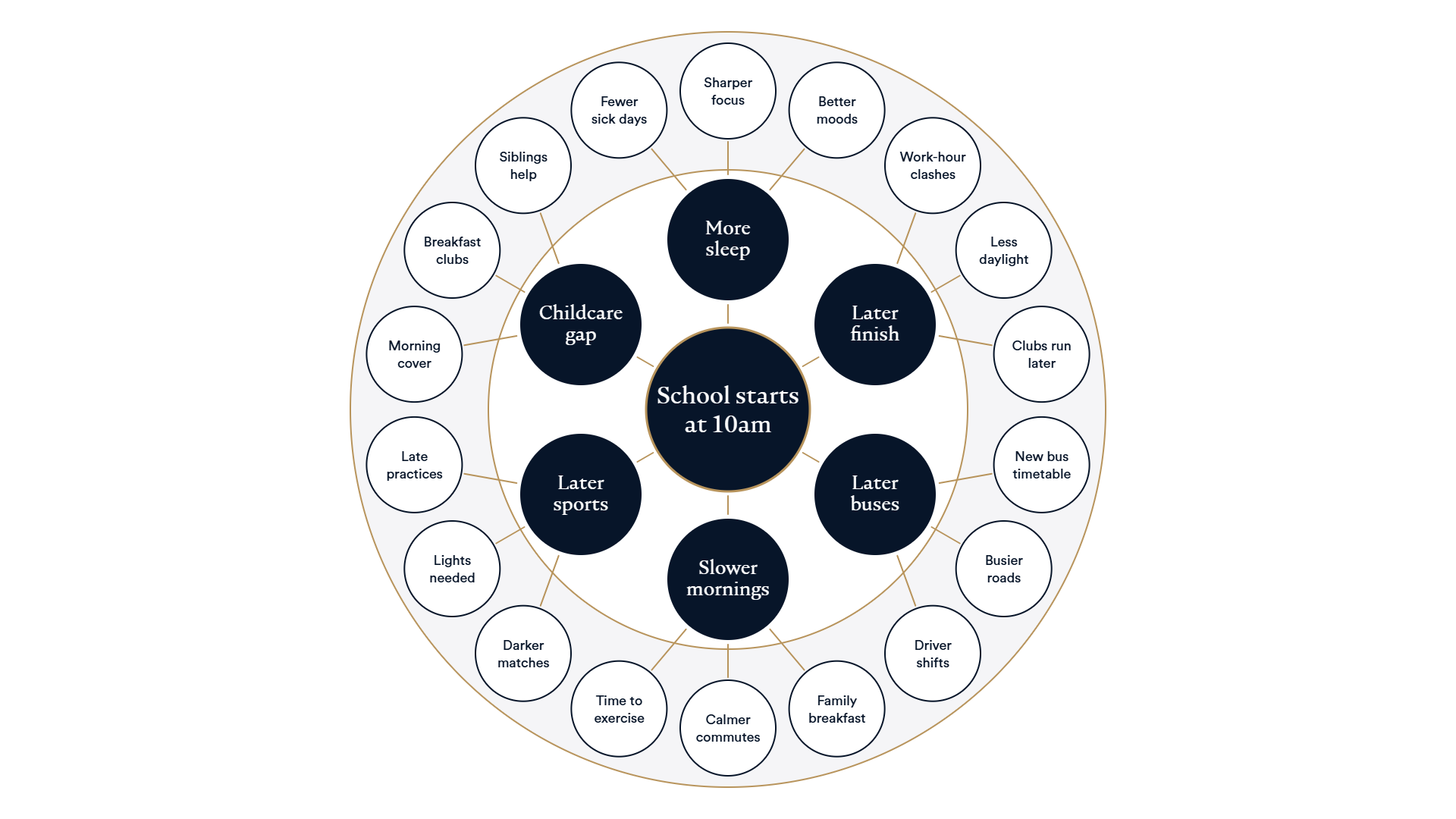
Drop a stone into a pond and the ripples spread far beyond the splash. A futures wheel maps how one change spreads through daily life the same way.
Jerome Glenn created this method in 1971, and it needs only paper and a pen. Write one change in the centre, draw its direct effects, then add their knock-on effects in a second ring.
Take California, which has required most high schools to start no earlier than 8:30am since July 2022. Push that to 10am, and students sleep longer and finish later. In the second ring, extra sleep could sharpen focus, while later finishes could clash with parents’ jobs. Original ideas usually appear there, because few people think past the first.
Method 3: sort possible, probable and preferable futures
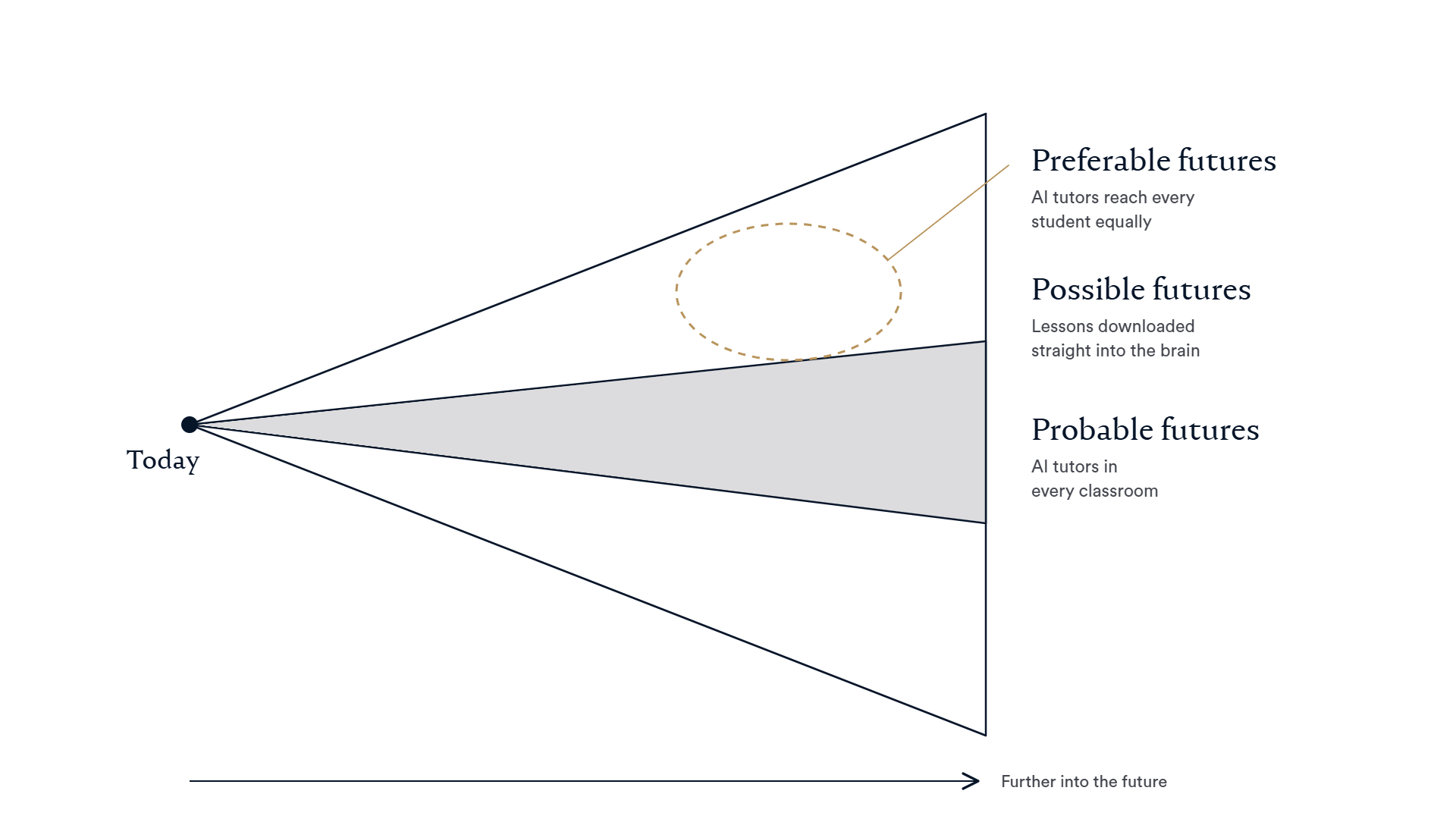
Futurists often sort ideas about tomorrow into three main types: possible, probable, and preferable futures. Roy Amara, a leading American futurist, was already using this split in the 1970s.
Here’s how each type looks if you imagine what classrooms could be like in 2126.
- Possible futures: Anything that could happen counts, however unlikely it seems today. Students could download a whole subject straight into their brains overnight, skipping lessons altogether.
- Probable futures: Current trends point here, so these feel most likely. AI tools already appear in many classrooms today, so AI tutors helping every student is a likely next step.
- Preferable futures: Your own values decide this one, whether or not it’s likely. If fairness matters to you, you’d want those AI tutors to reach every student equally, wherever they live.
Method 4: work backwards from the future you want
While forecasting asks what will happen next based on today’s trends, backcasting flips the question. It asks what must happen for the future you want to become real, then works back to today.
Here’s how to work backwards from the fair AI tutor future in Method 3.
- In 2126 (100 years from now): Every student has an AI tutor that adapts to how they learn, whatever their family can afford.
- By 2076 (50 years from now): Fast internet reaches even the most remote villages, so no school is left offline.
- By 2036 (10 years from now): Governments agree that AI learning tools should be free in public schools, just like textbooks.
- By 2027 (one year from now): You start a school club or give a speech arguing that every student deserves equal support. That first step can begin today, which gives your idea a reason to matter now.
Choosing the difference that excites you most
Once the four methods have filled a page with ideas, choose one difference using two filters. First, it should genuinely excite you. Second, you should be able to explain why it matters in your own life.
Compare two answers. “In 2126, education will be better for everyone” sounds positive but gives listeners nothing to hold onto. “In 2126, every student will get the extra maths help I once needed but couldn’t afford” is specific and personal. That personal why is what makes an idea memorable.
To find yours, think of something you’ve lived through, seen happen to others, or wished were different. If you don’t have a starting idea yet, our guide on how to find an idea worth sharing can help. It covers five places to look when you feel stuck.
Common traps when imagining the future
Even with good methods, a few traps can weaken a strong idea before you record it. Most come from the same habits that make the future hard to imagine.
Here are five common traps, and how to fix each one.
- Gadget trap: Before describing any new technology, ask who it helps. A robot carer matters because it lets an elderly neighbour stay home longer.
- Doom trap: Rising seas swallowing coastal cities is a warning that stops at fear. Add one change, like floating neighbourhoods, and the warning becomes a vision.
- Magic fix: Announcing that hunger has ended by 2126 leaves listeners asking how. Name one step, like lab-grown food, that could get the world there.
- Vague utopia: “A perfect world” is too big to picture. Instead, describe one change in a place you know, like free buses for every student in your town.
- Distant idea: Try finishing the sentence “This matters to me because…”. If you can’t, choose an idea closer to your own life.
Join the Immerse Education 2027 Essay Competition
Follow the instructions to write and submit your best essay for a chance to be awarded a 100% scholarship.
Answering the Learning to Be Heard Challenge prompt
With a signal spotted, a futures wheel drawn, and a preferable future chosen, your idea is ready to share. And our free Learning to Be Heard Challenge, open to students aged 14-18, is the place to do it.
This year’s prompt asks: “Imagine the world 100 years from now. What difference would excite you the most? Why?” To answer it, name one specific difference, then explain why it excites you personally.
Judges score idea clarity at 40%, originality and impact at 40%, and reflection and story connection at 20%. They’re listening for your idea, so you don’t need perfect English or an expensive camera.
Once your answer is ready, record it as a one-minute video and add one or two written sentences about your idea. Entries close on 10 January 2027 at 23:59 UK time, and the strongest win full or partial scholarships to our TED Summer School in London, New York, Singapore, or Sydney (ages 15-18), or virtually (ages 14-18).
Take your ideas further with TED Summer School
Even if your entry doesn’t win a full or partial scholarship, you can still apply to join us. Your idea deserves more than one minute, and our courses give it room to grow.
Over two weeks at our TED Summer School, you'll shape one idea into a full TED-style talk, working with our communication tutors in classes that average nine participants. Along the way, you'll analyse real TED talks, build your own with storytelling and research, and rehearse your delivery.
You can join us in London, New York, Singapore, or Sydney (ages 15-18), or virtually (ages 14-18). Either way, your final talk is recorded for you to keep, along with your script.
Whichever format you choose, you’ll practise sharing an idea you care about with clarity and confidence. And it all starts with one idea.
FAQs
What is futures thinking?
Futures thinking is a structured way of imagining what could happen, rather than predicting what will. Governments and businesses use tools like the futures wheel and backcasting to explore possible futures and plan for change.
How do you imagine what the world will be like in 100 years?
Start with a signal of change you can see today, then follow it forward. Map its knock-on effects, choose the future you’d want, and work backwards to a first step you could take now.
What are some good ideas for the world in 100 years?
Strong ideas start from real changes happening now. Examples include AI tutors for every student, free buses for young people, or floating coastal homes. The best one is the idea you care about most.
Does my idea about the future need to be realistic?
No, your idea doesn’t need to be likely, but it should be believable. Show at least one step that could get the world there, so listeners can picture how it happens.
Can I talk about a problem instead of a positive change?
Yes, you can start with a problem, as long as you don’t stop there. Pair the danger with one change that could prevent it, so your idea offers hope as well as a warning.
How do I make an idea about the future feel personal?
Connect your idea to a moment, place, or person from your own life. Try finishing the sentence “This matters to me because…”. If you can’t, pick an idea closer to home.
Conclusion: the future starts with what you notice today
Imagining the world in 100 years starts closer to home than you think. Spot a signal, follow it forward, choose the future you want, and explain why it matters to you.
Remember, nobody is grading your predictions. Judges want a clear idea, a fresh perspective, and an honest reason it excites you.
The signals you notice today, in your school, your town, or your feed, could become the difference that shapes 2126.
So grab your phone, record your one minute, and enter the Learning to Be Heard Challenge before 10 January 2027. Your future starts with what you say next.







Unlock Inspiring Opportunities with the Immerse Education Newsletter
Join our newsletter to stay ahead with exclusive updates, exciting programme highlights, and expert insights from the world of immersive education.
Learn how Immerse can transform your life
An in-depth overview of our university and career preparation programmes
Get a glimpse into the life of an Immerse participant
Find the right programme for you with sample timetables, location showcases, and more