15 Best STEM Summer Camps for High School Students

TL;DR
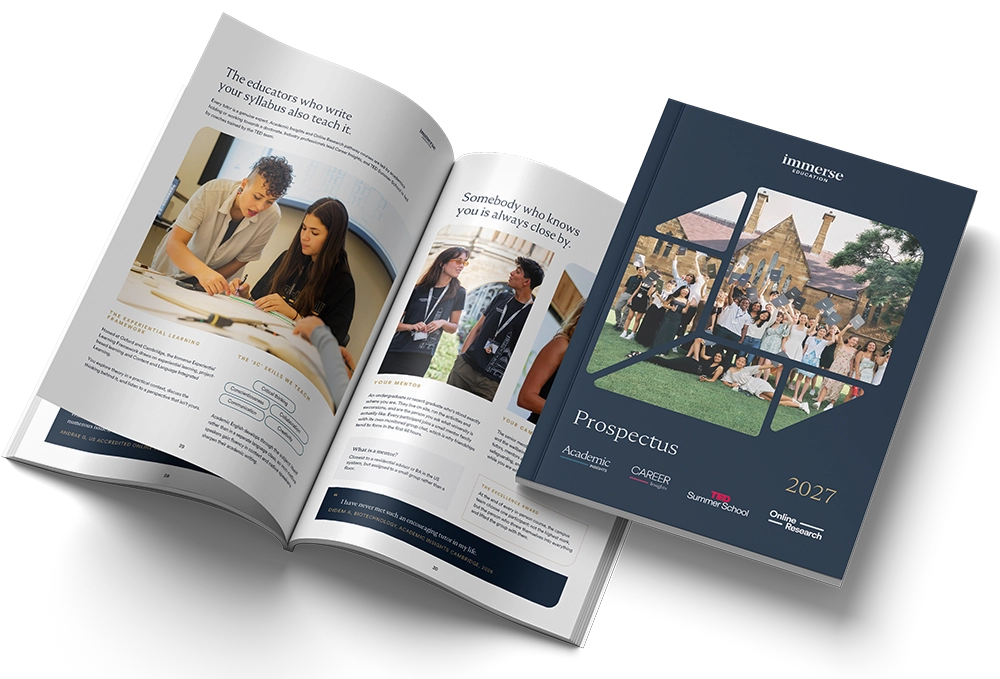
This list rounds up 15 STEM summer camps, ranging from free national-lab programs to selective university courses costing thousands of dollars. You can choose from a one-week introduction to a four-week residential research program, with some open internationally and others limited to US residents. If you want structured lab work and faculty-led research, COSMOS alone lets you join a UC campus cohort of up to 200 students for four weeks of coursework. Immerse Education's two-week Pre-University Summer School also appears here, open to you at ages 13 to 18 across campuses like Oxford and Cambridge, with a bursary programme available.
As a high schooler curious about STEM, you’ve probably realized that the subject extends far beyond what you encounter in the classroom. Whether it’s scientific research, engineering design, coding, or data-driven problem-solving, it all requires hands-on practice, collaboration, and experimentation. A STEM summer camp gives you the opportunity to experience these aspects firsthand while learning alongside students who share similar interests.
Picture yourself designing experiments in a laboratory, analyzing datasets with scientific software, building engineering prototypes, or presenting research findings to faculty and peers. You’ll also learn directly from university faculty, researchers, and STEM professionals, and gain valuable insight into how these disciplines are studied beyond high school. The best STEM summer programs can act as a foundation for your college journey, giving you a taste of what university life is like at a top institution while helping you build practical academic experience and a stronger understanding of potential STEM careers.
How do you choose the right STEM summer camp?
Finding the right STEM summer camp for yourself can be a difficult task. You’ll have to think about things like its reputation, how challenging it is, whether it offers hands-on experiences, and more. That’s why guidance is important, as it helps you sort through all the options and determine the right camp.
These experiences help you develop practical skills that are difficult to build in a traditional classroom while introducing you to university-level expectations. To help you find the right opportunity, we’ve curated a list of the 15 best STEM summer camps for high school students, selected for their academic rigor, research opportunities, faculty mentorship, and overall educational experience.
For more options, consider STEM summer internships and STEM pre-college programs for high school students.
15 Best STEM Summer Camps for High School Students
1. Los Alamos National Laboratory: Summer Physics Camp
Location: Los Alamos National Laboratory, Los Alamos, NM
Cost/Stipend: No cost; $350 stipend
Acceptance rate: Selective
Dates: June 8-19
Application Deadline: April 1st
Eligibility: High school students living in New Mexico or the East Hawaii tribal community must have completed Algebra I or high-level Math in school; Not open to international students
The Summer Physics Camp at Los Alamos National Laboratory is a two-week residential program that introduces you to physics and other STEM fields through hands-on learning and research-inspired activities. You’ll work alongside scientists and engineers from Los Alamos National Laboratory and Sandia National Laboratories and explore topics like physics, engineering, chemistry, bioengineering, computer programming, and cybersecurity.
You’ll participate in demonstrations, experiments, coding, and collaborative projects and develop practical problem-solving skills. You’ll also learn about how physics is applied to energy systems, national security, materials science, and computational research. The program also includes research talks, lab visits, career exploration sessions, and professional development workshops covering resume writing, interviews, and STEM career pathways. Admission is based on your enthusiasm for STEM rather than your GPA, making it accessible to students eager to explore scientific research.
Why it stands out: Lets you learn directly from national laboratory scientists while exploring physics through hands-on research activities and real-world scientific applications.
2. Immerse Education’s Pre-University Summer School

Location: Oxford, Cambridge, London, Singapore, Sydney, and Toronto
Cost: Varies; summer school scholarship available through our bursary programme
Acceptance rate/cohort size: Selective; an average of 7 participants per class
Dates: 2 weeks during the summer
Application Deadline: Multiple cohorts with rolling admissions
Eligibility: Students across the globe aged 13-18 currently enrolled in middle or high school; open to international students
The Pre-University Summer School lets you experience university life firsthand. You will live on campus and study in small groups with an average of 7 participants per class, learning from tutors from top universities like Oxford and Cambridge. As a participant, you can explore over 20 subjects, including STEM, Architecture, AI, Business Management, Computer Science, Economics, Medicine, Philosophy, and more.
The courses are experiential and hands-on, meaning you may find yourself conducting dissections in medicine, designing a robotic arm in engineering, participating in a moot court for law, or building creative writing portfolios and business case studies. By the end of the program, you'll complete a personal project, receive written feedback, and receive a certificate of completion. You can find more details about the application here.
Why it stands out: You’ll get an early start at university life and academics because the program includes an independent project, discussion-based classes, and living at a college campus.
3. Veritas AI
Location: Virtual
Cost: Varies depending on program type. Full financial aid available.
Application deadline: Rolling. Spring (January), Summer (May), Fall (September), and Winter (November). You can apply to the program here.
Program dates: Multiple 12-15-week cohorts throughout the year, including spring, summer, fall, and winter.
Eligibility: High school students. AI Fellowship applicants should either have completed the AI Scholars program or exhibit experience with AI concepts or Python.
Veritas AI, founded and run by Harvard graduate students, offers programs for high school students who are passionate about artificial intelligence. Students who are looking to get started with AI, ML, and data science would benefit from the AI Scholars program. Through this 10-session boot camp, students are introduced to the fundamentals of AI & data science and get a chance to work on real-world projects.
Another option for more advanced students is the AI Fellowship with Publication & Showcase. Through this program, students get a chance to work 1:1 with mentors from top universities on a unique, individual project. A bonus of this program is that students have access to the in-house publication team to help them secure publications in high school research journals. You can also check out some examples of past projects here and read about a student’s experience in the program here.
Why it stands out: You get 1-1 mentorship with a Ph.D. mentor and produce an independent research project by the end.
4. Stanford University Mathematics Camp (SUMaC)

Location: Stanford University, Stanford, CA + Virtual
Cost/Stipend: Online: $3,750, Residential: $8,950 (financial aid offered); No stipend
Acceptance rate: Selective
Dates: Online: June 15th – July 3rd or July 6-24; Residential: June 21st – July 17th
Application Deadline: February 2nd
Eligibility: 10th-11th graders (15+); Open to international students
Stanford University Mathematics Camp (SUMaC) is an intensive program that lets you explore mathematics beyond the standard school curriculum. Through daily lectures, collaborative problem-solving sessions, and guided research discussions, you’ll investigate advanced topics such as abstract algebra, number theory, and algebraic topology while developing proof-based reasoning and analytical thinking.
Instead of focusing on routine exercises, the program encourages mathematical inquiry, helping you understand how mathematicians construct arguments, solve complex problems, and explore new ideas. You’ll also examine the historical development of important mathematical concepts and their connections to modern scientific research while working alongside highly motivated peers from around the world.
Why it stands out: Emphasizes proof-based mathematics, advanced theory, and collaborative problem-solving through a curriculum modeled on university-level mathematical study.
5. Missouri University of Science and Technology: Engineering with Biology
Location: Missouri University of Science and Technology, Rolla, MO
Cost/Stipend: $650 registration fee; No stipend
Cohort size: 30 students
Dates: June 14-18
Application Deadline: Rolling until full
Eligibility: Students aged 14-18 years; May be open to international students (not specified)
Missouri University of Science and Technology’s Engineering with Biology camp introduces you to synthetic biology and its role in addressing global challenges such as disease detection, environmental sustainability, and food security. Through hands-on laboratory activities, you’ll learn how scientists engineer living organisms, design genetic systems, and evaluate different biological solutions to solve real-world problems.
The program explores topics such as genetic engineering, biological system modeling, and the use of organisms like yeast to produce valuable compounds and nutrient-enriched foods. You’ll also examine the ethical and societal implications of synthetic biology while applying engineering principles to biological research. The experience concludes with a design competition where you’ll develop and present an innovative solution to a challenge of your choice.
Why it stands out: Combines synthetic biology, engineering design, and laboratory research while encouraging you to solve real-world problems through interdisciplinary innovation.



6. Missouri University of Science and Technology: Jackling Introduction to Engineering Camp
Location: Missouri University of Science and Technology, Rolla, MO
Cost/Stipend: $650; Unpaid
Cohort size: 150 students
Dates: Session 1: May 31st – June 4th; Session 2: June 14-18; Session 3: June 28th – July 2nd
Application Deadline: Rolling until full
Eligibility: Students aged 15-18 years; May be open to international students (not specified)
Missouri University of Science and Technology’s Jackling Introduction to Engineering Camp introduces you to a broad range of engineering disciplines through faculty-led sessions, demonstrations, and hands-on activities. You’ll learn how engineers approach real-world challenges while exploring fields such as civil, mechanical, electrical, chemical, mining, and aerospace engineering.
After introductory presentations, you’ll visit up to five engineering departments of your choice, where you’ll participate in laboratory activities, facility tours, and research demonstrations. The program also includes collaborative design challenges and team competitions that encourage you to apply engineering concepts in practical situations.
Why it stands out: Lets you experience multiple engineering disciplines through department visits, hands-on projects, and direct interaction with university faculty.
7. University of Michigan Summer Engineering Exploration (SEE) Camp
Location: University of Michigan, Ann Arbor, MI
Cost/Stipend: $750 (financial aid offered); Unpaid
Acceptance rate: ~7% (based on the previous year’s program)
Dates: July 5-11
Application Deadline: December 19th – February 19th
Eligibility: Rising 10th-11th graders, especially those with limited access to engineering resources; Open to international students
The University of Michigan Summer Engineering Exploration (SEE) Camp is a one-week residential program that introduces you to engineering through hands-on activities and collaborative learning. You’ll explore multiple engineering disciplines, including robotics, environmental engineering, and computer science, by participating in experiments, design projects, and interactive workshops led by faculty and engineering mentors.
Throughout the week, you’ll work in small teams to solve a real-world design challenge using the engineering design process while visiting laboratories and learning about different engineering careers. The program also includes campus tours, sessions with current University of Michigan students, and admissions guidance to help you understand college life and engineering pathways.
Why it stands out: Offers a beginner-friendly introduction to multiple engineering disciplines through hands-on projects, a week-long design challenge, and an immersive residential campus experience.
8. California State Summer School for Mathematics and Science (COSMOS)
Location: Hosted by the University of California system; Offered at multiple campuses throughout the state
Cost/Stipend: $5,518 + $44 application fee (financial aid available); Unpaid
Acceptance rate/cohort size: Competitive admissions; 160-200 participants each campus
Dates: July 5th – August 1st
Application Deadline: February 6th
Eligibility: Students in grades 8-12; COSMOS is limited to California students only; Not open to international students
The California State Summer School for Mathematics and Science (COSMOS) is a four-week residential program that lets you study advanced STEM subjects through intensive, university-level coursework. You’ll join a specialized academic cluster focused on an area such as engineering, biomedical sciences, computer science, mathematics, physics, robotics, ecology, or other research-driven disciplines.
Working with UC faculty, researchers, and scientists, you’ll participate in laboratory investigations, hands-on projects, and collaborative activities that extend well beyond the typical high school curriculum. The program also provides access to university research facilities while exposing you to current scientific discoveries, research methods, and STEM career pathways.
Why it stands out: Offers university-level STEM specialization through faculty-led research clusters and intensive laboratory-based learning at a UC campus.
9. National Youth Science Camp (NYSCamp)
Location: Monongahela National Forest, WV
Cost/Stipend: None
Acceptance rate: Highly competitive
Dates: July 11th – August 1st
Application Deadline: March 30th; April 11th (extended for some locations)
Eligibility: Graduates from high school between July 1st of the prior year and June 30th of the following year; Open to international students (ages 16-18) from selected countries
The National Youth Science Camp (NYSCamp) is a three-week residential STEM program that brings together outstanding high school students from across the United States and selected international participants. You’ll attend lectures, interactive seminars, and hands-on workshops led by scientists, engineers, and researchers from a wide range of disciplines while exploring current scientific discoveries and emerging technologies.
The program also features field expeditions, research discussions, and collaborative activities that encourage critical thinking, teamwork, and scientific inquiry. Throughout the camp, you’ll interact with STEM professionals, build connections with accomplished peers, and gain insight into academic and career opportunities in science and engineering.
Why it stands out: Brings together top young STEM students for a fully funded experience featuring renowned scientists, collaborative learning, and field-based exploration.
10. MIT; √mathroots
Location: Massachusetts Institute of Technology (MIT), Cambridge, MA
Cost/Stipend: None
Acceptance rate: Competitive
Dates: July 1-15
Application Deadline: March 3rd
Eligibility: Students (ages of 14-18) who are U.S. citizens or attending high school in the U.S.; Not open to international students
√mathroots is a residential mathematics program hosted by MIT PRIMES for high school students with a strong interest in advanced mathematical thinking and problem-solving. You’ll participate in lectures, workshops, and collaborative problem-solving sessions led by MIT faculty, researchers, and graduate students while exploring topics such as number theory, combinatorics, and mathematical proofs that are rarely taught in high school.
The program emphasizes creative reasoning, mathematical exploration, and persistence as you tackle challenging problems individually and in teams. Through discussions and guided activities, you’ll strengthen your proof-writing skills, develop deeper mathematical intuition, and experience how mathematicians approach research-level questions.
Why it stands out: Introduces advanced proof-based mathematics through collaborative learning with MIT mathematicians in an inclusive, research-oriented environment.
11. Niagara University Biomedical Research Institute STEM Camp
Location: Niagara University, Lewiston, NY
Cost/Stipend: $1,200; Unpaid
Cohort size: 35 students
Dates: August 2-8
Application Deadline: May 1st
Eligibility: High school students entering grades 10-12; Open to international students
The Niagara University Biomedical Research Institute STEM Camp introduces high school students to a wide range of STEM fields through hands-on laboratories, field experiences, and expert-led workshops. You’ll explore topics such as forensic science, artificial intelligence, biomedical engineering, anatomy, neuroanatomy, computer programming, astronomy, renewable energy, and bacteriophage research while working with university faculty, researchers, and industry professionals.
You’ll take part in practical activities, including analyzing digital evidence with Python and AI tools, designing medical devices, investigating brain anatomy, and conducting laboratory experiments using modern scientific equipment. The program also features visits to research centers, engineering facilities, and a planetarium.
Why it stands out: Combines biomedical research, engineering, AI, and field experiences into a multidisciplinary STEM program with extensive access to university and industry experts.
Join the Immerse Education 2027 Essay Competition
Follow the instructions to write and submit your best essay for a chance to be awarded a 100% scholarship.
12. Rice University: Tapia STEM Camps
Location: Rice University, Houston, TX
Cost/Stipend: $2,500 ($2,200 with early bird discount); Unpaid
Cohort size: 100-150 campers per session
Dates: July 5-10; July 12-17; July 19-24
Application Deadline: Typically in May
Eligibility: Rising 8th-12th graders; Open to international students
Rice University’s Tapia STEM Camps introduce you to STEM through project-based learning, hands-on experiments, and collaborative design challenges. You’ll work in small teams on projects related to topics such as data centers, renewable energy, algorithm design, artificial intelligence, and carbon capture while learning from Rice University students and faculty. Laboratory activities, engineering challenges, and interactive STEM demonstrations help connect classroom concepts to real-world scientific and technological problems.
Throughout the week, you’ll strengthen your teamwork and public speaking skills by presenting your project findings, while also interacting with university researchers and STEM professionals. The camp also features a STEM Fair and specialized sessions, including an advanced mathematics track for students seeking additional academic challenge.
Why it stands out: Blends cutting-edge STEM topics with hands-on engineering projects while placing emphasis on teamwork, communication, and real-world problem-solving.
13. SLAC National Accelerator Laboratory: SAGE Camp
Location: SLAC National Accelerator Laboratory and Stanford University, Menlo Park and Palo Alto, CA
Cost/Stipend: None
Cohort size: Limited capacity
Dates: June 21-27
Application Deadline: March 17th
Eligibility: Students currently enrolled in grades 9-11 in a Northern California high school; Must be under 18 years of age; Not open to international students
SAGE Camp at SLAC National Accelerator Laboratory introduces you to STEM through hands-on projects, career exploration, and direct interaction with scientists and engineers. You’ll participate in team-based activities, technology demonstrations, job-shadowing experiences, and laboratory tours that showcase how research and innovation are applied in real-world settings.
The program also includes career talks from STEM professionals, giving you insight into different scientific fields and the educational paths that lead to them. Through professional development and leadership sessions, you’ll strengthen communication, teamwork, and problem-solving skills while exploring how diverse interests can complement a STEM career. You’ll also become part of the SAGE community, connecting with peers and mentors who can support your academic and career journey.
Why it stands out: Combines hands-on STEM projects with job shadowing, leadership training, and direct access to scientists at a national research laboratory.
14. NUS Science Summer Camp
Location: National University of Singapore (NUS) Kent Ridge, Singapore
Cost/Stipend: S$2,950 (approx. U.S.$2,308.38); Unpaid
Acceptance rate/cohort size: Unspecified
Dates: June 29th – July 3rd
Application Deadline: Students need to pre-register; Successful applicants will be invited to proceed with official registration from January
Eligibility: Students in grades 10-12 (15+); Open to international + U.S. students
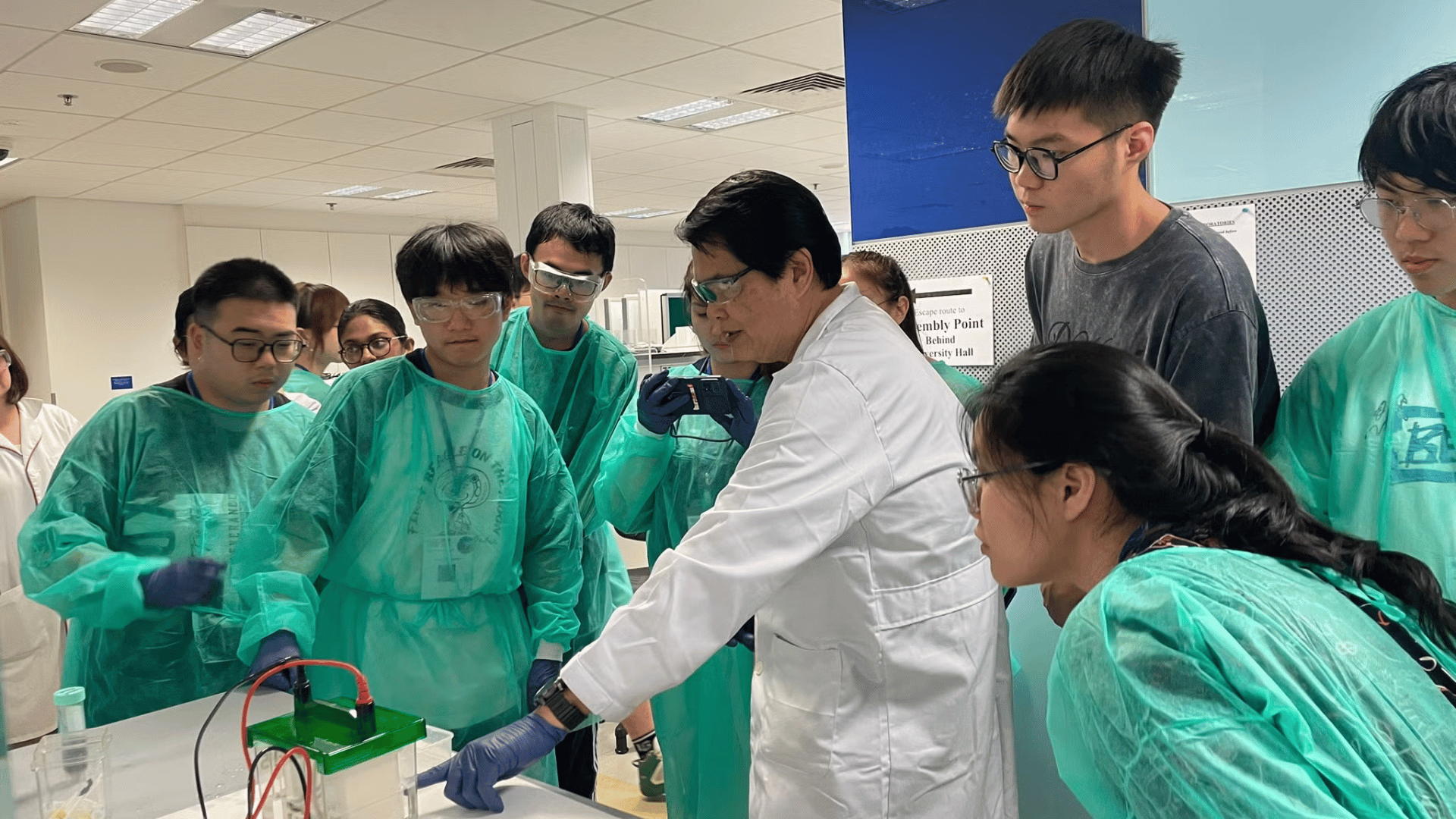
The NUS Science Summer Camp introduces you to university-level STEM learning through interactive lectures, laboratory demonstrations, and faculty-led workshops at the National University of Singapore. You’ll explore scientific concepts across areas such as biology, chemistry, physics, microscopy, and machine learning while connecting classroom ideas with practical applications.
Through hands-on activities and scientific demonstrations, you’ll investigate how researchers approach questions in the natural sciences and use technology to solve problems. The program also includes opportunities to interact with university professors, graduate students, and researchers to learn about academic pathways and research culture.
Why it stands out: Combines faculty-led STEM learning, laboratory experiences, and international campus exposure at one of Asia’s leading research universities.
15. IMA-MathCEP Math Modeling Camp
Location: University of Minnesota, Minneapolis, MN
Cost/Stipend: None
Cohort size: Limited space
Dates: June 22-26
Application Deadline: May 31st
Eligibility: High school students near the Twin Cities metro area; Must have completed a year‑long course in single‑variable calculus; Not open to international students
The IMA-MathCEP Math Modeling Camp introduces you to mathematical modeling through real-world problem-solving. Working with faculty from the University of Minnesota’s Math Center for Educational Programs and the Institute for Mathematics and its Applications, you’ll develop mathematical models to investigate topics such as traffic systems, disease transmission, and environmental resources.
You’ll work in teams to analyze data, test assumptions, and refine models while gaining experience with the same analytical approaches used in university research and applied mathematics. The program emphasizes exploration, discussion, and presentations, helping you communicate mathematical ideas and evaluate how models are used to solve complex scientific and engineering problems.
Why it stands out: Focuses on applying mathematics to real-world challenges through collaborative modeling projects guided by university researchers.
Frequently asked questions: STEM Summer Camps for High School Students
What is a STEM summer camp?
A STEM summer camp is a short-term, subject-focused program where you study science, technology, engineering, or math outside your regular classroom, often on a university or research lab campus. Instead of lectures alone, you work through lab experiments, coding projects, engineering design challenges, or data analysis under faculty or research scientist guidance. Programs run anywhere from one week to four weeks, and some, like COSMOS, group you into an academic cluster such as robotics or biomedical sciences for the full session. Many also include career talks, campus tours, and sessions with current students so you get a feel for college life.
How do you choose the right STEM summer camp for you?
Start by matching a camp's format to your goals, since research-intensive programs like Los Alamos or SLAC suit students chasing a specific project, while broader exploration camps like COSMOS let you sample several fields first. Check eligibility closely, since some programs require coursework like single-variable calculus while others accept any motivated student regardless of GPA. Weigh cost against need too, since fully funded options exist alongside programs costing several thousand dollars with financial aid available. Location matters as well, since a residential program means living on campus while a few camps offer virtual tracks instead.
How much do STEM summer camps for high school students cost?
Costs vary widely, from fully funded programs like the Summer Physics Camp at Los Alamos, which pays a $350 stipend, to selective options like Stanford's SUMaC, costing $3,750 online or $8,950 residential. Many fall in between, such as the Naval Academy's $450 week-long session or the University of Michigan's $750 SEE Camp, both of which offer financial aid. Longer, research-intensive programs tend to cost more, as seen with COSMOS's $5,518 four-week fee. If cost is a barrier, look specifically at free national-lab and university-hosted options, since several waive tuition entirely.
Are there free STEM summer camps for high school students?
Yes, several STEM summer camps charge no tuition at all. The Summer Physics Camp at Los Alamos National Laboratory is free and even pays a $350 stipend, while MIT's mathroots program and the National Youth Science Camp are fully funded with no cost to attend. These free options tend to be more selective, since they rely on limited lab space or external funding rather than tuition revenue. If a free program's eligibility rules exclude you, for instance by state residency or citizenship, paid options with financial aid, like COSMOS or the Naval Academy camp, are usually easier to access.
What age or grade do you need to be to attend a STEM summer camp?
Most STEM summer camps accept students in grades 8 through 12, though exact ranges depend on the program. Some, like the Niagara University Biomedical Research Institute camp, admit students entering grades 10 through 12, while others, such as Rice University's Tapia STEM Camps, open to rising 8th graders. Age limits sometimes apply separately from grade, since the SAGE Camp at SLAC requires you to be under 18, and MIT's mathroots program accepts ages 14 to 18. If you're younger than most eligible grades, Immerse Education's Pre-University Summer School, open to ages 13 to 18, can be a good starting point.
Do STEM summer camps help with college admissions?
STEM summer camps can strengthen a college application, especially selective ones that involve an independent research project or a certificate of completion you can point to in essays and interviews. Admissions officers value depth over name recognition, so a smaller, rigorous program with a real project, like the Pre-University Summer School's independent project and written feedback, can carry more weight than a generic workshop. That said, camps alone rarely decide admissions outcomes. They work best alongside strong grades, meaningful extracurriculars, and authentic interest in the subject you studied, which shows in how you write about it.
From STEM summer camp to university-ready student
You already know a strong summer program should combine research, mentorship, and a campus experience that feels like a preview of college itself.
Working through the best STEM summer camps for high school students, you'll notice the strongest ones require real projects, not just lectures and tours.
Whichever program you choose, the skills you build and the faculty connections you make become talking points you'll return to in applications and interviews.
If you want more guidance on turning this kind of summer experience into lasting academic momentum, explore Immerse's University Preparation blogs next.






Unlock Inspiring Opportunities with the Immerse Education Newsletter
Join our newsletter to stay ahead with exclusive updates, exciting programme highlights, and expert insights from the world of immersive education.
Learn how Immerse can transform your life
An in-depth overview of our university and career preparation programmes
Get a glimpse into the life of an Immerse participant
Find the right programme for you with sample timetables, location showcases, and more