15 Chemistry Summer Camps for High School Students

Summary
You’ll find 15 chemistry summer camps here, from free outreach programs like Oxford’s UNIQ and Stanford’s IFSS to paid residential courses at Penn, Columbia, and Pacific. The biggest split is between low-cost local day camps and pricier residential programs that welcome students from further afield. Most suit you if you’re in grades 9 to 12, though some require a year of high school chemistry first. Bucknell’s two-day camp, for example, costs $250, with need-based aid available. Immerse Education’s Academic Insights pathway in Chemistry runs in Oxford and Cambridge for students aged 16 to 18 from around the world.
Chemical reactions are constantly happening around us, shaping everything from modern medicine to sustainable materials. If you look at careers in pharmacy, environmental research, forensic analysis, chemical engineering, or materials science, understanding molecular structures gives you a distinct advantage. Gaining practical experience with lab techniques during high school sets you up for a smooth transition into college science courses. If you want to build that foundation while you are still in school, chemistry summer camps are a good place to start.
You will spend a few days or weeks running lab tests, tracking chemical reactions, or analyzing unknown compounds alongside other teens who love science. You will conduct safety-focused lab experiments, measure solution concentrations, and see how theoretical formulas apply to real physical reactions.
What kinds of chemistry summer camps for high school students are there?
Your selection links directly with your specific academic targets. Certain programs focus heavily on organic synthesis, chemical equations, and molecular structures, which suits students aiming for pre-med or research tracks. Other programs center on environmental chemistry, biochemistry, or materials science, allowing you to examine how chemical principles affect daily life.
Spending your break in a lab can help your university application stand out because it shows clear initiative and scientific curiosity. These programs also offer great practice with laboratory safety rules and analytical habits that you are likely to use during your university years and future career.
15 Chemistry Summer Camps for High School Students
1. Discovering Chemistry, Missouri University of Science and Technology
Location: Missouri University of Science and Technology, Rolla, Missouri
Cost/Stipend: $800, covering all meals, housing, and camp materials
Acceptance rate/cohort size: Capacity of 40 students
Dates: June 29th - July 2nd in 2026
Application Deadline: First-come, first-served registration; 2026 registration has closed
Eligibility: Students aged 14-18 | International eligibility not specified
Discovering Chemistry invites you into Missouri S&T’s labs to do chemistry you can see, smell, touch, and even eat. You synthesize pleasant-smelling molecules from simple materials, watch chemistry happen with electricity, light, and heat, and experiment with acids and polymers.
You also learn how chemistry on Earth helps scientists study the chemistry of stars and space. The week includes tours of working chemistry labs and meetings with scientific researchers. Along the way, the camp builds teamwork, critical thinking, and creativity, whether you’re an aspiring scientist or just curious.
Why it stands out: You use scientific instruments to tackle practical problems and even find out how chemistry makes ice cream better, all in one short residential week.
2. Immerse Education's Chemistry Summer School

Location: Oxford and Cambridge
Cost: Varies; summer school scholarship available through our bursary programme
Acceptance rate/cohort size: Selective; an average of 7 participants per class
Application deadline: Multiple cohorts with rolling admissions
Dates: 2 weeks during the summer
Eligibility: Students aged 16-18; open to international students
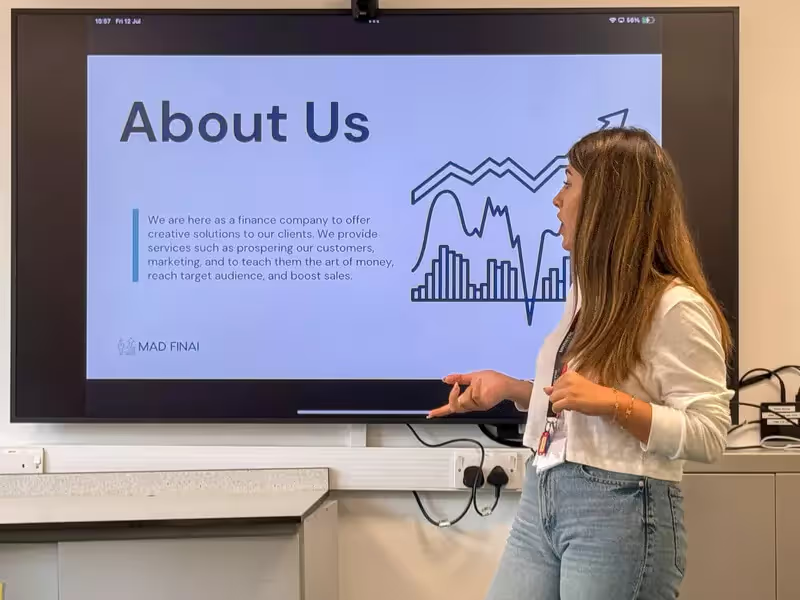
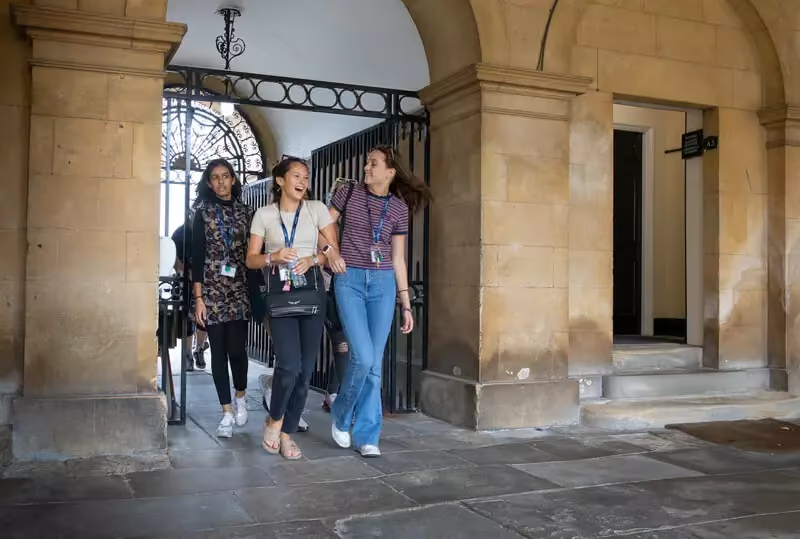
Immerse Education's Academic Insights pathway in Chemistry lets high school students experience university life firsthand. You can live on campus or join as a commuter and study in small seminar groups averaging 7 students, learning from tutors from top universities like Oxford and Cambridge. In the chemistry track, you will study physical chemistry, organic chemistry, and biochemistry to build a solid foundation for college.
Through theoretical analysis, lab experiments, and group projects, you will develop scientific skills, analytical thinking, and problem-solving abilities essential for STEM education. By the end of the program, you will complete a personal project, get written feedback, and receive a certificate of completion. You can find more details about the application here.
Why it stands out: You will study under expert academics, work with a university student mentor, complete a project you can show in future applications, and experience real university college life.
3. Lumiere Research Scholar Program
Location: Remote, you can participate in this program from anywhere in the world!
Cost: Varies depending on program type. Full financial aid available.
Program Dates: Varies by cohort: summer, fall, winter, or spring. Options range from 12 weeks to 1 year.
Application Deadline: Varies by cohort.
Eligibility: You must be currently enrolled in high school and demonstrate a high level of academic achievement.
The Lumiere Research Scholar Program is a rigorous research program tailored for high school students. The program offers extensive 1-on-1 research opportunities for high school students across a broad range of subject areas. The program pairs high school students with Ph.D. mentors to work 1-on-1 on an independent research project. At the end of the 12-week program, you’ll have developed an independent research paper!
You can choose research topics from subjects such as psychology, physics, economics, data science, computer science, engineering, chemistry, international relations, and more. You can find more details about the application here, and check out students’ reviews of the program here and here.
Why it stands out: You get 1-1 mentorship with a Ph.D. mentor and produce an independent research project by the end.
4. Chemistry Research Academy, University of Pennsylvania
Location: University of Pennsylvania, Philadelphia, Pennsylvania
Cost/Stipend: Listed on Penn’s Summer Academies tuition page | Penn Summer Scholarships may cover the full cost for eligible School District of Philadelphia students
Acceptance rate/cohort size: Not specified
Dates: Three weeks in summer; 2027 dates have not been posted yet
Application Deadline: Not specified
Eligibility: Current 10th - 11th grade students who have completed at least one year of high school chemistry | International eligibility not specified
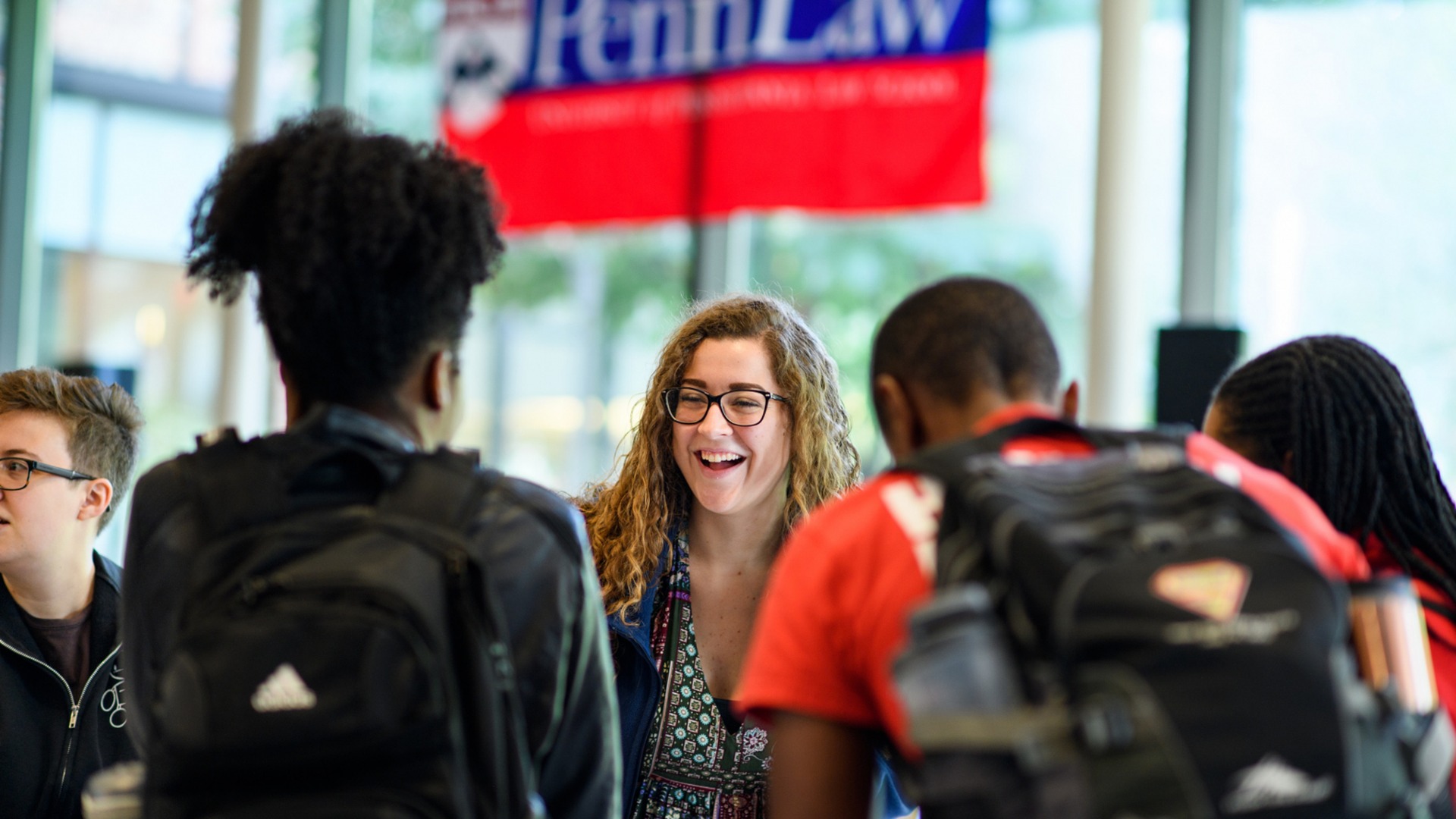
Penn’s Chemistry Research Academy is a three-week, residential, non-credit program that builds on the foundational topics covered in a first-year chemistry course. You explore what research actually involves, including whether working scientists use the same methods you learn in school.
The academy draws on Penn’s chemistry department, whose researchers work on a wide range of societal challenges. It suits you if you already enjoy lab work and want to see how foundational chemistry connects to current research. The program has run since 2013, when it was designed by Penn chemistry staff.
Why it stands out: You build on your high school chemistry and see how those foundations connect to current molecular research at an Ivy League chemistry department.
5. Pitt Summer Chemistry Academy, University of Pittsburgh
Location: Chevron Science Center, 219 Parkman Avenue, Pittsburgh, Pennsylvania
Cost/Stipend: $450 per course | A limited number of scholarships are available on a first-come, first-served basis
Acceptance rate/cohort size: Not specified
Dates: One-week day camps in July; Chemistry in Your World ran July 6-10 in 2026
Application Deadline: Registration for 2027 opens in January 2027
Eligibility: Students entering grades 9-12 for Chemistry in Your World; students entering grades 10-12 who have taken a chemistry course for Antibiotic Avengers | International eligibility not specified; day camp with no housing
You choose between two lab-focused day camps: Chemistry in Your World and Antibiotic Avengers. In the first, you synthesize aspirin, build a battery, identify unknown substances, and solve a forensics mystery. No previous chemistry knowledge is needed for this course.
In Antibiotic Avengers, you culture and observe real bacteria and investigate why they are becoming resistant to antibiotics. Camp runs from 9 a.m. to 3 p.m., Monday to Thursday, and until noon on Friday, with guest speakers at lunch on some days.
Why it stands out: You isolate naturally occurring antibiotics produced by bacteria and determine their molecular structure using IR and NMR spectroscopy.


6. Intensive Modern Chemistry Laboratory, Columbia University
Location: Columbia University, New York, New York
Cost/Stipend: Program tuition, plus about $175 for class equipment
Acceptance rate/cohort size: Not specified
Dates: June 28th - July 16th (Summer A) or July 20th - August 6th (Summer B), 2027
Application Deadline: Listed on Columbia’s Pre-College Dates and Deadlines page
Eligibility: High school students who have completed Algebra 1, Algebra 2, and one year of high school chemistry | Open to students from around the world
You attend both morning and afternoon sessions every weekday, so lab and class work fill most of your day. You receive formal training in spectroscopy, chromatography, and computer simulations using state-of-the-art equipment in the department’s modern labs.
Experiments and discussions are built around essential themes of current research, from medicinal to environmental and materials chemistry. You complete a small research project of your own and take part in regular class discussions. The extended schedule does limit how many other program events you can attend.
Why it stands out: You produce a scientific paper and a group presentation, and guest lecturers from academia and industry show you where chemistry can lead.
7. STARS Chemistry Camp, UT Southwestern Medical Center
Location: UT Southwestern Medical Center, Dallas, Texas
Cost/Stipend: Not specified on the camp page
Acceptance rate/cohort size: Not specified
Dates: Camp dates are posted when applications open
Application Deadline: Applications open February 8th, 2027, and close March 12th, 2027
Eligibility: Current 9th graders who will take sophomore-level chemistry next year | International eligibility not specified
STARS Chemistry Camp gives you a head start on the sophomore-level chemistry course you’ll take next school year. Your lab exercises cover chemistry and math, the periodic table, chemical reactions, mole concepts, stoichiometry, ions and compounds, complex molecules, and thermodynamics.
Afternoons include team-building activities and a DNA lab. You also tour a biochemistry lab at one of the country’s leading academic medical centers. The camp is offered to chemistry teachers as well as students, so the curriculum closely tracks what you’ll meet in class.
Why it stands out: You preview a full year of sophomore chemistry in a medical center setting, so the material already feels familiar when your course begins.
8. Molecules to Medicine Chemistry Summer Camp, University of the Pacific
Location: University of the Pacific, Stockton, California
Cost/Stipend: $4,000 for 2027, covering the academic program, housing, meals, and evening and weekend activities | $500 non-refundable deposit
Acceptance rate/cohort size: Not specified
Dates: June 7-17 or June 21st - July 1st, 2027
Application Deadline: Registration for 2027 is open; your place is secured with the deposit
Eligibility: High school students | International eligibility not specified
Molecules to Medicine explores how scientists turn molecular designs into potential new medicines. Working alongside faculty and graduate students, you synthesize organic and inorganic drug candidates, then purify and analyze the compounds using advanced instruments.
You also study how drugs interact with biological targets and use computer modeling and the scientific literature to refine your designs. At the bench, you assemble synthetic glassware, monitor reactions, and interpret spectroscopic data. The program follows the path from disease target to drug candidate in under two weeks.
Why it stands out: You work under faculty lead Qinliang Zhao, whose group designs enzyme inhibitors and metal-containing anticancer drugs, and finish by presenting your research to a broad audience.
9. Nature to Medicine, Austin Peay State University
Location: Austin Peay State University, Clarksville, Tennessee
Cost/Stipend: $300, including all supplies, snacks, drinks, lunches, and a t-shirt
Acceptance rate/cohort size: Not specified
Dates: July 27-31 in 2026, 8:30 a.m. to 4:00 p.m. daily
Application Deadline: Register through the APSU Marketplace page
Eligibility: Rising 8th to 12th graders | International eligibility not specified
Nature to Medicine is a research-based chemistry camp that uses university-level lab facilities and instruments. Across the week, you complete a full research project, starting with extracting natural products from plant materials and moving on to analytical characterization.
Instructional sessions cover lab safety, experimental design, data analysis, literature searching, basic organic chemistry, and scientific writing. You’re mentored by APSU chemistry faculty, trained undergraduate researchers, and American Chemical Society volunteers. Members of the local ACS section also introduce you to different chemistry careers.
Why it stands out: You test the compounds you extracted in student-friendly bacterial assays to explore their potential medicinal properties, under Drs. Anuradha Pathiranage and Laura Chamness.
10. Chemistry Camp, Bucknell University
Location: Bucknell University, Lewisburg, Pennsylvania
Cost/Stipend: $250, including instruction, lab materials, and several meals and snacks | Need-based financial aid is available
Acceptance rate/cohort size: Not specified
Dates: Two days in summer 2027; the camp did not run in 2026 due to building renovations
Application Deadline: May 3rd, with rolling admissions
Eligibility: Students entering grades 10, 11, or 12 | International eligibility not specified; this is not an overnight camp
Bucknell’s Chemistry Camp introduces you to the sub-branches of chemistry: organic chemistry, biochemistry, analytical chemistry, inorganic chemistry, and physical chemistry. Each branch includes an overview and a lab activity guided by a Bucknell professor.
You also meet Bucknell students who are spending their summer on scientific research. Professional development sessions include meetings with an admissions counselor and a STEM career coach. The camp is a good way to see how different branches of chemistry compare before you pick a direction.
Why it stands out: You plan a scientific demonstration with a faculty adviser and present it at a closing show for faculty, staff, students, and families, followed by a celebration dinner.
11. UNIQ Chemistry, University of Oxford
Location: University of Oxford, Oxford, United Kingdom; residential
Cost/Stipend: Free
Acceptance rate/cohort size: Not specified
Dates: One week; the 2026 Chemistry course ran July 13-17 | 2027 residentials run in late June or July
Application Deadline: Applications open December 15th, 2026, and close at 1 p.m. on January 19th, 2027
Eligibility: UK state school students in Year 12 (England and Wales), Year 13 (Northern Ireland), or S5 (Scotland) who meet UNIQ’s selection criteria | Not open to international students
UNIQ Chemistry gives you a taste of life as a Chemistry undergraduate at Oxford. The course mixes lectures, tutorials, and practical work, with tutorials covering the physical, inorganic, and organic branches of chemistry. Each session is designed to show you Oxford’s tutorial system, which is central to how the degree is taught.
UNIQ is an access program, so it prioritises students from backgrounds underrepresented at Oxford. After the residential, you receive online support from August to December to help you build a competitive application.
Why it stands out: You experience Oxford’s tutorial teaching firsthand and get sustained support with your Oxford application afterwards.
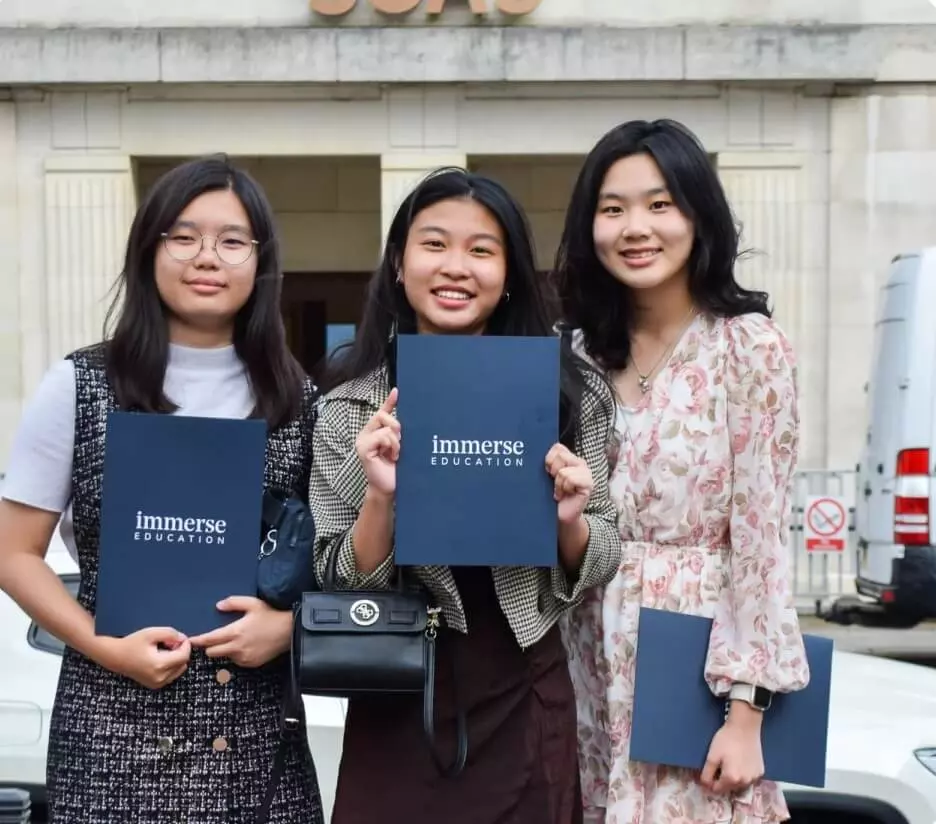
Join the Immerse Education 2027 Essay Competition
Follow the instructions to write and submit your best essay for a chance to be awarded a 100% scholarship.
12. ASM Materials Camp, University of Washington
Location: University of Washington, Seattle campus
Cost/Stipend: Free | No housing, and lunch is not provided
Acceptance rate/cohort size: Not specified
Dates: July 6-11 in 2026
Application Deadline: March 15th in 2026, at 5:00 p.m.; applications opened February 1st
Eligibility: Sophomores (10th grade) attending high school in the greater Seattle area | US citizenship isn’t required, but you must attend a Seattle-area high school
UW’s ASM Materials Camp is a free materials science day camp where applied chemistry, physics, and math come together. You combine mini-demonstrations and field trips with extended time in labs and facilities, using instruments to explore materials science, engineering, and biology principles. No prior engineering experience is required.
Applicants are selected on academic record, motivation, and college or career interests. A 3.0 GPA and some knowledge of algebra, chemistry, or physical science are preferred but not required.
Why it stands out: The camp ends with a team-based problem-solving challenge led by “Materials Mentors,” who are practicing engineers and researchers.
13. Inspiring Future Scientists through Shadowing, Stanford University
Location: Stanford University Department of Chemistry, Stanford, California
Cost/Stipend: Free | Room, board, and transportation (including parking) are not covered
Acceptance rate/cohort size: Small cohort; the volunteer-run program has limited capacity
Dates: June 15-26 in 2026, 9:00 a.m. to 12:00 p.m., Monday to Friday
Application Deadline: March 1st in 2026, at 11:59 p.m.
Eligibility: Rising high school juniors and seniors who are at least 16 by the first day, and who live and attend school in Alameda, Santa Clara, San Francisco, or San Mateo County | Not open to international students
IFSS gives you two weeks of mornings in Stanford’s chemistry department, observing and talking with graduate students as they work. Instead of running one project, you shadow several researchers, which lets you learn broadly about a wide range of topics and techniques.
The program is built around exposure to professional research rather than an individual research project. You must attend the full two weeks, since important safety training and other activities can’t be missed. Applications are reviewed carefully, and the use of AI to prepare them is strictly prohibited.
Why it stands out: Shadowing multiple Stanford researchers gives you a broad view of current chemical research before you commit to any one area.
14. CURIE: Catalyzing UR Interest in Chemical Engineering, University of Illinois Urbana-Champaign
Location: Grainger College of Engineering, University of Illinois Urbana-Champaign, Urbana, Illinois
Cost/Stipend: $1,500 residential | $750 commuter | Scholarships are available
Acceptance rate/cohort size: Not specified
Dates: July 26th - August 1st in 2026
Application Deadline: The 2026 camp is full; 2027 application details have not been posted yet
Eligibility: Students in grades 10-12 | International eligibility not specified
CURIE introduces you to chemical engineering, the discipline of taking a scientific process and engineering it for large-scale production. Past camps have included making plastics from scratch with an extruder machine and an interactive session on distillation towers with chemical engineers.
You also play with Silly Putty to understand the physics of fluids and use computer games to learn how proteins function in the body. You meet faculty, graduate students, and undergraduates to learn about chemical engineering research. The camp is led by Dr. Diwakar Shukla, whose research applies computational methods to chemical and biomolecular engineering problems.
Why it stands out: You sample each part of chemical engineering in one week, from fluid physics to plant-scale production, with field trips to see how the work applies in industry.
15. Chemistry Olympiad Study Camp, American Chemical Society
Location: University of Maryland, College Park, Maryland
Cost/Stipend: Not specified; participation is by invitation
Acceptance rate/cohort size: The 20 top-scoring students from the US National Chemistry Olympiad National Exam
Dates: Two weeks; May 31st - June 13th in 2026
Application Deadline: No application; you qualify through the local and national Olympiad exams
Eligibility: High school students who qualify through their ACS local section’s USNCO coordinator | International eligibility not specified
The Chemistry Olympiad Study Camp is the third tier of the US National Chemistry Olympiad, which the American Chemical Society has sponsored since 1984. The 20 top scorers on the National Exam, which more than 1,000 students take each April, spend two weeks in rigorous training.
You are mentored by faculty from the University of Maryland’s Department of Chemistry and Biochemistry. Your performance at camp decides which four students represent the United States at the International Chemistry Olympiad. It’s the most competitive option on this list, built for students already working at the top of high school chemistry.
Why it stands out: The camp trains and selects the four-member US team for the International Chemistry Olympiad, so you study alongside the strongest young chemists in the country.
Frequently asked questions: Chemistry Summer Camps for High School Students
Are there free chemistry summer camps for high school students?
Yes, several camps on this list are completely free, though most have location limits. Oxford’s UNIQ is free for eligible UK state school students, and UW’s ASM Materials Camp and Stanford’s IFSS are free for local students. The Chemistry Olympiad Study Camp is by invitation only, based on exam results. If a paid camp suits you better, Pitt and Bucknell both offer scholarships or need-based aid.
How much do chemistry summer camps cost?
Costs range from free to several thousand dollars. Short day camps are the most affordable: Bucknell charges $250, Austin Peay $300, and Pitt $450 per course. Residential options cost more, such as $800 at Missouri S&T and $4,000 for the 2027 session at University of the Pacific. When you compare prices, check whether housing, meals, and materials are included.
Do you need to have studied chemistry before attending a summer camp?
Not always, since many introductory camps welcome beginners. Pitt’s Chemistry in Your World requires no previous chemistry, and UW’s materials camp doesn’t require prior engineering experience. More advanced programs set prerequisites: Columbia expects one year of high school chemistry plus Algebra 1 and 2, and Penn’s academy builds on a first-year chemistry course. Read each program’s requirements before applying so you choose the right level.
Can international students attend chemistry summer camps?
Yes, but many US camps are aimed at local students. Columbia’s program welcomes students from around the world, while camps like UW’s and Stanford’s require you to attend a local high school. Immerse Education’s Academic Insights pathway in Chemistry in Oxford and Cambridge is open to students aged 16 to 18 worldwide, with an average of 7 students per class. You can also explore these chemistry camps in the UK for high school students.
Can you do real chemistry research at a summer camp?
Some camps let you complete a research project of your own. At University of the Pacific, you synthesize and characterize drug candidates, and Austin Peay’s camp takes you from plant extraction to bacterial assays. Stanford’s IFSS focuses on shadowing researchers rather than running your own project. For longer, research-focused options, browse these chemistry research programs for high school students.
Are there online chemistry options if you can’t attend a camp in person?
Yes, several online options let you study chemistry from home. Immerse Education’s Online Research pathway in Chemistry pairs you with a tutor from Oxford, Cambridge, or an Ivy League institution for 10 to 15 hours of 1:1 tutorials, ending in a research paper. Online study is a flexible way to go beyond your school syllabus without travel costs. You can compare more choices in this list of online chemistry courses for high school students.
Turning chemistry curiosity into university plans
A week in a real chemistry lab can tell you more about your future degree than another year of reading textbooks at home.
When you compare chemistry summer camps for high school students, weigh the prerequisites, location rules, and costs alongside the lab work offered.
Whichever program you choose, note the techniques you learn and the questions that excite you, since both will shape your university choices.
To keep planning your path toward a chemistry degree, explore our University Preparation blogs for advice on subjects, applications, and interviews.







Unlock Inspiring Opportunities with the Immerse Education Newsletter
Join our newsletter to stay ahead with exclusive updates, exciting programme highlights, and expert insights from the world of immersive education.
Learn how Immerse can transform your life
An in-depth overview of our university and career preparation programmes
Get a glimpse into the life of an Immerse participant
Find the right programme for you with sample timetables, location showcases, and more