15 College Summer Programs for High School Freshmen
TL;DR
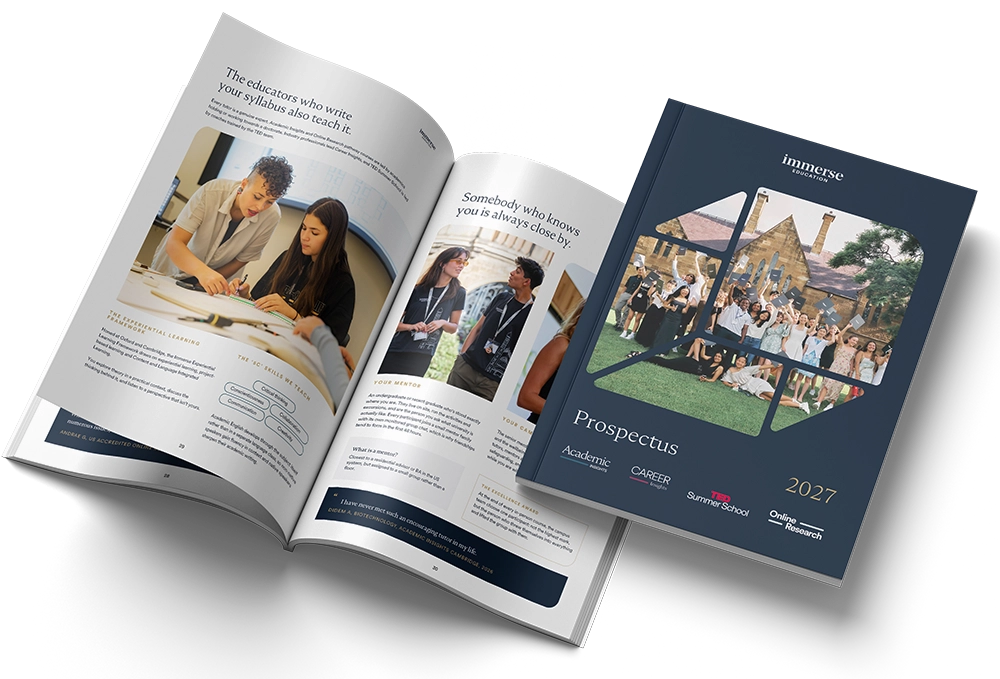
On this page, you’ll find college summer programs that welcome ninth graders, from free commuter programs like CSExplore and NYU’s ieSoSC to residential academies at Brown and Penn. Some run online or as day camps, while others let you live in a college dorm and study one subject in depth. AIM-High, for example, costs $1,800 for five days of clinical skills practice and caps each session at 50 students. Immerse Education’s Academic Insights pathway is also open to students aged 13 to 18, with two-week courses in cities such as Cambridge, Oxford, and Sydney.
If you’re a high school freshman, summer is more than just a break from classes. It’s an opportunity to explore new interests, challenge yourself academically, and get a glimpse of what college life is really like. Imagine spending your summer on a college campus, working on projects with students who share your interests, attending lectures taught by university professors, or exploring fields such as engineering, business, medicine, writing, or computer science.
College summer programs also give you the chance to step outside your usual routine. You’ll meet motivated peers from different backgrounds, learn in a new environment, and gain exposure to subjects that may not be available at your school. Whether your goal is to explore a potential career path or simply try something new, the right college summer program for high school freshmen can make your summer both productive and memorable.
How do you choose the right college summer programs for high school freshmen?
Finding the right program can feel overwhelming. Some programs focus heavily on academic enrichment, while others emphasize practical learning, leadership development, or career exploration. With so many options available, it’s important to identify programs that match your interests, goals, and learning style.
Many colleges and educational organizations offer programs designed specifically for younger high school students. You might explore STEM research, creative writing, entrepreneurship, public speaking, environmental science, or other specialized fields. Some programs provide a broad introduction to college-level learning, while others allow you to explore a specific subject in depth.
To make your search easier, we’ve compiled a list of 15 college summer programs for high school freshmen. Each program offers valuable learning opportunities, strong mentorship, and experiences that can help you make the most of your summer.
15 College Summer Programs for High School Freshmen
1. Stanford Pre-Collegiate Summer Institutes
Location: Online (run by Stanford Pre-Collegiate Studies, Stanford University)
Cost/Stipend: Varies; tuition and financial aid details are on the program website
Acceptance rate/cohort size: Average class size of 16
Dates: June 15th to 26th or July 6th to 17th (2026 sessions); 2027 dates not yet posted
Application Deadline: 2026 applications have closed; 2027 deadline not yet posted
Eligibility: Students currently in grades 8 to 11; open to international students, with participants typically coming from more than 50 countries
Stanford Pre-Collegiate Summer Institutes lets you spend two weeks studying a single online course with content that goes beyond a typical high school curriculum. You’ll choose from more than 75 courses in subjects such as artificial intelligence, creative writing, engineering, mathematics, and philosophy.
Classes meet live each weekday, and you’ll attend with your camera and microphone on and complete short assignments to prepare for the next day. Courses are ungraded and don’t carry credit, so the focus stays on learning rather than grades. You’ll study alongside peers who typically come from all 50 U.S. states and dozens of countries.
Why it stands out: Instead of rotating through multiple disciplines, you spend the entire program focused on one subject in small, live online classes.
2. Immerse Education’s Pre-University Summer School

Location: Cambridge, London, Oxford, Singapore, Sydney, and Toronto
Cost/Stipend: Varies; summer school scholarship available through our bursary programme
Acceptance rate/cohort size: Selective; an average of 7 participants per class
Dates: 2 weeks during the summer
Application Deadline: Multiple cohorts with rolling admissions
Eligibility: Students aged 13 to 18; open to international students from around the world
Immerse Education’s Academic Insights pathway gives you two weeks of undergraduate-level study in one subject in cities such as Cambridge, London, Oxford, Singapore, Sydney, and Toronto. You’ll learn in tutor-led seminars averaging 7 students, with two 1:1 tutorials, masterclasses, and guest speakers built into your timetable.
You can choose from more than 20 subjects, including Architecture, Artificial Intelligence, Business Management, Economics, Engineering, Law, and Medicine. By the end of the course, you’ll complete a personal project and present it on the final Friday. From age 14, you can also opt in to earn 8 UCAS points or 3 US college credits. You can find more information about the application process here.
Why it stands out: You get an early taste of university-style learning through small seminars, 1:1 tutorials, and a personal project you can talk about in future applications.
3. Lumiere Research Scholar Program
Location: Remote, you can participate in this program from anywhere in the world!
Cost: Varies depending on program type. Full financial aid available.
Application Deadline: Varies by cohort.
Program Dates: Varies by cohort: summer, fall, winter, or spring. Options range from 12 weeks to 1 year.
Eligibility: You must be currently enrolled in high school and demonstrate a high level of academic achievement.
The Lumiere Research Scholar Program is a rigorous research program tailored for high school students. The program offers extensive 1-on-1 research opportunities for high school students across a broad range of subject areas. The program pairs high school students with Ph.D. mentors to work 1-on-1 on an independent research project. At the end of the 12-week program, you’ll have developed an independent research paper!
You can choose research topics from subjects such as psychology, physics, economics, data science, computer science, engineering, chemistry, international relations, and more. You can find more details about the application here, and check out students’ reviews of the program here and here.
Why it stands out: You get 1-1 mentorship with a Ph.D. mentor and produce an independent research project by the end.
4. Tapia STEM Camps
Location: Rice University, Houston, TX (residential)
Cost/Stipend: $2,225 (Early Bird, before February 1st, 2027) or $2,525 (Regular, before May 1st, 2027), including housing, meals, and a field trip; limited scholarships available
Acceptance rate/cohort size: Typically 100 to 150 campers per week
Dates: July 11th to 16th, July 18th to 23rd, or July 25th to 30th, 2027
Application Deadline: Regular registration by May 1st, 2027; scholarship awards begin in mid-April 2027
Eligibility: Rising 8th to 12th graders interested in STEM; open to international students, with a few international campers attending each year
At Tapia STEM Camps, you’ll spend six days and five nights living on Rice University’s campus while working through STEM challenges built around data centers and their impact. You’ll build your own heatsink, design model wind turbines and carbon capture reservoirs, and even create a college admissions algorithm.
Along the way, you’ll learn from Rice students, meet STEM professionals, and practice public speaking before presenting your work on the final Friday. The week also includes a STEM Fair, evening activities, and a field trip within Houston, such as NASA Johnson Space Center. Classrooms are loosely grouped by grade, so you’ll work alongside students close to your own age.
Why it stands out: You combine advanced STEM projects with communication training, a combination that many technical summer programs overlook.
5. Shirley Povich Sports Journalism Summer Camp
Location: Knight Hall, Philip Merrill College of Journalism, University of Maryland, College Park, MD
Cost/Stipend: Not specified on the official program page
Acceptance rate/cohort size: Not specified
Dates: A weeklong day program held each July
Application Deadline: Registration opens in March; no deadline listed
Eligibility: Students entering grades 9 to 12; open to students from anywhere, though no on-campus housing is offered
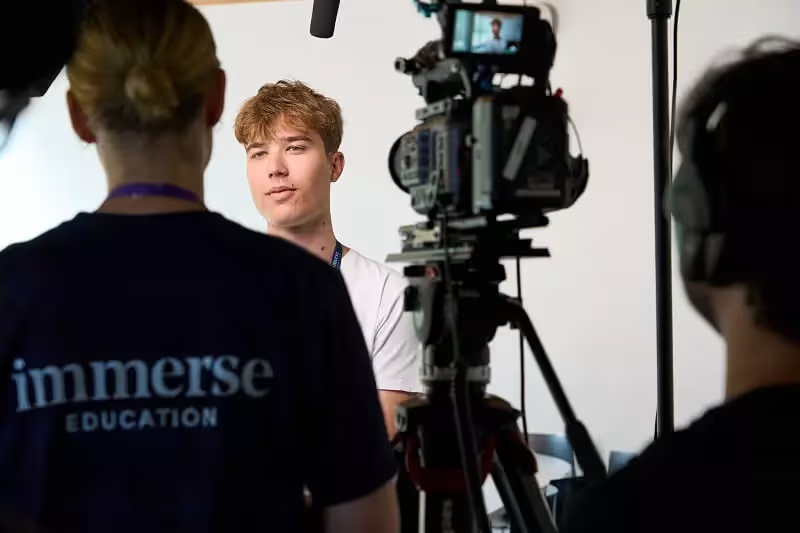
If you follow the stories behind the games as closely as the scores, this camp offers a practical introduction to sports media. Throughout the week, you’ll practice sports writing, play-by-play broadcasting, social media video, sports analytics, and eSports production.
You’ll tour the university’s Xfinity Center and hear from guest speakers, including a 2026 keynote from a Washington Wizards broadcaster. By the final day, you’ll present a completed camp story that reflects the skills you developed during the program.
Why it stands out: You explore multiple sides of sports media, from reporting and broadcasting to analytics and social content creation, in a single week-long experience.


6. USF High School Robotics Camp
Location: DFX Lab, College of Engineering, University of South Florida, Tampa, FL
Cost/Stipend: To be announced for 2027; optional Rocky’s Residents residential add-on (cost to be announced)
Acceptance rate/cohort size: 30 students per session
Dates: No additional 2026 sessions available; 2027 dates not yet posted
Application Deadline: Registration for 2027 summer programs opens February 1st, 2027
Eligibility: Students entering grades 9 to 12; international eligibility not specified
At this engineering camp, you’ll design, build, and program your own Autonomous Mobile Robot using a Raspberry Pi kit. You’ll learn robotics theory, circuit design, and Python programming, then use 3D printing to construct your robot. As the week progresses, you’ll add sensors and actuators so your robot can sense and respond to its environment.
You’ll also explore industrial robotics through ABB RobotStudio software and work with real industrial robots in USF’s labs. You’ll take home your completed robot, project files, and the skills to keep experimenting on your own.
Why it stands out: You leave with a fully functioning robot that you designed, assembled, and programmed yourself.
7. Summer@Brown
Location: Brown University, Providence, RI
Cost/Stipend: Tuition varies by course and session
Acceptance rate/cohort size: Not specified
Dates: June 15th to July 25th (2026), with 1-, 2-, and 3-week on-campus sessions and a 5-week hybrid option; 2027 dates not yet posted
Application Deadline: 2027 deadline not yet posted
Eligibility: Students completing grades 9 to 12 who are 14 to 18 by the program start; open to international students
Summer@Brown lets you build a summer around the subjects that interest you most. You can choose from more than 230 non-credit courses spanning areas such as medicine, psychology, engineering, literature, business, and the arts. You’ll spend three hours a day in class, plus two to three hours on independent and group work that you schedule yourself.
Outside class, you’ll join workshops and activities from morning to night while living alongside students from around the world. Every student who completes a course earns a digital certificate, and courses of two weeks or longer also come with a Course Performance Report.
Why it stands out: With hundreds of course options across disciplines, you can create a highly personalized academic experience rather than following a fixed curriculum.
8. Innovation, Entrepreneurship and the Science of Smart Cities (ieSoSC)

Location: NYU Tandon School of Engineering, Brooklyn, NY
Cost/Stipend: Free (full scholarship, supported by the Winston Foundation)
Acceptance rate/cohort size: Not specified
Dates: July 6th to August 7th, 2026 (Program I, five weeks); July 13th to August 7th, 2026 (Program II, four weeks, invitation only); Monday to Friday, 9 a.m. to 4 p.m.
Application Deadline: May 15th (2026); 2027 dates not yet posted
Eligibility: Students in grades 9 to 11 who live in New York City; not open to international students living outside NYC
If you’re interested in both technology and entrepreneurship, ieSoSC lets you explore how the two intersect through the lens of smart cities. You’ll learn coding, electronics, circuit deployment, sensor integration, and microcontroller programming while working on projects tied to urban challenges.
The program also introduces you to product development, economics, project management, pitch presentation, and patents and copyrights. As you build a prototype with your team, you’ll strengthen your communication skills through theater-based workshops. The experience concludes with a final showcase where you present your solution.
Why it stands out: You develop both engineering and entrepreneurial skills while designing technology-based solutions for city problems, all at no cost.
9. State Pre-College Enrichment Program (S-PREP)
Location: Vagelos College of Physicians and Surgeons, Columbia University, New York, NY
Cost/Stipend: Free
Acceptance rate/cohort size: Not specified
Dates: Summer session Monday to Friday, 10 a.m. to 2 p.m., in July; academic year session on Saturdays, 9 a.m. to 3 p.m., from October to May
Application Deadline: In 2025, summer applications closed April 15th and academic year applications closed September 15th; check the program site for current dates
Eligibility: Students in grades 7 to 12 who are New York State residents and meet New York State Education Department STEP eligibility criteria, such as income guidelines; not open to international students living outside New York
If you’re interested in medicine, science, or health-related careers, S-PREP offers a structured introduction to these fields through rigorous enrichment coursework. You’ll take classes in subjects such as Anatomy, Biochemistry, Chemistry, Brain and Cognitive Science, Physics, Psychology, Algebra, and Calculus.
The program also includes PSAT preparation in the summer, SAT preparation during the academic year, college counseling, career development workshops, field trips, and college tours. Once admitted, you can also apply to Columbia research programs such as BRAINYAC and YES in THE HEIGHTS.
Why it stands out: You receive long-term academic and college-preparation support through a tuition-free program designed to increase access to STEM and healthcare careers.
10. CSExplore Camp
Location: UB North Campus, University at Buffalo, Buffalo, NY (day camp)
Cost/Stipend: Free
Acceptance rate/cohort size: Not specified
Dates: July 28th to 30th (2026)
Application Deadline: May 30th (2026); later applications are added to the waitlist
Eligibility: Students entering grades 9 to 12, with no prior programming experience needed; local high schools are prioritized, but participation isn’t limited to Erie and Niagara counties; international eligibility not specified
CSExplore is a three-day camp run by UB’s Department of Computer Science and Engineering that introduces you to computing from the ground up. You’ll explore the fundamentals of computing, from the low-level hardware of circuits to the high-level logic of writing software.
Activities include programming a robot and designing a video game, along with visits to campus research labs that apply computing to meaningful problems. You don’t need any prior experience, which makes it an easy first step if you’re curious about computer science.
Why it stands out: You get a quick, free introduction to every layer of computing, from circuits to code, in just three days.
11. UCLA Summer Precollege Focus Series
Location: University of California, Los Angeles, CA (commuter only, with no housing provided), plus select virtual programs
Cost/Stipend: Varies by program; estimates are available through UCLA Summer Sessions’ fee calculator
Acceptance rate/cohort size: Not specified
Dates: Three-week sessions in the summer (2026 sessions ran June 22nd to July 10th and July 13th to 31st); 2027 dates not yet posted
Application Deadline: 2026 enrollment has closed; 2027 dates not yet posted
Eligibility: High school students who are at least 15 by the first day of Summer Sessions (some programs set higher ages); open to students from around the world
UCLA’s Summer Precollege Focus Series lets you earn UCLA college credit in three weeks while studying one subject in depth. In 2026, programs included Critical Thinking, Discovering College Math, Economics, Engineering Design, Introduction to Investments, Political Science, TeenArch Studio, and World Politics.
Alongside classes, you’ll take part in projects, field visits, and guest lectures tied to your subject. Since in-person programs are commuter-only, you’ll need your own housing if you don’t live nearby. You must be at least 15 on the first day, so this option works best if you’re an older freshman.
Why it stands out: You can earn UCLA college credit in just three weeks, which is rare among programs open to ninth graders.
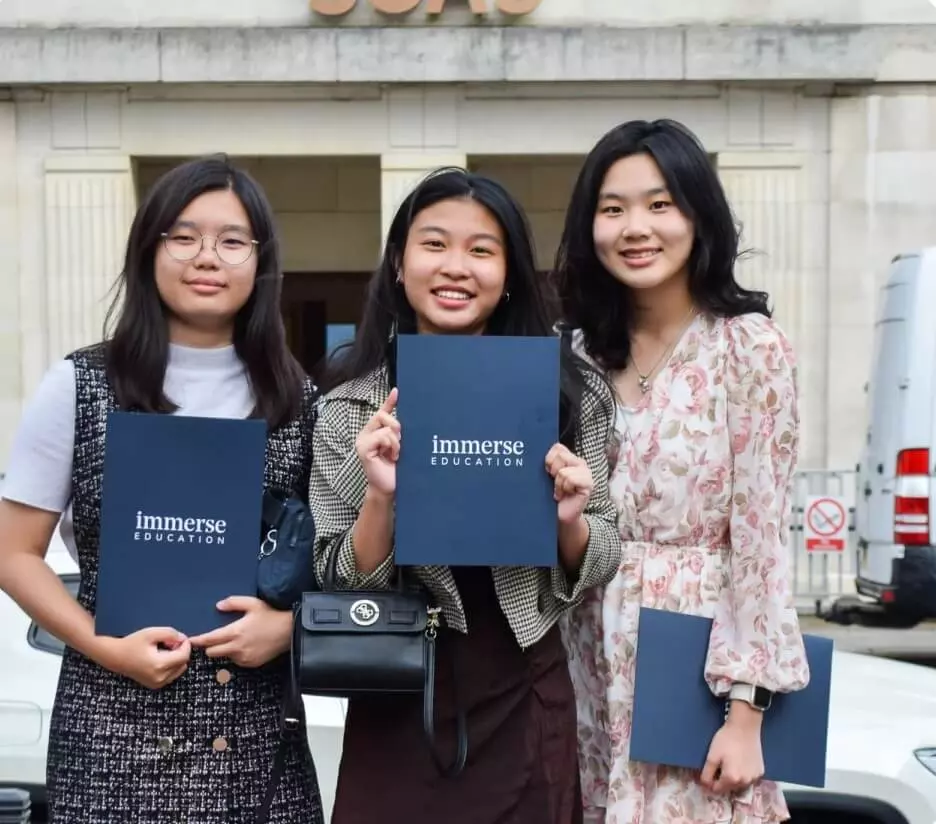
Join the Immerse Education 2027 Essay Competition
Follow the instructions to write and submit your best essay for a chance to be awarded a 100% scholarship.
12. AIM-High Medical Summer Camp
Location: NSU Fort Lauderdale Campus (Fort Lauderdale, FL) and NSU Tampa Bay Regional Campus (Clearwater, FL)
Cost/Stipend: $1,800, including meals, snacks, and materials; $50 application fee; need-based scholarships available
Acceptance rate/cohort size: 50 students per session
Dates: Fort Lauderdale June 28th to July 2nd or July 12th to 16th, 2027; Clearwater June 21st to 25th, 2027
Application Deadline: Applications open in November 2026 and are reviewed on a rolling basis; decisions arrive by mid-April at the latest
Eligibility: Rising high school freshmen, sophomores, juniors, and seniors with a minimum 3.2 GPA; open to international students, though there’s no visa sponsorship or scholarship funding for them
If you’re curious about a future in healthcare, AIM-High gives you an inside look at what medical training involves. You’ll spend five days working with NSU medical students and faculty while exploring more than 15 health career fields, from emergency medicine and radiology to pharmacy and public health.
Practical sessions introduce you to skills such as suturing, CPR, splinting, and vital signs assessment. You’ll also use augmented and virtual reality simulation labs, review patient cases with physicians, and learn about the path from high school to medical school.
Why it stands out: You get direct experience with clinical skills and medical simulation tools that are typically reserved for students already pursuing healthcare training.
13. Biomedical Research Academy
Location: University of Pennsylvania, Philadelphia, PA (residential only)
Cost/Stipend: Not specified on the program page; scholarships available for select School District of Philadelphia students
Acceptance rate/cohort size: Not specified
Dates: July 11th to August 1st (2026); 2027 dates not yet posted
Application Deadline: Listed on Penn’s Application Information page
Eligibility: Current 9th to 11th graders who have completed a year of high school biology (a year of chemistry is strongly advised); open to international students on a tourist or B-2 visa
If you’re fascinated by how scientific discoveries shape medicine, this three-week residential academy offers a closer look at the research behind human health and disease. You’ll attend daily lectures from Penn faculty, scientists, and clinicians on topics such as genome sequencing, CRISPR, vaccine research, and antibiotic resistance.
In wet lab sessions, you’ll use techniques including PCR, gel electrophoresis, bacterial transformation, and ELISA to determine your blood type and analyze a mock disease outbreak. In computational labs, you’ll use Python to analyze real biological data, with no prior programming experience required. You’ll also discuss research papers in small-group journal clubs and present an article to your peers at the end.
Why it stands out: You work in Penn’s undergraduate teaching labs and engage with current biomedical research through both lab experiments and scientific literature analysis.
14. Stanford EXPLORE: A Lecture Series on Biomedical Research for High School Students
Location: Stanford School of Medicine, Stanford University, Stanford, CA, with a virtual option
Cost/Stipend: $800 a week in person or $600 a week online; two-week minimum
Acceptance rate/cohort size: Not specified
Dates: July 6th to 31st (2026), Monday to Friday, 9 a.m. to 12 p.m. PT; 2027 dates not yet posted
Application Deadline: Registration opened March 1st in 2026 and is now closed; 2027 dates not yet posted
Eligibility: Students in grades 9 to 12 who are U.S. citizens or permanent residents currently living in the U.S.; international students are not eligible
Stanford EXPLORE introduces you to biomedical research through lectures led mainly by graduate students and postdoctoral fellows, with some taught by faculty. In 2026, weekly themes covered immunology and cancer immunotherapy, neuroscience and stem cells, AI in biomedicine and precision health, and careers in science and medicine. There’s no homework, and you’ll learn about graduate and medical school pathways from current students. If you attend in person, you’ll also join several on-campus site visits.
Why it stands out: You gain exposure to multiple biomedical disciplines through lectures delivered by researchers working at Stanford School of Medicine.
15. YES in THE HEIGHTS Program
Location: Herbert Irving Comprehensive Cancer Center, Columbia University Irving Medical Center, New York, NY
Cost/Stipend: Paid internship for eight weeks of full-time work (35 hours a week); no housing or transportation provided
Acceptance rate/cohort size: Fewer than 10% of high school applicants are accepted
Dates: June 29th to August 21st (High School Scholars, 2026); the program runs over two summers
Application Deadline: January 9th (2026 cycle; applications opened the previous November)
Eligibility: Students who are at least 14, in good standing at school, and U.S. citizens or permanent residents; local applicants are encouraged; international students are not eligible
If you want to experience biomedical research beyond the classroom, YES in THE HEIGHTS places you alongside Columbia researchers and physicians for a paid summer internship. You’ll spend eight weeks contributing to cancer-related research while receiving mentorship from a faculty member whose work aligns with your interests.
Alongside your research placement, you’ll attend a weekly cancer biology journal club, professional development training, and networking events. You’ll also create an Individual Development Plan and submit a scientific abstract based on your work, with an oral presentation in your second summer.
Why it stands out: You conduct paid, mentor-guided cancer research at Columbia while working within a program that admits fewer than 10% of high school applicants.
Frequently asked questions: College Summer Programs for High School Freshmen
Can high school freshmen attend college summer programs?
Yes, plenty of college summer programs accept ninth graders, though age and grade rules vary. Summer@Brown takes students completing grades 9 to 12 who are at least 14, and Penn’s Biomedical Research Academy accepts current 9th to 11th graders. Some programs set higher limits, such as UCLA’s Summer Precollege Focus Series, which requires you to be at least 15. Immerse Education’s Academic Insights pathway welcomes students aged 13 to 18, so you can join during your freshman summer in classes averaging 7 participants.
Are there free college summer programs for high school freshmen?
Yes, a handful of strong programs charge no tuition, although most have residency limits. NYU Tandon’s ieSoSC is free for New York City residents in grades 9 to 11, and the University at Buffalo’s CSExplore camp is free for students entering grades 9 to 12. Columbia’s S-PREP is also free for eligible New York State students in grades 7 to 12. If the program you want charges tuition, this guide to top scholarships for STEM students can help you find funding.
Do college summer programs for freshmen give college credit?
Most programs open to freshmen don’t award college credit, and that’s normal at this stage. Stanford Pre-Collegiate Summer Institutes courses are ungraded and carry no credit, while Summer@Brown gives you a certificate of completion and, for courses of two weeks or longer, a Course Performance Report. UCLA’s Summer Precollege Focus Series does award UCLA credit, but you must be at least 15. With Immerse Education’s Academic Insights pathway, you can opt in to earn 8 UCAS points or 3 US college credits from age 14.
Do summer programs help freshmen get into college?
A summer program won’t guarantee admission, but it can help you figure out what you enjoy and build on it over the next three years. Starting early gives you time to turn one summer interest into deeper coursework, clubs, or projects later in high school. Programs that end with concrete work, such as the robot you take home from USF or the scientific abstract you submit at YES in THE HEIGHTS, give you something specific to discuss later. Focus on fit and curiosity rather than prestige alone.
Can high school freshmen do research or internships in the summer?
Yes, though research and internship programs for ninth graders are less common than for older students. Columbia’s YES in THE HEIGHTS accepts students who are at least 14 and pays you for eight weeks of mentored cancer research, but it’s limited to U.S. citizens and permanent residents. Penn’s Biomedical Research Academy offers a gentler entry point, with wet lab sessions, Python-based data analysis, and daily journal clubs. For more options at your age, browse these summer internships for 14 year olds.
Are there online college summer programs for high school freshmen?
Yes, and they’re a good option if you can’t travel or want a shorter commitment. Stanford Pre-Collegiate Summer Institutes runs two-week live online courses for students in grades 8 to 11, with an average class size of 16. Stanford EXPLORE also offers a virtual lecture option at $600 a week, though it’s limited to U.S. citizens and permanent residents living in the U.S. For more remote choices, browse these online summer programs for high school students.
Make your first high school summer count
Your freshman summer is the perfect low-pressure moment to test a new subject, a campus, and a learning style before high school gets much busier.
Whether you pick a free day camp or a residential academy, college summer programs for high school freshmen help you discover what truly excites you.
Start researching options early in the fall, since AIM-High opens applications in November and Tapia’s early-bird pricing ends February 1st, rewarding students who plan ahead.
For more expert help planning the rest of high school, explore our University Preparation blogs on coursework, applications, test prep, and choosing your future major.






Unlock Inspiring Opportunities with the Immerse Education Newsletter
Join our newsletter to stay ahead with exclusive updates, exciting programme highlights, and expert insights from the world of immersive education.
Learn how Immerse can transform your life
An in-depth overview of our university and career preparation programmes
Get a glimpse into the life of an Immerse participant
Find the right programme for you with sample timetables, location showcases, and more