15 Economics Summer Schools for Year 11 Students

Summary
You’ll find 15 economics summer schools here, from two-week residential programs at Harvard, Yale, and Cornell to credit-bearing courses at UCLA and Miami. The main split is between non-credit enrichment programs and courses that award college credit. Most suit you if you’re finishing Year 11, though some require you to be 16 by the start date. Yale Young Global Scholars, for example, offers need-based aid covering up to full tuition. Immerse Education’s Academic Insights pathway in Economics runs in Cambridge, London, Oxford, and Singapore for students aged 13 to 18.
If you’re a Year 11 student interested in economics, you may be wondering what the subject involves beyond supply-and-demand diagrams and textbook definitions. Economics provides a framework for examining how individuals, businesses, and governments make decisions when resources are limited. It can also help you understand questions involving inflation, trade, inequality, employment, financial markets, and public policy.
One way to explore these questions in greater depth is through an economics summer school for Year 11 students. Depending on the program, you might attend university-style lectures, analyze economic data, debate policy questions, work through case studies, or examine how economic models apply to practical problems.
How do you choose the right economics summer school for Year 11 students?
Choosing between economics summer schools for Year 11 students can be challenging because programs differ substantially in their academic level, teaching format, eligibility requirements, and subject focus. Some introduce the foundations of economics, while others expect you to engage with more specialized areas such as behavioral economics, public policy, international trade, or experimental economics.
University-hosted programs may use lectures, seminars, discussions, simulations, experiments, group projects, and independent academic work to introduce you to economic thinking. Some offer a broad introduction to the discipline, while others focus on a particular area, such as economic policy or behavioral decision-making.
15 Economics Summer Schools for Year 11 Students
1. Economics Policy Academy
Location: Georgetown University, Washington, DC
Cost: $9,085 (residential tuition and meals) | $7,085 (commuter tuition) for 2026
Acceptance rate/cohort size: Not specified
Dates: June 28th - July 17th in 2026 | 2027 programming is being announced
Application Deadline: January 31st (early bird, application fee waived) | May 15th (final) | Applications completed afterward are reviewed case by case
Eligibility: You must be a current 8th, 9th, 10th, 11th, or 12th grader during the academic year before the program, with at least a 2.0 GPA | International students can apply to the Academies and don’t need a student visa
Georgetown’s Economics Policy Academy lets you examine how governments influence markets through economics and political science. You’ll explore topics such as basic microeconomics, globalization, poverty and inequality, development economics, trade policy, behavioral economics, and U.S. fiscal and monetary policy.
Your schedule combines lectures, guest speakers, workshops, group discussions, and off-site visits to local economic policy organizations. You’ll also create a research-based poster connected to a theme from the program and receive a Certificate of Participation when you complete it.
Why it stands out: You’ll connect economic theory with political decision-making while exploring policy issues through classroom work, research, and visits around Washington, DC.
2. Immerse Education’s Economics Summer School

Location: Cambridge, London, Oxford, and Singapore
Cost: Varies; summer school scholarship available through our bursary programme
Acceptance rate/cohort size: Selective; an average of 7 participants per class
Dates: 2 weeks during the summer
Application Deadline: Multiple cohorts with rolling admissions
Eligibility: Students aged 13-18, with age groups varying by location | Open to international students from around the world
Immerse Education's Academic Insights pathway in Economics gives you a chance to explore how markets, governments, and global economic systems work. In Oxford, the course for ages 13 to 15 introduces supply, demand, and market structures, while older students move on to more advanced economic theory and policy. You learn in tutor-led seminars averaging 7 students, with two 1:1 tutorials, masterclasses, and guest speakers built into your two weeks.
By the final Friday, you complete a personal project and present it to your cohort. You can also choose an accredited option that earns 8 UCAS points or 3 US college credits from age 14. You can find more details about the application here.
Why it stands out: It blends small-group economics teaching with an international summer experience, helping you deepen your knowledge while studying alongside peers from around the world.
3. Lumiere Research Scholar Program
Location: Remote, you can participate in this program from anywhere in the world!
Cost: Varies depending on program type. Full financial aid available.
Program Dates: Varies by cohort: summer, fall, winter, or spring. Options range from 12 weeks to 1 year.
Application Deadline: Varies by cohort.
Eligibility: You must be currently enrolled in high school and demonstrate a high level of academic achievement.
The Lumiere Research Scholar Program is a rigorous research program tailored for high school students. The program offers extensive 1-on-1 research opportunities for high school students across a broad range of subject areas. The program pairs high school students with Ph.D. mentors to work 1-on-1 on an independent research project.
At the end of the 12-week program, you’ll have developed an independent research paper! You can choose research topics from subjects such as psychology, physics, economics, data science, computer science, engineering, chemistry, international relations, and more. You can find more details about the application here, and check out students’ reviews of the program here and here.
Why it stands out: You get 1-1 mentorship with a Ph.D. mentor and produce an independent research project by the end.
4. UCLA Economics Summer Precollege Program
Location: University of California, Los Angeles, Los Angeles, CA | Virtual
Cost: Varies by course and format
Acceptance rate/cohort size: Selective
Dates: June 22nd - July 10th (Principles of Economics and Python for Economics and Finance) | July 13-31 (Introduction to Investments) in 2026
Application Deadline: June 12th in 2026
Eligibility: You must have been born on or before June 23rd, 2011, for the 2026 program, with a minimum GPA of 3.2 | International eligibility not specified
The UCLA Economics Summer Precollege Program lets you take a real UCLA economics course in a rigorous precollege setting and earn college credit. In Principles of Economics, a commuter course, you explore economic policy, critical issues facing the United States and the world, and the foundations of economic analysis while building data analysis skills.
Each course is worth four units, with Principles of Economics earning credit for UCLA Econ 1. You can also take Python for Economics and Finance online, or Introduction to Investments as a commuter or virtual student.
Why it stands out: You’ll earn official UCLA course credit while taking an actual university economics course before starting college.
5. Yale Young Global Scholars: Politics of Law & Economics (PLE)
Location: Yale University, New Haven, CT
Cost: $7,500 for one residential two-week session, covering housing, meals, and curriculum materials but not travel | Need-based financial aid can cover up to the full cost of tuition
Acceptance rate/cohort size: Selective
Dates: June 20th - July 2nd | July 4-16 | July 18-30, 2027
Application Deadline: October 15th, 2026 (Early Action, now passed) | January 6th, 2027 (Regular Decision)
Eligibility: You must be 16-18 years old by July 18th, 2027, and a current high school sophomore or junior (or international equivalent) | YYGS accepts applications from all countries, and international students can apply for need-based financial aid
The Politics of Law & Economics session gives you a chance to explore diverse economic theories, the values and practices of government, and legal frameworks. Through lectures and seminars, you’ll approach present-day issues using economic, political, and legal perspectives.
Past sessions have covered topics such as public policy, market regulation, antitrust, inequality, and the economic impacts of tariffs. The interdisciplinary format also helps you strengthen your critical thinking and analytical skills while considering questions about power, markets, and political participation.
Why it stands out: You’ll explore economics alongside law and politics at Yale, giving you a broader way to understand how societies, markets, and governments interact.




6. High School Summer Scholars Program, Washington University in St. Louis
Location: Washington University in St. Louis, St. Louis, MO
Cost: $4,075 online or commuter for one credit-bearing course | $8,560 residential for one credit-bearing course | Need-based scholarship assistance is available
Acceptance rate/cohort size: Not specified
Dates: June 13th - July 17th, 2027
Application Deadline: March 1st, 2027 (early) | April 1st, 2027 (regular) | Applications open December 1st
Eligibility: You must be a current high school junior graduating in 2028 | International students can apply, with English proficiency scores required for non-native speakers
The High School Summer Scholars Program lets you take an undergraduate course at Washington University in St. Louis while earning pre-matriculation credit. In 2026, the course list included Introduction to Microeconomics, which examines how individuals and firms make decisions, along with supply, demand, prices, and market structures.
The course also covers topics such as taxes, international trade policies, inequality, welfare analysis, and externalities as time allows. The accelerated format combines lectures, discussions, and group work with assignments, readings, quizzes, exams, and presentations. The 2027 course list will be posted in December.
Why it stands out: You can earn university credit through a genuine undergraduate course while experiencing life as a summer scholar at WashU.
7. Economics from an Experimental Perspective, Session 1
Location: University of Chicago, Chicago, IL
Cost: $9,300 | Need-based financial aid is available
Acceptance rate/cohort size: Not specified
Dates: June 15th - July 2nd in 2026
Application Deadline: The 2026 course is full and closed | 2027 deadlines have not been posted on the course page
Eligibility: High school students in 9th, 10th, or 11th grade | International eligibility not specified
The Economics from an Experimental Perspective course introduces you to experimental economics, a field in which UChicago has been a leader. You’ll use experiments to investigate questions ranging from how markets and exchange systems work to what motivates people’s decisions about conserving resources or donating to charity.
Laboratory experiments give you the chance to observe economic behavior and then discuss what the results reveal about underlying principles. You’ll also work through specific economic problems both independently and in groups.
Why it stands out: You’ll study economics by actually participating in experiments, then use the results to investigate how people and markets behave.
8. Cornell SC Johnson College of Business High School Summer Program
Location: Cornell University, Ithaca, NY
Cost: $5,850 (residential) | $1,300 (commuter) for students within daily commuting distance | $200 off if you apply before January 1st, 2027
Acceptance rate/cohort size: Not specified
Dates: July 12-24, 2027
Application Deadline: Not specified | Applications for 2027 are now open
Eligibility: Current high school students | The program welcomes students from around the world
The Cornell SC Johnson College of Business High School Summer Program lets you build a foundation in economics, global strategy, and business while experiencing Cornell’s academic environment. You’ll take the required course Economics, Global Strategy and Sustainable Business, plus one elective: Big Data and Business Analytics or Behavioral and Environmental Economics.
Faculty research seminars cover areas such as AI in business, real estate, and finance. You’ll also take part in a business analysis simulation and a business pitch competition, and you’ll receive a certificate on satisfactory completion.
Why it stands out: You’ll combine economics coursework with business simulations and competitions while learning directly within Cornell’s Ivy League academic environment.
9. UPenn Summer Academies: Economics Academy
Location: University of Pennsylvania, Philadelphia, PA
Cost: Listed on Penn’s Summer Academies tuition page | Penn Summer Scholarships may cover the full cost for eligible School District of Philadelphia students
Acceptance rate/cohort size: Selective
Dates: Three weeks in summer | 2027 dates have not been posted yet
Application Deadline: Not specified
Eligibility: Current 9th, 10th, or 11th grade students | International students are welcome to apply
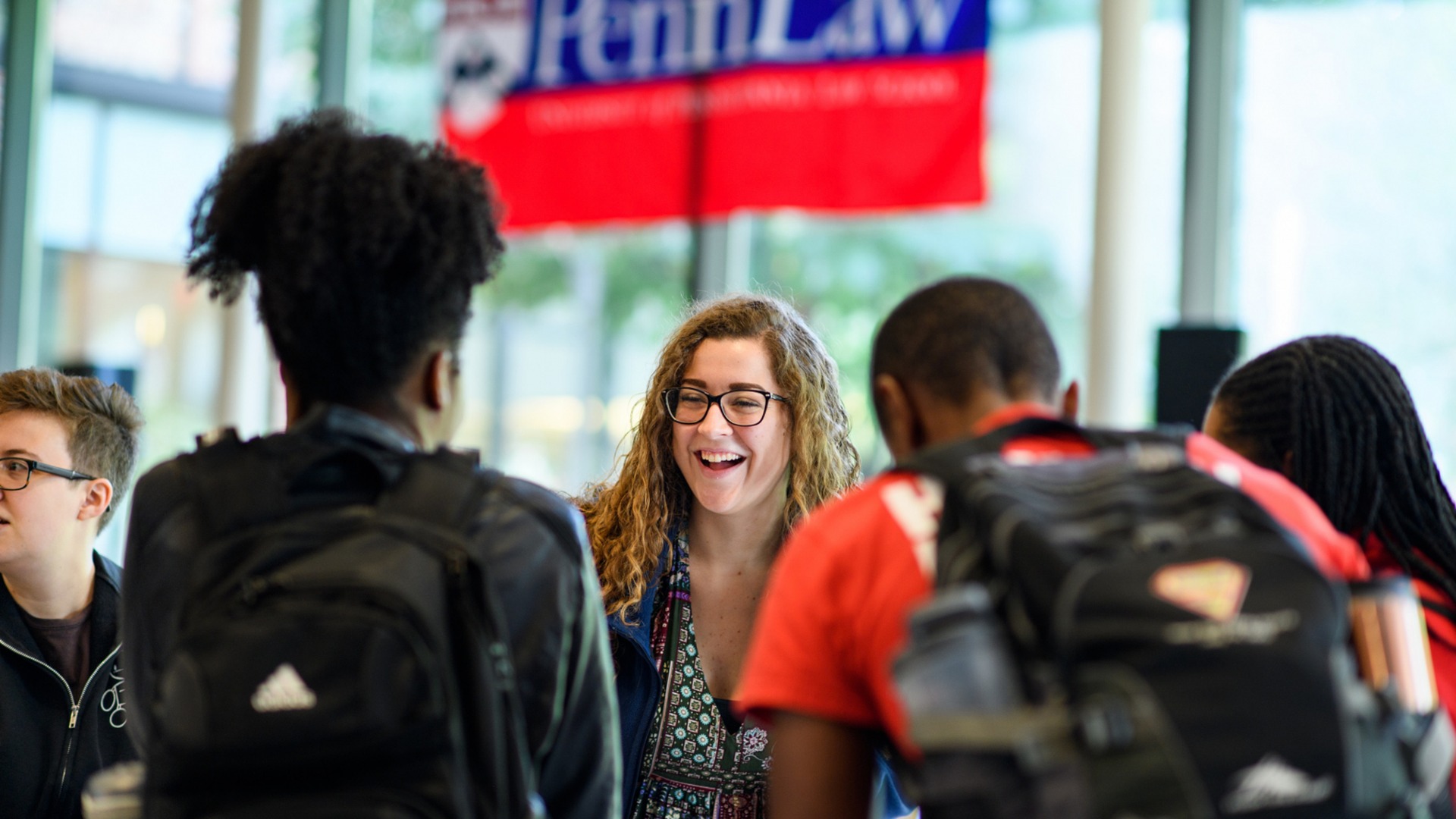
The Penn Economics Academy is a three-week, residential, non-credit program that introduces you to economics in a global, contemporary context. You’ll study core ideas such as scarcity, markets, market failures, competition, monopolies, and economic policy.
Lectures, workshops, guest speakers, discussions, and group assignments give you opportunities to apply these ideas to current issues. During the last week of the course, you’ll present a capstone project in a poster format.
Why it stands out: You’ll connect economic theory to international issues and finish by presenting your own capstone project to your cohort.
10. Economics for Leaders
Location: Host university campuses across the United States, with sites varying each summer
Cost: Listed on FTE’s Costs & Scholarships page | Scholarships are available
Acceptance rate/cohort size: Approximately 25-40 students per site | Roughly two applicants for each available spot
Dates: Residential sessions in summer, with dates varying by site | Check here
Application Deadline: Applications are reviewed on a rolling basis
Eligibility: Current high school sophomores and juniors | International students can apply
Economics for Leaders is a selective residential program that teaches student leaders to integrate economics into decision-making. The course introduces economic concepts, reasoning, and leadership theory, with a focus on applying economic analysis to public policy decisions.
Admission decisions are based on leadership potential, maturity, and your vision for your future. College credit is available for participants who want it. Spaces are limited at each site, so applying early gives you a better chance of getting your preferred location.
Why it stands out: You’ll learn to connect economic reasoning with leadership while weighing public policy questions alongside other student leaders, with an optional college-credit pathway.
11. Summer@Brown: Economics Courses
Location: Brown University, Providence, RI
Cost: Depends on the number and length of courses you take | Some courses add supplemental or materials fees
Acceptance rate/cohort size: Not specified
Dates: June 15th - July 25th in 2026, with 1-, 2-, and 3-week on-campus sessions and a 5-week hybrid option
Application Deadline: Not specified for 2027
Eligibility: Students completing grades 9-12, ages 14-18 by June 14th (2026 cycle) | Brown welcomes students from around the world
Summer@Brown gives you the chance to explore economics through more than 230 college-level, non-credit courses. You can choose a course within Brown’s Business, Economics and Legal Studies area while studying alongside students with interests from across the academic spectrum.
Courses reflect Brown’s Open Curriculum and emphasize student-centered learning without the pressure of formal grades. You’ll spend three hours in class each day, plus two to three hours of independent or group work. Every student who completes a course receives a digital certificate, and courses of two weeks or longer also come with a Course Performance Report.
Why it stands out: You can shape your summer around your own economics interests while experiencing Brown’s Open Curriculum approach in a community of students from around the world.
Join the Immerse Education 2027 Essay Competition
Follow the instructions to write and submit your best essay for a chance to be awarded a 100% scholarship.
12. Harvard Pre-College Program: Economics Courses

Location: Harvard University, Cambridge, MA
Cost: $6,250, plus a $75 application fee, covering tuition, room and meal plan, activities, and insurance | Need-based financial aid is available
Acceptance rate/cohort size: Selective
Dates: June 21st - July 2nd | July 12-23 | July 26th - August 6th, 2027
Application Deadline: January 13th, 2027 (early) | February 10th, 2027 (regular) | March 31st, 2027 (late, or earlier if course waitlists are full)
Eligibility: Students who will graduate from high school and enter college in 2028 or 2029, who are at least 16 by June 20th, 2027, and won’t turn 19 before July 31st, 2027 | International students can apply
Harvard’s Pre-College Program gives you two weeks to explore a subject through a college-level course on Harvard’s campus. You’ll take one course per session, and economics options let you examine economic ideas through readings, class discussions, and problem-solving.
The program is non-credit and doesn’t put grade pressure on you, so you can focus on exploring the subject. You’ll also experience residential campus life alongside motivated students from around the world.
Why it stands out: You’ll explore economics through Harvard’s intensive Pre-College format while experiencing residential campus life and discussion-based college-level learning.
13. Penn Arts & Sciences High School Programs: Introduction to Microeconomics
Location: University of Pennsylvania, Philadelphia, PA
Cost: Listed on Penn’s Pre-College tuition page
Acceptance rate/cohort size: Selective
Dates: June 30th - August 8th in 2026
Application Deadline: Listed on Penn’s Application Information page
Eligibility: Current 10th - 11th grade students | International eligibility not specified
The Introduction to Microeconomics course, offered through Penn’s credit-bearing Pre-College Residential Program, gives you a foundation in the economic analysis of individual markets and decision-making. You’ll examine the theory of supply and demand and consider how firms operate under different market structures.
The course also covers costs and revenues, including the behavior of firms under perfect competition, monopoly, and oligopoly. You’ll explore the pricing of factors of production, income distribution, and international trade.
Why it stands out: You’ll study core microeconomic theory through a genuine Penn course, covering everything from market structures to international trade.
14. Finance Institute: Wall Street in the Classroom
Location: Fordham University, Bronx, NY | Hybrid, with in-person and remote options
Cost: Not specified on the program page
Acceptance rate/cohort size: Not specified
Dates: One week in summer
Application Deadline: Registration requests received before April 1st receive priority
Eligibility: Any high school student interested in learning about finance | International students can apply to attend virtually
The Finance Institute: Wall Street in the Classroom gives you a short introduction to finance and financial markets at Fordham’s Gabelli School of Business. You’ll cover economic basics, historical perspective, the time value of money, and an introduction to financial markets, alongside personal finance and investing.
You choose whether to attend in person or remotely when you apply. Guest speakers from finance companies and recent Gabelli School alumni add perspectives from the industry. The program is led by Jim Gannon, a former Wall Street global equity trader and certified financial education instructor.
Why it stands out: You’ll combine foundational economics and finance with personal finance, investment analysis, and perspectives from finance professionals.
15. Summer Scholars: Economics and Financial Modeling
Location: University of Miami, Coral Gables, FL
Cost: Varies by commuter and residential options
Acceptance rate/cohort size: Not specified
Dates: June 26th - July 16th, 2027
Application Deadline: Not specified on the program page
Eligibility: Students completing grades 10 or 11 | International eligibility not specified
The University of Miami’s Summer Scholars Program lets you explore economics and financial modeling through two undergraduate courses while earning six university credits in three weeks. You’ll study Introduction to Macroeconomics (ECO 212), which covers national income, employment, money and banking, economic growth, and different economic systems.
Alongside it, Fundamentals of Financial Engineering (FIN 280) introduces financial products such as equities, bonds, and currencies, plus portfolio construction and financial statement analysis. Classes run daily from Monday to Friday and combine lectures, guest speakers, open discussion, and field trips.
Why it stands out: You can earn six University of Miami credits through two actual undergraduate courses, combining macroeconomic theory with financial engineering in an intensive three-week summer.
Frequently asked questions: Economics Summer Schools for Year 11 Students
Can Year 11 students attend US economics summer programs?
Yes, many US programs accept you, but you need to translate your year group into US grades. Year 11 in England roughly matches 10th grade, or the sophomore year, in the US. Programs like YYGS, Economics for Leaders, and UChicago accept sophomores. Some also set age cutoffs: Harvard and YYGS both expect you to be at least 16 by the start of summer. WashU’s Summer Scholars Program only takes current juniors, so check each program’s rules before applying.
How much do economics summer schools cost?
Costs vary widely, from a few thousand dollars to over $9,000. Cornell charges $5,850 for its residential program, Harvard’s Pre-College Program costs $6,250 plus a $75 application fee, and UChicago’s experimental economics course costs $9,300. Several programs offer need-based aid, and YYGS can cover up to the full cost of tuition. Remember to budget for flights, since most programs don’t include travel. If you’d prefer to stay closer to home, compare these economics in-person programs in the UK for high school students.
Can you earn college credit at an economics summer school?
Yes, several programs award credit you can list on your transcript. UCLA’s Principles of Economics earns four units of credit for UCLA Econ 1, and the University of Miami’s Summer Scholars Program earns six credits in three weeks. WashU awards pre-matriculation credit, though each university sets its own transfer policy. Immerse Education’s Academic Insights pathway in Economics offers an accredited option that earns 8 UCAS points or 3 US college credits from age 14.
Do you need to study economics at GCSE to attend?
No, most programs don’t require any prior economics. WashU’s Introduction to Microeconomics lists no prerequisites, and Georgetown’s Economics Policy Academy only asks for at least a 2.0 GPA. Some programs set academic bars instead, such as UCLA’s minimum 3.2 GPA. Immerse Education’s Academic Insights pathway in Economics, in Oxford for ages 13 to 15, introduces supply, demand, and market structures from the basics. If you’re weighing the subject for sixth form, read about what you learn in A-level economics.
When should you apply for an economics summer school?
Start in the autumn of Year 11, since many deadlines fall between December and March. Cornell offers $200 off if you apply before January 1st, 2027, YYGS’s regular deadline is January 6th, 2027, and Harvard’s early deadline is January 13th, 2027. WashU’s early deadline is March 1st, 2027. Programs with rolling admissions, such as Economics for Leaders, can fill up, so earlier applications give you more choice.
Are there economics summer schools for Year 11 students in the UK?
Yes, though most programs in this list are in the US. Some UK options are open to students from around Year 11, while others are only for Year 12 students at UK state schools. Checking age limits matters more than the year group label, since UK and US programs set their cutoffs differently. You can also browse these summer schools in London for Year 11 students to see other subjects and formats.
Using Year 11 to explore economics further
Finishing your GCSEs gives you a natural pause to test whether economics deserves a place in your A-level choices and beyond.
The right economics summer school for Year 11 students matches your age, budget, and curiosity, whether that means policy, markets, or finance.
Check grade equivalents and deadlines early, since several US programs close applications in winter and expect you to be 16 by summer.
When you’re ready to plan your sixth form and university steps, explore our University Preparation blogs for practical guidance on subjects and applications.







Unlock Inspiring Opportunities with the Immerse Education Newsletter
Join our newsletter to stay ahead with exclusive updates, exciting programme highlights, and expert insights from the world of immersive education.
Learn how Immerse can transform your life
An in-depth overview of our university and career preparation programmes
Get a glimpse into the life of an Immerse participant
Find the right programme for you with sample timetables, location showcases, and more