15 Medicine Summer Schools in Singapore for High School Students

TL;DR
You can choose from medicine-focused summer programs across Singapore, ranging from free single-day lab workshops to selective, multi-week university immersions. You'll find options suited to secondary and junior college students in Singapore, as well as international applicants aged 14 to 19 interested in clinical, biomedical, or neuroscience pathways. At the competitive end, NTU's MedCamp admits as many as 140 pre-university students each June for clinical simulations and lab work. You'll also find Immerse Education's two-week Academic Insights pathway in Singapore here, with a medicine track open to students aged 16 to 18 and bursary support available.
High school programs are an excellent way for students to explore their academic interests while building advanced skills beyond the classroom. Through hands-on projects, interactive workshops, and guidance from university faculty, participants engage with the core concepts, tools, and methods used in their chosen fields, developing practical knowledge alongside critical thinking, problem-solving, collaboration, and communication skills.
A summer medicine program throws high schoolers past the textbook and straight into the reality of a college-level pre-med track, demanding both hands-on precision and critical thinking. You grip scalpels for actual dissections, practice suturing on simulation pads, and learn to take real patient vitals using stethoscopes and blood pressure cuffs.
Why Singapore?
Singapore offers high school students a rare environment where world-class academics and global industries sit side by side in a remarkably compact, easy-to-navigate city-state. Because the island essentially functions as a living laboratory for urban innovation, you don't just study abstract concepts in smart technology, sustainability, or finance; you can step off campus and see those systems running in real time.
Top institutions like the National University of Singapore (NUS) and local research centers regularly host programs that pull younger learners into actual labs, offering a preview of university-level rigor. On a practical level, the country acts as a highly safe, English-speaking bridge between East and West, allowing teenagers to navigate a richly diverse society, build an international network, and gain serious global exposure without the intense culture shock or safety concerns that often come with traveling abroad at a young age.
For related options, consider STEM summer programs in Singapore and psychology summer programs in Singapore for high school students.
To help you with your search, we have listed below 15 medicine summer schools in Singapore for high school students.
15 Medicine Summer Schools in Singapore for High School Students
1. Nanyang Technological University - seeNTU
Location: Singapore
Cost: S$20 per module
Acceptance rate/cohort size: Moderately competitive; cohort size not stated
Dates: June 2-5; June 11th
Application Deadline: March 13th
Eligibility: JC1, JC2, Year 5 and Year 6 students; endorsement and recommendation by the school's seeNTU Teacher Coordinator required; individual schools may apply their own additional criteria; not open to international students
In this program, you spend half-day or full-day sessions on the NTU campus taking modules taught by faculty from the University's Colleges and Schools, sampling university-level study before choosing a degree. The module closest to medicine puts you hands-on with a portable benchtop nuclear magnetic resonance spectrometer, a technique related to the MRI scanning used in medical diagnosis.
You cover the underlying theory in the morning, then prepare samples, acquire data and interpret spectra to identify unknown compounds under a lecturer's guidance. A separate social sciences module examines death, dying, grief and bereavement, including the cultural and institutional systems around end-of-life care. Throughout, you engage directly with NTU faculty members and current students.
Why it stands out: It opens 15 faculty-taught modules across NTU's Schools to junior college students for S$20 each, with placement running through their own school's teacher coordinator rather than a public application.
2. Immerse Education’s Singapore Medicine Summer School

Location: Singapore
Cost: Varies; summer school scholarship available through our bursary programme
Acceptance rate/cohort size: Selective; an average of 7 participants per class
Dates: 2 weeks during the summer
Application Deadline: Multiple cohorts with rolling admissions
Eligibility: Students worldwide aged 16-18 currently enrolled in high school; open to international students
Immerse Education’s Academic Insights pathway in Singapore offers a two-week, in-person medicine program that introduces you to university-level medical science through small-group teaching and case-based learning. You explore core topics such as anatomy, physiology, and clinical reasoning while learning how doctors apply scientific knowledge to diagnose and treat patients.
Classes emphasize discussion, critical thinking, and clear communication, mirroring the structure of undergraduate medical education. By the end of the program, you will complete an academic project, receive detailed feedback, and gain a clearer understanding of what studying medicine at a top university involves.
Why it stands out: It connects you with medical academics and clinicians, helping you understand how medicine is studied and practiced at leading universities.
3. Nanyang Technological University - #askLKCMedicine
Location: Singapore
Cost: None
Acceptance rate/cohort size: Non-competitive; ~250 attendees
Dates: May 22nd; June 17th; July 14th
Application Deadline: First-come, first-served basis
Eligibility: Prospective and pre-university students interested in LKCMedicine; parents and educators also welcome; open to international students
In this program, you explore medical education, admissions, and student life at LKCMedicine while considering whether medicine is the right academic and career path for you. You learn about the MBBS curriculum, admissions requirements, digital health, precision medicine, medical humanities, and developing research skills. Current medical students also share their experiences of studying medicine and progressing into clinical training.
You participate in a Team-Based Learning demonstration that gives you direct exposure to a cornerstone of LKCMedicine’s teaching approach. You can also ask admissions-specific questions and learn how the UCAT fits into the application process. The experience emphasizes realistic insight into studying medicine rather than hands-on clinical training.
Why it stands out: It lets prospective medical students experience LKCMedicine’s distinctive Team-Based Learning approach while receiving direct guidance on medical-school admissions and curriculum.
4. National University of Singapore (NUS) Youth Program: Introduction to Artificial Intelligence and Generative AI in Healthcare
Location: NUS Kent Ridge Campus, Singapore
Cost: SGD 2,452.50
Acceptance rate/cohort size: Selective; ~25-30 students per session
Dates: June - July
Application Deadline: Late March to April
Eligibility: High school and pre-university students (Grades 10-12); minimum age of 15 (born on or before Dec 31st, 2010 for current cycles); open to international students
The NUS Youth Program: Introduction to Artificial Intelligence and Generative AI in Healthcare introduces you to the role of artificial intelligence in modern healthcare. Throughout the program, you will study topics such as machine learning, neural networks, large language models, and the ethical considerations surrounding AI in medicine.
Learning takes place through lectures, case studies, collaborative discussions, and group projects that encourage you to examine how AI can be applied to healthcare challenges. By working with real-world examples and presenting your ideas as part of a team, you will strengthen your understanding of both the technical principles and broader societal impact of AI in healthcare.
Why it stands out: You will study on the NUS campus alongside university faculty, giving you direct exposure to an in-person university learning environment.
5. NUS Youth Program: Discover Medicine, Science & the Future of Healthcare
Location: National University of Singapore (NUS), Singapore
Cost: Not publicly listed by NUS; fees are set and managed by the independent third-party organizers
Acceptance rate/cohort size: Selective; cohort size varies depending on the group booking
Dates: July 13-17
Application Deadline: Set by the third-party organizer
Eligibility: High school and pre-university students aged 15-18; open to international students
This program introduces you to different areas of medicine, biomedical science, and healthcare innovation. You explore how healthcare professionals use scientific knowledge, technology, and research to address medical challenges. The program provides exposure to topics connected to clinical practice, healthcare systems, and scientific discovery.
You participate in academic sessions and activities designed around university-level learning. Through discussions and practical examples, you develop a broader understanding of healthcare careers beyond the role of a doctor. The program also allows you to experience the NUS learning environment and interact with academic staff. It is intended to help you understand the scope of modern healthcare before pursuing further studies.
Why it stands out: It provides broad exposure to medicine and healthcare pathways rather than focusing on a single discipline.



6. Science Center Singapore - Bacteria Transformation (26-D003-1)
Location: Singapore
Cost: S$7 per student
Acceptance rate/cohort size: Non-competitive; 20-40 students per class
Dates: School year; weekday sessions Monday - Friday
Application Deadline: School booking basis
Eligibility: Secondary 3 to Secondary 5 students; booked as a school group rather than by individual students; open to international students
In this course, you explore genetic engineering and how engineered bacteria can be used in medicine, including the production of human insulin for diabetes. You learn bacterial structure and the importance of plasmids while developing practical micropipetting skills.
You conduct a bacterial transformation experiment using the heat-shock method and grow the transformed bacteria by plating them to observe the results. You also investigate green fluorescent protein and other forms of genetic transformation. Sterile laboratory techniques are introduced as part of working safely with bacterial cultures. The 2.5-hour practical session gives you direct experience with foundational biotechnology techniques relevant to biomedical research and medicine.
Why it stands out: It combines hands-on bacterial genetic transformation with laboratory techniques that connect directly to modern medical biotechnology.
7. National University of Singapore - Science Summer Camp
Location: National University of Singapore, Kent Ridge Campus, Singapore
Cost: SGD 2,950
Acceptance rate/cohort size: Selective; ~100+ students
Dates: June 29th - July 3rd
Application Deadline: Rolling basis
Eligibility: Students in grades 10-12; aged 15 and above; open to international students
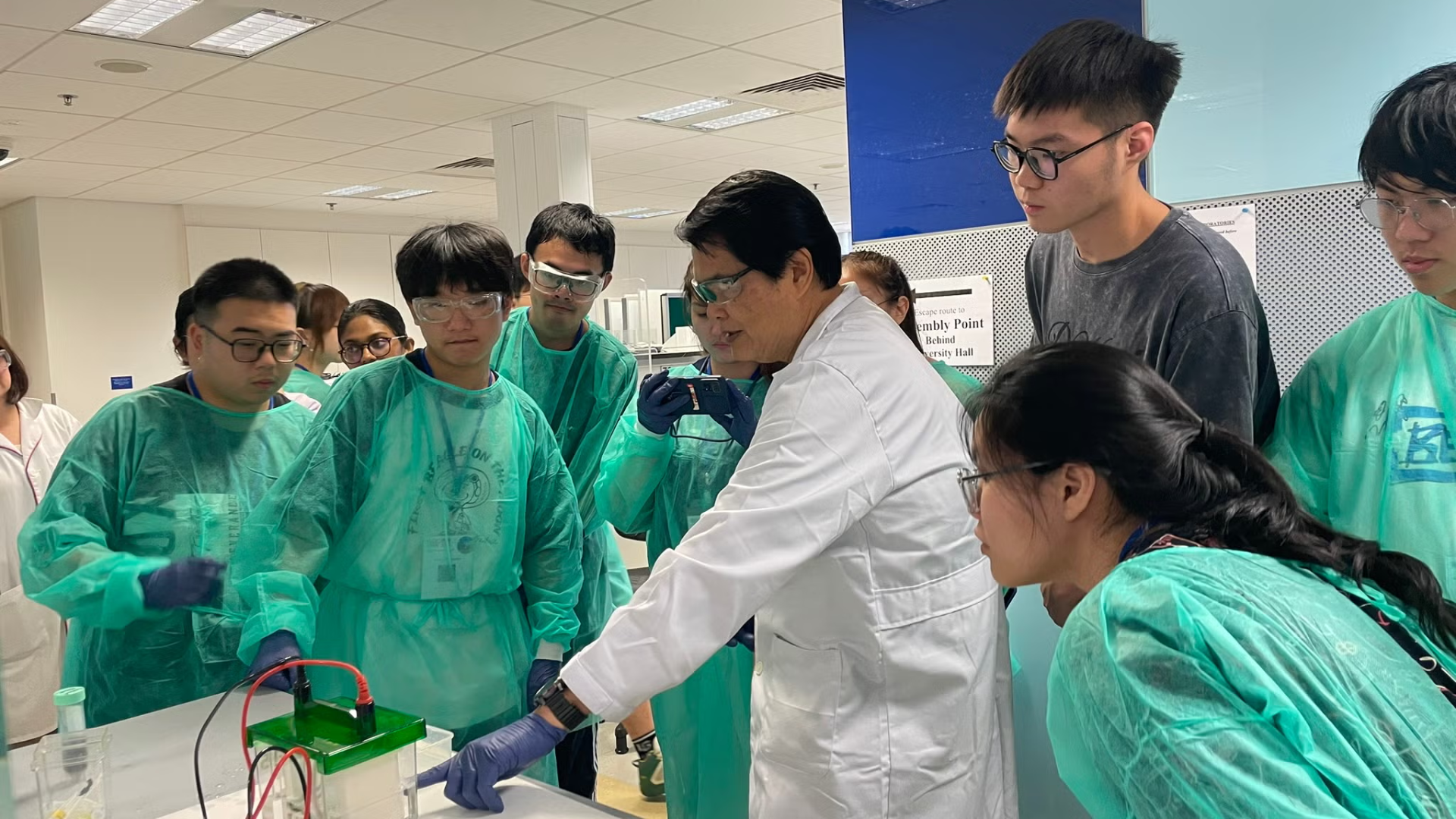
The NUS Science Summer Camp introduces you to different areas of science through a combination of academic sessions, demonstrations, and practical activities. You will attend lectures led by university professors and explore scientific concepts through examples and guided exercises.
The program covers multiple disciplines, including chemistry, biology, microscopy, and introductory machine learning topics, allowing you to gain exposure to a range of scientific fields. Living in NUS residential colleges allows you to experience aspects of university life while participating in campus-based activities. The program also includes field visits and guided tours that provide additional context outside the classroom.
Why it stands out: It combines broad scientific exploration with an introduction to the NUS campus environment.
8. Science Center Singapore - Genetic Diseases (26-C008-1)
Location: Singapore
Cost: S$7 per student
Acceptance rate/cohort size: Non-competitive; 20-40 participants per session
Dates: School year; two-hour sessions run Monday to Friday
Application Deadline: School booking basis
Eligibility: Secondary 3 to Secondary 5 students; booked as a school group rather than by individual students; open to international students
In this course, you spend a two-hour in-person laboratory session at Science Centre Singapore examining how inherited disorders arise and how their risk is assessed. You work through Klinefelter and Turner syndrome as chromosome mutations, then take Thalassemia, the most prevalent inherited single-gene disorder worldwide and especially in Southeast Asia, as a case study.
You cover DNA, genes and chromosomes, the difference between genotype and phenotype, and both Mendelian and non-Mendelian inheritance patterns, using genetic diagrams to predict the outcomes of simple crosses. You practise micropipetting and see how DNA is analysed by agarose gel electrophoresis. You also examine informed consent in genetic testing, placing the ethics of genetic diagnosis alongside the bench work.
Why it stands out: It pairs hands-on micropipetting and gel electrophoresis with a regionally relevant disease case study in thalassemia and a discussion of informed consent in genetic testing.
9. Nanyang Technological University - Inspiring NTU: Future Exploration Programme
Location: Singapore
Cost: June: S$3,542.50 standard, hostel included; July: S$3,106.50 standard, accommodation excluded
Acceptance rate/cohort size: Selective; cohort size not disclosed
Dates: June run: June 22-26; July run: July 20-24
Application Deadline: June run: March 25th; July run: June 16th
Eligibility: High school, junior college, or pre-university students; aged 16+; good command of English; open to international students
In this program, you explore emerging technologies and university pathways through a five-day interdisciplinary immersion. You attend faculty-led seminars on AI, FinTech, quantum science, sustainability, digital manufacturing, and entrepreneurship, then visit research and innovation facilities across NTU. For a medicine-focused lens, you examine how quantum science supports next-generation X-ray and medical-imaging technologies and how robotics research can address healthcare needs in ageing societies.
The programme’s distinctive feature is direct exposure to NTU research facilities alongside academic seminars and an admissions session. You also tour campus with student ambassadors and explore Singapore landmarks, building interdisciplinary technological literacy, career awareness, and confidence connecting scientific concepts to real-world applications.
Why it stands out: It pairs faculty-led exploration of emerging technologies with guided access to NTU research facilities, including healthcare-relevant robotics and medical-imaging applications.
10. Nanyang Technological University - MedCamp
Location: Singapore
Cost: None
Acceptance rate/cohort size: Selective; 140 students
Dates: Early June
Application Deadline: Open until full
Eligibility: Pre-university students in JC1, Poly Year 1, IB, or High School Year 1; open to international students
In this camp, you gain hands-on exposure to medical education at NTU's Lee Kong Chian School of Medicine. You engage in immersive lab experiences, testing clinical procedure skills under pressure and visualizing human anatomy through 3D models and virtual reality. You develop critical research and diagnostic skills by exploring cognitive biomarkers at the Dementia Research Centre and utilizing Riley, an AI chatbot for evidence-based medicine.
Additionally, you examine real bat cells to study longevity and participate in signature Team-Based Learning sessions. You interact directly with faculty and alumni to navigate residency pathways, culminating in a group showcase where the top team wins a hospital placement.
Why it stands out: It offers pre-university students an unusually advanced technological introduction to medical school, featuring hands-on practice with augmented reality anatomy tools and AI-driven evidence-based medicine chatbots.
11. National University of Singapore - Science Research Programme (SRP)
Location: Singapore
Cost: None
Acceptance rate/cohort size: Extremely competitive; cohort size not stated
Dates: The program spans 1.5 years. It typically begins in April with the Research Methods Module (RMM) and concludes in April of the following year with the annual Science Research Congress
Application Deadline: February 24th
Eligibility: JC1 and Year 5 Integrated Programme students studying in Singapore with a strong foundation in mathematics, science, and technology; open to international students
In this program, you engage in an extended research journey guided by National University of Singapore academics. During the core lab phase, you complete a minimum two-week full-time attachment within facilities like the Department of Medicine, conducting hands-on experimentation, data collection, and analysis.
You investigate life and medical sciences by exploring topics such as glucose tolerance, building foundational biomedical skills. Working directly with university mentors, you maintain rigorous lab logbooks and master the scientific method through weekly tutorials. Finally, you synthesize your findings into a formal scientific paper and present your research at the Science Research Congress, positioning you for advanced healthcare work.
Why it stands out: It offers high school students direct mentorship from university academics and hands-on laboratory experience within specialized facilities like the NUS Department of Medicine.
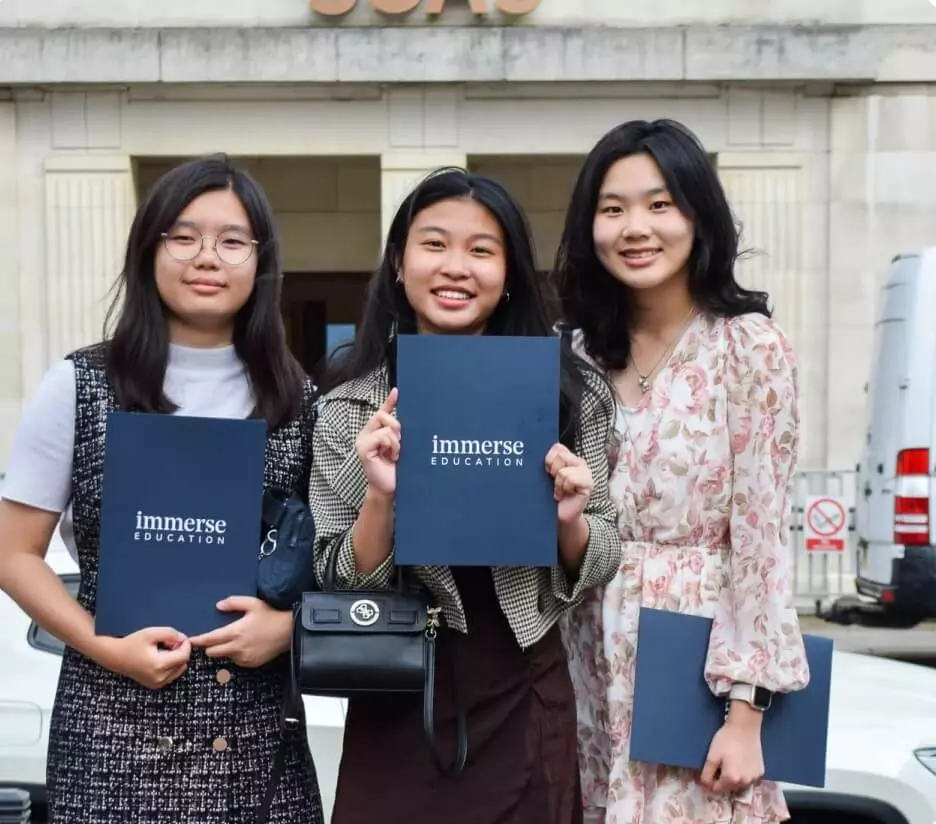
Join the Immerse Education 2027 Essay Competition
Follow the instructions to write and submit your best essay for a chance to be awarded a 100% scholarship.
12. National University of Singapore - Singapore Brain Bee Challenge
Location: Singapore
Cost: None
Acceptance rate/cohort size: Selective; approximately 120-150 students
Dates: Orientation/Lectures: May 11th; Written Challenge: May 29th; Viva: June 12th; Awards: July 1st
Application Deadline: Typically school-nominated/selected
Eligibility: Students aged 14-19 studying in Singapore; typically nominated or selected by their schools; open to international students
In this program, you explore neuroscience through an orientation and faculty-led lectures covering nervous-system structure and function, neurodevelopment, memory, learning, neurodegeneration, and clinical neuroscience. You use curated learning resources to build knowledge in neuroanatomy, neurophysiology, neurological disorders, sensory systems, and cognition. You then complete a written neuroscience challenge that tests core concepts and scientific reasoning.
Top-performing students advance to an oral viva, where you explain complex neuroscience ideas and demonstrate clinical reasoning and communication before neuroscience educators. The national champion goes on to represent Singapore at the International Brain Bee, linking early medical-science learning with international competition.
Why it stands out: It gives students a national neuroscience competition pathway in which the Singapore champion advances to the International Brain Bee.
13. Temasek Polytechnic - Creating Tomorrow’s Engineers
Location: Singapore
Cost: None
Acceptance rate/cohort size: Non-competitive; cohort size not stated
Dates: June 8th
Application Deadline: Open until all places are filled
Eligibility: Graduating secondary school (O-Level) and ITE students in Singapore preparing for the Early Admissions Exercise (EAE); open to international students
In this program, you explore courses in advanced manufacturing, aerospace, sustainable energy, and biomedical engineering. You discover how these biomedical engineering pathways prepare you to design technology and devices that directly impact modern medicine. The workshop guides you through the Early Admissions Exercise application process, helping you craft a winning portfolio that stands out to admissions panels.
You receive direct advice from Temasek Polytechnic lecturers on how to confidently tackle aptitude tests and impress during your interview. You gain a comprehensive overview of the School of Engineering and learn exactly what evaluators look for in aspiring engineering students.
Why it stands out: It provides prospective students with exclusive, direct guidance from polytechnic lecturers on mastering the admissions process while exploring cutting-edge pathways in medical and biomedical engineering.
14. Nanyang Junior College - IMH Intro to Mental Healthcare Programme
Location: Singapore
Cost: S$109 non-refundable administrative fee
Acceptance rate/cohort size: Non-competitive; cohort size not stated
Dates: June 17-19
Application Deadline: First-come, first-served until limited placements are filled
Eligibility: Second-year junior college students or Year 3 Polytechnic students or equivalent; completed primary COVID-19 vaccination and required booster dose; open to international students
In this program, you spend three full days exploring mental healthcare inside a tertiary psychiatric hospital. You gain first-hand exposure to the hospital environment, observe patient-related settings only under supervision, and learn about the challenges and rewards of working in psychiatric care.
You participate as a silent observer around patients and their relatives, giving you carefully supervised exposure to real mental-healthcare practice. You also follow confidentiality, professional attire, observer-pass, and strict social-media requirements used in a clinical setting. These experiences help you understand professional conduct, patient privacy, and the realities of medicine and mental-health careers before deciding whether the field suits you.
Why it stands out: It provides supervised exposure to an operating tertiary psychiatric hospital while introducing you to the professional and ethical realities of mental healthcare.
15. CHI Innovate - JETS (Job Expo ’36)
Location: Singapore
Cost: None
Acceptance rate/cohort size: Open admission; 3,000-person capacity
Dates: July 2-4
Application Deadline: Not applicable (Standard event registration only)
Eligibility: All high school students; open to international students
In the JETS (Job Expo ’36) program, you explore how healthcare jobs, skills, and workplaces may evolve by 2036 across homes, communities, and hospitals. You move through immersive exhibits, hands-on role-play simulations, guided experiences, and tech-enabled care demonstrations while considering future healthcare careers.
The experience translates workforce ideas drawn from more than 1,000 healthcare, workforce, and community stakeholders into a hybrid physical-digital showcase. You examine how technology and AI could support care while keeping healthcare human, inclusive, and sustainable. Career coaching helps you connect emerging roles and future-ready skills to possible pathways in medicine and the wider healthcare sector.
Why it stands out: It lets you experience possible future healthcare roles through simulations and tech-enabled demonstrations rather than only hearing about them.
Frequently asked questions: Medicine Summer Schools in Singapore for High School Students
What is the best medicine summer school in Singapore for high school students?
The right pick depends on what you want from the experience. If you want in-depth training, NUS's Science Research Programme offers an extended 1.5-year mentorship ending in a formal paper, and Immerse Education's two-week Academic Insights pathway in Singapore covers anatomy, physiology, and clinical reasoning in small classes with an average of 7 participants. If you want a quick, low-stakes trial, free single-day options like NTU's #askLKCMedicine or Science Centre Singapore's lab sessions let you test your interest before committing to anything longer.
Are there free medicine summer programs for high school students in Singapore?
Yes, several options cost nothing. NTU's #askLKCMedicine and MedCamp are both free, and Science Centre Singapore runs two-hour bacterial transformation and genetic disease labs for just S$7 per student. NUS's Science Research Programme is also free, though it runs over 1.5 years and is extremely competitive. These free options are generally shorter and more structured around a single topic than paid, multi-week programs, so they suit students who want a taste of medicine without a major cost or time commitment.
What age do you need to be to join a medicine summer program in Singapore?
Age requirements vary by program. Singapore Brain Bee Challenge opens to students as young as 14, while most university-run options through NUS and NTU set a minimum age of 15 and expect you to be in grades 10 through 12 or an equivalent pre-university year such as JC1. Some programs, like NTU's seeNTU, are restricted to students already enrolled in a partner school and are not open to international applicants. Others are open to any high schooler regardless of age, such as CHI Innovate's JETS expo, which has no stated age cutoff.
Can international students apply to medicine summer schools in Singapore?
Most programs on this list welcome international applicants, including NUS's Youth Programs, NTU's MedCamp and Inspiring NTU, and Science Centre Singapore's lab sessions. A few have restrictions worth knowing before you apply: NTU's seeNTU requires endorsement through your own school's teacher coordinator and is not open to international students, and the NUS Science Research Programme is intended for students already studying in Singapore. If eligibility by nationality matters to you, check each program's requirements closely, since several run through school nomination rather than open application.
How much do medicine summer programs in Singapore cost?
Costs range from free to roughly SGD 2,950. NTU's LKCMedicine and MedCamp cost nothing. Pricing for Immerse Education's Academic Insights pathway in Singapore varies by cohort, and a bursary programme is available for eligible students who need financial support to attend.
What do you do in a medicine summer program in Singapore?
Activities depend heavily on the program's format. Lab-based programs like Science Centre Singapore's genetic diseases course have you practising micropipetting and gel electrophoresis, while NTU's MedCamp lets you test clinical procedures under pressure and study real bat cells for longevity research. Research-based programs such as NUS's Science Research Programme involve a multi-week lab attachment followed by writing and presenting a formal paper. Lecture and discussion-based options, like NUS's #askLKCMedicine or Discover Medicine program, focus more on understanding medical careers, curricula, and admissions than on lab work.
Your medicine journey could start in Singapore
Singapore puts world-class universities, hospitals, and research facilities within reach of each other, making it a practical place to test your interest in medicine.
Across the city, medicine summer schools in Singapore for high school students range from free single-day workshops to selective multi-week university programs.
Choosing a program abroad means weighing eligibility, cost, and how much lab or clinical exposure you actually want before you commit.
If you're ready to compare study abroad options beyond Singapore, our Study Abroad blogs can help you build a stronger, more confident application.






Unlock Inspiring Opportunities with the Immerse Education Newsletter
Join our newsletter to stay ahead with exclusive updates, exciting programme highlights, and expert insights from the world of immersive education.
Learn how Immerse can transform your life
An in-depth overview of our university and career preparation programmes
Get a glimpse into the life of an Immerse participant
Find the right programme for you with sample timetables, location showcases, and more