15 Online Pre-Med Courses for High School Students

TL;DR
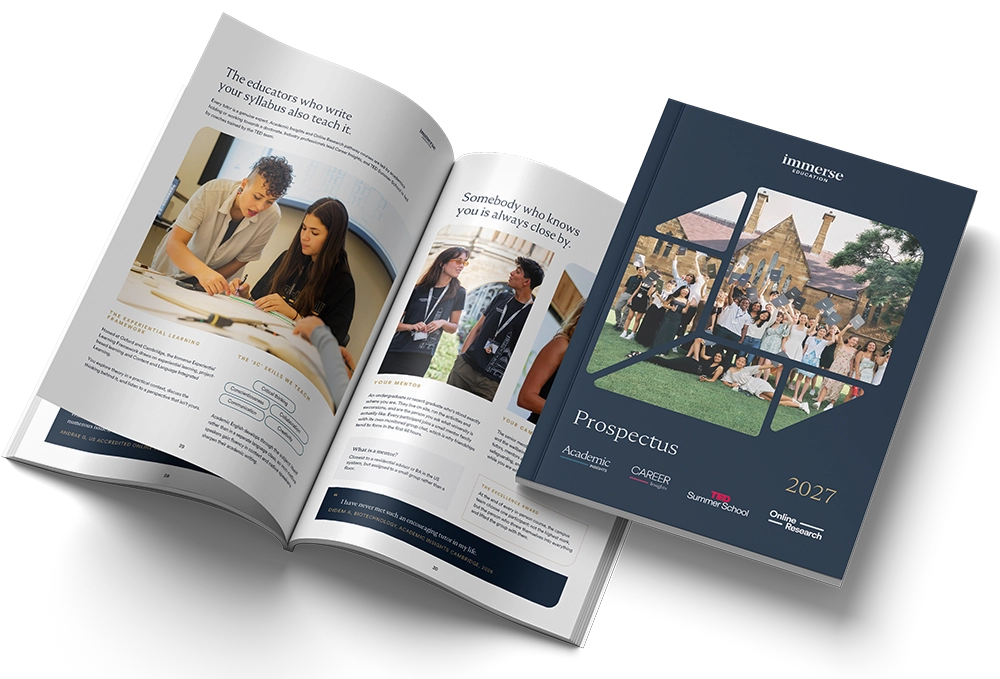
This guide covers 15 online medicine and research programs you can complete from home, ranging from one-on-one mentored research to structured university courses with live lectures. Costs span from about $1,250 to nearly $5,000, and most programs welcome students in grades 9 through 12, including applicants from outside the United States. Harvard Medical School's course, for example, includes roughly 30 hours of instruction with mentor feedback on a final capstone project. Among these, Immerse Education offers a flexible Online Medicine Summer School for students aged 13 to 18, with bursary support available for those who qualify.
If you're a high schooler drawn to medicine, that interest usually starts long before you ever set foot in an anatomy lab. It shows up as curiosity about how a diagnosis gets made, why a clinical trial works the way it does, or how a virus actually infects a cell.
An online pre-med course lets you follow that curiosity somewhere structured: you work with real research methods, learn the vocabulary and reasoning tools that practicing clinicians and researchers use, and build a genuine sense of what studying medicine at the university level involves, all without needing to be anywhere near a hospital or a campus.
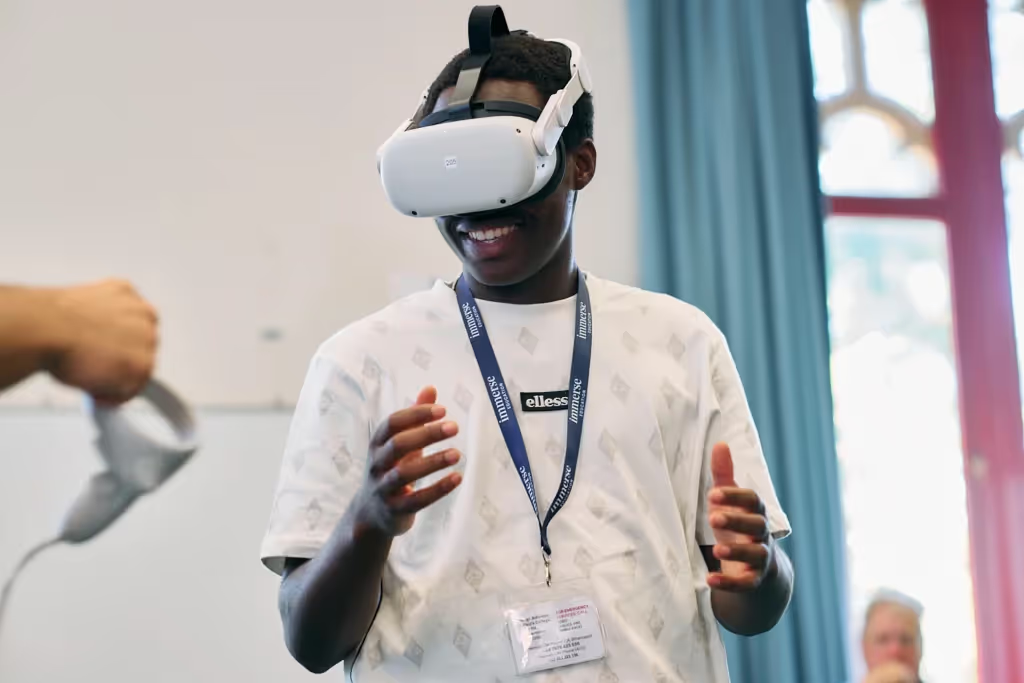
What they share is the format: everything happens online, so a student in a rural town has the same access to Oxford, Ivy League, or major medical school faculty as a student who lives next door to campus. Online programs allow you to access world-class academic mentorship from anywhere in the world, no travel required. They're a great way to build research skills, earn credentials, and get a taste of university-level work from home.
How do you choose the right online pre-med course for high school students?
Not every online pre-med course asks the same thing of you, so it helps to know what you're actually signing up for before you apply. Some programs are self-paced and asynchronous, which suits a student juggling a packed school year. Others run on a fixed schedule with live lectures and a cohort of peers, which suits a student who wants more structure and real-time discussion.
A few are built entirely around producing one piece of work, whether that's a research paper, a data analysis project, or a capstone presentation. In contrast, others are closer to a survey course that introduces you to a wide range of topics.
Below, we've put together a list of 15 online pre-med courses for high school students, drawn from research universities, medical schools, and other academic institutions.
15 Online Pre-Med Courses for High School Students
1. Stanford AIMI Summer Research Internship
Location: Fully virtual
Cost: $2,400 + $45 application fee; need-based financial aid is available
Acceptance rate/cohort size: Highly selective; ~50 students per session
Dates: Session A: June 15–26; Session B: July 6–17 (tentatively)
Application Deadline: February 1st
Eligibility: Students entering grades 9-12 in the fall, at least 14 years old by the program start; U.S. citizens, permanent residents, or students with valid visa status and a U.S. address; not open to international students
Hosted by Stanford's Center for Artificial Intelligence in Medicine and Imaging, this internship introduces students to how AI is applied in healthcare and medical imaging. You’ll attend lectures from Stanford researchers, clinicians, and trainees covering machine learning fundamentals, medical imaging AI, and responsible AI in clinical settings.
You’ll work in small teams paired with a Stanford mentor on a focused health AI project, learning to frame research questions and analyze medical data. The program prefers applicants with math or programming skills, or prior experience on a healthcare-related project. Full-day sessions run over the two weeks, with attendance required throughout.
Why it stands out: Participants work directly with researchers shaping the future of medical imaging and machine learning.
2. Immerse Education’s Online Medicine Summer School
Location: Remotely from anywhere in the world
Cost/Stipend: Varies; summer school scholarship available through our bursary programme
Acceptance rate/cohort size: Not specified
Dates: Flexible; multiple cohorts in a year
Application Deadline: Rolling admissions; multiple dates throughout the year
Eligibility: Students aged 13-18 (accredited options require age 14+); open to international students

The medical online research programs focus on teaching you the theoretical and practical aspects of medicine. The curriculum will cover theoretical concepts taught in medical school, ensuring that you gain a thorough understanding of the subject and a strong foundation for college.
Some of the topics you will study are human anatomy, physiology, the principles of disease, medical ethics, the history of medicine, and more. Plus, you will be introduced to medical fields like neuroscience, pharmacology, anatomy and physiology, and more.
Why it stands out: The tutors you will be working with are from top universities like Oxford, Cambridge, and Harvard.
3. University of Rochester Pre-College Online Program – Personalized Medicine: Customizing Care Through Genetics
Location: Online
Cost: $1,595 tuition; need-based scholarships are available
Acceptance rate/cohort size: Selective; cohort size not stated
Dates: Available year-round; multiple 1-, 2-, and 4-week sessions offered
Application Deadline: Applications accepted year-round
Eligibility: Age 13+; currently enrolled in high school or a U.S.-high-school equivalent, or within one year of graduating; open to international students
In this course, you explore how genetics can guide disease risk assessment, diagnosis, and individualized medical treatment. You study genomic sequencing, practice reading gene data, identify disease-related mutations, and examine the usefulness of consumer genetic testing. You also investigate cancer genetics, aging, stem-cell therapies, gene editing, inherited traits, and the ethical questions surrounding genetic medicine.
The asynchronous course combines faculty-designed video lessons, assignments, mentor guidance, and flexible online study. For your final capstone, you examine a disease from a genetic perspective and explain how personalized medicine could be used to treat it. You develop genetic literacy, analytical, communication, and pre-medical reasoning skills.
Why it stands out: It connects foundational human genetics directly with emerging personalized treatments while giving you a disease-focused capstone project relevant to pre-medical study.
4. Dartmouth Precollege Online Program, Dartmouth College – Regenerative Medicine: Healing with Science
Location: Online
Cost: $1,895 tuition; need-based scholarships are available
Acceptance rate/cohort size: Non-competitive; cohort size not stated
Dates: Year-round 1-week, 2-week, and 4-week sessions offered
Application Deadline: Typically, one week before the course start date
Eligibility: Ages 13 and older currently enrolled in high school or within one year of graduating; open to international students
In this course, you will explore the core principles of tissue engineering, stem cell technology, and organ regeneration. You will analyze cutting-edge tools like 3D bioprinting, biomaterials, and bioreactors to understand how modern science repairs cellular damage. Throughout the course, you will evaluate the ethical, economic, and social implications of cellular therapies and personalized medicine through real-world case studies.
You will acquire foundational knowledge in biology and engineering that directly prepares you for future medical- and science-driven fields. The course culminates in a capstone project where you develop and justify three distinct regenerative treatment approaches for individual patient cases.
Why it stands out: It allows high school students to explore advanced biotechnology and organ regeneration while receiving personalized guidance from an expert mentor in the field.
5. Johns Hopkins Summer at Hopkins Online: Medical School Intensive
Location: Fully online
Cost: $1,950 tuition + $20–$50 for required lab supplies and shipping; financial aid is available
Acceptance rate/cohort size: Highly competitive; cohort size not specified
Dates: Session 1: June 22nd – July 3rd; Session 2: July 6–17; Session 3: July 20–31
Application Deadline: Rolling admissions
Eligibility: Pre-college/high school students; a background in Biology is strongly recommended; open to international students
Medical School Intensive offers you a broad introduction to medicine through an online course covering surgery, internal medicine, pediatrics, emergency medicine, and biomedical science. You’ll work through interactive lectures and laboratory activities while learning basic medical knowledge and techniques with guidance from experts in the field.
The course is primarily asynchronous, allowing you to complete assignments on your own schedule while meeting daily and weekly deadlines, with optional live sessions such as office hours and group discussions. A Biology background is recommended, and students must purchase a small set of lab supplies for hands-on activities.
Why it stands out: The course demonstrates how health and medicine are studied at a leading research university.


6. University of Chicago: Introduction to Biological Psychology
Location: Remote
Cost: $4,980 + $75 application fee
Acceptance rate/cohort size: Highly selective; a select cohort of advanced high school students
Dates: June 15th – July 2nd
Application Deadline: March 12th
Eligibility: Students entering 11th or 12th grade; prior coursework in Biology is strongly recommended; open to international students
This is an undergraduate-level course open to a small number of advanced high schoolers, covering the biological processes underlying human and animal behavior, including brain anatomy, physiology, and chemistry, and how these systems relate to perception, motivation, and emotion.
Because the course is shared with University of Chicago undergraduates, the pace and reading load reflect an actual college course rather than a version built specifically for high schoolers. Classes meet four days a week during the session, with sessions taught by Chicago faculty. You’ll earn a grade and official transcript credit upon completion, which can typically be evaluated for transfer by other institutions.
Why it stands out: It connects biology and behavior to show how brain processes influence human cognition, using the same curriculum and grading standards applied to Chicago undergraduates.
7. Columbia University Pre-College Online: Cell and Molecular Biology
Location: Fully online
Cost: $2,868 for the 1-week online session or $4,018 for the 2-week online session, plus an $80 application fee and any course-specific materials; need-based scholarships are available
Acceptance rate/cohort size: Selective; average of 15–20 students
Dates: Summer: June 22–26 or July 6–17 or July 20–31; Fall: October 9th – November 22nd; Spring: January 15th – March 21st
Application Deadline: Summer: March 24th; Fall: September 11th; Spring: December 21th
Eligibility: Students entering grades 9 through 12, or the first year of college; one year of high school biology and one year of high school chemistry required; open to international students
Columbia's online Summer Immersion track includes a biology curriculum covering cell structure, molecular processes, and disease at the cellular level, taught by Columbia instructors over a one- or two-week format. You will work through the same subject matter offered in Columbia's in-person biology courses, adapted for a remote setting, and take part in structured discussion and assignments led by faculty.
The online format removes the cost of housing and travel that comes with Columbia's residential program, making it a more accessible way to access the same instructors. Certificates are issued on completion, and some sessions offer optional college credit.
Why it stands out: It explains disease at the cellular level, strengthening a student's understanding of the scientific foundations that underlie clinical medicine.
8. UC Irvine School of Medicine: Summer Online Research Program
Location: Fully online
Cost: $2,350 per three-week session; a $75 early-registration discount was available before February 14; limited scholarships are available to qualified applicants from low-income families
Acceptance rate/cohort size: Highly selective; cohort size not specified
Dates: Session One: June 22nd – July 10th; Session Two: July 13–31
Application Deadline: Applications typically close by the end of January or beginning of February; reviewed on a rolling, first-come basis until capacity is reached
Eligibility: High school students ages 15–18 with a minimum unweighted GPA of 3.3/4.0 who are interested in healthcare research; open to international students
Designed for high school students curious about healthcare research, this three-week online program combines independent work with mentorship from UC Irvine faculty and biomedical-focused undergraduate or postgraduate coaches. You’ll learn about responsible research involving human subjects, evidence-based medicine, and how to critically evaluate medical literature while working on a research project connected to your interests.
Instruction takes place through email, Zoom meetings, and/or podcasts, with a flexible schedule that lets you complete assignments at your own pace. You’ll also develop skills in organizing a research report and preparing an abstract for potential submission to a national meeting, where an accepted abstract may list you as a co-author.
Why it stands out: The mentorship model mirrors a university research apprenticeship, which is rare for a program at the high school level.
9. Georgetown University Pre-College Online: Medical Research

Location: Fully online
Cost: $1,895; need-based scholarships are available
Acceptance rate/cohort size: Selective; cohort size not specified
Dates: 1-, 2-, or 4-week year-round cohorts
Application Deadline: Typically closes one week before the start date of each cohort
Eligibility: High school students aged 13 and up; open to international students
This course teaches the process researchers use to formulate, conduct, and evaluate evidence in medicine, from designing a study to interpreting its results. You’ll learn how clinical trials are structured, how to navigate published research databases, and how the principles of evidence-based medicine apply to real diagnostic decisions.
The course culminates in a capstone project where students select two to three research papers on a topic such as cancer screening or treatment and create a video presentation demonstrating the scientific method behind the studies. You will be paired with a mentor throughout the course who supports you and answers questions as the material gets more advanced.
Why it stands out: It provides insight into how medical research questions are actually studied at research universities, rather than presenting medicine as a fixed body of facts.
10. Brown University Pre-College Online: Medicine in Action: A View into the Life of a Medical Student
Location: Online
Cost: $3,364 + $80 application fee
Acceptance rate/cohort size: Highly selective; cohort size not stated
Dates: June 29th – July 10th
Application Deadline: May 15th
Eligibility: Students completing grades 9–12 who are ages 14–18 by June 14th; a strong foundation in biology is expected; open to international students
This course gives you an interdisciplinary introduction to modern medicine through the perspective of current Brown medical students. Over two weeks, you’ll explore the human heart as a case study, connecting anatomy and pathophysiology with medical interviewing, cardiopulmonary physical exams, and discussions of medical ethics.
The mostly asynchronous online format allows you to work through course material independently while also engaging with optional live sessions and medical-student instructors. You’ll examine different medical careers and pathways and have opportunities to connect with mentors and role models in medicine.
Why it stands out: It reflects Brown's inquiry-driven teaching style and how a top research university approaches the biological sciences.
11. Northwestern Pre-College Online: Medical Research: Evaluating Claims and Facts
Location: Fully online
Cost: $1,895; need-based scholarships are available
Acceptance rate/cohort size: Selective; cohort size not stated
Dates: 2-week and 4-week sessions available year-round
Application Deadline: Rolling basis; new sessions start regularly throughout the year
Eligibility: Students aged 13 and up; open to international students
This course teaches students to critically evaluate medical claims found in traditional and social media by examining the research methods and ethical standards behind them. You’ll learn to identify different research methods and their limitations, understand the benchmarks of ethical medical research, and locate and read published medical research articles.
Lessons are delivered through video content led by Northwestern faculty, and students work with a mentor throughout the course. The course concludes with a capstone project in which students investigate a real medical claim from the news or social media and compare the coverage to the underlying published research.
Why it stands out: Its integration with Northwestern's medical faculty exposes students to how clinical and research findings actually reach the public.
Join the Immerse Education 2027 Essay Competition
Follow the instructions to write and submit your best essay for a chance to be awarded a 100% scholarship.
12. SUNY Albany RNA Institute: High School Bioinformatics Summer Camp
Location: Fully virtual, hosted by the RNA Institute at the University at Albany
Cost: $1,250 for applications submitted by February 1; $1,450 for applications submitted by March 31; payment waivers may be available based on financial need
Acceptance rate/cohort size: Competitive; ~54 students
Dates: July 6th – August 1st
Application Deadline: March 31st, with rolling review starting in December
Eligibility: High school students; have a GPA above 3.0; at least one year of high school biology credit; open to international students
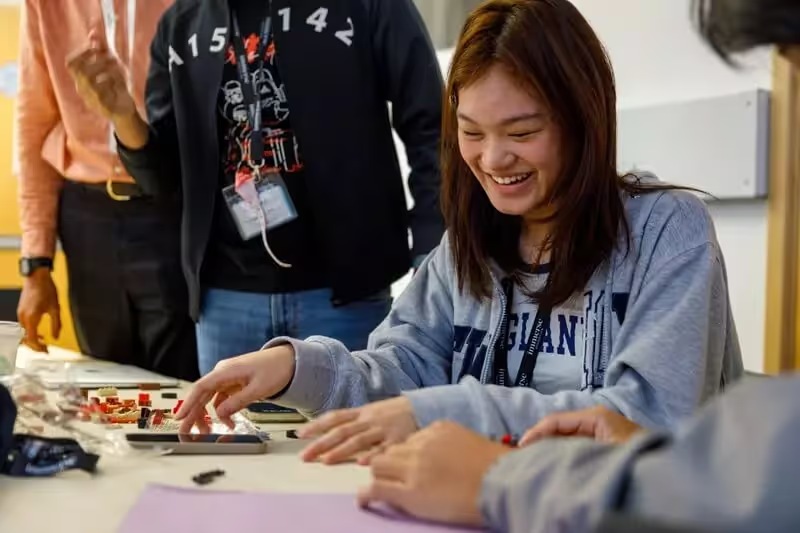
This camp trains students in analyzing RNA sequencing data through live daily lectures, mentor support from UAlbany-affiliated researchers, and an independent bioinformatics project centered on neurodegenerative disease research, covering conditions such as ALS, Parkinson's disease, and Myotonic Dystrophy Type 1. You will first complete short pre-course modules to build basic programming skills before the live sessions begin.
Over the course of the program, you’ll learn R coding, command-line computing, and how to interpret and visualize sequencing data. Finally, you will present your finished project either virtually or in person at the institute's annual RNA Day event, alongside a Certificate of Completion and a digital skills badge.
Why it stands out: It introduces students to computational biology and data analysis, showing how biology and technology intersect in modern research.
13. Harvard Medical School – Medical Research: Shaping the Future of Health and Medicine
Location: Online
Cost: $2,195; need-based scholarships are available
Acceptance rate/cohort size: Highly selective (approximately 12%); a tight-knit 12:1 student-to-mentor ratio
Dates: Year-round 4-week courses
Application Deadline: Typically, one week before the course start date
Eligibility: Students ages 13 and up; open to international students
This course gives you a look at how scientific discoveries move from the laboratory toward real-world medical treatments. You’ll explore the foundations of medical discovery, therapeutic development, genomic medicine, CRISPR gene editing, protein structure, disease models, and the use of AI and machine learning in healthcare.
Along the way, you’ll learn from Harvard Medical School faculty and other medical research leaders while completing multimedia lessons, assignments, quizzes, and interactive activities. A final capstone project asks you to take on the perspective of a lead scientist and design a study addressing a major human disease, bringing together ideas about research, collaboration, and therapeutic development.
Why it stands out: The course is fully online, includes approximately 30 hours of instruction and activities, and provides mentor feedback throughout the experience.
14. Wake Forest University Making the Rounds: An Insider’s Guide to Becoming a Doctor
Location: Online
Cost: $1,595; need-based scholarships are available
Acceptance rate/cohort size: Competitive; cohort size not stated
Dates: 1, 2, or 4 weeks; multiple sessions throughout the year
Application Deadline: Typically, one week before the course start date
Eligibility: Students ages 13 and up; open to international students
In this program, you’ll study the anatomy of the heart, examine factors that contribute to heart disease, and learn how healthcare professionals such as paramedics, ER physicians, anesthesiologists, nurses, physical therapists, and surgeons contribute to patient care. Through videos, simulations, assignments, and insights from Wake Forest School of Medicine professors, you’ll explore both clinical practice and the educational paths required for different medical careers.
The course also introduces topics including psychotherapy, neuropsychological testing, neuroscience, interventional psychiatry, and community psychiatry. You’ll receive mentor support throughout the course and complete a final Capstone project demonstrating what you learned about healthcare and the patient journey.
Why it stands out: It immerses high school students in the medical field by having them track a real-world patient's journey from an emergency response to rehabilitation, allowing them to explore various healthcare roles under the guidance of Wake Forest School of Medicine faculty.
15. Rice University Precollege Program, Rice University – Physiology: The Foundations of Medicine

Location: Online
Cost: $1,795 tuition; need-based scholarships available
Acceptance rate/cohort size: Selective; cohort size not stated
Dates: Year-round; 4-week sessions; 1- and 2-week sessions also offered depending on time of year
Application Deadline: Typically, one week before the course start date
Eligibility: Age 13+; currently enrolled in high school or U.S.-high-school equivalent, or within one year of graduating; open to international students
In this course, you explore how healthy human systems function together and what can go wrong in disease. You study flow and resistance, membrane transport, electrical signaling, neuron communication, muscle contraction, cardiovascular mechanics, and respiratory physiology. You analyze how ion concentrations affect excitation, examine how the heart conducts electrical signals, and connect Boyle’s Law to breathing and gas exchange.
You also hear from practicing physicians about pathological complications encountered in medicine. You create models of healthy and pathological organs and systems for a final capstone project, with mentor guidance and feedback. The course builds a pre-medical foundation while introducing careers including physician, surgeon, pharmacist, exercise physiologist, and laboratory technician.
Why it stands out: It combines foundational human physiology with physician perspectives, interactive coursework, mentor feedback, and a capstone focused on modeling healthy and pathological body systems.
Frequently asked questions: Online Pre-Med Courses for High School Students
Can I do pre-med classes online?
Yes, university and medical school-affiliated online pre-med courses are widely available to high school students, and the 15 above cover a range of them. You can choose an asynchronous, self-paced course you fit around your school schedule, or a live cohort-based program with real-time lectures and discussion. Topics range from human anatomy and genetics to clinical reasoning and disease research, and most conclude with a capstone project or research paper. All you need is a computer and an internet connection to take part.
What classes should I take in high school for pre-med?
Most competitive online pre-med programs expect at least one year of high school biology, and several, including Columbia's and the University of Chicago's offerings, also ask for chemistry or prior coursework in the sciences. Beyond required prerequisites, a mix of biology, chemistry, and statistics gives you the strongest foundation for the material these courses cover, from genomics to cell and molecular biology. You can go over this guide on how to get clinical experience in high school.
What are some good online medical courses for high school students?
Strong options include research-based programs like Stanford's AIMI Summer Research Internship and Johns Hopkins' Medical School Intensive, along with subject-specific courses such as Dartmouth's regenerative medicine program and Rice University's physiology course. Immerse Education's Online Medicine Summer School is also worth considering, since it pairs students aged 13 to 18 with tutors from universities like Oxford and Cambridge for a one-on-one research project. Costs and formats vary widely, so compare eligibility, cohort size, and capstone requirements before choosing.
Can a 16 year old go to med school?
No, medical school in the US requires a bachelor's degree first, so a 16 year old cannot enroll directly. What you can do at 16 is take an online pre-med course to explore whether medicine is the right path, since most of the programs above accept students starting around age 13 or 14. However, you can prepare a successful application to get into med school later.
Do online pre-med programs offer financial aid or scholarships?
Yes, need-based scholarships are common among these programs, including at Dartmouth, Rice, Georgetown, and Northwestern, where financial aid can offset tuition that otherwise ranges from around $1,250 to nearly $5,000. Some programs, like UC Irvine's, also offer early-registration discounts or waivers tied to family income. It's worth checking each program's application page directly, since aid eligibility, deadlines, and award amounts differ from one institution to the next and aren't guaranteed for every applicant.
Do you need a biology background to enroll in an online pre-med course?
It depends on the program. Courses like the University of Chicago's Introduction to Biological Psychology and Columbia's Cell and Molecular Biology track require at least a year of high school biology, while others, such as Georgetown's Medical Research course, don't list biology as a prerequisite. If you're newer to the subject, look for programs described as non-competitive or open to a range of experience levels, since these are built to introduce foundational concepts rather than assume prior coursework.
Building the skills medical schools want to see
You don't need a formal hospital placement to prove you're serious about medicine, since a structured research project can carry just as much weight.
Among the online pre-med courses for high school students covered above, the strongest options pair mentorship with an independent capstone you can point to later.
You'll sharpen genomics, clinical reasoning, and evidence based research skills, the exact habits of mind that medical school admissions committees actively look for early.
As you weigh your next step toward medicine, our University Preparation guides can help you plan applications, personal statements, and interviews with the same rigor.







Unlock Inspiring Opportunities with the Immerse Education Newsletter
Join our newsletter to stay ahead with exclusive updates, exciting programme highlights, and expert insights from the world of immersive education.
Learn how Immerse can transform your life
An in-depth overview of our university and career preparation programmes
Get a glimpse into the life of an Immerse participant
Find the right programme for you with sample timetables, location showcases, and more