
 Русский (RU)
 Українська (UK)
 Türkçe (TR)
 Italiano (IT)
 Français (FR)
 Português (PT)
 中文 (中国) (ZH)
 Español (ES)
 日本語 (JA)
 ไทย (TH)
 Deutsch (DE)
 Ελληνικά (EL)
 Polski (PL)
 Bahasa Indonesia (ID)
 Nederlands (NL)
 العربية (AR)
 한국어 (KO)

When you’re in high school, summers are often seen as a break from classes, homework, and exams. But if you’re interested in learning, they can be much more than just time off. Chemistry research programs for high school students offer one of the best opportunities to explore subjects beyond your school curriculum, challenge yourself academically, and gain experiences that help you grow as a student and as a person.
Imagine working in a real laboratory, learning how chemical reactions are studied, or assisting researchers with experiments in materials science, biochemistry, or environmental chemistry. You might analyze data, design experiments, or even contribute to ongoing research projects. These programs give you hands-on exposure to how science actually works beyond textbooks, and help you see whether a future in STEM or research is right for you.
Even if you enjoy chemistry in school, participating in a research program can deepen your understanding and set you apart in college applications. You’ll work with mentors, collaborate with students, and experience a taste of university-level academics.
What kinds of chemistry research programs for high school students are there?
Finding the right chemistry research program can be challenging. Not all programs labeled “research” offer meaningful exposure and learning experience. That’s why it’s important to understand the different types of opportunities available, so you can choose one that truly aligns with your interests and goals.
Chemistry research programs for high school students generally fall into several categories. Some are university-based lab research programs, where you’ll work under professors or graduate students on real research projects. Others focus on specialized areas like biochemistry, chemical engineering, materials science, or environmental chemistry.
Overall, strong chemistry research programs challenge you to think critically, apply concepts creatively, and engage deeply with science. To help you navigate these options and choose wisely, we’ve curated a list of 15 Chemistry Research Programs for High School Students. We’ve selected them for their academic rigor, research exposure, mentorship quality, and overall value.
In addition to these, you can also check out online chemistry programs for high school students or research internships for high school students.
15 Chemistry Research Programs for High School Students
1. Chemistry Scholars (Illinois Institute of Technology)
Location: Illinois Institute of Technology, Chicago, IL
Cost/Stipend: $4500
Acceptance rate/cohort size: Not specified
Dates: July 6th – July 31st (approximate based on previous schedule)
Application Deadline: Typically in late March; may vary by year
Eligibility: Middle and high school students; open to students from the United States and international students worldwide
The Chemistry Scholars program at Illinois Tech lets you step into an active laboratory setting where you tackle real chemical problems and engage directly in experimental research. You’ll explore topics such as bioanalytical chemistry, environmental science, materials chemistry, and forensic applications, linking them to current challenges in energy, sustainability, health, and technology. You’ll be paired with faculty mentors who help you plan and execute research activities.
Along with lab work, you’ll participate in group discussions that build your ability to interpret data, troubleshoot methods, and think critically like a scientist. The program also includes collaborative projects that mirror the work of undergraduate researchers, giving you a taste of what college-level science involves. Beyond academics, living and learning with peers in a university environment helps you build confidence and expand your network among STEM colleagues.
Why it stands out: You’ll gain hands-on research experience under faculty supervision that closely resembles what college science students do, making it a strong stepping stone toward future scientific studies.
2. Immerse Education’s Chemistry Online Summer School

Location: Fully remote
Cost/Stipend: Varies; summer school scholarship available through their bursary programme
Acceptance rate/cohort size: 1-on-1 tutoring or small group tutorials available
Dates: Flexible; multiple cohorts in a year.
Application Deadline: Rolling admissions; multiple dates throughout the year
Eligibility: High school students aged approximately 13-18 interested in chemistry research; open to students from the United States and international students worldwide
The Chemistry Online Research Programme from Immerse Education offers you a tailored virtual research experience that lets you conduct university-level studies from your own home. You’ll be paired with a dedicated tutor who helps you explore chemistry topics that genuinely interest you and guides you through the process of designing and completing an independent research project. Sessions combine academic discussion with the development of essential skills like critical thinking, academic writing, and presentation, helping you understand how professional researchers work.
You also have the chance to showcase your finished work at an online symposium or pursue publication in a research journal, which adds a sense of accomplishment and visibility to your efforts. You can find examples of papers Immerse students have worked on here. The program’s flexible structure lets you fit studies around your current schedule, making it easier to balance school and other commitments. You can find more details about the application here.
Why it stands out: You’ll work one-on-one on a real research project with an expert tutor, giving you personalised academic support and a meaningful piece of work to showcase.
3. Simons Summer Research Program
Location: Stony Brook University, Stony Brook, NY
Cost/Stipend: Free to participate; you receive a stipend at the program’s conclusion
Acceptance rate/cohort size: Highly competitive and selective
Dates: June 29th – August 7th
Application Deadline: February 7th
Eligibility: Applicants must be in their junior year of high school at the time of applying and aged 16+ by the start of the program; applicants must be U.S. citizens or permanent residents
The Simons Summer Research Program is one of the most competitive chemistry research programs for high school students, inviting you to spend over five weeks in a genuine research environment at Stony Brook University. You’ll work directly with faculty mentors on projects spanning biology, chemistry, physics, math, and engineering. Paired with a research team, you’ll learn professional lab techniques, choose methods, and contribute to real experiments. Weekly seminars and workshops supplement your lab work, helping you build skills in analysis, writing, and scientific communication.
The experience concludes with you producing a written abstract and presenting your research poster at a symposium, presenting what you’ve learned to peers and mentors. Living on or near campus connects you to a community of highly motivated students and gives you a taste of the college research culture.
Why it stands out: It allows you to engage in hands-on research in science alongside academically talented, motivated high school students at a science and engineering university.
4. Aspiring Scholars Directed Research Program (ASDRP)
Location: Fremont, CA
Cost/Stipend: Varies
Acceptance rate/cohort size: Competitive selection
Dates: June 1st – August 30th
Application Deadline: Priority deadlines: February 1st, March 1st, and April 15th
Eligibility: Rising high school students (grades 9-12) passionate about STEM research; accepts students from the United States and around the world
The Aspiring Scholars Directed Research Program offers you the chance to get involved in genuine scientific research alongside experienced mentors in a nonprofit research environment rather than in a typical classroom setting. You’ll join a team working on original projects that advance knowledge in fields including chemistry, biochemistry, physics, and more, using professional-grade research equipment and methods.
Throughout the program, you’ll learn to read primary scientific literature, design experiments, analyze data, and write technical research papers, often presenting your findings at poster sessions or even at external conferences. ASDRP’s model reflects an authentic research culture, where you engage as an active contributor rather than completing pre-scripted experiments.
Why it stands out: You’ll take part in real, mentor-guided research that can lead to publications and presentations, helping you build a portfolio of scientific work well before college.
5. American Chemical Society’s Project SEED Program
Location: Varies based on lab choice. Check here.
Cost/Stipend: Free; paid stipend
Acceptance rate/cohort size: Approximately 350+ students annually
Dates: June through July (8-10 weeks); may vary by year
Application Deadline: Typically in April, varies by year
Eligibility: High school students; participants must be U.S. residents (economically disadvantaged students in the U.S. and U.S. territories)
The ACS Project SEED Program gives you the chance to join authentic chemistry research in academic, industrial, or government labs under the guidance of experienced scientists. You’ll work on hands-on experiments and contribute to meaningful projects. Along the way, you’ll build laboratory skills in areas like analytical methods, synthesis, and data interpretation while participating in professional development workshops and networking opportunities.
The program also includes structured support such as webinars and seminars focused on college readiness and future career pathways in science. At the end of your research experience, you might present your work at local or national meetings and leave with a solid foundation for future science coursework or applications. Here’s the application link.
Why it stands out: You’ll earn a significant stipend while getting true laboratory research experience and professional mentorship.
6. Chemistry Research (Boston Leadership Institute)
Location: Gann Academy/Bentley University, Waltham, MA
Cost/Stipend: Varies
Acceptance rate/cohort size: Selective admissions
Dates: June 29th – July 17th
Application Deadline: Rolling admissions
Eligibility: Students entering grades 9-12 with an interest in chemistry and hands-on lab work; the institute is open to students from the United States and international students worldwide
The Chemistry Research program from the Boston Leadership Institute lets you explore experimental chemistry topics with a focus on green chemistry, sustainability, and practical lab skills in a small-group summer setting. You’ll engage in hands-on experiments such as transforming plastic into glass cleaner, synthesizing biodiesel, performing calorimetry, and examining toxicology concepts, all guided by instructors with strong academic and industry backgrounds.
You’ll also investigate current environmental challenges and how chemists are redesigning materials and processes to reduce negative impacts on human and planetary health. Field trips to nearby research centers and labs enrich your perspective by showing real-world applications of what you learn in the classroom and lab. Here’s the application link.
Why it stands out: You’ll gain hands-on experience in green chemistry and practical lab techniques while exploring real scientific questions and research environments near Boston.
7. University of Pennsylvania’s Chemistry Research Academy
Location: University of Pennsylvania, Philadelphia, PA
Cost/Stipend: Tuition for the 3-week Summer Academies is $10,050
Acceptance rate/cohort size: Not specified; generally competitive admissions
Dates: July 11th – August 1st
Application Deadline: Varies; early applications recommended
Eligibility: High school students who have completed at least one year of chemistry; open to students from the United States and international students worldwide
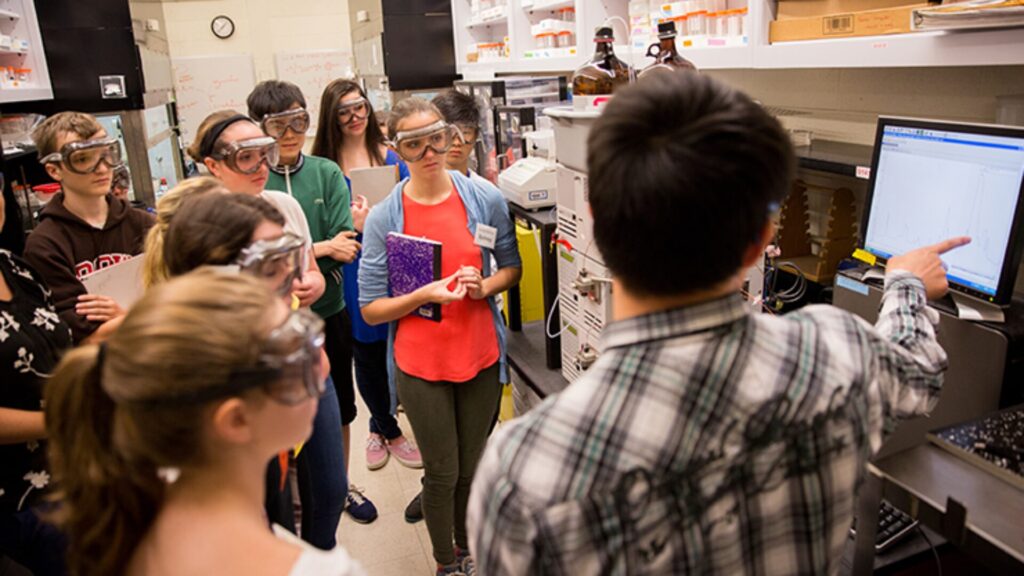
The Chemistry Research Academy at the University of Pennsylvania offers you a deep dive into modern chemical sciences on an Ivy League campus. During these three weeks, you’ll spend about half your time doing hands-on experiments in well-equipped labs while learning how analytical tools like spectroscopy and gas chromatography work. Classroom sessions go beyond textbook theory, covering materials science fundamentals, chemical bonding, organic and coordination chemistry, and research-oriented discussions with professors and advanced students.
You’ll also visit research spaces and institutes to see professional scientific work up close and join journal clubs and presentations that sharpen your critical thinking and communication skills. A key part of the experience is a capstone project you design and plan, helping you build the foundation for future science fairs or independent research. You’ll connect with a diverse group of peers and faculty in a setting that mirrors real university research life. Here’s the application link.
Why it stands out: You’ll gain authentic laboratory practice and research insight while working on a personalized project that prepares you for future scientific inquiry.
8. Inspiring Future Scientists through Shadowing (IFSS) Program
Location: Stanford University, Stanford, CA
Cost/Stipend: Free to participate
Acceptance rate/cohort size: Small cohort; limited spots
Dates: June 15th – June 26th
Application Deadline: March 1st
Eligibility: You must be a rising high school junior or senior who is at least 16 years old and lives and attends school locally in the Bay Area counties near Stanford (Alameda, Santa Clara, San Francisco, or San Mateo)
The IFSS program at Stanford invites you to spend two weeks on the Stanford campus exploring real chemical research through a shadowing experience. You’ll meet and follow multiple graduate student mentors in the Department of Chemistry, learning how they design experiments, choose techniques, and think through scientific problems.
You’ll engage with different research topics, giving you a panoramic view of how research groups operate and what cutting-edge chemistry looks like in practice. Sessions focus on observation, thoughtful discussion, and exposure to a range of scientific methods and tools, letting you connect your classroom knowledge with real research activities.
Why it stands out: It gives you a rare front-row look at real laboratory research by shadowing multiple mentors across different projects at a top research university.
9. Summer High School Internship Program (SHIP)
Location: NIST campuses in Gaithersburg, MD, and Boulder, CO
Cost/Stipend: Free internship
Acceptance rate/cohort size: Competitive
Dates: June 22nd – August 7th
Application Deadline: January 26th
Eligibility: You must be a high school junior or senior with at least a 3.0 GPA and U.S. citizenship, live within ~50 miles of the NIST Gaithersburg (MD) or Boulder (CO) campus
The NIST Summer High School Internship Program (SHIP) offers you the opportunity to join real research teams at a leading federal science institution, working alongside scientists and engineers on projects that span measurement science, materials, chemistry, physics, computing, and more. Over the seven-week summer, you’ll dive into a research problem, build technical skills, and contribute authentically to ongoing work.
Your experience might involve experiments, data analysis, instrumentation, or modeling, depending on your placement, and you’ll gain insight into how scientific research shapes technology and standards in the U.S. Throughout the program, you’ll participate in seminars, professional development, and a final poster session where you present what you’ve learned to your peers and mentors.
Why it stands out: You’ll get exposure to cutting-edge science that can be a pivotal step toward future STEM opportunities, including gaining insight into federal research careers.
10. RISE Internship Track
Location: Boston University, Boston, MA
Cost/Stipend: Varies; tuition and fees apply
Acceptance rate/cohort size: Highly selective cohort
Dates: June 28th – August 7th
Application Deadline: Varies; typically around February
Eligibility: Rising seniors in high school; the residential or commuter STEM research program is only open to U.S. citizens or legal permanent residents
The RISE Internship Track at Boston University lets you spend six weeks immersed in real laboratory research alongside faculty, postdoctoral researchers, and graduate students. You’ll work about 40 hours a week on a research project tailored to your interests, which can include chemistry, biomedical engineering, environmental sciences, physics, or computational science. In addition to your hands-on work, RISE includes weekly workshops on topics like scientific ethics, reading research papers, poster design, and professional networking, which help you build the broader skills real scientists use.
Toward the end of the session, you’ll showcase your findings at the RISE Poster Symposium, giving you practical experience communicating your work. This experience helps you bridge the gap between high school and college STEM research by combining mentorship, practical work, and professional development.
Why it stands out: You’ll contribute to authentic university research and learn the scientific process from start to finish, including presenting your work to the broader research community.
11. King’s College London Chemistry Summer School
Location: King’s College London, London, UK
Cost/Stipend: Free
Acceptance rate/cohort size: Selective
Dates: In July
Application Deadline: Applications close in April
Eligibility: Year 12 students in the UK wanting to study chemistry in Year 13 from non-fee-paying schools
This Chemistry Summer School at King’s College London is a free, week-long program designed to introduce you to university-level chemistry through hands-on experiments, interactive workshops, and academic discussions. You’ll work in King’s laboratories performing practical tasks like creating your own sunscreen and studying its properties with tools such as infrared (IR) and nuclear magnetic resonance (NMR) spectrometers, offering you a taste of real scientific methods and instrumentation.
You also get to explore the campus environment, talk with current students and academics, and learn more about studying chemistry at the undergraduate level. At the end of the week, you’ll present your work to peers and faculty, strengthening your confidence and experience in scientific communication.
Why it stands out: You’ll gain direct exposure to university-level lab techniques and present your own science poster without paying tuition, giving you a valuable head start on undergraduate STEM learning.
12. MIT’s Research Science Institute (RSI)
Location: Massachusetts Institute of Technology (MIT), Cambridge, MA
Cost/Stipend: Fully funded
Acceptance rate/cohort size: Selective
Dates: Approximately six-week summer session
Application Deadline: Typically around early December
Eligibility: High school juniors are eligible; open to both U.S. and international students
The Research Science Institute (RSI) brings together top high school science students from around the world for an immersive research experience at MIT’s campus that mirrors real scientific inquiry.You begin with an intensive week of advanced coursework taught by university faculty before transitioning into a full research project under the guidance of experienced mentors from different scientific fields, including chemistry.
Over the next five weeks, you develop your research plan, conduct experiments or theoretical work, and refine skills such as academic writing and data analysis. The program culminates in both written and oral presentations, helping you learn how scientists communicate their findings at conferences or professional settings. Throughout the weeks, you also interact with peers and researchers in seminars and community activities that broaden your perspective.
Why it stands out: You’ll take part in a highly prestigious and competitive research experience at MIT that leads you from foundational STEM study to producing original research.
13. Anson L. Clark Scholars Program
Location: Texas Tech University, Lubbock, TX
Cost/Stipend: Free participation; $750 stipend upon research project completion
Acceptance rate/cohort size: Very competitive
Dates: June 21st – August 6th
Application Deadline: February 16th
Eligibility: You must be a current high school student who is at least 17 years old and either a rising senior (summer before senior year) or a recent high school graduate; applicants must be U.S. citizens or permanent residents
The Anson L. Clark Scholars Program at Texas Tech University gives you an intensive research experience where you get to work alongside faculty on a real project in chemistry or another STEM field for seven weeks. Over the summer, you’ll dig into your chosen research topic, get hands-on practice with labs and methods, and build your ability to analyze and solve problems like a scientist.
In addition to your research, the program includes weekly seminars, peer collaborations, field trips, and social activities that help you grow both socially and academically. Living on campus with other motivated students adds a college-like feel and lets you build connections with professors and peers alike. At the end of the session, you prepare a research report and receive a stipend as recognition of your work and accomplishments. You need to sign in to apply to the program.
Why it stands out: You’ll join a very small, highly selective group of peers and complete a faculty-mentored research project that mirrors authentic university research experiences.
14. SSP: Synthetic Chemistry
Location: Southwestern Oklahoma State University, Oklahoma
Cost: Free for participants with a family income of $75,000 or less; for more details, check here
Acceptance rate/cohort size: Competitive
Dates: June 8th – July 13th (tentative)
Application Deadline: February 21st (tentative)
Eligibility: Applicants must be at least 15 years old but not yet 19 during the program. Current freshmen, sophomores, and seniors are not eligible
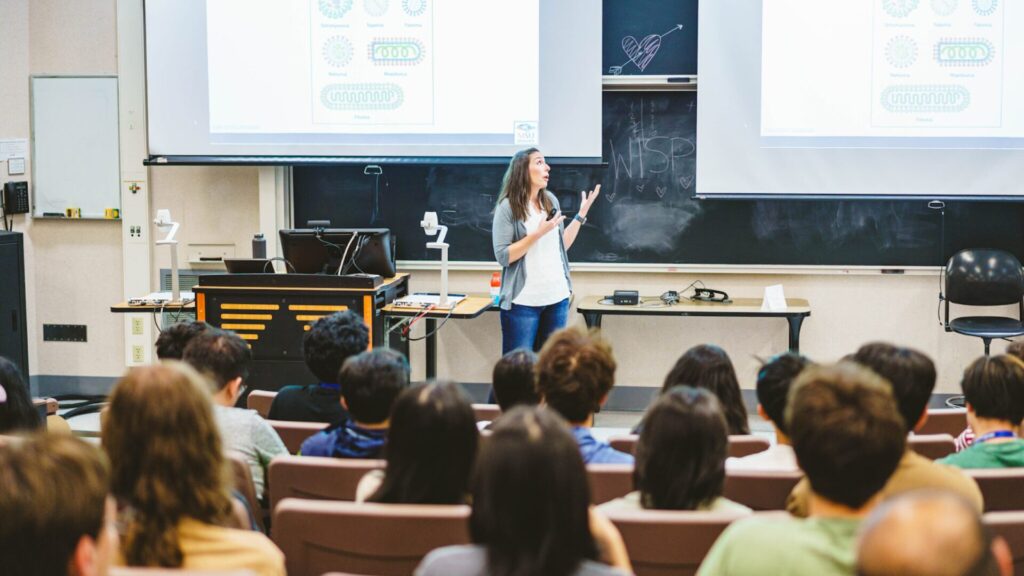
In the synthetic chemistry program, you will explore concepts like organic chemistry, coordination chemistry, and characterization of organic and inorganic compounds. During the classes, you will learn how to use organic and inorganic chemistry to create safe and effective chemical reactions. You will learn techniques of de novo synthesis, characterizing organic and inorganic molecules.
In labs led by trained professionals and experienced chemists, you will learn how to pivot, optimize, and troubleshoot research problems. The program will start with 200-level Organic I and Organic II college courses and end with 300- to 400-level courses in inorganic and coordination chemistry for chemistry majors. By the end, you will complete and summarize the project and present a professional poster.
Why it stands out: It involves gradual progression to advanced courses, mirroring undergraduate studies.
15. Aspiring Scientists Summer Internship Program (ASSIP)
Location: George Mason University, Fairfax, VA
Cost/Stipend: $1,299 for 3 college credits (fee waivers available based on financial need)
Acceptance rate/cohort size: Competitive
Dates: June 18th – August 12th
Application Deadline: February 15th
Eligibility: High school students (minimum age usually 15+; 16+ for laboratory placements); open to students from the United States and international students worldwide
The Aspiring Scientists Summer Internship Program at George Mason University invites you to gain real research experience by working closely with faculty mentors on hypothesis-driven STEM projects across disciplines. You’ll participate in hands-on work using modern research tools and technologies, and you’ll also hone skills in scientific writing, data interpretation, and professional communication. Part of the program is designed to help you explore potential STEM career paths through discussions with role models and collaboration with peers who share your scientific curiosity.
You’ll earn university credit upon successful completion, giving you a college-level research experience to include on future applications or resumes. Both in-person and remote internship options give you flexibility, and financial support in the form of waivers can help make the opportunity accessible. Here’s the application link.
Why it stands out: You’ll conduct a substantive, faculty-mentored research project that can earn you real college credit while strengthening your scientific skills and academic profile.
From Lab Curiosity to University Confidence
Exploring science beyond school lessons changes how you see your future. Real laboratory exposure builds clarity, resilience, and genuine academic direction.
Chemistry research programs for high school students give you more than technical skills. They teach you how to ask sharper questions, interpret data thoughtfully, and think like a developing scientist.
When you design experiments, analyse results, and present findings, you build confidence that carries into university applications, interviews, and competitive STEM pathways.
Now turn that research experience into a real admissions advantage. Explore our University Preparation blogs for expert guidance on personal statements, interviews, and supercurricular strategy that helps you stand out decisively.