15 Social Science Summer Programs in Japan for High School Students

TL;DR
On this page, you’ll find 15 social science programs in Japan, from paid summer schools like Temple University Japan’s to free university taster days at Osaka, Keio, and Meiji. The biggest differences are language and access: a few, like the Hiroshima Global Youth Forum and ICU’s peace workshop, run in English and welcome students from abroad, while most are Japanese-language events for local students. The Hiroshima Global Youth Forum even covers flights and lodging for around 40 international participants. Immerse Education’s Career Insights pathway in Tokyo is open to students aged 15 to 18 from around the world, with bursaries available.
If you’ve ever imagined studying social sciences in a country where ancient temples sit beside bullet trains and everyday life feels like a lesson in culture, systems, and society, Japan is a compelling place to begin. Social science summer programs for high school students can give you more than a short academic experience. They can help you build skills in research, discussion, policy analysis, and presenting your ideas to others.
Depending on the program, you may analyze social issues, discuss global peace and governance, study language and identity, explore community development, or examine how culture shapes public life. These experiences can also give you a closer look at university life, from seminar-style discussions and group presentations to faculty-led lectures and collaborative projects with peers from different backgrounds.
Why Japan?
Japan is a particularly strong setting for social science because it offers a rich mix of history, public policy, economic development, cultural innovation, international relations, and urban transformation. Its universities and research institutions are deeply connected to questions that matter globally, from peacebuilding and demographic change to sustainability, technology, diplomacy, education, and multicultural coexistence.
Studying in Japan can help you see social science outside the textbook. You can see how cities balance tradition and modernization, explore Japan’s role in global cooperation, or learn how communities respond to historical memory and social change.
15 Social Science Summer Programs in Japan for High School Students
1. Temple University Japan: High School Summer Program
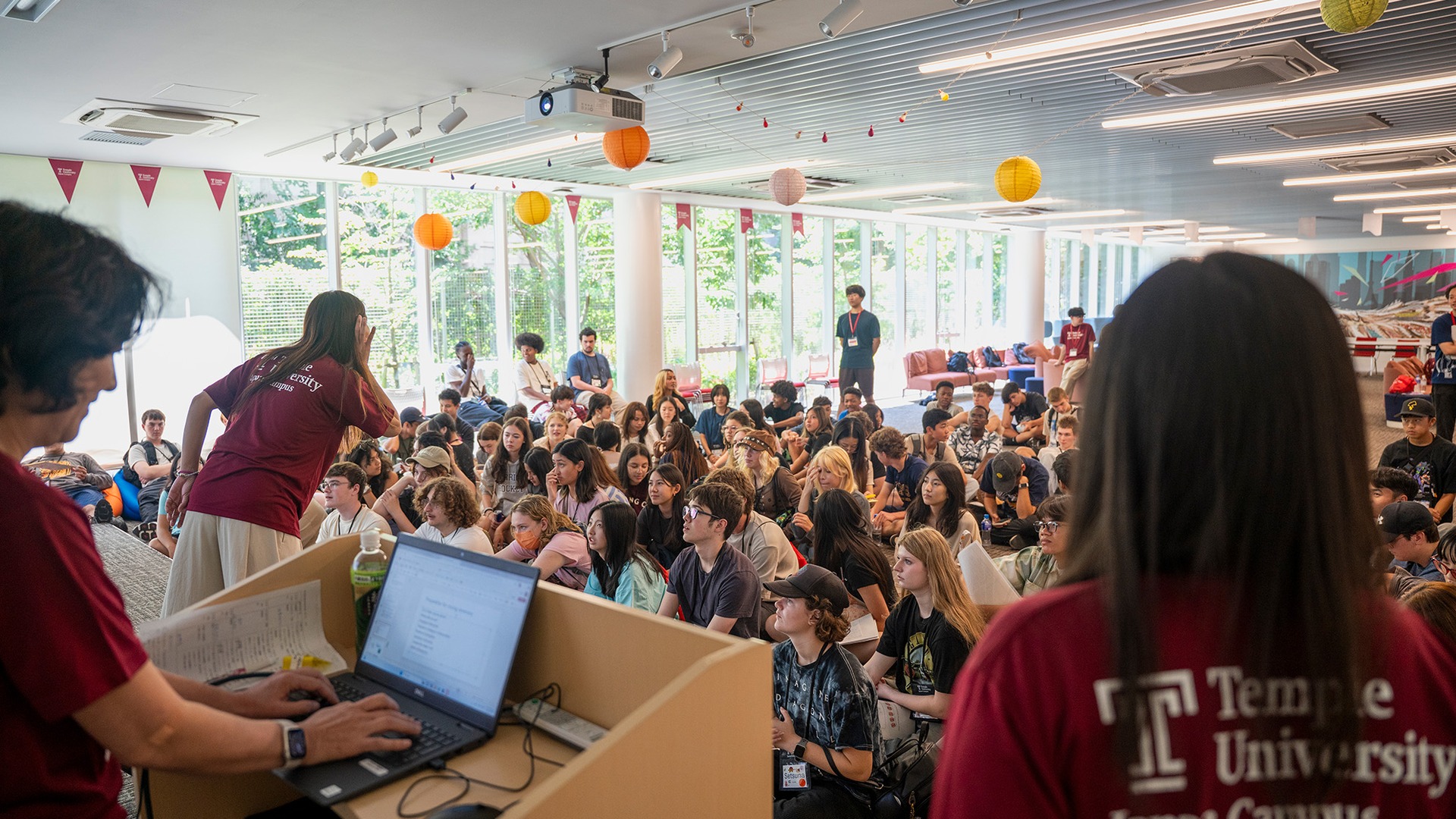
Location: Temple University, Japan Campus, Setagaya, Tokyo, Japan, plus excursions to Nikko
Cost: JPY 360,000 + JPY 20,000 registration fee; the first 20 accepted students who pay by February 1st receive a JPY 20,000 discount
Acceptance rate/cohort size: Not specified
Dates: July 28th - August 5th, 2027
Application Deadline: Applications open in late fall 2026; program fee due April 1st, 2027 (March 1st for students who need a visa)
Eligibility: High school students entering grades 9-12 in the 2027-2028 academic year; no Japanese required; open to international students
The TUJ High School Summer Program gives you an eight-night introduction to university life in Tokyo, combining Japanese language classes with electives modeled on TUJ undergraduate courses. Elective options include International Affairs, International Business Studies, Film, E-Sports, and Tourism, Hospitality and Event Management, so you can try a social science subject in a college-style classroom.
Japanese classes are offered at beginner, intermediate, and advanced levels. Outside class, you’ll take an overnight cultural excursion to Nikko, spend a day at Tokyo DisneySea, and share events and meals with Japanese high school students. The fee covers accommodation, all meals, classes, and program-related transportation.
Why it stands out: You get a compact study-abroad experience in Tokyo that combines Japanese language learning, university-style electives, and guided cultural exploration.
2. Immerse Education’s Tokyo Summer School
Location: Tokyo, Japan
Cost: Varies; summer school scholarship available through our bursary programme
Acceptance rate/cohort size: Selective; an average of 7 participants per class
Dates: 2 weeks during the summer
Application Deadline: Multiple cohorts with rolling admissions
Eligibility: Students aged 15-18; open to international students from around the world
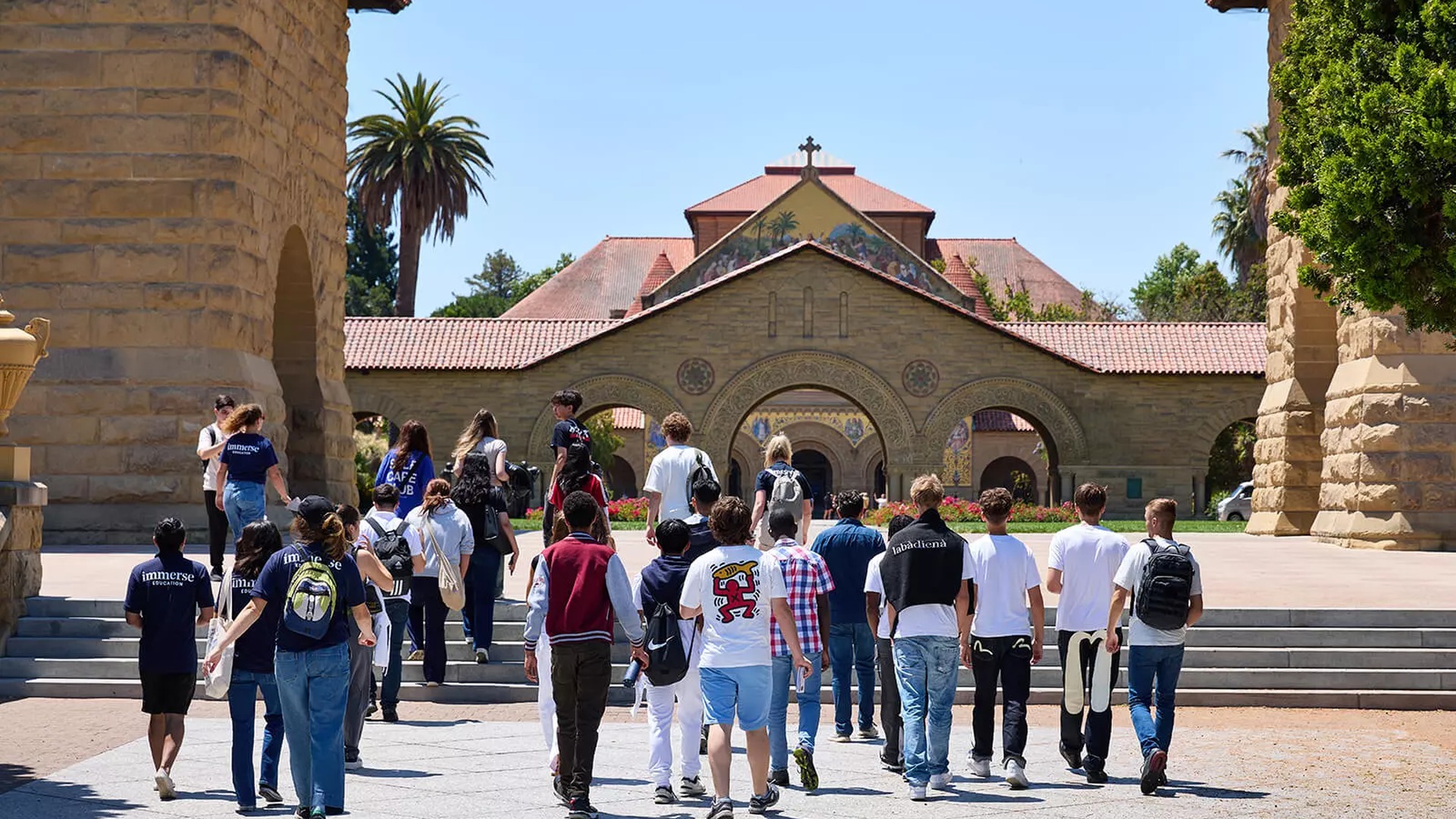
Immerse Education’s Career Insights pathway in Tokyo gives you two weeks to explore how business and society work in one of the world’s most distinctive cities, with learning hosted at locations including the University of Tokyo and Waseda University. On the Business Management pathway, you’ll learn from industry professionals and see ideas in action on off-campus visits, such as a past presentation and tour at the Tokyo Stock Exchange followed by a workshop trading stocks against live news feeds.
Sample experiences outside class include Shibuya Crossing, the Meiji Shrine, Harajuku, and an Asakusa tour. If you’d rather focus on a single social science like psychology, economics, or international relations, you can also study it one-to-one through Online Research, which ends in a research paper.
Why it stands out: It pairs small-group teaching with industry visits in Tokyo, giving you a close look at how businesses and institutions operate in Japan.
3. Meiji University: Multicultural Coexistence Summer School for High School Students
Location: Meiji University Nakano Campus, Nakano, Tokyo, Japan
Cost: Not specified on the 2026 flyer (the 2025 summer school was free)
Acceptance rate/cohort size: 30 places per day
Dates: The 2026 summer school ran August 25th (Day 1) and August 26th (Day 2); 2027 dates to be announced
Application Deadline: Not specified for 2027
Eligibility: High school students; international eligibility not specified
In this program, you examine how Japan is adapting socially and linguistically to its growing foreign resident population. Across two days, you explore “plain Japanese” (yasashii nihongo), the simplified Japanese used to communicate with non-native speakers, and the policies and ideas behind multicultural coexistence.
The summer school is run by the lab of Professor Keizo Yamawaki at Meiji’s School of Global Japanese Studies, which specialises in multicultural coexistence. Meiji undergraduates from the Yamawaki Seminar, who run plain Japanese workshops for local governments and schools, help lead the sessions. Discussion-based workshops give you practice rephrasing everyday spoken and written Japanese so it’s easier for everyone to understand.
Why it stands out: It connects to Meiji’s wider High School Students’ Future Action programme, which continues into presentation contests on plain Japanese and multicultural coexistence later in the year.
4. University of the Ryukyus: Psychology Experience Class for High School Students
Location: University of the Ryukyus, Nishihara, Okinawa Prefecture, Japan
Cost: Free (lunch and transportation not included)
Acceptance rate/cohort size: Not specified
Dates: The 2026 class ran August 15th; 2027 date to be announced
Application Deadline: Advance registration required; 2027 details to be announced
Eligibility: High school students considering psychology; some lectures in the series specify grade levels; international eligibility not specified
In this program, you explore psychology through a one-day university experience designed for students considering the field. You’ll take part in lectures, experiments, and exercises that help you understand what psychology actually involves as an academic discipline.
The class is part of the university’s Ninufa-boshi lecture series, which lets high school students experience university lectures and practical sessions in the field they hope to study. It gives you a clearer picture of psychology at university level before you choose a degree.
Why it stands out: It combines university-level lectures with experiments and practical exercises in a single intensive day.
5. Hiroshima University of Economics: High School - University Collaborative Open Lectures
Location: Hiroshima University of Economics, Hiroshima, Japan
Cost: Free
Acceptance rate/cohort size: Not specified; popular lectures may close early once full
Dates: The 2026 lectures ran July 30th, July 31st, August 18th, and August 20th; 2027 dates to be announced
Application Deadline: The 2026 deadline was July 26th; 2027 deadline to be announced
Eligibility: Mainly high school students; international eligibility not specified
In this program, you can choose up to four in-person lectures linked to the university’s economics, business management, and media business faculties. The 2026 lineup included sessions on using economics to understand human psychology, the value and responsibility of information in a digital society, marketing basics, and how a professional soccer club was managed through the pandemic.
Other lectures covered text mining of traveler reviews and advertising design. Each lecture gives you a taste of university teaching to help you clarify your academic interests and future path.
Why it stands out: You can sample several social science disciplines in one summer, helping you compare economics, business, and media before choosing a degree.


6. International Christian University: Reconsidering Peace in Liberal Arts
Location: International Christian University, Mitaka, Tokyo, Japan
Cost: JPY 43,000 dorm fee (covers accommodation, breakfast, and dinner; no program fee)
Acceptance rate/cohort size: Selective; 30 students
Dates: The 2026 workshop ran August 5-8; 2027 dates to be announced
Application Deadline: The 2026 deadline was June 7th; 2027 deadline to be announced
Eligibility: High school students who can attend the full program, with English at roughly CEFR B2 or above; open to international students
ICU’s Reconsidering Peace in Liberal Arts program asks you to examine peace as a complex academic and social question. Co-hosted with Middlebury College, the four-day residential workshop is adapted from the Critical Issues Forum run by the James Martin Center for Nonproliferation Studies. You’ll attend English-language lectures from ICU faculty and Middlebury College, with the 2026 theme focused on peace in a divided world.
On days two and three, you’ll tackle peace from different fields and perspectives through group work, while living in an ICU student dormitory. The program ends with group presentations and feedback, giving you practice organizing your thinking and explaining your conclusions clearly.
Why it stands out: ICU gives you a rigorous, English-language introduction to peace studies through liberal arts lectures, group discussion, and final presentations.
7. Fukuyama University: Summer Economics and Business Course for High School Students
Location: Fukuyama University Social Collaboration Promotion Center, beside JR Fukuyama Station, Hiroshima Prefecture, Japan
Cost: Not specified
Acceptance rate/cohort size: Not specified
Dates: The 2026 course ran on Saturdays: July 25th, August 1st, and August 8th; 2027 dates to be announced
Application Deadline: Advance registration through the official form; no closing date published
Eligibility: High school students in all year levels; international eligibility not specified
In this program, you step beyond the high school syllabus and study contemporary society through economics and management, guided by teaching staff from Fukuyama University’s Faculty of Economics. Across three Saturday afternoons, you attend two lectures each day, covering the future of the Japanese economy, work in the age of AI, the impact of Trump tariffs, and how a company counts its money.
An optional open discussion period after each day lets you put questions to the lecturers directly. You receive a certificate of completion if you attend all six lectures. Parents and teachers are welcome to attend alongside you.
Why it stands out: It pairs university-level lectures on current economic issues with optional discussion time and a faculty certificate for completing all six sessions.
8. Meisei University: TAMA High School Entrepreneurs Camp
Location: Meisei University, Hino, Tokyo, Japan
Cost: Not specified
Acceptance rate/cohort size: Selective if oversubscribed (applicants chosen based on their motivation statement)
Dates: The 2026 camp ran August 6-8; 2027 dates to be announced
Application Deadline: The 2026 deadline was July 21st; 2027 deadline to be announced
Eligibility: High school students who can attend all three days; international eligibility not specified
In this camp, you learn entrepreneurship through a three-day team-based experience organized by Meisei’s School of Business Administration. You identify problems in everyday life, use idea-generation tools, develop personas, and prototype a service designed to address a chosen need. On the final day, each team presents its proposal and receives feedback, followed by a review of the three days and closing messages from the instructors.
You’ll also hear talks from practising entrepreneurs. Completing the camp makes you eligible for Meisei’s entrepreneurship-based admissions route.
Why it stands out: It gives you a structured three-day pathway from spotting a social problem to developing, prototyping, and presenting a business idea.
9. Osaka University: Future Design Workshop for High School Students
Location: Osaka University Suita Campus, Suita, Osaka, Japan
Cost: Free
Acceptance rate/cohort size: Around 80 students; first-come, first-served
Dates: The 2026 workshop ran August 8th; 2027 date to be announced
Application Deadline: The 2026 workshop filled on July 25th; 2027 details to be announced
Eligibility: High school students from both humanities and science tracks; international eligibility not specified
In this program, you explore future design, a new field that aims to design social systems that pass a sustainable society on to future generations. Working in groups, you’ll examine an actual city policy from a future perspective using a card game developed at Osaka University, guided by Osaka University students who join each group as supporters.
The workshop asks what society will need in 2060 and what you can do now to make it sustainable. You’ll receive a certificate of completion for taking part.
Why it stands out: It lets you apply the framework of future design directly to a real municipal policy through an interactive card game.
10. Hiroshima Global Youth Forum
Location: International Conference Center Hiroshima, Hiroshima, Japan
Cost: Free; sponsors cover round-trip travel from your nearest international airport, lodging, and meals
Acceptance rate/cohort size: Selective; around 40 international high school students and 45 Japanese high school students
Dates: The 2026 forum ran August 15-19, with online pre-learning from June 30th to August 10th; 2027 dates to be announced
Application Deadline: The 2026 deadline was May 31st; 2027 deadline to be announced
Eligibility: High school students aged 15-18 with a strong interest in peace, the ability to join English discussions, and a recommendation letter from their principal; open to international students
The Hiroshima Global Youth Forum places you in an international discussion environment centered on how to achieve a peaceful world without nuclear weapons. You prepare through English-language online discussions and a lecture before arriving in Hiroshima. During the forum, you’ll visit the Peace Memorial Museum and Peace Memorial Park, hear testimony from an atomic bomb survivor, and join team-building workshops with Japanese and international peers.
The program also includes a visit to Miyajima. Over two days of group discussion, you’ll draft and finalize the Hiroshima Declaration, then present it on the final day before carrying out your own follow-up activities at home.
Why it stands out: The forum turns peace studies into active dialogue through site visits, survivor testimony, and the drafting of the Hiroshima Declaration.
11. Hiroshima Prefecture: Future Leaders’ Program for Global Peace
Location: Hiroshima City, Japan, plus training trips to Okinawa or Nagasaki and overseas training in the Philippines
Cost: Not specified
Acceptance rate/cohort size: Selective; 20 trainees per cohort
Dates: The 2025-2026 cohort ran from July 2025 to February 2026, including a 5-day special training period in mid-August; dates for the next cohort to be announced
Application Deadline: Recruitment usually begins around May
Eligibility: Students of any nationality enrolled in a high school, technical college, or upper secondary school in Hiroshima Prefecture; not open to students living outside the prefecture
Hiroshima Prefecture’s Future Leaders’ Program for Global Peace is a longer training program focused on English and the basics of international relations, including nuclear disarmament and conflict resolution. You study Hiroshima’s destruction by the atomic bomb and its reconstruction alongside the political, economic, and social frameworks that support peacebuilding.
English practice builds your speech and discussion skills around the UN Charter, historically significant speeches, and nonproliferation. The program includes a five-day forum with overseas high school students in Hiroshima, peace education trips to Okinawa or Nagasaki, and overseas training with local students in Manila. It closes with an English presentation of your results and a certificate of completion.
Why it stands out: This months-long program combines peace education, international relations, English discussion, domestic and overseas field visits, and public presentation work.
Join the Immerse Education 2027 Essay Competition
Follow the instructions to write and submit your best essay for a chance to be awarded a 100% scholarship.
12. Keio University: SFC Future Vision Camp
Location: Shonan Fujisawa Campus, Fujisawa, Kanagawa; Kyoto; and Yonago, Tottori, Japan
Cost: JPY 3,000 for one-day SFC workshops; JPY 8,000 for the overnight SFC workshop; about JPY 17,000 for Kyoto; JPY 25,000 (planned) for Tottori
Acceptance rate/cohort size: Selective; applications usually exceed places; 9-20 participants per workshop
Dates: In 2026, SFC workshops ran August 4th (one overnight workshop August 3-4), Kyoto ran August 3-4, and Tottori ran August 17-19; 2027 dates to be announced
Application Deadline: The 2026 deadline was June 8th; 2027 deadline to be announced
Eligibility: First- and second-year high school students (technical college students also eligible for Tottori); one workshop application per person; international eligibility not specified
In this program, you join one of eight workshops run by Keio’s Faculty of Policy Management and Faculty of Environment and Information Studies. Several take a social science angle: simulating US - Soviet Cold War decision-making with the board game Twilight Struggle, discussing strategy, finance, and organization with management faculty, or learning interview techniques to understand other people’s experiences.
The Kyoto workshop sends you into the city for group fieldwork on opening up public buildings and spaces. Places are awarded based on a written assignment set by each workshop, not first-come registration. You work in small groups alongside SFC professors and current students, building discussion, research, and idea-development skills.
Why it stands out: It puts you inside SFC’s own way of working, with small groups of high school students tackling policy, community, and business questions alongside the faculty who research them.
13. University of the Ryukyus: Politics and International Relations Summer Course
Location: University of the Ryukyus, Nishihara, Okinawa Prefecture, Japan
Cost: Free (lunch and transportation not included)
Acceptance rate/cohort size: Not specified
Dates: The 2026 course ran August 5th; 2027 date to be announced
Application Deadline: Advance registration required; 2027 details to be announced
Eligibility: High school students interested in politics and international relations; international eligibility not specified
In this program, you explore politics, society, and gender equality through Iceland, a country widely seen as a leader in gender equality. You attend a lecture on Icelandic politics and society and examine how political and social institutions can be designed to support gender equality.
The course is aimed at students considering the university’s Politics and International Relations Program, and it connects what you learn to future university study. It gives you a focused introduction to comparative political and social analysis.
Why it stands out: It uses Iceland as a focused case study to connect gender equality with politics and society in a university-level course.
14. LanguBridge Japan Summer Programs
Location: Tokyo, Japan
Cost: Approximately $3,235 - $6,795 depending on session length
Acceptance rate/cohort size: Non-selective;
Dates: July 4th - August 22nd
Application Deadline: Varies by stream; Culture Discovery B closes May 1st, 2026; other sessions close earlier or on a rolling basis
Eligibility: Ages 14-18 for Youth Immersion (Tokyo E); minimum age 16 for Culture Discovery streams (Tokyo A, B & C); open to international students
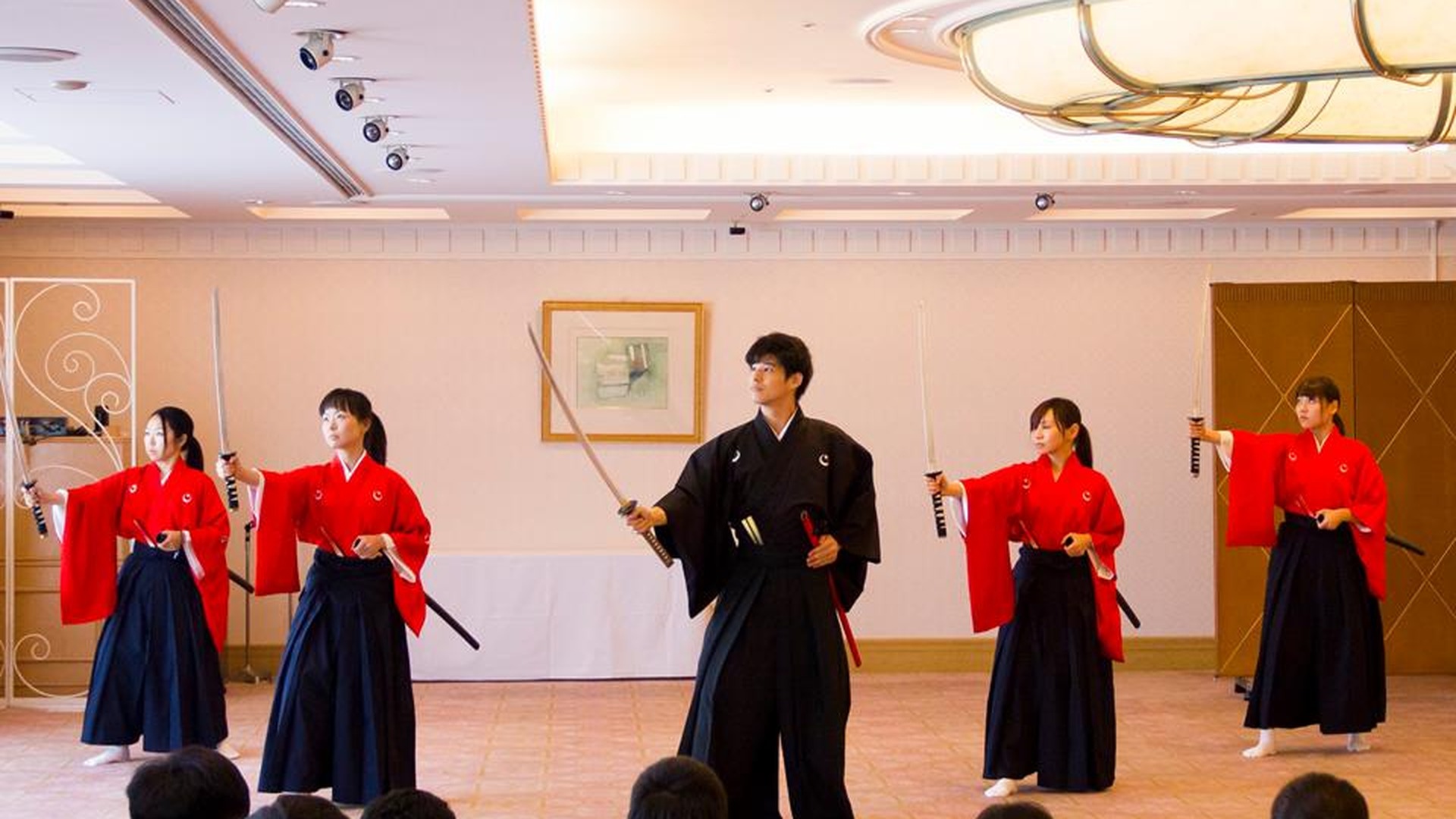
LanguBridge offers two separate summer pathways in Tokyo: the Youth Immersion programme (Tokyo E) and the Culture Discovery programme (Tokyo A, B & C). Both options combine Japanese language instruction with cultural activities and guided excursions. You attend classes taught by experienced local instructors and are grouped by language proficiency.
Cultural activities across both streams include tea ceremony, calligraphy, and trips to sites such as Asakusa and Harajuku; Culture Discovery additionally offers an overnight trip to Mt. Fuji or Kyoto. The Youth Immersion track places greater emphasis on homestays, structured daily supervision, and comprehensive transportation support including airport pickup and drop-off and a daily commuting pass.
Why it stands out: You can choose between a highly immersive homestay-focused experience or a more independent cultural exploration model.
15. Chuo University: 5th Chuo University Entrepreneurship Camp
Location: Chuo University Tama Campus, Hachioji, Tokyo, Japan
Cost: Free (bring your own lunch; travel not included)
Acceptance rate/cohort size: 50 high school students, supported by 10 Chuo student mentors; first-come, first-served
Dates: The 2026 camp ran August 3rd; 2027 date to be announced
Application Deadline: Open until places fill
Eligibility: High school students in years one to three; international eligibility not specified
In this program, you spend a day at Chuo University’s Tama Campus learning entrepreneurship as a mindset for tackling new challenges, not just starting a company. The mission is to design ideas that would make university life more exciting. After sessions on communication, teamwork, and asking good questions, you’ll tour the campus with your team on an observation mission, guided by a Chuo undergraduate mentor.
You then learn business frameworks and case studies, develop your team’s idea, and prepare a presentation. The day closes with team presentations, feedback, and a reflection on what you learned.
Why it stands out: It pairs every high school team with a current Chuo undergraduate mentor and sends participants out to observe the campus, so proposals rest on first-hand evidence.
Frequently asked questions: Social Science Summer Programs in Japan for High School Students
Are there social science summer programs in Japan taught in English?
Yes, a few programs on this list run in English. Temple University Japan’s High School Summer Program requires no Japanese and offers electives like International Affairs. ICU’s Reconsidering Peace in Liberal Arts workshop is taught in English and generally expects CEFR B2-level English. The Hiroshima Global Youth Forum runs entirely in English. Most other university taster events on this list are designed for students at Japanese high schools and run in Japanese.
Can international students join social science programs in Japan?
International students can join several programs, though many university events are aimed at local students. Temple University Japan welcomes students from abroad and gives guidance on visas, while the Hiroshima Global Youth Forum covers travel, lodging, and meals for around 40 international participants. Immerse Education’s Career Insights pathway in Tokyo is open to students aged 15 to 18 from around the world, with an average of seven participants per class. Programs like JICA Chugoku’s are limited to students at schools in specific regions of Japan.
Are there free social science programs in Japan for high school students?
Many university programs in Japan are free or low-cost. The Hiroshima Global Youth Forum, Osaka University’s Future Design Workshop, Hiroshima University of Economics’ open lectures, and Chuo University’s Entrepreneurship Camp all charge no participation fee. Keio’s one-day Future Vision Camp workshops cost JPY 3,000 to cover lunch and insurance. JICA Chugoku charges JPY 4,000 for meals and covers lodging for its three-day residential program.
What social science subjects can you study in Japan?
You can explore a wide range of social sciences in Japan, from peace studies and international relations to psychology, economics, and public policy. Hiroshima’s forums and ICU’s workshop focus on peace and nuclear disarmament, while the University of the Ryukyus offers taster classes in psychology and politics. Fukuyama University and Hiroshima University of Economics focus on economics and business. You can also compare more options in these psychology summer programs in Japan and economics summer programs in Japan.
Do these programs help with university applications?
Several programs offer concrete benefits for your applications. Completing Meisei University’s TAMA High School Entrepreneurs Camp makes you eligible for an entrepreneurship-based admissions route at Meisei. JICA Chugoku gives participants a certificate of participation that can be used in university applications, and Osaka University and Fukuyama University also award certificates. Programs like the Future Leaders’ Program for Global Peace end with English presentations that give you strong material for interviews and personal statements.
Can you study social sciences online instead of traveling to Japan?
You can study social sciences online if you can’t travel to Japan. Immerse Education’s Online Research pathway lets students aged 13 to 18 work one-to-one with a tutor in subjects like psychology, economics, international relations, or global society and sustainability, ending in a research paper. The Hiroshima Global Youth Forum also starts with an online pre-learning program before the in-person forum. For more remote options, explore these online social sciences programs for high school students.
Your next step toward studying in Japan
From peace forums in Hiroshima to policy workshops at Keio, each program shows you how Japanese society tackles questions the whole world is asking.
Many social science summer programs in Japan for high school students run in Japanese, so check the language of instruction before you apply.
Deadlines for English-language options like the Hiroshima Global Youth Forum fall in late spring, so start preparing your application this winter.
If you’re picturing yourself living and learning in Japan, explore our Study Abroad blogs for practical advice on choosing destinations and settling in.






Unlock Inspiring Opportunities with the Immerse Education Newsletter
Join our newsletter to stay ahead with exclusive updates, exciting programme highlights, and expert insights from the world of immersive education.
Learn how Immerse can transform your life
An in-depth overview of our university and career preparation programmes
Get a glimpse into the life of an Immerse participant
Find the right programme for you with sample timetables, location showcases, and more