
 Русский (RU)
 Українська (UK)
 Türkçe (TR)
 Italiano (IT)
 Français (FR)
 Português (PT)
 中文 (中国) (ZH)
 Español (ES)
 日本語 (JA)
 ไทย (TH)
 Deutsch (DE)
 Ελληνικά (EL)
 Polski (PL)
 Bahasa Indonesia (ID)
 Nederlands (NL)
 العربية (AR)
 한국어 (KO)

Psychology is often one of the first subjects students become interested in because it feels immediately relevant to everyday life. Questions about memory, emotions, relationships, motivation, decision-making, and mental health affect everyone. But psychology is also a rigorous academic discipline built on research, data, and scientific investigation. If you’re considering studying psychology or a related field at university, psychology summer programs in Japan for high school students can help you examine the subject in greater depth.
Think about spending a few weeks studying famous psychological experiments, discussing theories of human behaviour, investigating neuroscience, or learning how researchers design studies and analyse evidence. You may encounter topics that rarely receive detailed attention in high school while gaining exposure to the kinds of questions psychology students investigate at university.
Why Japan?
Japan provides a great environment for students interested in psychology because it offers exposure to a culture that is often studied within psychology itself. Topics such as social behavior, group dynamics, communication, identity, well-being, and aging can be explored from perspectives that may differ from what students are used to encountering at home.
The country is also known for its strong higher education system and contributions to research across fields such as neuroscience, cognitive science, education, and behavioral studies. Learning in this environment can help students connect psychological theories to real-world social and cultural contexts.
For students interested in studying psychology at university, the experience can also demonstrate intellectual curiosity and a willingness to engage with the subject beyond the classroom.
To help you get started, we’ve put together a list of 15 psychology summer programs in Japan for high school students!
For adjacent opportunities, consider the online psychology program.
Key Takeaways
- Costs range from free programs like SAKURA SCIENCE High School Program and RIKEN BDR’s Hands-On Life Science Workshop to over $5,800 for Cornell Online Summer’s Introduction to Psychology.
- Programs are based in cities across Japan, including Tokyo, Kobe, Osaka, and Saitama, alongside several fully online options run by US universities.
- Most programs welcome international students, with the exception of RIKEN BDR’s workshop, which requires Japan residency and fluency in Japanese.
- Program length varies widely, from one day experiences like RIKEN BDR’s lab workshop to multi month research programs such as Osaka University’s SEEDS Program, which runs from August through the following February.
- Several online courses, including those from Cornell, Northwestern, and the University of Chicago, are self paced or asynchronous, with total costs reaching close to $6,000 once application fees are included.
- Many programs connect psychology to adjacent disciplines, covering neuroscience, forensic psychology, clinical psychology, and critical thinking and reasoning.
- Immerse Education’s Psychology Summer School stands out for combining small group, university style instruction with a personal project, written feedback, a certificate of completion, and bursary support for eligible students.
- Application deadlines fall across a wide window, from February through July, so timelines should be checked individually for each program.
15 Psychology Summer Programs in Japan for High School Students
1. Temple University, Japan (TUJ) High School Summer Program
Location: Tokyo, Japan
Cost: 340,000 JPY program fee, plus a 20,000 JPY registration fee
Application Deadline: The final payment deadline is May 1st, though students requiring a visa to visit Japan must apply and secure their payment by April 1st
Dates: July 29th – August 6th
Eligibility: High school students entering the 9th, 10th, 11th, or 12th grade for the upcoming academic year. No prior Japanese language ability is required. Available to international students
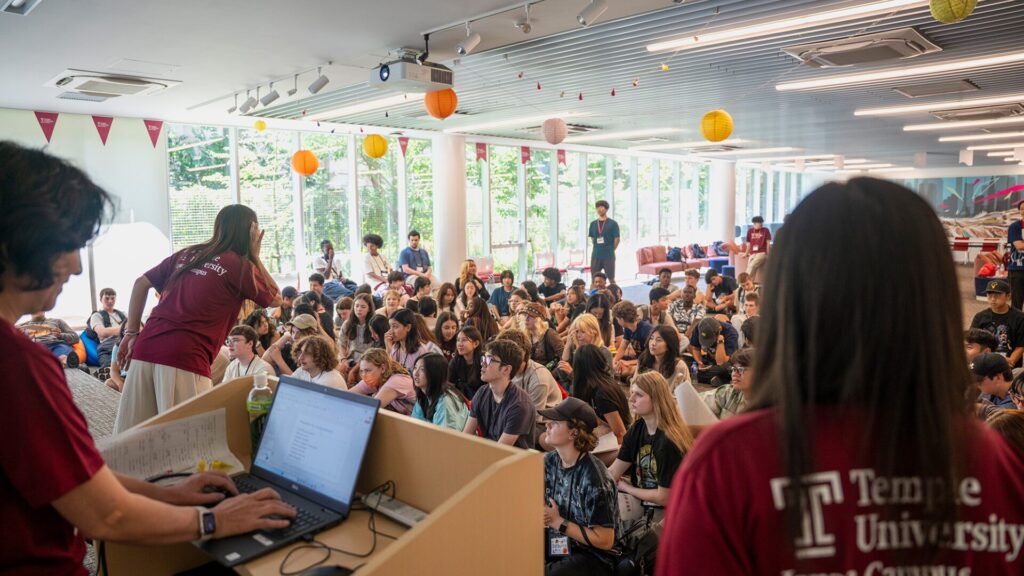
At Temple University Japan’s summer program, you can combine Japanese language study with university-level coursework while spending time in Tokyo. As one of the more culturally immersive psychology summer programs in Japan for high school students, it lets you enrol in classes that reflect topics taught in the university’s undergraduate psychology curriculum. Outside the classroom, the program incorporates cultural programming designed to help you engage with everyday life in Japan.
Activities include opportunities to interact with Japanese high school students, allowing you to practice language skills and gain insight into local perspectives. Organized excursions form part of the experience, including visits to sites in and around Tokyo as well as an overnight trip to Nikko. Coursework and activities are structured to help you balance academic learning with cultural exploration.
Why it stands out: It combines introductory psychology coursework with direct exposure to Japanese student life and culture.
2. Immerse Education’s Tokyo Psychology Summer School
Location: Tokyo, Japan
Cost/Stipend: Varies; summer school scholarship available through our bursary programme
Dates: 2 weeks during the summer
Application Deadline: Multiple summer cohorts with rolling admissions
Eligibility: Students worldwide aged 13-18 currently enrolled in middle or high school
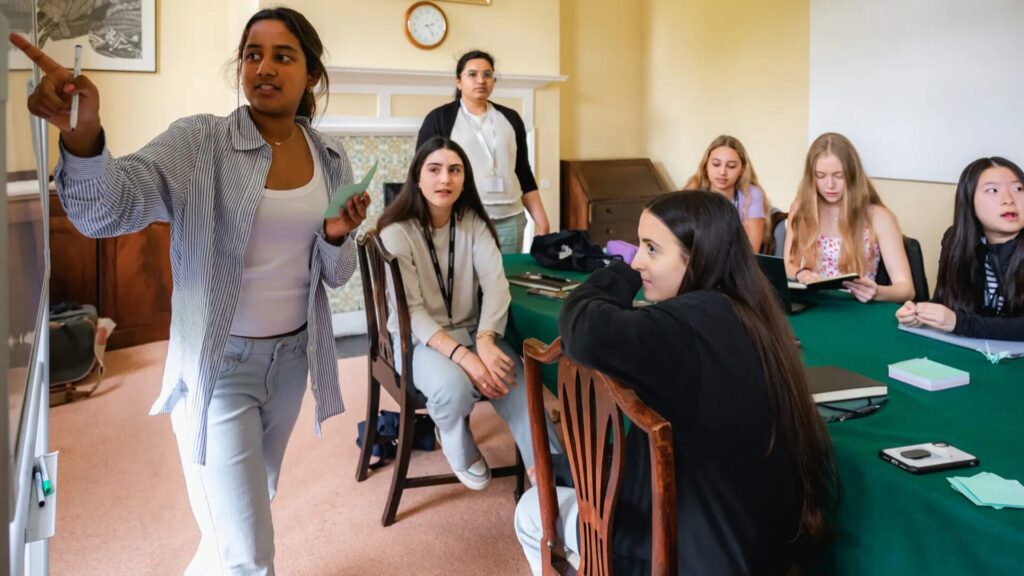
The Immerse Education Psychology Summer School is an immersive two-week academic program designed to introduce you to the scientific study of the human mind and behaviour. You’ll engage with core areas of psychology that include cognitive psychology, behavioural science, and mental health. You’ll dive into cognitive psychology and neuroscience while unpacking the core ideas of behavioural psychology. You’ll be participating in interactive lectures, case studies, experiments, and group discussions that build analytical, research, and critical thinking skills.
Along the way, you’ll see how surroundings and context influence the way people think and act, and you’ll develop an understanding of the forces that shape interactions and social patterns. By the end of the program, you will complete a personal project and receive written feedback and a certificate of completion. You can find more details about the application here.
Why it stands out: It gives you a taste of university-style psychology study, helping you prepare for future university applications or careers in psychology and related fields.
3. HLAB Summer School
Location: Tokyo, Shinshu (Nagano), and Onagawa (Miyagi), Japan
Cost: Varies by location; limited scholarships and need-based aid available
Application deadline: Typically, March – April
Dates: One week (July – August)
Eligibility: High school students in Japan and abroad, ages 15-18
HLAB Summer School places you in a residential learning environment where academic discussions continue beyond formal sessions. Throughout the week, you take part in seminars, workshops, and small-group conversations led by mentors studying at universities in Japan and internationally. While the program follows a liberal arts model rather than a dedicated psychology curriculum, many discussions explore topics related to human behavior, social dynamics, decision-making, identity, and cultural perspectives, areas that intersect with psychology.
A central component of the program is the house system, where you live and learn alongside mentors and fellow participants. Depending on the location, you may also explore themes such as community development, social change, leadership, and cultural resilience, all of which can be connected to concepts studied in social and cultural psychology. Through discussions, collaborative activities, and community engagement, you gain exposure to real-world contexts that can complement an interest in psychology and related social sciences.
Why it stands out: It connects topics in human behavior and social interaction with an immersive residential learning experience.
4. SAKURA SCIENCE High School Program (SSHP)
Location: Multiple research institutions and universities in Japan
Cost: Free
Dates: 1-week courses (specific dates may vary)
Application Deadline: April 21st, July 4th, October 6th
Eligibility: High school students from around 14 countries
SAKURA SCIENCE High School Program (SSHP) offers a one-week learning opportunity to international high school students. The program aims to contribute to the development of global science and technology by guiding and supporting students. You’ll attend special STEM-focused classes, learn from experienced scientists and Nobel laureates, while also enjoying social activities with Japanese high school students.
You’ll go on visits to laboratories, research institutes, and universities, and explore engaging topics across a range of science disciplines, including psychology & neuroscience. The program will also give you the chance to form meaningful friendships while enjoying a culturally rich experience in Japan.
Why it stands out: You’ll get rare access to Japan’s top research institutes and work with an international cohort.
5. Summer in JAPAN (SIJ)
Location: Japan
Cost/Stipend: ¥330,000
Dates: July 26th – August 10th
Application Deadline: February 28th
Eligibility: Students ages 7-18 worldwide
Summer in JAPAN (SIJ) is a non-profit program for high school students. The program is a collaborative offering between the students and alumni at Harvard University and students from three international universities, including Oita University Medical School, Ritsumeikan Asia Pacific University, and Akita International University.
You’ll pursue courses in a range of subjects, including psychology, neuroscience, healthcare, humanities, and more, based on your interests, and learn from experienced instructors. You’ll participate in workshops on your chosen topics and develop a range of skills in critical thinking, intercultural competence, and communication. The program also offers travel and cultural experiences across Japan, along with academic learning.
6. RIKEN BDR Hands-On Life Science Workshop
Location: RIKEN Center for Biosystems Dynamics Research (BDR), Kobe Campus, Kobe, Japan
Cost: Free (Participants pay for their own transportation)
Dates: 1 day during the summer (usually in August)
Application Deadline: Details not available on the official website
Eligibility: High school students residing in Japan; international students living outside the country are ineligible because the administration requires physical attendance and conducts all activities strictly in Japanese
The RIKEN Center for Biosystems Dynamics Research invites teenagers to spend a full day exploring professional life science concepts inside official government laboratories. Although it leans more towards biology and neuroscience than many psychology summer programs in Japan for high school students, it can still interest students who want to understand how brain science, genetics, and behaviour connect. You extract and analyse your own DNA to examine specific genetic traits, such as your body’s ability to break down alcohol.
You operate complex laboratory equipment like polymerase chain reaction machines and microscopes under the direct supervision of professional biologists & neuroscientists. Everyone concludes the workshop by chatting directly with the scientists to evaluate future college majors and potential careers in neuroscience.
Why it stands out: Local teenagers spend a full day conducting real genetic tests on their own DNA inside an official government biology laboratory.
7. Tokyo Academics Student Research Program
Location: Tokyo, Japan or Remote
Cost: Varies by project length
Dates: Flexible 10-week to 16-month projects
Application Deadline: Rolling basis
Eligibility: Middle and high school students worldwide
The Tokyo Academics Student Research Program is an immersive learning experience for high school students. You’ll have the opportunity to work on an independent project based on your area of interest and receive expert mentorship. You’ll explore an interesting topic in a range of disciplines, including science, medicine, technology, humanities, or social sciences.
You’ll engage in data collection, data analysis, and write a structured academic paper through guidance from your mentor. The program will allow you to develop scientific thinking abilities, problem-solving skills, and have the chance to publish your work in a reputed academic journal while also presenting it at an international conference.
Why it stands out: You’ll work on an independent research project, analyze data, and write a full academic paper with mentorships, and get the chance to publish and present your work.
8. Natsugaku Summer School for Girls
Location: National Women’s Education Center (NWEC), Saitama Prefecture, Japan
Cost: ¥10,000 JPY (May change over the years)
Dates: Mid-August (Subject to change)
Application Deadline: Mid-June
Eligibility: Female junior and senior year high school students worldwide
Natsugaku Summer School for Girls allows high school students in Japan to engage in a 3-day learning experience. You’ll explore career pathways in science and technology and interact with women in the same fields and industries.
You’ll attend lectures on career development, participate in science quizzes, and engage in science-focused laboratory work. The program also includes a poster presentation along with the opportunity to receive counseling for your career and overall well-being.
Why it stands out: You’ll explore careers in science and technology, work in labs, and present your ideas while learning from women in these fields.
9. Osaka University SEEDS Program
Location: Osaka University, Osaka, Japan
Cost/Stipend: None
Acceptance rate/cohort size: ~130 students
Dates: August through February (Spanning the initial lecture phase and the final research phase)
Application Deadline: April to May
Eligibility: High school students around the world
The Osaka University SEEDS Program introduces you to advanced academic research through lectures, laboratory experiences, and mentorship from active university researchers at Osaka University. For students seeking research-heavy psychology summer programs in Japan for high school students, this option is especially useful because it shows how scientists develop questions, solve problems, and design investigations across science and humanities fields, including psychology.
Students who progress to the advanced stage join a university laboratory, where they conduct experiments, analyze data, and work alongside professors and graduate students on research projects. The program concludes with a formal research paper and a presentation at an academic conference, giving you firsthand experience with the university research process.
Why it stands out: You move beyond classroom learning by conducting real university-level research and presenting your findings in a conference setting.
10. Brown Pre-College Online: Psychopathology: Investigating the Biology and Psychology of Mental Illness

Location: Online via Canvas, Brown’s learning management system; mostly asynchronous
Cost: A non-refundable fee of $80 plus $3,364; application fee waiver and scholarships available
Application Deadline: May 8th
Dates: June 29th – July 10th or July 13-24
Eligibility: Students around the world completing grades 9 to 12, ages 14 to 18 by June 14th
This course introduces you to how biological and environmental factors contribute to behavior, mood, and mental health. You explore the interaction between genetics, brain function, and external influences, and how these elements relate to psychological patterns and vulnerability to certain conditions. The syllabus combines introductory psychology with basic neurobiology to help you understand mental processes from both biological and clinical perspectives.
In the first part of the course, you study foundational concepts in neuroscience, including the structure of the brain, cellular processes, chemical signaling, hormones, and physiological systems involved in behavior. In the second part, you shift toward applied psychology, examining how mental health conditions are assessed and how counseling and therapeutic approaches are used in treatment settings.
Why it stands out: It links the biological foundations of the brain with introductory approaches to psychological treatment.
11. Columbia University Pre-College Programs: True Crime: Introduction to Forensic Psychology
Location: Online session available
Cost: A non-refundable application fee of $80 plus $4,017; financial aid available
Application Deadline: May 18; extended
Dates: July 6-17
Eligibility: Rising 9th through 12th graders from anywhere in the world
Columbia University’s True Crime course introduces you to how psychology and criminal justice intersect in the study of criminal behavior. You examine how psychological theories are used to understand decision-making, patterns of offending, and behavioral evidence in legal contexts. The course also introduces basic concepts from forensic psychology and criminology, focusing on how scientific methods are applied within investigations. You engage with case studies and real-world examples drawn from documented incidents and media reporting.
These materials are used to explore how researchers and practitioners interpret behavior, evaluate evidence, and construct explanations for criminal actions. Through discussion-based learning, you consider how psychological principles are applied in legal settings and how they relate to broader questions in social science and law.
Why it stands out: It applies psychological concepts to real criminal case studies within a university course context.
12. UCLA Summer Pre-College Focus Series: Critical Thinking
Location: Virtual
Cost: $3,201; total estimated fee; need- and merit-based scholarships available for students from California
Application Deadline: July 3rd
Dates: July 13-31
Eligibility: 9th-12th graders from anywhere in the world
Offered through UCLA’s Summer Sessions, this pre-college course introduces you to foundational ideas in critical thinking and reasoning. You explore how arguments are structured and evaluated, and how logical and probabilistic frameworks can be used to assess claims in areas such as media and artificial intelligence. The course also includes elements of psychology related to reasoning, including how people form judgments and make decisions under uncertainty. You study topics such as deductive and inductive logic, the relationship between reasoning and evidence, and common patterns of bias in human thinking.
Coursework is designed to develop your ability to analyze arguments using structured methods and apply these approaches to contemporary issues. As part of the program, you complete assignments that involve short problem sets and written work, which help you practice applying the concepts introduced in lectures.
Why it stands out: It combines logic-based reasoning with applied exercises in writing and problem-solving.
13. Cornell Online Summer: Introduction to Psychology
Location: Online
Cost: A non-refundable application fee of $75 plus $5,820; financial aid available
Application Deadline: May 5th
Dates: June 22 nd – July 31st
Eligibility: 11th and 12th graders from anywhere in the world, ages 15-19
This Cornell course introduces you to psychology as a scientific field and traces how its ideas and methods have developed over time. You examine how psychologists study behavior and mental processes using empirical research, and how approaches in the field have changed as new findings emerge. The course also provides an overview of key methods used in psychological research, including how developmental changes in cognition and behavior are studied across the lifespan.
You engage with examples drawn from different areas of psychology to understand how researchers investigate topics such as perception, memory, intelligence, language, morality, mental health, and related aspects of human behavior. The material emphasizes how evidence is collected and interpreted in psychological science, and how theories are built and tested. By working through these examples, you gain exposure to the scope of questions psychology addresses and the methods used to study them in academic settings.
Why it stands out: It provides an overview of how psychological research is conducted across multiple core areas of the field.
14. Northwestern University: Psychology: Inside Diagnosis and Treatment
Location: Online
Cost: $1,895; need-based scholarships available
Application Deadline: Varies by the cohort
Dates: Multiple 2-week and 4-week cohorts available
Eligibility: High school students from all nationalities who are at least 13 years old
This pre-college online program introduces you to foundational concepts in clinical psychology and how mental health is studied and treated in professional settings. You examine how psychological theory is used to understand the relationship between behavior and mental health, and how clinicians approach the process of assessment and treatment planning.
You explore how psychological disorders are identified, how diagnostic criteria are applied, and how different treatment approaches are developed and evaluated. The course also introduces cognitive behavioral therapy as one of the evidence-based approaches used in clinical practice. Through these topics, you gain an understanding of how clinical psychology integrates research, diagnosis, and treatment within mental health care.
Why it stands out: It introduces clinical psychology through exposure to diagnostic frameworks and evidence-based treatment approaches taught by practitioners.
15. Summer at UChicago: Foundations of Psychological Research
Location: Online
Cost: An application fee of $75 plus $4,980; need-based financial aid available
Application Deadline: March 12th
Dates: July 7-23
Eligibility: 9th to 11th graders from anywhere in the world
The Foundations of Psychological Research course offered through the University of Chicago introduces you to how psychological research is designed, conducted, and interpreted. You examine core concepts in psychology alongside the methods researchers use to study behavior, cognition, and emotion systematically. The course emphasizes how psychological knowledge is built through empirical evidence rather than theory alone.
You work with academic articles from the field to understand different research designs and how studies are structured to test specific questions. The course guides you through developing your own research question and considering how it could be examined using established psychological methods.
Why it stands out: It focuses on developing a research project using methods drawn from experimental psychology.
Frequently Asked Questions: Psychology Summer Programs in Japan for High School Students
What is a psychology summer program for high school students?
A psychology summer program is a structured academic experience that introduces high school students to the scientific study of the mind and behavior before college. Programs typically cover areas like cognitive psychology, neuroscience, clinical psychology, and research methods through lectures, case studies, and group discussion. Many are hosted by universities or research institutions and run anywhere from one day to several months. Students usually leave with a deeper understanding of how psychological research is designed and interpreted.
Do these programs require prior psychology coursework?
No, most psychology summer programs are designed for students with no prior background in the subject. Courses like Cornell’s Introduction to Psychology and Immerse Education’s Psychology Summer School are built to introduce foundational concepts from the ground up, covering topics such as cognitive psychology and behavioral science before moving into more applied material. A genuine interest in human behavior and willingness to engage with research based material matters more than prior coursework.
How much do psychology summer programs in Japan cost?
Costs vary significantly, from free programs like SAKURA SCIENCE and RIKEN BDR’s workshop to nearly $6,000 for university affiliated online courses once application fees are included. Mid range options include Northwestern’s Inside Diagnosis and Treatment course at $1,895 and UCLA’s Critical Thinking course at $3,201. Immerse Education’s Psychology Summer School offers bursary support that can reduce costs for eligible students. Financial aid and fee waivers are available at several other programs as well.
Can international students attend psychology programs in Japan?
Yes, the majority of these programs accept international students, with one notable exception. RIKEN BDR’s Hands-On Life Science Workshop is limited to students residing in Japan, since the program requires physical attendance and is conducted entirely in Japanese. Programs like Immerse Education’s Psychology Summer School, HLAB Summer School, and SAKURA SCIENCE are all open to students from around the world, as are the fully online courses offered through US universities.
What age do I need to be to apply?
Age requirements vary depending on the program, generally falling between 13 and 19 years old. Immerse Education’s Psychology Summer School accepts students aged 13 to 18 currently enrolled in middle or high school, while university affiliated programs like Cornell’s online course are limited to 11th and 12th graders. Programs like Northwestern’s Inside Diagnosis and Treatment accept students as young as 13. It’s worth checking each program’s exact grade and age requirements before applying.
Do these programs include hands-on research experience?
Yes, several programs go beyond lectures and include direct research components. Osaka University’s SEEDS Program places advanced students in a university laboratory to conduct experiments and present findings at an academic conference, while the Tokyo Academics Student Research Program guides students through an independent project that can lead to publication. RIKEN BDR’s one day workshop even has students extract and analyze their own DNA using professional lab equipment under scientist supervision.
How do psychology summer programs help with college applications?
Participating in a psychology summer program demonstrates academic initiative and genuine interest in the subject, both of which college admissions officers value. Programs like Immerse Education’s Psychology Summer School provide a certificate of completion and written feedback on an independent project, giving students a concrete credential and talking point for personal statements. Research focused programs like Osaka University’s SEEDS Program offer an even stronger signal, since students complete a formal paper and conference presentation.
What’s the difference between in-person and online psychology programs?
In-person programs, such as those held in Tokyo or Osaka, combine academic coursework with cultural immersion, campus life, and direct interaction with researchers or fellow students. Online programs, including those from Cornell, Northwestern, and the University of Chicago, offer more flexibility through self paced or asynchronous formats but lack the residential and cultural components. Immerse Education’s Psychology Summer School bridges the two by offering live, small group instruction with a residential option in Tokyo. The right choice depends on whether travel, cost, or scheduling flexibility matters most to you.
Start Planning Your Psychology Study Pathway
Understanding why people think, feel, decide, and relate to others can give you a stronger foundation for future academic choices.
Through psychology summer programs in Japan for high school students, you can experience university-style learning while considering how culture shapes human thought and connection patterns.
These opportunities can clarify whether cognitive science, clinical psychology, forensic psychology, neuroscience, or research-focused study best suits your academic goals and future ambitions.
Where could that interest lead next? Visit our Study Abroad blogs for guidance on destinations, subject choices, applications, and universities worldwide.