15 Stock Market Camps for High School Students

TL;DR
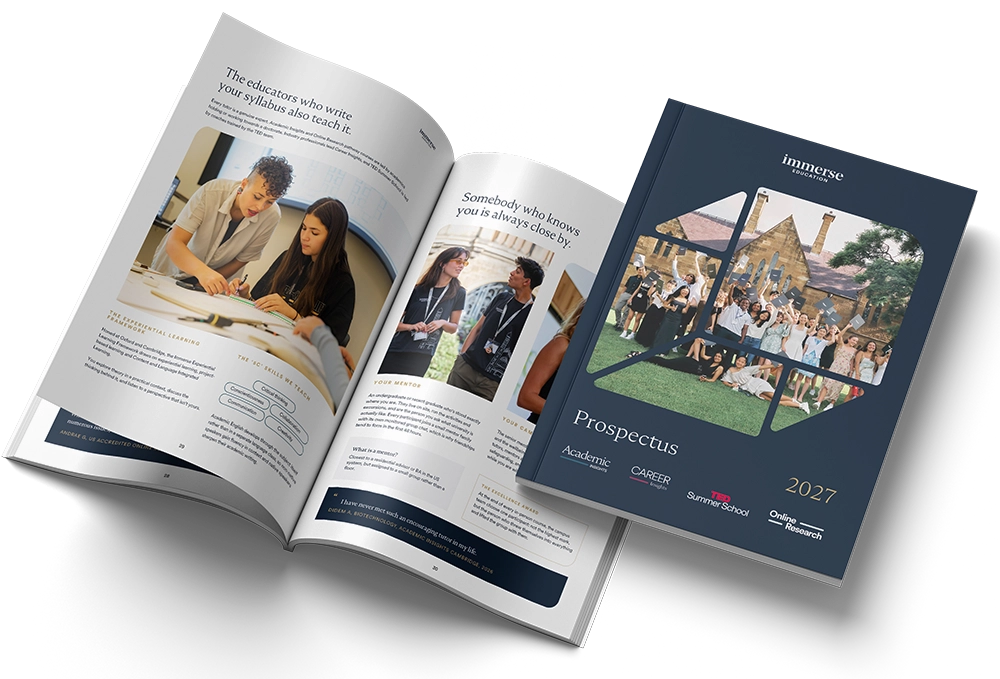
You’ll find 15 stock market and finance camps here, from one-week intensives at Bentley and Trulaske to online courses from Stevens and Wake Forest. The main split is between residential university camps, local day camps, and fully online options you can join from anywhere. Most suit high school students in grades 9 to 12, and several, including Young Wall Street and Purdue Northwest’s camp, are free. Immerse Education’s Career Insights pathway offers two-week Banking & Finance courses in London and New York for ages 15 to 18, with a bursary programme available.
Learning how equity valuation, market liquidity, and portfolio risk function gives teenagers an insider view into how billions of dollars shift across global exchanges every single day. If you look at fields like investment banking, hedge fund management, corporate finance, or economic research, understanding how shares are bought and sold sets a solid baseline for your future studies. Developing financial literacy during high school sets you up for a smooth transition into university economics and business courses. If you want to construct that foundation, a specialized stock market camp is a fantastic place to start.
Think about spending a few weeks tracking price movements, evaluating income statements, or managing simulated portfolios alongside other teenagers who share your interests. You will formulate trade theses, test trading methods using live financial tools, and observe how stock exchanges react to economic news in real time.
What kinds of stock market camps for high school students are there?
Your selection links directly with your specific academic targets. Certain camps focus heavily on quantitative finance, algorithmic trading, and statistical analysis, which suits students who love mathematics and computer code..
Many camps operate directly inside university trading labs equipped with professional financial software, while online finance courses and virtual trading simulations fit around your personal schedule. The top camps always give participants opportunities to execute mock trades, defend portfolio choices, and analyze market trends rather than just listening to passive lectures.
To help you find the right fit, we’ve curated a list of 15 stock market camps for high school students worth exploring!
15 Stock Market Camps for High School Students
1. Trulaske Wall Street Summer Camp
Location: In person at Cornell Hall, Robert J. Trulaske, Sr. College of Business, University of Missouri, Columbia, with overnight residence hall stay or a commuter option
Cost/Stipend: $1,000 for the overnight camp, including room and board; commuter options are available
Acceptance rate/cohort size: Limited to 35 campers
Dates: June 15th to 18th, 2026 (2027 dates not yet posted)
Application Deadline: March 13th, 2026, with selected campers notified by April 3rd (2027 deadline not yet posted)
Eligibility: Rising high school juniors and seniors | International eligibility not specified
You explore capital markets, investing, and finance careers through experiential learning rather than lecture alone. You assemble a mock portfolio and track its performance across the camp, then compete in a stock pitch competition against your fellow campers.
Trulaske faculty teach your classes in Cornell Hall, and you get to explore the Bloomberg Terminal along the way. Living in the residence halls and eating in campus dining gives you the daily rhythm of a business student rather than a visitor. Evening activities include a movie night at the MU Student Center and a night at MizzouRec.
Why it stands out: You gain practical exposure to capital markets through Bloomberg Terminal exercises, mock portfolio management, and a stock pitch competition, all while living like a Mizzou business student.
2. Immerse Education's Banking & Finance Summer School

Location: London and New York
Cost: Varies; summer school scholarship available through our bursary programme
Acceptance rate/cohort size: Selective; an average of 7 participants per class
Application Deadline: Multiple cohorts with rolling admissions
Program Dates: 2 weeks during the summer
Eligibility: High school students worldwide aged 15-18; open to international students
Immerse Education's Career Insights pathway in Banking & Finance offers high school students an insight into financial markets and banking operations. In the program, you will explore different career paths through real-world projects, workshops, and network with industry leaders. The program is designed by industry experts to offer a professional world experience. You will explore various financial sectors based on your interests and develop the skill set of communication, problem-solving, and critical thinking required in the field.
You will learn key concepts like the banking system, the stock market, and financial analysis. You will learn how financial organizations plan to reduce financial risk while protecting both the company and clients. By the end, you will have expanded your knowledge in the field, gained professional working experience, developed skills, and earned a certificate.
Why it stands out: You will learn investment strategies, financial analysis, and case studies. You will work on real-world projects and expert-led workshops and earn a certificate.
3. Young Founders Lab
Location: This program is 100% virtual, with live, interactive workshops
Cost: Varies depending on program type. Full financial aid available
Acceptance rate/cohort size: Selective
Dates: Multiple cohorts throughout the year, including summer, fall, winter, and spring
Application Deadline: Varies according to cohort. You can access the application link here!
Eligibility: The program is currently open to all high school students worldwide
The Young Founder’s Lab is a start-up boot camp founded and run by Harvard entrepreneurs. In this program, you will work towards building a revenue-generating start-up that addresses a complex problem. You will also have the opportunity to be mentored by established entrepreneurs and professionals from Google, Microsoft, and X.
Apart from building the start-up itself, you will also participate in interactive classes on business fundamentals and business ideations, workshops and skill-building sessions, case studies, panel discussions, and more. The program is an excellent opportunity to delve into the world of business in high school and have a space to explore multiple theoretical as well as practical frameworks that lead to a successful business. You can check out the brochure for the program here.
Why it stands out: You work on building a startup with expert mentorship.
4. Wharton Global Youth Essentials of Finance
Location: In person and residential on the University of Pennsylvania campus in Philadelphia
Cost/Stipend: $8,599 for 2027 (+ $100 non-refundable application fee), including housing and most meals
Acceptance rate/cohort size: Selective; cohort size not disclosed
Dates: Two-week sessions running from June to August 2027
Application Deadline: Priority deadline January 27th, 2027 | Final deadline March 19th, 2027 | Scholarship application due February 3rd, 2027
Eligibility: Students in grades 9 to 11 | International applicants are welcome
You work through the theory and methods of finance using a curriculum developed by Wharton Professor Michael Roberts, who heads the Wharton Financial Analytics Initiative. The material integrates personal and corporate finance, covering the time value of money, interest rates, compounding, discounted cash flow, and net present value.
Your team analyzes a publicly traded company and presents an investment recommendation, which is the closest thing here to genuine equity research. Instructors deliver daily lectures, Penn teaching assistants lead small-group discussions, and the Wharton Global Youth Speaker Series brings in notable Wharton faculty. Completing the program earns you a Wharton Global Youth Certificate of Completion.
Why it stands out: The two-week residential program introduces you to corporate finance, fixed income, and valuation models through case studies and a team equity evaluation capstone project.
5. Bentley Wall Street 101: Stock Market and Investment Research
Location: Bentley University’s Trading Room in Waltham, Massachusetts, with in-person and online weeks
Cost/Stipend: Not specified on the official course page
Acceptance rate/cohort size: Two sections run during in-person weeks; Section 1 is for credit and Section 2 is non-credit
Dates: June 7th to 11th, 2027 (online) | June 14th to 18th, June 21st to 25th, June 28th to July 2nd, and July 5th to 9th, 2027 (in person)
Application Deadline: Not specified
Eligibility: Rising high school juniors and seniors | Open to international students, with past participants from across the globe
You learn financial statement analysis, forecasting, risk assessment, and the valuation models Wall Street analysts actually use. You prepare and present an industry-standard stock pitch, which trains you to communicate a recommendation to clients and investment managers rather than merely reach one.
In-person students work in Bentley’s 5,000-square-foot Trading Room, and all students get access to Bloomberg, FactSet, Morningstar Direct, and CapIQ. Bentley faculty teach alongside finance professionals, and each course is nearly equivalent to a college-level course. Trading simulations, quizzes, and group presentations build the capital markets instinct that reading alone cannot.
Why it stands out: You gain practical equity analysis and valuation experience using industry-standard platforms like Bloomberg and FactSet inside a dedicated trading room.



6. Fordham Gabelli Finance Institute: Wall Street in the Classroom
Location: In person at Fordham University’s Gabelli School of Business, Rose Hill campus, Bronx, New York
Cost/Stipend: Not specified on the official program page
Acceptance rate/cohort size: Not disclosed
Dates: One week during the summer
Application Deadline: Not specified; the program accepted applications for summer 2026
Eligibility: Any high school student interested in finance | International eligibility not specified
You cover the foundations of financial markets across a single concentrated week at the Gabelli School of Business. The curriculum spans personal finance, investing, economics, and innovation, with instruction from a former Wall Street global equity trader.
Being in New York places you within reach of the financial district itself, so the market you are studying operates a subway ride away. The format emphasizes practical exposure over abstract theory, which suits students still deciding whether finance appeals to them. You finish with a working vocabulary for markets and a clearer sense of the field.
Why it stands out: Guest speakers from top finance companies and recent Gabelli School alumni visit the classroom, so you hear how finance careers unfold in practice.
7. Stevens Finance and Investing: 1-Week Intensive Virtual Bootcamp
Location: Online, run by the Stevens School of Business in Hoboken, New Jersey
Cost/Stipend: $1,000
Acceptance rate/cohort size: Not disclosed
Dates: August 3rd to 7th, 2026 (2027 dates not yet posted)
Application Deadline: Not specified
Eligibility: Rising high school sophomores, juniors, and seniors | International eligibility not specified
The program simulates the working experience of a professional portfolio manager rather than teaching finance in the abstract. You learn equity analysis, risk assessment, and portfolio diversification, then apply each to live decisions.
Using the S&P Capital IQ academic platform, you gather data, analyze company performance, run backtests, and manage both real and simulated portfolios. Twice a day after lectures, teaching assistants guide you through practical exercises in breakout sessions. The week builds the analytical foundation that investment management assumes you already possess. You can apply here.
Why it stands out: You can work toward S&P certifications including Capital IQ Pro 101, Pro 201, Banking 101, and Ratings Direct 101, industry credentials that appear on a résumé rather than only a transcript.
8. USF Bulls Finance Camp

Location: In person at the Muma College of Business, USF Tampa campus, Florida, with an optional residential add-on
Cost/Stipend: Not specified on the official camp page
Acceptance rate/cohort size: Capacity of 60 students
Dates: Five days during the summer (2027 dates not yet posted)
Application Deadline: Not specified
Eligibility: High school students in grades 9 to 12, including those who have completed eighth grade | International eligibility not specified, though recent cohorts have included students from around the world
You move across personal finance, investments, corporate finance, and fintech in a single week, which is broader coverage than most camps attempt. Interactive lectures alternate with group work, campus tours, and conversations with current USF finance students.
You learn about stock markets and investments from USF faculty, then put that knowledge to work in a group finance competition at the end of the week. Experts from the USF Federal Credit Union lead sessions across the week. The pace assumes no prior background, so the sessions start from first principles. You can start applying here.
Why it stands out: You get a broad introduction to personal finance, corporate finance, and fintech from USF faculty and credit union experts, plus a taste of college life on the Tampa campus.
9. Young Wall Street Summer Camp
Location: In person at the University of Memphis, Tennessee
Cost/Stipend: Free to attend
Acceptance rate/cohort size: Not disclosed
Dates: Two weeks, June 8th to 19th, 2026 (2027 dates not yet posted)
Application Deadline: Not specified
Eligibility: High school students with no prior experience and no GPA requirement | International eligibility not specified
You build your first investment portfolio during the camp rather than studying one hypothetically. Stocks, saving, risk, compound growth, and everyday financial choices are taught in plain enough terms to act on immediately. The program treats your first portfolio as the starting point for long-term wealth building, and organizers report that 90 percent of participants start investing within six months.
You also practice the vocabulary and mindset to discuss money with clarity instead of intimidation. The curriculum connects personal goals and family legacy to financial choices, framing investing as a route to a future you can describe. You can join the waitlist here.
Why it stands out: This tuition-free camp asks for no experience and no GPA minimum, so you can build your first portfolio from scratch alongside other first-time investors.
10. WKU Personal Financial Planning Camp
Location: In person and residential at Western Kentucky University in Bowling Green, hosted by the Department of Finance and the Center for Financial Success
Cost/Stipend: Tuition covers all meals, dorm housing, activities, and a camp t-shirt (2027 pricing not yet posted)
Acceptance rate/cohort size: Not disclosed
Dates: June 14th to 18th, 2026, Sunday through Thursday (2027 dates not yet posted)
Application Deadline: Not specified
Eligibility: Students who will be high school sophomores, juniors, or seniors in the fall | International eligibility not specified
You gain the money management skills that apply regardless of which career or major you eventually choose. The camp is built around practical financial habits, with an emphasis on what you will need in college and immediately after.
You compete in a team-based financial planning case study and present your plan, which pulls several areas of personal finance into a single project. You also visit local financial planning firms and meet professionals working in financial planning, investment advising, and banking. Top WKU finance students serve as trained camp counselors throughout the residential week.
Why it stands out: The camp pairs personal finance training with visits to regional financial planning firms and a team financial plan competition.
11. Purdue University Northwest Personal Finance and Investments Summer Camp
Location: In person at Purdue University Northwest’s Hammond campus, Indiana
Cost/Stipend: Free
Acceptance rate/cohort size: Not disclosed
Dates: July 6th to 10th, 2026, Monday to Friday, 9:00 am to 3:00 pm (2027 dates not yet posted)
Application Deadline: Not specified; registration is through PNW’s camp event page
Eligibility: Campers aged 13 to 17 | International eligibility not specified
You take part in discussions on managing your own money before moving into banking, budgeting, and investments. Classroom activities hosted by PNW’s College of Business ground each concept in a concrete task, such as building a personal financial statement or creating a budget.
You then invest through a stock market simulation, which converts the groundwork into live decisions about allocation and risk. Past sessions have included career spotlights with professionals from the finance industry. PNW provides resource materials on each topic so the learning continues after the camp closes.
Why it stands out: You build core financial literacy through a stock market simulation, practical budgeting exercises, and a look at careers in finance, all at no cost.
Join the Immerse Education 2027 Essay Competition
Follow the instructions to write and submit your best essay for a chance to be awarded a 100% scholarship.
12. Gallaudet Financial Wizards
Location: In person and residential at Gallaudet University in Washington, D.C.
Cost/Stipend: Free; the program fee covers classes, housing, meals, transportation, and outings
Acceptance rate/cohort size: Not disclosed
Dates: One week during the summer
Application Deadline: All forms must be completed by May 1st
Eligibility: Deaf or hard-of-hearing students entering 10th, 11th, or 12th grade | International eligibility not specified
You explore finance and administration careers spanning corporate finance, accounting, financial analysis, and investment banking. The program is built to strengthen your financial literacy, with the stock market as a core focus of the week.
You also meet Gallaudet faculty, explore the campus, and stay in the university’s dormitories to get a taste of college life. Outings and recreational activities round out the week alongside the financial content. The program is a partnership between CSD Learns and the SIFMA Foundation.
Why it stands out: This fully funded residential program offers deaf and hard-of-hearing students a financial literacy curriculum built by CSD Learns and the SIFMA Foundation.
13. Wake Forest Online Immersion: Investing, The Future of Finance

Location: Online through the Wake Forest University Online Immersion Program
Cost/Stipend: $1,595, with need-based scholarships available
Acceptance rate/cohort size: Not disclosed
Dates: Multiple 1-, 2-, and 4-week sessions, with 20 to 30 hours of total coursework
Application Deadline: Rolling, with tuition due the day before your chosen course starts
Eligibility: Students aged 13 and over | Open to international students, as the asynchronous format works from anywhere
You examine how financial markets work today, from how companies attract investors to the role shareholders play. Wake Forest faculty design the video lessons, and active industry experts share how they approach today’s markets.
You complete the coursework asynchronously with support from an assigned mentor, so you can fit it around your schedule. The course closes with a capstone in which you pick a publicly traded company and write an analyst report on how the future of finance is affecting its practices and prospects.
Why it stands out: You are paired with a Wake Forest undergraduate mentor who supports your work as you build an analyst report on a publicly traded company.
14. NYIF: Young Equity Analyst
Location: Online
Cost: $1,990
Acceptance rate/cohort size: Small live virtual cohort
Dates: Two-week live online sessions; first session August 10-21
Application Deadline: Rolling registration
Eligibility: Ages 15-18; international students welcome\
Founded by the New York Stock Exchange, NYIF brings Wall Street practitioners into a live virtual classroom for this hands-on equity analysis course. You learn to read financial statements and ratios, work through the relationship between time and the cost of money, and study how industries perform across market cycles.
You build a Free Cash Flow model and calculate your own fair value for a stock, using the same valuation logic that professional analysts use. Sessions are taught by CFAs and former managing directors, making this one of the more technical online finance courses for high school students you will find.
Why it stands out: You'll build a discounted cash flow model and reach your own valuation for a company's stock.
15. Cornell Precollege: Risk Management in Emerging Markets
Location: Online
Cost: $5,820 for the three-credit course
Acceptance rate/cohort size: Selective
Dates: Three-week online session, June 22nd - July 10th (asynchronous)
Application Deadline: May 14th
Eligibility: High school students who have completed grade 9; international applicants welcome
This online Cornell course looks at the opportunities and risks of operating in emerging markets such as China, India, Brazil, Mexico, and South Africa. Through readings, lectures, and case discussions, you learn the major types of risk businesses face abroad and the leading approaches to assessing and managing them.
You practice evaluating risk and building business strategies suited to volatile, fast-growing economies. It is a strong choice if your interests lean toward global finance and international strategy.
Why it stands out: You'll assess country and market risk for economies like China, India, and Brazil, and design strategies around it.
Frequently asked questions: Stock Market Camps for High School Students
What do you learn at a stock market camp?
You learn how stocks are valued, how portfolios balance risk and return, and how to explain an investment decision to other people. Most camps mix lectures with practice, such as Trulaske’s mock portfolio and stock pitch competition or Bentley’s trading simulations. Wharton’s Essentials of Finance also covers corporate finance and fixed income before your team presents a recommendation on a publicly traded company. If you want a broader sense of what you learn in finance, these camps make a practical first step.
Do you need investing experience to join a stock market camp?
No, most stock market camps start from the basics and welcome complete beginners. Young Wall Street asks for no experience and no GPA, and USF’s Bulls Finance Camp starts from first principles. A few programs expect more background, so check each listing first. Bentley recommends basic familiarity with the stock market before you take its Stock Market and Investment Research course, and Wharton prefers applicants who have shown an understanding of economics or business.
How much do stock market camps for high school students cost?
Costs range from free to more than $8,000, depending on length and whether housing is included. Young Wall Street, Purdue Northwest’s camp, and Gallaudet’s Financial Wizards cost nothing to attend, while Stevens charges $1,000 for its online week and Trulaske charges $1,000 for an overnight camp with room and board. Wharton’s two-week residential program sits at the top end at $8,599 for 2027. Wake Forest offers need-based scholarships and Wharton has a limited number of awards, so ask about aid early.
Can international students attend stock market camps in the US?
Yes, several camps accept international students, though the format matters. Wharton’s Essentials of Finance welcomes international applicants, and Bentley’s Wall Street 101 has drawn participants from across the globe. Online options like Wake Forest’s investing course are asynchronous, so you can take part from any time zone. Outside the US, Immerse Education’s Career Insights pathway in Banking & Finance welcomes students aged 15 to 18 from around the world in London. Many day camps don’t list international eligibility, so email the organizers before you apply.
Do stock market camps help with college applications?
They can, especially when you come away with something concrete to show. A finished stock pitch, an analyst report, or a portfolio you managed gives you specific material for essays and interviews. Some programs add formal credentials: Wharton and Wake Forest award certificates of completion, and Bentley offers a for-credit section of its stock market course. Immerse Education’s Career Insights pathway also offers an optional accredited route from age 14, worth 8 UCAS points or 3 US college credits.
What finance careers can a stock market camp help you explore?
A stock market camp can introduce you to equity research, trading, portfolio management, financial planning, and investment banking. Gallaudet’s Financial Wizards covers corporate finance, accounting, financial analysis, and investment banking, while WKU’s camp focuses on personal financial planning and investment advising. Hearing from professionals during these programs helps you see which path suits your strengths. Once you have a direction, finance internships for high school students are a natural next step.
Building market skills for your future career
Reading a chart, defending a stock pick, and explaining risk to a room of peers are skills you can start building well before university.
The best stock market camps for high school students let you test those skills against real data, live tools, and honest feedback from instructors.
Once you know whether trading, analysis, or financial planning excites you most, you can choose internships, courses, and majors with far more confidence and purpose.
To map out where those skills could take you next, browse our Career Exploration blogs for practical guides on finance, business, and other fields.






Unlock Inspiring Opportunities with the Immerse Education Newsletter
Join our newsletter to stay ahead with exclusive updates, exciting programme highlights, and expert insights from the world of immersive education.
Learn how Immerse can transform your life
An in-depth overview of our university and career preparation programmes
Get a glimpse into the life of an Immerse participant
Find the right programme for you with sample timetables, location showcases, and more