15 Summer Programs for High School Seniors

TL;DR
On this page, you’ll find options for the summer before or after your senior year, from fully funded programs like CMU’s AI Scholars to paid pre-college courses at Notre Dame, Columbia, and Harvard. Some focus on lab research, while others offer college-style classes, math intensives, or short career camps. Notre Dame’s two-week Summer Scholars program costs $5,200 for 2027, including housing and dining. Immerse Education’s Academic Insights pathway welcomes students aged 13 to 18 from around the world, with two-week courses in cities including Cambridge, Oxford, and Toronto.
For many students, the summer before college represents a unique opportunity to deepen academic interests, explore future career paths, and gain experience beyond the traditional high school classroom. Summer programs for high school seniors provide structured learning environments where you can engage with advanced subjects, develop practical skills, and experience aspects of university life before beginning your undergraduate journey.
These programs span a wide range of disciplines, including engineering, medicine, business, computer science, law, psychology, economics, public policy, and the humanities. Depending on the program, you may participate in university-level coursework, laboratory research, collaborative projects, seminars, workshops, and mentorship opportunities led by faculty members, researchers, and industry professionals.
What kinds of summer programs are available for high school seniors?
Summer programs for high school seniors vary significantly in focus, structure, and intensity. Some programs offer university-level academic courses that allow you to explore potential majors, while others emphasize lab research, professional development, leadership training, or career exploration.
Universities, research institutions, government organizations, and educational foundations offer programs across a wide range of disciplines. You may study advanced academic topics, participate in laboratory research, engage in fieldwork, collaborate on group projects, or attend lectures and workshops designed to mirror undergraduate learning environments. Some programs also provide opportunities to earn college credit, receive mentorship from faculty and researchers, or see practical applications of academic subjects.
15 Summer Programs for High School Seniors
1. Summer Physics Camp
Location: New Mexico School for the Arts, Santa Fe, New Mexico, United States
Cost: Free, with lunch and snacks provided daily and a $350 stipend when you complete the program; a limited number of free residential spots for students living more than 60 miles from Santa Fe
Program Dates: June 8th to 19th, Monday to Friday, 9 a.m. to 4:30 p.m. (2026 dates; 2027 dates not yet posted)
Deadline: April 1st at 5 p.m. (2026)
Eligibility: Students living in New Mexico, New Mexico tribal communities, or East Hawaii Island who have completed Algebra I or a higher-level math course and can commit to full participation. Acceptance isn’t based on GPA. International students are not eligible.
This two-week STEM camp introduces you to scientific concepts through projects in physics, engineering, bioengineering, chemistry, computer programming, and cybersecurity. You’ll investigate the theme “Invisible Worlds: Physics Beyond What Our Eyes Can See,” exploring forces such as electricity, gravitational waves, and the quantum realm. You’ll learn alongside scientists and engineers from Los Alamos National Laboratory and Sandia National Laboratories, who help design and lead the activities.
You’ll also explore educational and career pathways at local colleges and Department of Energy national laboratories. Workshops cover professional skills such as writing a résumé and applying and interviewing for a job. When you finish, you can join the national SAGE Journey program, a community focused on future leadership in science and technology.
Why it stands out: You learn directly from national laboratory scientists and engineers at no cost, and you earn a stipend for completing the program.
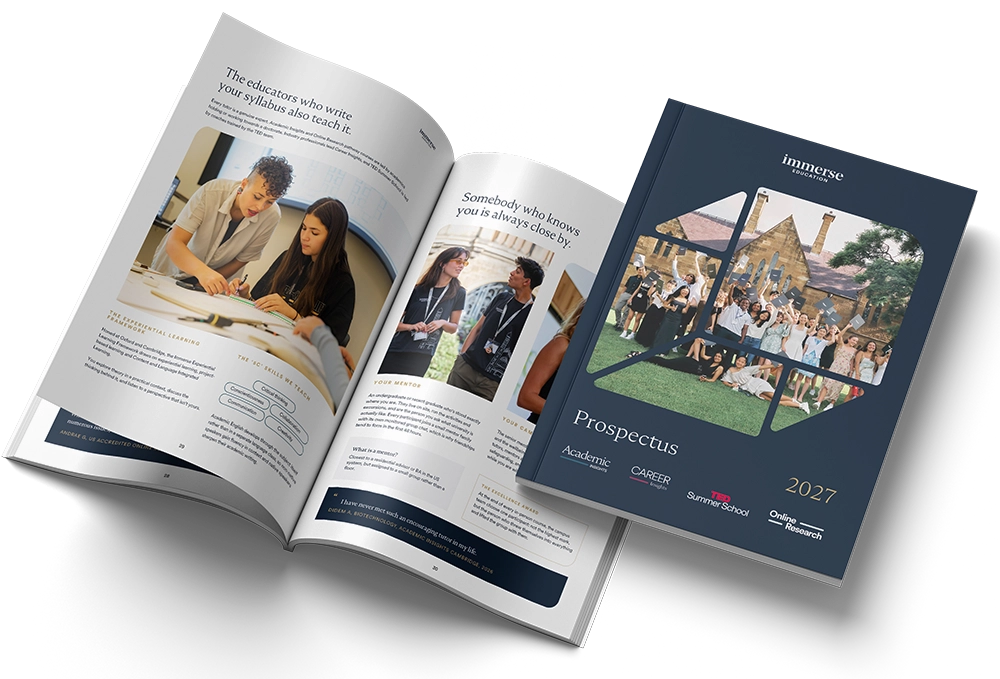
2. Immerse Education’s Pre-University Summer School

Location: Cambridge, London, Oxford, Singapore, Sydney, and Toronto
Cost: Varies; summer school scholarship available through our bursary programme
Acceptance rate/cohort size: Selective; an average of 7 participants per class
Program Dates: 2 weeks during the summer
Application Deadline: Multiple cohorts with rolling admissions
Eligibility: Students aged 13 to 18; open to international students from around the world
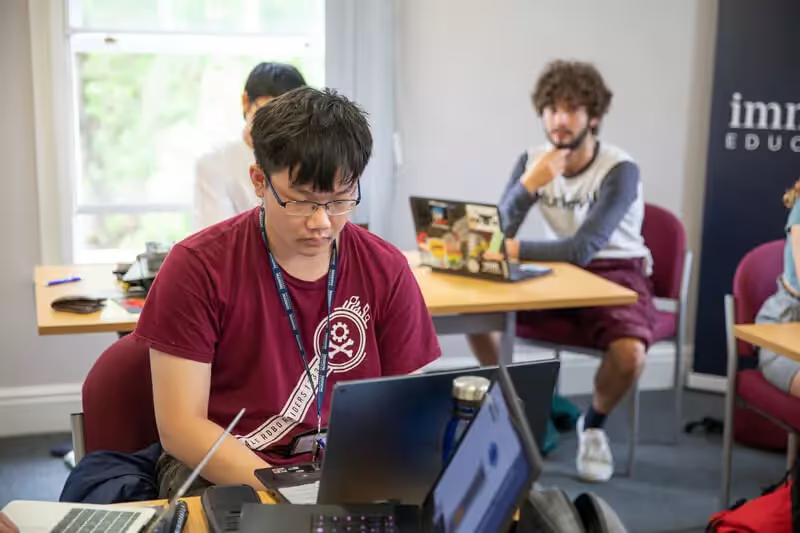
Immerse Education’s Academic Insights pathway gives you two weeks of undergraduate-level study in one subject while you live and learn in cities such as Cambridge, Oxford, and Toronto. You’ll learn in tutor-led seminars averaging 7 students, with two 1:1 tutorials, masterclasses, and guest speakers built into your timetable.
You can choose from more than 20 subjects, including Architecture, Artificial Intelligence, Business Management, Economics, Engineering, Law, and Medicine. By the end of the course, you’ll complete a personal project and present it on the final Friday. From age 14, you can also opt in to earn 8 UCAS points or 3 US college credits. You can find more details about the application here.
Why it stands out: You study one subject at undergraduate level in a small group, supported by mentors outside class, and leave with a personal project you can point to in future applications.
3. Lumiere Research Scholar Program
Location: Remote, you can participate in this program from anywhere in the world!
Cost: Varies depending on program type. Full financial aid available.
Application Deadline: Varies by cohort.
Program Dates: Varies by cohort: summer, fall, winter, or spring. Options range from 12 weeks to 1 year.
Eligibility: You must be currently enrolled in high school and demonstrate a high level of academic achievement.
The Lumiere Research Scholar Program is a rigorous research program tailored for high school students. The program offers extensive 1-on-1 research opportunities for high school students across a broad range of subject areas. The program pairs high school students with Ph.D. mentors to work 1-on-1 on an independent research project. At the end of the 12-week program, you’ll have developed an independent research paper!
You can choose research topics from subjects such as psychology, physics, economics, data science, computer science, engineering, chemistry, international relations, and more. You can find more details about the application here, and check out students’ reviews of the program here and here.
Why it stands out: You get 1-1 mentorship with a Ph.D. mentor and produce an independent research project by the end.
4. University of Notre Dame Summer Scholars
Location: University of Notre Dame, Notre Dame, Indiana, USA (residential)
Cost: $5,200 for 2027, covering tuition, housing, dining, extracurricular activities, class field trips, and the $300 enrollment fee; $75 application fee; limited need-based partial to full-tuition scholarships available
Program Dates: Session I: June 19th to July 3rd, 2027; Session II: July 10th to 24th, 2027
Deadline: February 17th, 2027, including the financial aid request form; applications open October 19th, 2026, and optional test scores are accepted until January 31st, 2027
Eligibility: Current sophomores and juniors who will be at least 16 by August 1st, 2027, with strong academic standing and solid extracurricular activities. International applicants are welcome and must submit an English proficiency test if they don’t attend an English-speaking high school.
The University of Notre Dame Summer Scholars program is a two-week residential academic experience where you’ll study a college-level subject alongside other high school students. You’ll choose from courses across a wide range of disciplines, including an Accounting course supported by a KPMG grant for students who qualify. The program emphasizes discussion, coursework, and collaborative projects that reflect university-level expectations.
Outside the classroom, you’ll live on campus and experience residential college life as part of the Notre Dame community. Your application includes a transcript, a counselor report, and a teacher recommendation. By the end of the program, you’ll gain deeper subject knowledge, greater confidence with college-level coursework, and a clearer understanding of university academics.
Why it stands out: You spend two weeks living on Notre Dame’s campus while taking a college-level course, with need-based scholarships that can cover full tuition.
5. Ashoka Young Scholars Programme (YSP)
Location: Ashoka University, Sonepat, Haryana, India (residential)
Cost: ₹49,500 + GST (5-day programmes) or ₹85,000 + GST (10-day programmes), depending on stream
Program Dates: Edition 1 begins May 18th and Edition 2 begins June 1st, with 5-day and 10-day options (2026 dates; 2027 dates not yet posted)
Deadline: 2026 applications have closed; updates on the next cycle will be posted on the programme website
Eligibility: Students entering grades 9 to 12; international eligibility not specified on the programme page
The Ashoka Young Scholars Programme (YSP) is a certified, residential pre-college programme that introduces you to liberal arts and sciences through interdisciplinary academic study. You’ll examine streams such as the Sciences, Economics, Artificial Intelligence, Psychology, Computational Thinking, Design Thinking, International Affairs, Writing with Impact, Business, and Policy. The programme emphasizes university-style learning through faculty-led sessions, discussions, and collaborative work.
You’ll engage with Ashoka faculty and industry leaders, and past cohorts have heard from figures such as MakeMyTrip founder Deep Kalra and Info Edge founder Sanjeev Bikhchandani. Beyond academics, you’ll take part in networking, cultural programming, and campus activities that mirror aspects of university life. By the end of the programme, you’ll gain greater clarity about potential academic interests and a stronger understanding of liberal arts education.
Why it stands out: It offers an interdisciplinary residential university experience with multiple academic streams and direct interaction with Ashoka faculty and industry leaders.



6. University of Wisconsin - Whitewater Social Media Marketing Camp
Location: Whitewater, Wisconsin, USA
Cost: Resident: $650 | Commuter: $500 (2026)
Program Dates: July 12th to 17th (2026 dates; 2027 dates not yet posted)
Deadline: Register at least 10 days before the program begins; early registration is recommended as spaces may fill quickly
Eligibility: Students in grades 9 to 12 and graduating seniors. International eligibility not specified.
The University of Wisconsin - Whitewater Social Media Marketing Camp is a five-day residential program that introduces you to digital marketing through content creation and client-based projects. You’ll create original social media content for real clients while filming at locations including Lake Geneva, the Wisconsin State Capitol, and a sports organization. The program emphasizes video production, content strategy, personal branding, and digital storytelling.
You’ll edit and refine your work alongside UW - Whitewater marketing students and faculty before presenting your results. You’ll also meet alumni working in marketing, entrepreneurship, sports, and social media to learn about different career paths. By the end of the program, you’ll build a professional portfolio containing short-form videos, a photo carousel, a creator brand sheet, and presentation experience.
Why it stands out: You graduate with a professional digital marketing portfolio built through client projects and location-based content creation.
7. Stanford University Mathematics Camp (SUMaC)
Location: Stanford University, Stanford, California, United States (residential and online options)
Cost: Varies by residential or online option; financial aid available
Program Dates: Residential: June 21st to July 17th; online sessions: June 15th to July 3rd and July 6th to 24th (2026 dates; 2027 dates not yet posted)
Deadline: 2026 applications have closed; 2027 deadline not yet posted
Eligibility: Students currently in 10th or 11th grade; open to students from around the world
SUMaC is an intensive mathematics program for students with advanced preparation and a strong interest in proof-based problem solving. You’ll study abstract algebra and number theory or algebraic topology, well beyond the standard high school curriculum. The program emphasizes mathematical reasoning, proof writing, and in-depth exploration of advanced topics through lectures, guided research, and group problem solving.
The residential program serves 40 participants and the online program serves 64, with an average class size of 16. Online students also attend guest lectures from mathematicians and others who use mathematics in their work. Courses carry no credit or grades, so the focus stays on mathematical enrichment, and you’ll finish by presenting a final research project. By the end of the program, you’ll have developed deeper proof-based reasoning skills and greater familiarity with advanced mathematical study.
Why it stands out: You study proof-based mathematics at a level that extends well beyond typical high school coursework while working alongside a highly selective cohort of mathematically advanced students.
8. Shiv Nadar University Young Thinkers Robotics Summer Camp
Location: Shiv Nadar University, Delhi NCR, India (residential)
Cost: ₹35,000 + GST (includes all meals, accommodation, stationery kits, and a goodies bag)
Program Dates: June 1st to 6th (2026 dates; 2027 dates not yet posted)
Deadline: 2026 registrations have closed; seats are limited and offered on a first-come, first-served basis
Eligibility: Students in grades 9 to 12 from all academic backgrounds. International eligibility not specified.
The Shiv Nadar University Young Thinkers Robotics Summer Camp is a six-day residential program, run in partnership with Milagrow Education, that introduces you to robotics, artificial intelligence, and automation. You’ll build your own robots using robotics kits while learning from scientists, engineers, and industry experts. The camp includes innovation challenges with prizes worth ₹10 lakhs, giving you a chance to test your designs against other teams.
You’ll have access to university labs and materials, along with mentorship and career guidance in robotics, AI, and tech. Participants can also be considered for paid internships and industry projects. By the end of the program, you’ll receive a Certificate of Participation from Shiv Nadar University and strengthen your understanding of robotics.
Why it stands out: You build robots through project work while receiving mentorship from scientists, engineers, and industry professionals in a residential university setting.
9. Columbia University Pre-College Summer Program
Location: Columbia University, New York City, New York, United States (residential, commuter, or online)
Cost: NYC Residential Summer (3 weeks): $12,838; NYC Commuter Summer (3 weeks): $6,381; Online Summer (2 weeks): $4,018 per course (2027 estimates), plus an application fee; need-based aid covering 25% to 50% of the cost is available for U.S. residents in commuter and online programs
Program Dates: Summer sessions lasting one to three weeks, depending on format (2027 dates on the program’s Dates and Deadlines page)
Deadline: Rolling admissions, with courses often filling before the deadline; financial aid deadline February 10th, 2027
Eligibility: Rising 9th through current 12th graders, domestic and international. NYC Residential Summer students must be at least 15 and turn 16 by December 31st of the year they attend.
Columbia’s Pre-College Summer Program introduces you to university-level study through residential, commuter, or online courses. You can choose from more than 100 courses across a dozen subject areas, from architecture and chemistry to sports business and filmmaking. The program emphasizes intellectual exploration, critical thinking, and active class participation.
You’ll apply academic concepts through class discussions, assignments, and project-based learning while experiencing the expectations of university study. Residential students also experience campus life at a major research university in the heart of New York City. Courses are non-credit, but you’ll receive a Certificate of Participation and a personalized evaluation from your instructor.
Why it stands out: You choose from residential, commuter, or online formats while studying college-style courses at Columbia University.
10. MIT Beaver Works Summer Institute (BWSI)
Location: Massachusetts Institute of Technology (MIT), Cambridge, Massachusetts, United States
Cost: Free for families with income and assets under $200,000; $3,000 for families above $200,001 (2027); housing not included for in-person programs
Program Dates: July (2027 dates not yet posted)
Deadline: Register now for the online prerequisite course, which opens February 1st; registered students receive the summer application in March, nominations close March 31st, and teacher recommendations are due April 2nd
Eligibility: High school students who live or attend high school in the United States and complete the online prerequisite course. International students are not eligible.
The MIT Beaver Works Summer Institute is a STEM-focused summer program built around project-based coursework in fields such as artificial intelligence, autonomy, radar, and satellites. Before you can be considered, you must complete an online prerequisite course, and instructors track your participation and progress as part of admissions.
You’ll apply technical concepts through team projects while developing problem-solving and analytical skills. The application includes three short essays of up to 500 words each, a teacher or mentor recommendation, and evidence of technical ability through coursework, grades, or test scores. The online courses stay open to independent learners even if you aren’t accepted into the July program. By the end of the program, you’ll gain exposure to applied STEM fields, collaborative project work, and the expectations of advanced technical study.
Why it stands out: Admission is tied to demonstrated engagement with rigorous prerequisite coursework rather than grades alone.
11. NIH Summer Internship Program (SIP)
Location: National Institutes of Health (NIH) campuses, including the main campus in Bethesda, Maryland, United States
Cost: Paid; stipends are adjusted annually and based on education level; NIH does not provide housing
Program Dates: Between May 10th and August 31st, 2027, with exact dates set with your Principal Investigator
Deadline: January 26th, 2027, at 12 p.m. ET; reference letters due February 2nd, 2027
Eligibility: U.S. citizens or permanent residents. Graduating high school seniors can apply if they will be 18 by September 30th, 2027 (applicants who are 17 on June 1st, 2027, must live within 40 miles of an NIH campus) and will graduate before the internship starts. International students are not eligible.
The NIH Summer Internship Program is a full-time research internship that places you within an active research group in the NIH Intramural Research Program. You’ll work under a Principal Investigator in fields such as biology, engineering, epidemiology, psychology, mathematics, chemistry, physics, computer science, and bioinformatics. To be considered, you reach out to NIH Principal Investigators whose work interests you and point them to your completed application.
You’ll engage with current research questions while learning how research is designed, conducted, and presented. Additional programming includes professional development, career services, a Graduate and Professional School Fair in July, and Summer Poster Day in early August. By the end of the program, you’ll gain practical research experience, exposure to scientific careers, and a stronger understanding of academic and healthcare research pathways.
Why it stands out: You conduct full-time research within NIH laboratories while receiving a stipend and direct mentorship from active researchers.
Join the Immerse Education 2027 Essay Competition
Follow the instructions to write and submit your best essay for a chance to be awarded a 100% scholarship.
12. AI Scholars
Location: Carnegie Mellon University, Pittsburgh, Pennsylvania, United States (residential)
Cost: Fully funded; tuition, housing, meal plans, and select program-related field trips are covered, with limited travel assistance for families facing transportation barriers
Program Dates: June 26th to July 24th, 2027
Deadline: February 1st, 2027; decisions released April 1st, 2027
Eligibility: Students who are at least 16 by June 26th, 2027, U.S. citizens or permanent residents, and in 11th grade when they apply. No coding experience is required. International students are not eligible.
The AI Scholars program is a four-week residential program focused on artificial intelligence, computing, and project-based learning. You’ll start with a virtual Python course about a month before arrival, then take a core AI curriculum taught by Carnegie Mellon faculty. The program emphasizes collaborative group projects that apply what you’ve learned and conclude with a public symposium presentation on the final day.
You’ll also take a writing workshop and leave the program with a completed college application essay workshopped by your instructor and peers. Weekly seminars cover admissions, financial aid, and wellbeing, and field trips connect you with professionals at tech companies. By the end of the program, you’ll gain exposure to AI applications, collaborative problem-solving, and the expectations of university-level computing study.
Why it stands out: It combines fully funded residential study with project-based AI coursework, faculty mentorship, and a final symposium.
13. Simons Summer Research Program
Location: Stony Brook University, Stony Brook, New York, United States
Cost: No program fees or tuition; residential participants pay for housing and dining; $75 application fee, with waivers for significant financial need
Program Dates: June 28th to August 6th, 2027
Deadline: February 5th, 2027, with teacher recommendations due February 12th; your school must nominate you (up to three nominees per school)
Eligibility: 11th graders who are U.S. citizens or permanent residents and at least 16 by the start of the program. International students are not eligible.
The Simons Summer Research Program places you inside a faculty research group at Stony Brook University for six weeks. You’ll work alongside a faculty mentor from departments such as chemistry, computer science, geosciences, marine science, or neurobiology. You’ll run experiments, analyze data, and take on a research question of your own, then finish by presenting a research poster.
The application asks you to choose up to three faculty mentors from the published list, and prior research experience isn’t required. Participation requires full commitment throughout the program period. By the end of the program, you’ll gain experience with university-level research and a stronger understanding of academic investigation.
Why it stands out: With 60 fellows selected from 1,864 applications in 2026, it offers highly selective access to faculty-mentored research at a major research university.
14. Stanford Institutes of Medicine Summer Research Program (SIMR)
Location: Stanford University, Stanford, California, United States
Cost: No participation fee beyond the application fee; need-based stipends available
Program Dates: June 8th to July 30th (2026 dates; 2027 dates not yet posted)
Deadline: February 21st (2026)
Eligibility: Current high school juniors or seniors who are at least 16 by the start of the program and are U.S. citizens or permanent residents living in and attending high school in the United States. International students are not eligible.
The Stanford Institutes of Medicine Summer Research Program (SIMR) is an eight-week biomedical research internship for high school students interested in medicine, biology, engineering, and health sciences. You’ll conduct lab research under a one-on-one mentor in one of eight institutes: immunology, neurobiology, cancer biology, bioengineering, stem cell and regenerative medicine, cardiovascular biology, bioinformatics, or genetics and genomics.
You can also join the Bioengineering Team Internship, where teams of four to five design and build a prototype that addresses a medical need. You’ll examine scientific literature, apply research methods, analyze data, and contribute to ongoing investigations. The program ends with a poster session where you share your work with the SIMR community. By the end of the program, you’ll develop practical research skills and a clearer understanding of academic and healthcare-focused career pathways.
Why it stands out: You receive direct one-on-one mentorship in Stanford research laboratories across multiple biomedical disciplines.
15. Harvard Secondary School Program (7-Week Online)

Location: Online (Harvard Summer School, Cambridge, Massachusetts, United States)
Cost: $4,180 (4 credits) or $8,160 (8 credits), plus a non-refundable $75 application fee (2026); financial aid available for U.S. citizens and permanent residents
Program Dates: Seven weeks in the summer (2027 dates not yet posted)
Deadline: 2027 deadline not yet posted
Eligibility: High school students who meet the Secondary School Program’s admission requirements. International students may apply.
The Harvard Secondary School Program (SSP) Online is a seven-week academic program that lets you enroll in graded, for-credit Harvard Summer School courses from anywhere in the world. You’ll choose from a wide range of college-level subjects, organized into Career Pathways such as computer science and engineering, economics and public policy, and psychology and neuroscience. You must take at least 4 credit hours and can take up to 8, with one class typically worth 4 credit hours.
You’ll develop research, writing, analytical, and time-management skills expected in university settings. You’ll also have access to tutoring, the Writing Center, and virtual social and college-prep activities. According to Harvard, 89% of past attendees said their courses helped them identify what they wanted to study in college.
Why it stands out: It offers graded Harvard college courses for credit while letting you participate remotely from anywhere.
Frequently asked questions: Summer Programs for High School Seniors
What is the best summer program for high school students?
The best program is the one that matches your goals, budget, and eligibility. If you want lab research, NIH, SIMR, and Simons place you with working scientists, while SUMaC suits you if you love proof-based math. Notre Dame, Columbia, and Harvard’s Secondary School Program give you a taste of college classes, and AI Scholars pairs AI coursework with college-prep support. If research appeals to you, this guide on how to do research in high school can help you prepare.
What are the best free summer programs?
Several strong programs cost nothing to attend, and some pay you. CMU’s AI Scholars covers tuition, housing, and meals, and the Summer Physics Camp is free with a $350 stipend for students in New Mexico and East Hawaii. NIH interns earn a stipend, Simons charges no program fees or tuition, and MIT BWSI is free for families with income and assets under $200,000. You can find more ways to fund your summer in this guide to top scholarships for STEM students.
What can you do in your senior year of high school?
You can use the summer after senior year for research, college courses, or career exploration, though some programs are closed to graduates. NIH’s Summer Internship Program accepts graduating seniors who will be 18 by September 30th, 2027, and Columbia welcomes current 12th graders to its summer courses. Immerse Education’s Academic Insights pathway is open to students up to age 18, with two-week courses taught in small classes averaging 7 participants. Check each program’s grade rules, since many target the summer before senior year.
Do summer programs help with college applications?
They can, especially when you leave with something concrete to show. AI Scholars sends you home with a completed college application essay, Harvard’s Secondary School Program gives you graded college credits, and Columbia provides a personalized instructor evaluation. Immerse Education’s Academic Insights pathway ends with a personal project you present on the final Friday, and from age 14 you can opt in to earn 8 UCAS points or 3 US college credits. Whatever you choose, be ready to explain what you learned in your essays.
When should you apply to summer programs?
Start in the fall of junior year, since many deadlines fall between January and March. NIH’s Summer Internship Program closes on January 26th, 2027, while AI Scholars closes on February 1st, 2027, and Simons on February 5th, 2027. Notre Dame Summer Scholars is due February 17th, 2027, and MIT BWSI sends its summer application in March to students registered for its online prerequisites. Rolling programs like Columbia’s fill up early, so apply as soon as you can.
Can international students attend these summer programs?
Yes, but eligibility varies widely from program to program. Columbia, Notre Dame, and SUMaC accept international applicants, and Harvard’s 7-Week SSP Online lets you take for-credit courses from anywhere in the world. NIH, AI Scholars, Simons, and SIMR are limited to U.S. citizens or permanent residents, and MIT BWSI only accepts students living in the U.S. If you can’t travel, you can also explore these online STEM programs for high school students.
Step into college with confidence this summer
Spending a few weeks in a lab, seminar room, or campus dorm shows you how college learning actually feels before your very first semester begins.
The best summer programs for high school seniors help you test a possible major early while building the independence you’ll need once you’re on campus.
Start researching options in the fall of junior year, since many selective deadlines arrive between January and March, well before most summer programs actually start.
When you’re ready for the next step, our University Preparation blogs guide you through choosing a course, writing strong applications, and settling into university life.






Unlock Inspiring Opportunities with the Immerse Education Newsletter
Join our newsletter to stay ahead with exclusive updates, exciting programme highlights, and expert insights from the world of immersive education.
Learn how Immerse can transform your life
An in-depth overview of our university and career preparation programmes
Get a glimpse into the life of an Immerse participant
Find the right programme for you with sample timetables, location showcases, and more