

 Русский (RU)
 Українська (UK)
 Türkçe (TR)
 Italiano (IT)
 Français (FR)
 Português (PT)
 中文 (中国) (ZH)
 Español (ES)
 日本語 (JA)
 ไทย (TH)
 Deutsch (DE)
 Ελληνικά (EL)
 Polski (PL)
 Bahasa Indonesia (ID)
 Nederlands (NL)
 العربية (AR)
 한국어 (KO)

If you’ve ever looked at a building and wondered why it was designed that way, you’re already thinking about architecture differently from most people. Architecture is understanding how design affects movement, light, sustainability, comfort, and the way people experience spaces every day. Online architecture programs for high school students make it easier to explore that balance between creativity and technical thinking from home.
Imagine spending your time designing small projects digitally, experimenting with CAD software, or learning how architects plan spaces before construction even begins. You might analyse urban layouts, work on conceptual sketches, or explore how sustainability and engineering influence architectural decisions.
How do you choose the right online architecture programs for high school students?
Not all online architecture programs offer the same depth or level of interaction. Some are more theory-focused and introductory, while others are much more hands-on, involving design projects, digital modelling, critiques, and instructor feedback that mirror parts of university-level architecture education.
Many online architecture programs include lectures, virtual workshops, portfolio-building assignments, and collaborative design discussions. You may learn tools like AutoCAD, Rhino, SketchUp, or Revit while also exploring topics like structural systems, sustainable architecture, and spatial planning.
One of the biggest advantages of these programs is that they allow students to build practical and technical skills early without needing to relocate or commit to long in-person programs. Alongside creative exposure, students also gain a much clearer sense of what studying architecture at the college level might actually involve.
To make your search easier, we’ve curated a list of 15 online architecture programs for high school students!
For adjacent opportunities, consider the in-person architecture program.
15 Online Architecture Programs for High School Students
1. Carleton University Imagine Architecture Online Program
Location: Online
Cost: CAD $600 + HST (online lab)
Acceptance rate/cohort size: Limited spots; first-come, first-served
Dates: July 27th – July 31st
Application Deadline: Rolling
Eligibility: Open to students in Grades 10-12 worldwide
Carleton’s Imagine Architecture program introduces you to architecture through a fast-paced online studio built specifically for high school students with little or no prior experience. Across five days, you work on drawing exercises, model-making activities, and design challenges that introduce how architects observe space and communicate ideas visually. The sessions are taught by instructors connected to Carleton’s Azrieli School of Architecture and Urbanism, so the structure mirrors a simplified university studio environment.
Throughout the week, you also receive guidance on architecture portfolios, including examples of past admissions work and feedback on your own projects. A major part of the program involves translating observations from your surroundings into design concepts and visual experiments. Here’s the registration link.
Why it stands out: You experience an authentic design studio environment online while building early portfolio pieces.
2. Immerse Education’s Online Architecture Summer School

Location: Online
Cost: Varies; summer school scholarship available through our bursary programme
Acceptance rate/cohort size: Small cohorts of around 7 participants per class
Dates: Year-round (flexible schedule)
Application Deadline: Rolling admissions
Eligibility: Open to students aged 13-18 worldwide, including international students
Immerse Education approaches architecture through research, theory, and independent project development rather than short studio exercises alone. You work closely with a tutor while exploring topics like architectural theory, sustainability, urban design, and critical analysis in a format that feels much closer to university coursework. As the course progresses, you develop your own research question and gradually build it into a structured final paper or project.
The sessions are available in both one-on-one and small-group formats, which keeps the discussions more interactive and individualized than large online classes. Alongside design thinking, the course also focuses heavily on analytical writing and academic discussion connected to architecture.
Why it stands out: You create a full research project with expert mentorship, giving you something substantial to showcase in applications.
3. The Cooper Union Introduction to Architecture Online
Location: Online
Cost: $2,884 + $40 application fee
Acceptance rate/cohort size: Not specified
Dates: July 6th – August 7th
Application Deadline: June 1st
Eligibility: Open to current or recently graduated high school students worldwide, including international students
This five-week online studio introduces you to architecture through an intensive project-based format modeled after Cooper Union’s undergraduate design studios. Throughout the program, you work through iterative design exercises that focus on spatial thinking, visual communication, conceptual development, and model-making. The course also introduces digital design tools and architectural theory while requiring you to revise and refine projects through regular faculty critiques.
Since the workload builds gradually across five weeks, the experience feels much closer to a true architecture foundation course than a short enrichment workshop. By the end, you will have completed multiple projects that can contribute directly to an architecture portfolio.
Why it stands out: You develop a complete architecture portfolio under rigorous studio mentorship from a top design school.
4. Global Solutions Lab
Location: Online / Hybrid
Cost: $250. Partial tuition scholarships are available
Acceptance rate/cohort size: Not specified
Dates: June 15-24
Application Deadline: Not specified
Eligibility: Open to high school students and older participants globally, including international students
Global Solutions Lab approaches architecture and design through sustainability, systems thinking, and global problem-solving. You engage with architecture and design through a problem-solving lens rather than a traditional studio format. The lab places you in a fast-paced, collaborative environment where you work on real-world global challenges.
Guided by the UN Sustainable Development Goals, you’ll use tools like the NewWorld Game platform and AI-assisted research to plan strategies, analyze data, and create project proposals. The experience is highly interactive, with teamwork, research, and presentations shaping your daily work. By the end, you contribute to a final project that reflects both design thinking and strategic planning.
Why it stands out: You tackle real global problems using design thinking, making the experience feel closer to applied research than a classroom course.
5. University of Maryland Architecture High School Summer Program (ARCH150: Discovering Architecture)
Location: Online or University of Maryland
Cost: Varies; tuition-based
Acceptance rate/cohort size: Not specified
Dates: July 13th – July 31st
Application Deadline: Not specified
Eligibility: Must be a rising high school sophomore or above; international students are welcome to apply
ARCH150 introduces you to architecture through a structured summer course that blends studio work, architectural theory, and urban exploration. Over three weeks, you develop your own design project while learning how architects think through space, cities, and the built environment. The course follows a studio-style format where you exchange ideas with classmates, participate in critiques, and receive guidance from faculty and architecture professionals.
Discussions also introduce career pathways in architecture and urban design while exposing students to how buildings and public spaces are planned. Since the course carries college credit, the expectations and workload feel closer to an introductory university architecture course than a casual summer workshop.
Why it stands out: You earn college credit while experiencing a studio-based architecture course at a top public university.
6. Boston Architectural College Summer Academy – Global (Online)
Location: Online
Cost: $1,800 – $2,000 depending on credit option (early discounts available)
Acceptance rate/cohort size: Small studios of 8–10 students; first-come, first-served
Dates: July 6th – July 31st
Application Deadline: June 9th
Eligibility: Open to students aged 14+ worldwide, including international students
BAC’s Summer Academy brings a studio-based format to the different online architecture programs for high school students, recreating a live architecture studio through small-group instruction and hands-on design work. Across four weeks, you work on architectural design challenges while learning sketching, digital modeling, presentation techniques, and portfolio development. The academy also ships a physical materials kit to students, which allows you to build models and experiment with physical design processes from home.
Since studio groups are capped at around 8–10 students, critiques and discussions stay highly interactive throughout the program. Faculty guide you through each stage of project development, gradually helping you build a digital architecture portfolio by the end of the course.
Why it stands out: You experience a true studio environment online, complete with shipped materials and close mentorship in small groups.
7. Fallingwater Institute Virtual Summer Camps (Architecture Track)
Location: Online
Cost: $350 (scholarships available)
Acceptance rate/cohort size: Limited enrollment
Dates: June 22nd – June 26th; August 3rd – August 7th
Application Deadline: Not specified
Eligibility: Open to students entering grades 9-12 worldwide, including international students
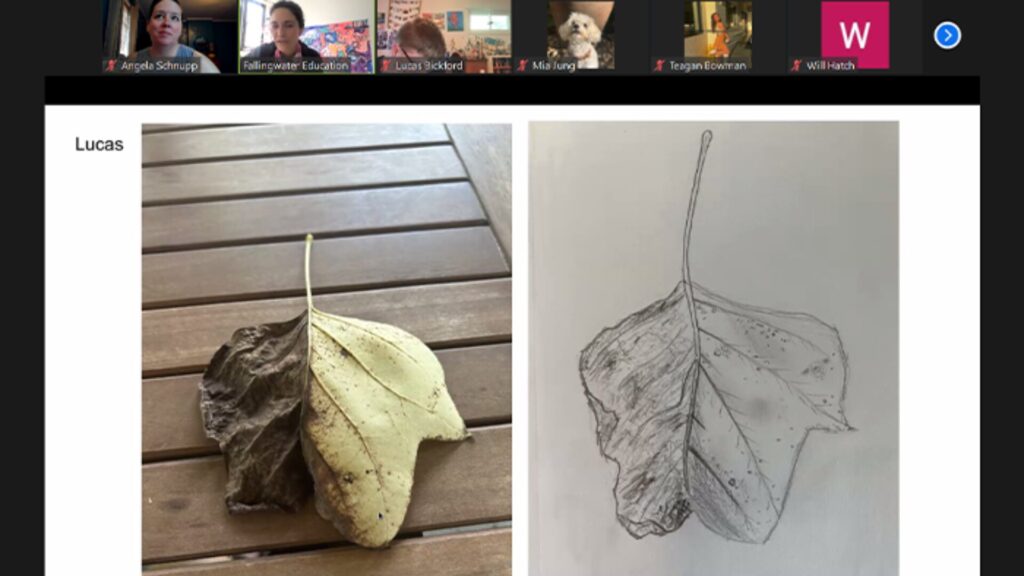
Fallingwater’s architecture camp introduces you to design through the philosophy and architectural ideas connected to Frank Lloyd Wright’s famous Fallingwater house. The sessions combine drawing exercises, design thinking, and portfolio-building activities with live discussions and guided studio work.
Some workshops focus specifically on hand drawing and observation, while others revolve around creating portfolio-ready design pieces. The program also ships materials to participants, so you work physically with sketching and model-based exercises instead of staying fully screen-based throughout the week.
Why it stands out: You learn architecture through the philosophy of Frank Lloyd Wright while creating tangible portfolio pieces from home.
8. Thomas Jefferson University Architecture & Design Summer Academy (Online)
Location: Online
Cost: $350 per week (+ $50 deposit; financial aid available)
Acceptance rate/cohort size: Not specified (small, studio-style classes)
Dates: July 13th – July 17th; July 20th – July 24th
Application Deadline: June 24th
Eligibility: Open to high school students (rising sophomores to seniors); international students can participate in the online format
Jefferson’s online academy begins with a Career Discovery Week that introduces architecture alongside related fields like interior design and construction management before moving into more focused studio work. As the program continues, you complete project-based assignments involving sketching, model-making, and design thinking while working with instructors and industry professionals.
The sessions are structured around live instruction and critiques, so much of the learning happens through project revision and discussion instead of passive lectures. Because the program introduces multiple built-environment disciplines together, you also gain a broader understanding of how architecture interacts with construction, interiors, and urban design.
Why it stands out: You explore multiple architecture-related careers while working with industry mentors in a structured, flexible format.
9. UCLA TeenArch Studio (Online Option)
Location: Online
Cost: Tuition-based (varies; UC credit program)
Acceptance rate/cohort size: Not specified (limited enrollment)
Dates: June 22nd – July 10th
Application Deadline: Not specified
Eligibility: Open to all students aged 15+ enrolled in grades 9-12
TeenArch Studio mirrors the structure of a university architecture studio through live design sessions, technical workshops, and critiques led by UCLA faculty and instructors. Throughout the program, you work through a sequence of projects focused on space, form, materials, and architectural representation using both physical and digital techniques.
The course introduces drawing, modeling, and architectural presentation while also including lectures on design culture and professional practice. Studio critiques are built into the schedule regularly, so you constantly revise and refine projects through discussion and feedback. At the end of the course, students formally present their projects to reviewers and critics.
Why it stands out: You earn university credit while experiencing an authentic UCLA design studio in an online format.
10. Rensselaer Polytechnic Institute (RPI) Architecture Career Discovery (Online)
Location: Online
Cost: $1,850
Acceptance rate/cohort size: Limited spots; first-come, first-served
Dates: July 20th – July 31st
Application Deadline: Varies
Eligibility: Open to high school students entering grades 10-12; international students can apply
RPI’s Architecture Career Discovery program places you inside a fast-moving studio environment that closely resembles undergraduate architecture education. You begin with sketching and conceptual model-building before gradually developing a larger architectural proposal through critiques and revisions.
Alongside studio work, the course introduces professional tools like Rhinoceros and Adobe Creative Suite while also discussing architectural theory and modern design practice. By the end, you will have completed a developed architecture project suitable for portfolio use.
Why it stands out: You experience a true college-level architecture studio while building a strong portfolio piece in just two weeks.
11. Virginia Tech Explore Architecture (Online Session)
Location: Online
Cost: $250 (virtual session)
Acceptance rate/cohort size: Not specified (limited seats; fills quickly)
Dates: July 14th – July 19th
Application Deadline: May 15th or until full
Eligibility: Open to students in grades 9-12 worldwide
You explore architecture through a focused, week-long design challenge that mirrors an early college studio. You work on hands-on exercises that push you to observe your surroundings and translate ideas into visual form. The program blends short lectures, critiques, and collaborative discussions, helping you understand how architects approach problem-solving.
You also experiment with both conceptual and practical design methods, guided by faculty from Virginia Tech’s architecture school. By the end, you will have completed a project that reflects both your creativity and evolving design thinking.
Why it stands out: You get a compact but immersive studio experience that captures the essence of first-year architecture education.
12. Academy of Art University Pre-College Art & Design Experience (Architecture Track)
Location: Online
Cost: Free
Acceptance rate/cohort size: Large cohorts
Dates: Dates vary
Application Deadline: Rolling admissions
Eligibility: Open to high school students worldwide
This free online architecture track introduces you to architectural design through guided assignments focused on spatial thinking, visual communication, and design fundamentals. The structure mirrors simplified college coursework, allowing you to work through projects at your own pace while still receiving instructor feedback throughout the program.
Lessons are delivered through video instruction and project-based exercises, with opportunities to share work and interact with peers in the course community. Since the curriculum is developed by practicing professionals, many assignments are tied to how architects approach design problems in real studio environments.
Why it stands out: You can access a university-style architecture experience for free while learning at your own pace.
13. University of Wisconsin-Milwaukee (UWM) Virtual Architecture Summer Camp Academy
Location: Online
Cost: Not specified
Acceptance rate/cohort size: Not specified
Dates: July 26th – August 1st
Application Deadline: June 15th
Eligibility: Open to students worldwide in grades 9-12, including recent graduates
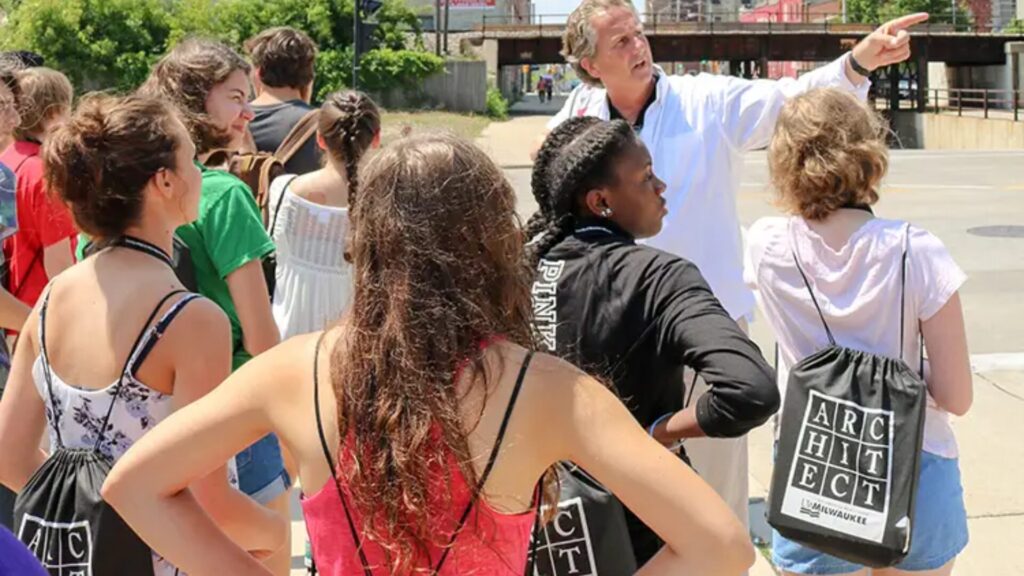
UWM’s Virtual Architecture Summer Camp introduces you to architecture through a guided online studio centered on creativity, visual communication, and problem-solving. Throughout the program, you respond to real-world design challenges using drawings, models, and presentations while learning how architectural ideas gradually develop into structured solutions.
The sessions also introduce foundational concepts like spatial thinking and architectural representation, which form a major part of first-year architecture education. Faculty and graduate students work closely with participants during critiques and discussions, helping refine ideas and presentation techniques across the week.
Why it stands out: You get a well-rounded introduction to architecture with a strong focus on communication and design thinking in a supportive studio setting.
14. ‘T’ Space Summer Architecture Residency (Virtual Option)
Location: Online
Cost: Free
Acceptance rate/cohort size: Highly competitive
Dates: July 5th – July 27th
Application Deadline: May 4th
Eligibility: Open to students and young professionals in architecture, design, and visual arts worldwide
In this program, you step into an intensive design environment that pushes you to think beyond conventional architecture. You develop a site-specific project while exploring experimental and theoretical approaches to design. The program revolves around critiques, discussions, and lectures led by practicing architects and thinkers.
You engage deeply with ideas, often working independently while receiving detailed feedback from mentors. The virtual format still feels immersive, with a strong emphasis on dialogue and critical reflection. By the end, you produce a concept-driven project that reflects both creativity and intellectual depth.
Why it stands out: You join a fully funded, highly selective residency that emphasizes experimental thinking over traditional studio work.
15. Build San Francisco Summer Design Institute (AFSF)
Location: Online
Cost: $3,500 (early bird: $3,000; includes materials)
Acceptance rate/cohort size: Not specified
Dates: June 8th – June 26th; July 6th – July 24th
Application Deadline: Rolling
Eligibility: Open to high school students worldwide, including international students
In the Build San Francisco Summer Design Institute (AFSF), you join a structured three-week online studio that introduces you to both the creative and technical sides of architecture. You learn sketching, digital modeling, and design thinking while working on your own projects from concept to presentation.
The program includes daily live sessions along with collaborative work, so you stay engaged with peers from different parts of the world. You also receive one-on-one mentoring from practicing architects, giving you insight into real career pathways. As you progress, you build a portfolio using professional tools and techniques.
Why it stands out: You get direct mentorship from industry professionals while building a polished portfolio using real-world design tools.
Shape Your Portfolio, Sharpen Your Future
Rather than treating architecture as a distant degree choice, start with the work itself: sketches, site analysis, models, critiques, and digital experiments.
Online architecture programs for high school students help you test that process early, building evidence of curiosity through design challenges, CAD practice, sustainability questions, and portfolio pieces.
Your strongest application will not come from saying you like buildings; it will come from showing how you think about space, people, constraints, and solutions.
Before your portfolio or personal statement feels finished, open our University Preparation blogs for sharper guidance on interviews, academic writing, entry requirements, and supercurricular planning.