15 Coding Camps for 13-Year-Olds

Summary
You’ll find 15 coding camps for 13-year-olds here, from free university camps in Texas and Washington to paid robotics and AI programs in Boston and online. The biggest split is between short, low-cost day camps built for middle schoolers and longer paid programs that run up to high school. Most welcome beginners, though CU Boulder’s Advanced Programming with Python expects prior experience. CompSciConnect, for example, welcomes over 120 middle schoolers each year. Immerse Education’s Academic Insights pathway also runs Computer Science for ages 13 to 15 in Cambridge and Oxford.
At 13, you might already spend time tinkering with apps, games, or websites and wonder how they actually work. Yet school computing classes can only cover so much of what programming involves. You may want to see how code powers games, robots, websites, and AI tools before deciding whether computer science is right for you. One of the best ways to explore that curiosity is by joining a coding camp.
Imagine spending your summer writing your first Python game, programming an Arduino to light up and make sound, or building a website from scratch with other students. A coding camp can teach you the fundamentals of programming, help you build problem-solving and teamwork skills, and give you a clearer sense of where a tech career could lead.
How do you choose the right coding camps for 13-year-olds?
Finding the right camp can be tricky when options differ so much in format, length, cost, and difficulty. You need to think about which languages or topics you want to try, whether the camp matches your grade, and whether you need an online or in-person option.
Universities, nonprofits, and tech education organisations run coding camps covering Python, JavaScript, web design, game design, robotics, cybersecurity, and AI. Depending on the camp, you might build games, design websites, program robots, or train a simple machine learning model. Some camps are free or cost very little, while others charge several thousand dollars for longer or residential programs.
Grade cut-offs also matter at 13. Many camps are built around middle school grades, while others start from entering 8th grade or set a minimum age for in-person sessions. To make your search easier, here is a list of 15 coding camps for 13-year-olds. These camps were chosen for their coding focus, age fit, and the chance to build projects of your own over the summer.
15 Coding Camps for 13-Year-Olds
1. Berkeley Coding Academy - Data Science - The AI Journey
Location: Online, through Berkeley Coding Academy’s live virtual program
Cost: Varies by package; see the registration page for current pricing
Program Dates: July 6-31 in 2026 | 2027 dates have not been posted yet
Deadline: Not specified; registration is through the academy’s website
Eligibility: Teens, grouped into cohorts by age and coding background | International eligibility not specified
Berkeley Coding Academy’s Data Science - The AI Journey program teaches you the Python code behind data science and AI as you explore big data. During lectures, you learn new concepts while coding along, then move into small cohorts that average 6 students of a similar age and coding background. Cohort time is where you apply what you’ve learned to project development and original research, with 1:1 support available when you need it.
By the end of the program, you leave with a portfolio project, dozens of coding notebooks, and a certificate verifying your work. Bonus time between long coding sessions also gives you a chance to connect with other students.
Why it stands out: You create your own coding notebooks and get access to annotated lecture notebooks that stay permanently in your Google Drive.
2. Immerse Education's Online Coding Summer School

Location: Fully remote
Cost/Stipend: Varies; summer school scholarship available through our bursary programme
Acceptance rate/cohort size: Selective; 1:1 learning
Dates: Start any time; 10-15 hours of 1:1 tutorials over 2-3 weeks
Application Deadline: Rolling admissions; multiple dates throughout the year
Eligibility: Students aged 13-18 (accredited options require age 14+); open to international students
The Online Research pathway allows you to explore coding through an independent, university-style research project guided by a personal tutor from Oxford, Cambridge, or an Ivy League university. On the coding and computer science pathways, you'll investigate areas such as programming languages, algorithms, data structures, software development, or applied computing, developing analytical and problem-solving skills used in real technical fields. You may also choose to explore encryption and cybersecurity topics, examining how cryptographic techniques protect digital information and how security principles are applied in modern systems.
Delivered through one-to-one tutoring, the programme mirrors undergraduate research and is available across more than 20 subjects. Depending on the pathway, you can earn recognised college or UCAS credits. By the end, you'll complete a full academic research paper, receive detailed written feedback, and have the opportunity to publish your work and, on the Accredited and Publication options, present it at the Immerse Online Symposium.
Why it stands out: You'll get access to 1:1 Oxbridge- or Ivy-style research supervision culminating in a publishable academic paper.
3. Veritas AI
Location: Virtual
Cost: Varies depending on program type. Full financial aid available.
Program dates: Multiple 12-15-week cohorts throughout the year, including spring, summer, fall, and winter.
Application deadline: Rolling. Spring (January), Summer (May), Fall (September), and Winter (November). You can apply to the program here.
Eligibility: High school students. AI Fellowship applicants should either have completed the AI Scholars program or exhibit experience with AI concepts or Python.
Veritas AI, founded and run by Harvard graduate students, offers programs for high school students who are passionate about artificial intelligence. Students who are looking to get started with AI, ML, and data science would benefit from the AI Scholars program. Through this 10-session boot camp, students are introduced to the fundamentals of AI & data science and get a chance to work on real-world projects.
Another option for more advanced students is the AI Fellowship with Publication & Showcase. Through this program, students get a chance to work 1:1 with mentors from top universities on a unique, individual project. A bonus of this program is that students have access to the in-house publication team to help them secure publications in high school research journals. You can also check out some examples of past projects here and read about a student’s experience in the program here.
Why it stands out: You get 1-1 mentorship with a Ph.D. mentor and produce an independent research project by the end.
4. Boston Leadership Institute Cryptography & Cybersecurity
Location: Regis College, Weston, MA
Cost: $699 tuition | $699 residential fee for the week
Program Dates: July 13-17 in 2026 | 2027 dates have not been posted yet
Deadline: No application required; you register and pay a deposit to save your seat
Eligibility: Students entering 8th grade through entering college | Open to international students
Boston Leadership Institute’s Cryptography & Cybersecurity program is a one-week introduction to how information is protected from hackers and how secret messages are written and broken. You study cryptography across history, starting with ancient codes and moving toward the modern methods used to secure financial and personal data.
Past students have described the codebreaking activities as a highlight of the week. The program suits you if you’re drawn to coding or curious about careers in cybersecurity. Classes run from 9 a.m. to 3:30 p.m., with an optional extended day until 5 p.m. at no extra cost.
Why it stands out: You approach coding through codebreaking and cybersecurity, a different entry point from game or app development.
5. Geering Up High School Summer Programs
Location: University of British Columbia, Vancouver, Canada, with some programs in Kelowna and South Surrey
Cost: CAD 500, depending on theme and location | Camp bursaries available
Program Dates: Weekly from July through August, 9 a.m. to 3 p.m. (2026 schedule)
Deadline: 2026 registration opened February 18th | Registration for each camp closes on the Sunday the week before it starts
Eligibility: Students entering grades 8-12, depending on the theme | International eligibility not specified
Geering Up’s High School Summer Programs at the University of British Columbia offer week-long day programs across engineering and science themes. If you’re entering grade 8 or 9, Software Engineering Jr introduces you to HTML, CSS, JavaScript, and algorithms as you build a week-long web development project.
No prior coding experience is required, and the program is designed to feel low-stress for beginners and experienced coders alike. Other themes for your grade band include integrated engineering, biomedical engineering, and experiential physics, so you can come back for a different week. Across the programs, activities mix engineering building challenges, coding projects, experiments, and creative design work.
Why it stands out: With 9 program options each summer, you can start with Software Engineering Jr and return later for senior themes like Mechatronics Engineering.


6. UT Dallas Computer Science Summer Camps
Location: Online through Microsoft Teams | In-person Python and Java camps at the University of Texas at Dallas, Richardson, Texas, for ages 15 and up
Cost: $300 for the online middle school JavaScript camp | $500 for online Python and Java camps | $600 for in-person Python and Java camps
Program Dates: June 8th - July 31st in 2026, in two-week (middle school) and four-week (Python and Java) sessions | 2027 dates have not been posted yet
Deadline: Rolling registration
Eligibility: Ages 12 and up for online camps and 15 and up for in-person camps | Python and Java camps are for high school students | International eligibility not specified
UT Dallas’s Computer Science K-12 Outreach team runs summer coding camps, mostly online through Microsoft Teams. At 13, your main option is Enjoyable Coding with JavaScript, an online middle school camp that meets for 1.5 hours every weekday across two-week sessions. Once you reach high school, you can move on to Problem Solving in Python or Problem Solving in Java, offered online or, if you’re 15 or older, in person.
Taken together, Problem Solving in Java and Advanced Java are designed to be equivalent to AP Computer Science. The short daily sessions make it easy to fit coding around other summer plans.
Why it stands out: You can start with JavaScript online at 13 and follow a clear path into Python, Java, and AP-level computer science as you get older.
7. Code-it Hacks - Space Invaders: Python AI Edition
Location: Swansea Town Hall, Bloor West Village, Toronto, Canada
Cost: Not listed on the camp page | Early-booking, multi-camp, and sibling discounts available
Program Dates: June 29th - July 3rd in 2026 | 2027 dates have not been posted yet
Deadline: Rolling enrolment while spots remain
Eligibility: Ages 13-17 | International eligibility not specified
In Code-it Hacks’ Space Invaders: Python AI Edition, you build your own version of the classic arcade game in Python while learning how AI techniques can shape gameplay. Each day mixes short STEM lessons with long build-and-code blocks, so most of your time goes into writing, testing, and improving your game. Collaboration time, design inquiry segments, and outdoor screen-free breaks round out the schedule.
On Fridays, campers visit a tech company, go on a field trip, or show off their projects at an expo day. Along the way, you also cover coding fundamentals, an AI primer, and alpha and beta testing.
Why it stands out: You learn Python and an introduction to AI by building a game you can actually play and show off by the end of the week.
8. DesignYOU! Code Camp sponsored by Texas Workforce Commission (TWC) and the University of Houston
Location: University of Houston at Sugar Land, 13858 University Boulevard, Sugar Land, TX, USA
Cost: Free
Program Dates: June 8-12 (entering grade 6) | June 15-18 (entering grade 7) | June 22-26 (entering grade 8) in 2026 | The 2027 camp is pending approval, with a decision expected in mid-March 2027
Deadline: Rolling deadline, but camps reach capacity quickly
Eligibility: Students entering grades 6-8 | International eligibility not specified
DesignYOU! Code Camp offers a no-cost way to explore coding, with a focus on how programming connects to the fashion and retailing industry. Through coding and programming projects, you work on problem-solving and analytical skills while seeing how technology shapes fashion and retail. The camp runs for one week, Monday to Friday from 9 a.m. to 4 p.m., and you need to attend all five days.
At 13, you’ll most likely join the session for students entering 8th grade. By the end of the program, you’ll develop critical thinking, teamwork, and technical skills applicable to various fields.
Why it stands out: It’s completely free and connects coding to fashion and retail, an angle you won’t find at most coding camps.
9. CompSciConnect (University of Maryland)
Location: University of Maryland, College Park, MD, USA
Cost: $400 for two weeks of camp | Need-based scholarships available
Program Dates: Two-week sessions; in 2026, June 22nd - July 2nd and July 13-24 | One Sunday meeting per month during the school year
Deadline: Applications open between January and March each year | 2026 applications are closed
Eligibility: Rising 6th graders for Yellow | Rising 7th graders for Yellow or Red | Rising 8th graders for Terp | International eligibility not specified
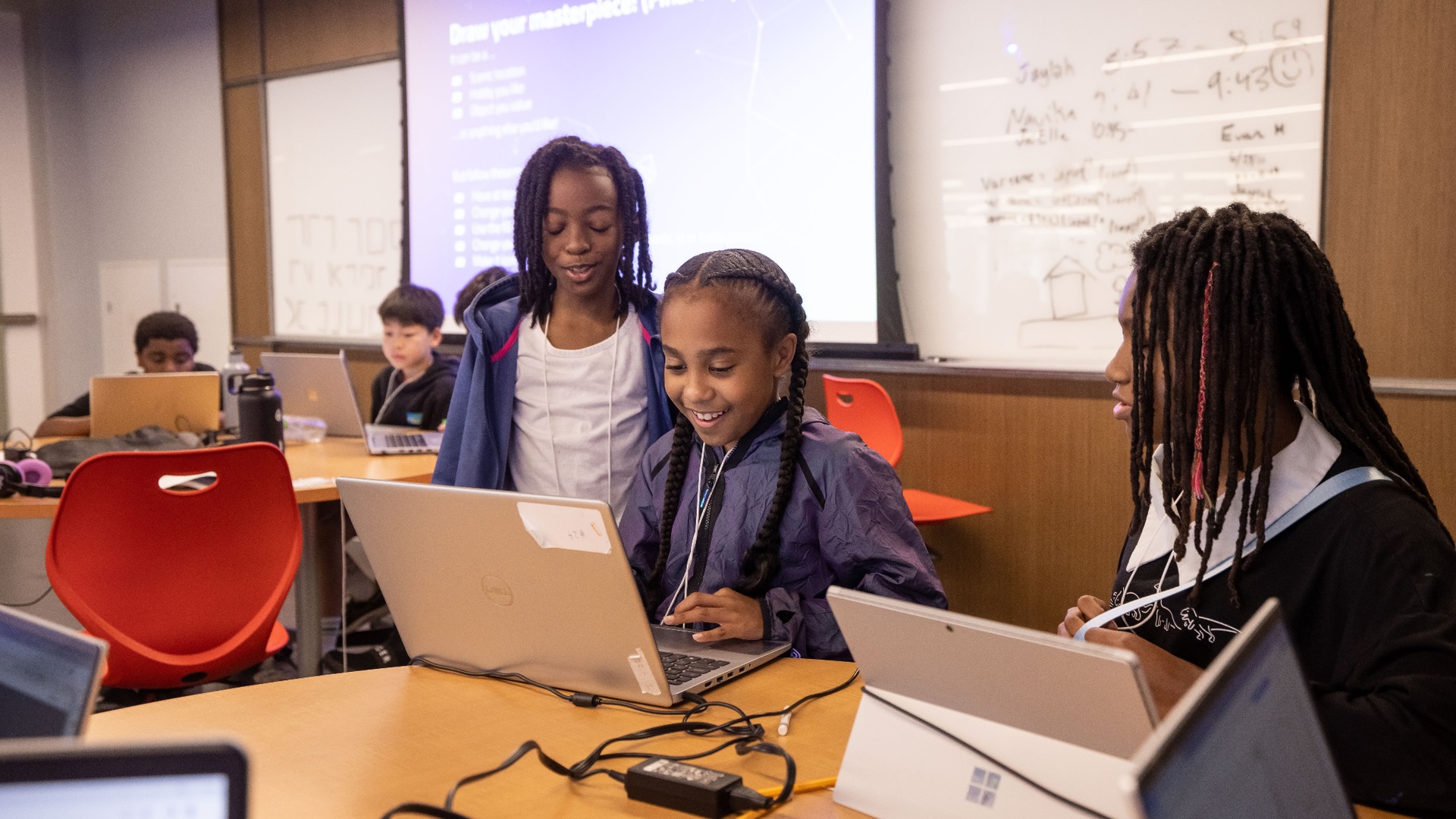
CompSciConnect is a three-year program at the University of Maryland that introduces middle school students to programming. Across three summers, you progress from block-based programming like Scratch (Yellow) to web design with HTML, CSS, and JavaScript (Red), then to 3D game design (Terp). You also learn about cybersecurity, cryptology, number bases, and logic, with an emphasis on how computing connects to other subjects.
UMD undergraduate students lead the curriculum, and you keep meeting one Sunday a month during the school year. Most new students join Yellow or Red, so if you’re 13, apply early and check which group you’re eligible for.
Why it stands out: Over 120 students participate in CompSciConnect each year, providing a dynamic and collaborative environment for aspiring young programmers.
10. WSU Summer Programming Camp
Location: Online via Zoom and in person at Washington State University, Pullman, WA
Cost: No cost
Program Dates: August 10-14 (online, 10 a.m. - 12:30 p.m. PT) | August 17-21 (in person, 8 a.m. - 12 p.m. PT) in 2026
Deadline: Register through the camp website; no deadline published
Eligibility: Students currently in grades 6-8 | International eligibility not specified
Now in its tenth year, the WSU Summer Programming Camp teaches middle schoolers basic programming functions and concepts. Graduate students from WSU’s Computer Science and Educational Psychology programs run the camp and support you as you work through activities built around each concept. You can join online via Zoom or in person, depending on which week suits you.
The goal is for you to leave with a basic understanding of programming and, ideally, a stronger interest in it. It’s a low-pressure starting point if you’ve never coded before.
Why it stands out: The WSU Summer Programming Camp lets you take part either online via Zoom or in person, and both options are free.
11. UNB Computer Science Adventures in Computing Camp
Location: Faculty of Computer Science, UNB Fredericton Campus, Fredericton, NB, Canada
Cost: $200 | A limited number of bursaries available
Program Dates: July 13-17 | July 20-24 in 2026 (both weeks cover the same content)
Deadline: Online registration; no deadline published
Eligibility: Students entering grades 6-8 in September | International eligibility not specified
The UNB Computer Science Adventures in Computing Camp, located at the Fredericton Campus, takes you through many corners of computer science. Designed for middle school students entering grades 6 to 8, the camp requires no prior technology experience. You explore topics such as website development, video games, and artificial intelligence through practical activities. Each day runs from about 9 a.m. to 4 p.m., led by experienced educators and computer science students.
This structure helps you build a foundational understanding of computer science and see how it overlaps with other fields. By the end of the program, you’ll develop problem-solving, critical thinking, and teamwork skills.
Why it stands out: Camps are led by Connor Wilson, an Assistant Teaching Professor at UNB, along with a team of Computer Science students who provide mentorship and guidance throughout the experience.
Join the Immerse Education 2027 Essay Competition
Follow the instructions to write and submit your best essay for a chance to be awarded a 100% scholarship.
12. Stonecutter Foundation Computer Science Camp at Gardner-Webb University
Location: Gardner-Webb University, Boiling Springs, NC, USA
Cost/Stipend: $25 per participant, reduced from $200 thanks to the Stonecutter Foundation | Covers materials, a T-shirt, lunch, and field trips
Program Dates: July 27-31 in 2026 | 2027 dates have not been posted yet
Deadline: The 2026 camp filled and registration has closed
Eligibility: Students entering grades 7-12 | Day camp with no overnight accommodation | International eligibility not specified
The Stonecutter Foundation Computer Science Camp starts with the basics of computer science, then moves into areas such as artificial intelligence, cloud computing, social networking, mobile networking, and big data. Each morning, you spend two hours in a computer lab learning to program in Alice, a 3D environment used to create animations, interactive games, and videos.
Afternoons are for working on your own Alice project or going on a field trip. No computer science experience is required, and lunch is provided each day. The low cost makes it one of the most accessible camps on this list.
Why it stands out: The camp covers basic programming using Alice, an innovative 3D programming environment designed to make complex coding concepts easier to understand through interactive and visual methods.
13. Programming with Python (Grades 7-8)
Location: CU Science Discovery, University of Colorado Boulder, Boulder, CO
Cost: $330
Program Dates: Session 1: June 8-12, 1-4 p.m. | Session 2: July 6-10, 9 a.m. - 12 p.m. (2026)
Deadline: Online registration closed May 29th (Session 1) and July 3rd (Session 2) in 2026
Eligibility: Students in grades 7-8 | International eligibility not specified
Programming with Python (Grades 7-8) is a camp where you learn Python, a fast, versatile programming language used by professionals worldwide. You’ll explore core programming concepts, from simple commands to more complex structures. Throughout the week, you put those skills to work by creating your own interactive games.
The camp is built for beginners and connects basic math, such as multiplication, angles, and measurements, to your coding projects. You can pair the July session with the afternoon Arduino camp for a full-day experience. By the end of the program, you’ll develop creativity, analytical thinking, and coding proficiency.
Why it stands out: You apply your math skills in a practical way by creating your very own interactive games in Python.
14. Advanced Programming with Python (Grades 7-8)
Location: CU Science Discovery, University of Colorado Boulder, Boulder, CO
Cost: $330
Program Dates: June 22-26, 9 a.m. - 12 p.m. (2026)
Deadline: Online registration closed June 12th in 2026
Eligibility: Students in grades 7-8 with prior Python experience or completion of Programming with Python | International eligibility not specified
Advanced Programming with Python takes you beyond the basics to explore how programmers use Python to solve problems, build dynamic projects, and automate tasks. You work with concepts such as functions, loops, conditionals, data structures, and object-oriented programming through project-based challenges.
Over the week, you design and develop more complex games and interactive applications. You also look at how Python is used in fields like artificial intelligence, data analysis, and app development. You’ll need prior Python experience or to have completed the beginner camp first.
Why it stands out: You tackle advanced concepts like object-oriented programming while building more complex games and applications.
15. Arduino: An Introduction (Grades 7-8)
Location: CU Science Discovery, University of Colorado Boulder, Boulder, CO
Cost: $330 + $40 Arduino materials fee = $370
Program Dates: Session 1: June 8-12, 9 a.m. - 12 p.m. | Session 2: July 6-10, 1-4 p.m. (2026)
Deadline: Online registration closed June 5th (Session 1) and July 3rd (Session 2) in 2026
Eligibility: Students in grades 7-8 | International eligibility not specified
At CU Science Discovery in Boulder, CO, this camp introduces you to physical computing through the widely used Arduino microcontroller platform. You will learn to assemble simple electronic circuits and write programs, called Arduino sketches, that create projects that light up, move, and make sound.
You’ll use the Seeed Studio Grove Beginner Kit for Arduino, which is user-friendly and easy to expand for future projects. No experience is necessary, and you take your own Arduino kit home at the end of camp. By the end of the program, you’ll develop problem-solving, coding, and teamwork skills.
Why it stands out: Each participant takes home their own Arduino kit, so you can keep building and expanding your projects after camp ends.
Frequently asked questions: Coding Camps for 13-Year-Olds
Are there free coding camps for 13-year-olds?
Yes, a few strong options are free or nearly free. DesignYOU! Code Camp at the University of Houston at Sugar Land costs nothing for students entering grades 6 to 8, and WSU’s Summer Programming Camp is free both online and in person. Gardner-Webb’s Stonecutter Foundation camp costs just $25, including lunch and field trips. Free camps fill quickly, so watch for registration dates in spring.
What coding language should a 13-year-old learn first?
Python is a popular first choice, and several camps here teach it to beginners, including CU Science Discovery and Code-it Hacks. If you’d rather start with something more visual, CompSciConnect begins with block-based Scratch, while Gardner-Webb uses Alice, a 3D programming environment. JavaScript is another good option if websites interest you. Immerse Education’s Academic Insights pathway in Computer Science, for ages 13 to 15 in Cambridge, also starts with Python before moving into algorithms and game theory.
Are there online coding camps for 13-year-olds?
Yes, and they’re a good fit if you can’t travel. UT Dallas runs an online JavaScript camp for ages 12 and up, WSU offers a free week via Zoom, and Veritas AI’s AI Trailblazers program is fully virtual for grades 6 to 8. Berkeley Coding Academy also teaches data science and AI live online. For more ideas as you move into high school, browse these online coding programs for high school students.
Can a 13-year-old attend a residential coding camp?
Yes, though most coding camps for this age are day camps. Boston Leadership Institute offers residential options for students entering 8th grade and up, with a residential fee of $699 per week. Camps such as CompSciConnect, Gardner-Webb, and Geering Up are day-only. Immerse Education’s Academic Insights pathway runs residential Computer Science courses for ages 13 to 15 in Cambridge and Oxford, with an average of 7 students per class.
Do you need coding experience to join a coding camp at 13?
No, most camps on this list are designed for beginners. UNB’s Adventures in Computing Camp requires no prior technology experience, and Geering Up’s Software Engineering Jr welcomes students who have never coded. CU Science Discovery’s Programming with Python is built for beginners, while its advanced camp expects prior Python experience. If you want more options for your grade, these summer programs for 8th graders are worth a look.
What can you build at a coding camp for 13-year-olds?
You can build a surprising range of projects in just a week or two. At Code-it Hacks, you create your own Space Invaders game in Python, while CU Science Discovery’s Arduino camp has you program projects that light up, move, and make sound. Berkeley Coding Academy students leave with a portfolio project and a certificate. When you’re older, these coding summer programs for high school students can help you build on those skills.
Testing a future in tech at 13
A week spent debugging a Python game or programming an Arduino can tell you more about tech careers than any regular school lesson can.
The best coding camps for 13-year-olds match your grade, your experience level, and whether you’d rather learn online or on a university campus.
Since many free camps fill quickly, check registration dates early in the spring and keep a shortlist of two or three backup options.
To see which tech roles might suit you, explore our Career Exploration blogs for guides on computing careers, skills, and the paths that lead there.






Unlock Inspiring Opportunities with the Immerse Education Newsletter
Join our newsletter to stay ahead with exclusive updates, exciting programme highlights, and expert insights from the world of immersive education.
Learn how Immerse can transform your life
An in-depth overview of our university and career preparation programmes
Get a glimpse into the life of an Immerse participant
Find the right programme for you with sample timetables, location showcases, and more