15 Coding Summer Programs for High School Students

If you’re a high school student interested in coding, you may already enjoy building small projects, experimenting with new languages, or solving algorithmic challenges. But beyond classroom assignments and online tutorials, you might still wonder what it truly means to study computer science in depth. One of the most powerful ways to experience that fully is through a structured coding summer program.
Imagine spending your summer immersed in hands-on workshops, developing real applications, debugging complex problems, and collaborating with peers who share your passion for technology. Picture learning how to build websites, design apps, explore artificial intelligence, or strengthen your understanding of data structures and algorithms in an environment that mirrors university-level study. Coding summer programs provide a focused space where curiosity turns into capability.
How do you choose the right coding summer programs for high school students?
With so many options available, it’s important to distinguish between programs that offer surface-level introductions and those that provide rigorous, skill-building experiences. Some focus on beginner-friendly foundations, while others dive into specialized topics like machine learning, cybersecurity, game development, or software engineering. Thoughtful research ensures you find a program that matches your experience level and long-term goals.
Across universities, tech organizations, and educational platforms, coding summer programs are increasingly hands-on and project-driven. You might work on capstone projects, participate in hackathon-style challenges, or collaborate in small teams to develop functional applications. Programs range from accessible introductions for newcomers to intensive courses designed for students ready to push their limits.
You’ll learn from experienced instructors, engage in collaborative coding sessions, and connect with motivated peers from around the world. Along the way, you’ll strengthen logical reasoning, improve debugging and development skills, and gain a clearer sense of what pursuing computer science at the university level might look like.
To help you get started, we’ve curated a list of 15 Coding Summer Programs for High School Students.
If you’re looking for more options, you can also have a look at online coding summer programs for high school students.


15 Coding Summer Programs for High School Students
1. Immerse Education’s Coding Summer School
Location: Cambridge
Cost: Varies; summer school scholarship available through our bursary programme
Dates: 2 weeks during the summer
Application Deadline: Multiple summer cohorts; rolling admissions
Eligibility: Open to students aged 13-18 worldwide
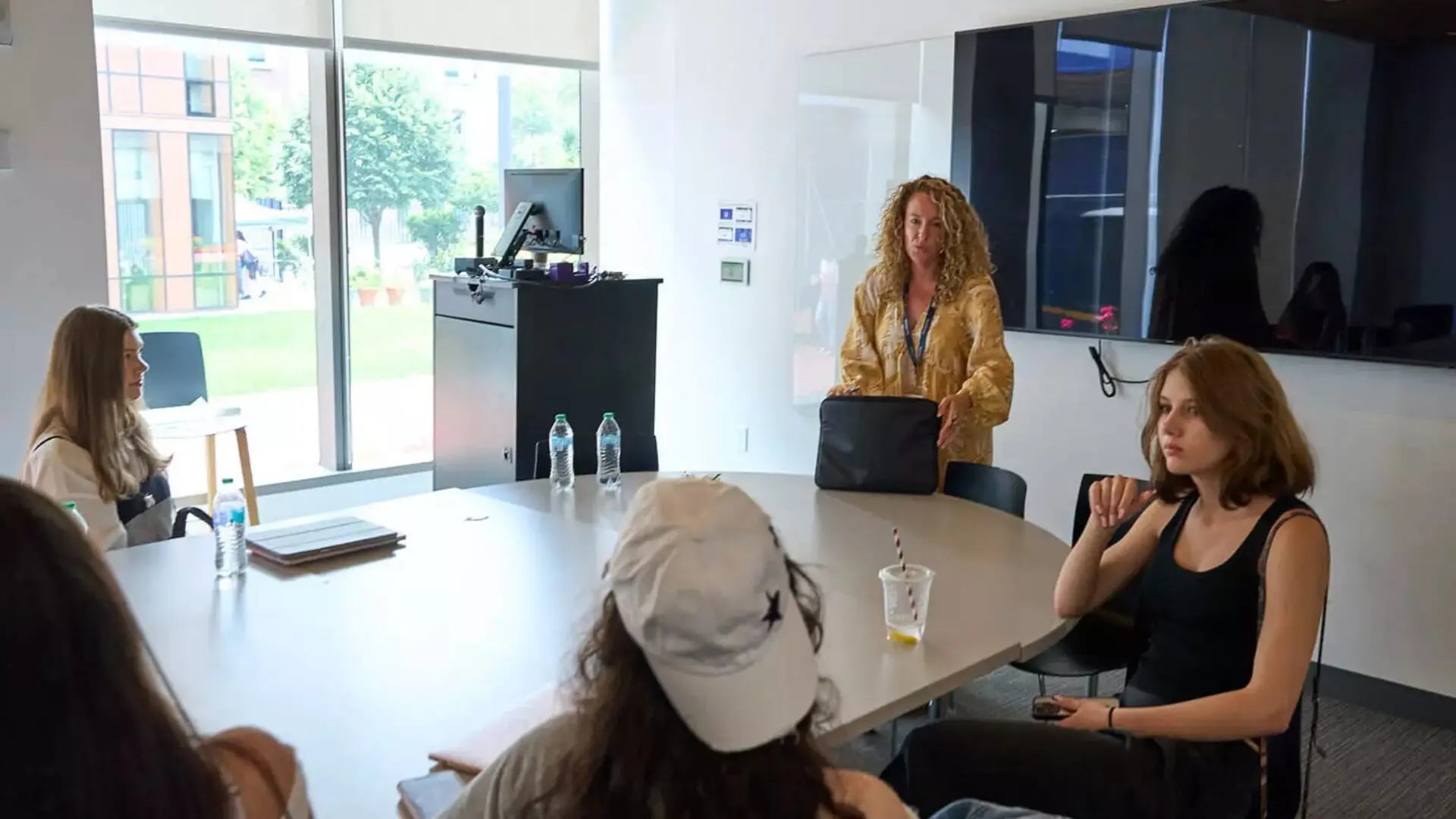
The Academic Insights program allows you to experience university life while building foundational coding skills through small-group instruction led by tutors from leading institutions such as Oxford and Cambridge. You will explore core programming concepts, computational thinking, and problem-solving techniques while applying them to practical exercises and guided projects.
Depending on your track, you may engage with topics such as Python programming, algorithms, software development, or data-driven applications. The course emphasizes experiential learning, encouraging you to write code, debug programs, and understand how technical systems operate in real-world contexts. Living on campus further helps you understand the independence and academic expectations associated with university study while connecting with a global peer network.
By the end of the program, you will complete a personal project, receive individualized feedback, and earn a certificate of completion. This program offers a realistic preview of studying computer science at the university level while helping you evaluate whether coding aligns with your long-term academic goals. You can find more details about the application here.
Why it stands out: You learn in small, discussion-driven classes while living on campus, gaining an experience that closely reflects undergraduate computer science education.
2. MIT Beaver Works Summer Institute (BWSI)
Location: Massachusetts Institute of Technology, Cambridge, MA
Cost: Fully funded
Dates: July 8th – August 4th
Application Deadline: March 31st
Eligibility: Open to U.S. citizens, permanent residents, and international students currently attending high school in the U.S.
The Beaver Works Summer Institute at MIT is often considered one of the most challenging and advanced AI and engineering programs for high school students.The institute offers hands-on courses like “Autonomous RACECAR”, in which students write code for small-scale vehicles to race on intricate tracks, and “Cognitive Assistant”, an NLP-focused course.
The program is designed to serve as a bridge between abstract computer science and practical engineering. In fact, teamwork is essential as you will be required to tackle complex technical problems collaboratively.
Why it stands out: This program is one of the few free, highly selective opportunities that offer deep, hands-on exposure to MIT’s engineering methodology.
3. NextGen Bootcamp – Computer Science Summer Certificate Program
Location: In-person in New York City (185 Madison Ave) and live online
Cost: $3,999 (NYC) / $3,095 (Online); no financial aid available
Dates: June 29th – July 30th
Application Deadline: Rolling admissions; early application recommended
Eligibility: High school students aged 13-19; open to international students
This four-week intensive programme offers 95 hours of live, project-based instruction, making it one of the more structured coding summer programs for high school students if you want a clear Java-to-Python pathway. You’ll start with Java, covering object-oriented programming and recursion, preparing you for the AP Computer Science Exam. The second half delves into Python, emphasising data science and machine learning fundamentals.
Classes are kept small (8–15 students) to ensure personalized attention. You’ll engage in hands-on projects, receive one-on-one bonus training, and have access to class recordings for 30 days. Upon completion, you’ll earn a verified digital certificate, showcasing your newly acquired skills.
Why it stands out: It’s an immersive, hands-on experience in computer science, aiming to build a strong foundation in Java and Python programming.
4. NYU Tandon School of Engineering – SPARC (Summer Program for Automation, Robotics, and Coding)
Location: Brooklyn, NY
Cost: $3,300
Dates: 2 weeks during the summer
Application Deadline: Rolling until filled
Eligibility: High school students with an interest in robotics or CS, Open to U.S. and international students; international students require a student visa (F-1 or J-1).
SPARC introduces students to robotics, automation, and programming through hands-on lab sessions and guided instruction by NYU Tandon faculty. You gain knowledge of fundamental ideas in robot navigation, microcontrollers, and sensor integration. Workshops for designing, constructing, and testing robotic devices are part of the program.
Basic control algorithms and Python are covered in coding instruction. The curriculum emphasizes practical engineering skills and project-based learning. By the end, you feel more comfortable with robots’ hardware and programming, which are frequently used in university engineering courses.
Why it stands out: It offers a hands-on robotics and coding experience, focusing on microcontrollers, sensor integration, and Python programming, providing you with practical skills in automation and robotics for future engineering studies.
5. MITES Summer – Massachusetts Institute of Technology (MIT)
Location: Massachusetts Institute of Technology, Cambridge, MA
Cost: Free (travel, housing, and meals covered)
Dates: Late June – Early August (6 weeks)
Application Deadline: February 15th
Eligibility: U.S. citizens or permanent residents currently enrolled as high school juniors
MITES Summer lets you immerse yourself in a six-week residential STEM curriculum designed for high school juniors interested in science and engineering. You’ll take advanced coursework across math, science, computer science, and humanities. You will study electives like machine learning, genomics, or computing. Daily lectures, recitations, and laboratory tours at MIT give you a first-hand look at how researchers and engineers at leading institutions work.
You’ll also receive a written evaluation from your instructors and gain access to college admissions-preparation support. Finally, by living on campus and working with classmates who share your interests, you’ll develop both technical skills and a better understanding of what undergraduate STEM education may look like.
Why it stands out: It provides a comprehensive six-week STEM curriculum with advanced coursework in science, engineering, and the humanities, offers hands-on experience at MIT, and provides college admissions support for high school juniors.
6. Changemakers in Computing (CiC)—University of Washington, Paul G. Allen School of Computer Science & Engineering
Location: University of Washington, Seattle, WA (in‑person on campus)
Cost/Stipend: Free; no tuition or fees for accepted participants.
Dates: July 6th – July 30th (meets Monday – Thursday with orientation and group sessions)
Application Deadline: April 1st (application opens earlier in March)
Eligibility: Rising high school juniors and seniors currently enrolled in Washington State high schools; U.S. citizens, permanent residents, DACA, or Employment Authorization Document holders
Changemakers in Computing (CiC) is a free, four-week summer program at the University of Washington’s Allen School that teaches you basic technology concepts through structured group work and discussion. You work in small groups with undergraduate mentors and learn coding through project-based learning that is relevant to real-world computing situations and ethical issues. The curriculum includes both technical lessons and lessons on social justice, career exploration, and computer science pathways after high school.
Since your mentors are college students studying computer science, you also learn about how college students are expected to do well in school and how to study. By the end of the program, you will have built practical coding experience and a clearer sense of how computing coursework and community operate within a major public research institution.
Why it stands out: It teaches coding and social justice in computing, where you work on group projects with mentors to solve real-world problems using technology while exploring career pathways in computer science.
7. Texas Tech University’s Anson L. Clark Scholars Program
Location: Texas Tech University, Lubbock, TX
Cost: Free
Dates: June 21st – August 6th
Application Deadline: February 16th
Eligibility: High school juniors and seniors who are at least 17 by the start date and are U.S. citizens/permanent residents
The Anson L. Clark Scholars Program is a highly selective, faculty-mentored research experience that places you in a university research setting for an extended summer term. You are paired one-on-one with a Texas Tech faculty mentor and conduct original, hands-on research in a chosen field, which may include artificial intelligence, computer science, engineering, or related disciplines. The program focuses heavily on research methodology, academic writing, and independent inquiry through an extended lab or project work.
Besides research, you participate in weekly seminars, discussions, and field trips that help you understand how academic research connects to real-world issues. You live on campus, allowing you to experience the structure, expectations, and pace of residential university life. The program culminates in a formal written research report and presentation of your findings.
Why it stands out: This is one of the few long-duration, low-cost residential programs that offer direct faculty mentorship and a complete introduction to the undergraduate research process.
8. Oxford AI and Machine Learning Pioneers Summer School
Location: Oxford, UK
Cost: £8,995
Dates: July 19th – August 1st
Application Deadline: Rolling admissions
Eligibility: Open to students aged 16-18 from all nationalities and backgrounds.
This program, organised by the Saïd Business School at the University of Oxford, is aimed at students eager to learn the impact of AI on business and society.
With top-notch professors, you will discuss and debate the major issues raised by AI, such as the ethical use of AI, bias in algorithms, and how machine learning can be utilized in industries like medicine and banking. The program also offers practical coding sessions and team challenges to enhance your skillset and create tangible evidence of your work.
Why it stands out: This program provides an official certificate from the University of Oxford, validating your engagement with high-level academic discourse.
9. Wake Forest University Summer Immersion Program – Coding and Computer Science Institute
Location: Winston-Salem, NC (Wake Forest University Reynolda Campus)
Cost: $3,500; $60 non-refundable application fee; need-based scholarships available (apply by February 1)
Dates: July 5-10 (Beginner) and July 12-17 (Intermediate/Advanced)
Application Deadline: Rolling admissions beginning November 1st; early application encouraged due to limited spots
Eligibility: Current high school students in grades 9-12; open to domestic and international students
The Beginner track introduces students to fundamental concepts, including problem-solving, data structures, and basic programming in Python and Java. Participants engage in hands-on activities such as developing games, building LED circuits with Raspberry Pis, and analyzing real-world datasets. The Intermediate/Advanced track delves deeper into topics like machine learning, AI, advanced algorithms, and version control using Git and GitHub.
Students in this track work on projects involving neural networks, develop machine learning models, and explore high-performance computing. Both tracks include tours of Wake Forest’s High Performance Computing Center and discussions on ethics in computing. Upon completion, students receive a certificate from Wake Forest University, providing formal recognition of their academic engagement.
Why it stands out: It’s an immersive, hands-on experience in coding and computer science, whether you’re a beginner looking to explore the field or an advanced student aiming to deepen their knowledge and skills.
10. Oxford Saïd Teen Technology and Innovation Summer Academy (University of Oxford)
Location: Saïd Business School, University of Oxford, Oxford, England
Cost/Stipend: £8,995
Dates: July 18-31
Application Deadline: Early spring (tentatively)
Eligibility: Open to ambitious teens aged 15-18 worldwide.
This program’s primary goal is to empower the next generation of innovators by delving deeply into technology-driven topics and their real-world applications. The rigorous, project-based curriculum covers topics like biotech, sustainable tech, tech entrepreneurship, and artificial intelligence. Reputable academics and business professionals will instruct you.
You will hone your technical and persuasive communication abilities while working in groups to investigate and present technology solutions to a panel of experts. The course validates your study and achievement in a highly relevant topic by awarding you with an official University of Oxford diploma.
Why it stands out: It combines technology and entrepreneurship, where you work on real-world projects and learn from academics and business professionals at Oxford, culminating in presenting tech solutions to industry experts.
11. Meta Summer Academy
Location: Meta Headquarters, Menlo Park, CA
Cost: Students will receive a stipend
Dates: June 16th – July 25th
Application Deadline: February 14th
Eligibility: High school sophomores with a minimum cumulative GPA of 2.0 who reside full-time in East Palo Alto, Belle Haven, or Redwood City are invited to apply
Meta Summer Academy is a paid, cohort-based program that introduces you to applied computer science and artificial intelligence within a large technology organization. You spend the summer working approximately 30 hours per week on structured coding projects that introduce concepts in machine learning, deep learning, and software development.
Part of the program is guidance from Meta experts, giving you a peek into the nitty-gritty of how AI systems are built, verified, and rolled out in actual products. Besides skill-building, you get involved in debates about data ethics, digital responsibility, and the social consequences of technology.
Why it stands out: This program distinguishes itself by combining early technical skill-building with firsthand exposure to how AI is developed and evaluated in an industry setting.
12. Stony Brook University’s Simons Summer Research Program
Location: Stony Brook University, Stony Brook, NY
Cost: Free
Dates: June 29th – August 7th
Application Deadline: February 5th
Eligibility: Students in their junior year of high school (11th grade) who are at least 16 years old by the start of the program, open to U.S. citizens or permanent residents only
Through the Simons Summer Research Program, you can work in a faculty-led research group on novel STEM initiatives, such as data science and artificial intelligence. You receive practical expertise with research techniques like coding, data analysis, visualization, and experimental design while working directly with a faculty mentor at Stony Brook.
Participants in the program are introduced to the culture and standards of academic research through weekly lectures and professional development seminars. To present your study at a formal symposium, you draft an abstract and build a poster throughout the summer. Upon completing the program, participants receive a stipend.
Why it stands out: It provides hands-on research in STEM, where you work with faculty mentors on projects like AI and data science, gaining practical experience and presenting your findings at a formal symposium.
13. Carnegie Mellon University AI Scholars
Location: Carnegie Mellon University, Pittsburgh, PA
Cost: Free
Dates: June 20th – July 18th
Application Deadline: February 1st
Eligibility: High school juniors who are at least 16 years old and U.S. citizens, permanent residents, or DACA-registered can apply. No prior coding experience is required.
Carnegie Mellon’s AI Scholars program creates a fully funded opportunity for students to explore artificial intelligence through a combination of classroom instruction and group research projects. You will attend lectures delivered by CMU faculty, learning the core concepts of machine learning, robotics, and computational thinking while working on team projects that address real-world challenges.
The program also includes college preparation seminars and opportunities to connect with industry leaders in the tech field.
Why it stands out: It stands out for its commitment to equity in STEM, offering a whole scholarship experience at a top-tier university for computer science.
14. UCLA’s Computer Science Summer Institute (Introductory Track)
Location: University of California, Los Angeles, CA
Cost: To be announced
Dates: June – July
Application Deadline: June 14th
Eligibility: High school students in grades 9-12 are eligible to apply. All participants must be at least 15 years of age by the first day of Summer Sessions; international students may apply but must ensure they meet visa requirements
For high school students interested in computer science and related majors, the Computer Science Introductory Track offers a combination of coding and lab tours along with UCLA coursework. Through UCLA’s computer programs, you will learn how to use computers as instruments for problem-solving, creativity, and discovery.
Using Python, a programming language, UCLA’s Computer Science Summer Institute simulates what it would be like to enroll in a college-level computer science course. It introduces students to both programming and the broader field of computing. Since on-campus housing is not an option, this opportunity is only open to students who can travel to UCLA’s campus.
Why it stands out: It gives an introduction to computer science through Python coding and UCLA coursework, offering hands-on programming experience in a college-level setting.
15. Girls Who Code Virtual Summer Immersion
Location: Online (Global reach, US-based)
Cost: Free (Stipends available for eligible students)
Dates: Multiple sessions offered
Application Deadline: Mid-March
Eligibility: Girls and non-binary students in grades 9–11, international students may apply.
This online course is one of the most inclusive coding summer programs for high school students, combining beginner-friendly web development with game design and user experience in a supportive learning environment. As you work on your own projects, you’ll learn coding languages like HTML, CSS, and JavaScript through guided online sessions.
The program offers mentorship sessions with female professionals in the tech sector, as well as technical skills training. It fosters a supportive community that motivates students to pursue careers in engineering and computer science.
Why it stands out: It is a free, mission-driven program that combines technical coding skills with robust industry mentorship and community building for underrepresented groups.
Join the Immerse Education 2027 Essay Competition
Follow the instructions to write and submit your best essay for a chance to be awarded a 100% scholarship.
From Coding Camp To Future Learning
Coding skills grow fastest when you practise them with structure, feedback, and real deadlines, not just tutorials and solo projects.
The coding summer programs for high school students mentioned in this article give you momentum through projects, teamwork, and university-style problem solving.
By the end, you’ll likely have stronger logic, cleaner code, and more confidence explaining how your work actually functions.
Want to keep building that edge all year? Head to our Educational Innovation blogs for fresh edtech insights, teaching trends, and practical guidance you can use right away.






Unlock Inspiring Opportunities with the Immerse Education Newsletter
Join our newsletter to stay ahead with exclusive updates, exciting programme highlights, and expert insights from the world of immersive education.
Learn how Immerse can transform your life
An in-depth overview of our university and career preparation programmes
Get a glimpse into the life of an Immerse participant
Find the right programme for you with sample timetables, location showcases, and more